Inscrutable machine learning (ML) models are part of increasingly many information systems. Understanding how these models behave, and what their output is based on, is a challenge for developers let alone non-technical end users.
The authors investigate how AI systems and their decisions ought to be explained for end users through a systematic literature review.
The authors’ synthesis of the literature suggests that AI system communication for end users has five high-level goals: (1) understandability, (2) trustworthiness, (3) transparency, (4) controllability and (5) fairness. The authors identified several design recommendations, such as offering personalized and on-demand explanations and focusing on the explainability of key functionalities instead of aiming to explain the whole system. There exists multiple trade-offs in AI system explanations, and there is no single best solution that fits all cases.
Based on the synthesis, the authors provide a design framework for explaining AI systems to end users. The study contributes to the work on AI governance by suggesting guidelines on how to make AI systems more understandable, fair, trustworthy, controllable and transparent.
This literature review brings together the literature on AI system communication and explainable AI (XAI) for end users. Building on previous academic literature on the topic, it provides synthesized insights, design recommendations and future research agenda.
1. Introduction
Artificial intelligence (AI) systems are becoming increasingly complex (Karamitsos et al., 2020; von Eschenbach, 2021). This trend can be attributed to advances in machine learning (ML) model technology, that has advanced towards better predictive power, but as a consequence, the models have become inscrutable and more difficult to explain (Brennen, 2020; Došilović et al., 2018; von Eschenbach, 2021). Simultaneously, AI functionalities are being integrated as part of a growing range of information systems (Hornung and Smolnik, 2021; Rana et al., 2021; Tarafdar et al., 2019) and used to support critical decision-making. For example, ML approaches have been used to combat the COVID-19 pandemic through patient outcome prediction, risk assessment and predicting the disease spreading (Dogan et al., 2021), and are an integral component of recommendation systems that curate social media feeds and e-commerce (Batmaz et al., 2019). To reinforce public trust in AI-driven and AI-supported decision making, and to mitigate prejudices (Zarifis et al., 2020) it is pivotal to ensure the explainability of AI-made decisions to the end users of these systems (European Commission, 2020).
The increased deployment of AI, particularly in high-risk and critical application areas such as military (Dawes, 2021) and healthcare (Smith, 2021), has spurred a public debate on the risks and unintended negative consequences of ill-governed black-box algorithms (Jobin et al., 2019; Liang et al., 2021; Shneiderman, 2020). The potential missteps of ML system decisions, and misinterpretations of ML model output due to lack of understanding, have potentially grave consequences (Rana et al., 2021). Simultaneously, AI systems are increasingly being used by individuals with non-technical backgrounds (Liang et al., 2021) such as medical doctors and clinicians (Bussone et al., 2015; Cai et al., 2019) and lawyers (Dodge et al., 2019). This has created the need to come up with AI system explanations and communication aimed for end users to ensure trust through transparency [1] (European Commission, 2020). However, explaining AI systems and communicating about them to end users are not straightforward tasks (Weitz et al., 2021).
Previous research has delineated several potential barriers to the explainability of AI systems, including technical challenges (Anjomshoae et al., 2019), limitations of human logic (Asatiani et al., 2020, 2021) and even intentional secrecy (Burrell, 2016). However, even with full explanations, the issue of how to communicate about the AI system to end users remains a challenge (Brennen, 2020). For example, for end users, a completely transparent, full explanation may not always be the most useful one (Lim et al., 2009; Broekens et al., 2010). The field of explainable AI (XAI) research seeks to bring clarity to how specific ML models work. According to Arrieta et al. (2020), XAI can be defined as follows: “Given an audience, an XAI is one that produces details or reasons [regarding a ML model] to make its functioning clear or easy to understand.” Hence, XAI is crucial to ensure that AI systems produce sufficient information regarding their operation that allows explanations to be given about the system to their users. Communicating AI explanations to end users represents a key challenge for AI system design and an important area of study for XAI research. This calls for review studies providing evidence-based insights about end users' explainability needs and preferences, as well as synthesizing work to uncover best practices for designing end user AI communication suggested in previous XAI research.
While prior XAI literature features a few systematic literature reviews (SLRs), no SLR has specifically focused on end users as an audience or users of XAI. Arrieta et al. (2020) and Anjomshoae et al. (2019) investigated technical solutions for XAI. Anjomshoae et al. (2019) discovered that the literature featured only relatively few studies focusing on XAI and AI system explanations for end users. The SLR conducted by Antoniadi et al. (2021), in turn, elaborated on XAI for clinical decision support systems and their users, with also a primary focus on technical solutions. In this study, we depart from the technical XAI literature (Anjomshoae et al., 2019; Antoniadi et al., 2021; Arrieta et al., 2020) and focus on studies on AI system end user communication. In doing so, we answer the following research questions:
What are the goals and objectives of AI system explanations for end users?
What recommendations does the extant literature suggest for designing explanations for AI systems that facilitate positive outcomes?
What future research directions arise from the extant literature?
Through answering the research questions we make three contributions. First, we answer the recent calls to study AI system end users and XAI from the HCI perspective (Brennen, 2020; Weitz et al., 2019b). Second, we summarize and synthesize the findings of extant empirical studies on five objectives of XAI (Meske et al., 2022) for end users. Third, we provide an agenda for future research in this field. The rest of this study is structured as follows. In the background section, we look at previous studies on technical XAI solutions to determine what kinds of explanations are possible, followed by the identification of the stakeholders of XAI to determine who the end users of XAI are and what the search keywords are for the SLR work. Next, we describe the methods and data collection process for the SLR, followed by the findings concerning the three research questions. We conclude the paper with a discussion of the results, theoretical and practical implications, limitations and future work.
2. Background
2.1 Technical XAI solutions
XAI can be considered the starting point of AI system explanations for end users. Arrieta et al. (2020) classified model agnostic post-hoc XAI techniques into four categories: (1) explanation by simplification, where the AI system is explained by simplifying it either through architecture modification or other means; (2) feature relevance explanation, where the relevance of the features that contribute to a specific model decision are highlighted; (3) local explanation, where parts of the larger model are explained individually, and (4) visual explanation, which aims to provide visual support such as heat maps for machine vision algorithms that help understand what factors the model prediction was based on (Arrieta et al., 2020). These categories are not mutually exclusive, and, for example, methods such as local interpretable model-agnostic explanations (LIME) belong to both explanation by simplification and local explanation categories (Ribeiro et al., 2016). Other widely used XAI tools include SHAP [2] and its derivatives (Ribeiro et al., 2016), which aim to provide various visualizations that can demystify the inner workings of ML models and visualize the process that ultimately generates the models' predictions. In practice, this can be executed through, for example, heat maps for computer vision algorithms and graphs displaying which factors inside the model had the biggest impact on the final decision (Parsa et al., 2020). Moreover, solutions such as Google Model Cards aim to present a clear, transparent report of ML models (Mitchell et al., 2019). The Model Card is not a technical XAI approach as such; rather, it delivers knowledge of what data was used to train and test the model. Hence, it also can include XAI reports and visualizations (Mitchell et al., 2019).
Another approach to increasing model explainability is to design interpretable ML systems from the beginning (Evans et al., 2021). These types of models can be regarded as transparent because they are explainable by themselves. Examples of such systems include rule-based systems, Bayesian models and decision trees (Arrieta et al., 2020). Recently, researchers have managed to create transparent unsupervised learning models, for example, via a neural-symbolic computing approach (Evans et al., 2021). Such approaches also yield novel opportunities for AI system communication for end users. Overall, XAI technology is constantly advancing, and the technical solutions (ML approach and the explainability) have enormous influence on what can be explained from a certain ML model.
2.2 XAI stakeholders
Table 1 presents the five key stakeholder groups for XAI which are commonly discussed in the extant literature (Meske et al., 2022; Arrieta et al., 2020), and a rationale for each group. Regarding the end users of AI systems, the literature distinguishes between individuals voluntarily using AI systems and individuals affected by decisions made by AI systems (Meske et al., 2022). In addition, there are two stakeholder groups overseeing AI systems from different perspectives. Regulatory entities ensure that AI systems comply with laws and regulations, while managers and executive board members make sure AI systems serve their purpose in the overall business landscape. Finally, there are AI system developers who are considered a stakeholder group of their own (Arrieta et al., 2020; Meske et al., 2022). Against this backdrop, AI system end users entail both the people who use AI systems and the people who are influenced by the AI system's decision-making. This duality is particularly exemplary in today's AI-driven consumer services. While AI end users are doing a Google search or browsing Netflix, they are constantly both using an AI system and being influenced by its decision making (Ngo et al., 2020).
Meske et al. (2022) suggest that there are five general reasons for implementing XAI: (1) evaluating the AI; referring to forming an idea of how well the AI system performs, (2) justifying the AI, referring to ensuring the system works in a correct and fair manner, (3) learning from the AI, referring to increasing understanding of the system, (4) improving the AI, referring to the capability to make the AI system better, and connected to all these (5) managing the AI, that is, ensuring the AI system stays under control and operates as intended. Meske et al. (2022) further argued that these objectives might differ between XAI stakeholder groups. When implementing XAI and transparent AI in practice, it is important to remember the audience (Parsa et al., 2020; Ribeiro et al., 2016). As an example, laypeople on average do not possess the same technical abilities and knowledge of ML systems as data scientists or AI auditors (Dodge et al., 2019; van der Waa et al., 2021; Weitz et al., 2019a). Thus, with regards to the end users, it is important to elucidate the goals and drivers of XAI and the communication of explanations.
3. Methodology
3.1 Literature search
To systematically identify studies on XAI from the HCI perspective, we conducted a preliminary subjective examination of the topic and identified relevant keywords and terminology. We discovered various terms that have been used in XAI research to describe the concept. These include AI interpretability, transparency and understandability. XAI research is also connected to the topics of AI accountability, responsibility and governance. The lack of consistent terminology has recently been discussed by, for example Brennen (2020), who identified through stakeholder interviews that practitioners are, in fact, using up to 20 synonyms for XAI. Drawing from the interviews conducted by Brennen (2020), we summarized a list of alternative terms for XAI that are relevant in our SLR. These included explanatory AI, transparent AI, interpretable AI and accountable AI. Concerning HCI, we decided not to include specific keywords, but rather filter out studies at a later stage because we noticed that HCI is not a keyword included in many of the studies that seemed to fit the scope of our work. Based on this work, we formulated search strings, which are available in Appendix 1.
In conducting the literature search, we followed the Preferred Reporting Items for Systematic Reviews and Meta-Analyses (PRISMA) guidelines (Moher et al., 2009). We looked up literature from two popular meta-level research databases: Scopus and Web of Science Core Collection. Scopus is known for indexing databases that are relevant to computer science, such as ACM, DBLP Computer Science Bibliography, IEEExplore and SpringerLink (Morschheuser et al., 2017). Supplementing the search with Web of Science Core Collection increases the robustness of the results. According to Kitchenham and Brereton (2013), screening the references of selected studies can help discover studies that were missed during the initial search. This is particularly relevant in our case since we focused on XAI specific keywords and omitted search terms related to AI system communication. Thus, we also performed backward snowballing (Wohlin, 2014), where we went through the references of our resulting sample of papers, identified potential studies connected to the research topic, examined all their references, and repeated this process until no new studies emerged (Wohlin, 2014).
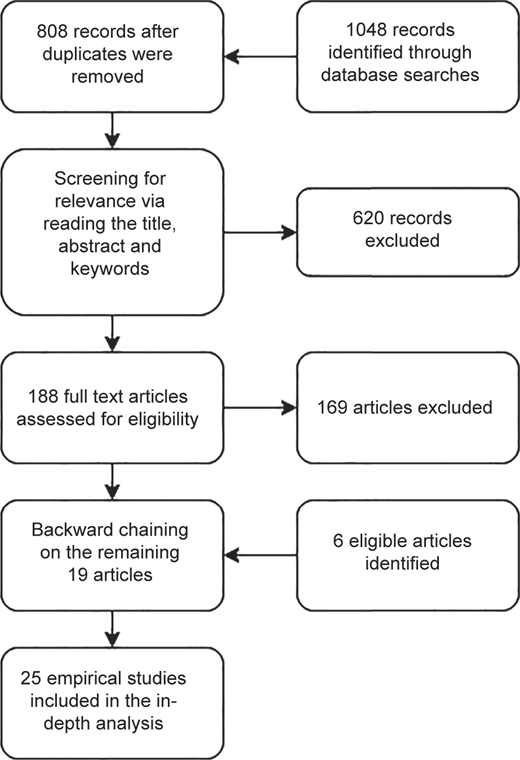
Both Scopus and Web of Science Core Collection were searched in October 2020. The bibliographic information of the studies was downloaded in .csv format and subsequently combined. The search in Scopus resulted in 723 articles, and the Web of Science Core Collection resulted in 325 articles. Upon combining articles from both databases and removing duplicates, 808 articles remained.
3.2 Inclusion and exclusion criteria
The inclusion and exclusion criteria for the study item processing are displayed in Table 2. These criteria were used in the identified articles in two stages. In the first stage, only the titles and abstracts of the studies were read. As the full paper articles were not evaluated at this stage, we wanted to be broad with the inclusion criteria to avoid false negatives. Accordingly, if any of the criteria in Table 2 were met, the study was included in the second phase, where full texts were assessed for eligibility.
Out of the 808 initial articles, 620 were excluded based on the inclusion and exclusion criteria specified in Table 2. Examples included studies not related to AI, studies in math and chemistry where “XAI'' was part of a formula, studies conducted near the Mozambican city Xai-Xai, and studies involving the indigenous Xai'xai people from Canada. Furthermore, we excluded non-empirical work (based on criterion #3) and technical AI studies that were clearly not related to the end users of AI systems. Unclear and borderline cases were included at this stage to avoid false negatives. Thus, after screening for the abstract and title, we were left with 188 studies. This process was conservative and straightforward and conducted by one of the authors.
In the second stage, we assessed the full texts of the studies to determine whether they concerned XAI or AI explanations for end users. At this stage, if it was not clear whether a study should be included, we discussed it between the authors until a decision was reached. Based on these discussions we omitted, for example, studies that focused on the feasibility of a specific XAI solution (Kuwajima et al., 2019; Ming et al., 2019) and non-empirical studies on XAI stakeholders (e.g. Zhu et al., 2018). Subsequently, we were left with 19 articles, which we proceeded to engage in backward chaining (Wohlin, 2014). Accordingly, we screened the reference lists of all 19 articles. In case an article seemed potentially related to the research topic, we looked it up and read the abstract. If the article still seemed relevant, we read the full text. Applying the same inclusion and exclusion criteria as before, we proceeded to comb all the references. If the article was included, we also read its references, repeating the process (Wohlin, 2014). Through this procedure, we identified six additional articles, resulting in the final number of 25 articles to be included in the synthesis. The entire data search process is displayed in Figure 1.
3.3 Data extraction and analysis
With the final sample of studies (n = 25), we agreed on a specific set of information that we systematically extracted to answer the three research questions. The fetched descriptive information was as follows: (1) publication venue, (2) publication year, (3) study approach, (4) methodology and (5) sample. Subsequently, we extracted information on the studied end user groups, in order to obtain knowledge on possible differences among XAI needs between the groups. To answer the research question RQ1: “What are the goals and objectives of AI system explanations for end users?”, we extracted the studied outcomes of AI communication. We went through the empirical studies and assigned codes for each measured or investigated goal and objective. This approach was similar to open coding (Strauss and Corbin, 1998). We then conducted a round of axial coding where we sought to combine similar codes together to form thematic clusters. For example, intelligibility, comprehensiveness and understandability were combined into the same theme; as were justice and fairness. In the end, five thematic clusters merged as the objectives for AI system explanations for end users. When discussing these, we returned to the codes and looked at the results and discussion surrounding each theme from the research papers.
For RQ2: What recommendations does the extant literature suggest for designing explanations for AI systems that facilitate positive outcomes?, we extracted each unique design recommendation that appeared either explicitly or implicitly in the studies. Similarly to the analysis process for answering RQ1, we coded the design recommendations from the studies using open coding (Strauss and Corbin, 1998) and then combined similar codes together. We also extracted information regarding the context in which the given recommendations apply and organized the recommendations into general, what to explain, how to explain and when to explain. Finally, for RQ3: “What future research directions arise from the extant literature?”, we searched for the future research directions presented in the studies. We extracted each explicitly stated research direction, but also conducted a meta-level synthesis on the research directions that arise from the extant literature on XAI for end users as a whole.
3.4 Descriptive data of reviewed studies
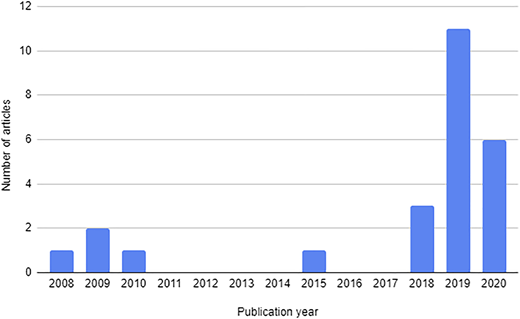
With respect to the publication venues, the most common outlet was the Proceedings of the CHI Conference on Human Factors in Computing Systems, with six studies. The second most popular outlet was the Proceedings of the International Conference on Intelligent User Interfaces (three studies). Of the identified studies, most were published in 2018–2020 (n = 20), with some preliminary work already taking place in 2008–2010. The publication years of the studies are displayed in Figure 2.
All studies featured human participants in some form or another, which was expected, as we specifically looked for empirical studies on XAI in the field of HCI. Five studies drew participants from the USA (Brennen, 2020; Cai et al., 2019; Eslami et al., 2018; Putnam and Conati, 2019; Xie et al., 2019), two from the UK (Binns et al., 2018; Bussone et al., 2015), and two from the Netherlands (Broekens et al., 2010; Cramer et al., 2008). Other countries from which participants were selected included South Korea (Oh et al., 2018), Germany and Brazil (Chazette and Schneider, 2020), and Austria (Cirqueira et al., 2020). In addition, not included in the countries listed above were studies that sourced their participants from online crowdsourcing websites such as MTurk (Cheng et al., 2019; Dodge et al., 2019; Lim and Dey, 2009; van der Waa et al., 2020; Yin et al., 2019), TurkPrime (Ehsan et al., 2019) and Prolific Academic (Binns et al., 2018). Various studies did not specify where their participants were recruited, but instead had a heavy focus on the AI system itself, and its evaluation was only secondary. All the studies including information regarding their approach and methods are available in Table A1.
4. Results
4.1 End users and application contexts of AI systems
We looked at the application contexts in which academic studies have observed XAI needs of end users. Most of the studies included in the review focused on a specific user group, however, some included several scenarios (e.g. Binns et al., 2018) and some looked at AI systems generally without explicitly connecting to a specific context (see Chazette and Schneider, 2020; Lim and Dey, 2009; Lim et al., 2009; Schrills and Franke, 2020; van der Waa et al., 2020). While the contexts were various, the ML approaches were sometimes similar. For example, outcome prediction systems were used to predict speed dating scenarios (Yin et al., 2019) and outcomes of criminal trials (Dodge et al., 2019).
The application contexts in the studies are described in Table 3. In addition, there were studies which did not specify a context but looked at AI systems generally (e.g. Chazette and Schneider, 2020; Lim and Dey, 2009; Schrills and Franke, 2020). By identifying the application contexts, we also identified end users who are likely to benefit from AI system explanations in that context. We notice that XAI and end user communications needs to be aimed at least towards the following stakeholder groups: laypeople, doctors, other medical professionals, clerks, tellers, actuaries, sales personnel, human resources personnel, administrative staff, management staff, airline employees, security specialists, IT personnel, financial crime specialists, judges, jury members, defendants, prosecutors, attorneys and employees working for technology providers. This large but not exhaustive list corresponds with the reported ubiquitous proliferation of ML across IS (Collins et al., 2021; Laato et al., 2021, 2022).
Laypeople could be pinpointed as a key end user group in a multitude of studies (e.g. Eslami et al., 2018; Schrills and Franke, 2020; van der Waa et al., 2020; Yin et al., 2019), but Table 3 highlights that there are also various professional groups and even artists (Oh et al., 2018) who are dealing with AI systems in a way where the users are likely to benefit from XAI solutions. These observations underscore how XAI tools and systems should be built not only for developers (Arrieta et al., 2020), and not only for end users generally (Meske et al., 2022), but to various professionals and expert groups across industry sectors who, depending on even more specific application contexts within their field, may wish for various kinds of explanations concerning the system.
4.2 The objectives and goals of AI communication for end users
Based on the extraction of the key goals of XAI from the empirical studies, we identified five key objectives or goals for explaining AI systems for end users. These were the increasing of (1) understandability, (2) trustworthiness, (3) transparency, (4) controllability and (5) the fairness of the system. Studies also discussed general goals not particularly related to the ML system, itself, such as usability, ease of use and satisfaction (Oh et al., 2018). Furthermore, studies have approached these goals from two main intertwined perspectives: features of the system and perceptions of the end users. In practice, the features of the system were obtained via observing the perceptions of the end users; thus, the two are discussed together in this section. The identified central objectives of XAI and AI system communication for end users are displayed in Table 4. For each objective, we identified the most popular term but also included synonyms and other words or concepts that were indistinguishable from the main objective.
4.2.1 Understandability
When discussing how end users understand an AI system, four terms were used. In addition to understandability, the three other terms were interpretability (Chazette and Schneider, 2020), comprehensibility (Oh et al., 2018) and intelligibility (Ehsan et al., 2019; Lim and Dey, 2009). Slightly depending on the definition and interpretation, these four terms all referred to how accurately end users could imagine the system's operation and its decisions. In addition, there was significant overlap in the studies between the understandability (1) of the system and (2) of the communication. For example, a few studies focused on the characteristics of the system (Lim and Dey, 2009; Lim et al., 2009), and from there aimed to work toward how end users perceived it. By contrast, other studies approached understandability from the perspective of end users' perceptions, and here, communication about the system was highlighted (Cheng et al., 2019; Cirqueira et al., 2020; Dodge et al., 2019; Ehsan et al., 2019). The understanding of the system was also connected to the other identified themes. The transparency of the system, for example, enabled users to better understand it (Cramer et al., 2008).
Among the various approaches toward understandability, there was a consensus that end users' technical knowledge, prior conceptions, and mental abilities must be considered when explaining AI systems to them (e.g. Chazette and Schneider, 2020; Dodge et al., 2019; Ehsan et al., 2019; Weitz et al., 2019a; Wang et al., 2019; Xie et al., 2019). The better aligned the explanations were with the users' conceptions and mental models, the better they understood the explanations (Ehsan et al., 2019; Ngo et al., 2020). This was particularly relevant for AI systems whose users with little technical expertise have a particularly high likelihood of having misconceptions about how AI systems arrive at conclusions (Oh et al., 2018; Xie et al., 2019). Hence, XAI tools need to focus on delivering explanations that are intuitive, meaning visualizations and even metaphors to make the system more understandable for the end users (Schrills and Franke, 2020; Weitz et al., 2019b).
A few studies focused specifically on the communication of AI systems, how to produce it, and how it is perceived by the end users. Studies have assessed both verbal (Eslami et al., 2018; Ngo et al., 2020) and nonverbal (Cheng et al., 2019; Weitz et al., 2019a) communication. Regarding verbal communication, oversimplified language and overly complicated language hinder end users' ability to understand a system (Eslami et al., 2018). Providing overly complex and detailed explanations could cause information overload among the participants (Oh et al., 2018), and according to Ehsan et al. (2019), contextual accuracy is more important than the length of the explanation. In summary, the understandability of AI systems relies on the system itself, verbal and non-verbal communication about it, and the end users' experiences and expertise.
4.2.2 Trustworthiness
Unlike understandability, trustworthiness is discussed primarily from the perspective of the end users, not the system. Yet, the term trustworthiness appeared ubiquitously in the selected studies referring to a characteristic of the AI system. However, the empirical studies focused on end users' trust in the system, which of course was influenced by how end users received knowledge about the system – meaning communication (Brennen, 2020; Bussone et al., 2015; Cheng et al., 2019; Ehsan et al., 2019; Schrills and Franke, 2020; Yin et al., 2019).
One of the interesting findings concerning trust in AI systems was that, in one study, XAI and clear explanation interfaces did not facilitate trust. They did, however, increase the understandability of a system (Cheng et al., 2019). Even in a study where end users were shown that the AI system performs more accurately than the participant, their trust in the system did not increase (Yin et al., 2019). By contrast, end users had more trust in explanations shown by virtual agents than, for example, only text- or voice-based explanations (Weitz et al., 2019a, b). Furthermore, according to the findings of Schrills and Franke (2020), the relationship between explanation types and end users' trust in a system and its decisions is complex and not straightforward.
Four articles discussed medical professionals' perceived trust in XAI (Bussone et al., 2015; Cai et al., 2019; Xie et al., 2019; Wang et al., 2019). Here, the consensus was that medical professionals need in-depth explanations regarding why the system makes decisions (Bussone et al., 2015; Cai et al., 2019). Studies recommended XAI for medical professionals be as complete as possible and suggested systems to deliver the training data, source, and situational data, and other forms of external information to the system's users on demand (Xie et al., 2019; Wang et al., 2019). Thus, at least for medical professionals and other expert end users, XAI aiming to build trust should be transparent. Similar findings have appeared in studies with other types of end users (Cramer et al., 2008; Ehsan et al., 2019).
4.2.3 Transparency
As pointed out earlier, transparency was closely related to the discussion on trust, as the lack of transparency can adversely impact trust (Ehsan et al., 2019) but also understandability, as perceived transparency is connected to how well users can understand content (Cramer et al., 2008). While transparency could be measured objectively as a characteristic of the system, in the reviewed literature, transparency was primarily scrutinized from the viewpoint of end users (Brennen, 2020; Schrills and Franke, 2020; Ngo et al., 2020; Eiband et al., 2018). While some studies were conducted with AI systems created specifically for research purposes (e.g. Cai et al., 2019), others investigated existing popular systems such as the Netflix content recommendation system (e.g. Ngo et al., 2020). Regarding Netflix, participants in the study sample had inaccurate mental models of how it works. For example, some participants imagined the system would use much more information about them than it did in reality, while others did not realize the system would also use data from other Netflix users (Ngo et al., 2020).
Compared to the rest of the identified objectives of XAI, transparency was seemingly straightforward, as it could objectively be defined as simply disclosing more information about the system for end users (Brennen, 2020; Cai et al., 2019; Chazette and Schneider, 2020; Cramer et al., 2008). However, the situation was not clear cut, as AI systems are not fully transparent even for the developers making them (Arrieta et al., 2020), which brings the technical XAI perspective into the discussion. Besides what can be explained, the discussion on transparency includes the perspective of what information about the system is relevant for the end users (Eiband et al., 2018).
4.2.4 Controllability
Altogether, three studies focused on end users' perceived sense of control over a system and, consequently, the system characteristic of “controllability” (Ngo et al., 2020; Oh et al., 2018; Wang et al., 2019). In their model based on previous results of XAI research, Wang et al. (2019) postulated that one of the reasons people want explanations is to control and predict how the system behaves. Perceived control is, thus, an intrinsic need for system end users, which can be especially important if the system behaves in an unexpected or undesired manner (Wang et al., 2019). While Wang et al. (2019) tested their framework with medical professionals, the other two studies focused on recommender systems (Ngo et al., 2020) and a drawing tool involving AI (Oh et al., 2018).
Ngo et al. (2020) focused on online recommender systems that use other people's data, the end user's own data, as well as potential other sources of data to find recommendations on what the user may like or what the system provider may want the user to click. The results indicate that, for end users to feel more in control of the system, the system's explanations need to guide users to form mental models of the system that match its real technical implementation (Ngo et al., 2020). Oh et al. (2018) created a drawing tool in which end users could draw images together with an AI system. Their results showed that end users wanted to oversee the drawing procedure and wanted the AI system to explain itself upon request (Oh et al., 2018). Based on the findings of this study, interaction opportunities that enhance the sense of control for end users, such as the ability to command AI in various ways and the ability to choose when the AI system explains itself, are important for increasing the perceived controllability of the system (Oh et al., 2018).
4.2.5 Fairness
Compared to the other goals of XAI reported above, the fairness cluster contained the smallest number of studies. Fairness and justice were discussed together and even appeared interchangeably (Binns et al., 2018; Dodge et al., 2019). The two articles (Binns et al., 2018; Dodge et al., 2019) focused particularly on end users' conceptions and perceptions regarding the fairness of AI systems. In both studies, participants viewed case-based explanations (i.e. explanations comparing the current case to previous cases) as least fair. Participants in Dodge et al. (2019) stated the following reasons: (1) case-based explanations do not provide adequate information about how an AI system arrives at a conclusion, (2) the number of cases provided in the experiment was considered too small, and (3) it is questionable whether one case can ever be considered identical to another.
In contrast, sensitivity-based explanations were ranked the fairest (Binns et al., 2018; Dodge et al., 2019). They were valued for their conciseness, understandability, and transparency when the decisions were non-controversial (Binns et al., 2018; Dodge et al., 2019). Interestingly, both case- and sensitivity-based explanations were local explanation styles (Arrieta et al., 2020), as opposed to global explanations. It seems end users appreciate explanations that they understand, and conciseness and understandability are more important than an explanation's completeness. Finally, major individual differences exist, as Dodge et al. (2019) point out that an individual's prior conceptions have a “significant impact on how they react to explanations, and possibly more so than differences in cognitive styles.” Finally and interestingly, the studies discussing fairness pointed out that users will not trust the model or consider it fair regardless of improvements made to it if they consider the system's task type fundamentally unfit for algorithmic decision making (Binns et al., 2018; Dodge et al., 2019).
4.3 Design recommendations for explaining AI systems to end users
Table 5 summarizes design recommendations for explaining AI system decisions, and communication about them, for end users presented in the reviewed studies. We have categorized the recommendations into four groups: general recommendations and recommendations addressing “when,” “what” and “how” to explain. We identified 16 unique design recommendations. The heterogeneity of the recommendations stems from the differences in the research setups, study contexts, and research focuses of the studies (see Table A1), as well as the novelty and, thus, the formative stage of the research area.
The recommendations vary in specificity. While some are general, such as the one that guides designers to consider the context in which they provide AI system explanations for end users, others concern a specific aspect of the explanation design. Recommendation 2, which suggests providing explanations on demand, is the only example of “when” to explain; however, it was posited by several studies (Chazette and Schneider, 2020; Cramer et al., 2008; Lim et al., 2009; Lim and Dey, 2009; Oh et al., 2018). Recommendation #8, the most often mentioned, suggests strengthening users' curiosity in the system (Oh et al., 2018; Putnam and Conati, 2019). This along with recommendations #3–13 belong to the “how” category. Recommendation #15, which suggests users may want explanations for negative or less favorable AI decisions (Putnam and Conati, 2019), is an example of “what” to explain. Recommendations #14–16 fall into this category.
Importantly, the identified recommendations are not universal, as evidenced by the first recommendation #1, as well as the findings from this literature review. There were multiple situations in which AI systems were explained to end users, and there were individual differences regarding end users' prior knowledge of AI systems and their ability to understand explanations (Dodge et al., 2019; Xie et al., 2019). As a solution, adding personalized explanations has been suggested (Dodge et al., 2019; Wang et al., 2019; Xie et al., 2019). The reasoning for this included that end users vary in terms of their knowledge and understanding of AI systems and concerning when and what kind of explanations they need. Several studies (Chazette and Schneider, 2020; Cramer et al., 2008; Lim et al., 2009; Lim and Dey, 2009; Oh et al., 2018) argued that always displaying explanations to end users would reduce the usability and even understandability of AI systems and that it would be counterproductive to force explanations to all AI systems. Thus, AI system designers should consider the UI design as a key component for understandability and test for most effective ways to display and visualize explanations (Eslami et al., 2018; Ngo et al., 2020; Schrills and Franke, 2020; Weitz et al., 2019a, b).
When devising explanations, the research shows there are trade-offs with regards to what to focus on (Cheng et al., 2019; Dodge et al., 2019; Ehsan et al., 2019; Weitz et al., 2019a). Using metaphors to make the AI system more understandable (Ngo et al., 2020) can backfire, as users may form inaccurate conceptions of how ML systems work over time (Cramer et al., 2008; Oh et al., 2018). Due to ubiquitous misconceptions about ML systems, one of the recommendations was to consider them when providing AI system explanations, with the goal of correcting the misconceptions (Cramer et al., 2008; Oh et al., 2018). One of the more creative uses of AI explanations for end users was given in the context of medicine, where the explanations may help practitioners increase their understanding of the underlying phenomena, adding value to decision making beyond what the model delivers (Wang et al., 2019). However, Wang et al. (2019) also noted that giving users full access to the source data might increase dangers, such as extracting sensitive information from the source dataset or reverse engineering the ML model. Thus, explanations with such a high level of transparency are not suitable for all cases.
4.4 Future research agenda
We extracted the future research directions from the reviewed studies as such, but also synthesized the literature to identify research directions more broadly in the field of XAI for end users. Most of the future research directions explicitly mentioned in our sample of studies were related to improving the empirical research setup of the work, such as (1) improvements specific to the research problem more generally augmenting the usability of the UI of the research tool (e.g. Broekens et al., 2010; Chazette and Schneider, 2020) and (2) repeating the research setup elsewhere for increased reliability and proving reproducibility (e.g. Cirqueira et al., 2020; Ngo et al., 2020). The remaining explicitly stated future research directions can be divided into two main groups. The first group relates to research directions specific to the five objectives of XAI for end users discussed in Section 4.2. The second consists of research directions that are generally applicable across the five objectives of AI communication for end users.
The future research recommendations related to XAI for end users are presented in Table 6. Concerning end users' understanding of AI systems, future research should compare various subgroups of end users and discern how individual differences influence an understanding of AI system explanations (Cheng et al., 2019). In addition, there is a need to study at what level different stakeholders groups need to understand the AI systems they use. Regarding the trustworthiness of the system, there were a few suggestions. First would be to explore whether showcasing the presence of humans in the decision loop increased the perceived trustworthiness of the system (Cheng et al., 2019). A second approach could be to investigate the various components of trust (i.e. emotional and cognitive) as well as situational aspects such as surprise and confusion (Yin et al., 2019). Third, there is a need to study the different explanation types in further detail (e.g. rule-based vs example-based).
No explicit future research directions were given in the sample of studies. However, through synthesis of the literature we suggest future work to focus on further probing the connections between controllability and transparency, fairness, trustworthiness and understanding. This would help better frame controllability as a goal for AI system explanations for end users. Regarding the research on transparency, future research should explore the link between the transparency of the system and trust (Eiband et al., 2018). Finally, for research on fairness, future research should focus on applying the psychology of justice theories (Binns et al., 2018). In addition, research could investigate the link between understanding the system and end users' perceived fairness of it.
Table 7 summarizes the general future research directions presented by the studies. The research avenue that overwhelmingly most often appears validates the findings of the studies in real-world contexts. This speaks of the multiple experimental scenarios created to study XAI for end users and of the lack of real-world implementations of the proposed systems. Thus, the future research agenda of this domain must focus on field experiments, industry collaboration, and the study of real-world systems. Another general future research avenue that appeared more than once was to consider various XAI stakeholder groups (Binns et al., 2018; Brennen, 2020). Previous work still seems to focus overwhelmingly on data scientists (Binns et al., 2018; Brennen, 2020). However, research is also done on end users, as evident by this study and other stakeholder groups identified by Meske et al. (2022). Future research agendas could even divide the end users into clusters based on, for example, the type of AI system used or individual differences.
Interestingly, Cramer et al. (2008) suggested investigating how end users' perceptions of AI systems change over time and whether they initially desire more information about whether they can trust the system and later something else. However, our literature review showed this suggestion remains unexplored. Another interesting future research avenue was to explore the outcomes of adding interactivity to the explanations, particularly in the form of enabling end users to question decisions (Ehsan et al., 2019). Chazette and Schenider (2020) delivered two suggestions: to clarify the concepts and terminology involved in this research field and to explore the interactions between XAI for end users and other design aspects, such as the usability of the system. Interestingly, the education aspect was still largely missing from the body of literature, indicating that intervention studies looking into how education on AI systems influence end users' perceptions regarding provided explanations is needed. Finally, there is a growing body of IS research on the dark sides of AI-agents and AI systems (e.g. Cheng et al., 2021) and explaining the negative and unwanted consequences of AI systems are largely absent in the literature synthesized in this study. Thus, we encourage future work to investigate how to explain unwanted consequences of AI systems to end users.
5. Discussion
5.1 Key findings
We summarize our findings by answering our three research questions as follows.
What are the goals and objectives of AI system explanations for end users?
We identified five high-level aims/goals for XAI and AI system explanations for end users. These were (1) understandability, (2) trustworthiness, (3) transparency, (4) controllability and (5) fairness. These themes were interlinked. For example, higher transparency was found to support users' trust in the system (Ehsan et al., 2019; Xie et al., 2019; Wang et al., 2019) and their overall understanding of it (Cramer et al., 2008). In addition, the understandability of AI system explanations was associated with the fairness of the system itself (Binns et al., 2018; Dodge et al., 2019).
What recommendations does the extant literature suggest for designing explanations for AI systems that facilitate positive outcomes?
We identified 16 unique design recommendations classified into four categories: general recommendations and recommendations addressing “when,” “what” and “how” to explain AI system decisions. These are displayed in Table 5. The literature shows that there is no single way to explain AI systems for end users (Bussone et al., 2015; Dodge et al., 2019; Ehsan et al., 2019; Oh et al., 2018; Putnam and Conati, 2019; Wang et al., 2019; Xie et al., 2019). As the end users originate from various backgrounds and have different conceptions about ML models, the literature suggests personalized explanations (Chazette and Schneider, 2020; Cramer et al., 2008; Dodge et al., 2019; Weitz et al., 2019a; Wang et al., 2019; Xie et al., 2019) and linking the explanations to users' existing conceptions and mental models (Ngo et al., 2020; Lim et al., 2009). Other often-mentioned design recommendations included offering explanations on demand (Chazette and Schneider, 2020; Cramer et al., 2008; Lim et al., 2009; Lim and Dey, 2009; Oh et al., 2018), visualizing explanations (Schrills and Franke, 2020; Weitz et al., 2019a, b), ensuring the visibility of the explanations in the UI (Eslami et al., 2018), and clarifying the user system decision based on Ngo et al. (2020).
What future research directions arise from the extant literature?
Our analysis of the future research areas suggested by the reviewed studies revealed three main future research directions. First, there is a need to validate the findings of the studies in real-world contexts (Chazette and Schneider, 2020; Cirqueira et al., 2020; Cheng et al., 2019; Eiband et al., 2018; Eslami et al., 2018; Lim and Dey, 2009; Ngo et al., 2020). This includes field experiments and research with real-world systems. Second, various studies have discovered individual differences between AI end users, and the differences need to be better understood (Ngo et al., 2020; Lim et al., 2009). These differences link to creating personalized AI system explanations, as well as educating the masses (Chazette and Schneider, 2020; Cramer et al., 2008; Dodge et al., 2019). Third and finally, in our systematic review, we observed that the participant samples were not adequately described in several studies (See Table A1). This is a shortcoming in the XAI for end users' research field. As the end users' perceptions played a primary role in various studies, and there was evidence of individual differences (Ngo et al., 2020; Lim et al., 2009), understanding who exactly the end users are should be paramount. Thus, future research should particularly emphasize the rigorous sampling of research subjects and the detailed reporting of the profile and characteristics of the samples.
5.2 Research implications
The current study makes three principal contributions to XAI research. First, we respond to the recent calls for (1) research on the XAI area from an HCI perspective (Brennen, 2020) and (2) increased focus on AI system end users (Weitz et al., 2019b) by systematically reviewing and synthesizing the existing literature. Our work also supports literature reviews carried out on the technical aspect of XAI (Antoniadi et al., 2021; Arrieta et al., 2020) by extending the current body of knowledge on the explainability needs and goals of end users. Serving these needs will ultimately be the task of system developers. This review can help XAI developers and system designers in eliciting design requirements.
Second, through our review of the literature, we have elucidated findings of five objectives of XAI for end users, namely (1) understandability, (2) trustworthiness, (3) transparency, (4) controllability and (5) fairness. In doing so, the current study extends on Meske et al. (2022), who presented five objectives of XAI for AI system developers. Importantly, the five objectives identified here have connections to those of developers. For example, while developers must understand AI systems to develop and operate them (Anjomshoae et al., 2019; Antoniadi et al., 2021), it is important for end users to feel in control of the system (Ngo et al., 2020; Oh et al., 2018; Wang et al., 2019). Hence, the developers must create tools and systems that enable end users to understand the system they are using and feel control of it. Moreover, this connects to the discussion on the role of XAI as an element of AI governance (Minkkinen et al., 2020b, 2022a; Mäntymäki et al., 2022; Seppälä et al., 2021). According to Seppälä et al. (2021), AI design and development play a significant role in translating ethical principles into governed AI, while explainability in turn, is one of the key design issues related to AI governance.
Third, by synthesizing the future research areas suggested by the reviewed studies, we have provided a future research agenda for the research of XAI and AI communication for end users. Regarding future research directions, one of the primary pursuits should be to validate the findings of the studies in real-world scenarios (Chazette and Schneider, 2020; Cirqueira et al., 2020; Cheng et al., 2019; Eiband et al., 2018; Eslami et al., 2018; Lim and Dey, 2009; Ngo et al., 2020). While AI system development seems to advance primarily through the efforts of the industry, academia seems to be at the forefront concerning AI communication for end users. This is evident in the promising results of the research reviewed in this study.
5.3 Practical implications
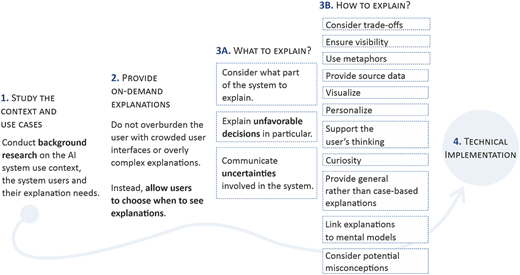
The key practical implications and contributions of this review are the summary of the design recommendations presented in Table 5. The presented list of 16 design recommendations is a summary of the reviewed 25 studies and may be used by practitioners and designers as a checklist of what to consider when presenting AI systems' explanations to end users. Based on the results displayed in Table 5, we developed a framework for designing XAI and AI system communication for end users (Figure 3). The two ubiquitously applicable steps of researching the context and providing explanations on demand are followed by a set of “how to explain” and “what to explain” considerations, which, while not universally relevant to all AI systems, can be useful for AI communication designers.
Several studies have stated there is a need to implement their findings into practice (Chazette and Schneider, 2020; Cirqueira et al., 2020; Cheng et al., 2019; Eiband et al., 2018; Eslami et al., 2018; Lim and Dey, 2009; Ngo et al., 2020). This demonstrates how while academic research has produced several ideas for various scenarios on how to improve XAI for end users, real world scenario validation is still lacking. Hence, the next step is for practitioners to adopt them into use. While the research findings seem promising concerning being able to, for example, increase users' trust in AI systems (Ehsan et al., 2019; Schrills and Franke, 2020; Wang et al., 2019; Weitz et al., 2019b; Xie et al., 2019; Yin et al., 2019) and feeling of control (Ngo et al., 2020; Oh et al., 2018: Wang et al., 2019) of the AI system, these results can be different under real-world circumstances. Thus, practitioners are encouraged to take promising design recommendations and adapt them into practice, but measure their effects on end users. For example, it is worthy to investigate whether AI system communication has the potential to alleviate trust issues that end users face with AI systems (Zarifis et al., 2020) or technostress (Tarafdar et al., 2020). Continuous measurement and feedback are important, as each system and use case are unique. Furthermore, blindly trusting findings from any usability research in the XAI field would be counterproductive due to the novelty and formative state of the research area.
The lack of explainability of ML models and resulting challenges with governance have been identified as one of the biggest obstacles to adopting them into use (e.g. Adadi and Berrada, 2018; Došilović et al., 2018; Rana et al., 2021; Weitz et al., 2019a). With our work, we present key design recommendations regarding AI system end users' explanation needs. This has implications for XAI developers who seek to create visualizations and other forms of XAI to support system users, as well as for system and UI engineers who aim to present explanations in a way that end users find useful. The findings of this study pave the way for creating more transparent and clear explanations of AI systems, which can also negate some of the unintended consequences and inhibitors for adopting AI systems that companies as well as individuals face (Rana et al., 2021).
5.4 Limitations
The limitations of the current study relate to two main areas: (1) the literature search and (2) data extraction and analysis. In the literature search process, we focused on two widely used bibliometric databases: Web of Science and Scopus. However, there are still some venues and publications that are not indexed in these databases. Hence, despite the backward chaining (Wohlin, 2014) executed, there is a risk of missing some studies.
In addition, we focused exclusively on peer-reviewed studies and omitted gray literature. This was done to ensure the quality of the material included in the analysis but again has the drawback of potentially missing some relevant information. The initial literature search process was conducted by a single author. Accordingly, there is a minor risk of false negatives in the sample. False positives should not exist, since all authors participated in reviewing the final sample.
With regards to the data extraction and analysis, we extracted data to focus on answering our two research questions. However, unlike some empirical quantitative studies with similar research setups, the studies included in the final review were heterogeneous in terms of contextual coverage and thus, to some extent, challenging to compare. For example, the contextual coverage of the reviewed studies ranged from medical AI systems (Xie et al., 2019) to online advertising (Eslami et al., 2018). While the contexts and research setups were different (see Table A1 for more information), the core issues the studies dealt with were the same. Nonetheless, the contextual and methodological variance between the reviewed studies must be acknowledged as a potential limitation.
6. Conclusion
We conducted a systematic literature review on AI system explanations for end users. The systematic literature search and selection process resulted in 25 empirical research articles, which were looked into in detail in this study. Through our main findings, this work makes three key contributions. First, we identified and elucidated the objectives and goals of AI communication for end users. Second, we extracted, analyzed and further developed design recommendations for explaining AI systems to end users. Third, based on the findings, we produced a synthesized design framework for end-user AI communication (Figure 3) which serves as a structured form of the discovered design recommendations. The framework provides AI system communication designers and XAI specialists a solid starting point for understanding the explanation needs of end users, and provides suggestions on how to communicate about the AI system in a way that is understandable, trustworthy, transparent, controllable and fair.
The initial literature search upon which this article develops was done for the following Master's thesis published at the University of Turku:
Tiainen, M., (2021), To whom to explain and what?: Systematic literature review on empirical studies on Explainable Artificial Intelligence (XAI), available at: https://www.utupub.fi/handle/10024/151554, accessed April 2, 2022.
Notes
The founder of Twitter, Jack Dorsey, has repeatedly communicated how the (partially automated) moderation practices of Twitter should be made more transparent, available at: https://economictimes.indiatimes.com/tech/tech-bytes/twitter-intends-to-make-its-content-moderation-practices-more-transparent-jack-dorsey/articleshow/81223668.cms (November 20, 2021).
SHapley Additive exPlanations (SHAP), available at: https://shap.readthedocs.io/en/latest/index.html (accessed April 2, 2022).
References
Appendix 1 Search strings for Scopus and web of science
The search string for Scopus:
TITLE-ABS-KEY(xai OR “Explainable AI” OR “transparent AI” OR “interpretable AI” OR “accountable AI” OR “AI explainability” OR “AI transparency” OR “AI accountability” OR “AI interpretability”) AND (LIMIT-TO (DOCTYPE, “cp”) OR LIMIT-TO (DOCTYPE, “ar”) OR LIMIT-TO (DOCTYPE, “ed”) OR LIMIT-TO (DOCTYPE, “bk”) OR LIMIT-TO (DOCTYPE, “er”) OR LIMIT-TO (DOC-TYPE, “le”) OR LIMIT-TO (DOCTYPE, “no”)) AND (LIMIT-TO (LAN-GAUGE, “English”))
The search string for the Web of Science Core Collection:
(TI = (xai OR “Explainable AI” OR “transparent AI” OR “interpretable AI” OR “accountable AI” OR “AI explainability” OR “AI transparency” OR “AI accountability” OR “AI interpretability”) OR AK = (xai OR “Explainable AI” OR “transparent AI” OR “interpretable AI” OR “accountable AI” OR “AI explainability” OR “AI transparency” OR “AI accountability” OR “AI interpretability”) OR AB = (xai OR “Explainable AI” OR “transparent AI” OR “interpretable AI” OR “accountable AI” OR “AI explainability” OR “AI transparency” OR “AI accountability” OR “AI interpretability”)) AND DOCUMENT TYPES: (Article OR Abstract of Published Item OR Proceedings Paper)