Social media (SM) provides a range of positive and negative benefits to users, and an SM detox has been suggested as a way to deal with its negative effects. Instagram (IG) is one of Generation Y’s most widely used SM platforms, noted for its addictive potential. Using a journey perspective, the purpose of this research is to map and describe the experiences in the various stages of a detox journey among Generation Y IG users.
Using an inductive and qualitative approach, empirical data were collected over the stages of the journey using focus groups, self-completion diaries and interviews. The data were coded, analysed and interpreted using thematic analysis.
The findings of the study show two main motivations for undertaking a detox, namely gaining back control and self-reformation. During the detox, five themes were identified, specifically mood and satisfaction, technological craving, mental well-being, physical well-being and social relationships. Three post-detox behaviours were noted, namely the boomerang effect, conscious consumption and a re-evaluation towards the platform, which impacts future IG use.
By following one group of participants throughout an IG detox journey, the study highlights the detox experiences in each journey stage.
The positive benefits of a detox were experienced by the participants, encouraging future detox and actions by platforms to aid in future detoxes.
This study accompanies one group of participants throughout their detox journey. This enabled the researchers to obtain insights into the detox experience in all phases of the journey. This was undertaken using diverse qualitative methods.
1. Introduction
Social media (SM) has become a defining media form, with high consumption levels based on the time spent on these platforms. Instagram (IG) is popular among Generation Y (those aged 18–29) (Auxier and Anderson, 2021), providing multimodal affordances to users (Hurley, 2019). IG provides users the ability to post their life events through pictures and videos (Hu et al., 2014), but it has a reputation for intensity of use and addictiveness (Jorge, 2019). Research considers excessive use of SM as a form of Internet addiction, which is becoming increasingly common among young adults (Cabral, 2011; Grau et al., 2019) which is facilitated by their attachment to their smartphone (Marchant and O’Donohoe, 2019). One strategy IG users can use to address their overuse and potential addictiveness is by undertaking an SM detox (El-Khoury et al., 2021; Franks et al., 2018). Understanding this phenomenon, specifically among Gen Y, a cohort that is viewed as digital natives and represents a relevant IG user group and has not been extensively studied (Franks et al., 2018; Radtke et al., 2022) either as a group or on IG, thus filling a gap in the literature (York and Turcotte, 2015; Zhou et al., 2018).
The positive effects of SM are widely acknowledged, but recent research has also highlighted its dark side including cyberbullying and excessive use (Baccarella et al., 2018; Giumetti and Kowalski, 2022). Detoxification – or detox – is a term well-known in the nutrition and health field and implies following a specific diet to eliminate toxins, improve physical and mental health and promote weight loss (Van De Walle, 2022). This term has also been applied to SM users who consciously disengage or take a break from SM for a few hours or longer period (El-Khoury et al., 2021; Franks et al., 2018; Turel, 2015; Zhou et al., 2018). A detox (or discontinuance, sabbatical or vacation) has been suggested as a strategy for dealing with perceived excessive SM use and has been studied in a range of SM including Facebook and IG (Franks et al., 2018; Hanley et al., 2019; York and Turcotte, 2015). Most studies focus on Facebook, whereas other platforms are relatively neglected in research (Franks et al., 2018; Turel, 2015).
Understanding user experiences is valuable as these influence user impressions and continued usage decisions (Voorhees et al., 2017). In the case of SM, experiences that indicate how users interact with technology over time can provide platforms with insights into the lived experiences of users (Reitsamer and Becker, 2024). A customer journey aids consumers in making sense of their lives as they “describe and understand their lives”, aiding them to attain more specific goals (Hamilton and Price, 2019, p. 188). The customer journey reflects customers’ experiences over several stages (Følstad and Kvale, 2018; Lemon and Verhoef, 2016). This study has approached the SM detox from a customer journey perspective, viewing a detox as a process (Soliman and Tuunainen, 2022) which enables the examination of the responses and reactions throughout the detox process (Reitsamer and Becker, 2024).
There has been research into the various phases of the detox process, including the motivation for undertaking a detox (Fan et al., 2021; Nguyen, 2023; Wang et al., 2021), the detox experience (Franks et al., 2018; Stieger and Lewetz, 2018) and outcomes of this process (El-Khoury et al., 2021; Pennington, 2021). These three detox stages have been considered in isolation (Franks et al., 2018; Hanley et al., 2019; Pennington, 2021; York and Turcotte, 2015) rather than as a single experience among the same participants, providing an opportunity to understand the stages of the detox process in more detail. Viewing SM detox from a journey perspective provides a detailed perspective of the detox journey where participants can record their experiences across the various stages (Soliman and Tuunainen, 2022).
Detox has thus attracted the academic attention of scholars from fields such as information systems (Huang et al., 2019; Soliman and Tuunainen, 2022; Wang et al., 2021), health researchers (Frith and Loprinzi, 2017; Orben and Przybylski, 2019), marketing (Jorge, 2019; Turel, 2015) and psychology (Giumetti and Kowalski, 2022; Vanman et al., 2018). Understanding how individuals experience the SM detox process is important to SM platforms and other users (e.g., influencers) due to the impact of their (non)-use on a range of stakeholders (Huang et al., 2019). Despite this importance, there is a lack of clarity on how individuals perceive and experience a SM detox journey (Franks et al., 2018). Informed by customer journey research (Becker et al., 2020; Følstad and Kvale, 2018), the purpose of this study is to map and describe the experiences of IG users in the three stages of their SM detox journey (Becker et al., 2020; Heinonen and Strandvik, 2015). Three associated research questions were formulated: (1) What motivates users to undertake a detox? (2) How do they experience a detox? (3) What are their post-detox experiences?
This paper makes several contributions. We provide a perspective on SM discontinuance, illustrating how users experience a detox from IG and the outcome of the detox process on future SM usage. We show the variability of these experiences with participants experiencing a range of outcomes during the detox, with some experiencing happiness and relief and others experiencing disorientation and boredom. This study also provides a methodological contribution using several qualitative research methods, including both individual and group perspectives. Interviews allowed for understanding the motivation of participants to undertake this detox journey, while the use of daily diaries for 14 days allowed for gathering extensive data on the lived experiences. The post-detox interviews and focus groups provide additional insights into these experiences.
2. Literature review
2.1 Instagram (IG) as a social media platform
SM is ubiquitous in everyday life, with IG being one of the most-used and fastest-growing platforms, and an estimate that the average user spends 53 min daily on the platform (Chen et al., 2022). IG is a virtual space for visual communication containing shared images and content (Hu et al., 2014; Manovich, 2017). It has an especially strong following among Gen Y (Auxier and Anderson, 2021), making it suitable for this study. Gen Ys describe IG as a useful, trendy, and creative place where content can be created actively (e.g., by posting or liking) or consumed passively (Tiggemann et al., 2020) by merely scrolling through the newsfeed (Orben, 2020). It is used to create and share information, build relationships, create an identity and experience a sense of community (Al-Gamal et al., 2016; Baccarella et al., 2018; Lepik and Murumaa-Mengel, 2019).
2.2 Social media (SM), Instagram (IG) and its effects on well-being
SM platforms provide many positive benefits as they enable sharing with others, which provides social capital value (Faelens et al., 2021) yet negative aspects such as cyberbullying, invasion of privacy and fake news are also identified (Baccarella et al., 2018). Time spent on SM has raised concerns about users’ physical health, mental health and well-being (Al-Gamal et al., 2016). Previous research has shown mixed findings regarding the impact of SM on mental and physical health (Faelens et al., 2021; Odgers and Jensen, 2020; Orben, 2020; Orben and Przybylski, 2019; Vuorre et al., 2021), with the impact influenced by the intensity of use (i.e., active or passive users) and the content viewed (Faelens et al., 2021). Yet Gen Ys have become high digital media users, becoming highly attached to SM, thus being described as addicted (Al-Samarraie et al., 2021; Lundahl, 2021). Perceived negative effects associated with spending long periods of time on SM (and IG) have encouraged users to consider responses such as a digital detox (Franks et al., 2018; Jorge, 2019; Soliman and Tuunainen, 2022).
2.3 Social media (SM) detox – a journey perspective
A SM detox is described as a voluntary decision to disengage or discontinue the use of one or more SM platforms (Franks et al., 2018; Radtke et al., 2022), also described using other terms including a detox (Lepik and Murumaa-Mengel, 2019), an intermittent discontinuance (Zhou, 2014), a sabbatical (Franks et al., 2018) or as a vacation (York and Turcotte, 2015).
Behavioural theories allow for the identification of a range of factors that affect individual decision-making to understand behavioural changes (Kwon and Silva, 2020). Continuum models such as the theory of planned behaviour can show the likelihood of a specific action at a specific point (Schwarzer et al., 2011). These can be contrasted with stage models such as the transtheoretical model (TTM) (Prochaska et al., 2008; Sniehotta and Aunger, 2010), the stage theory of discontinuance (Soliman and Tuunainen, 2022) and customer behaviour models such as the customer journey model (Lemon and Verhoef, 2016; Tueanrat et al., 2021) which follow the user experience and resulting behavioural change. These models are relevant to understanding a SM detox among participants who desire behavioural change, similar to changing health-related behaviours such as stopping smoking (Levit and Cismaru, 2020).
The customer journey is widely used in service management and design to understand the customer’s (or user’s) expectations, emotions and perceptions of an experience. A customer journey is conceptualized as comprising interrelated stages having different goals at each stage (Becker et al., 2020; Reitsamer and Becker, 2024). Three generic stages have been identified in this journey, namely (1) pre-consumption, (2) consumption, and (3) post-consumption (Lemon and Verhoef, 2016). In the pre-consumption stage, the consumer recognizes a need to search for information before arriving at a range of solutions and selecting the preferred option. In the consumption stage, the customer experiences the benefits or drawbacks of the product or service, and in post-consumption, the consumer evaluates the experience and may share feedback with other consumers and establish a deeper relationship with the brand (Lin and Lekhawipat, 2014). Similar to a consumption experience, a detox can be viewed as a journey as the consumer decides to not consume, there is a non-consumption experience and a post-consumption (post-detox) stage where the outcome is evaluated (Syvertsen and Enli, 2020).
2.3.1 Stage 1: detox motivation
Three motivations have previously been identified for an SM detox. First, personal connections are impacted using SM and technology and digital experiences are viewed as less authentic (Jorge, 2019), thus a detox is driven by a need for more meaningful and authentic personal social connection with family and/or friends outside SM platforms (Hardey and Atkinson, 2018; Jorge, 2019; Syvertsen and Enli, 2020). This enables a person to be “in the moment” with friends and family (Miksch and Schulz, 2018). Second, time control (time management) (Brubaker et al., 2016; Franks et al., 2018; Ganito and Jorge, 2017; Jorge, 2019; Miksch and Schulz, 2018; Nguyen, 2023) inspires a detox as SM disrupts the perception and sense of time, distracting SM users from what is valuable and essential for a good life (Syvertsen and Enli, 2020). This enables users to do other things (Brubaker et al., 2016) including being more productive, more focused and in control of their time (Ganito and Jorge, 2017; Jorge, 2019; Zhou et al., 2018). Third, self-reformation motivates a detox where users attempt to increase personal well-being (Miksch and Schulz, 2018), as SM can increase feelings of comparative anxiety, inadequacy, personal disempowerment and increased stress (Kent, 2020). Undertaking a detox is seen as a chance to heighten consciousness and reduce these stresses (Glomb et al., 2011; Syvertsen and Enli, 2020).
2.3.2 Stage 2: experiences during the detox
The SM detox journey encompasses experiences and feelings related to five categories namely (1) mood and satisfaction, (2) technological craving, (3) mental well-being, (4) physical well-being and (5) social relationship impacts.
Previous literature has investigated people’s mood and satisfaction while undergoing a digital detox which revealed feelings such as boredom, motivation, stress, and loneliness (Hanley et al., 2019; Lepik and Murumaa-Mengel, 2019; Stieger and Lewetz, 2018; Turel, 2015; Vally and D’Souza, 2019; Vanman et al., 2018). There are contradictory findings concerning life satisfaction during a detox, with several studies reporting an increase in life satisfaction (Sheldon et al., 2011; Tromholt, 2016) while other studies reported lower subjective well-being (Vally and D’Souza, 2019; Vanman et al., 2018). Other researchers found no significant impact on life satisfaction (Hall et al., 2021; Hanley et al., 2019). Boredom may also occur, with higher boredom levels experienced by participants due to being absent (Stieger and Lewetz, 2018) and time passing “more slowly” (Lepik and Murumaa-Mengel, 2019, p. 64). A detox can also increase productivity, making them feel good (Lepik and Murumaa-Mengel, 2019) with less procrastination (Sheldon et al., 2011). A SM detox has also been found to reduce physiological stress, with lower cortisol levels among participants (Turel, 2015; Vanman et al., 2018) yet Vally and D’Souza (2019) found an increase during this detox. Conflicting findings have also been found concerning loneliness experienced, with some reporting an increase in loneliness (Vally and D’Souza, 2019), others a decrease in loneliness (Hunt et al., 2018) and others no change in feelings of loneliness (Hall et al., 2021).
Technological cravings are also associated as IG has a reputation for addictiveness (Jorge, 2019), resulting in a craving for SM (Stieger and Lewetz, 2018; Wilcockson et al., 2019). This is relevant to IG due to its multiple affordances including sharing others’ posts, posting pictures, and self-presentation (Hurley, 2019).
Mental well-being is also impacted by a SM detox, with positive effects such as a decline in depressive symptoms (Hunt et al., 2018) and a reduction in the occurrence of anxiety identified by Tromholt (2016) and Brown and Kuss (2020). Yet Wilcockson et al. (2019) found no change in the anxiety levels of participants, while other studies found poorer mental health, particularly among female adolescents (Barthorpe et al., 2020), suggesting conflicting findings.
Physical well-being is also impacted (Vanman et al., 2018). A detox can result in a decrease in cortisol and the body’s response to stress, having a positive impact on physical health and an impact on sleep quality (Bianchi and Phillips, 2005). Dunican et al. (2017) found no effect on sleep quality during a two-day digital detox, though this could be ascribed to the short detox period.
Undertaking a SM detox also impacts social connectedness, namely a person’s emotional attachment to others, society, or oneself (Pennington, 2021) though this can vary between individuals (Brown and Kuss, 2020). The detox can impact social relationships by producing feelings of social connectedness, fear of missing out (FoMo), social pressure and the urge for social comparison (Brown and Kuss, 2020; Eide et al., 2018; Hunt et al., 2018; Lepik and Murumaa-Mengel, 2019). Some individuals feel less connected while others experience greater connectedness (Brown and Kuss, 2020), largely due to an increase in the number of face-to-face conversations (Lepik and Murumaa-Mengel, 2019). FoMo or unsatisfied needs (Chan et al., 2022) has been evidenced in some studies (Brown and Kuss, 2020; Eide et al., 2018; Hunt et al., 2018) due to users not being on SM. Similarly, if FoMo decreases, the Joy of Missing out (JoMo) or the feeling of not being available and connected, increases. Social pressure is associated with the comparison with others and is assumed to reduce during a SM detox; however, Stieger and Lewetz (2018) found high social pressure was present and associated with an increased FoMo.
2.3.3 Stage 3: post-detox behaviour
Despite limited research, scholars have noted three different behaviours namely (1) overconsumption, (2) conscious consumption, and (3) attitude change. Overconsumption is seen in the users’ urge to return to familiar patterns of behaviour as if they were “addicted” (Lepik and Murumaa-Mengel, 2019, p. 65), thus spending time catching up on missed posts. Second, participants attempted to consume SM more consciously having gained insight into their consumption patterns during the detox. This impacted their self-reflection and encouraged them to restructure their life (Brown and Kuss, 2020; Hanley et al., 2019) and even repeat the detox in the future (Lepik and Murumaa-Mengel, 2019). Third, Brown and Kuss (2020) found that participants changed their attitude and behaviour towards SM by turning off notifications, moving the app, and uninstalling or using it while Lepik and Murumaa-Mengel (2019) found that unfollowing people, groups, and pages also resulted from undertaking a detox.
These stages of the detox journey serve as the conceptual model.
3. Methodology
An interpretivist perspective and qualitative methods were used in this study to provide rich insights throughout the journey (Nunan et al., 2017). Qualitative methods are particularly relevant when exploring participants’ experiences and perceptions in their own words (Prosek and Gibson, 2021). In this study, a combination of qualitative methods was used to provide these insights. Focus groups allowed the participants to share their motivation and experiences with other participants while the diaries and interviews enabled the participants their reflections without compromising their privacy.
3.1 Population and sample
The population were Generation Y IG users, and participants were recruited using judgemental sampling (Sharma, 2017). Gen Y participants were required to be frequent users of IG (at least thirty minutes daily) and have a perceived dependency on IG. This was an approximate time as self-report measures on SM use tend to be unreliable (Parry et al., 2021). They also had to have a willingness to abstain from IG for 14 days. Participants were recruited via a short survey published on IG, mainly targeting friends and acquaintances of the researchers (see the supplementary material). A total of 15 participants who met these requirements were selected and a WhatsApp group was created to facilitate interaction between all the participants (and researchers), arrange interviews, and maintain contact as well as build trust with the participants. All participants consented to audio and video recording and the reading and analysis of the diaries as part of taking part. Details on the participants appear in Table 1.
3.2 Data collection methods
Primary data were collected by conducting a study using diverse qualitative research methods. The entire study lasted 4 weeks which included the focus group meetings, the diary research and the interviews. Focus groups, diary research and in-depth interviews were used in the various stages of the research (see Table 2).
Focus groups were used in Stages 1 and 3. In Stage 1 they were used to explore the participants’ motivations for undertaking a digital detox (average of 48 min) while in Stage 3, they enabled participants to reflect on their detox experience (average of 21 min). As there were 15 participants, 2 focus groups were held on Zoom as the participants were geographically dispersed. The questions formulated for the session were linked to the phases of the detox and the categories in each of these phases. (See the supplementary material for the interview guide).
Stage 2 used diary research for participants to record their experiences during the detox, similar to Lepik and Murumaa-Mengel (2019) and Orben and Przybylski (2019). Diaries capture participants’ personal data (e.g., thoughts, feelings, and experiences) related to events (Snowden, 2015) which is difficult to collect using other techniques (Bartlett and Milligan, 2015; Scott, 2022), thus regarded as less biased (Barthorpe et al., 2020). These diaries which capture personal reactions and insights towards change or upheaval were used in this study (Snowden, 2015). Diaries also allow participants to reflect on inactivity, rather than on actions (Lepik and Murumaa-Mengel, 2019) as well as their emotions (Prosek and Gibson, 2021). A diary was developed for the study, collecting demographic data (e.g., age, nationality) and the participant’s expectations and anxieties before commencing the detox. It was then subdivided into days, allowing for entries in the theoretical categories and each week, a blank page was provided to enable the sharing of additional thoughts. For example, participants were asked to reflect on their emotions as well as their mental and physical well-being with prompts being provided. This allowed participants to reflect daily (for 14 days) on their experience, thereby providing a deeper insight (rather than participants writing one or two entries in this period). The diaries were used to prepare the in-depth interviews and anonymized for data analysis. Participants were offered the choice between an electronic and a paper diary (see the supplementary material for the layout of the diary). Screenshots were collected from participants while undertaking the detox (Hunt et al., 2018) to determine that they had not been on IG.
In-depth interviews were used one week after the completion of the detox journey to provide detail on the detox experience, using the contents of the diaries to structure this discussion (averaging 29 min) (Nunan et al., 2017). These interviews supplemented the diary data, allowing participants to reflect on their experiences (Bartlett, 2012).
3.3 Data analysis
Thematic analysis was used to analyse the data to identify, analyse, and interpret word patterns. The analysis started with generating initial codes thereafter the final themes were defined, named and represented with codes to sort and categorize the data (Clarke and Braun, 2018). The data were coded by the researchers independently and then compared, with disagreements resolved through discussion (Campbell et al., 2013). As suggested by Gioia (2021), both the first-order (informant-centric) and second-order (theory-centric) analyses are presented, with quotes provided to support the development of the themes (Lingard, 2019). The techniques of Lincoln and Guba (1985) were used to develop trustworthy findings to provide confidence in data, interpretation, and methods used to certify the quality of a study (Polit and Beck, 2014). The study obtained credibility through the use of several sources of data (e.g., interviews and diaries) and analysis of the data by multiple researchers (Stahl and King, 2020). Transferability was obtained through the gathering of “thick data” (Stahl and King, 2020, p. 27) from the various data sources which can be used to understand other types of SM. To achieve dependability, the selection of the participants was undertaken purposively to ensure that they were aware of the purpose of the research and willing to take part in the detox. The 15 interviews and focus groups provided 9 1/2 h of interview data and the diaries produced 173 pages of transcription, enabling detailed reflections on the detox experience (Gioia, 2021). All the interviews were audio-recorded, transcribed, and anonymized. To achieve confirmability, the researchers sought to remain objective and neutral throughout the whole research process (Stahl and King, 2020).
4. Findings
The findings reflect the complexity of a detox journey experience. Similar to Stieger and Lewetz (2018), the addictive nature of SM (and IG) is seen in that two participants had minor relapses during the journey. They were retained in the study to gain additional insights into their journey. Findings are presented around each stage in the detox journey, together with the coding structure and participant-centric quotes.
4.1 Stage 1: detox motivation
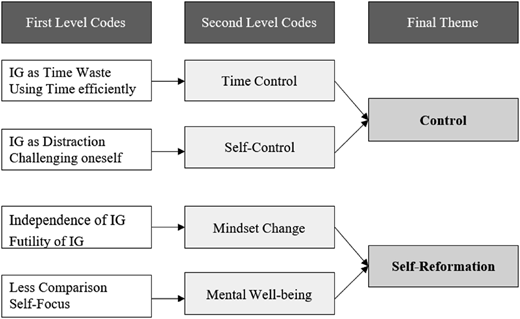
Two major motivations were identified, namely control and self-reformation, which comprised two subcodes, as seen in Figure 1.
Control comprises time control and self-control. Time control was indicated by the majority to regain control over their time, and not waste it by using the platform several times a day. “I wish to define any kind of new routines […] and I don’t have time to do sports, I don’t have time to whatever, go for a walk. But I see that I spend one hour per day on IG. And that means that I definitely have the time because I’m doing or I’m wasting one hour of my day just scrolling through pictures.” (P13) Many participants stated that IG was a waste of time and a desire to time more efficiently (P6), instead of unconsciously opening the app several times a day. This would give them the time to focus on other tasks, such as going to the gym or working on university assignments. Self-control comprised the motivation to prove to themselves that they could live without IG and that the app was unnecessary. As P7 stated: “So, I just wanted to know, for myself, can I actually do it? And I think I can, I can prove myself that I can go without it [IG].” Participants stated that IG was a distraction and, therefore a reason to challenge oneself (P3) to prove independence from the platform, as described by P15: “IG […] takes my time. […] then I feel like I don’t have control because they have control over me.”
Self-reformation comprised mindset change and mental well-being among the participants. Mindset change refers to the desire of the participants to remind themselves that they did not need IG: “So, I hope I will be reminded that I can live without it” (P7). P9 stated the wish to attend gatherings without the “continuous need to use SM and share everything”. P10 questioned the need to continue using IG at all to avoid “being dependent on how many likes a post, story or picture has received”. Mental well-being effects were experienced when participants did not see the positive portrayal of the lives of other users (e.g., influencers, celebrities and friends) as these often made them feel uncomfortable and stressed about their own life and achievements. This constant comparison was expressed by P5: “[…] comparing myself to others, comparing myself to random people that I’ve met and followed on IG before. And obviously, they post highlights of their life. So, when I see them, their highlights, and I’m just sitting in my bed doing nothing. It’ sort of like, oh shit, I should be doing something with my life. And that constant comparison just weights me down a lot.” This wish to compare themselves less with others, often unknown-people and “focus more on oneself” (P5) without feeling pressure to compare. This constant comparison was described as being “mentally exhausting”, which they aimed to minimize. P1 described as happening “subconsciously and without controlling it” when scrolling through the app. P4 described that he “felt compelled” to make comparisons with others.
4.2 Stage 2: experiences during the detox
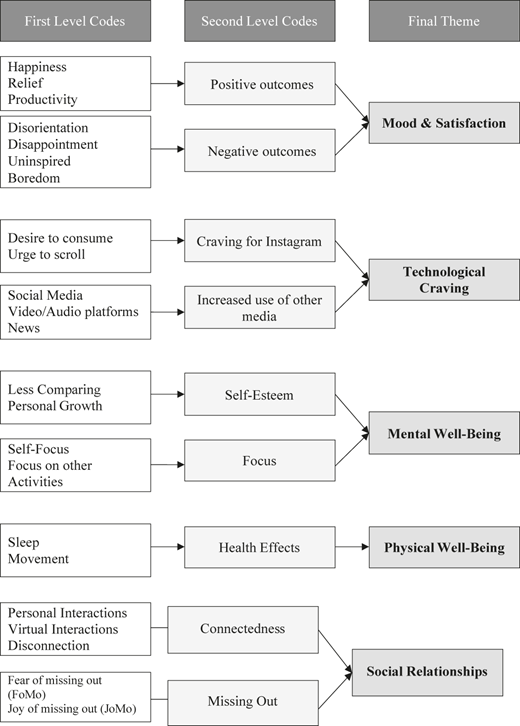
Five themes emerged while undertaking the detox journey, namely mood and satisfaction, technological craving, mental well-being, physical well-being, and social relationships were identified during the journey. (See Figure 2).
The mood and satisfaction of the participants comprised both positive and negative outcomes. Several positive outcomes, assessed and described as “good”, were mentioned with P10 saying (I) “[…] and she asked me, how is your IG detox going? And I said to her, I’m so happy. It’s so good.” Other positive feelings expressed included satisfaction, excitement and motivation as well as happiness, relief, or increased productivity. Happiness or an increase in their current mood was attributed to the absence of IG, with four participants describing it as a relief as they did not have to post, share content, or reply to others. Participants felt a sense of increased productivity since IG could not be used as a distraction or procrastination, having more time for other useful activities such as sports, reading or cleaning. Negative outcomes, assessed as “bad” by the participants included feelings of disorientation, disappointment, boredom, and a lack of inspiration. P12 stated this way: “I feel like it was a little bit a combination of like, sometimes being uninspired and bored. Then this just makes me feel kind of like down a bit.” Participants felt disorientated as they did not know what to do as IG was not available to them, causing them to feel “lost”. They felt that access to IG offered them a sense of stability and familiarity and they were unsure how they would feel in the coming days without IG. Some participants were disappointed when they accidently opened the app as they felt it ruined the detox. Others felt uninspired as they used IG as a source of inspiration with P12 describing how he missed getting fashion inspiration from IG. Some participants described a feeling of boredom which led P3 to relapse during the first week of her detox.
Technological craving, specifically a craving for IG and other media became evident. Despite agreeing to undertake the detox, all participants experienced a craving for IG to varying extents. P11 described it in this way: “At the beginning, like, I caught myself always going on my phone and wanting to use IG and then realized, oh, you cannot use it. Some expressed a desire to consume, or search for specific topics such as checking specific accounts and topics. For instance, P6 mentioned the desire to look for interior inspiration, which was not possible during the detox. This desire was so intense two participants (P3 and P5) relapsed for a short period. It also included the mostly unconscious desire to use the phone to scroll for its own sake. P14 described it as: “my hand really wants to scroll” with a third of participants associating this with “a type of muscle memory” as their hands were used to scrolling through the phone and consequently, they checked their phone automatically with receipt of any notification. Participants also described the increased use of other media during the detox with P8 stating: “[…] in the first week, I took up my phone all the time, and instead I was scrolling Facebook or News […] but then I just realized at one point, I just found myself like scrolling my Facebook feed, and I was like, what am I doing? This is so stupid.” Participants described an increased use of other SM platforms, with a shift from IG to other platforms such as Facebook, Twitter, Snapchat, or TikTok. Some participants stated this consumption happened unconsciously while others consciously searched for content that they would usually have consumed on IG. The participants also increased their use of video (e.g., Netflix or YouTube) and audio platforms (e.g., Spotify). Three participants started listening to podcasts instead of using IG. Some participants reported an increased interest in the news due to the changing political situation in Europe, resorting to substitutes and using news apps such as the BBC, NTV or Tagesschau.
Mental well-being changes were also experienced. Positive changes in the self-esteem of the participants became evident as they compared themselves less with others. P9 stated: “[…] I think my self-esteem improved because I didn’t really care anymore what if someone would like or dislike or see or not see what I was wearing or doing or eating.” Being on a detox meant improved the participants’ self-esteem as P4 stated that he felt “more comfortable with himself” while other participants indicated improvements in their self-esteem, suggesting this enabled them to grow beyond themselves, specifically personal growth. Another mental well-being change was that participants were more focused during the detox. P12 summarized it this way: “[…] the whole topic of like people being mentally not as stable because they see these perfect lives of people. And that stresses me out a lot sometimes. But I was less stressed because I didn’t see it. […] And had like a more focus on myself and what I do. […] And that like really cut my stress off.” This included a self-focus where participants focused on their life and personal or career goals and enjoying quality time and not sharing everything on IG. Participants could also focus on other activities that positively influenced their mental well-being such as reading books (P11, P7) and discovering new music (P3) or language practice (P10).
Participants experienced physical well-being improvements during the detox. Some experienced changes related to their sleeping or exercise patterns. P3 stated that “my daily habits changed […] like going to gym. Like one good thing kind of triggers or another.” A third of the participants noted better or longer sleep as they were less distracted in the evening being less exposed to blue light. A few participants, for example, P14 who scheduled daily walks, experienced an increased motivation to move as they spent less time on their phones.
Social relationships reflected various levels of connectedness during the detox with not being connected to IG impacting this feeling of connectivity. As stated by P9: “I open stuff because I want to see what other people are doing at that moment. […] maybe […] I want to see what other people are doing, actually. Maybe to somehow feel connected to them.” Participants experienced an increase in personal interaction as they had more time available. P9 and P11 talked more to people around them and P12 became closer to his roommates while also sharing directly with friends and family instead of posting on IG. Virtual interactions increased with participants calling their friends and family or sending messages through other SM channels. Six participants mentioned a feeling of disconnection or even being lonely as they had no alternative way to keep in contact as P10 stated that some “don’t have other media” (P10). Missing out included contrasting feelings of fear and joy when missing out on specific moments. P9 stated that she thought about “[…] what I could be missing or who like who could be following me or talking to me.”, with P4 described feeling stressed by the fact that his friends went out, but he could not check their postings. Some participants experienced JoMo and enjoyed not being informed, described by P9 as having “more piece of mind” by not seeing what her friends posted.
4.3 Stage 3: post-detox behaviour
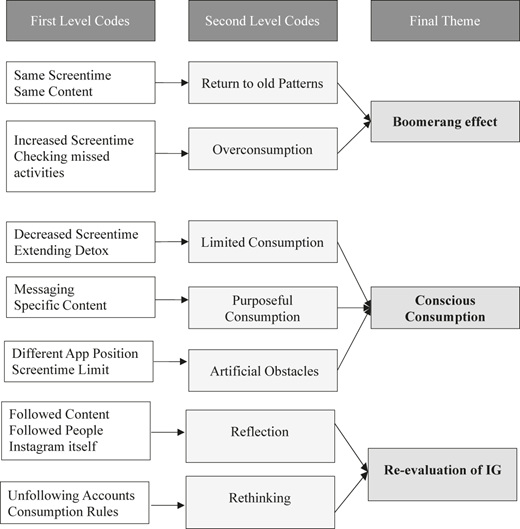
Three final themes could be identified after the detox, namely a boomerang effect, conscious consumption and a re-evaluation of IG. (See Figure 3).
The boomerang effect is seen as participants returned to IG and similar consumption patterns, with some spending more time on IG than previously, suggesting that little noticeable changes occurred. Participants made statements about having similar screen times and consuming the same content, described as follows: “When we spoke last week, I’ve told you that I more or less went back to my normal usage […].”, which disappointed the participants (P13). P8 said that she continued consuming the same content, yet she made it clear that she was already paying attention to what content she followed. P13 concurred saying that it felt unnecessary to delete the app as she felt she could now control her usage. A few participants reported feelings of guilt returning to IG, especially when they realized they were falling back into old patterns. Some participants (e.g., P9, P4) started spending more time on IG and their screen time increased after the detox. Their focus was on checking missed activities while undertaking the detox, which often took up a lot of time as stated by P9: “[…] the first thing I did was answer the messages, check the notifications. […] this is so much work to go back for two weeks.” In contrast, limited consumption, purposeful consumption and artificial obstacles reflect the partial change in the majority of the participants’ post-detox behaviour due to the positive experiences in the detox. Participants indicated limited IG consumption reflected by P2: “Yes, it decreased a lot. After a few days, I used IG and I think I opened the app more consciously. And yeah, I think I am now daily at 20 to 25 min” Almost all participants mentioned decreased screen time when compared to pre-detox primarily because they were more aware of when opening the app. Two participants decided to extend their detox to prove to themselves that they could go without the app for longer. Participants also described their consumption as purposeful with the desire to use IG to stay in contact with friends and family, for messaging or to consume specific content. P15 stated: “it makes me use it more mindfully now because like I know what accounts there are. There are some accounts like that inspire me in my like yoga and I really kind of missed some of the accounts when I wasn’t there […] because I know they only inspire me and they don’t bring me any negativity or comparison. […] now I know what the accounts were that I was missing.” Participants described how they developed artificial obstacles to limit access to IG such as repositioning the app on their phone or setting a (time) limit in the app such as getting the app to shut down after 30 min. P6 described it as follows: “And I also still haven’t, like, put the app back in its original place on my phone, which I think makes a very big difference. Just not being able to yeah, just mindlessly click on it.” Other participants decided to access IG through a computer rather than via the app. P5 stated he “didn’t downloaded the app again” and “used Safari to get on IG, which makes it harder”. This enabled them to determine their specific topics of interest and focus on them.
Participants experienced attitude change by reflecting and rethinking the place of IG in their lives including the content and people followed, the app itself and it’s meaning for them. P4 said that “but still, I think I use it, like, in a different way. I unfollowed a lot of accounts or content I didn’t really want to see and […] started searching for more things that really interest me”. Part of this reflection was on how IG is used to take, edit, and share inspirational pictures. P6 said she reflected on the negative effects of IG on her, especially when it comes to watching the news, which often feels unfiltered. Rethinking enabled participants to unfollow accounts and set up new individual consumption rules such as checking IG only once or twice per day. P11 (FG) said that they “try to just look at IG in the evening, like once, and nothing more, just also like P9 and P10 said […] that I don’t go on IG 10 times a day” as “a few minutes in the evening is quite sufficient” (P2). Participants planned various forms of the detox in the future, ranging from one day a week detox (i.e., a mini detox) or longer detoxes due to “how good it is” (P7). The possibility of having separate accounts was presented in the focus group with one for interacting with friends and family and one for commercial brands and influencers.
5. Discussion
With the identification of the possible negative effects associated with SM and the use of a detox strategy, the purpose of this research was to capture the experiences of IG users in the three stages of the SM detox journey (Becker et al., 2020; Heinonen and Strandvik, 2015), namely (1) pre-detox, (2) during the detox, and (3) post-detox behaviour.
5.1 Stage 1: detox motivation
Control was the main motivation for the SM detox as scrolling wasted time and prevented them from attending to important tasks, pursuing valuable activities and using time more efficiently (Brubaker et al., 2016; Jorge, 2019; Nguyen, 2023; Syvertsen and Enli, 2020; Zhou et al., 2018). IG was seen as a source of distraction by the majority of participants so a detox could improve their time control on IG, similar to Brubaker et al. (2016), Syvertsen and Enli (2020), Miksch and Schulz (2018) and Nguyen (2023). Participants also wanted to prove to themselves that they could live without IG, showing their independence and the futility of the app, not previously identified. In the context of self-reformation, participants changed their thoughts regarding the usage of IG and improving their mental well-being. Participants wanted to self-reform by raising their awareness and re-learning self-regulation through controlling their consumption behaviour (e.g., not mindlessly scrolling or clicking on the app) to show that they could live without IG (Syvertsen and Enli, 2020). Similar to Kent (2020), the participants were motivated to avoid social comparison and rather focus on themselves to avoid feelings of comparative anxiety, inadequacy and disempowerment through social comparison and the resulting negative feelings. Professional well-being (Glomb et al., 2011; Miksch and Schulz, 2018) was not identified among this student sample. Similarly, personal identification (Ganito and Jorge, 2017; Hardey and Atkinson, 2018; Jorge, 2019) and social relationships were not identified.
5.2 Stage 2: experiences during the detox
The positive experiences of participants (e.g., mood, satisfaction, and increased productivity) are consistent with previous research (Lepik and Murumaa-Mengel, 2019; Sheldon et al., 2011). Boredom was experienced by the participants, similar to Stieger and Lewetz (2018) and other negative emotions (e.g., disorientation and disappointment) were also identified. Scholars (e.g., Stieger and Lewetz, 2018; Wilcockson et al., 2019) suggested the occurrence of technology cravings during the detox could contribute to relapse among users as seen in this study, though taking longer than suggested (Wilcockson et al., 2019). Similar to Baumer et al. (2015), participants used other media such as other SM and video/audio platforms and news sites. Similar to Tromholt (2016) and Brown and Kuss (2020) but differing from Stieger and Lewetz (2018), improved mental well-being, specifically an increased self-esteem and self-focus including a feeling of personal growth was also identified in this study.
Similar to previous research (Vanman et al., 2018) participants experienced a positive impact on physical well-being, particularly the urge to move and be physically active. The influence on social relationships has been widely researched (e.g., Brown and Kuss, 2020; Eide et al., 2018; Hunt et al., 2018; Lepik and Murumaa-Mengel, 2019; Nguyen, 2023; Stieger and Lewetz, 2018) with participants reflecting variability, similar to Brown and Kuss (2020).
5.3 Stage 3: post-detox behaviour
Three post-detox behaviours were identified namely (1) the boomerang effect, (2) conscious consumption, and (3) a re-evaluation of the platform (IG). Similar to Lepik and Murumaa-Mengel (2019) and Nguyen (2023), a boomerang effect was evident with participants returning to similar IG behaviours rather than remaining off IG. They described themselves as addicted to IG, with some reporting similar or even higher screen time after the detox, blaming their curiosity about missed posts and checking messages. Participants wanted to be more conscious regarding IG, i.e., to be aware of the content and thereby extend the benefits of the detox (Brown and Kuss, 2020; Lepik and Murumaa-Mengel, 2019). The majority spent less time on IG and reduced their screen time, creating artificial obstacles to limit access to the app in their phone settings.
Most participants reflected a re-evaluation of their IG behaviour, consistent with previous studies (Brown and Kuss, 2020; Lepik and Murumaa-Mengel, 2019). Participants provided details on setting new behavioural rules after reflecting on their user behaviour. Brown and Kuss (2020) showed that some of the participants felt morally better after a detox leading to behaviour change. Likewise, the reason for this re-evaluation of IG was due to the perceived improvement in the participants’ mental well-being. They reflected on the content, people and unfollowed accounts, and similar to Nguyen (2023), the detox changed their relationship with IG. Similar to Lepik and Murumaa-Mengel (2019), some participants designed new consumption rules for themselves, e.g. they opened the app only once or twice instead of several times a day or having a specific IG-free day within the week.
FoMo was widely experienced by participants, similar to previous studies (Brown and Kuss, 2020; Eide et al., 2018; Nguyen, 2023; Stieger and Lewetz, 2018). FoMo influences the long-term outcome of the detox (i.e., the decision to re-engage with IG for longer times) and the subsequent need for future detoxes. Similarly, while JoMo was not as widely experienced, perceptions thereof also impacted the IG re-engagement decision.
5.4 Theoretical and practical contributions
This study provides insight into the actual experiences of participants in the detox journey, contributing to the understanding of this complex phenomenon (Soliman and Tuunainen, 2022), including the outcomes experienced at each stage. Two specific experiential aspects can be highlighted, contributing to the understanding of SM. Firstly, the technological craving was experienced by participants during the detox process as they were unable to access IG. Platforms provide diverse affordances to attract their audiences (Shane-Simpson et al., 2018) with the absence of IG’s multimodal affordances contributing to the development of technological cravings among participants. Secondly, the use of alternative media during the detox, specifically on other news, audio/visual and SM platforms could also indicate a degree of technological craving and suggest ways SM users deal with the craving provided by one platform, seeking the satisfaction of the need on other platforms.
By adopting specifically a journey perspective, this study uses a process perspective of a detox, providing insights into the various phases of the detox process experienced by the same participants. Further, it proposes that a journey can be viewed as a negative journey, being viewed as a non-consumption journey which is incorporated into users’ future decisions. Further, the return of participants to IG, even at lower levels, suggests that total removal from SM (and IG) is not possible for many users, which differs from health-related behaviours (e.g., stopping smoking).
Methodologically, this study employed a unique research design by incorporating multiple qualitative research methods, which sets it apart from other studies. By accompanying the participants throughout their detox journey and by using focus groups, diary research and in-depth interviews, deeper insights were gained, as suggested by Soliman and Rinta-Kahila (2020). Having the participants complete a diary entry every day over 14 days provides more daily detail and covers a longer period than other studies (Lepik and Murumaa-Mengel, 2019; Orben and Przybylski, 2019; Stieger and Lewetz, 2018).
Practical implications for individuals and platforms can be highlighted at all stages of the detox journey. For individuals, the decision to undertake a detox can be linked an increased mindfulness regarding their use of SM (in general) and particularly IG. This includes individuals being aware of the various affordances that they find useful on IG (and other platforms) and which serve as the reason for engaging in SM. Influencers such as celebrities and others with “instafame” (Khamis et al., 2017, p. 205) may actively influence the behaviour of followers (Belanche et al., 2021), such as deciding to detox from SM for a period, reporting on the outcome of their detox or using IG more mindfully.
Journeys can be social (Hamilton et al., 2021), thus providing support to others when considering or while undertaking a detox journey can increase the likelihood that the detox journey will be completed (Franks et al., 2018). For example, users can motivate each other to share their IG detox experience using tags such as #offlineisthenewluxury, #lessscrollingmoreliving, and #disconnecttoreconnect. Users can also encourage each other to lower their IG use. While undertaking a detox, users can delete the app, blocking and muting notifications and shifting to analogue tools and highlighting JoMo (Chan et al., 2022). They can also control their screen time through screenshots to gain a more accurate idea of the time spent on IG than self-reports (Vuorre et al., 2021).
The detox impacts SM platforms, placing a responsibility for their users’ well-being, and encouraging them to reduce or be more conscious of their SM use (Syvertsen and Enli, 2020). This could include individually determined and age-based usage restrictions, such as prohibiting night-time use for minors. Integration of these restrictions can positively impact its reputation, differentiating it from other platforms. SM platforms can explore design changes on the platform to reduce mindless scrolling or to provide a “reaction-based interface” to help users manage the amount of time they spend on a platform (Ruiz et al., 2024, p. 4). Given the addictive nature of SM, digital nudges can be used to assist individuals in managing their SM activity. The installation of browser extensions can “reduce the addictive features” of these sites (Purohit et al., 2020, p. 1) and can increase the consciousness of SM users.
SM is also a concern for policymakers due to its nature and effects on people, particularly younger people (Balkin, 2021; O’Keeffe and Clarke-Pearson, 2011). Education of all on both the positive and negative aspects of SM (O’Keeffe and Clarke-Pearson, 2011) remains important, and encouraging limited SM use, and encouraging breaks from SM can form a part of mental health campaigns.
6. Conclusions, limitations, and future research
No study is without limitations. Firstly, limitations can be associated with the sample who took part in the study. The study used a convenience sample comprising those who identified their excessive IG use, which may not be experienced by all. All the participants were from a similar age group, which raises the question of the detox experience among other generational cohorts, which can also indicate future research opportunities. This study focused on Gen Y, but extending this to other generational cohorts (e.g., Gen Z) is recommended. Most of the participants were non-native English speakers residing in Europe or the US. This highlights the necessity for cross-cultural research into the detox experience given the varying uses of SM (and IG) across different cultures. While an extensive effort was placed into building trust with the participants on WhatsApp through regular interactions and clear communication with the participants at the start and throughout the study, the extent to which they expressed their true emotions could also be questioned. Participants reported on their experience of the detox journey, but the impact of other life events may also have impacted their experiences. The participants were also aware that they were taking part in research and thus approached the detox differently than if the decision had been a personal one (and without the involvement of the researchers). The study implemented a two-week detox period which was longer than the 5 days used by Lepik and Murumaa-Mengel (2019), the period may still be too short to analyse and reveal long-term effects, thus a longer detox period may produce other insights into this experience. A longitudinal follow-up with those participating in a study of this nature is also recommended to determine whether these changes are temporary or permanent as some effects may be evaluated over time (Verduyn et al., 2015), thereby clarifying the long-term outcomes of an SM detox on the participants. In this study, participants could choose between a digital or a paper diary. Further investigation into whether participants experience the detox differently is suggested, e.g., whether the choice of the diary method influences the perception of the detox.
Second, this study has focused on IG due to the affordances of this platform, but the extension of this research to other platforms (e.g., TikTok and Snapchat) is recommended as different apps could have different effects on mental health (Barthorpe et al., 2020). Differentiating between those who are active and passive on SM can also serve as a future research opportunity as there is a difference between these users (Orben, 2020). Users also have a different intensity of IG use (Faelens et al., 2021), which can affect the detox experience and the resulting outcomes, such as quality of life (Verduyn et al., 2015).
Third, conducting quantitative research (e.g., surveys, experiments) can provide additional insights into the nature and consequences of detox as these methods can access larger samples (Nunan et al., 2017).
Fourth, the study identified several variables from the literature that affect the detox experience (e.g., mental and physical health) (Faelens et al., 2021; Maclean et al., 2022; Waheed et al., 2024), but other variables may have been excluded. This thus provides the opportunity for future research into the specific effect of a detox on specific individual variables such as the effect on anxiety or sleeping patterns.
The authors thank the anonymous reviewers for valuable feedback and comments.
Funding: The authors received no financial support for the research, authorship and/or publication of this article.
References
The supplementary material for this article can be found online.