
Skip to Main Content

Nanotechnology is gaining prime importance in the present era due to modeling of metals in nanoparticles (NPs) by biological methods, but nowadays, researchers are designing the exact mode of action of nanomaterials on plants. NPs are fabricated by different physical and chemical methods, but biological methods are preferred due to their simplicity and non-toxic nature. The current development of biomimetic NP synthesis is a more reliable, economically favorable and eco-friendly method for the treatment of different diseases. NPs fabricated by traditional methods have shown a lot of demerits, so the green route to the formation of metallic NPs is advantageous compared to the use of microbes. Secondary metabolites in the plant have active chemical constituents which can act as capping and reducing agents, thereby enhancing the rate of reduction and stabilizations of NPs. In this review, a major focus is given to biogenic silver NPs’ mechanism of action toward cancer and microbes.

Nanoparticles (NPs) include particles with sizes from 1 to 100 nm.1 Nanotechnology focuses mainly on the synthesis, design, size of particles in nanodimension and the manipulation of their structures.2 Richard Feynman3 first gave the concept of nanotechnology in 1959. Nanotechnology is now creating new innovations and inventions in the field of medical sciences as well as biomedical devices.4 

Metal NPs have been reported to have excellent chemical reactivity and potential applications in biosensing, drug delivery, detection of genetic disorders, gene therapy, catalysis, surface-enhanced Raman scattering, photography and DNA sequencing (Figure 1).5 
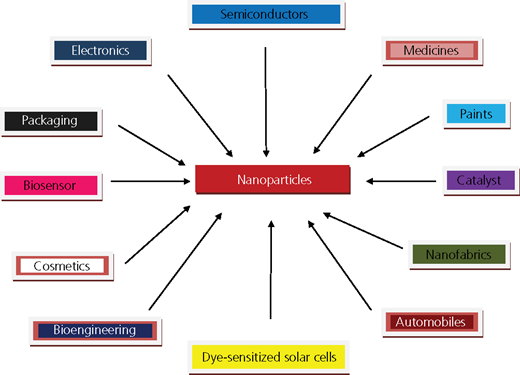
Figure 1

Applications of NPs

Figure 1

Applications of NPs

Close modal

NPs have unique properties compared to microparticles, with regard to shape, size and distribution.6 Silver (Ag)-based compounds have been used in medical applications since the nineteenth century.7 Silver nanoparticles (SNPs) have been used as antimicrobial agents in elevators and railway stations in China.8 Silver is usually used in the form of silver nitrate (AgNO3) to induce antimicrobial effects; when silver is used at the nanoscale, its enhanced surface area increases the magnitude of action toward microbes. SNPs can inhibit cell transduction, cell lysis and growth.9 

Current studies have revealed that the use of SNPs in the treatment of wound healing causes reduction of local matrix metalloproteinase activity and enhances neutrophil apoptosis within the wounds.10 When SNPs were introduced in a rat model with burn injury, these caused reduction in the level of proinflammatory cytokines; SNPs play a vital role in the inhibition of the tumor necrosis factors alpha and activities of interferon gamma, which are responsible for inflammation.11,12 

Nanosilver-based design for wound dressing was first discovered by Dr Robert Burrell in 1995. The name of the dressing was Acticoat; nowadays, it is being sold worldwide by Smith and Nephew.13 SNPs are coated with polymethyl methacrylate and used in bone cements as artificial joint replacements. When polypropylene mesh was coated over nanosilver particles, it showed tremendous antimicrobial activity.14 

A proto-oncogene is a normal gene that regulates cell growth in a controlled fashion, but it can be converted into an oncogene by way of mutations and overexpression. Activated oncogenes are responsible for inducing tumor and cancer in healthy cells. Cancer is the fastest spreading and most fatal disease all over the world; malignant cells undergo rapid and uncontrolled cell division in the human body.15 

Cancer cells proliferate through different steps of mutation, on which anticancer drugs exert their mechanisms of action (Figure 2). The philosophy of using anticancer drugs is to inhibit one or more actions/steps of mechanisms of cancer cell proliferation or inhibit an organelle to work for the cells.
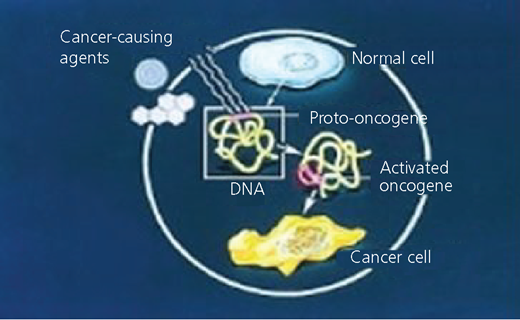
Figure 2

Mechanism of formation of oncogenes

Figure 2

Mechanism of formation of oncogenes

Close modal

NPs are fabricated by physical, chemical and biological methods. SNPs (3–40 nm) are obtained by chemical reduction of metal slat of silver tetrafluoroborate (AgBF4) by sodium borohydride in water.16 Very expensive conventional methods have been used for the fabrication of NPs while showing hazardous effects (Figure 3).
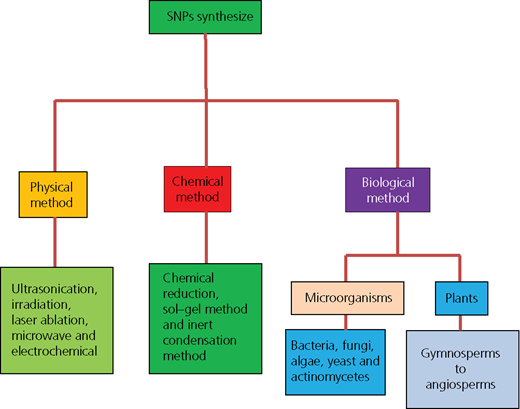
Figure 3

Method of NP synthesis

Figure 3

Method of NP synthesis

Close modal

Thus, scientists have put their attention toward using green synthesis for the formation of NPs due to obtain their precise shape and controlled structures. Two approaches are preferred: top-down and bottom-up (Figure 4).17 

  • Top-down approach: The lithographic technique is used to break down the bulk material particles into nanoscale size.18 

  • Bottom-up approach: Atoms are self-assembled by electrochemical deposition and sonodecomposition to form new nuclei, which grow into NPs of desired sizes.
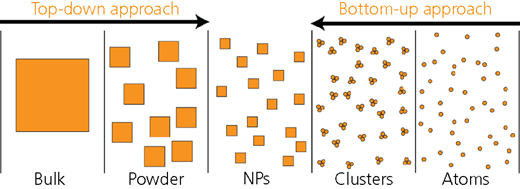
Figure 4

Approaches to NP formation

Figure 4

Approaches to NP formation

Close modal

Amulyavichus et al.19 first reported that SNPs were isolated from silver mine using Pseudomonas stutzeri AG259. The mechanisms involved in the resistance of microorganisms are responsible for alteration of solubility and toxicity by way of reduction.20 In vitro synthesis by silver using bacteria (Bacillus licheniformis) causes secretion of alpha nicotinamide adenine dinucleotide phosphate (NADP) and NADPH enzymes, which are responsible for nitrate reductase, which efficiently converts silver ion into metallic silver (Figure 5).21 
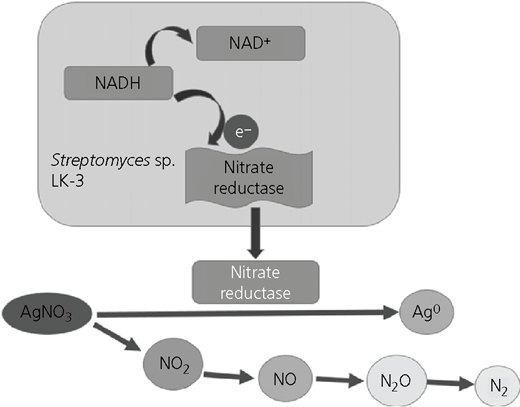
Figure 5

SNP formation by bacteria

Figure 5

SNP formation by bacteria

Close modal

If the formations of SNPs by bacteria and fungi are compared, fungi show outstanding production of NPs compared with bacteria due to the ability of fungi to emit a greater amount of proteins that directly translates to enhance the production of NPs.22 
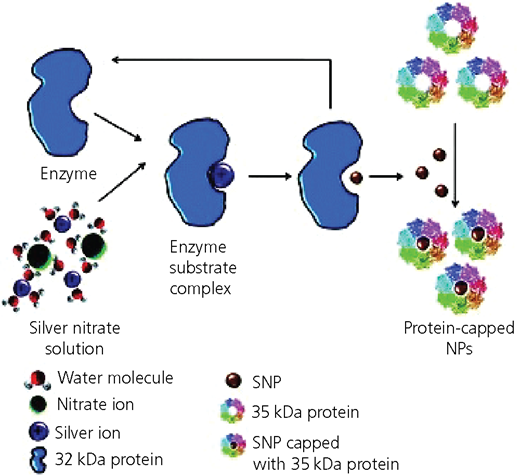
Extracellular enzymes such as naphthoquinones and anthrax-quinones present in fungi are accountable for trapping silver ions at the surface of fungal cells and reduction of silver ions (Ag+) into metallic silver (Figure 6).23,24 

Figure 6

SNP formation by fungi

Figure 6

SNP formation by fungi

Close modal

Plant extracts could be utilized as a source for the fabrication of SNPs; chemical constituents such as secondary metabolites present in plant extracts act as reducing and capping agents. Silver nitrate, aurum chloride and titanium chloride have been used for the formation NPs such as silver, gold and titanium by using plant extracts.25,26 

Plants consist of a complicated set of antioxidant metabolites and enzymes that work against oxidative damage to cellular components. Phytochemicals such as polyphenols, ascorbic acid, triterpenes, alkaloids, alcoholic compounds, saponins, flavonoids, sterols, fructose, glucose, protein and β-phenylethylamines have been used for the reduction of silver ion into metallic silver.22,27–29 

Different parts of plants contain a variety of functional groups of secondary metabolites that cause reduction of silver ions.30,31 After the formation of SNPs, characterization of NPs by using different surface techniques – for example, SEM – is then carried out to determine the morphology of NPs at submicron to micron scales.

Fourier-transform infrared spectroscopy can be used to identify functional groups attached to the surface of NPs, whereas X-ray powder diffraction is used to determine the crystal structure and phase identification of NPs.32,33 Metallic NPs have been synthesized by using different phytoextracts shown in Table 1.

Table 1

Some phytofabricated nanoparticles

PlantPlant partsBiomolecules involvedType of NPSize and shapeReferences
Acalypha indicaLeafQuercetinSilver20–30 nm; sphericalSun et al.34 
Achyranthus asperaLeafPolyolsSilver20–30 nm; sphericalKrishnaraj et al.35 
Allium sativumLeafSucrose and fructoseSilver4–22 nm; sphericalDaniel et al.36 
Aloe veraLeafProteinsSilver, gold50–350 nm; spherical and triangularVon White et al.37 
Azadirachta indicaLeafSalanin, nimbin, azadirone and azadirachtinSilver, gold7·5–6·5 nm; spherical, triangular, quasi-sphericalChandran et al.38 
Astragalus gummiferLeafProteinsSilver13·1±1·0 nm; sphericalThirumurugan et al.39 
Andrograhis paniculataLeafHydroxyflavones; catechinSilver28 nm; sphericalKora and Arunachalam40 
Anacardium occidentaleLeafPolyols and proteinsGold, silver, gold core–silver shell, gold–silver alloyJayashree and Vani41 
Allium cepaLeafVitamin CGoldApproximately 100 nmSheny et al.42 
Avena sativaLeafPhenolicsGold6–20 nmParida et al.43 
Argemone MexicanaLeafTerpenoidSilverShankar et al.44 
Boswellia ovalifoliolataLeafTannins and quininesSilver30–40 nmSingh et al.45 
Brassica junceaLeafOxalic acidGoldAnkanna et al.46 
Bacopa monnieraLeafPhenolicsSilver15–120 nmMarshall et al.47 
Boswelliaovali foliolataBark and leafPolyols, heterocyclic componentsSilverMahitha et al.48 
Bauhinia variegateLeafPolyphenols or flavonoidsGold43–145 nmJha et al.49 
Cinnamomum camphoraLeafPolyols, heterocyclic componentsGold and silver55–80 nmKumar and Yadav50 
Capsium annuumLeafProteinsSilver15–20 nmHuang et al.51 
Cinnamomum zeylanicumLeafTerpenoidSilver50–100 nmLi et al.25 
Carica papayaLeafHydroxyflavones and catechinsSilver15 nmSathishkumar et al.52 
CorianderLeafProteins and amino acidsGold6·75–57·91 nmKora and Arunachalam40 
Cariandrum sativumLeafTerpenoid, flavonoidsSilver26 nmNarayanan and Sakthivel53 
Curcuma longaLeafFlavones, alkaloid or proteinsSilverSathyavathi et al.54 
Catharanthus roseusLeafProteins and amino acidsSilver48–67 nmSathishkumar et al.55 
Camellia sinensisLeafPolyphenolic compoundsGold25 nmKannan et al.56 
Centella asiaticaLeafTerpenoid, flavonoidsSilverBoruah et al.57 
Chenopodium albumLeafOxalic acidSilver, gold12, 10 nmPalaniselvam et al.58 
Coleus aromaticusLeafFlavonoidsSilver40–50 nmDwivedi and Gopal59 
Cycas circinalisLeafProteins and amino acidsSilver2–6 nmVanaja and Annadurai60 
Citrullus colocynthisLeafPolyphenols with aromatic ring and bound amide regionSilver31 nmJha et al.49 
Chrysanthemum morifoliumLeafFlavonoidsSilver20–50 nm; sphericalPriya et al.61 
Chrysopogon zizanioidesLeafTerpenoidSilver85–110 nm, cubicHe et al.62 
Chrysanthemum indicumLeafPolyphenols or flavonoidsSilver37·71–71·99 nm; sphericalArunachalam and Annamalai63 
Datura metelLeafPlastohydroquinone or plastrocohydroquinolSilver16–40 nmArokiyaraj et al.64 
Desmodium triforumLeafWater soluble antioxidative silverent such as ascorbic acidsSilver5–20 nmKesharwani et al.65 
Dioscorea bulbiferaLeafPolyphenols or flavonoidsSilver8–20 nm Average 75 nmAhmad et al.66 
Diopyros kakiLeafTerpenoid and reducing sugarsPlatinum2–12 nmAhire et al.67 
Dioscorea oppositifoliaLeafPolyphenols with aromatic ring and bound amide regionSilver14 nmSong et al.68 
Dalbergia sissoLeafPolyphenols or flavonoidsGold and silver5–80 nm and 5–55 nmMaheswari et al.69 
Elettaria cardamomom MatonLeafAlcohols, carboxylic, acids, ethers, esters and aliphatic aminesSilverSingh et al.70 
Eclipta prostrateLeafFlavones and proteinsSilver35–60 nm, triangles, pentagons, hexagonsGnanajobitha et al.71 
Euphorbiaceae latexLeafFlavonoids, proteins and terpenoidsCopper/silver18 nm silver and 10·5 nm copperRajakumar and Rahuman,72 Patil et al.73 
Emblica officinalisLeafPolyphenols or flavonoidsSilver and gold10–20 nm and 15–25 nmValodkar et al.74 
Euphorbia hirtaLeafFlavonoidsSilverAnkamwar et al.75 
Eucalyptus hybrid leafLeafFlavanoid and terpenoidSilver50–150 nm; sphericalElumalai et al.76 
Ficus benghalensisLeafPolyphenolsSilver16 nmDubey et al.77 
GeraniumLeafPhenolicsSilver16–40 nm; quasilinear superstructureJegadeeswaran et al.78 
Gliricidia speiumLeafPolyphenols or flavonoidsSilver10–50 nm; sphericalShankar et al.79 
Gardenia jasminoides EllisLeafGeniposide, chlorogenic acid, crocins and crocetinPalladium3–5 nmRaut et al.80 
Glycyrrhiza glabraLeafFlavonoids, terpenoid, thiamineSilver20 nmJia et al.81 
Hibiscus cannabinusLeafAscorbic acidSilver9 nmDinesh et al.82 
Hydrilla verticilataLeafProteinsSilver65, 55 nmBindhu and Umadevi83 
Humulus lupulusLeafTerpenoidGoldSable et al.84 
HennaLeafAlkaloids, flavonoidsGold, silver21, 39 nmRai et al.85 
Hibiscus rosa-sinensisLeafPolyphenols with aromatic ring and bound amide regionSilver4 nm; sphericalKasthuri et al.86 
Ipomea carneaLeafPolyphenols and hydroxyl groupsSilver30–130 nmPhilip87 
Jatropha curcasLeafCurcacycline A (an octapeptide), curcacycline B (a non-apeptide), curcain (an enzyme)Zinc sulfide, lead10 nm; 10–12·5 nmDaniel et al.,88 Bar et al.89 
Justicia gendarussaLeafPolyphenol and flavonoidsGold27 nmHudlikar et al.90 
Lantana camara L.LeafCarbohydrates, glycosides and flavonoidsSilver12·55 nmFazaludeen et al.91 
Leonuri herba L.LeafPolyphenols and hydroxyl groupsSilver9·9–13·0 nmSivakumar et al.92 
Lxora coccineaLeafAlcohols, carboxylic, acids, ethers, esters and aliphatic aminesSilver13–57 nm; sphericalIm et al.93 
Mentha pipertiaLeafMentholSilver, gold5–150 nm; sphericalKaruppiah and Rajmohan94 
Musa paradisiacalLeafProteinsSilver20 nmMubarakAli et al.95 
Macrotyloma uniflorumLeafPolyphenols with aromatic ring and bound amide regionGold14–17 nmBankar et al.96 
Mirabilis jalapaLeafPolyolsGold100 nmAromal et al.97 
Morinda pubescens L.LeafHydroxyflavones, catechinsSilver25–50 nmVankar and Bajpai98 
Medicago sativaLeafAlcohols, carboxylic, acids, ethers, esters and aliphatic aminesSilver2–20 nmJancy and Inbathamizh99 
MemecyloneduleLeafWater-soluble carbohydratesSilver and gold5–55, 50–90 nmMubarakAli et al.95 
Morinda citrifoliaLeafPhenolic compounds alcohols, phenols and proteinsSilver32–55 nm, ovalParashar et al.100 
Nerium indicumLeafPolyphenols and hydroxyl groupsSilverAnkamwar et al.75 
Nicotiana tabaccumLeafProteins and amino acidsSilver8 nmSuman et al.101 
Nelumbo nuciferaLeafProtein and enzymesSilver25–80 nm; spherical triangularPrasad et al.102 
Ocimum sanctum L.LeafPhenolic and flavanoid compounds, proteins, ascorbic acid, gallic acid and terpenoidsSilver, gold, platinumApproximately 10, 4–30, 23 nmSanthoshkumar et al.,103 Ahmad et al.,104 Ramteke et al.105 
Parthenium hysterophorousLeafHydroxyflavones and catechinSilver10 nmSoundarrajan et al.106 
Pedilanthus tithymaloidesLeafProtein and enzymesSilver15–30 nmAshok Kumar107 
Pipper betle L.LeafProteinsSilver3–37 nmAbbasi108 
Piper nigrum L.LeafProteinsSilver5–50 nmKoduru et al.109 
Plumeria rubra L.LeafProteinsSilver32–220 nmGarg110 
Parthenium leafLeafFlavones and anthocyaninsGold50 nm; face-centered cubicPatil et al.111 
Pelargonium graveolensLeafPhenolic and flavanoid compounds, proteins, ascorbic acid, gallic acid and terpenoidsSilver16–40 nmParashar et al.112 
Phyllanthus maderaspatensisLeafProteins, flavones and terpenoidsSilver30–130 nmShankar et al.113 
Rosa rugosaLeafAmines, alcoholsSilver, gold30–60 nm silver; 50–250 nm goldAnnamalai et al.114 
Sesuvium portulacastrum L.LeafProteins, flavones and terpenoidsSilver5–20 nmDubey et al.115 
Solanum xanthocarpum L.LeafPhenolics, alkaloids and sugarSilver10 nmNabikhan et al.116 
Sorghum bicolor MoenchLeafPolyphenolsSilver, iron10 nm, 50 nmAmin et al.117 
SoybeanLeafProteins and amino acidsLeadApproximately 15 nmNjagi et al.118 
Swietenia mahoganiLeafPolyhydroxy limonoidsSilver, gold and bimetallic alloy gold–silverPetla et al.119 
Syzgium aromaticumLeafFlavonoidsGold5–100 nmMondal et al.120 
Sesbania drummondiiLeafProteins and amino acidsGold6–20 nmRaghunandan et al.121 
Syzgium cuminiLeafFlavonoidsSilver100–160 nmNabikhan et al.116 
Syzgium cuminiBarkProteins, flavones and terpenoidsSilver20–60 nmPrasad and Swamy122 
Santalum albumLeafHydroxyflavones and catechinsSilver80–200 nmPrasad and Swamy123 
Sorghum bicolorLeafHydroxyflavonesSilver and ironSwamy and Prasad124 
Salanum torvumLeafPhenolic and flavanoid compounds, proteins, ascorbic acid, gallic acid and terpenoidsSilver5–50 nm; sphericalNjagi et al.118 
Saraca asocaLeafHydroxyflavones and catechinsSilver87–102 nm, irregularRamamurthy et al.125 
Terminalia catappa L.LeafHydrolyzable tanninsGold10–35 nmSuman et al.101 
Trianthema decandraLeafHydroxyflavones and catechinsSilver10–50 nmAnkamwar126 
Tridax procumbens L.LeafWater-soluble carbohydratesCopper peroxideGeethalakshmi and Sarada127 
Tanacetum vulgareLeafHydrolysable tanninsSilver, gold16 nm silver, 11 nm goldAnnamalai et al.114 
Trapa bispinosaLeaf SilverGopalakrishnan et al.128 
Tamarindus indicaLeafProtein and enzymesGold20–40 nmPandey et al.129 
Vitus vinifera L.LeafFlavones and anthocyaninsLead661 nmPavani et al.130 
Vitex negundoLeafFlavonoidsGold10–30 nm; face-centered cubicZargar et al.131 
Zingiber officinaleLeafAlkanoids, flavonoidsSilver, gold10 nmSingh et al.132 

Silver metal has been used in people’s daily life for different purposes such as jewelry, ornamentation and fine cutlery. Silver is the only metal which has the potential to resist microbes, dating back to the Phoenicians. Silver is used as an antimicrobial agent to fight against many microorganisms, numbering approximately 650 from diverse modules such as gram-negative and gram-positive bacteria, fungi and viruses.

In 1884, aqueous silver nitrate was used in the form of eye drops for newborn babies to prevent the transmission of Neisseria gonorrhoeae from infected mothers. Metals have many properties; silver is the metal that shows the least toxic effect in in vivo and in vitro.46 

Silver is usually used in the form of salt, mostly silver nitrate, to show antimicrobial effect, but when SNPs are used, their physical parameters eventually changed, such as when huge surface areas have been exposed for the microbes. Biogenic SNPs have been used for evaluating their antimicrobial activities against different microbes. The antimicrobial properties of biofabricated SNPs are based on size, environmental conditions and capping agent. SNPs have a significant action against microbes; they have the ability to anchor to a bacterial cell and penetrate it (Figure 7). Silver is inert, but when it is in contact with moisture, it releases silver ions, so a positive charge indicating silver ions is reported to be vital for antimicrobial activities.133 
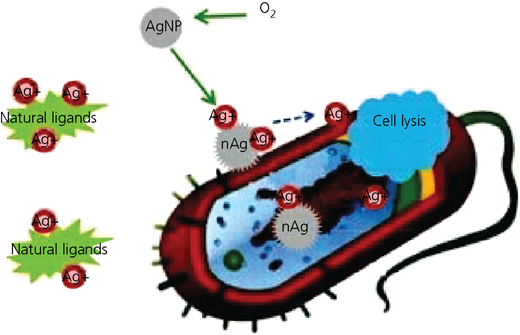
Figure 7

Mechanism of action of SNPs on microbes

Figure 7

Mechanism of action of SNPs on microbes

Close modal

Silver ions are able to form complexes with nucleic acids and preferentially interact with the nucleosides rather than with the phosphate groups of nucleic acids. Silver ions are obtained from silver or silver-containing compounds with notable antimicrobial properties; these silver ions may be incorporated into the substance and released slowly with time.134 Researchers have reported that a suitable bactericidal agent is formed due to a strong electrostatic force of attraction between positively charged SNPs and negatively charged bacterial cells.132,135,136 Two mechanisms have been reported for SNP resistance toward microbes.

SNPs can easily permeate into bacterial cell walls and cause cell death by changing the structure of bacteria; thus, pits that have formed on the cell surface of bacteria provide a way for NPs to accumulate.134 Ankanna et al.46 reported that SNPs have been shown to accumulate inside the membrane and can subsequently penetrate into the cells then causing injury to the cell wall or cell membranes.

The exact mode of action of SNPs is that they bind to thiol groups (SH) of enzymes and then form the stable S–Ag bonds with thiol-containing compounds and are responsible for the deactivation of enzymes such as transmembrane energy generation and ion transport in the cell membrane.

When silver ions enter cells, these intercalate between the purine and pyrimidine base pairs, disrupting the hydrogen bonds between the two antiparallel strands and denaturing the DNA molecule. Bacterial cell lysis could be one of the reasons for the antibacterial property of silver NPs. NPs modulate the phosphotyrosine profile of bacterial peptides, in turn affecting signal transduction and inhibiting the growth of microorganisms.

Escherichia coli cells have been treated with SNPs, and SNPs have been found to be accumulated in the bacterial membrane, which results in an increase in the permeability of the cell wall and death of the cell. Gram-positive bacteria are less susceptible to silver than gram-negative bacteria. The reason is that the gram-positive bacterial cell wall has more peptidoglycan molecules than the gram-negative bacterial cell wall.

As the cell wall of gram-positive bacteria is thicker and peptidoglycans are negatively charged and silver ions are positively charged, more SNPs may get stuck to the peptidoglycans in gram-positive bacteria than in gram-negative bacteria. The decreased liability of gram-positive bacteria can also be simply explained by the fact that the cell wall of gram-positive bacteria is thicker than that of gram-negative bacteria.131 

It is proved by literature that DNA has the ability to destroy the cell membrane through an electron-release mechanism or free radical production then formation of SNPs playing a key role to make the membrane too much porous and accumulate to envelope protein precursor or destabilization of outer membrane, which finally leads to ATP leaking, which can eventually lead to cell death.46,137,138 

The spectroscopic technique (electron spin resonance) has been recommended to analyze the formation of free radicals by SNPs.139,140 When bacterial cells come in contact with silver salts, the salts interact with thiol groups of many vital enzymes that exist in the cell membrane of bacteria which take up the silver ions, resulting in the inactivation of various functions in the cell and permanent injury to the cells.

Reactive oxygen species (ROS) are generated by silver ion to inhibit the respiratory enzyme of bacterial cell and attack the cell itself. Silver has a tendency to behave as an acid to react with the base present in the DNA of a cell – that is, sulfur (S) and phosphorus retarded the function of DNA ultimately causing cell death.141,142 It is reported that phosphorylation of protein substrates in bacteria causes influences in signal transduction of bacteria and inhibition of growth.143 

Silver has a potential as antiseptic and disinfectant; it has the ability to interact with disulfide bonds of the glycoprotein/protein contents of microorganisms such as viruses, bacteria and fungi. SNPs and silver ions are responsible for changing the three-dimensional structure of proteins by interfering with disulfide bonds and block the functional operations of the microorganism.144–146 

Biogenically fabricated NPs are gaining importance over chemical and physical methods because it is cost-effective and eco-friendly and can be easily scaled up for large-scale synthesis, and there is no need to use high energy, pressure, temperature and toxic chemicals.147–150 

Cancer is a disease that is caused by the changes in genes that control the way cells function, particularly how they grow and divide. Genetic changes arise as the result of errors that occur in cell division because of DNA damage. In general, cancer cells have more genetic changes such as mutations in DNA than normal cells.

Akhtar et al.30 reported mechanisms in cancerous cell by using biomimetic NPs as novel controlling agents. Biogenic nanosilver has immense potential toward various cancer cell lines such as Hep 2, HCT 116, MCF-7, A549, HT-29 and Caco-2 (Figure 8).151 
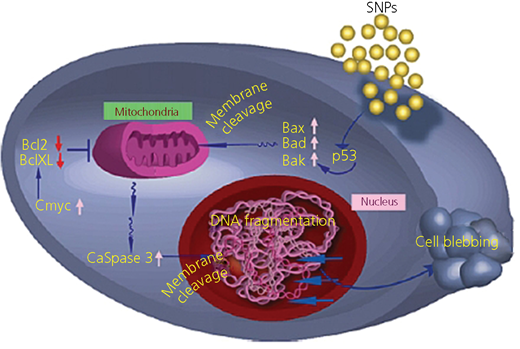
Figure 8

Mechanism of action of SNPs on oncogenes

Figure 8

Mechanism of action of SNPs on oncogenes

Close modal

NPs, once attached to the cell membrane, damage the integrity of the membrane and trigger the activation of p53 protein. In turn, p53, a known activator of proapoptotic gene, activates Bax, Bad and Bak. These activated proteins are known to cause mitochondrial membrane leakage and release cytochrome complex, which, in a cascade reaction, activates caspase-3. Bcl-xL (B-cell lymphoma-extra large) and Bcl 2 (B-cell lymphoma 2) are proteins in humans encoded by the Bax gene Bcl-xL, corroborating manifestation of apoptosis and consequent cell blebbing. Phytofabricated SNPs possess great selectivity to cancer cells and can display potential application in cancer chemoprevention and chemotherapy. SNPs have striking antiangiogenic properties and the ability to block the activity of abnormally expressed signaling proteins.

When SNPs are exposed to certain mammalian cells, some proteins such as interleukins, macrophage colony-stimulating factor and macrophage inflammatory proteins are activated and upregulated. SNPs can stimulate inflammatory cells. They play a vital role in the formation of ROS and damage the DNA of cancer cells; this ROS depletes glutathione in rat liver cell by way of damaging the mitochondria.

SNPs have large surface area-to-mass ratio, so they can provide a large functional surface to bind, absorb and carry other compounds such as drugs, probes and protein – for example, ligands have ability to find the receptor of targeted cells. Tumor cells are usually considered more acidic in nature, so SNPs release more in tumor cells than in normal cells. Currently, an in vivo study has examined the NP distribution with diameter greater than 100–150 nm to accumulate in tumors because of their higher extravasation in comparison with normal vasculature.152–154 

The cytostatic effect of metallic silver on cancer cells is due to active physichemical interaction of SNPs with bimolecular active functional groups of intercellular protein and DNA. SNP administration caused significant reduction of proliferation in glioblastoma multiforme (GBM) cells.155,156 Both proliferative and mitotic indices were significantly lower in the SNP group in comparison with control and placebo groups. Biogenic SNP accumulate in the nucleus of GBM cells, where they cause chromosome instability, malignancy in tumor cells and mitotic arrest.157 

Medicated SNPs bind with functional groups to inhibit the overexpression of cell division and signaling cascade; SNPs have the potential ability to cure GBM against cancer. Tumor-bearing mice have a longer survival time when SNPs are injected; the effect of SNPs is more potent than that of vincristine treatment.

The SNP active surface can directly induce the generation of free radicals; it causes DNA damage and disruption of mitochondrial membrane, potentially leading to releases of cytochrome complex and mitochondria-dependent apoptosis. The majority of anticancer drugs initiate apoptosis causing caspase IX overexpression, which, after activation, leads to apoptosis.

Cancer is treated by using different conventional treatments such as surgery, radiotherapy and chemotherapy, which pose harmful effects on healthy tissues of the body. Biogenically fabricated SNPs have increased their importance due to its eco-friendliness. Green synthesis is now overcoming the limitations of physical and chemical methods of formations of metallic NPs. Phytofabricated nanosilver particles are less time-consuming, cost-effective and non-toxic. Silver metal has shown significant potential as an antimicrobial and anticancer agent. When silver is used as phytofabricated SNPs with increased surface area, it has enhanced efficiency against microbes and oncogenes. This current review has summarized the mechanisms of action of SNPs in antimicrobial and anticancer activities.


1
Albrecht
MA
,
Evans
CW
,
Raston
CL
2006
Green chemistry and the health implications of nanoparticles
Green Chemistry
8
5
417
 -
432
2
Savithramma
N
,
Rao
ML
,
Rukmini
K
,
Devi
PS
2011
Antimicrobial activity of silver nanoparticles synthesized by using medicinal plants
International Journal of ChemTech Research
3
3
1394
 -
1402
3
Feynman
RP
1960
There’s plenty of room at the bottom
Engineering and science
23
5
22
 -
36
4
Sadowski
Z
2010
Biosynthesis and application of silver and gold nanoparticles
Silver Nanoparticles
Pozo
D
IntechOpen
London, UK
257
 -
276
5
Thirumurugan
A
,
Tomy
NA
,
Ganesh
RJ
,
Gobikrishnan
S
2010
Biological reduction of silver nanoparticles using plant leaf extracts and its effect on increased antimicrobial activity against clinically isolated organism
Der Pharma Chemica
2
6
279
 -
284
6
Nalwa
HS
2005
Handbook of Nanostructured Biomaterials and Their Applications in Nanobiotechnology: Biomaterials. 1
American Scientific
Valencia, CA, USA
1
7
Slawson
RM
,
Trevors
JT
,
Lee
H
1992
Silver accumulation and resistance in Pseudomonas stutzeri
Archives of Microbiology
158
6
398
 -
404
8
Zhao
G
,
Stevens Jr
SE
1998
Multiple parameters for the comprehensive evaluation of the susceptibility of Escherichia coli to the silver ion
Biometals
11
1
27
 -
32
9
Prabhu
S
,
Poulose
EK
2012
Silver nanoparticles: mechanism of antimicrobial action, synthesis, medical applications, and toxicity effects
International Nano Letters
2
1
1
 -
10
10
Kirsner
R
,
Orsted
H
,
Wright
JB
2001
The role of silver in wound healing: part 3: matrix metalloproteinases in normal and impaired wound healing
Wounds
13
3
5
 -
10
11
Tian
J
,
Wong
KK
,
Ho
CM
, et al
2007
Topical delivery of silver nanoparticles promotes wound healing
ChemMedChem
2
1
129
 -
136
12
Haefeli
C
,
Franklin
C
,
Hardy
K
1984
Plasmid-determined silver resistance in Pseudomonas stutzeri isolated from a silver mine
Journal of Bacteriology
158
1
389
 -
392
13
Shin
SH
,
Ye MK Kim
HS
,
Kang
HS
2007
The effects of nano-silver on the proliferation and cytokine expression by peripheral blood mononuclear cells
International Immunopharmacology
7
13
1813
 -
1818
14
Altv
B
2004
Nanoparticulate silver: a new antimicrobial substance for bone cement
Orthopade
33
8
885
 -
892
15
Cohen
MS
,
Stern
JM
,
Vanni
AJ
, et al
2007
In vitro analysis of a nanocrystalline silver-coated surgical mesh
Surgical Infections
8
3
397
 -
404
16
Kanchana
A
,
Balakrishna
M
2011
Anti-cancer effect of saponins isolated from Solanum trilobatum leaf extract and induction of apoptosis in human larynx cancer cell lines
International Journal of Pharmacy and Pharmaceutical Sciences
3
4
356
 -
364
17
Thirumalai
AV
,
Prabhu
D
,
Soniya
M
2010
Stable silver nanoparticle synthesizing methods and its applications
Journal of Biological Sciences Research
1
4
259
 -
270
18
Meyers
MA
,
Mishra
A
,
Benson
DJ
2006
Mechanical properties of nanocrystalline materials
Progress in Materials Science
51
4
427
 -
556
19
Amulyavichus
A
,
Daugvila
A
,
Davidonis
R
,
Sipavichus
C
1998
Study of chemical composition of nanostructural materials prepared by laser cutting of metals
Fizika Metallov I Metallovedenie
85
1
111
 -
117
20
Husseiny
MI
,
El-Aziz
MA
,
Badr
Y
,
Mahmoud
MA
2007
Biosynthesis of gold nanoparticles using Pseudomonas aeruginosa
Spectrochimica Acta Part A: Molecular and Biomolecular Spectroscopy
67
3
1003
 -
1006
21
Vaidyanathan
R
,
Gopalram
S
,
Kalishwaralal
K
, et al
2010
Enhanced silver nanoparticle synthesis by optimization of nitrate reductase activity
Colloids and Surfaces B: Biointerfaces
75
1
335
 -
341
22
Mohanpuria
P
,
Rana
NK
,
Yadav
SK
2008
Biosynthesis of nanoparticles: technological concepts and future applications
Journal of Nanoparticle Research
10
3
507
 -
517
23
Mukherjee
P
,
Ahmad
A
,
Mandal
D
, et al
2001
Fungus-mediated synthesis of silver nanoparticles and their immobilization in the mycelial matrix: a novel biological approach to nanoparticle synthesis
Nano Letters
1
10
515
 -
519
24
Duran
N
,
Marcato
PD
,
Alves
OL
,
De Souza
GI
,
Esposito
E
2005
Mechanistic aspects of biosynthesis of silver nanoparticles by several Fusarium oxysporum strains
Journal of Nanobiotechnology
3
1
1
 -
7
25
Li
S
,
Shen
Y
,
Xie
A
, et al
2007
Green synthesis of silver nanoparticles using Capsicum annuum L. extract
Green Chemistry
9
8
852
 -
858
26
Saxena
A
,
Tripathi
RM
,
Singh
RP
2010
Biological synthesis of silver nanoparticles by using onion (Allium cepa) extract and their antibacterial activity
Digest Journal of Nanomaterials and Biostructures
5
2
427
 -
432
27
Sharma
NC
,
Sahi
SV
,
Nath
S
, et al
2007
Synthesis of plant-mediated gold nanoparticles and catalytic role of biomatrix-embedded nanomaterials
Environmental Science & Technology
41
14
5137
 -
5142
28
Chandran
SP
,
Chaudhary
M
,
Pasricha
R
,
Ahmad
A
,
Sastry
M
2006
Synthesis of gold nanotriangles and silver nanoparticles using Aloe vera plant extract
Biotechnology Progress
22
2
577
 -
583
29
Saxena
A
,
Tripathi
RM
,
Zafar
F
,
Singh
P
2012
Green synthesis of silver nanoparticles using aqueous solution of Ficus benghalensis leaf extract and characterization of their antibacterial activity
Materials Letters
67
1
91
 -
94
30
Akhtar
MK
,
Turner
NJ
,
Jones
PR
2013
Carboxylic acid reductase is a versatile enzyme for the conversion of fatty acids into fuels and chemical commodities
Proceedings of the National Academy of Sciences
110
1
87
 -
92
31
Munsif
V
,
Raghunandan
K
,
Rama
DV
,
Singhvi
M
2011
Audit fees after remediation of internal control weaknesses
Accounting Horizons
25
1
87
 -
105
32
Schaffer
B
,
Hohenester
U
,
Trügler
A
,
Hofer
F
2009
High-resolution surface plasmon imaging of gold nanoparticles by energy-filtered transmission electron microscopy
Physical Review B
79
4
411
 -
419
33
Chithrani
BD
,
Ghazani
AA
,
Chan
WC
2006
Determining the size and shape dependence of gold nanoparticle uptake into mammalian cells
Nano Letters
6
4
662
 -
668
34
Sun
S
,
Murray
CB
,
Weller
D
,
Folks
L
,
Moser
A
2000
Monodisperse FePt nanoparticles and ferromagnetic FePt nanocrystal superlattices
Science
287
5460
1989
 -
1992
35
Krishnaraj
C
,
Jagan
EG
,
Rajasekar
S
, et al
2010
Synthesis of silver nanoparticles using Acalypha indica leaf extracts and its antibacterial activity against water borne pathogens
Colloids and Surfaces B: Biointerfaces
76
1
50
 -
56
36
Kiruba Daniel
SCG
,
Ayyappan
S
,
Philiphan
NJP
, et al
2011
Green synthesis and transfer of silver nanoparticles in a food chain through Chiranamous larva to zebra fish – A new approach for therapeutics
International Journal of Nanoscience
2
159
 -
169
37
Von White
G II
,
Kerscher
P
,
Brown
RM
, et al
2012
Green synthesis of robust, biocompatible silver nanoparticles using garlic extract
Journal of Nanomaterials
2012
1–12
730746
38
Chandran
SP
,
Chaudhary
M
,
Pasricha
R
,
Ahmad
A
,
Sastry
M
2006
Synthesis of gold nanotriangles and silver nanoparticles using Aloe vera plant extract
Biotechnology Progress
22
2
577
 -
583
39
Thirumurugan
A
,
Jiflin
GJ
,
Rajagomathi
G
, et al
2010
Biotechnological synthesis of gold nanoparticles of Azadirachta indica leaf extract
International Journal of Biological Technology
1
75
 -
77
40
Kora
AJ
,
Arunachalam
J
2012
Green fabrication of silver nanoparticles by gum Tragacanth (Astragalus gummifer): a dual functional reductant and stabilizer
Journal of Nanomaterials
2012
1–8
869765
41
Jayashree
S
,
Vani
GS
2016
In vitro study on antibacterial activity of aqueous extract and silver nanoparticles of Andrographis paniculata
International Journal of Current Microbiology and Applied Sciences
5
5
400
 -
406
42
Sheny
DS
,
Mathew
J
,
Philip
D
2011
Phytosynthesis of Au, Ag and Au–Ag bimetallic nanoparticles using aqueous extract and dried leaf of Anacardium occidentale
Spectrochimica Acta Part A: Molecular and Biomolecular Spectroscopy
79
1
254
 -
262
43
Parida
UK
,
Bindhani
BK
,
Nayak
P
2011
Green synthesis and characterization of gold nanoparticles using onion (Allium cepa) extract
World Journal of Nano Science and Engineering
1
4
93
 -
98
44
Shankar
SS
,
Rai A Ahmad
A
,
Sastry
M
2005
Controlling the optical properties of lemongrass extract synthesized gold nanotriangles and potential application in infrared-absorbing optical coatings
Chemistry of Materials
17
3
566
 -
572
45
Singh
A
,
Jain
D
,
Upadhyay
MK
,
Khandelwal
N
,
Verma
HN
2010
Green synthesis of silver nanoparticles using Argemone mexicana leaf extract and evaluation of their antimicrobial activities
Digest Journal of Nanomaterials and Biostructures
5
2
483
 -
489
46
Ankanna
S
,
Tollamadugu
NVKVP
,
Elumalai
EK
,
Savithramma
N
2010
Production of biogenic silver nanoparticles using Boswellia ovalifoliolata stem bark
Digest Journal of Nanomaterials and Biostructures
5
2
369
 -
372
47
Marshall
AT
,
Haverkamp
RG
,
Davies
CE
, et al
2007
Accumulation of gold nanoparticles in Brassic juncea
International Journal of Phytoremediation
9
3
197
 -
206
48
Beheraa
S
,
Mallickb
B
,
Tiwaric
TN
,
Mishrad
PC
2011
Biosynthesis, characterization and antimicrobial studies of AgNPs extract from Bacopa monniera whole plant
Digest Journal of Nanomaterials and Biostructures
6
135
 -
142
49
Jha
AK
,
Prasad
K
2010
Green synthesis of silver nanoparticles using Cycas leaf
International Journal of Green Nanotechnology: Physics and Chemistry
1
2
P110
 -
P117
50
Kumar
V
,
Yadav
SK
2011
Synthesis of variable shaped gold nanoparticles in one solution using leaf extract of Bauhinia variegata L
Digest Journal of Nanomaterials and Biostructures
6
4
1685
 -
1693
51
Huang
J
,
Li
Q
,
Sun
D
, et al
2007
Biosynthesis of silver and gold nanoparticles by novel sundried Cinnamomum camphora leaf
Nanotechnology
18
10
105104
52
Sathishkumar
M
,
Sneha
K
,
Kwak
IS
, et al
2009
Phytocrystallization of palladium through reduction process using Cinnamom zeylanicum bark extract
Journal of Hazardous Materials
171
1
400
 -
404
53
Narayanan
KB
,
Sakthivel
N
2008
Coriander leaf mediated biosynthesis of gold nanoparticles
Materials Letters
62
30
4588
 -
4590
54
Sathyavathi
R
,
Krishna
MB
,
Rao
SV
,
Saritha
R
,
Rao
DN
2010
Biosynthesis of silver nanoparticles using Coriandrum sativum leaf extract and their application in nonlinear optics
Advanced Science Letters
3
2
138
 -
143
55
Sathishkumar
M
,
Sneha
K
,
Yun
YS
2010
Immobilization of silver nanoparticles synthesized using Curcuma longa tuber powder and extract on cotton cloth for bactericidal activity
Bioresource Technology
101
20
7958
 -
7965
56
Kannan
N
,
Mukunthan
KS
,
Balaji
S
2011
A comparative study of morphology, reactivity and stability of synthesized silver nanoparticles using Bacillus subtilis and Catharanthus roseus (L.) G. Don
Colloids and Surfaces B: Biointerfaces
86
2
378
 -
383
57
Boruah
SK
,
Boruah
PK
,
Sarma
P
,
Medhi
C
,
Medhi
OK
2012
Green synthesis of gold nanoparticles using Camellia sinensis and kinetics of the reaction
Advanced Materials Letters
3
6
481
 -
486
58
Palaniselvam
K
,
Velanganni
AAJ
,
Govindan
SN
,
Karthi
2012
Leaf assisted bioreduction of silver ions using leaves of Centella asiatica L. and its bioactivity
Life Sciences
1
46
 -
49
59
Dwivedi
AD
,
Gopal
K
2011
Plant-mediated biosynthesis of silver and gold nanoparticles
Journal of Biomedical Nanotechnology
7
1
163
 -
164
60
Vanaja
M
,
Annadurai
G
2013
Coleus aromaticus leaf extract mediated synthesis of silver nanoparticles and its bactericidal activity
Applied Nanoscience
3
3
217
 -
223
61
Priya
MM
,
Selvi
BK
,
Paul
JA
2011
Green synthesis of silver nanoparticles from the leaf extracts of Euphorbia hirta and Nerium indicum
Digest Journal of Nanomaterials and Biostructures
6
2
869
 -
877
62
He
Y
,
Du
Z
,
Lv
H
, et al
2013
Green synthesis of silver nanoparticles by Chrysanthemum morifolium Ramat. extract and their application in clinical ultrasound gel
International Journal of Nanomedicine
8
1
1809
 -
1815
63
Arunachalam
KD
,
Annamalai
SK
2013
Chrysopogon zizanioides aqueous extract mediated synthesis, characterization of crystalline silver and gold nanoparticles for biomedical applications
International Journal of Nanomedicine
8
1
2375
 -
2384
64
Arokiyaraj
S
,
Arasu
MV
,
Vincent
S
, et al
2014
Rapid green synthesis of silver nanoparticles from Chrysanthemum indicum L and its antibacterial and cytotoxic effects: an in vitro study
International Journal of Nanomedicine
9
1
379
 -
388
65
Kesharwani
J
,
Yoon
KY
,
Hwang
J
,
Rai
M
2009
Phytofabrication of silver nanoparticles by leaf extract of Datura metel: hypothetical mechanism involved in synthesis
Journal of Bionanoscience
3
1
39
 -
44
66
Ahmad
N
,
Sharma
S
,
Singh
VN
, et al
2010
Biosynthesis of silver nanoparticles from Desmodium triflorum: a novel approach towards weed utilization
Biotechnology Research International
2011
454090
67
Ahire
M
,
Pardesi
K
,
Bellare
J
, et al
2012
Synthesis of silver nanoparticles using Dioscorea bulbifera tuber extract and evaluation of its synergistic potential in combination with antimicrobial agents
International Journal of Nanomedicine
7
483
 -
496
68
Song
JY
,
Kwon
EY
,
Kim
BS
2010
Biological synthesis of platinum nanoparticles using Diopyros kaki leaf extract
Bioprocess and Biosystems Engineering
33
1
159
 -
164
69
Maheswari
RU
,
Prabha
AL
,
Nandagopalan
V
,
Anburaja
V
2012
Green synthesis of silver nanoparticles by using rhizome extract of Dioscorea oppositifolia L. and their anti-microbial activity against human pathogens
Journal of Pharmaceutical and Biological Sciences
1
38
 -
42
70
Singh
C
,
Baboota
RK
,
Naik
PK
,
Singh
H
2012
Biocompatible synthesis of silver and gold nanoparticles using leaf extract of Dalbergia sissoo
Advanced Materials Letters
3
4
279
 -
285
71
Gnanajobitha
G
,
Annadurai
G
,
Kannan
C
2012
Green synthesis of silver nanoparticle using Elettaria cardamomom and assessment of its antimicrobial activity
International Journal of Pharmaceutical Sciences and Research
3
323
 -
330
72
Rajakumar
G
,
Rahuman
AA
2011
Larvicidal activity of synthesized silver nanoparticles using Eclipta prostrata leaf extract against filariasis and malaria vectors
Acta Tropica
118
3
196
 -
203
73
Patil
RS
,
Kokate
MR
,
Kolekar
SS
2012
Bioinspired synthesis of highly stabilized silver nanoparticles using Ocimum tenuiflorum leaf extract and their antibacterial activity
Spectrochimica Acta Part A: Molecular and Biomolecular Spectroscopy
91
234
 -
238
74
Valodkar
M
,
Nagar
PS
,
Jadeja
RN
, et al
2011
Euphorbiaceae latex induced green synthesis of non-cytotoxic metallic nanoparticle solutions: a rational approach to antimicrobial applications
Colloids and Surfaces A: Physicochemical and Engineering Aspects
384
1
337
 -
344
75
Ankamwar
B
,
Damle
C
,
Ahmad
A
,
Sastry
M
2005
Biosynthesis of gold and silver nanoparticles using Emblica officinalis fruit extract, their phase transfer and transmetallation in an organic solution
Journal of Nanoscience and Nanotechnology
5
10
1665
 -
1671
76
Elumalai
EK
,
Prasad
TNVKV
,
Hemachandran
J
, et al
2010
Extracellular synthesis of silver nanoparticles using leaves of Euphorbia hirta and their antibacterial activities
Journal of Pharmaceutical Sciences and Research
2
9
549
 -
554
77
Dubey
M
,
Bhadauria
S
,
Kushwah
BS
2009
Green synthesis of nanosilver particles from extract of Eucalyptus hybrida (safeda) leaf
Digest Journal of Nanomaterials and Biostructures
4
3
537
 -
543
78
Jegadeeswaran
P
,
Shivaraj
R
,
Venckatesh
R
2012
Green synthesis of silver nanoparticles from extract of Padina tetrastromatica leaf
Digest Journal of Nanomaterials and Biostructures
7
3
991
 -
998
79
Shankar
SS
,
Ahmad
A
,
Sastry
M
2003
Geranium leaf assisted biosynthesis of silver nanoparticles
Biotechnology Progress
19
6
1627
 -
1631
80
Raut
RW
,
Lakkakula
JR
,
Kolekar
NS
,
Mendhulkar
VD
,
Kashid
SB
2009
Phytosynthesis of silver nanoparticle using Gliricidia sepium (Jacq.)
Current Nanoscience
5
1
117
 -
122
81
Jia
L
,
Zhang
Q
,
Li
Q
,
Song
H
2009
The biosynthesis of palladium nanoparticles by antioxidants in Gardenia jasminoides Ellis: long lifetime nanocatalysts for p-nitrotoluene hydrogenation
Nanotechnology
20
38
385601
82
Dinesh
S
,
Karthikeyan
S
,
Arumugam
P
2012
Biosynthesis of silver nanoparticles from Glycyrrhiza glabra root extract
Archives of Applied Science Research
4
1
178
 -
187
83
Bindhu
MR
,
Umadevi
M
2013
Synthesis of monodispersed silver nanoparticles using Hibiscus cannabinus leaf extract and its antimicrobial activity
Spectrochimica Acta Part A: Molecular and Biomolecular Spectroscopy
101
184
 -
190
84
Sable
N
,
Gaikwad
S
,
Bonde
S
,
Gade
A
,
Rai
M
2012
Phytofabrication of silver nanoparticles by using aquatic plant Hydrilla verticilata
Nusantara Bioscience
4
2
45
 -
49
85
Rai
A
,
Singh
A
,
Ahmad
A
,
Sastry
M
2006
Role of halide ions and temperature on the morphology of biologically synthesized gold nanotriangles
Langmuir
22
2
736
 -
741
86
Kasthuri
J
,
Veerapandian
S
,
Rajendiran
N
2009
Biological synthesis of silver and gold nanoparticles using apiin as reducing agent
Colloids and Surfaces B: Biointerfaces
68
1
55
 -
60
87
Philip
D
2010
Honey mediated green synthesis of silver nanoparticles
Spectrochimica Acta Part A: Molecular and Biomolecular Spectroscopy
75
3
1078
 -
1081
88
Daniel
SK
,
Banu
BN
,
Harshiny
M
, et al
2014
Ipomea carnea-based silver nanoparticle synthesis for antibacterial activity against selected human pathogens
Journal of Experimental Nanoscience
9
2
197
 -
209
89
Bar
H
,
Bhui
DK
,
Sahoo
GP
, et al
2009
Green synthesis of silver nanoparticles using latex of Jatropha curcas
Colloids and surfaces A: Physicochemical and Engineering Aspects
339
1
134
 -
139
90
Hudlikar
M
,
Joglekar
S
,
Dhaygude
M
,
Kodam
K
2012
Latex-mediated synthesis of ZnS nanoparticles: green synthesis approach
Journal of Nanoparticle Research
14
5
1
 -
6
91
Fazaludeen
MF
,
Manickam
C
,
Ashankyty
IM
,
Ahmed
MQ
,
Beg
QZ
2012
Synthesis and characterizations of gold nanoparticles by Justicia gendarussa Burm F leaf extract
Journal of Microbiology and Biotechnology Research
2
1
23
 -
34
92
Sivakumar
P
,
Nethradevi
C
,
Renganathan
S
2012
Synthesis of silver nanoparticles using Lantana camara fruit extract and its effect on pathogens
Asian Journal of Pharmaceutical and Clinical Research
5
3
97
 -
101
93
Im
A
,
Han
L
,
Kim
E
, et al
2012
Enhanced antibacterial activities of Leonuri herba extracts containing silver nanoparticles
Phytotherapy Research
26
8
1249
 -
1255
94
Karuppiah
M
,
Rajmohan
R
2013
Green synthesis of silver nanoparticles using Ixora coccinea leaves extract
Materials Letters
97
141
 -
143
95
MubarakAli
D
,
Thajuddin
N
,
Jeganathan
K
,
Gunasekaran
M
2011
Plant extract mediated synthesis of silver and gold nanoparticles and its antibacterial activity against clinically isolated pathogens
Colloids and Surfaces B: Biointerfaces
85
2
360
 -
365
96
Bankar
A
,
Joshi
B
,
Kumar
AR
,
Zinjarde
S
2010
Banana peel extract mediated novel route for the synthesis of silver nanoparticles
Colloids and Surfaces A: Physicochemical and Engineering Aspects
368
1
58
 -
63
97
Aromal
SA
,
Vidhu
VK
,
Philip
D
2012
Green synthesis of well-dispersed gold nanoparticles using Macrotyloma uniflorum
Spectrochimica Acta Part A: Molecular and Biomolecular Spectroscopy
85
1
99
 -
104
98
Vankar
PS
,
Bajpai
D
2010
Preparation of gold nanoparticles from Mirabilis jalapa flowers
Indian Journal of Biochemistry and Biophysics
47
3
157
 -
160
99
Jancy
ME
,
Inbathamizh
L
2012
Green synthesis and characterization of nano silver using leaf extract of Morinda pubescens
Asian Journal of Pharmaceutical and Clinical Research
5
1
159
 -
162
100
Parashar
UK
,
Saxena
PS
,
Srivastava
A
2009
Bioinspired synthesis of silver nanoparticles
Digest Journal of Nanomaterials and Biostructures
4
1
159
 -
166
101
Suman
TY
,
Rajasree
SR
,
Kanchana
A
,
Elizabeth
SB
2013
Biosynthesis, characterization and cytotoxic effect of plant mediated silver nanoparticles using Morinda citrifolia root extract
Colloids and Surfaces B: Biointerfaces
106
74
 -
78
102
Prasad
KS
,
Pathak
D
,
Patel
A
, et al
2011
Biogenic synthesis of silver nanoparticles using Nicotiana tobaccum leaf extract and study of their antibacterial effect
African Journal of Biotechnology
10
41
8122
 -
8130
103
Santhoshkumar
T
,
Rahuman
AA
,
Rajakumar
G
, et al
2011
Synthesis of silver nanoparticles using Nelumbo nucifera leaf extract and its larvicidal activity against malaria and filariasis vectors
Parasitology Research
108
3
693
 -
702
104
Ahmad
N
,
Sharma
S
,
Alam
MK
, et al
2010
Rapid synthesis of silver nanoparticles using dried medicinal plant of basil
Colloids and Surfaces B: Biointerfaces
81
1
81
 -
86
105
Ramteke
C
,
Chakrabarti
T
,
Sarangi
BK
,
Pandey
RA
2012
Synthesis of silver nanoparticles from the aqueous extract of leaves of Ocimum sanctum for enhanced antibacterial activity
Journal of Chemistry
2013
1
 -
7
106
Soundarrajan
C
,
Sankari
A
,
Dhandapani
P
, et al
2012
Rapid biological synthesis of platinum nanoparticles using Ocimum sanctum for water electrolysis applications
Bioprocess and Biosystems Engineering
35
5
827
 -
833
107
Ashok Kumar
D
2012
Rapid and green synthesis of silver nanoparticles using the leaf extracts of Parthenium hysterophorus: a novel biological approach
International Research Journal of Pharmacy
3
169
 -
173
108
Abbasi
T
,
Anuradha
J
,
Ganaie
SU
,
Abbasi
SA
2015
Biomimetic synthesis of nanoparticles using aqueous extracts of plants (botanical species)
Journal of Nano Research
31
138
 -
202
109
Koduru
M
,
Dillip
GR
,
Narasimha
G
,
Nannepaga
JS
,
Borelli
DPR
2012
Phytofabrication and characterization of silver nanoparticles from Piper betle broth
Research Journal of Nanoscience and Nanotechnology
2
1
17
 -
23
110
Garg
S
2012
Rapid biogenic synthesis of silver nanoparticles using black pepper (Piper nigrum) corn extract
International Journal of Innovations in Biological and Chemical Sciences
3
5
 -
10
111
Patil
CD
,
Patil
SV
,
Borase
HP
,
Salunke
BK
,
Salunkhe
RB
2012
Larvicidal activity of silver nanoparticles synthesized using Plumeria rubra plant latex against Aedes aegypti and Anopheles stephensi
Parasitology Research
110
5
1815
 -
1822
112
Parashar
UK
,
Saxena
PS
,
Srivastava
A
2009
Bioinspired synthesis of silver nanoparticles
Digest Journal of Nanomaterials & Biostructures
4
1
159
 -
166
113
Shankar
SS
,
Ahmad
A
,
Sastry
M
2003
Geranium leaf assisted biosynthesis of silver nanoparticles
Biotechnology Progress
19
6
1627
 -
1631
114
Annamalai
A
,
Christina
VLP
,
Christina
V
,
Lakshmi
PTV
2014
Green synthesis and characterisation of Ag NPs using aqueous extract of Phyllanthus maderaspatensis L
Journal of Experimental Nanoscience
9
2
113
 -
119
115
Dubey
SP
,
Lahtinen
M
,
Sillanpää
M
2010
Green synthesis and characterizations of silver and gold nanoparticles using leaf extract of Rosa rugosa
Colloids and Surfaces A: Physicochemical and Engineering Aspects
364
1
34
 -
41
116
Nabikhan
A
,
Kandasamy
K
,
Raj
A
,
Alikunhi
NM
2010
Synthesis of antimicrobial silver nanoparticles by callus and leaf extracts from saltmarsh plant, Sesuvium portulacastrum L
Colloids and Surfaces B: Biointerfaces
79
2
488
 -
493
117
Amin
M
,
Anwar
F
,
Janjua
MRSA
,
Iqbal
MA
,
Rashid
U
2012
Green synthesis of silver nanoparticles through reduction with Solanum xanthocarpum L. berry extract: characterization, antimicrobial and urease inhibitory activities against Helicobacter pylori
International Journal of Molecular Sciences
13
8
9923
 -
9941
118
Njagi
EC
,
Huang
H
,
Stafford
L
, et al
2010
Biosynthesis of iron and silver nanoparticles at room temperature using aqueous sorghum bran extracts
Langmuir
27
1
264
 -
271
119
Petla
RK
,
Vivekanandhan
S
,
Misra
M
,
Mohanty
AK
,
Satyanarayana
N
2012
Soybean (Glycine max) leaf extract based green synthesis of palladium nanoparticles
Journal of Biomaterials and Nanobiotechnology
3
1
14
 -
19
120
Mondal
S
,
Roy
N
,
Laskar
RA
, et al
2011
Biogenic synthesis of Ag, Au and bimetallic Au/Ag alloy nanoparticles using aqueous extract of mahogany (Swietenia mahogani Jacq.) leaves
Colloids and Surfaces B: Biointerfaces
82
2
497
 -
504
121
Nabikhan
A
,
Kandasamy
K
,
Raj
A
,
Alikunhi
NM
2010
Synthesis of antimicrobial silver nanoparticles by callus and leaf extracts from saltmarsh plant, Sesuvium portulacastrum L
Colloids and Surfaces B: Biointerfaces
79
2
488
 -
493
122
Prasad
R
,
Swamy
VS
2012
Antibacterial activity of silver nanoparticles synthesized by bark extract of Syzygium cumini
International Journal of Pharma and Biosciences
2012
1
 -
6
123
Prasad
R
,
Swamy
VS
2013
Antibacterial activity of silver nanoparticles synthesized by bark extract of Syzygium cumini
Journal of Nanoparticles
2013
431218
124
Swamy
VS
,
Prasad
R
2012
Green synthesis of silver nanoparticles from the leaf extract of Santalum album and its antimicrobial activity
Journal of Optoelectronic and Biomedical Materials
4
3
53
 -
59
125
Ramamurthy
CH
,
Padma
M
,
Mareeswaran
R
, et al
2013
The extra cellular synthesis of gold and silver nanoparticles and their free radical scavenging and antibacterial properties
Colloids and Surfaces B: Biointerfaces
102
808
 -
815
126
Ankamwar
B
2010
Biosynthesis of gold nanoparticles (green-gold) using leaf extract of Terminalia catappa
Journal of Chemistry
7
4
1334
 -
1339
127
Geethalakshmi
R
,
Sarada
DVL
2010
Synthesis of plant-mediated silver nanoparticles using Trianthema decandra extract and evaluation of their anti-microbial activities
International Journal of Engineering Science and Technology
2
5
970
 -
975
128
Gopalakrishnan
K
,
Ramesh
C
,
Ragunathan
V
,
Thamilselvan
M
2012
Antibacterial activity of Cu2O nanoparticles on E. coli synthesized from Tridax procumbens leaf extract and surface coating with polyaniline
Digest Journal of Nanomaterials and Biostructures
7
2
833
 -
839
129
Pandey
S
,
Mewada
A
,
Thakur
M
, et al
2013
Rapid biosynthesis of silver nanoparticles by exploiting the reducing potential of Trapa bispinosa peel extract
Journal of Nanoscience
2013
1
 -
9
130
Pavani
KV
,
Swati
T
,
Snehika
V
,
Sravya
K
,
Sirisha
M
2012
Phytofabrication of lead nanoparticles using grape skin extract
International Journal of Engineering Science and Technology
1
4
3376
 -
3380
131
Zargar
M
,
Hamid
AA
,
Bakar
FA
, et al
2011
Green synthesis and antibacterial effect of silver nanoparticles using Vitex negundo L
Molecules
16
8
6667
 -
6676
132
Singh
C
,
Sharma
V
,
Naik
PK
,
KHandelwal
V
,
Singh
H
2011
A green biogenic approach for synthesis of gold and silver nanoparticles using Zingiber officinale
Digest Journal of Nanomaterials and Biostructures
6
2
535
 -
542
133
Klueh
U
,
Wagner
V
,
Kelly
S
,
Johnson
A
,
Bryers
JD
2000
Efficacy of silver-coated fabric to prevent bacterial colonization and subsequent device-based biofilm formation
Journal of Biomedical Materials Research
53
6
621
 -
631
134
Sondi
I
,
Salopek-Sondi
B
2004
Silver nanoparticles as antimicrobial agent: a case study on E. coli as a model for Gram-negative bacteria
Journal of Colloid and Interface Science
275
1
177
 -
182
135
Wright
JB
,
Lam
K
,
Hansen
D
,
Burrell
RE
1999
Efficacy of topical silver against fungal burn wound pathogens
American Journal of Infection Control
27
4
344
 -
350
136
Eby
DM
,
Schaeublin
NM
,
Farrington
KE
,
Hussain
SM
,
Johnson
GR
2009
Lysozyme catalyzes the formation of antimicrobial silver nanoparticles
ACS Nano
3
4
984
 -
994
137
Sharma
VK
,
Yngard
RA
,
Lin
Y
2009
Silver nanoparticles: green synthesis and their antimicrobial activities
Advances in colloid and Interface Science
145
1
83
 -
96
138
Park
J
,
Lim
DH
,
Lim
HJ
, et al
2011
Size dependent macrophage responses and toxicological effects of Ag nanoparticles
Chemical Communications
47
15
4382
 -
4384
139
Danilczuk
M
,
Lund
A
,
Sadlo
J
,
Yamada
H
,
Michalik
J
2006
Conduction electron spin resonance of small silver particles
Spectrochimica Acta Part A: Molecular and Biomolecular Spectroscopy
63
1
189
 -
191
140
Kim
JS
,
Kuk
E
,
Yu
KN
, et al
2007
Antimicrobial effects of silver nanoparticles
Nanomedicine: Nanotechnology, Biology and Medicine
3
1
95
 -
101
141
Morones
JR
,
Elechiguerra
JL
,
Camacho
A
, et al
2005
The bactericidal effect of silver nanoparticles
Nanotechnology
16
10
2346
142
Hatchett
DW
,
White
HS
1996
Electrochemistry of sulfur adlayers on the low-index faces of silver
Journal of Physical Chemistry
100
23
9854
 -
9859
143
Shrivastava
S
,
Bera
T
,
Roy
A
, et al
2007
Characterization of enhanced antibacterial effects of novel silver nanoparticles
Nanotechnology
18
22
225103
144
Sadeghi
B
,
Gholamhoseinpoor
F
2015
A study on the stability and green synthesis of silver nanoparticles using Ziziphora tenuior (Zt) extract at room temperature
Spectrochimica Acta Part A: Molecular and Biomolecular Spectroscopy
134
310
 -
315
145
Jia
X
,
Ma
X
,
Wei
D
,
Dong
J
,
Qian
W
2008
Direct formation of silver nanoparticles in cuttlebone-derived organic matrix for catalytic applications
Colloids and Surfaces A: Physicochemical and Engineering Aspects
330
2
234
 -
240
146
Rai
M
,
Yadav
A
,
Gade
A
2009
Silver nanoparticles as a new generation of antimicrobials
Biotechnology Advances
27
1
76
 -
83
147
Kumar
PV
,
Pammi
SVN
,
Kollu
P
,
Satyanarayana
KVV
,
Shameem
U
2014
Green synthesis and characterization of silver nanoparticles using Boerhaavia diffusa plant extract and their anti-bacterial activity
Industrial Crops and Products
52
562
 -
566
148
Singh
M
,
Kumar
M
,
Kalaivani
R
,
Manikandan
S
,
Kumaraguru
AK
2013
Metallic silver nanoparticle: a therapeutic agent in combination with antifungal drug against human fungal pathogen
Bioprocess and Biosystems Engineering
36
4
407
 -
415
149
Sahayaraj
K
,
Rajesh
S
2011
Bionanoparticles: synthesis and antimicrobial applications
Science against Microbial Pathogens: Communicating Current Research and Technological Advances
Crop Protection Research Centre
Tamil Nadu, India
228
 -
244
150
Shawkey
AM
,
Rabeh
MA
,
Abdullah
AK
,
Abdellatif
OF
2013
Green nanotechnology: anticancer activity of silver nanoparticles using Citrullus colocynthis aqueous extracts
Advances in Life Science and Technology
13
60
 -
70
151
Selim
ME
,
Hendi
AA
2012
Gold nanoparticles induce apoptosis in MCF-7 human breast cancer cells
Asian Pacific Journal of Cancer Prevention
13
4
1617
 -
1620
152
Hernández-Pedro
NY
,
Rangel-López
E
,
Magaña-Maldonado
R
, et al
2013
Application of nanoparticles on diagnosis and therapy in gliomas
BioMed Research International
2013
351031
153
Prasek
M
,
Sawosz
E
,
Jaworski
S
, et al
2013
Influence of nanoparticles of platinum on chicken embryo development and brain morphology
Nanoscale Research Letters
8
1
251
154
Shi
Y
,
Wang
FHEJ
,
Yadav
S
,
Wang
H
2010
Titanium dioxide nanoparticles cause apoptosis in BEAS-2B cells through the caspase 8/t-Bid-independent mitochondrial pathway
Toxicology Letters
196
1
21
 -
27
155
Peng
SF
,
Lee
CY
,
Hour
MJ
, et al
2014
Curcumin-loaded nanoparticles enhance apoptotic cell death of U2OS human osteosarcoma cells through the Akt-Bad signaling pathway
International Journal of Oncology
44
1
238
 -
246
156
Ostrovsky
S
,
Kazimirsky
G
,
Gedanken
A
,
Brodie
C
2009
Selective cytotoxic effect of ZnO nanoparticles on glioma cells
Nano Research
2
11
882
 -
890
157
Zarnescu
O
,
Brehar
FM
,
Chivu
M
,
Ciurea
AV
2008
Immunohistochemical localization of caspase-3, caspase-9 and Bax in U87 glioblastoma xenografts
Journal of Molecular Histology
39
6
561
 -
569

or Create an Account

Close Modal
Close Modal