Artificial intelligence (AI) is changing entire business models and markets, and we are arguably witnessing only the beginning of its impact on business-to-business (B2B) firms and markets. While new technologies and transformations have been core areas in the B2B marketing literature and, thus, theories, models and frameworks for managing digital innovation already exist, the managerial realities AI imposes on organizations are manyfold and potential impacts have arguably been listed in an unstructured, random and eclectic way. The purpose of this paper is to offer a framework structuring advantages and disadvantages of AI.
Against this backdrop, the authors conceptualize a framework entailing 10 specific features creating a consolidated overview and reflecting the potentially paradoxical tensions between the advantages and disadvantages inherent in AI projects. The framework makes these tensions explicit and managerially addressable. The authors field tested the framework with 145 executives to judge its relevance and viability.
The paper presents a field-tested framework which enables managerial practice and guides further research.
The paper presents an inclusive framework that summarizes a wide area of arguments into a unique framework.
1. Introduction
Artificial intelligence (AI) is currently the subject of extensive attention and development (e.g. Brynjolfsson et al., 2025), not only in a technical sense but also in its business application. Changes in business-to-business (B2B) firms’ work processes (e.g. AI in customer-relationship management, e.g. Ledro et al., 2022; B2B customer journeys, e.g. Andersson et al., 2024; GenAI and B2B sales processes, e.g. Rodriguez et al., 2025; AI and buying behavior, Osmonbekov et al., 2024), business-model transformations (e.g. the digitalization of B2B firms, e.g. Ritter and Pedersen, 2020; strengthening competitiveness and firm performance of B2B firms with AI, e.g. Mehta et al., 2025) and modifications of exchanges in B2B markets are materializing. We are likely witnessing only the beginning of this revolution. Breakthroughs in algorithms and computing power as well as the general democratization of AI tools through limited entry barriers create major shifts in how business operations should optimally be conducted in the future (Pedersen and Ritter, 2024, 2025).
Across industries, executives and boardrooms are grappling with how AI applications will move the needle in terms of optimization, innovation and value creation, thereby opening the next chapter in the long-standing discussion on how to balance exploitation and exploration initiatives in pursuit of organizational ambidexterity (e.g. Tushman and O’Reilly, 1996). AI can be seen as “prediction machines” that allow for faster, better and cheaper predictions and task performance (e.g. Agrawal et al., 2018). These promises apply to all kinds of organizations, including B2B firms and industrial networks. In fact, the development of the AI ecosystem is mainly a B2B phenomenon in which key players form a powerful network of B2B firms. Yet, AI also has potential downsides. As such, it can multiply and magnify existing biases and misbehavior. Hence, we propose viewing the advantages and disadvantages of AI in combination and explicitly, as they go hand in hand. In this regard, the application of AI should be understood as maneuvering among paradoxes, i.e. navigating persistent tensions over time.
Most organizations are considering the impact of AI on their business: will AI pose a unique opportunity? Is it an existential threat? Will business largely continue as usual? AI is a multifaceted technology (or, rather, a collection of different technologies and algorithms) that is poised to change how we work together (Kolbjørnsrud, 2023) and to provide a variety of customer experiences entailing both positive and negative outcomes, which are reflected in inherent tensions (Puntoni et al., 2020; Raisch and Krakowski, 2021). As such, companies are drawn to AI out of both hope and fear, with hope arising from the promises of AI’s inherent benefits and fear related to making mistakes, becoming obsolete or missing the boat on the most important technological development in recent years.
While digital transformation has been a key issue for B2B firms for several decades (e.g. Ritter and Pedersen, 2020), the new organizational reality imposed by AI arguably demands new frameworks for identifying, diagnosing and managing strategic issues related to AI’s adoption (Pedersen and Ritter, 2024, 2025). Therefore, the present paper has the objective of introducing a practical framework for aiding in the management of AI-projects, by identifying potential issues in a unique project profile. Against this backdrop, this paper introduces a framework for understanding the strategic tensions between the advantages and disadvantages of AI projects. The framework draws upon and integrates insights from the emerging and evolving literature on AI, while incorporating this stream of literature into a management-oriented framework. As such, we have distilled research-based insights into a framework entailing 10 specific and commonly experienced features (5 advantages and 5 disadvantages) upon which AI projects in B2B firms can be analyzed and assessed. The relevance, intuitiveness and viability of the framework have been tested and face-validated by executives. In large part, AI projects will often take place in a B2B context due to the supplier-driven nature of many AI solutions. As an example of this, Novo Nordisk collaborates with several AI suppliers on specific AI projects forming an industrial inter-organizational collaboration [1]. Moreover, AI agents have been predicted to displace and disrupt existing B2B sales processes [2]. In a similar vein, customer relationship management platforms like Salesforce increasingly rely upon AI technology to enable the industrial selling and marketing process [3]. It follows that B2B marketing is under immense changes due to AI and that such changes are often implemented through specific projects that enable both advantages and disadvantages.
The paper is organized as follows. In the next section, we briefly define AI and describe its development. Thereafter, the framework is contextualized, presented and illustrated using cases. Finally, we describe a field-tested process for applying the framework and outline managerial implications as well as avenues for further research.
2. AI between improvement and idiocy [4]
2.1 The definition of artificial intelligence
An analysis of definitions of “artificial intelligence” reveals fundamental conceptual ambiguity, suggesting that meaningfully defining AI is difficult (Haenlein and Kaplan, 2019; Pedersen and Ritter, 2025; Pedersen and Ritter, 2024). As noted by Haenlein and Kaplan (2019), the difficulties in properly defining AI predominantly rest on three main problems.
First, the definition of human intelligence is not clear. This problem affects definitions of AI (Pedersen and Ritter, 2025). Historically, much emphasis was put on logical thinking, mathematics and intelligence quotient (IQ) tests [5]. From that basis, intelligence has been extended to other areas, such as language and social intelligence, and it is now seen as a concept with up to nine dimensions (Gardner, 1999). Given that the definition of AI builds on the ongoing controversy regarding human intelligence, the conceptual problem carries over to AI.
A second challenge is the “AI effect”, which illustrates that what is considered “intelligent” behavior for a machine is a moving target – after a machine achieves a goal that was once perceived as unattainable, achieving that goal again is no longer viewed as a sign of intelligence (Haenlein and Kaplan, 2019; Pedersen and Ritter, 2024, 2025). For example, the fact that AI could beat a world champion in chess was once a global sensation. Today, every smartphone can run a chess application that humans cannot beat, and no one is surprised or particularly impressed by this feature (Haenlein and Kaplan, 2019). In other words, what is seen as “being intelligent” changes over time, and once a machine obtains a seemingly intelligent objective, it ceases to be perceived as being a sign of intelligence any longer.
Third, AI is an umbrella term that spans different technologies and algorithms, as well as a wide variety of application areas. For instance, AI encompasses different technological solutions, like machine learning, deep learning, generative AI and agentic AI, to mention just a few subfields. Moreover, different solutions draw upon different kinds of intelligence, and we have different levels of competency, such as artificial narrow intelligence, artificial general intelligence and artificial superintelligence (e.g. Haenlein and Kaplan, 2019). This adds to the difficulty of defining what and how well-developed AI is.
Thus, we highlight the pressing need to improve the definition of AI. The current ambiguity hinders the field’s development and leads to incompatible arguments and, ultimately, to unintelligent definitions of AI. Against this backdrop, we suggest that the present use of the term AI can best be described along three dimensions (see Pedersen and Ritter, 2024):
Digital: “Artificial” is used to signal that algorithms are used to process data on computers.
Task fulfillment: “Intelligence” is used to signal that the use of algorithms solves a task, so there is meaning in and reason for the application of algorithms.
Human comparison: The task is solved in a way that is as acceptable as a human solving the task. In fact, the task may be solved in an even better way compared to humans.
These three dimensions offer an analytical frame for discussing where different AI projects are located. Not all AI projects deliver in human comparisons and, most likely, not all tasks can or should be solved digitally. Sometimes, organizations develop great digital systems that are far better than humans but they cannot carry out tasks that are relevant for the organization.
2.2 The phases of artificial intelligence
New technologies, such as AI, pass through different stages in their development and application. While researchers suggest several different technology pathways, we conceptualize three core phases for technology adoption (Pedersen and Ritter, 2025).
The first is a curiosity phase. This phase is characterized by excitement about the new technology and its potential applications, which are expressed in numerous experiments, huge investments in the technology and the buildup of extreme value-creation expectations. This resonates with Gartner’s hype curve as well as other known adoption trajectories (Pedersen and Ritter, 2025).
The second is a commercialization phase focused on the realization of the envisioned value potential. In this phase, experiments are not about the technological possibilities but about the application of the technology in value-creating processes. In this phase, realistic business cases are built and roll-out plans are developed. Some AI applications have clearly been in this phase, but not all of the ideas have entered the commercialization phase and not all of the high expectations have come to fruition.
Finally, in the commonplace phase, the application of a technology becomes taken for granted. There is no longer a special feeling or excitement about AI (the “AI effect”, Haenlein and Kaplan, 2019) – rather, it seems strange when the technology is not available. The technology is omnipresent and runs in the background but rarely enters individuals’ awareness. In fact, the technology has become a hygiene factor like electricity or the internet, as we only become aware of it, when it is no longer there (Pedersen and Ritter, 2024, 2025). Many AI applications will ultimately reach this phase. In fact, several AI applications already have reached this stage. For instance, the use of AI in game applications is normal, as is the use of GPS guidance to find one’s way.
Key issues surrounding managerial decision making in organizations entail the identification of the phase in which projects or technologies are located, the distribution of resources and attention among the phases and analyses of how employees and talent are distributed across the phases.
2.3 The effects of introducing artificial intelligence
In the commercialization phase, AI is implemented in workflows with the aim of contributing to value creation. The many potential benefits and opportunities as well as the downsides and threats of AI implementation tend to become evident and need to be managed in this phase. In fact, empirical evidence suggests that AI implementation is challenging, and that the challenges only grow in complexity and variety as companies advance in AI maturity (Ångström et al., 2023). Part of the challenge of bringing AI to fruition is that it often requires organizations to rethink how they operate. Consider, for example, the classic Leavitt (1965) diamond model, which explains the factors involved in technological change. For instance, a change in technology (e.g. the introduction of an AI project) may simultaneously bring about changes in tasks (e.g. people may need to know about prompt engineering), structure (e.g. AI bots may replace certain teams and a designated AI department may be established) and people (e.g. new skills in AI may be needed, new people may need to be hired and AI may clash with the organization’s culture). The main argument is that changes in one factor in Leavitt’s (1965) model will introduce changes in the other factors, resulting in massive transformations and necessitating an integrated view of change as well as a need for good preparation and change management. In other words, for an AI project to be successful, it must deliver an AI-enabled solution to a business issue and an implementation plan that ensures that the organization adopts that solution.
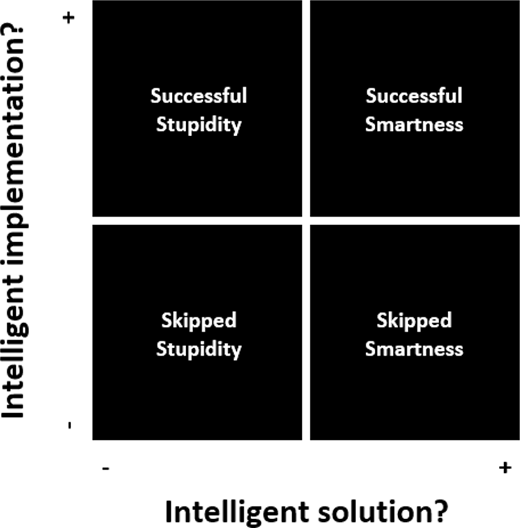
Thus, value capture from AI applications is a complex phenomenon that involves a variety of potential positive and negative outcomes. The advantages and disadvantages, and their intricate interactions with each other demand appropriate management. As such, outcomes and processes (i.e. how well an AI solution works and how well it was implemented) need to be viewed in combination, as they comprise the bundle that will ultimately determine organizational success. In other words, advantages and disadvantages occur in both solutions and implementations, and both solutions and implementations can be more or less intelligent (see Figure 1). An intelligent solution with poor implementation will result in “skipped smartness” (i.e. a lost opportunity). Successful implementation of a solution that is problematic will result in “successful stupidity” (i.e. the effective implementation of something that should have never been introduced). “Skipped stupidity” refers to a situation in which neither the solution nor the implementation are particularly intelligent, paradoxically resulting in a good organizational outcome, as the organization “dodges a bullet”. Finally, the intelligent implementation of an intelligent solution results in “successful smartness”, which is the objective of most AI implementations.
Hence, we will simultaneously find smart and stupid elements in both outcomes and processes. The general understanding of the inherent tensions embedded in AI as a technology and its deployment is poorly developed. Therefore, an approach for developing a holistic understanding of the advantages and disadvantages related to AI is needed. Put differently, we need an integrated and rich overview of the AI domain to aid in the proactive diagnosis and management of issues related to AI projects. Against this backdrop, we introduce the AI-impact framework.
3. The artificial intelligence-impact framework
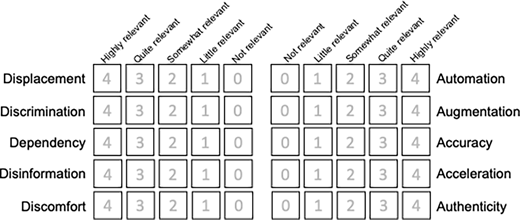
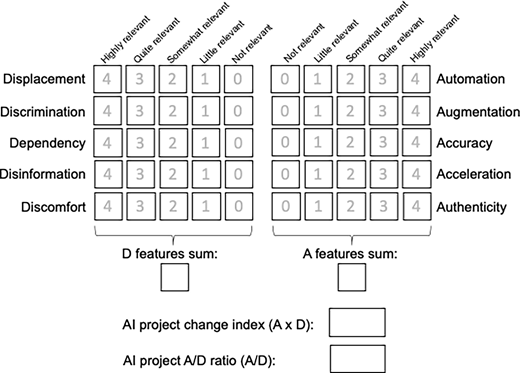
The potential opportunities and substantial threats inherent in AI may help shape corporate motivations for engaging with this technology (Wang and Laufer, 2026). However, the many suggestions which are put forward in different publications, based on different insights and presented with different terminology, may confuse subsequent analysis and decision making. To address this problem, the AI-impact framework was developed, by reviewing the different impacts AI were described to have in the academic literature and in cases observed and followed in the business press over a longer period of time – as well as ongoing interactions with practitioners. The AI-impact framework is comprised by feature that carry advantages and disadvantages. The features were abductively derived from the AI-literature in combination with observations from practice, i.e. media reports from news outlets and engagement with practitioners. The motivation underlying the framework was the conceptual proposition that managers need to have a pluralistic overview of the many dual tensions inherent in AI-use, as the advantages can rarely be realized without also facing some related disadvantages. That is, we sought to abductively develop and field-test a managerial framework for aiding in decision-making around AI-projects – something that would similarly help B2B actors navigate in the highly-evolving and uncertain AI-driven context that increasingly embeds business relationships and networks. In essence, the collected arguments refer to five advantage (A) features (describing positive impacts of AI) and five disadvantage (D) features (describing negative impacts of AI). Each potential feature is assessed on a five-point scale in terms of its impact on the organization for a given AI project. As such, the framework (Figure 2) enables comprehensive issue analyses for AI projects. Whereas the framework draws upon the terminology of a scale, it is not meant for objective quantification. Rather, it is essentially a dialogue tool that helps managers consider and discuss the relevance of 10 common issues in AI from the perspective of a specific AI project, which may ultimately result in proactive measures and better planning. As such, it acts as a structuring device for subjective assessments, internal dialogue and sensemaking.
We included these ten A + D features of AI impact in the framework after thoroughly reviewing the AI-related literature concerning the most common descriptions of AI’s negative or positive effects. The framework was subsequently validated for its explanatory value in relation to recent public AI cases, representing a combined face validation and pilot test. Subsequently, the framework was used in 145 AI project assessments. In the following, we first detail the A features (advantages) before moving on to the D features (disadvantages).
3.1 Automation
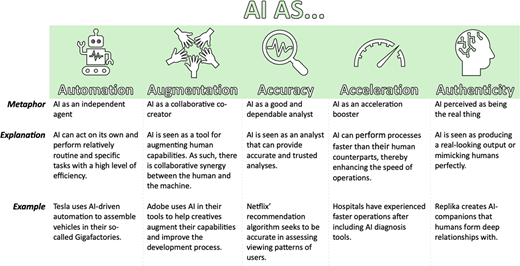
One of the most common advantages of AI is its ability to automate tasks as an “automated operator”. In this use case, AI offers advantages by enabling highly automated systems and handling processes on its own, usually with high precision (i.e. less variation and error than humans handling processes) and higher efficiency (faster and cheaper) (Agrawal et al., 2018). Put differently, the AI system performs certain tasks on its own, with or without humans in the loop (Raisch and Krakowski, 2021).
Consider, for instance, how Tesla deploys AI-driven automation in its Gigafactories, where it assembles electric vehicles using robotic systems guided by AI[6]. These systems offer efficiency and consistency and, in turn, free up valuable time and human resources to perform other important tasks (Agrawal et al., 2023).
3.2 Augmentation
AI also offers advantages as an “augmenting imaginator” through which employees may improve their individual skills (Brynjolfsson et al., 2025). That is, AI is viewed as a tool (or even a teammate) that can augment and enhance human skills, essentially providing a form of extended intelligence (Raisch and Krakowski, 2021). Consequently, the emphasis is placed on the synergies that may arise through effective collaboration between human and machine, which may allow for a superior outcome (Agrawal et al., 2023).
Consider how Adobe integrates AI into a variety of its creative tools typically used in marketing departments. Graphical designers may benefit from these capacities, including AI-generated suggestions [7]. “Augmentation” often goes beyond user imagination and is proactive in its approach. Yaghtin and Mero (2024) developed a model for augmenting machine learning with human insights in B2B marketing (and as a consequence, the human insights are also augmented by the machine’s). Similarly, Tao et al. (2026) documented a significant positive effect of AI capabilities on new product performance in 291 Chinese B2B manufacturing firms.
3.3 Accuracy
AI may also offer analytical skills that surpass humans’ capabilities. In other words, AI is portrayed as an “analytical interpreter”, which refers to the AI system’s capacity to analyze and interpret large amounts of complex data to aid decision making. The sheer size of the data set typically reaches far beyond what humans can cognitively process on their own, and the AI system can often uncover previously undetected relationships and patterns in the data (Agrawal et al., 2018).
One example of the accuracy dimension is apparent in IBM Watson Health. The AI system analyzed massive troves of medical data to support health-care practitioners in identifying patterns and insights in the data and, thereby, improve treatment and patient care [8]. In a similar vein, Microsoft recently revealed an AI system that performs better than human doctors in undertaking complex health diagnoses [9].
3.4 Acceleration
AI can act as an “acceleration booster”, as it enhances the speed with which processes are carried out (Agrawal et al., 2018; Kaplan, 2022). Although this element can be closely related to automation, it is a distinct dimension, as it focuses on the speed of a process and not necessarily on who carries out that process. That is, an automated process may, in principle, be slow and an accelerated process does not necessarily need to be automated, but it can be augmented. As such, AI can boost processes to new speeds, and it can accelerate development and execution processes because it can contribute to an artificial test facility.
Examples of AI as an acceleration booster are found in medical-treatment development, improvements in medical diagnoses and production optimization. For instance, Novo Nordisk uses AI to draft clinical-study reports – what used to take 15 weeks now takes 10 min [10].
3.5 Authenticity
Finally, one of the major advancements in AI technology is its ability to mimic human behavior and decision making to the extent that AI becomes an “authentic impersonation” of humans (Pedersen and Ritter, 2024). Authenticity is defined as “the perceived quality of being real and true based on the seeming connection between a digital entity and a physical person, place and/or time” (Pedersen and Ritter, 2024, p. 165). AI-enabled technologies have arguably increased in authenticity and passed the Turing test [11]. Therefore, it becomes harder, if not impossible, to distinguish between authentic human artefacts and behavior and AI-created artefacts and interactions. While this is a great achievement, it also comes with challenges, such as fake news and fraud. For authenticity to remain an advantage, authorization becomes a key enabler (Pedersen and Ritter, 2024). Yet, it is described as an advantage here, as it allows for solving interactive, communicative tasks with humans – and it may create artefacts that are indistinguishable from those made by human experts. As such, it opens up for many use cases for value creation.
Use cases for AI as authentic impersonation can be found in customer-experience management, where chatbots are becoming standard in customer interactions. Moreover, people have initiated intimate relationships with chatbots, with some even resulting in marriage [12]. Such extreme experiences suggest that the boundaries between real and artificial have indeed become blurred.
In sum, the five A features provide a comprehensive overview of the beneficial aspects of AI systems and their deployment (Figure 3). However, these beneficial advantages do not provide an exhaustive understanding of the impact of AI projects as they only capture to positive elements – the upsides. To understand the full picture of AI, we need to discuss the five D features (disadvantages) of AI projects.
3.6 Displacement
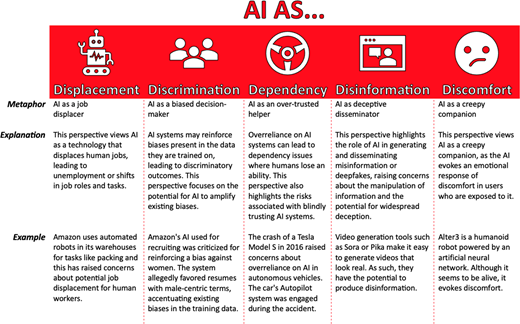
The first negative aspect pertains to the view that AI risks being a powerful force that can displace human jobs across a multitude of industries, resulting in both extensive retraining programs and unemployment (e.g. Wang and Laufer, 2026). As such, it can be seen as a “job displacer” – an aggressive destroyer of employment and, thus, of human livelihood. While manual and repetitive tasks have been highlighted as being in danger of being disrupted by AI, the new wave of generative AI has put pressure on several knowledge-intensive and creative industries. Although how many jobs will actually disappear or be displaced by machines remains to be seen, it is likely fair to predict that AI will partially deconstruct many, if not most, jobs in the future.
An example of the danger of displacement can be seen in Amazon’s warehouses, where intelligent robots have taken over tasks like packing and sorting. Thus, automation and displacement go hand-in-hand [13]. Moreover, the Swedish payment operator Klarna claimed that its AI chatbot has replaced 700 customer-service employees [14].
3.7 Discrimination
The second D refers to AI being a “biased decision maker” – a discriminating algorithm. In other words, AI systems may not only inherit certain biases present in their training data, but they may also perpetuate them, resulting in discriminatory outcomes (e.g. Wang and Laufer, 2026). As such, AI can reproduce existing biases in decision-making processes. In so doing, it will also amplify the problems of discrimination and inequality. This perspective speaks to the danger of blindly training AI systems on imperfect, real-world data and, thereby, transferring hidden patterns into AI systems that could perpetuate biases.
A high-profile case in this respect revolves around Amazon’s hiring algorithm, which was criticized for allegedly be biased against women and favoring resumes with male-centric terms. Both were purported to reflect and amplify the gender biases in the historical hiring data used to train the AI system [15].
3.8 Dependency
The third perspective views AI systems through the lens of overreliance – that is, users being too dependent on and trusting of the assessments and decision making of AI systems (Kaplan, 2022). In these cases, AI systems may become “addictive toolboxes” where users cannot fulfil tasks without assistance from AI. Dependency issues may arise when there is insufficient human oversight, resulting in an overreliance on AI systems. That is, either the humans are not in the loop or they “fall asleep at the wheel” (or keyboard). As such, the third D highlights the risks of blindly trusting AI systems and downplaying the value of human judgment in the process.
Consider, for instance, the fact that Tesla has experienced several crashes in relation to the car’s autopilot system. These incidents have raised debates about the risks of relying too much upon automated and intelligent systems [16].
3.9 Disinformation
In this perspective, AI systems are viewed as “deceptive disseminators”, as they become “audience deceptors”. AI may be used to generate and disseminate misinformation, raising the risk of large-scale deception (e.g. Wang and Laufer, 2026). These issues are particularly pronounced in relation to so-called deepfakes, whereby AI is used to create fake imagery that can be misused for a variety of purposes (Kietzmann et al., 2019).
A relevant example in this context relates to ChatGPT, which has the potential to create false and misleading text that can be used in disinformation campaigns. This text can be highly accurate in its style and may even mimic the “tone” of certain real-world formats, outlets and authors [17]. As such, the advantage of being authentic is often accompanied by the danger that real and artificial are mixed together and difficult to keep apart.
3.10 Discomfort
As a fifth disadvantage, AI systems can create feelings of discomfort by creating an “uncanny valley effect”. The fact that AI may resemble humans but is not quite human may evoke notable emotional responses [18]. Moreover, individuals may have strong anti-AI emotions merely due to the fact that it is AI (Kaplan, 2022). Consider humanoid robots like Alter3, AVA or Telenoid. While seemingly lifelike, they are digital, potentially spurring discomfort among people who are exposed to them [19]. Van Esch (2024) illustrated that discomfort responses of B2B customers to AI-enabled robots depend on the buyer’s political orientation. This study highlights that discomfort is important in the B2B context – and that discomfort is subject-specific and, thus, should be analyzed and understood while developing and implementing AI-enabled solutions.
In sum, the literature acknowledges several negative or detrimental impacts of AI (Figure 4). These five disadvantages represent potential dangers of specific AI projects and, therefore, need to be proactively considered prior to launching an AI project.
The different issues are complementary rather than competing. In fact, they may coexist in a paradoxical reality. Individual aspects are not entirely exhaustive in terms of describing the nature of an AI project, but together they provide combined and valid lenses for diagnosing an AI project. In combination, they capture the important elements of these projects that management teams need to be aware of and manage to ensure that they can be successfully implemented and, subsequently, create value for the organization.
A variety of illustrative cases can help explain the framework’s logic. For instance, in a recent high-profile court case, Air Canada was ordered to compensate a customer who was misled by the company’s chatbot, which gave false information [20]. This case scores high on “automation” (i.e. a chatbot deployed without assistance in customer inquiries), “dependency” (i.e. the company relied on the chatbot providing accurate information without a human in the loop, and then sought to shift its responsibility to the chatbot) and “disinformation” (i.e. the wrong information was provided by the chatbot). Hence, the framework provides an analysis of the coexistence of advantages and disadvantages of AI projects.
In another case, a European hospital used an AI system to analyze X-rays. In less than a minute, it could provide an analysis of an X-ray with 98% certainty and, as a result, the department cut the waiting time by one hour [21]. This AI system entailed “automation” (i.e. the AI could solve a problem by itself) and “accuracy” (the AI system’s analytical capabilities were highly accurate). However, the case is also characterized by “displacement” (i.e. the AI system could make jobs redundant) and “dependency” (i.e. the risk of relying too heavily on the AI system or losing the capacity among existing staff to effectively read the X-rays).
Finally, Google’s Gemini represents a case in which one “D” replaces another. In this case, the image generator was pointed out as being too “woke” because it apparently had a hard time acknowledging the existence of Caucasian individuals (i.e. it produced images of other ethnicities if one wanted to see Vikings or Nazis) [22]. Hence, in an attempt to preempt the risk of “discrimination”, Gemini became a generator of “disinformation”.
In sum, the framework provides a structure for systematically analyzing AI projects, and for discussing and considering the various impacts of these projects. As such, it should be seen as a discussion tool for uncovering, diagnosing and assessing strategic issues related to AI projects.
4. A process model for AI project analysis
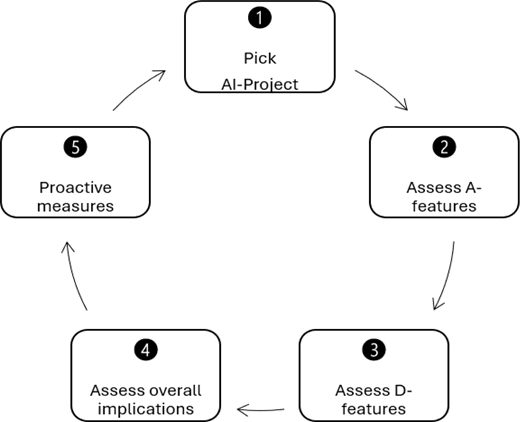
Based on our work with practitioners, we propose the process-model highlighted below as a tried-and-tested approach for working constructively with the many tensions inherent in AI projects (Figure 5). We applied the framework in workshop settings with 145 practitioners and managers from a variety of industries and sectors. The framework offers a structure that can guide the diagnosis, discussions and decisions concerning AI. In the following, we deal with each of the five steps in detail.
4.1 Step 1: picking an AI project
In the first step, decision makers agree to focus on a specific AI project. While this step should be relatively straightforward in theory, choosing a specific AI project can be difficult in practice, as decision makers often lack a focus on concrete AI projects. Often, they predominantly focus on abstract, intentional aspirations for AI. In contrast, specific projects require tangible and operational insights about the nuts and bolts of AI.
4.2 Step 2: assess a features
After a project has been chosen, decision makers need to assess the positive aspects of that project – that is, they need to assess all A features on the right-hand side of the framework. This entails considering the project in light of each of the five As and, subsequently, providing a specific score for each of those features. While such scoring may be highly subjective, we have found that disagreements within a group allow for constructive, insightful discussions within organizations and enable reflected, consolidated ratings. This is precisely the reason for having such discussions in the first place. Moreover, an overall average score for each of the five As can still be calculated despite potential disagreements (and the calculated variance may similarly be an insightful measure).
4.3 Step 3: assess D features
After the positive aspects of the project have been accounted for, the negative aspects will similarly need to be assessed and tallied – that is, the D features will need to be considered. Therefore, decision makers will need to analyze the left-hand side of the framework and assess the project in view of each of the Ds. Similarly to the preceding step, scores will need to be tallied and calculated for each feature.
4.4 Step 4: assess overall implications
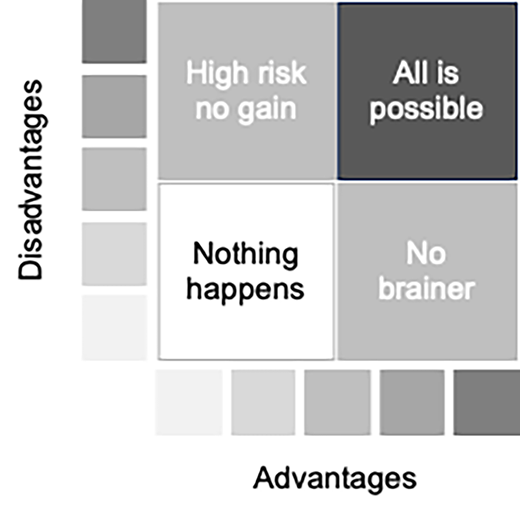
After decision makers have completed the preceding steps, they will be able to assess the project’s overall implications. This can take different forms. The first approach entails calculating an “AI net impact”, which is simply the total score of all of the As versus the total score of Ds (Figure 6). In so doing, decision makers gain an immediate overview of the viability of the project in terms of related strategic issues. The AI net impact results can be roughly depicted using the matrix below (Figure 7).
The “nothing happens” cell refers to situations in which an AI project scores relatively low on both advantages and disadvantages. While potential risks may be lacking, so are apparent benefits and, consequently, the business impact of the AI project can be seen as trivial.
The “no brainer” cell refers to scenarios in which an AI project scores high on positive features and low on negative ones. Consequently, the analysis suggests that such projects should be pursued, although questioning and double-checking the reliability of assumptions is important.
The “high risk, no gain” cell refers to unfortunate scenarios in which a given AI project scores high on disadvantages and low on advantages. As the name implies, such projects make little (if any) business sense and should be discontinued as quickly as possible.
Finally, the “everything moves” cell refers to situations in which an AI project scores high on both the pros and cons sides of the framework. Therefore, a lot of change will result from the AI project. As such, the project is essentially a major managerial challenge in which much can be both won and lost.
Alternatives to AI impact measures can also be calculated. For instance, an “AI project change index” can be calculated by multiplying the total sum of As with the total sum of Ds. The result indicates the magnitude of change that the AI project may bring about. In a similar vein, if the total sum of A is divided by the total sum of D, one obtains an “AI project A/D ratio”, which suggests how advantages will be propelled by the AI project relative to the disadvantages.
In combination, these judgements help provide an overview of the viability of an AI project as well as the organizational change and risk that it may bring about. Again, the ratings of AI projects are not objective, quantitative measures but rather numerical intuitions based on subjective assessments. The scoping helps to structure discussions and to develop proactive planning of AI projects in a B2B context.
4.5 Step 5: proactive measures
Of course, merely assessing the likelihood of a project’s success is not enough. Decision makers must also consider proactive measures that they can take to prevent and preempt the D-side dimensions (i.e. the potential threats associated with the project). Even if a certain project does not seem threatened by D features, conventional implementation and project- and change-management obstacles will often stand in the way of the realization of the positive A features, suggesting the need for proactive measures.
5. Managerial implications
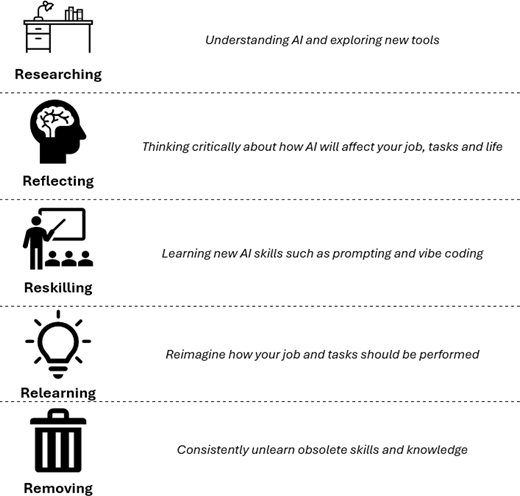
While our framework and process model offer guidance for practitioners wishing to manage the implementation of AI projects in their organizations, more general implications regarding AI should also be considered. While analyzing how to do business in the presence of AI, five activities are relevant to contemplate: researching, reflecting, reskilling, relearning and removing (Figure 8).
Researching covers active involvement in understanding AI and its development. As the technology itself and its application are continually evolving, we see ample need to invest in knowledge development. The purpose of researching is to understand AI at the level necessary for decision making.
Reflecting describes the process of thinking and critically assessing what AI may mean for an organization. Reflecting should be based on the understanding created through research, but the two activities do not need to occur simultaneously. Moreover, reflecting combines information and knowledge with individual experience and judgment. In fact, we suggest that phases of intense learning and experimenting with AI should be followed by phases without or limited AI – a form of AI detox.
Reskilling describes the investments made to enable the organization to create value with and from AI. Reskilling comprises investments in people to provide them with the necessary new skills, such as prompting and vibe coding and the knowledge needed to operate new processes that are AI assisted.
Relearning refers to the fact that businesses and their employees must relearn how to succeed with their extant business model and core tasks. In other words, processes and logics in marketing and selling in B2B firms should largely be relearned, as what they comprise will be different in an AI-enabled marketplace. It may even be necessary to create an organizational chart that is efficient when AI is adopted. Just as processes might change due to AI, so might reporting lines and responsibilities, which will change the organizational chart.
Removing essentially refers to the offloading of obsolete knowledge and other resources, and the termination of processes and business models that are no longer needed. As such, removing is a core competence in a marketplace in a constant state of flux and it may substantially influence competitive dynamics. While AI is new and exciting, and demands new skills and processes, an important element in the transition is removing outdated elements of the organization, such as routines that are obsolete, offerings that are no longer relevant and facilities that are not used. While it is important to bring new approaches and technologies to an organization, it is also important to remove obsolete parts. Removal is necessary for refocusing resources and reducing complexity.
6. Research implications and concluding remarks
This paper presents a framework for holistically assessing AI projects with a particular focus on their advantages and disadvantages. While some dimensions may be synergetic – addressing various dimensions at the same time (e.g. more automation may support more accuracy); and other decisions may call for trade-offs (e.g. less displacement and dependency by not using the full automation potential), some of the tensions between the dimensions present paradoxical challenges to executives in B2B firms, i.e. “contradictory yet interrelated elements that exist simultaneously and persist over time” (Smith and Lewis, 2011, p. 382). “A paradox is neither a compromise nor a split between competing tensions but is, rather, an awareness of both. Change and pluralism are spurred by these paradoxical tensions and reinforcing cycles” (Eisenhardt, 2000, p. 704). Thus, AI presents paradoxes to B2B executives who need to be “acutely aware of accepting contradiction in the long term” (Smith and Lewis, 2011, p. 392). Consequently, we are promoting a paradoxical perspective of AI, where advantages and disadvantages coexist and need to be managed simultaneously. We propose further advancing AI research in B2B firms using such paradoxical lenses to explore the multi-faceted nature of AI implementation.
We developed and tested our framework with a focus on single organizations. Our discussion of the framework and its applications has shown that the framework can also be used for AI projects that cut across organizations in inter-organizational relationships and ecosystems. Given the foundational nature of AI, such wider analyses are needed to truly understand AI implementations from a network perspective. Moreover, each dimension of the A + D framework is based on research but entails opportunities for future studies. While each of the 10 dimensions has been subject to research, they are all quickly evolving domains in terms of both technology and practice. Hence, there is ample room for focused efforts in each of the dimensions as well as room for synthesizing efforts across them. Whereas these domains are active areas of research in technologically oriented disciplines, we highlight the need for research that takes into account the B2B aspects of the themes as well as how they best embed themselves in industrial marketing settings. Toward this end, we stress the need for empirical studies.
We are living in both exciting and alarming times – exciting, as AI is accelerating at an unparalleled pace, suggesting a variety of previously unimaginable opportunities that are suddenly attainable; alarming, as AI is developing so quickly and, to a great extent, without transparency, such that even the smallest oversights in training data or model deployment can have substantial, often unintended consequences. Hence, good management in these fast-paced and uncertain times requires an honest, balanced and timely assessment of both advantages and disadvantages. Some managers fall into one of two extremes in terms of AI – either they love the prospects offered by AI and exhibit a form of technological tunnel vision, often resulting in optimism bias or they exhibit substantial skepticism toward AI, often resulting in a form of status-quo bias. However, both of these stances are comprised of biases. A more constructive approach can be found by embracing both sides, such that managers can be said to be informed and aware of the benefits, costs and risks. Hence, they can make well-considered decisions in relation to AI. Our framework provides structure for this kind of leadership by forcing a dual focus on both opportunities and threats related to AI.
Only by making decisions based on solid and complete analyses can we hope to navigate safely in stormy weather. While most organizations have already set sail, our framework provides the compass and map organizations need to orient themselves toward the harbor.
Notes
Section 2 is largely based on our book Gunstig intelligens (beneficial intelligence), which has been published in Danish (Pedersen and Ritter, 2025).
“Intelligence quotient (IQ)”. Glossary of Important Assessment and Measurement Terms. Philadelphia, PA: National Council on Measurement in Education. 2016. Archived from the original on July 22, 2017. Retrieved July 1, 2017.
See e.g. Link to the cited article