This study examines the interplay between tourism development, cultural preservation, and economic growth at Nigeria's Osun-Osogbo Sacred Grove, a UNESCO World Heritage Site, to inform sustainable management strategies for Nigeria's historic sites.
A qualitative case study approach was employed, integrating semi-structured interviews with local community members, heritage managers, and tourism operators, direct observation during site visits, and analysis of policy documents. Thematic analysis was used to interpret data and identify key patterns.
Tourism at the Osun-Osogbo Sacred Grove generates essential revenue for site maintenance, supports local employment, and stimulates business growth. However, it also introduces environmental pressures, risks of cultural commodification, and challenges in equitable benefit distribution. Community engagement and traditional custodianship are crucial for maintaining authenticity and resilience. The study reveals that while tourism can be a catalyst for economic growth and heritage preservation, over-commercialisation and inadequate infrastructure threaten long-term sustainability.
The qualitative design limits generalisability but offers transferable insights for similar heritage sites. Future research could employ mixed-methods approaches for broader applicability.
Policymakers and site managers should prioritise community-led initiatives, improve infrastructure, and enforce conservation regulations. Equitable benefit-sharing and responsible visitor management are vital for sustainable tourism development.
This research provides a nuanced, stakeholder-informed perspective on balancing tourism, cultural preservation, and economic growth at a major heritage site. It offers actionable recommendations for sustainable management, relevant to heritage managers, policymakers, and local communities.
1. Introduction
1.1 Overview of tourism development in Nigeria’s historic sites
Tourism is a vital sector for economic diversification and cultural promotion in Nigeria, encompassing activities such as sightseeing, cultural visits, and entertainment (Madandola and Boussaa, 2023). The country’s historic sites-including festivals, archaeological sites, and cultural landscapes-reflect a rich national identity and offer significant potential to attract both domestic and international tourists. When managed responsibly, tourism can drive economic growth, foster cultural exchange, and celebrate Nigeria’s diverse heritage (Eyisi et al., 2023; Ezenagu, 2020). However, according to Amalu et al. (2020), the sector faces persistent challenges: insecurity in the north, religious and traditional barriers, inadequate infrastructure, high taxation, lack of investment, seasonality, and regional imbalances favouring the south. These issues highlight the need for strategic management and preservation to ensure that tourism development contributes positively to local communities and the national economy.
1.2 The role of cultural preservation and tourism in economic growth
Cultural preservation is essential for safeguarding both tangible and intangible heritage-such as traditions, rituals, and artifacts-thereby sustaining community identity and continuity. UNESCO emphasises the importance of intangible heritage, including oral traditions and social practices, in maintaining cultural vitality (Selmanović et al., 2020). Tourism and hospitality sectors play a significant role in supporting preservation and economic development across countries, though the nature and extent of their impact vary by context (Katsoni and Cassar, 2024; Thommandru et al., 2023). In Nigeria, the preservation of cultural and natural assets attracts tourists to remote areas, providing economic incentives for maintaining these resources and contributing to sustainable development Richardson (2021). According to Butler et al. (2022), a balanced approach is necessary: while tourism can generate income and support preservation, overexploitation and loss of authenticity remain risks if development is not carefully managed.
1.3 Interdependence of cultural preservation and tourism development
A mutually reinforcing relationship exists between cultural preservation and tourism development (Timothy and Boyd, 2006; Ezenagu, 2020). By maintaining and restoring historic sites, artifacts, and traditions, communities create compelling reasons for tourists to visit, enhancing the destination's appeal and authenticity (Ayeni et al., 2024). This authenticity is increasingly valued by modern travellers, who seek meaningful and educational experiences. Preservation efforts often lead to improved tourism infrastructure and services, generating employment and stimulating local economies (Richards, 1996). Community involvement is critical: when local residents are empowered as custodians of their heritage (Lee et al., 2024), both preservation and tourism development become more sustainable and equitable (Ayeni et al., 2024). However, challenges such as over-tourism, commodification, and environmental degradation require careful planning and management to ensure long-term benefits.
Despite the Osun-Osogbo Sacred Grove’s recognised potential for economic development and cultural preservation, the site faces persistent challenges-including inadequate funding, poor infrastructure, inconsistent policies, and environmental pressures-that threaten its sustainability as a heritage tourism destination. These issues highlight a critical gap in understanding how to effectively balance tourism development with the preservation of cultural and natural heritage at Nigeria's historic sites.
1.4 The Sacred Groves of Osogbo: culture and conservation
The Osun-Osogbo Sacred Groves, a UNESCO World Heritage Site on the outskirts of Osogbo, exemplify the intersection of cultural heritage, spiritual significance, and tourism in Nigeria. This 75-ha forest sanctuary, established over 400 years ago, is home to shrines, sculptures, and sanctuaries dedicated to Osun-the Yoruba goddess of fertility-and other deities. The grove has long served as a centre for spiritual and cultural practices, reinforcing social cohesion and identity within the Osogbo community. The annual Osun-Osogbo festival, held each August, attracts tens of thousands of visitors and worshippers, highlighting the enduring connection between the community and its traditions. While recognised as a national monument in 1965 and inscribed as a World Heritage Site in 2005, the grove faces challenges such as overcrowding during festivals, which strains its capacity and threatens its ecological and cultural integrity. Proactive crowd management and infrastructural improvements are necessary to sustain its viability as both a spiritual and tourism destination.
1.5 Research objectives and key questions
This study examines the interplay between tourism development, cultural preservation, and economic growth in Nigeria's historic sites, with a focus on the Osun groves in Osogbo. The research aims to generate insights applicable to sustainable tourism development across Nigeria's cultural landscapes. The following research questions guide this investigation.
How does tourism development impact cultural preservation and economic growth at the Osun groves, and what are the implications for other Nigerian historic sites?
What are the key challenges and opportunities in balancing tourism development with cultural preservation at the Osun groves?
How effective are current sustainable tourism strategies in enhancing both cultural preservation and economic growth at the Osun groves, and what improvements can be suggested?
1.6 Contribution and originality
Beyond its Nigerian setting, this study advances global heritage debates by explaining how festival-intensified sacred sites experience distinctive tensions between authenticity and commercialisation; showing how custodianship models mediate benefit-sharing and visitor management, and identifying governance mechanisms—linking community authority, corporate sponsorships, and state regulation—that sustain preservation under growing tourism demand. These mechanisms are portable to other sacred heritage landscapes where spiritual value coexists with market pressures, thereby extending current theory on tourism-led growth, community support for tourism, and authenticity in heritage sites.
2. Literature review
This review establishes the conceptual base for analysing the Osun-Osogbo case. Section 2.1 synthesises tourism-led development and its trade-offs for heritage sites; 2.2 considers residents’ support and participation using community-attitudes lenses; 2.3 surveys authenticity and (de)commodification in sacred landscapes, with attention to festival intensity; 2.4 focuses on governance and custodianship arrangements in World Heritage contexts; 2.5–2.6 situate the discussion in African and historic-site literature; and 2.7 consolidates the theoretical perspectives we draw on. A brief 2.8 Synthesis and research gap then specifies how the Osun case advances broader debates and frames our research questions.
The alignment between foundational heritage tourism guidance and the analytical structure of this study is summarised in Table 1.
Aligned with foundational guidance for heritage tourism, the review draws on UNESCO/World Heritage Centre materials on sustainable tourism and the World Heritage and Sustainable Tourism Programme (2011–ongoing), which emphasises community engagement. Three operational levers recur in this corpus—carrying capacity, visitor management, and interpretation—and macro visitation patterns are contextualised with UNWTO Tourism Highlights and the International Tourism Dashboard. The ICOMOS International Cultural Tourism Charter (2022) and a rights-based perspective (recognition of indigenous knowledge, consent, and fair benefit-sharing) further anchor discussions of authenticity, equity, and governance in sacred landscapes.
2.1 Economic growth through heritage tourism
Heritage tourism is widely recognised as a significant driver of economic growth, particularly in regions rich in cultural and historical assets (Saboori et al., 2023; Teng et al., 2021; Rogerson, 2007). The tourism-led growth hypothesis posits that tourism can stimulate economic development through multiple channels, such as increased GDP, job creation, foreign exchange earnings, and infrastructure investment (Naseem, 2021; Akadiri et al., 2020). Empirical studies from Africa and beyond consistently demonstrate that tourism contributes to economic diversification and resilience, creating a multiplier effect that benefits local businesses and government revenues. For example, in South Africa and Kenya, strategic national policies have leveraged tourism to promote local economic development, especially in rural areas, while also addressing socio-spatial inequalities (Stoffelen et al., 2020; Baidoo et al., 2022; Sarpong et al., 2020; Holland et al., 2022; Matthew et al., 2021). Tourism's impact is not limited to direct economic benefits; it also fosters local business growth, supports regional development, and reduces economic disparities by attracting visitors to less-developed areas (Bhatt et al., 2024). However, the extent of these benefits depends on effective management, policy support, and the integration of tourism with broader development strategies.
2.2 The interplay of cultural preservation and tourism development
The relationship between cultural preservation and tourism development is inherently complex and multifaceted. Tourism can provide essential funding for the restoration and maintenance of cultural heritage sites, enhance local infrastructure, and promote the sustainable management of both cultural and natural resources (Wang et al., 2024). By increasing the visibility and appreciation of cultural traditions, tourism can strengthen national identity and foster cultural continuity (Timothy, 2014; Li et al., 2008; Catalani, 2013). However, the expansion of tourism also poses risks, including environmental degradation, cultural commodification, and excessive pressure on local resources (Yang, 2019; Briedenhann and Wickens, 2004). Over-commercialisation may dilute the intrinsic values of heritage, while underinvestment can leave sites vulnerable to neglect. Achieving a sustainable balance requires comprehensive planning that integrates economic incentives with the protection of cultural authenticity, ensuring that tourism supports rather than undermines cultural heritage (Zhao et al., 2024).
2.3 Balancing tourism growth and heritage conservation: risks and challenges
Balancing the economic benefits of tourism with the need for heritage conservation presents persistent challenges, particularly in developing regions (Baloch et al., 2023). The diverse impacts of tourism-environmental, social, and economic-necessitate adaptable assessment frameworks. Data limitations often hinder precise evaluation of tourism’s effects, especially at the local level (Ordóñez-Martínez et al., 2023; Xu et al., 2020). Developing regions, in particular, face the dual challenge of maximising tourism’s economic returns while mitigating its environmental and cultural impacts (Hernández-Delgado, 2015; Suckall et al., 2014). Unchecked tourism growth can lead to resource depletion, loss of authenticity, and community displacement. Conversely, overly restrictive management may stifle economic opportunities. The literature highlights the need for integrated policies that align tourism development with environmental preservation and social responsibility, fostering a mutually beneficial relationship between economic growth and heritage conservation.
2.4 Sustainable tourism: integrating technology, policy, and community
Sustainable tourism practices are central to reconciling economic, cultural, and environmental objectives (Rogerson, 2007). Recent advances, such as the adoption of artificial intelligence in tourism operations, have improved resource management, reduced waste, and enhanced visitor experiences (Rane et al., 2023). Strategic urbanisation and policy frameworks that prioritise infrastructure, price stability, and inflation control also play a crucial role in supporting sustainable tourism (Nitivattananon and Srinonil, 2019; Risteskia et al., 2012). Investments in infrastructure, often supported by foreign direct investment, can improve accessibility and site maintenance, further safeguarding cultural heritage (Qamruzzaman, 2023). However, the success of these strategies depends on effective governance, community involvement, and the alignment of technological and policy innovations with local needs. The literature underscores that sustainable tourism is most effective when it integrates technological advancements, sound policy, and active community participation to ensure long-term viability and equitable benefit-sharing (Siddik et al., 2025). These governance and custodianship constructs inform our sampling (role-diverse stakeholders) and guide theme development in the analysis.
2.5 Heritage tourism in Africa: comparative insights
Across Africa, heritage tourism has emerged as a major economic sector, contributing substantially to GDP and employment. Countries such as Mali, Zimbabwe, South Africa, Tanzania, and Botswana illustrate both the potential and challenges of leveraging cultural heritage for economic development (Bamidele et al., 2022; Arnoldi, 2014; Avraham and Ketter, 2017; Munyanyi and Chiromba, 2015; Knott et al., 2015). While these nations have benefited from increased tourism revenue, job creation, and infrastructure development (Badimo and Yuhuan, 2023; Wamboye et al., 2020), they have also faced obstacles such as political instability, inadequate infrastructure, and the need for sustainable management (Akamavi et al., 2023; Wang and Bramwell, 2012). The experiences of these countries offer valuable lessons for Nigeria, highlighting the importance of stable governance, targeted investment, and community engagement in maximising the benefits of heritage tourism while mitigating its risks.
2.6 The role of historic sites in tourism
Historic sites serve as key attractions within the tourism sector, offering immersive experiences that connect visitors with both tangible and intangible heritage. Research indicates that heritage tourists tend to stay longer and spend more than other types of tourists, amplifying the economic impact on local communities (Timothy and Boyd, 2006). Well-managed historic sites can foster community pride, cultural revitalisation, and improved quality of life (Brooks et al., 2023). Modern approaches emphasise participatory experiences and innovative site management, integrating educational, recreational, and cultural dimensions to enhance visitor satisfaction while preserving historical integrity. These strategies contribute to the sustainable development of heritage tourism, ensuring that historic sites remain viable and relevant for future generations.
2.7 Theoretical perspectives on tourism development and cultural preservation
Several theoretical frameworks inform the understanding of tourism development and its impact on cultural preservation (Wang et al., 2024; Makri and Neely, 2021; Lan et al., 2021; Aleshinloye et al., 2021; Erul et al., 2020 Han et al., 2020; Ulker-Demirel and Ciftci, 2020). The Emotional Solidarity theory explores the emotional bonds between residents and tourists, suggesting that positive relationships foster community support for tourism (Erul et al., 2020). Also, according to Erul et al. (2020), the Theory of Planned Behaviour highlights how attitudes, social norms, and perceived control shape residents’ intentions toward tourism development. Grounded Theory provides a qualitative approach to exploring complex social dynamics (Seyfi and Hall, 2022; Matteucci and Gnoth, 2017), allowing researchers to generate context-specific insights into the interplay between tourism growth and cultural heritage (Matteucci and Gnoth, 2017; Leavy, 2014). These theories collectively emphasise the importance of community attitudes, stakeholder engagement, and context-sensitive management in achieving sustainable tourism outcomes. In what follows, we operationalise these lenses—social exchange for community support, authenticity for ritual–tourism tensions, and governance for the mechanisms that condition outcomes—within a qualitative case design. Complementing these lenses underscores consent, cultural authority, and equitable benefit-sharing in sacred sites.
2.8 Synthesis and research gap
Prior research clarifies why communities support or contest tourism and how authenticity is negotiated under visitor pressure in heritage settings. What remains under-specified is how festival-intensified sacred sites translate these dynamics into outcomes via custodianship authority, benefit-sharing arrangements, and governance capacity. By analysing Osun-Osogbo—a UNESCO-inscribed Sacred Grove with pronounced festival surges—this study identifies portable mechanisms (festival intensity as a stressor; fairness in benefit-sharing; governance capacity) that move beyond the Nigerian context and speak to sacred heritage destinations globally. This gap motivates the research questions that follow and structures the integrated findings–discussion later in the paper.
3. Methodology
3.1 Research design
A qualitative case study approach was adopted to explore the relationship between tourism development, cultural preservation, and economic growth at the Osun-Osogbo Sacred Groves. The site was selected due to its cultural, historical, and economic significance as a UNESCO world heritage property and for its annual festival that concentrates visitation and management pressures. The study was guided by questions on the impacts of tourism on cultural preservation and local economic activity; challenges and opportunities in balancing these aims; and the effectiveness of current sustainable tourism strategies. Given these explanatory aims, a qualitative case design is appropriate. These design choices prioritised trustworthiness by aligning questions, data sources, and analysis, and by maintaining an audit trail and reflexive memos throughout (Tracy, 2010).
3.2 Data collection
Data were collected using multiple methods to ensure a comprehensive understanding of the research problem. Semi-structured interviews were conducted with a purposive sample of stakeholders, including local community members, heritage managers, and tourism operators. Participants were identified through community networks and official site contacts. Informed consent was obtained from all interviewees, and interviews were audio-recorded for accuracy. Direct observation was carried out during site visits, with systematic field notes documenting tourist activities, infrastructure conditions, and cultural events. Additionally, relevant documents such as policy reports were reviewed to supplement primary data.
3.3 Participants and sampling
We conducted twelve semi-structured interviews spanning local community members, heritage managers, artists/artisans and tourism operators using purposive, role-diverse sampling to capture information-rich perspectives. Individual interviews lasted approximately 50 min. Inclusion required direct involvement in festival operations, site management, ritual practice, or visitor-facing economic activity; recruitment combined community referrals and formal contacts. We monitored informational redundancy and considered thematic sufficiency reached when additional interviews ceased to add substantively new codes within and across role groups (Guest et al., 2006).
3.4 Data analysis
We conducted a reflexive thematic analysis (RTA) to identify patterned meanings across interviews and observations (Braun and Clarke, 2006, 2019). Analysis proceeded through initial open coding at semantic levels; clustering codes into candidate categories; reviewing/refining themes against extracts and the full corpus; naming themes; and producing the narrative with short anonymised verbatims. Coding was inductive but theory-inflected by the lenses outlined in Section 2—community support (social exchange/solidarity), authenticity/commodification, and heritage governance—so that interpretation remains anchored to the review. We maintained a lean codebook and decision log to record code merges/splits and theme boundary decisions (Nowell et al., 2017).
3.5 Trustworthiness and ethics
Credibility was enhanced through data-source triangulation (interviews, on-site observations across festival/non-festival periods, and document review) and peer debriefs on theme boundaries. Dependability/confirmability were supported by an audit trail (versioned codebook, memos, and analytic decisions) and brief reflexive notes on researcher positioning. Transferability is aided by concise but “thick” description of site context, festival intensity, and custodianship structures (Tracy, 2010). All participants provided informed consent; recordings were anonymised at transcription and stored securely.
4. Analysis
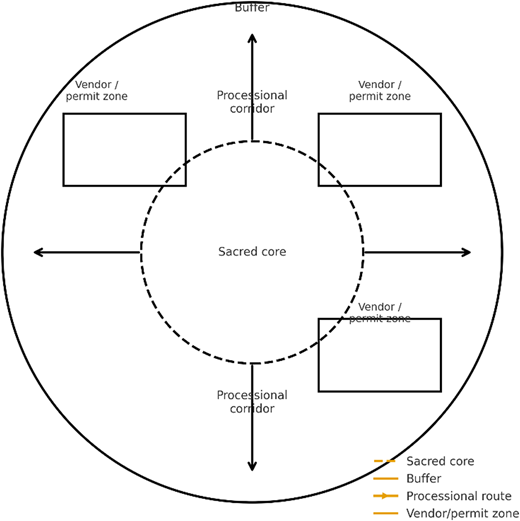
This section presents the findings using the lenses outlined in the literature review—community support (exchange/solidarity), authenticity/commodification in sacred space, and heritage governance. Each subsection below follows the same compact pattern: claim – evidence - interpretation → implication. Figure 1 illustrates the spatial organisation of the Osun-Osogbo Sacred Grove, showing the sacred core, processional corridors, surrounding buffer zones, and designated vendor areas during the festival period.
4.1 Examination of the relationship between tourism activities and cultural preservation
The relationship between tourism activities and cultural preservation at the Osun-Osogbo Sacred Groves is both complex and dynamic. Tourism revenue provides essential funding for the restoration and maintenance of shrines, sculptures, and other cultural artifacts, thereby supporting the physical integrity of the site. The visibility of traditional rituals and artistic expressions during festivals such as the annual Osun-Osogbo event not only reinforces local identity but also attracts both domestic and international visitors, who contribute to the site's economic sustainability. However, increased tourist footfall introduces new pressures, including environmental degradation and the risk of cultural commodification. As one custodian explained, “during the festival, we have the crowd; they do damage the sculptures” (P7), highlighting how peak visitation jeopardises material heritage. For instance, the influx of visitors during peak periods strains the grove's ecological balance, as waste disposal and crowd management become challenging. Participants also cautioned against commercial creep into sacred space: “Another challenge is over-commercialisation … it ends at the gate of the grove” (P3). The presence of commercial vendors and the introduction of modern infrastructure, such as electricity and temporary stalls, have also raised concerns about the dilution of the site's spiritual and cultural authenticity. Relatedly, “they've sold rights of picture-taking to a particular company … anybody would have to go through them” (P1), a practice perceived as edging commerce into ritual zones.
Community engagement emerges as a critical factor in navigating these challenges. Local residents, as custodians of tradition, play a vital role in preserving the intangible aspects of the grove, such as rituals, oral histories, and artistic practices. Their participation in tourism-related activities—ranging from performances to craft sales—ensures that cultural knowledge is transmitted to younger generations and that economic benefits are distributed within the community. Yet, this engagement is not without its tensions. The desire to attract more tourists sometimes leads to the adaptation of rituals or the simplification of cultural narratives to suit visitor expectations, raising questions about the long-term impact on the authenticity and resilience of local traditions.
The interplay between tourism and cultural preservation is further complicated by external influences. Government policies, corporate sponsorships, and international recognition (such as UNESCO World Heritage status) all shape the ways in which the grove is managed and presented to the public. While these factors provide valuable resources and visibility, they can also introduce competing priorities, such as the need to balance conservation with commercial interests. The result is a delicate equilibrium, where the benefits of tourism—economic growth, increased awareness, and community empowerment—must be carefully weighed against the risks of over-commercialisation, environmental harm, and cultural erosion.
Interpretation and implications: Festival intensity, read through the authenticity/commodification lens, amplifies encroachment on sacred cores and risks to both ritual and material heritage. Therefore, institute sacred-core buffers and processional corridors, enforce vendor/permit zones, and review commercial concessions to keep revenue aligned with preservation.
4.2 Economic impact assessment of tourism on local economies
The economic impact of tourism at the Osun-Osogbo Sacred Groves is multifaceted and significant. The annual Osun-Osogbo festival acts as a major economic catalyst, drawing thousands of visitors who spend on accommodation, food, transportation, and locally made crafts. “The hotels … are usually booked up … the people selling will sell,” a community member noted (P1); “we artists make a lot of sales … hotels make profits because people lodge,” added an artisan (P2). This surge in demand creates employment opportunities for local artisans, hoteliers, food vendors, and transport providers, many of whom rely on the festival for a substantial portion of their annual income. The presence of international tourists amplifies these effects, as they tend to have higher spending p vower and a greater interest in authentic cultural experiences.
Beyond the immediate festival period, tourism encourages ongoing investment in the area. The spiritual significance of the grove attracts pilgrims and other visitors throughout the year, leading to increased land purchases, the establishment of new businesses, and the expansion of community infrastructure. Corporate sponsorships from multi-national companies provide additional financial support for site maintenance, security, and cultural programming, further bolstering the local economy. These partnerships also enhance the grove's profile, attracting media attention and raising its status as a premier heritage tourism destination.
However, the economic benefits of tourism are not evenly distributed. While some community members—particularly those with established businesses or connections to festival organisers—reap substantial rewards, others struggle to access formal tourism markets. Informal vendors, for example, often face challenges in securing prime locations or official recognition, limiting their ability to capitalise on the influx of visitors. Moreover, the reliance on seasonal tourism introduces volatility, as the grove's economic fortunes are closely tied to the success of the annual festival and the broader tourism climate.
Interpretation and implications: Using the social-exchange/solidarity lens, visible household-level gains underpin resident support while perceived inequities erode it. Hence, publish simple benefit-sharing statements and apply artisan-first, transparently administered stall/vendor allocations during the festival.
4.3 Challenges and opportunities for balancing growth with preservation
Balancing tourism growth with cultural and environmental preservation at the Osun-Osogbo Sacred Groves presents a range of challenges that require careful management. Human activities, such as mining, improper waste disposal, and encroachment, pose direct threats to the grove's natural habitat and cultural artifacts. “The mining activities … make it really dirty … difficult for people to take the water and use it,” a participant reported (P1). “People … dump refuse … and these refuses flow directly into the river,” the same participant added (P1). Encroachment by developers and local residents reduces the protected area, undermining both conservation efforts and the grove's appeal as a heritage site “we are facing some encroachment of land here,” a custodian explained (P7); “if this is not stopped, it is going to affect the culture,” another participant warned (P6).
Over-commercialisation and modernisation represent additional challenges. The proliferation of commercial activities within the grove—including the sale of souvenirs, food, and beverages—has raised concerns about the commodification of sacred traditions and the erosion of the site's spiritual atmosphere. “Over-commercialisation … ends at the gate of the grove,” one artisan stressed (P3); “modernisation is going to affect this place more than anything” (P6). The introduction of modern amenities, such as electricity and temporary structures, further blurs the boundary between the sacred and the commercial, potentially altering the grove's character and diminishing its authenticity.
Security concerns, including theft and safety issues, also deter potential visitors and undermine the site's reputation as a safe and welcoming destination. “Many potential tourists have been discouraged … by insecurity and the kidnapping,” a participant noted (P2); “some are coming there to steal your phone,” another added (P3). Incidents of theft, particularly during crowded festivals, highlight the need for enhanced security measures and community vigilance. Religious prejudice, political instability, and harsh climatic conditions further complicate efforts to promote sustainable tourism and cultural preservation.
Despite these challenges, the grove presents numerous opportunities for innovative management and community engagement. The integration of traditional knowledge into site management, for example, can enhance both conservation and visitor experiences. Local stakeholders, including traditional leaders, artists, and community groups, possess valuable expertise that can inform decision-making and ensure that cultural values remain central to the grove's development. Strengthening partnerships between government agencies, private sector sponsors, and local communities can also improve the effectiveness of conservation efforts and the equitable distribution of economic benefits.
Interpretation and implications: Combining authenticity and governance lenses shows that peak-period commerce plus weak enforcement jointly degrade sacred-space integrity and ecological quality. Accordingly, adopt a festival management plan with buffered ritual paths, vendor-density permit zones, waste- and water-quality protocols, surge security, and real-time crowd monitoring.
4.4 Enhancing sustainable tourism development and cultural preservation: stakeholder perspectives
Stakeholders identified a range of specific opportunities and strategies for improving sustainable tourism and cultural preservation at the Osun groves. Central to their discussions was the integration and revival of local cultural elements, such as showcasing traditional clothing, food, and music to highlight the site's unique heritage. The enhancement of the artist village was seen as a priority, with suggestions for government support to help artists depict the history of Osogbo through their work. Establishing traditional kitchens and craft shops within the buffer zone was proposed as a way to offer immersive experiences and promote local artistry. Infrastructure additions were suggested—“a small bar … rather than the place just being bland” (P5); “local buildings where people can stay” (P1)—to enrich the visitor experience without intruding on sacred cores.
Stakeholders also emphasised the need for improved infrastructure, including small bars and local-style lodging, to enrich the visitor experience. The importance of global awareness and strategic promotion was highlighted, alongside calls for greater security during festivals and the integration of traditional stakeholders into decision-making processes. “The government needs to provide security guarantees to tourists … during the festival” (P2). Participants noted that stricter laws and taboos, as well as professional expertise in habitat management, could help address environmental concerns. “Traditional stakeholders need to be fully integrated into … decision-making” (P4); “let the professionalism show” (P4). Fostering partnerships with tourists through investment and outreach was also seen as a way to promote engagement and sustainable support.
Interpretation and implications: From governance and community-support perspectives, role clarity and visibly fair benefits are the levers that convert tourism pressure into conservation gains. Thus, formalise co-management with custodians, ring-fence a share of festival revenues for conservation, and use transparent artisan/vendor allocation alongside targeted, non-intrusive visitor infrastructure. The key stakeholder-identified themes, challenges, and opportunities emerging from the analysis are synthesised in Table 2.
Tourism at Osun-Osogbo provides revenue and visibility that can support conservation, but peak-period crowding and commercialisation threaten authenticity; the balance depends on governance capacity. The most salient challenges are mining-related water pollution, waste, encroachment, vendor sprawl, and insecurity; the opportunities lie in custodian-led zoning, artisan-centred markets, targeted infrastructure, and sponsor conditionalities tied to conservation. Current measures show partial effectiveness; effectiveness rises with surge-period enforcement, clear authority sharing with custodians, and predictable conservation finance. These patterns point to portable mechanisms relevant beyond Nigeria: festival intensity as a stress multiplier on authenticity; fair benefit-sharing as the basis of resident support; and governance capacity—role clarity, coordination, and enforcement—as the hinge determining whether tourism complements or corrodes preservation.
5. Discussion
5.1 Interplay between tourism, cultural heritage, and economic benefits
The Osun-Osogbo Sacred Groves exemplifies the dynamic interplay between tourism, cultural preservation, and economic benefits. As a UNESCO world heritage site, the groves attract thousands of visitors annually, particularly during the Osun-Osogbo festival, which serves as both a spiritual and tourism-driven event. The revenue generated through tourism—via entrance fees, festival-related commerce, and sponsorships from corporations such as MTN and Goldberg—has demonstrably contributed to preservation efforts. These funds have been used for site maintenance, security enhancements, and the conservation of sacred shrines and sculptures, reinforcing the argument that tourism can be a viable mechanism for heritage preservation (Madandola and Boussaa, 2023; Ezenagu, 2020). Additionally, cultural preservation enhances the tourist experience by offering authentic engagements, such as ritual performances and traditional artistic expressions, which in turn stimulate local economic activities. The influx of tourists increases demand for accommodation, local crafts, and other services, thereby creating employment opportunities and fostering investment in community infrastructure.
This case supports the tourism-led growth hypothesis, which posits that tourism can drive economic expansion through employment and local business stimulation (Naseem, 2021; Akadiri et al., 2020). Moreover, the Osun groves aligns with the theory of planned behaviour, as community attitudes towards tourism development are shaped by perceived economic gains, cultural pride, and social norms (Erul et al., 2020). However, challenges such as environmental degradation, over-commercialisation, and security concerns present risks to sustainability. These issues highlight the delicate balance between leveraging tourism for economic benefits and ensuring cultural preservation remains at the forefront of development strategies (Butler et al., 2022). The Osun groves case underscores the necessity of strategic governance, community involvement, and sustainable tourism practices to maintain this equilibrium, reinforcing scholarly discussions on the complex interdependencies between cultural heritage and tourism.
Taken together, the Osun case shows that festival intensity operates as a stress multiplier: when visitation surges without strong safeguards, commercial practices creep toward sacred cores and authenticity erodes. What ultimately determines whether tourism complements preservation is governance capacity—clear buffer rules, enforceable vendor limits, and revenue arrangements that prioritise conservation.
5.2 Stakeholder roles (government, local communities, tourists)
The sustainability of tourism and cultural preservation at Osun groves relies on the active involvement of key stakeholders—government authorities, local communities, and tourists—each playing distinct yet interconnected roles. The government is central in policymaking, funding, and site management, particularly through agencies responsible for heritage conservation and tourism regulation. While these roles are crucial in maintaining the grove's integrity, challenges such as bureaucratic inefficiencies, inconsistent policy implementation, and conflicting priorities between economic growth and cultural preservation have been noted. Government support has often leaned towards promoting the grove as a tourism destination rather than prioritising long-term conservation measures, leading to concerns about over-commercialisation. Moreover, the lack of adequate infrastructure and security measures, despite revenue generation from tourism, highlights governance gaps that could undermine both preservation efforts and visitor experiences.
Local communities serve as custodians of cultural heritage, ensuring that traditional rituals and artistic expressions remain integral to the Osun-Osogbo Sacred Grove. Their participation in tourism through craft-making, performances, and festival organisation provides economic opportunities, yet inequitable benefit distribution remains a concern. Many local artisans and traders face challenges accessing formal tourism markets, while external commercial interests often capitalise on tourism revenue, leaving communities with a dispsroportionate share of the profits. Additionally, the commodification of sacred traditions to cater to tourist expectations risks altering the authenticity of cultural practices. Meanwhile, tourists play a dual role as economic contributors and cultural participants, with their expenditures sustaining local businesses and preservation efforts. However, unsustainable tourist behaviours, such as overcrowding during festivals, improper waste disposal, and instances of cultural insensitivity, present threats to both environmental and cultural sustainability. The balance between maximising tourism's economic benefits and preserving the sacred and ecological integrity of the groves thus remains a persistent challenge, requiring better stakeholder collaboration and regulation.
These patterns are consistent with a fairness-conditioned support dynamic: visible, household-level gains bolster residents' willingness to back tourism, while perceived inequities quickly undermine it. Practical measures such as simple benefit-sharing statements and transparent, artisan-first stall allocations make the fairness mechanism visible and durable.
5.3 Challenges and opportunities
The sustainability of tourism development at Osun groves is shaped by a range of challenges and opportunities, many of which require targeted intervention to balance growth with cultural preservation. Insecurity, identified as a major challenge, poses a threat to both visitor turnout and the overall tourism experience. Incidents of theft, inadequate security during the annual Osun-Osogbo festival, and broader concerns over political instability have deterred some potential tourists. Addressing this requires increased government investment in security infrastructure, stricter enforcement of protective regulations, and community-driven monitoring initiatives to ensure a safe and welcoming environment (Butler et al., 2022). Additionally, over-commercialisation and modernisation have led to concerns about the loss of cultural authenticity, particularly as modern infrastructure, excessive trade activities, and external influences reshape the sacred space. If left unchecked, these pressures could dilute the grove's historical and spiritual significance, reducing its appeal as a heritage tourism destination.
Despite these concerns, opportunities for integration of cultural heritage into tourism strategies offer promising solutions. Revitalising traditional arts, crafts, and performances within a structured tourism framework can preserve authenticity while enhancing visitor engagement. Establishing dedicated spaces, such as cultural markets and interactive learning centres within the buffer zone, could create immersive experiences that align with the grove's heritage while ensuring economic benefits are distributed equitably among local artisans (Madandola and Boussaa, 2023). Sustainable tourism strategies, including community involvement in decision-making, the enforcement of conservation laws, and the promotion of responsible visitor behaviour, have shown partial success in mitigating these risks. However, further improvements are needed, particularly in implementing stricter regulations against encroachment, pollution control, and reinforcing the spiritual integrity of the site through stakeholder-led conservation initiatives (Ezenagu, 2020). Strengthening these strategies will be crucial in ensuring Osun Groves remains a globally recognised heritage site while supporting both cultural sustainability and economic viability.
5.4 Implications
At the practical and policy level, the findings point to a capacity-first approach: codify sacred-core buffers and processional corridors, enforce vendor-density caps and permit zones during festival peaks, and ring-fence a predictable share of festival/sponsorship revenues for conservation, sanitation, and surge security. Formal co-management with custodians (defined seats and mandates) improves day-of enforcement and aligns commercial rights (e.g. photography, concessions) with preservation goals. Buffer-zone investments—local-style lodging, interpretation, and craft spaces—channel spending outside the sacred core while sustaining livelihoods.
For research, the case specifies three portable mechanisms—festival intensity, fairness-conditioned support, and governance capacity—that can now be tested across sacred sites using mixed methods (comparative cases; before and after designs when buffers and ring-fencing are introduced). Teaching and public engagement can translate these insights into visitor charters and course modules on sacred-site governance, emphasising respectful behaviour, low-impact visitation, and transparent community benefit. Implementation aligns with SDG 11.4 (heritage protection) via core buffers and custodial co-management, SDG 8.9 (sustainable tourism) via vendor zoning and artisan-first allocations, and SDG 11.6/12.5 (waste/circularity) via peak-period waste contracts and audits; these measures are transferable to festival-intense sacred landscapes.
5.5 Limitations and future research
The single-site qualitative design prioritises depth over breadth; transferability rests on theorised mechanisms rather than statistical generalisation. Future work should (1) compare sacred sites with and without festival intensity, (2) track implementation fidelity of buffer/enforcement rules, and (3) model how benefit-sharing visibility affects resident support across seasons.
5.6 Impact on Outstanding universal value (OUV)
OUV at Osun-Osogbo rests on the sacred forest, ritual routes, shrines/sculptures, and living custodianship. Festival periods introduce specific risks: crowding and vendor encroachment near ritual cores, commercial concessions that blur sacred–market boundaries, and waste or mining-related water stress. Practical safeguards include legal core buffers and marked processional corridors, timed entry/flow management on peak days, permit-based vendor zoning with caps outside buffers, concession clauses prohibiting activity within ritual cores, and water-quality protocols with periodic audits. These controls protect OUV while sustaining local livelihoods and provide clear benchmarks for monitoring.
6. Conclusion and recommendations
This study has examined the complex relationship between tourism development, cultural preservation, and economic growth at the Osun-Osogbo Sacred Grove, offering insights applicable to other Nigerian historic sites. Our findings highlight several key points.
The Osun groves exemplify the potential for sustainable tourism to support both cultural preservation and economic development when managed thoughtfully
Balancing authenticity with tourism demands remains a critical challenge, requiring ongoing collaboration between local communities, preservationists, and tourism stakeholders
The success of the Osun-Osogbo model suggests that other Nigerian historic sites could benefit from similar integrated approaches to tourism and preservation.
Moving forward, policymakers and site managers should prioritise.
Developing adaptive management strategies that respond to changing tourism trends while safeguarding cultural integrity, including legal sacred-core buffers and marked processional corridors with on-peak stewards
Investing in community-led initiatives that ensure equitable distribution of tourism benefits and foster local ownership of preservation efforts
Promoting responsible tourism practices that enhance visitor experiences while minimising negative impacts on cultural and natural resources.
By addressing these priorities, Nigeria can harness the power of its rich cultural heritage to drive sustainable economic growth through tourism, while ensuring the long-term preservation of its historic sites for future generations. In practical terms, managing intensity, fairness, and capacity provides a clear blueprint to translate tourism pressure into resilient preservation and shared prosperity across comparable sacred heritage landscapes.