Discussion
BRIEFING: Women in engineering – why less costs more by Mary Inman (August 2006)
Contribution by G. Bratchell
I object to a number of bold statements in this article. First, ‘equality of opportunity and diversity are near-universally accepted principles’. Governments may give lip service to this (like ‘motherhood’) but I suggest that it is not true of the world population as a whole.
The sentence ‘Government action is required to tackle gender stereotypes at school’ sounds very sinister—are children to be allowed no diversity based on their instincts? Is this to be forbidden by law? Ever more onerous is the suggestion that public finances purchase only from contractors that promote gender equality (presumably in employment matters regardless of suitability for the tasks).
If it is true that ‘engineering faces a massive skills shortage globally’ then engineers' salaries and status would sky-rocket and stop the constant complaints on that subject. Why has this not happened? Does the estimate of £23 billion per year take in to account the possibility of those same women being in the financial sector, generating a good deal more for the UK economy? Or the value of bringing up a family?
The article concludes that no-one is advocating parity in gender representation, but this must be the aim of such articles, otherwise how can the ‘proper’ balance be decided. Why not accept the present level?
Author's reply
When we and other organisations talk of encouraging women into engineering we mean that women and girls with an interest and aptitude should be provided with an environment where no gender-based barriers exist to embarking on, or continuing in, the career. It is not our intention, or that of the many employers we work with, to press-gang young women into the field simply because we need them. That we need them is not in doubt: employers are suffering from a severe shortage of skills.
The minute proportion of female professionals pushes us towards the obvious conclusion that more women in engineering would be a good thing. However, we refuse to accept as a principal that men are better suited to, or more naturally inclined toward, engineering as a career than women. As with every career, we believe that an equal playing field, equal opportunity, equal rights and equal pay will create an equal interest (and potentially equal gender representation). For us, that means another hundred thousand engineers.
Some women will try and fail, some will succeed. Some will be adequate, some inadequate and some exceptional. Some will leave the industry to raise families, some will leave the industry to climb Everest or sail yachts round the world, but let them make these choices no more or less than the 90+% of the engineering population that is male. Give women the education, give them the tools, show them the reality of a career and let them make an informed choice.
BRIEFING: Trees: the new branch of sustainable drainage by Marcus Englmeier and Miklas Scholz (August 2006)
Contribution by Peter Bell
I once worked for The Fylde Water Board in Lancashire, which was then headed by a great water engineer, the late Frank Law. Some 50 years ago, he carried out comprehensive research in the catchment area of Stocks Reservoir on run-off losses incurred in heavily-forested areas, which were fashionable in reservoir catchments in those days. He established that conifer trees, planted quite densely, resulted in about a 33% loss in run-off, and his results were published as a paper in the Institution of Water Engineers' journal. I trust that this paper was studied by the authors before reaching their conclusions.
Author's reply
There are a lot of articles on trees and their corresponding interception of rainfall. The contributor refers to an interesting case study in a rural setting. However, our case studies were undertaken in urban Glasgow and Edinburgh. The reduction of run-off by trees can be either positive or negative depending on the purpose of the active or passive drainage structure. In the urban context, the reduction of run-off by trees is beneficial if there is a danger of flooding and a high likelihood of pollution due to urban contaminants on paved surfaces. However, if the aim is to capture water because it is a valuable resource, the interception by trees could be seen as negative. Finally, please also note it is common practice in academia to consider predominantly recent articles published in good international journals.
P14095: Jane Coston Cycle bridge: a model for managing vibration by Mitra Black and Godfrey Webster (August 2006)
Contribution by Poul Beckmann
The authors invoked the London Millennium Bridge, where the main problem was horizontal oscillation, but remain strangely silent about the possibility of such oscillations of their bridge. Is the absence of this problem something that should be obvious?
Author's reply
For brevity our paper concentrated on the problematic vertical vibration modes and the measures for their control. However, the structure was checked against lateral vibration load criteria derived from the Eurocodes and it does meet the limiting comfort criteria for all three load criteria, termed as DLM1, DLM2 and DLM3, as the structure is stiff laterally both at deck and arch level.
The structure's second mode shape was the lateral mode shape of the arch at 1·08 Hz frequency. Pedestrians walking at 2·16 Hz vertical frequency can excite this mode shape. However, for this mode both detail analysis and the pedestrian vibration tests proved that the deflection and acceleration amplitude induced by the lateral excitation at deck and arch level are of very low magnitude, hence not a concern.
Furthermore, the likelihood of lateral lock-in from a large number of pedestrians was also considered using the criteria derived by Flint & Neill following the study it carried out on the London Millennium Bridge. It was found that the number needed to cause lateral lock-in could not be accommodated on the bridge at the same time.
P14239: Civil engineering career management—the unwritten rules by Anna Hipkiss (August 2006)
Contribution by Khurram Gaba
The paper still appears to measure career success in the traditional way, that is promotion, playing politics, and promoting self-image and profile to ‘get ahead’. In my view, these are equally out-dated measures of success. In this regard, the paper did not provide the ‘lateral look’ at career management that I was expecting. What is needed are role models of career success who are not necessarily the managing director, chief executive or equivalent of their respective organisations, but have nevertheless achieved career success primarily through the value of their contributions and the personal satisfaction and respect achieved in the process. Changing our perceptions and measures of career success in this way will be better for the profession and for society as a whole.
Author's reply
I think everyone would agree with the contributor's point that changing measures and perceptions of career success would be beneficial. Had my paper been addressed to organisations, I would have taken a different approach, but it was designed to help individual engineers make their way to a satisfying career in the world as it stands today. Therefore the methods I described, including the positive use of politics, remain valid, whether you wish to climb the ladder, or simply to find the role where you can make the best and most satisfying contribution.
Contribution by Jamieson Christie
The only perspective not covered that I would add is that, at the end of the day, we provide a service, and I don't think we should lose sight of that whether with our clients, our colleagues, our business partners, our directors or with other professions.
Author's reply
Whilst this was a theme running through the paper—particularly the section on reputation and image—it can never be overemphasised. The contributor's particular comment about providing a service to everyone you work with, not just clients, is something that is often overlooked.
Contribution by Geoffrey Simons
The author does not comment on the contribution by the engineers' families to their career decisions. I believe there should be the desire to balance the three elements: job satisfaction, money and family life. What are the author's views on attaining this balance? It would be informative to have the opinions of the human resources managers and the engineers, as well as their families.
Author's reply
There is a much happier social trend in the direction of home life now. Organisations no longer expect engineers to drop everything and go to somewhere inhospitable for a two-year stretch. The needs of the family, and indeed the partner's career, are accepted as reasons not to take that overseas opportunity. In reality, despite that trend, those pressures are still there, if somewhat reduced, and an engineer who says no too many times may indeed be restricting his or her career. However, there is another rising trend which says that career is not everything, and quality of life takes priority. With the involvement of all concerned and a willingness to be flexible, balance can be achieved.
P14049: Developing productive relationships in civil engineering by Jim Platts and Vladimir Tomasevic (August 2006)
Contribution by Richard Larcombe
The proposed two-dimensional matrix—effectively aptitude and attitude—is a helpful approach to understanding the importance of relationships in the job role. However, these two dimensions do not go far enough. Assessment of competent performance at work needs to recognise all its components. These components have been expressed by different people in different ways in the past, and they include
task competence (doing things right)
task management competence (managing the doing of the tasks)
personal/interpersonal competence (managing yourself, relating to others, maximising their performance and potential)
relationships outside the job role (social, ethical and environmental responsibility).
To its credit, ICE has recognised these components of competence and, through the new development objectives and attributes for the three grades of qualified member (the ICE 3000 series), reviewers now seek to identify and assess all these aspects of competence in the candidates who come before them.
Authors' reply
We agree with the contributor. We have seen a lot of confusion of people trying to resolve relationship problems by increasing technical input and we have found it very valuable to identify relationship competence as a different axis. We see this as necessary, but no more than a foundation for the development of proper articulateness concerning all the wider aspects of that axis that the contributor identifies.
P14375: Teaching of design—results from a survey by John Burland and Ben Barr (August 2006)
Contribution by Brian Corbett
It was sad to read the comments of one vice-chancellor, ‘It is no longer possible to employ academic staff who have extensive practice experience but no research track record’. This is very different from the situation 30 years ago, otherwise there would have been no Sir Edmund Happold at the University of Bath nor Professor John Burland at Imperial College. Clearly there needs to be a review of the salary scales for entry to university of experienced engineers.
Authors' reply
The contributor highlights the very real dilemma faced by medium-sized departments which are striving to gain the highest possible research assessment exercise rating and all that this means financially and in terms of reputation and academic standing. He also reflects the huge personal satisfaction that practising engineers can gain from sharing their practical design experience with young aspiring engineers.
Full versions of these discussions can be read along with all other discussions in the online version of the journal at www.civilengineering-ice.com
Proceedings
RECENTLY PUBLISHED PAPERS
In addition to Civil Engineering, the ICE Proceedings includes ten specialist journals. Papers and articles published in the most recent issues are listed here. Summaries of all these and other papers and articles published in the past three years can be read free at www.ice.org.uk/journals. ICE members can download any 15 papers published in 2006 for £25 from www.iceknowledge.com
Bridge Engineering
159, No. BE3, September 2006, 93–145
Load-carrying capacity of flooded masonry arch bridges
K. M. Hulet, C. C. Smith and M. Gilbert
Analytical fatigue assessment of riveted rail bridges
B. Imam, T. D. Righiniotis, M. K. Chryssanthopoulos and B. Bell

Developments in the use of GPS for bridge monitoring
C. J. Brown, G. W. Roberts and X. Meng
Innovations in concrete arch bridge design
J. Radić, Z. Šavor and A. Kindij
Structural repair of elevated Harrow Road (westbound), UK
D. Yeoell, T. Parasram and B. Hodgkinson
Design and construction of two launched bridges
N. Beavor and J. Cai
Civil Engineering Special Issue on Risk
159, No. CESI2, November 2006, 1–64
Enterprise risk management and civil engineering
C. Lewin
Strategic risks—thinking about them differently
N. Allan and J. Davis

Experience of risk management
P. Thompson and N. Thompson
Managing changing risks to infrastructure systems
J. Hall, R. Dawson, L. Manning, M. Walkden, M. Dickson and P. Sayers
Geohazard risk management for infrastructure projects
M. Free, S. Anderson, C. Milloy and J. Mian
An observational model for managing risk
J. Le Masurier, D. Blockley and D. Muir Wood
A partnership approach to managing flood risk
M. Crossman, D. Richardson and J. Milne
What causes accidents?
A. Gibb, R. Haslam, D. Gyi, S. Hide and R. Duff
Risk perception and construction safety
G. MacDonald
Managing safety risk through whole-life competency
J. Carpenter
Professional indemnity insurance—a better way
J. Baster and M. Davis
Construction Materials
159, No. CM2, May 2006, 47–92
Performance of helically shaped metal fasteners in timber
G. Coste, A. Kermani and A. Porteous
Evaluating in situ shear strength of bituminous pavements
M. Naderi
Modelling drying shrinkage of cement-stabilised crushed rock
S. Chakrabarti and J. Kodikara
Composite model for basic creep of high-strength concrete
S. Setunge and J. Anaton
Leaching studies on cement-based products
A. Hidalgo, C. Alonso, M. Sanjuán, E. Guede and C. Andrade
Engineering Sustainability
159, No. ES3, September 2006, 89–132
Creating walkable urban environments
S. Barnett
Banked realignment: a case study from the Humber Estuary, UK
N. I. Pontee, S. C. Hull and J. R. Moore
Sustainable regeneration of former Mackies site, Belfast
J. Dunlop
Decision-support tools for sustainable drainage
M. Scholz
Optimum design of sustainable concrete pavements
B. P. Hughes
Geotechnical Engineering
159, No. GE4, October 2006, 243–303
3D modelling of sprayed-concrete-lined tunnels in clay
M. Yazdchi, S. R. Macklin and H. C. Yeow
Stiffness and cyclic response of clayey fine sands
N. Smith
Some observations on Statnamic pile testing
M. J. Brown and A. F. L. Hyde
Evaluating the seismicity parameters of Tehran, Iran
G. Ghodatri Amiri, R. Motamed, R. Hashemi and H. Nouri
Pipe pile installation effects in soft clay
X. T. Xu, H. L. Liu and B. M. Lehane
Maritime Engineering
159, No. MA3, September 2006, 91–135
Solitary wave transformation, breaking up and run-up at a beach
A. G. L. Borthwick, M. Ford, B. P. Weston, P. H. Taylor and P. K.Stansby

Analysis of flows and water levels near tidal flap gate
S. B. Mitchell, E. Tinton and H. Burgess
Rehabilitation of a sea wall in Mandal, Norway
A. E. Lothe and T. Birkeland
Application of simulation modelling to harbour operations
S. Khatiashvili, C. Bakeev and M. Fidler
Municipal Engineer
159, No. ME3, September 2006, 123–179
Implementing Planning Policy Statement 6
B. J. Simpson
Managing projects: the role of a project support office
A. Hamilton
The first sustainable industrial building projects
J.-T. San José, I. Garrucho and J. Cuadrado

Cost forecast model for sewer infrastructure
A. El-Assaly, S. T. Ariaratnam, J. Ruwanpura and H. Ng
Evaluating the financial health of construction contractors
D. Singh and R. L. K. Tiong
Safety culture in the construction industry
S. Wamuziri
Sickness in government science: case, cause and cure
M. Stone
Structures and Buildings
159, No. SB5, October 2006, 245–306
Crowd-induced rhythmic loading
J. G. Parkhouse and D. J. Ewins
Modelling effects of passive crowds on grandstand vibration
J. Sim, A. Blakeborough and M. Williams
Vibration serviceability for pedestrian bridges
M. Kasperski
Evaluation perception of wind-induced vibration in bridges
Y. Tamura, S. Kawana, O. Nakamura, J. Kanda and S. Nakata
Vibration control of ultra-sensitive facilities
J. Brownjohn and A. Pavic
Transport
159, No. TR3, August 2006, 101–145
England's National Traffic Control Centre: improving travel
G. Stockbridge
The Madrid–Seville line experience
B. Guirao
Pavement moduli variation under heavy aircraft trafficking
K. Gopalakrishnan and M. R. Thompson
A decision model for junction improvement schemes
V. Vassou, A. Labib and M. Roberts

Predicting long-term soaked CBR of gypsiferous subgrade soils
S. S. Razouki and D. K. Kuttah
Waste and Resource Management
159, No. WR2, May 2006, 53–100
Using recycled construction waste as aggregates for paving blocks
C.-S. Poon and D. Chan
Use waste tyre bales to construct a flood embankment
M. W. Bo and A. Yarde
Architect and contractor attitudes to waste minimisation
M. Osmani, J. Glass and A. Price
Development of the waste procurement toolkit
J. Davies, B. Couth, J. Enright, J. Snape and C. Whiteman
Water Management
159, No. WM3, September 2006, 147–207
Rainwater potential for domestic water supply in Grenada
E. J. Peters
Bridging Zambia's water service gap: NGO/ community partnerships
S. Kayaga and C. Kadimba-Mwanamwambwa

Wastewater nitrification using ceramic industry waste
F. Ososrio and E. Hontoria
Fishpasses at flow measurement structures
W. R. White, R. Iredale and G. Armstrong
Practical estimation of flow resistance through emergent vegetation
A. A. Jordanova, C. S. James and A. L. Birkhead
Sediment transport formulae for compound channel flows
R. D. Karamisheva, J. F. Lyness, W. R. C. Myers, J. B. C. Cassells and J. O'sullivan
Overbank flow depth prediction in alluvial compound channels
R. D. Karamisheva, J. F. Lyness, W. R. C. Myers, J. B. C. Cassells and J. O'sullivan
Request for papers
All Proceedings journals rely entirely on papers sent in by civil engineers and related professionals, researchers, academics and students. Papers should be around 2000 to 5000 words long, in good English and with adequate illustrations and references. Project papers are particularly welcome. All papers sent in will be assessed on merit and not on the status of the author. Simply email your text and images together with your contact details to journals@ice.org.uk.
For full guidelines on writing a paper please visit www.thomastelford.com/journals or contact the editor Simon Fullalove on 020 7665 2448 or editor@ice.org.uk.
Personal on-line subscriptions to specialist Proceedings journals start from £11 a year for members. Print subscriptions start at £21 a year and include full on-line access to the current and past three years' issues. Please call +44 (0)20 7665 2227, email subs@ice.org.uk or visit the ICE virtual library at www.iceknowledge.com. At the virtual library members can also download any 15 Proceedings papers published this year for £25 or any paper published over six years ago at £5 each.
Books: REVIEWS
On the wrong line: how ideology and incompetence wrecked Britain's railways by Christian Wolmar, published by Aurum Press, 2005, reviewed by Mike Thorn, Wallingford Research Consultancy
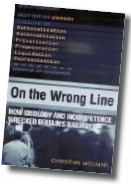
This book is the detailed story of a scandal, being a well-researched and well-referenced narrative of the privatisation of Britain's railways and the consequences that followed. The author has gathered together snippets and strands from many sources, reinforcing them with informed comment from many sectors of the railway industry, to deliver the complete story of how the railways came to their present condition.
The story unfolds to show how a privatised and fragmented railway system led inexorably to the Hatfield accident. ‘The way the maintenance was contracted out broke the engineering chain and, at the time, no one realised that,’ says Wolmar. ‘The accident at Hatfield was not caused by a broken rail. It was caused by total mismanagement by Railtrack and its contractors.’ The panic and subsequent chaos in the railway system following the accident are dispassionately described, leading ultimately to the collapse of Railtrack and the creation of Network Rail.
Writing in 2005, the author makes an appraisal of the railways' problems and prospects. He notes that in 2005/6 they will cost the taxpayer £6·5 billion, about five times the British Rail subsidy (at 2005 prices) at the time of privatisation in 1993/4. He concludes that the world of post-privatisation railway economies is, indeed, a fantasy land, and that Government timidity together with a desire to have control but not responsibility raises serious questions about the long-term viability of the railways.
This a compulsive read for anyone who loves railways as an engineer, enthusiast or passenger, but it also has wider connotations. Replace ‘railway’ with ‘energy’, ‘water’, ‘environment’, ‘health’, and some of the syndromes are familiar. Is it possible that in other national sectors of strategic importance, de-skilling, outsourcing, fragmentation, and financial target-driven management are creating the conditions for other Hatfields in the future?
Designers' Guide to EN 1992-1-1 and EN 1992-1-2. Eurocode 2: Design of Concrete Structures. General rules and rules for buildings and structural fire design by Nary Narayanan and Andrew Beeby, published by Thomas Telford, 2005, reviewed by Costas Georgopoulos, The Concrete Centre

This excellent commentary of Eurocode 2 has been written by two leading concrete experts, who have both been involved in drafting concrete design standards including the UK national annex to Eurocode 2. The Authors' expertise is clearly conveyed and this makes the guide useful for designers at all levels.
The background information, design aids and worked examples included in the guide provide good references for designers to Eurocode 2. Of particular use is the practical guidance given where the code is ambiguous or silent. The guide should also help lecturers and students in teaching and learning concrete design.
The background information is generally invaluable, giving the reader an insight into certain design expressions in the code although presentation would have been better if the guide had been published together with the code, for example clauses on odd pages and commentaries on even pages.
The guide contains numerous design aids which are particularly useful for hand calculations. These include moment coefficient tables and an extensive range of column design charts which should make the transition to Eurocode 2 easier.
Overall, I thoroughly enjoyed reading this guide and highly recommend it to all designers in concrete. Designers should read the guide in conjunction with the rest of the resources The Concrete Centre is making available such as the series of How-to leaf-lets, the Concise Eurocode 2 and the Design Examples. For details see the Eurocodes Expert website at www.eurocodes.co.uk.
Brunel, a pocket biography by Tom Rolt, published by Sutton Publishing, 2006, reviewed by Graham Tombs
This book is a reprint of one which was first published in 1965 as the result of a request for a précis of his comprehensive biography on Brunel, who was born 200 years ago this year.

The reader is quickly caught up in the frantic energy, pace and enthusiasm of Brunel's life as he designed the suspension bridge at Clifton, docks in Bristol and his most famous and enduring work, the Great Western Railway. He was not successful with his atmospheric section in South Devon nor did he win the battle of the gauges, his broad gauge of 7'¼ having to be relaid in the 1890s to Stephenson's standard gauge of 4' 8½. On this railway Brunel triumphed over major engineering obstacles with the famous brick arch bridge over the Thames at Maidenhead, his masterpiece across the Tamar at Saltash and the tunnel at Box. Simultaneously he produced architectural gems at Paddington and Temple Meads stations. In between he found time to design the Renkioi Hospital, setting the basis of prefabricated accommodation modules still used today.
Brunel saw his railway as the gateway to America through Bristol Docks. He turned his considerable talent to the design of steam ships culminating in his third, the Great Eastern, years ahead of its time. It was gigantic and set the principles of modern shipbuilding but it was achieved at terrible cost, both financially and to Brunel's health.
The enthralling story of Brunel's extraordinary powers of creativity and genius are vividly and concisely revealed in this book, which is recommended reading to all.
Strategic risk—a guide for directors by Actuarial Profession and Institution of Civil Engineers, published by Thomas Telford, 2006, reviewed by Suzannah Caccavone, Black and Veatch Known as STRATrisk, the steering group for this report consisted of ICE and the Institute of Actuaries, and was sponsored and supported by leading construction specialists, the Association of Consulting Engineers, the Department for Trade and Industry, the legal establishment and four universities.

The report shows why managing strategic risk needs a different approach, outlines the recommended approach, stresses the necessity for the board to create the right framework, and gives practical steps and useful tools to implement the findings. There is a self-assessment checklist included for the board and good up-to-date examples are given in the margins of each section.
It highlights that Enron, Equitable Life and Arthur Anderson all suffered from a failure to think deeply about strategic risk and also how the UK foot-and-mouth crisis, along with the immediate after effects of Hurricane Katrina, could have used the principles behind STRATrisk to ensure that adequate plans were in place to minimise the outcomes—financially and for business and social continuity.
The importance of board involvement is stressed as it should have a holistic approach to the business, be formed of a multidiscipli-nary team and also have the authority to act upon the decisions made.
The report contains a CD-Rom which contains a video introduction, PowerPoint presentations and case studies—all of which will prove valuable to the director of any company in today's economic climate.
Full versions of these reviews can be read with all other reviews in the online version of the journals at www.civilengineering-ice.com. Reviews of other books received in the past three months are as follows.
Concrete: Neville's insights and issues by Adam Neville, published by Thomas Telford, 2006, reviewed by Stephen Hare, Mouchel Parkman.
Designer's guide to EN 1998-1 and EN 1998-5. Eurocode 8: Design provisions for earthquake resistant structures by Michael Fardis, Eduardo Carvalho, Amr Alnashai, Ezio Faccioli, Paolo Pinto, Andre Plumier, published by Thomas Telford, 2005, reviewed by Costas Georgopoulos, The Concrete Centre
Dictionary of Urbanism by Robert Cowan, published by Streetwise Press, 2005, reviewed by John Jenkins, White Young Green Consulting
Economics of climate change by the House of Lords Select Committee on Economic Affairs, published by The Stationery Office, 2005, reviewed by Robert Freer
Encouraging innovation in the eighteenth and nineteenth centuries: the Society of Arts and Patents, 1754–1904 by James Harrison, published by High View, 2006, reviewed byPhilip Jackson, Bentley Systems
Interim guide to quantitative risk assessment for UK reservoirs by A. J. Brown and J. D. Gosden, published by Thomas Telford Ltd, 2004, reviewed by Robert Freer
Performance-based optimization of structures: theory and applications by Qing Quan Liang, published by Spon Press, 2005, reviewed by Sakdirat Kaewunruen, University of Wollongong
Site engineers' manual by David Doran, published by Whittles Publishing, 2003, reviewed by Pedo Serra, Costain
NEW BOOKS
The ICE's bookshop in London carries one of the most comprehensive ranges of civil engineering books in the world. New books received in the past three months are as follows.
A history of the theory of structures in the nineteenth century
Malcolm Charlton £15.99
Brunel, an engineering biography
Adrian Vaughan £19.99
Building procurement
Roy Morledge, Adrian Smith and Dean Kashiwagi £34.99
Calatrava: bridges
Alexander Tzonis and Rebeca Caso Donadei £15.95
Choosing the right NEC contract
Bill Weddell £30.00
Concrete design to EN 1992, 2nd edition
Lawrence Martin and John Purkiss £34.99
Concrete mix design, quality control and specification, 3rd edition
Ken Day £85.00
Construction business management
Nick Ganaway £29.99
Construction contracts, questions & answers
David Chappell £24.99
Current and future trends in bridge design, construction and maintenance
Institution of Civil Engineers £95.00
Design and construction of concrete floors
George Garber £54.99
Design and installation of marine pipelines
Mikael Braestrup £89.50
Designers' guide to EN 1994-2 Eurocode 4: Design of composite steel and concrete structures. Part 2, General rules and rules for bridges
Chris Hendy and Roger Johnson £65.00
Engineering ethics
Gail Baura £24.99
Engineers' dispute resolution handbook
Robert Gaitskell (editor) £35.00
Environmental geotechnics: opportunities, challenges and responsibilities for environmental geotechnics, 5th ICEG (set of 2 books)
Hywell Thomas (editor) £150.00
FIDIC user's guide: a practical guide to the 1999 red and yellow books—incorporating changes and additions to the 2005 MDB harmonised edition
Brian Totterdill £50.00
Financial fundamentals for engineers
George Solt and Richard Hill £19.99
Health and safety pocketbook
Jeremy Stranks £19.99
Improvements in reservoir construction, operation and maintenance: proceedings of the 14th conference of the British Dam Society
British Dam Society £90.00
Introduction to Autocad 2007
Alf Yarwood £21.99
Laxton's building price book
V B Johnson LLP (editor) £120.00
Managing in construction supply chains and markets
Andrew Cox, Paul Ireland and Mike Townsend £49.00
Managing the unknown: a new approach to managing high uncertainty and risk in projects
Christopher Loch, Arnoud DeMeyer and Michael Pich £55.00
New generation whole-life costing: property and construction decision-making under uncertainty
Ian Ellingham and William Fawcett £29.99
Partnering in the construction industry
John Bennett and Sarah Peace £49.99
Planning on the edge: the context for planning at the rural–urban fringe
Nick Gallent, Johan Andersson and Marco Bianconi £29.99
Principles and practice of testing in construction
Clive Cockerton and David Doran (editors) £60.00
Professional negligence in construction
Ben Patten £49.99
Quality management in construction
Brian Thorpe and Peter Sumner £27.50
Strategic issues in public–private partnership
Mirjam Bult-Spiering and Geert Dewulf £55.00
Structural masonry designers' manual, 3rd ed.
Bill Curtin et al. and revised by David Easterbrook £89.50
The art of structural design, a Swiss legacy
David Billington £30.00
Total quality in the construction supply chain
John Oakland and Marton Marosszeky £29.99
Uncertainty and ground conditions
Martin van Staveren £39.99
The bookshop is in the ICE foyer, 1 Great George Street, London SW1P 3AA and is open from 9.30 am to 5.00 pm, Monday to Friday. Books can also be ordered by calling +44 (0)20 7665 2462, emailing orders@thomastelford.com or by visiting www. thomastelford.com or the bookshop section of www.ice.org.uk
ICE review
A review of recent and forthcoming developments at the Institution of Civil Engineers by ICE director of communications and marketing Anne Moir. For further information please contact the Communications Office on +44 (0)20 7665 2150 or visit the ICE website at www.ice.org.uk
New ICE president
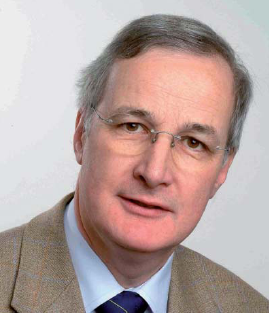
Quentin Leiper becomes the new ICE president on 7 November 2006 following his address to senior engineers at the Institution's headquarters in London.
During his presidency Leiper will champion the importance of sustainability within civil engineering and the promotion of engineering to university students as well as raising awareness of health and safety issues. The new president will also celebrate the 250th birth anniversary of Thomas Telford in his 2006–7 term of office.
Leiper has been involved in a wide range of committees, forums and awards panels in the construction industry, including chairing the British Geotechnical Association and the Ground Forum.
He was also the founding chairman and honorary editor for the ICE Engineering Sustainability journal, a member of the New Civil Engineer editorial board and was involved in the ‘Sustainability in Education, Training and CPD’ initiative chaired by Professor Paul Jowitt.
Since 1998, Lieper has been a visiting professor in the School of Civil and Environmental Engineering at the University of Edinburgh. His current day job is director of engineering and the environment for Carillion plc.
Civils 2006 exhibition
ICE has teamed up with New Civil Engineer magazine to co-host the largest ever industry-wide exhibition focusing solely on the UK's £8 billion civil engineering market.
‘Civils 2006’ will take place over three days on 28–30 November 2006 at London's Olympia, and offers civil engineers professional networking opportunities involving over 200 exhibitors, technical seminars and a major conference programme.
Spearheaded by leading clients, consultants, contractors and professional bodies, exhibitors will be showcasing their latest skills to over 5000 specifically targeted professional visitors. Free technical seminars will be run hourly and the themed conference programme will feature decision-making politicians and engineers speaking on the latest issues covering transport, infrastructure, regeneration, energy and the environment.
For full information, and online visitor registration, visit www.civils.com. Companies interested in exhibiting should contact David Hayward on +44 (0)1325 461149.

Road-user pricing report
A new report looking at the best technology for implementing national road-user pricing in the UK is being unveiled this month (November 2006) by the Road User Pricing Group.
ICE has led the group since its formation in March 2006. It comprises various engineering organisations and transport experts with an interest in the future of road charging as a way of reducing traffic congestion.
State of the nation report

ICE's 2006 The state of the nation report, which assesses the condition of the UK's infrastructure, was launched at a well-attended parliamentary reception on 17 October 2006.
Senior ICE representatives networked with hundreds of the UK's key opinion formers at the reception at Great George Street. The event proved that ICE is once again at the forefront of the future of the UK's infrastructure debate.
Green alternative for Blair
British Prime Minister Tony Blair's residence at No. 10 Downing Street in London has been declared environmentally unsustainable and a drain on energy and resources that must be replaced, according to a project run by ICE and the Royal Institute of British Architects (RIBA).
ICE and RIBA instigated The Green Wing project, which involved working with a group of year 11 students (aged 15–16) from Cedar Mount High School, a successful inner-city comprehensive in East Manchester.
The students were invited to take part in a project to design an environmentally friendly prime minister's office and residence on Duck Island in St James's Park. A panic room, an underwater cabinet room and an organic farm featured in a proposal for a No. 10 replacement. The students unveiled their proposal at the UK Labour party conference in a truck in September 2006.