

Discussion
P14806: Climate stability: an inconvenient proof: by David Bellamy and Jack Barrett (May 2007)
Contribution by Richard Dawson, Jim Hall, Enda O'Connell, Mike Hulme, Tim Lenton, Andrew Watkinson, Robert Nicholls and Peter Stansby
The role of solar activity in global climate change is, contrary to the authors' statement, not ignored by the Intergovernmental Panel on Climate Change (IPCC). In an analysis of the relative contribution of carbon dioxide (CO2) and other greenhouse gasses, volcanic eruptions and solar activity to radiative forcing since 1750, IPCC demonstrates in its Fourth Assessment Report of 200719 that, whereas solar activity is not irrelevant, radiative fluxes are increasingly dominated by greenhouse gases. The Royal Society20 and Met Office21 provide informative statements on the widely promulgated ‘myths’ and ‘fictions’ about the relationship between solar activity and climate change.
The authors estimate that global climate sensitivity to a doubling of CO2 will be limited to an increase of just 1·5 °C (without an uncertainty range), whereas the IPCC19 gives a likely range of 2–4·5 °C, and it is considered ‘very unlikely’ to be less than 1·5 °C. Other recent studies incorporating larger datasets of climate observations and evidence from paleoclimate data (overlooked by Bellamy and Barrett) indicate a climate sensitivity of 1·7–4·9 °C,22 1·7–4·2 °C (using recent observed data)23 and 1·2–4·3 °C (using data from the last glacial maximum).24 This means that greenhouse gas emissions are very likely to have greater consequences for global temperatures than assumed by the authors.
The suggestion that mankind might be able to burn all known fossil fuel reserves without leading to dangerous climate change is contrary to all published evidence. The data in Table 2 for fossil fuel reserves (again with no uncertainty range) are in conflict with those of the International Energy Authority, which gives reserves for oil, natural gas and coal of 200–1300, 170–860 and approximately 3500 Gt carbon, respectively. Unabated consumption of these fossil fuel reserves will ultimately lead to at least two doublings of atmospheric CO2 (i.e. four times the pre-industrial level) and therefore warming of at least two times the climate sensitivity.25
The authors conclude that climate predictions should be ignored because of the uncertainties. Engineers are well aware that the climate is an uncertain phenomenon and have been designing structures to withstand climate variability for centuries, before climate change was even recognised. Engineers are adept in the business of risk-based decision-making under uncertainty. To ignore scientific predictions of climate change, because of uncertainties, is inconsistent with responsible engineering practice.
Authors' response
In the IPCC's Third Assessment Report of 20016 (our paper was written before the 2007 report) there are no more than two pages devoted to the reporting and dismissal of the work about cosmic ray influence on climate.
Our estimate that there will be an increase in global temperature of 1·5 °C was for cloudless skies and was for an instantaneous doubling of the atmospheric CO2. The consequent effects on the biosphere and the hydrosphere are the great areas of uncertainty and they are not dealt with fully by the IPCC approach. The quoted range of temperature rises of 2–4·5 °C is associated with various fossil-fuel burning scenarios; it does not represent an error range. Such ranges are not given for any particular model run and it would be of great interest to see the results of a proper consideration of uncertainties in any of the 19 models that are supposed to predict the future climate.
We persist in our criticism that the large differences in the results of the 19 general circulation models give very little confidence in them. We do not deny that there are climate changes occurring; we claim that only about 20% is due to anthropogenic generated CO2 and that the sensitivity of the atmosphere to changes in the CO2 concentration used by the IPCC programmes is too large.
Finally, there are other estimates of the remaining reserves of fossil fuels and of the total resources. We have to differentiate between the economically extractable reserves and the total resources. Any chemist or biologist understands that as the concentration of a rate-determining reactant increases, the rate at which it is used up increases. This has the consequence that, for any particular emission rate, the resulting atmospheric CO2 concentration will tend to level out, a consequence that seemingly has been ignored by the IPCC.
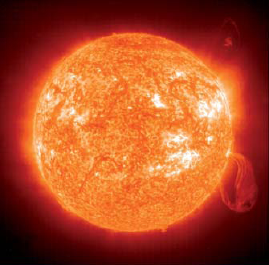
There are many ‘myths’ and ‘fictions’ about the relationship between solar activity and climate change (SOH-EIT Consortium, ESA, NASA)
There are many ‘myths’ and ‘fictions’ about the relationship between solar activity and climate change (SOH-EIT Consortium, ESA, NASA)
That we should use fossil fuels prudently is still our conclusion. We do not suggest that the IPCC predictions should be ignored; just regarded with caution considering the uncertainties surrounding them.
Contribution by Malcolm Clare
I take issue with the conclusion that there is insufficient evidence to make any forward planning decisions. Sea-level rise is with us; even with the limited warming predicted in the paper, it should be addressed. Therefore the following would be appropriate
sea defences should be designed to meet the IPCC median predictions for 100-year sea-level rise
compensation should be paid to all property owners for loss if works of defence or protection are not carried out.
Authors' response
The rise in sea level is currently around 3 mm/year. Sea levels rise because of the melting of ice that is not floating, the sinking of land and the expansion of the oceans if temperature rises.
The IPCC's projected values contain estimates of the expansion effect that applies to the total water content of the oceans. When atmospheric temperatures vary, only the surface layers of the oceans respond and imply a much smaller effect on sea level than that assumed by the IPCC.
Contribution by Ali Abbas
Civil engineers are used to dealing with uncertainty by designing for the worst-case scenario. So, even if there is doubt about the cause or the magnitude of global warming, then civil engineers will still consider its effects to be on the safe side. Our models cannot tell us where exactly an earthquake will hit, but that does not mean we should ignore its effects in design.
References
19. Intergovernmental Panel on Climate Change. Climate Change 2007: The Physical Science Basis. Contribution of Working Group I to the Fourth Assessment Report of the Intergovernmental Panel on Climate Change. Cambridge University Press, 2007.
20. See http://www.royalsoc.ac.uk/downloaddoc.asp?id=1630 (last accessed June 2007).
21. See http://www.metoffice.gov.uk/corporate/pressoffice/myths/index.html (last accessed June 2007).
22. Annan J. D. and Hargreaves J. C. Using multiple observationally-based constraints to estimate climate sensitivity. Geophysical Research Letters, 2006, 33, L06704, doi:10.1029/2005GL025259.
23. Rahmstorf S., Cazenave A., Church J. A., Hansen J. E., Keeling R. F., Parker D. E. and Somerville R. C. J. Recent climate observations compared to projections. Science, 4 May 2007, 316, No. 5825, 709.
24. Schneider von Deimling T., Held H., Ganopolski A. and Rahmstorf S. Constraining climate sensitivity with proxy data from the last glacial maximum. Climate Dynamics, 2006, 27, No. 2–3, 149–163.
25. Lenton T. M., Williamson M. S., Edwards N. R., Marsh R., Price A. R., Ridgwell A. J., Shepherd J. G., Cox S. J. and The GENIE team. Millennial timescale carbon cycle and climate change in an efficient Earth system model. Climate Dynamics, 2006, 26, No. 7–8, 687–711.
ICE Prestige lecture: Climate science, earth systems and engineering
ICE is holding an evening meeting to discuss this paper, together with Earth systems engineering: turning vision into action by Hall and O'Connell, published in this issue (p114), and Climate change and engineering challenges, by Julian Hunt, scheduled for publication in this journal, at Imperial College, London, on the 11th October (booking is essential).
P14431: CDM Regulations: 12 year of pain but little gain: by Alasdair Beal (May 2007)
Contribution by Howard Walter
One of the author's conclusions, ‘Site safety is primarily the contractor's responsibility’, takes us back close to the situation prevailing up to about 20 years ago, when all responsibility for site safety was heaped upon the contractor, irrespective of the constraints applied by the designer and client, and even enshrined in some conditions of contract. This injustice was recognised in some milestone court cases, where designers and clients were convicted and heavily fined as a result of fatalities on construction sites, and the industry has moved on now to share the responsibility for managing health and safety risk.
We must not forget the notion of buildability. Consideration of buildability is, in my view, a powerful means by which the designer can often reduce site safety risk or even eliminate it at source.
Author's response
Of course buildability should be considered in designs, but most site accidents are not caused by the permanent works design and the potential for reducing deaths and injuries by making design changes is much less than has been claimed.
The idea that designers and clients should share responsibility for site safety may sound attractive, but in reality it is the contractor who decides on construction methods and programme, appoints subcontractors, coordinates their work and controls the site. The influence of designers and clients on what happens on site is normally small by comparison.
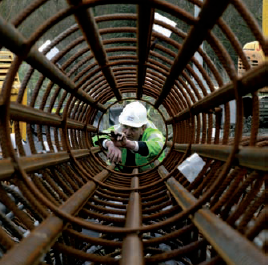
Dumping responsibility for site safety on contractors would tum the clock back 20 years (Newscast)
Dumping responsibility for site safety on contractors would tum the clock back 20 years (Newscast)
Contribution by Marin Hordyk
The CDM Regulations have introduced an awareness of safety issues. Nowadays contractors and consultants consider safety to a far greater degree than 30 years ago; indeed I am not aware of any consideration in consultants' offices at the beginning of my career. The figures given in Table 1 confirm this observation of an increased awareness: 8·6 deaths per 100 000 workers in 1985 reducing to 5·0 in 1995 and 3·5 in 2004.
| PAPER AND AUTHORS | ISSUE IN 2006 | AWARD |
|---|---|---|
| Bridge Engineering | ||
| Load carrying capacity of flooded masonry arches, by Kent Hulet, Colin Smith and Matthew Gilbert | September | Baker Medal |
| St Paul's Footbridge, Ebw Vale, Wales—landmark structure, by David Williams | June | John Henry Garrood King Medal |
| Heat-straightening repairs to a steel road bridge, by Simon Clubley, Stephen Winter and Keith Turner | March | Bill Curtin Medal |
| Recent concrete, self-anchored suspension bridges in China, by Zhe Zhang, Qi-jie Teng and Wen-liang Qiu | December | Overseas Prize (1) |
| Civil Engineering | ||
| Sharing water: engineering the Indus Water Treaty, by David Birch, Aslam Rasheed and Iftikhar Drabu | May | Coopers Hill War Memorial Prize |
| What lies beneath: surveying the Thames at Woolwich, by Joe Lenham, Vaughan Meyer, Helen Edmonds, David Harris, Rory Mortimore, John Reynolds and Mike Black | February | Manby Prize |
| Lessons learned from tsunami damage in Sri Lanka, by Priyan Dias, Ranjith Dissanayake and Ravihansa Chandratilake | May | Overseas Prize (2) |
| Cheong Gye Cheon restoration in Seoul, Korea, by Jong-Ho Shin and In-Kun Lee | November | Reed and Mallik Medal |
| What causes accidents?, by Alistair Gibb, Roger Haslam, Diane Gyi, Sophie Hide and Roy Duff | November | Safety in Construction Medal |
| Construction Materials | ||
| Performance of helically shaped metal fasteners in timber, by Guillaume Coste, Abdy Kermani and Alexander Porteous | May | Howard Medal |
| Engineering Sustainability | ||
| Widening engineering horizons: addressing the complexity of sustainable development, by Richard Fenner, Charles Ainger, Heather Cruickshank and Peter Guthrie | December | George Stephenson Medal |
| Sustainable landslide risk reduction in poorer countries, by Malcolm Anderson and Liz Holcombe | March | Trevithick Fund |
| Geotechnical Engineering | ||
| Distributed strain measurement for pile foundations, by Assaf Klar, Peter Bennett, Kenichi Soga, Robert Mair, Paul Tester, Rab Fernie, Hugh St John and Gordon Torp-Peterson | July | Crampton Prize |
| Maritime Engineering | ||
| Modelling coastal boundary flows over typical bed-forms, by Ming Li, Shunqi Pan and Brian O'Connor | March | Halcrow Prize |
| The maritime energy resource, constraints and opportunities, by Ian Bryden | June | David Hislop Prize |
| Rehabilitation of a sea wall in Mandal, Norway, by Arne Lothe and Tor Birkeland | September | Telford Premium (2) |
| Municipal Engineer | ||
| Impact of climate change on London's transport network, by Brian Arkell and Geoff Darch | December | James Hill Prize |
| Carbon reduction strategies at University of East Anglia, UK, by Keith Tovey and Charlotte Turner | December | Watt Medal |
| Structures and Buildings | ||
| An improvement on Mangel's diagram, and an application, by Chris Calladine | June | Palmer Prize |
| Repairs to River Trent navigation locks, 1981–2002, by Jeff Pickles | June | Parkman Medal |
| Vibration serviceability for pedestrian bridges, by Michael Kasperski | October | Telford Premium |
| Transport | ||
| Road user charging and taxation, by David Bayliss | November | Rees Jeffrys Award |
| Development of German non-ballasted track forms, by Roger Bastin | February | Webb Prize |
| Using waste to reduce slope erosion on road embankments, by Juan de Oña and Francisco Osorio | November | Telford Premium |
| Water Management | ||
| Integrating 1D and 2D hydrodynamic models for flood simulation, by Binliang Lin, John Wicks, Roger Falconer and Konrad Adams | June | Robert Alfred Carr Prize |
However, there does not appear to be a similar reduction in major injuries. I would be interested to see the data on deaths and major injuries at large and small sites.
Author's response
I agree with Mr Hordyk that it would be interesting to see evidence about the relative safety records of large and small sites and also how these have been affected by the CDM Regulations.
Contribution by Alan Muir Wood
This is a valuable paper, exposing the waste in money (more than £1 billion a year), other resources and the time of experienced engineers, with CDM following from a bureaucratic solution to an incorrectly defined problem. Construction safety must depend primarily on engineering judgement. It is likely that the most grievous problems have resulted from the emphasis of the 1980s on least (apparent) cost and consequent fragmentation of project contributions between consultants, contractors and specialists.
An important benefit would follow from ensuring that all engineers in project decision-making roles have appropriate experience across the artificial design–construction divide. How extraordinary, in this context, if the supervisors / coordinators need no qualification in relation to what they are expected to supervise or coordinate.
Health and safety plans do distract, as the author states, unless prepared by those who appreciate innovation in design and construction. They will tend to bury or omit specific potential risks—that usually call for training rather than regulation—beneath the ‘fluff’ of generalities that could be generated robotically.
A case is surely made for ICE to commission studies of the nature of this paper to define the real problems and the options for solutions, whenever government appears to be girding up its loins for new legislation.
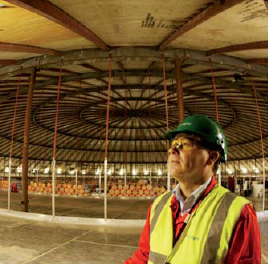
Health and safety plans should be prepared by those who appreciate innovation in design and construction (David Parry/Newscast)
Health and safety plans should be prepared by those who appreciate innovation in design and construction (David Parry/Newscast)
Author's response
Sir Alan identifies succinctly the problems created by current UK CDM culture and the costly, bureaucratic and ineffective practices it has spawned. I hope that ICE will heed his call for critical studies to review current practice, identify the real problems and come up with better solutions.
Contribution by Nick Reilly
I believe that it was never credible that designers could be responsible for more than a tiny proportion of accidents on site; this is obvious from the fact that a majority of accidents involve falls from height or transport.
Nor is it logical to go for clients. A client totally ignorant of construction should be able to commission work from experts without having to worry about anything but that the work should meet its requirements. To require that clients should make ‘resources available to ensure safety’ is ludicrous; the client pays what it is required to pay after a process of competitive tendering by organisations which will comply with the law and act responsibly.
What is needed is a team of government safety inspectors empowered to go round sites and visit without warning. But this would cost the government money and it would always rather inflict cost on others.
I agree with the author that the health and safety file is the only useful feature of the regulations and even this is of limited value unless a copy is lodged in some central archive because clients will lose them. I act as an All Reservoirs Panel engineer under the Reservoirs Act 1975 and find that owners have frequently lost the statutorily required ‘prescribed form of record’ and a new one has to be compiled.
It is clear to me that the CDM Regulations were drafted by people with little understanding of construction. If the Health and Safety Executive really believes that its CDM Regulations were well-founded, it would commission and publish research into how it is done in the rest of Europe.
Author's response
Mr Reilly poses pertinent questions about the justification of the idea in the 2007 CDM Regulations of holding clients responsible for construction safety. His proposal for a study of experience in the rest of Europe is particularly interesting—it would be interesting to know whether other countries have managed to implement the EU Directive in ways which are more effective and less bureaucratic than the UK.
Full versions of these discussions can be read with all other discussions in the online version of the journal at www.civil-engineering-ice.com
Proceedings
> RECENTLY PUBLISHED PAPERS
In addition to Civil Engineering, the ICE Proceedings includes twelve specialist journals. Papers and articles published in some of the most recent issues are listed here. Summaries of all these and other papers and articles published in the past three years can be read free at www.ice.org.uk/journals. ICE members can download any 15 papers published in 2007 for £25 from www.iceknowledge.com
Bridge Engineering
160, No. BE2, June 2007, 47–98
PAPERS
Reconstruction of Bryn-y-Felin Railway Bridge, Snowdonia
J. C. Sreeves

Jamestown Viaduct, UK: strengthening of an early steel viaduct
C. Roberts. A. Hanson, D. Henderson and G. Bell
UB 30/274 Daer Viaduct replacement
G. Bell, B. Anderson and R. Rocke
Design and construction of the Metrolink Finback Bridge
S. W. Jones and R. G. Wrigley
A new masonry arch bridge assessment strategy (SMART)
C. Melbourne, J. Wang and A. K. Tomor
Field testing of a 30-year-old composite Preflex railway bridge
S. Staquet, G. Kalogiannakis, H. Detandt, D. Van Hemelrijk and B. Espion
Energy
160, ENI, February 2007, 1–43
BRIEFING
Prospects for nuclear power
S. Dagnall

PAPERS
Energy efficiency with natural ventilation: a case study
S. D. Fitzgerald and A. W. Woods
Clean coal technologies for power generation
J. M. Farley
North Hoyle offshore wind farm: design and build
J. M. F. Carter
Renewables and the grid: understanding intermittency
R. Gross, P. Heptonstall, M. Leach, D. Anderson, T. Green and J. Skea
Geotechnical Engineering
160, No. GE3, July 2007, 123–184
PAPERS
Speed and reloading effects on pavement rutting
L. Korkiala-Tannttu
Plastic bending of sheet steel piles
P. J. Bourne-Webb, D. M. Potts and D. Rowbottom
Characteristic and design soil parameters: use of statistics
S. R. Lo and K. S. V. Li
Using a virtual back in retaining wall design
C. O'Sullivan and M. Creed
Loss of soil structure for natural sedimentary clays
Z. Hong, S. Shen, Y. Deng and T. Negami
Development of Hairsine method for design of L-shaped walls
J. L. Justo, P. Durand and E. Justo
Deflectometer-based analysis of ballasted railway tracks
M. P. N. Burrow, A. H. C. Chan and A. Shein
Kinematics of two deep-seated landslides in Greece
S. I. Pytharouli, V. A. Kontogianni and S. C. Stiros
Maritime Engineering
160, No. MA2, June 2007, 47–91
PAPERS
Static equilibrium bays in coast protection
S. P. Herrington, B. Li and S. Brooks

Simulating storm waves in the Irish Sea
A. J. Elliott and S. P. Neill
Planning supply transport in port works
J. L. Moura Berodia, L. dell'Olio and A. Ibeas Portilla
Analysing eyewitness reports of the 2004 Asian tsunami
R. Spence, J. Palmer, M. Petal, I. Kelman and K. Saito
Municipal Engineer
160, No. ME2, June 2007, 69–113
PAPERS
Community design with children in Montreal and Guadalajara
J. Torres and M. Lessard

The Child Friendly Cities Initiative
S. Schulze and F. Moneti
Inclusive design: planning public urban spaces for children
J. Haider
Where do the children play? How policies can influence practice
H. Woolley
Creating child friendly cities: the case of Denver, USA
B. Kingston, P. Wridt, L. Chawla, W. van Vliet and L. Brink
Engineering children's physical activity: making active choices easy
N. M. Nelson and C. B. Woods
Structures and Buildings
160, No. SB3, June 2007, 123–184
PAPERS
Certification of building structural design in Scotland
D. Walker

Stainless steel structures in fire
L. Gardner
Enhancing ductility of non-seismically designed RC shear walls
J. S. Kuang and Y. B. Ho
Elastic analysis of ground-floor slabs under multiple loads
A. A. Abbas, M. N. Pavlović and M. D. Kotsovos
Cracking and tension zone behaviour in RC flexural members
K. L. Kong, A. W. Beeby, J. P. Forth and R. H. Scott
Inclined reinforcement around web opening in concrete beams
K.-H. Yang and A. F. Ashour
Transport
160, No. TR3, August 2007, 93–154
PAPERS
The introduction of flexibility into a road ironwork installation
B. V. Brodrick, A. C. Collop, S. F. Brown and R. Cooper
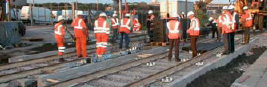
The extension of London Underground's East London line
G. T. Bessant
Geocomposite technology: reducing railway maintenance
P. K. Woodward, D. Thompson and M. Banimahd
Travel patterns of three distinct driver age groups in Greece
I. Spyropoulou, E. Papadimitriou, G. Yannis and J. Golias
A modelling technique for assessing linked MOVA
G. Tenekeci
Identification of potential highways maintenance schemes
T. J. Brownlee, S. Finnie and D. Wightman
Waste and Resource Management
159, No. WM4, November 2006, 143–185
PAPERS
Grey modelling of solid waste volumes in developing countries
A. K. Srivastava and A. K. Nema
Groundwater impacts from coal ash in highways
L. Li, C. H. Benson, T. B. Edil and B. Hatipoglu
Performance of photo-catalytic paving blocks made from waste
C. S. Poon and E. Cheung
Compressibility of tyres for use in landfill drainage systems
R. P. Beaven, W. Powrie, A. P. Hudson and D. J. Parkes
Water Management
160, No. WM4, November 2006, 143–185
PAPERS
Estimation of burst rates in water distribution mains
J. B. Boxall, A. O'Hagan, S. Pooladsaz, A. J. Saul and D. M. Unwin
Estimating time to failure of cast-iron water mains
B. Rajani and S. Tesfamariam
Assessing water mains condition using hydraulic transients
D. Misiunas, M. Lambert, A. Simpson and G. Olsson
Optimising water supply and distribution operations
Z. F. Rao, J. Wicks and S. West
Real-time modelling of a major water supply system
R. Farmani, P. Ingeduld, D. Savic, G. Walters, Z. Svitak and J. Berka
The effect of pressure on leakage in water distribution systems
J. E. van Zyl and C. R. I. Clayton
Peak residential water demand
C. Tricarico, G. de Marinis, R. Gargano and A. Leopardi
Modelling the risk of contaminant intrusion in water mains
K. Vairavamoorthy, J. Yan and S. D. Gorantiwar
Personal on-line subscriptions to specialist Proceedings journals start from £11 a year for members. Print subscriptions start at £21 a year and include full on-line access to the current and past three years' issues. Please call +44 (0)20 7665 2227, email subs@ice.org.uk
Request for papers
All Proceedings journals rely entirely on papers sent in by civil engineers and related professionals, researchers, academics and students. Papers should be around 2000 to 5000 words long, in good English and with adequate illustrations and references. Project papers are particularly welcome. All papers sent in will be assessed on merit and not on the status of the author. Simply submit your text and images using the online submission system via www.ice.org.uk/journals.
> AWARD WINNING PAPERS IN 2006
On 5 October 2007, ICE president Quentin Leiper will present awards to the following papers published in the various ICE Proceedings journals in 2006. Journal editorial panels nominated their best papers and an awards committee, chaired by John Burland, allocated the awards. Members can download these award-winning papers free from their MyICE page on the ICE website at www.ice.org.uk
Books
>>> REVIEWS
Ralph B Peck, educator and engineer—the essence of the man
edited by John Dunnicliff and Nancy Peck Young, published by BiTech Publishers, 2007, £50·00, reviewed by Ron Williams
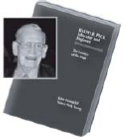
In 1984, John Dunnicliff and Don Deere edited the volume Judgement in Geotechnical Engineering to commemorate the 70th birthday of Ralph Peck. It included a most valuable collection of professional papers and reports. This new book builds from this point with an extensive autobiography, based on tape recordings and dictations made by Peck during 2004 and 2005, and concludes with a series of vignettes by 35 colleagues and friends which provide a multi-faceted view of this remarkable engineer.
Between these personal accounts are a selection of publications and lectures covering the past 25 years. These give a vivid account of the development of geotechnical engineering and Peck's pragmatic approach developed from his early background in civil engineering. His concerns about the present dominance of theory over practice in the education of undergraduates are again emphasised.
In a recent talk he said, ‘The failure to think and act in a geological fashion is an undesired by-product of our computer age. It must be remedied or the benefits of applied soil mechanics will be lost’. Whether this call has been heeded is open to doubt.
The dedication to Richard Goodman's biography of Karl Terzaghi is, ‘To Ralph Peck. A courageous, strong and honest human being whose teaching, writing, speaking and practice of civil engineering continue to light the way.’ After reading this most rewarding volume few would disagree. The specialist and non-specialist alike will find much of relevance and the whole volume of interest. It is most highly recommended.
Design of movable weirs and storm surge barriers: by InCom Working Group 26, published by PIANC, 2006, €95·00, reviewed by Graham Tombs

This report is presented as a hard-copy book written in English to which is attached a CD containing additional information and contributions, some written in English and 404 pages written in French, from various authors, authorities and manufacturers.
The report, including the French part of the CD, focuses on the design and construction of gates and their supporting structures for
control of water level and flow in rivers and waterways—movable weirs
control of water level and flow in estuaries to exclude high tides—flood barriers.
In addition, the CD contains presentations on flood protection in the UK, demountable flood defences, fabridams and environmentally considerate lubricants.
The total scope and detail of this subject is enormous and every project will have its own special requirements and constraints. This short report cannot therefore be exhaustive in its coverage but it is a very good introduction and should encourage further reading and study.
Encouraging innovation in the eighteenth and nineteenth centuries: the Society of Arts and Patents, 1754–1904: by James Harrison, published by High View, 2006, £17·50, reviewed by Philip Jackson, Bentley Systems
After overcoming what at first appeared to be a daunting historical treatise with few illustrations, I found this to be a fascinating book. It traces the history of the first 150 years of the Royal Society of Arts, which had a major role to play in the patents story alongside the industrial revolution and the rise of Britain's economic influence and dominance in the world.
It is a serious historic treatise with over half of its 242 pages devoted to references, notes and appendices. However, it is lightened by the inclusion of human interest and details from interesting inventions. Famous names can be found scattered throughout, from writers like Samuel Johnson and Charles Dickens to giants of British invention like Matthew Boulton, Humphrey Davy, John Nash, James Watt and Josiah Wedgwood.
The book traces the influence of the society in the encouragement and invention through to 1852—when the Patent Office was established, the result of the Patent Law Amendment Act, which was also known as the ‘Society of Arts’ Act' after the part played by the society. The Royal Society predates the engineering institutions and records their influence on the Society, placing both in perspective in their roles offering advice and encouraging knowledge dissemination for the greater good. The book goes on to offer thoughts on the Society's decline prior to the 1852 Patent Law Act through to its revival in the years following.
Overall this is a very interesting book which rewarded me, overcoming initial fears that it may be dry and uninteresting. It is of value to social and engineering historians and the interested layman.
Designer's guide to EN 1998-1 and EN 1998-5. Eurocode 8: Design provisions for earthquake resistant structures: by Michael Fardis, Eduardo Carvalho, Amr Alnashai, Ezio Faccioli, Paolo Pinto and Andre Plumier, published by Thomas Telford, 2005, £75·00, reviewed by Costas Georgopoulos, The Concrete Centre

This state-of-the-art commentary of Eurocode 8 has been co-authored by the national delegates to the CEN / TC250 subcommittee 8 that drafted the code. The authors' collective research expertise is evident from the introduction right through to the 156 references noted at the end.
Arguably the research foundation combined with the necessary specialised terminology would make the document complicated for the novice engineer. However, the guide provides invaluable information on the background to Eurocode 8 for the experienced designer of earthquake-resistant structures who needs to understand better or even diversify from the standard provisions of the code.
Having recently written chapter 8 of the British Standards Institution Design guide to Eurocodes for lecturers and students, I also believe that every lecturer who either teaches or carries out research on seismic design should have a copy of this guide.
Overall, I thoroughly enjoyed reading this guide and highly recommend it to anybody who is interested in seismic design.
Performance-based optimization of structures: theory and applications: by Quin Quang Liang, published by Spon Press, 2005, £95·00, reviewed by Sakdirat Kaewunruen, University of Wollongong
This book is about the mathematical techniques of so-called ‘performance-based optimisation’ (PBO).
PBO techniques have been recently adopted for use in engineering analysis and design due to the fact that modern engineering modules need the optimum topologies and shapes that meet clients' satisfactions in sustainability, durability, safety, performance, effective weight, in particular cost-effectiveness, and so on. These preferences are additional constraints, which later form the mathematical equations, together with the design problem, to be considered and solved by engineers.
Although there are certain techniques to solve such problems, the procedures of those techniques are not versatile. PBO techniques then become more popular because they are effective and powerful in solving series of equations with compliant restraints set up in engineering applications for the optimum values. Their clarity, simplicity, and ease to understand are also attractive points.
Extensions of the method include various applications in aeronautical, automobile, or mechanical fields; for instance, the design of lightweight spacecraft, the design of aerodynamic shapes for racing cars, or even the selection of dimensions for toothpicks. Nonetheless, this book mostly provides examples of design applications in engineering structures.
Overall, the content flows smoothly for all readers, ranging from beginners as university students to advanced analysts as researchers and practical engineers. This book is recommended for those with ample backgrounds in engineering fundamentals and conceptual designs.
Dictionary of urbanism: by Robert Cowan, published by Streetwise Press, 2005, £29·95, reviewed by John Jenkins, White Young Green Consulting
Robert Cowan's dictionary continues the tradition of both entertaining and informing the reader by an ease of style and liberal use of quotations in the presentation of its definitions. Like many dictionaries it is a product of its time and the few decades preceding it. As a result, the dictionary has a freshness and immediacy that will be of use as reference now and for social research in the future.
There is a helpful introduction by the author which sets the tone for the book and is worth reading in its own right. It builds a richness of expectation that, on the whole, is delivered by the subsequent entries. The illustrations are, however, somewhat over-stylised and the likenesses weak, but this is a minor point of criticism.
Specific definitions are an eclectic mix that reaches beyond the field of urban design that would be recognisable to purists. The dictionary will therefore be of interest to any practitioner in the built environment, particularly engineers who deal with crossover skills of master planning, regeneration, transportation and allied disciplines.
In compiling the dictionary the author has allowed some prejudices to be expressed. The definitions of ‘engineer’ and, more obviously, ‘highway engineer’ are somewhat barbed although this is most probably impishness rather than malice.
The most important contributions are those around current topics of importance to the urban fabric of cities and society in general. The entries for ‘sustainable’, ‘urban design’, ‘place’ and ‘city’ are thoughtful and instructive and reward re-reading.
In summary, this work will be a useful reference for anyone interested in the development of our urban spaces or simply those observers of the social mores of the late twentieth and early twenty-first centuries.
Interim guide to quantitative risk assessment for UK reservoirs: by Alan Brown and John Gosden, published by Thomas Telford, 2004, £40·00, reviewed by Robert Freer
The authors are senior engineers with Kellogg Brown & Root Ltd and are on the All Reservoirs Panel of Inspecting Engineers. The document is intended to be ‘a tool for the management of reservoir safety’ based on the ‘annual probabilities of occurrence, consequences and tolerability of the risk of reservoir failure’.
Since probability depends on having sufficient historical data on performance, the scope of the document is limited to embankment dams, and mainly to embankment dams ‘in service’, that is more than 5 years since the reservoir was first filled. Most of the dams in the UK are embankment dams and there are insufficient performance data to extend the assessment to concrete and masonry dams.
The present document is issued as an interim guide for comment and the definitive guide is expected to be published in 2008.
One of the problems in assessing risk is to understand the uncertainties in making the assessment, and quantitative risk assessment (QRA) is one of the tools used to manage this risk. A particularly useful part of this guide is the worked example of QRA in appendix C.
This publication is another commendable contribution to the guidance documents which will assist dam engineers in ensuring the safety of the national stock of dams.
Full versions of these reviews can be read with all other reviews in the online version of the journal at www.civilengineering-ice.com
>>> NEW BOOKS
The ICE's bookshop in London carries one of the most comprehensive ranges of civil engineering books in the world. New books received in the past three months are as follows.
Building 3000 years of design
Bill Addis £45·00
Building services engineering (5th edn)
David Chadderton £29·99
Concrete pavement design: guidance notes
Geoffrey Griffiths and Nick Thom £65·00
Construction of marine and offshore structures
Ben Gerwick Jr £74·99
Manual for streets
Department for Transport, Communities and Local Government, Welsh Assembly Government £22·50
Mechanics of soils and foundations (2nd edn)
John Atkinson £24·99
Principles of project and infrastructure finance
Willie Tan £29·99
Smith & Keenan's English law (15th edn)
Denis Keenan £36·99
Thomas Telford: 250 years of inspiration
Institution of Civil Engineers £6·00
Understanding building failures
James Douglas and Bill Ransom £24·99
Understanding JCT standard building contracts
David Chappell £18·99
Underwater embankments on soft soil—a case history
William van Impe and Daniel Verastegui Flores £39·95
Water reuse—issues, technologies and applications
Metcalf & Eddy, Inc. £84·99
Wind loading of structures
John Holmes £90·00
The bookshop is in the ICE foyer, 1 Great George Street, London SWIP 3AA and is open from 9.30am to 5.00 pm, Monday to Friday. Books can also be ordered by calling +44 (0)20 7665 2462, emailing orders@thomastelford.com or by visiting www.thomastelford.com or the bookshop section of www.ice.org.uk
ICE review
A review of recent and forthcoming developments at the Institution of Civil Engineers by ICE director of communications and marketing Anne Moir. For further information please contact the Communications Office on +44 (0)20 7665 2150 or visit the ICE website at www.ice.org.uk
Infrastructure funding call
Leading engineers, surveyors and town planners wrote to the then UK chancellor Gordon Brown in May 2007 calling for a clear plan for delivering multi-billion pound investment in the nation's essential infrastructure ahead of the forthcoming Planning White Paper.
The letter, representing 230 000 professionals from ICE, the Royal Institution of Chartered Surveyors and the Royal Town Planning Institute, asked the Government to clarify its plans for major investments into new transport, energy, waste and water infrastructure.
ICE president Quentin Leiper commented, ‘Failure to invest in our infrastructure could lead to further traffic congestion, more hosepipe bans and over-reliance on imported gas supplies. Ultimately, essential infrastructure investment is vital for improving the nation's quality of life.’
New Eurocodes website
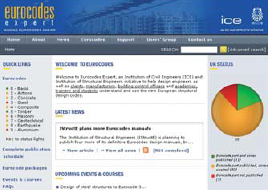
ICE and the Institution of Structural Engineers launched an enhanced Eurocodes Expert website at www.eurocodes.co.uk in April 2007. The site aims to be the authoritative source of information on structural Eurocodes and is supported by an extensive range of content partners drawn from the professional bodies, trade associations and government.
The revamped website is set to be the UK's leading online information portal on Eurocodes and uses an innovative ‘traffic lights‘ system to indicate the current UK status of each of the 58 Eurocodes parts. It provides easy access to comprehensive support resources including publications, events and courses provided by the content partners.
Road-pricing report
A leading panel of transport experts—including ICE—is backing the UK Government's plan to implement road user pricing as one solution to combat UK road congestion, which will cost the economy £12 billion a year by 2010.

The Green Light Group's report entitled Road Pricing: What Are The Facts? wants potential revenue raised from road pricing to be put back into improving the transport infrastructure network.
The group—which represents over 185 000 transport professionals—says the Government should decide on whether road-pricing schemes should be tailored to some cities and towns, severely congested roads, or in the form of a nationwide system.
The report can be downloaded from www.greenlightgroup.org.uk.
CDM coordinator register
ICE launched a new register in April 2007 to raise the standard of health and safety practice across the construction industry as new legislation comes into force.
The new Construction Health, Safety and Welfare Register will enable construction professionals to become coordinators under the new Construction (Design and Management) Regulations, launched by the Health and Safety Executive on 6 April 2007.
David Lloyd-Roach, ICE's director of membership, commented, ‘The new register will provide a ready means of identifying those construction professionals with the necessary knowledge and competence to become health and safety CDM coordinators.’
The register will be publicly available, with an additional list detailing the names of organisations which employ staff who have made it onto the list. To join the register please visit www.ice.org.uk/joining/joining_specialist_lists2.asp.
Subscriptions rise 2·5%
ICE Council recently voted to increase subscriptions in 2008 by only 2·5% compared to the 9% increase for 2007. The small increase was due to a successful performance by subsidiary Thomas Telford Limited (TTL), which doubled its profit target by making £2·8 million in 2007.
The increase is also lower than projected in the ICE five-year business plan. The recent years' increases were required to create the regional support teams across the UK.
New graduate members will be entitled to free membership for the remainder of the year in which they graduate; this will be introduced from 2008. ICE Council also voted to offer a significantly reduced subscription rate to technician members that will be trialled over the next five years. The technician rate for 2008 will be £100, compared to £157 in 2007.
Benevolent Fund update
‘Supporting members throughout their working lives’ is the new objective for the modernised ICE Benevolent Fund. Major changes in the charity's approach to aiding people since its inception in 1864 have given new hope to troubled engineers.

A free 24-hour helpline is available which provides assistance with employment law, including advice on Transfer of Undertakings (Protection of Employment), debt problems, insurance disputes, consumer issues and so on. Also available is a new outplacement career service which aids members in their search for work in the engineering sector.
The Fund has also produced a simple document called Where is it kept for engineers and their spouse or partner. The document can be obtained from the Fund at benfund@ice.org.uk, or downloaded from the website www.bfice.org.uk.
FOR FURTHER INFORMATION CONTACT, Pauline Arundel EMAIL pauline.arundel@ice.org.uk

