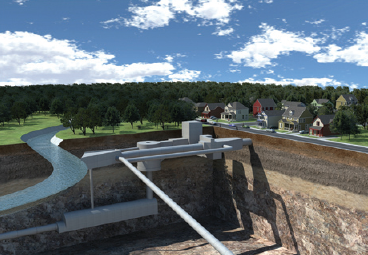
Civil engineers need to embrace digitalisation more fully to meet the critical challenges that lie ahead, says Mark Paraskeva of Autodesk. in particular it could make the profession more attractive to talented youngsters.
The world is transforming before our eyes. Thanks to digitilaisation, how we work, communicate, find information, learn and access entertainment today is very different to how we did it just a decade ago.
Digitalisation, combined with the increased capacity to connect, has accelerated globalisation and society's ability to collaborate and compete. This in turn this has led to a worldwide infrastructure boom worth up to US$40 trillion, with developed nations repairing and rebuilding their existing infrastructure and emerging economies building afresh. In addition we are faced with a changing climate, rising energy costs and dwindling resources. These issues bring challenges but also huge opportunities for civil engineers.
However, the profession has an ageing workforce and a severe skills shortage among its younger members – a lack of young talent could prevent it from rising to the occasion. Civil engineers need to overcome their traditional mistrust of the new and recognise there are tools around that can change the way they work.
Efficiency through digitalisation
By 2010, there will be 1·4 billion worldwide internet users and more than three billion mobile phone subscribers. This means that almost every other person in the world will have a mobile phone only four years from now.
What relevance does this have for civil engineering? In a digital world, when more and more people are expecting things to be in digital form, companies need to get better at keeping their work digital in order to compete. This requires the creation and maintenance of efficient digital workflows that make working with people anywhere, at any time, easy and productive.
Digitalisation makes collaborative working much simpler – whether talking across a project, across different disciplines or across the globe. However, globalisation has two sides – everyone can collaborate, but they can also compete. As Jonathan Ive, head designer at Apple once said: ‘It's easy to be different, it's hard to be better’. So, when trying to stand out from the crowd, civil eningeers need to design infrastructure that works better, is easier to use and that will last longer.
To keep up with infrastructure boom the profession also needs to learn how to run large projects more effectively and efficiently, making the entire design–engineer–operate lifecycle digital.
China, for example, currently plans to build 37 new airports and expand 31 others in the western part of the country. In the next five years India has budgeted ’494 billion of infrastructure spending and Saudi Arabia will spend $1 trillion on infrastructure over the next 15 years. To cope with this civil engineers need to use technology not just to build, but also to monitor and maintain. For example, concrete ‘smart bridges' being tested in New Mexico have embedded fibre-optic sensors to monitor safety.
Sustainability through simulation
Overshadowing efficiency issues is the need to create buildings and infrastructure that are sustainable due to the dual concerns of climate change and the need to protect finite resources.
Civil engineering designers thus need to use technology that enables them to simulate, analyse and predict the performance of designs over time. It also means being able to experiment freely with the use and impact of different materials, and to make early improvements to the way designs will look, behave and perform.
Being in the frontline of global trends will not be enough alone to attract new young talent to the profession. Civil engineers therefore need to do three things – make use of the international talent pool, maximise readily available skills and, being realistic, learn how to do more with fewer resources.
The profession must also reverse the trend of dwindling student numbers, which will not be easy. However, providing graduates with readily available tools that take the drudgery out of the job – for example, eliminating the need for complex calculations and the constant checking of co-ordination when changes are made – will leave them freer to create higher quality and more innovative solutions to today's challenges.
A new way of working is needed – and software vendors are listening more than anyone to learn what is required. Thankfully much of the digital design and workflow technology is now available. All that is needed now is civil engineering ideas and innovation.
FOR FURTHER INFORMATION CONTACT, Mark Paraskeva, TEL +44 1252 456600, EMAIL gb-info@autodesk.com, WEB www.autodesk.co.uk