10-00054 Carbon dioxide from earthworks: a bottom-up approach
by Lynsay Hughes, Alan Phear, Duncan Nicholson, Heleni Pantelidou, Kenichi Soga, Peter Guthrie, Alex Kidd and Niall Fraser (May 2011)
Contribution by Stephen Farrar
The paper fails to mention that the disturbance of soil, especially topsoils and organic-based soils such as peat, can cause considerable release of carbon dioxide, as does the final use of the earthworks. The conservation of soils is also an important issue. This has been recognised in The Scottish Soil Framework: A Consultation Document (http://www.scotland.gov.uk/publications/2008/06/27092711/9).
Authors’ reply
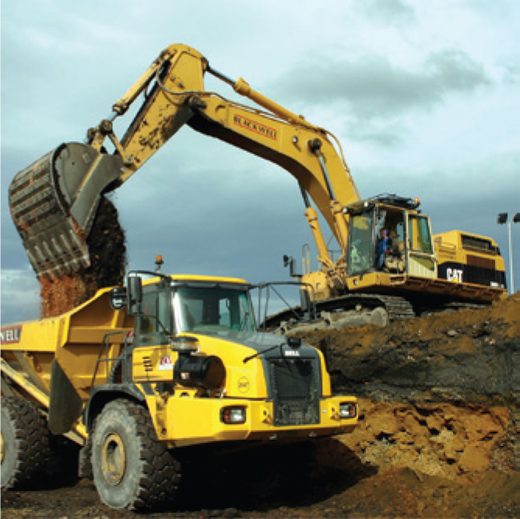
The focus of the paper was to understand the carbon dioxide from the earthworks operation within the construction phase of an overall infrastructure project. It is appreciated that the intended final use of the infrastructure for which the earthworks was undertaken can result in additional carbon dioxide emissions, as can the removal of topsoils and highly organic soils.
The paper addressed bulk earthworks operations in soils that would not be classed as highly organic. However, the authors would recommend a considered approach to the protection of carbon stocks in existing highly organic soils.
On several projects that the authors have been involved with involving earthworks across peat deposits and other highly organic soft ground, the quantification of the carbon dioxide associated with different treatment options for these highly organic soils has been an important aspect in determining the preferred engineering solution for the earthworks. These options have typically aimed to try to preserve these soils, either by excavating and relocating them so they can remain saturated, or stabilising them in-situ. The carbon associated with these options was estimated and was compared against the carbon dioxide released when highly organic soils are allowed to dry out, along with the lost carbon sequestration potential.
The authors agree that the sustainable reuse of topsoils and highly organic soils is very important as these are a vulnerable and essentially non-renewable resource. We would also like to highlight the good practice guidance published by the UK Department for the Environment, Food and Rural Affairs (Defra) in 2009 on sustainable use of topsoils and other organic soils, Construction Code of Practice for the Sustainable Use of Soils on Construction Sites (http://archive.defra.gov.uk/environment/quality/land/soil/built-environ/documents/code-of-practice.pdf).
sustainable reuse of topsoils and highly organic soils is very important
10-00035 Super subterranean hub: updating King’s Cross St Pancras
by Peter Evans, John Turzynski, Robert Oag and Andy Sindle (May 2011)
Contribution by Stuart Porter
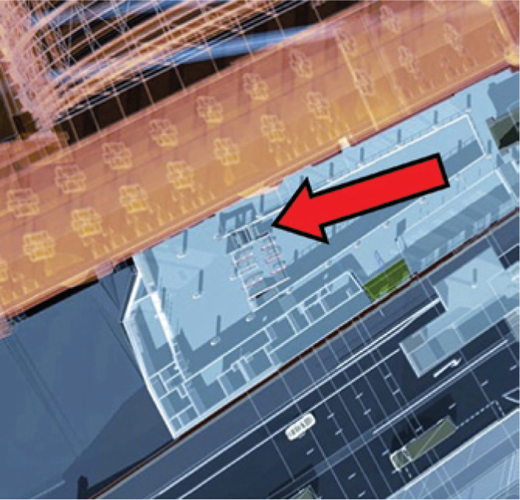
As a regular user of St Pancras western underground ticket hall, I have noticed a pinch point created by a small passenger lift at the west end of the hall. The lift is too small for the heavy ebb and flow of wheeled suitcases to and from Eurostar services and provides only about a 1·5 m change in levels. With hindsight would not a ramp in this position or a differently located lift have improved pedestrian flows? Perhaps this end of the ticket hall is an interim feature pending Crossrail 2, which I reckon will be needed when High Speed 2 phase 2 is completed.
Authors’ reply
It will be appreciated from our paper that during the detailed design some 10 years ago, King’s Cross St Pancras was already a major interchange for a number of rail systems that were operating, with other developments in prospect. At that time the Crossrail project, then known then as the Chelsea–Hackney Line, was looking at safeguarding matters. The understanding was that a ticket hall for this line would be in close proximity, but on the south side of Euston Road, further to the east of the western ticket hall. The services diversions for the London Underground entrance on the south side of Euston Road took into account a potential escalator under Crestfield Street and the subways under Euston Road are compatible with a future ticket hall between Crestfield Street and Argyll Street.
The design of the western ticket hall was very constrained by existing heritage structures, the underlying tunnels and a major sewer that the project had to divert. With access to St Pancras as a key objective, the change in levels became an early fix. The design went through many iterations, especially taking into account passenger flows. A ramp alternative to a lift was assessed but discounted. The length needed for a ramp would have severely constrained the start of the subway under Pancras Road and caused a pinch point opposite the ticket office. Consideration was also given to an escalator, but again space was a constraint.
A further consideration was safety: that with a rise of only 3 m there might be a disproportionate increase in accidents, particularly with passengers manoeuvring heavy luggage. It was a project aspiration to provide step-free access from street level to all platforms by lifts and its position near to the entrance to St Pancras was concluded to be the most practical, avoiding cross-flows at the top of the stairs and conflicts at the bottom with ticket office queues.
10-00023 The Barker Crossing: Royal Engineers reconnect Workington
by Caroline Livesey (née Graham-Brown) (May 2011)
Contribution by Craig Roberts
I work for Tensar, which supplied the triaxial geogrid for the project. As the geogrid-reinforced construction platform and temporary abutments were designed as mechanically stabilised layers, relying primarily on confinement and interlock of the geogrid and type 1 sub-base fill to provide adequate load distribution over the soft subgrade, rather than the more traditional approach of designing based on the tensile strength of the geogrid, I would be interested to know how the platform performed. In particular, what surface deformations were measured, particularly during the critical temporary launch phase of the bridge off the front rollers?
Author’s reply
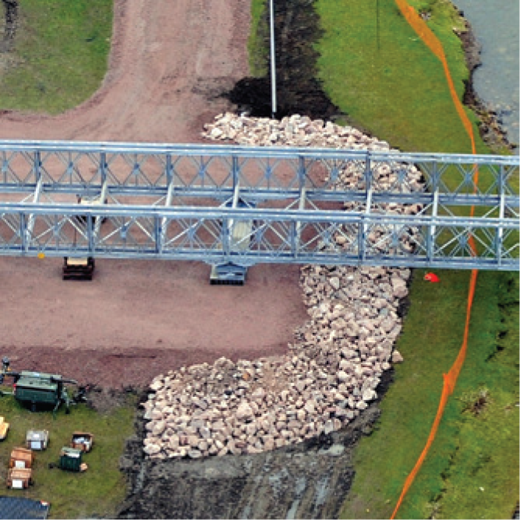
The platform performed very well throughout the life of the bridge. During the construction phase there was very little deformation observed despite heavy point loads, and extensive trafficking from plant.
Of particular note was the abutment area. During construction the maximum temporary loading conditions were not reached as the bridge landed on the north bank rollers before the centre of gravity had moved forward of the southern abutment rollers. However, no movement was recorded. Numerous surveys were then conducted during the life of the bridge and just before its recovery. Only 5 mm settlement was noted in the abutments during the 12-month life of the bridge.
10-00041 M25 Bell Common tunnel refurbishment: faster, leaner, safer
by John Tomkins (May 2011)
Contribution by Richard Rivett
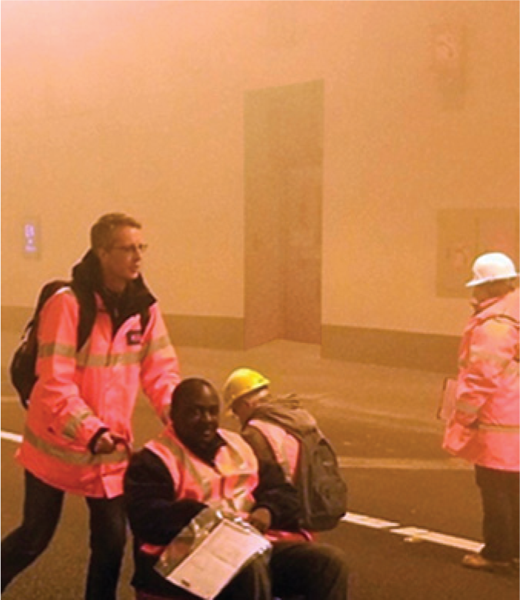
The emergency doors linking the two bores of the Bell Common and Holmesdale M25 tunnels are recessed some 300 mm from the face of the tunnel wall. This arrangement could cause any vehicle, heaven forbid a motorcycle, sliding along the wall to catch the recess and be thrown out into passing traffic with severe consequences. Bell Common is slightly different in that there is an area of hatching alongside the wall. The doors at the back of the hard shoulder are all but flush so I do not see why this arrangement could not have done for the centre wall. I have raised this with the Highways Agency on several occasions, only to be told it complies with standards. To my mind, then, the standards are wrong and need amending.
Author’s reply
The contributor raises a good point, especially when the provision of road restraint systems (safety fences) now requires a risk-based approach and would doubtless require a continuous barrier across the opening, thereby removing a safe means of emergency escape between tunnel bores.
The Highways Agency standard (BD 78/99 Design of Road Tunnels) requires 1:12 tapering of walls at emergency doorways to mitigate the collision risk. The use of flush doors in the centre wall would also help mitigate the risk, although they have to be reasonably lightweight to facilitate easy opening and unlikely to provide much resistance to any significant impact load.
For Bell Common, it is not feasible to provide flush doors in the centre wall. The wall is too thick to be serviced by a single door, and too thin to be able to provide doors on both faces of the centre wall as they would clash with each other when being used. The door at the back of the hard shoulder is a maintenance access with sufficient space behind it to allow flush mounting.
As with a lot of tunnel refurbishment work, it is necessary to make the most of an existing asset and often requires a trade-off between competing safety requirements.
SPECIAL ISSUE Delivering London 2012: Planning and People
Introduction by Alison Nimmo, Tony Caccavone, Richard Dawson and Sue Housley (May 2011 special issue)
Contribution by Geoffry Rooke
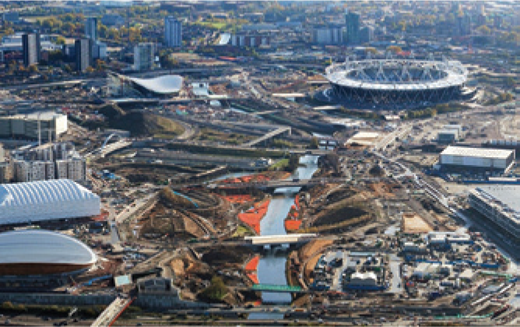
Thank you for the excellent special issue, dedicated to delivering the site for the 2012 Olympic Games. My admiration for the organisation and management of this remarkable feat is boundless. I can only hope there will be enough OBEs, MBEs and other awards to recognise the contributions of those most concerned.
However, I have to remark that when I was on the site as a member of the general public at the end of April 2011, the stench of raw sewage was simply nauseating. I searched the papers desperately for confirmation that outstanding public health works are in hand and will be completed in time, but to no avail. I trust that Britain will not treat its visitors to the same unpleasantness that I suffered.
Authors’ reply
The contributor does not specify where an odour was detected, which could be as a result of works to the sewer network or excavation of soil either on or adjacent to the Olympic Park. The Olympic Delivery Authority (OD A) will have completed the ‘big build’ phase of works in July 2011, including remediation of contaminated soil, works to the Greenway and completion of surface water drainage systems. OD A completed work to the primary sewer in 2010.
10-00031 The four major rivers restoration project in South Korea
by Jong-Ho Shin and Jae-Yong Chung (February 2011)
Contribution by John Davis
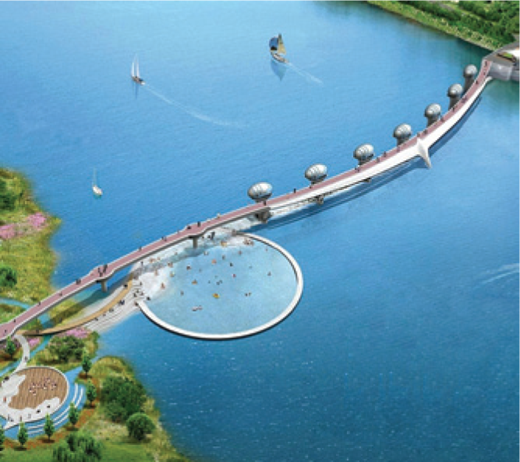
The title of the paper is misleading. River restoration means the return of a degraded river to a former, more natural condition. The project described in the paper involves the construction of a series of dams that convert a free-flowing river into a series of ponds. Once the project is completed the rivers will be more removed from a natural condition than they are currently. This is an economic development project not a restoration project. The title of the paper appears to be chosen to mask the real purpose of the project – water supply development, flood control and power generation; not an unusual strategy, and one known as ‘greenwashing’.
Authors’ reply
We had much discussion and debate about the project title at the initial stage, considering other words such as ‘improvement’, ‘regeneration’, ‘maintenance’ and ‘refurbishment’. But the project includes ecological, cultural and historical restoration works as well as civil engineering works, and involves four Korean ministries.
As the contributor mentions, public understanding of ‘restoration’ would be just ecological restoration. Certainly the work includes this, with biological restoration of traditional fish stocks using clone technology, removal of alien plant and fish species that have threatened and destroyed the traditional ecology, and replanting traditional flora on the river bank.
Several decades ago there was also significant boat traffic on the rivers. By restoring the river environment, navigation will be possible again and the traditional culture and history related to boating activities will be similarly revived.
In civil engineering terms, the rivers had become silted, polluted and flood-prone such that they were functionally dead, requiring functional restoration.
There are also some limits in translating Korean terms into English: the Korean title of the project actually means, ‘making the four rivers alive’.
Full versions of these discussions can be read with all other discussion in the online version of the journal at www.civilengineering-ice.com.