

Structural Engineer’s Pocket Book (3rd edition)
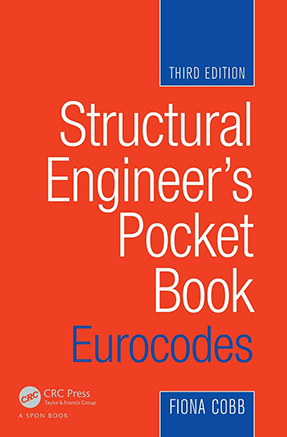
The Structural Engineer’s Pocket Book has long been an invaluable source of quick reference for practising engineers, university students and those preparing for The Institution of Structural Engineers part 3 exam. This latest edition has become slightly less pocket-sized, having grown on plan in both directions by approximately 15 mm and in thickness by 6 mm.
Overhauled to reference Eurocodes, a useful addition is a fold-out front and rear leaf summarising some of the vast number of symbols and notations used in Eurocodes. Cobb has rearranged the chapter order, which is a little confusing for those of us with well-thumbed second editions, but actually puts the chapters in the same order as the Eurocode suite. Chapters are based around the key aspects of a structural engineer’s design input to a project, starting with decision-making information for projects, followed by design data and analysis methods, and continuing with detailed chapters dedicated to each of the structural materials which may be utilised in design.
Guidance in relation to Eurocodes has been developed to include uptodate values for actions and partial safety factors. There are also useful tables in each material chapter drawing key comparisons between the latest Eurocode design guidance and previous British standards.
The rules of thumb and succinct summaries of design best practice that we have all come to expect from the book remain the key part of the latest edition. Overall, despite being slightly larger, this excellent little book should remain an important first reference tool for practising engineers and students alike.
Design in modular construction
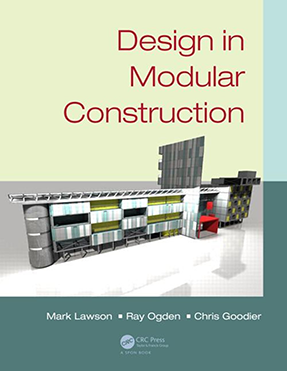
The benefits of off-site manufacture in construction are well proven and documented, but successful implementation requires collaboration of the entire supply chain. This 250-page book comprehensively reviews the subject in the context of homes and buildings, though the information and lessons can be translated to other sectors of construction using off-site manufacture.
In all, 19 chapters cover the planning and implementation of modular design primarily using steel, concrete and timber. Individual chapters consider applications for housing, hospitals, schools and specialist buildings. Each element of modular design is illustrated with case studies and photographs.
The book is a key reference for anyone involved in the design of homes and buildings using modular construction and for undergraduate and post-graduate education.
Reinforced concrete with FRP bars: mechanics and design
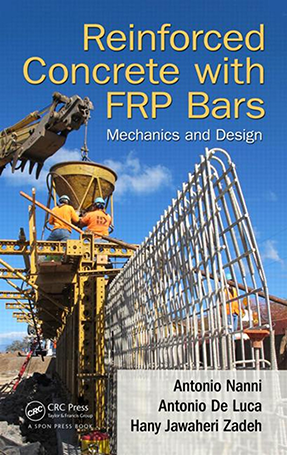
This is a comprehensive reference with regard to the design of reinforced concrete using fibre-reinforced-polymer (FRP) bars. The three-part book covers material characteristics, mechanical responses and design aspects.
The primary codes or standards referenced are ACI 318-11 (Building Code Requirements for Structural Concrete) and 440.1R-06 (Guide for the Design and Construction of Structural Concrete Reinforced with FRP Bars) published by American Concrete Institute.
Each design example shows step-by-step approaches so that practitioners, research professionals or engineering students can readily follow and complete the design of FRP-reinforced concrete members. I recommend this textbook for the design and construction community.
Lessons learned from the Fukushima nuclear accident for improving safety of US nuclear plants

In seeking the lessons to be learned from the 2011 Fukushima Daiichi nuclear plant accident this book provides background information in regard to Japanese and US nuclear plants, describes the impacts on the Japanese nuclear plants from the earthquake and tsunami, and gives a detailed description of both the geological event and the accident at Fukushima.
It poses the question as to whether or not the USA would be sufficiently resilient to such an event, as critical infrastructure was damaged which diverted emergency response resources. Although US-specific, the recommendations from this finding are relevant worldwide and, indeed, significant work has been carried out by nuclear operators in the UK.
Another finds Tepco and its nuclear regulators deficient in maintaining a strong nuclear safety culture. Having worked in the UK nuclear industry for 30 years I know that this would not be the case here as a significant amount of work has been carried out in regard to the safety case aspects of ‘beyond design basis’ events by both the UK regulator and operators.
Recommendations from other organisations, including the UK Office for Nuclear Regulation are also provided in an appendix.
Floods and reservoir safety (4th edition)
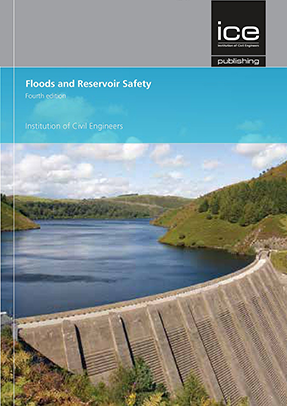
This revised guide by the Institution of Civil Engineers and the UK Department for Environment, Food and Rural Affairs takes account of changes in legislation, new research and the risk approach to reservoir safety. It should be seen as the authoritative guidance on flood protection standards, flood mitigation and freeboard, for use by those responsible for the design and inspection of reservoirs.
The fourth edition introduces the new rainfall depth–duration–frequency model to provide rainfall estimates for 2-year to 10 000-year return periods, which will eventually replace the Flood Estimation Handbook and Flood Studies Report UK rainfall models. The development of the rapid assessment method to include the predicted rate of wave overtopping as opposed to establishing the required freeboard margin is also a useful modification.
In addition, the revised guide has been recompiled in a more concise form, making it easier to use. It has been written with additional clarification and guidance included to help address the situation where different engineers’ interpretations have led to different recommendations.
NEW BOOKS
The ICE library maintains one of the most comprehensive collections of civil engineering books in the world, including all titles from ICE Publishing (shown in bold below). New books received in the past 3 months include the following.
All books can be borrowed from the ICE library on the first floor of 1 Great George Street, London, SW1P 3AA from 8.30 am to 6.30 pm, Monday to Friday. ICE Publishing titles can also be purchased from the ICE library or ordered by calling +44 1892 832299, emailing orders@icepublishing.com or by visiting www.icevirtuallibrary.com/content/books.


