

Successful professional reviews for civil engineers (5th ed.)
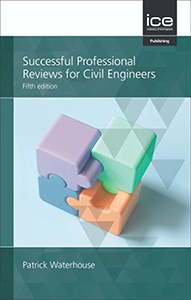
This book provides comprehensive up-to-date guidance to those working towards the Institution of Civil Engineers professional review. The text takes the reader through the whole process, from the role and purpose of professional qualifications to post-review advice in the event of an unsuccessful review.
Each section provides details of every stage and includes an in-depth understanding of the process, assessment methods, focus areas and topics. Examples, anecdotes, personal experiences and advice provide the reader with tools to assist in their individual preparations.
The book is targeted at those aiming for incorporated or chartered status who are nearing completion of their initial professional development. However, much of the guidance is very relevant to aspiring members of all grades and stages as well as those who mentor them.
Even if you have had an older version of this book, the extras and amendments make this fifth edition a worthwhile addition to your bookshelf.
FIDIC 2017: A definitive guide to claims and disputes
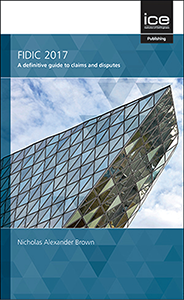
The book provides a complete guide for civil engineers with a basic level of knowledge of claims, dispute avoidance and dispute resolution under International Federation of Consulting Engineers (Fidic) 2017 (second edition) contracts.
The reader is taken on a journey from development of an initial claim event through to binding and final court decisions. The author’s reliance on court decisions to clarify rules and principles in the contracts is a reminder of the complexity of dispute resolution when dispute avoidance is not embraced.
Important definitions are consistently and conveniently provided throughout the text. There is detailed analysis, explanation and comparison of the Fidic Red, Yellow and Silver 2017 books with respect to claims and disputes. Diagrams, tables and flow charts help the reader gain a full appreciation of the timelines, options, procedures, processes and comparative terminologies associated with specific acts and omissions by the contracting parties.
This superbly written book has significant professional development value as well as important practical day-to-day knowledge. I recommend it as an addition to all private and public libraries.
Computer-aided highway engineering
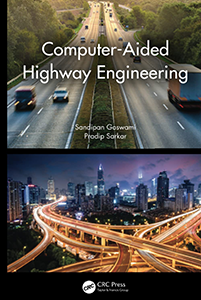
This book effectively covers key aspects of civil engineering from a highway design perspective. It is particularly useful for the computer-aided design of highway alignments, interchanges, earthworks, pavements and drainage. It starts from fundamental principles and, through a separate online resource, provides real-world cases through tutorial examples.
Readers will need a basic understanding of some of the topics covered as there are very few definitions of technical terms. Also lacking is much coverage of topics such as geotechnics, environment and carbon dioxide accounting. It should be noted, too, that the example design drawings provided would not really be sufficiently detailed for construction.
Despite these shortcomings, this is a well-researched book that reflects the depth and breadth of the authors’ experience.
NEW BOOKS
The ICE Library maintains one of the most comprehensive collections of civil engineering books in the world, including all titles from ICE Publishing (shown in bold below). New books acquired in the past 3 months include the following (* indicates e-book only).
All books can be borrowed through the library’s online catalogue at www.ice.org.uk/knowledge-and-resources/ice-library or from the ICE Members’ Resource Hub at 1 Great George Street, London, SW1P 3AA – Monday to Friday, 10 a.m. to 3 p.m. (subject to Covid-19 restrictions), email library@ice.org.uk
Recent ICE Publishing titles can be ordered online from https://www.icebookshop.com


