This paper analyses the strategic evolution of a principal company from 2016 to 2023, emphasising the critical role of digital innovation in enhancing operational efficiency, safety and project management. The adoption of a unified technology system has significantly enhanced the company’s capabilities, leading to a 23% improvement in site safety and a 78% reduction in worker induction time. By comparing these achievements with industry standards, the paper illustrates how digital transformation can exceed typical performance benchmarks, setting new standards for technology use in construction. The integration of predictive analytics, including machine learning tools, has further strengthened safety outcomes, reducing accident frequency rates from 0.170 to 0.026. This demonstrates the practical value of using advanced data analysis to proactively manage safety risks on construction sites. Finally, the paper explores future opportunities for digital advancements in civil engineering, emphasising continuous innovation and comparing the outcomes of this transformation with those achieved by other leading contractors in the industry.
1. Introduction
After its inception in 2016, the company initiated a comprehensive digital transformation aimed at enhancing operational efficiency, safety and sustainability. Over 7 years, through the strategic adoption of digital technologies, the company improved its project efficiency, safety protocols and sustainability practices, climbing to the 15th position in the industry league tables.
This paper examines how the company made a significant shift towards a tech-driven operational model. The paper explores the collaborative decision-making process, the implementation of a unified technology system and the role of digital adoption in overcoming traditional operational challenges.
By addressing issues such as reducing accident frequency rates (AFRs) through technology and fostering continuous improvement, this paper provides insights into the practical benefits of technological enablement in the construction industry. It also compares these outcomes with those achieved by other major contractors, highlighting both successes and challenges faced during the digital transformation journey.
1.1 Technology roll-out in 2021
Sepasgozar and Davis (2018) define construction technologies as innovations that encompass new tools, machines and modifications designed to fulfil specific objectives or resolve challenges. The selected technology provider exemplifies this definition with a suite of software and hardware solutions aimed at enhancing operational efficiency and achieving project objectives.
The strategic deployment of these technologies was a calculated move to leverage digital innovation in streamlining construction processes and enhancing project management efficiency. According to Ellis (2023), adopting digital tools in construction has been shown to reduce rework by up to 30% and improve productivity by 20%.
The motivation behind this move aligns with the observations of Loosemore (2014), who noted the construction sector’s growing inclination towards integrating new technologies to mitigate costs, elevate productivity, enhance safety and achieve sustainability goals. Hilti (2023) supports this by highlighting how advanced tools and cloud-based management systems have significantly improved safety compliance and reduced workplace accidents. This trend is part of a broader industry shift towards leveraging technological advancements to address operational challenges and meet evolving project demands.
1.2 Results
The strategic incorporation of new technologies into construction practices has been widely recognised as a critical business strategy, supported by numerous studies (Rahman, 2014; Sepasgozar et al., 2016). Over the past decade, the implementation of advanced digital tools has become essential for companies navigating the complexities of modern construction environments successfully. For example, companies that have adopted similar digital solutions report an average a 25% increase in project efficiency and a 20% reduction in operational costs (McKinsey & Company, 2017).
In practice, advanced digital tools such as those managing inductions, time management, inspections and safety observations have facilitated a more agile and data-driven approach to project management. This allows for real-time monitoring, improved communication and proactive problem-solving. For instance, digital tools have shown measurable improvements in site safety by 23% and a 78% reduction in individual induction time, resulting in an increase of 1500 productive hours per project, with financial savings upwards of £16 800 per project.
Research highlights that the adoption of digital technologies in construction can significantly improve safety and operational efficiency. For example, Zhang et al. (2017) demonstrated that sensor-based technologies in construction safety management enhance real-time monitoring and hazard identification, reducing accident rates substantially. Additionally, the integration of such technologies addresses the limitations of conventional safety management methods, which often struggle to manage dynamic and complex construction environments effectively.
Further supporting this, a report by the International Labour Organisation (ILO, 2015) indicates that consistent and well-planned safety management processes, including the use of digital tools, can prevent many construction-related accidents. The practical applications of these tools are critical in bridging the gap between traditional safety measures and modern tech-driven solutions.
As we delve deeper into the company’s journey, it becomes evident that their digital strategy has been instrumental in their rise within the industry.
2. Scaling with technology
As the company embarked on scaling operations through digital innovation, a strategic approach to selecting and implementing technology was essential for sustainable growth and competitiveness. This section delves into the methods and frameworks that underpinned the deployment and scaling of the technology, benchmarking these processes against industry standards and comparing them with similar initiatives by other contractors.
2.1 Collaboration genesis
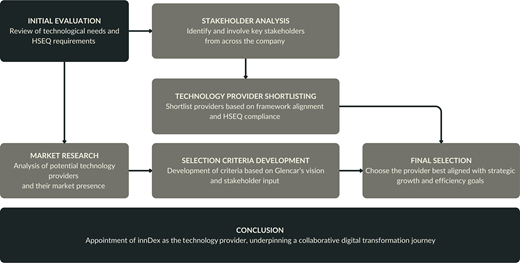
Central to the company’s digital transformation was selecting a technology provider that aligned with its vision for growth and efficiency while meeting health, safety, environment and quality (HSEQ) standards. According to Blanco et al. (2016), adopting a new business model that supports the integration of emerging technologies is crucial for reaping their full potential. This requires a predefined set of guidelines and comprehensive stakeholder involvement, as outlined in Figure 1.
2.2 Roll-out plan
Following selection of the technology provider, the implementation phase required meticulous planning to ensure seamless integration of digital tools across operations. The roll-out plan included defining ‘pain points’, establishing the scope of trials and engaging stakeholders across finance, commercial, operations, safety and sustainability departments. As stated by Bosch-Sijtsema et al. (2021), the involvement of all parties linked to the technology, from frontline users to C-level, is instrumental in overcoming uncertainties and meeting objectives.
The roll-out plan served as a critical blueprint, guiding the transition from initial demonstration to full-scale implementation across the business. This process was rooted in a deep understanding of the company’s operational challenges, collectively identified as ‘pain points’, and tailored the deployment of software and hardware solutions to address these issues effectively.
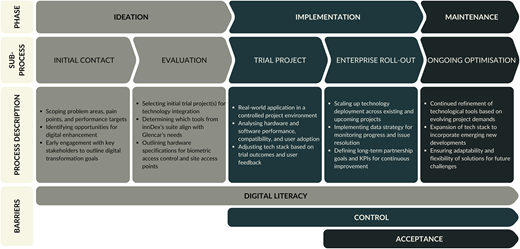
The roll-out plan consisted of a phased approach, initiating with an in-depth consultation to pinpoint operational inefficiencies and tailor the suite of digital tools to the company’s specific needs, taking into account the following three key phases.
- ▪
Initial contact – scoping problem areas, pain points and targets, such as faster worker induction time, progress reporting and better communication.
- ▪
Trial period – conducting a trial project to determine necessary tools (inductions, time management, safety observations etc.) and hardware requirements (biometric access control, site plans with access points). This stage involved extensive stakeholder engagement to ensure alignment with operational needs.
- ▪
Enterprise roll-out – full deployment of technology across all upcoming projects, supported by a data strategy for monitoring and reporting progress and issues. The plan included long-term partnership goals, aiming to continuously refine and enhance the digital solutions in use.
The first touchpoint was the initial contact phase, in which the technology provider sat down with the company to identify critical problem areas, pain points and innovation targets such as faster induction of the workforce, improved progress reporting across the business and improved standardisation and governance of safety observations and incident reports. Aligning with the responsibility hierarchy identified by Bajpai and Misra (2021) this phase ensured the establishment of a new business model, conscious of the unique operational needs of the company.
Scoping was followed by the trial phase at Fenny Lock Logistics Park. During this stage, the company tested the technology in a real-world environment, aligning with the concept design outlined in the framework. The site team gained hands-on experience with various tools from the technology provider’s suite, including digital inductions, time management, toolbox talks and safety observations. Concurrently, hardware requirements for biometric access control were assessed, and site plans with access points were established to ensure seamless integration of physical hardware with digital modules (inductions and time management).
This process involved engaging stakeholders from finance, commercial, operations, safety and sustainability departments to ensure comprehensive coverage and address any emerging issues. This cross-functional collaboration proved instrumental in tailoring the digital solutions to meet diverse operational needs and align with the company’s organisational goals. Finance teams evaluated the cost-effectiveness of tech adoption, while commercial departments looked at the scalability and integration with existing systems. Operations teams, on the ground, provided valuable feedback on usability and efficiency gains, whereas safety and sustainability stakeholders focused on compliance and environmental impact assessments.
This inclusive approach ensured that each stakeholder’s perspective was considered in the trial, facilitating a comprehensive evaluation of the technology’s impact across different aspects of the project. The trial phase was marked by rigorous mid-trial and end-of-trial reviews, ensuring that the technology addressed identified pain points and delivered tangible value against the financial investment. According to McKinsey & Company (2020), involving multiple stakeholders in the implementation of digital technologies can lead up to a 20% reduction in operational costs and a 25% increase in project efficiency.
The company entered the enterprise roll-out phase in May 2022. During this phase, the technology provider offered comprehensive support for deploying the technology across all upcoming projects. Schnell et al. (2023) emphasise the importance of establishing a robust data strategy to monitor progress and address potential issues during the roll-out. This approach was integral to the company’s strategy, ensuring continuous improvement and adaptation of the technology to meet evolving project needs. Figure 2 provides a succinct yet comprehensive view of the framework structure as a whole.
This holistic engagement fostered a sense of ownership among stakeholders, ensuring the necessary acceptance and support for the technology’s integration and use across projects. Additionally, financial transparency and decisive support from management underscored the robustness of the roll-out plan, reflecting best practices in the industry for successful digital transformation.
2.3 Dealing with ‘change fatigue’
Adopting new technology in construction is often met with significant resistance from those on the ground. This change fatigue stems from years of broken promises that each new tool will make tasks easier, only to find that many solutions add more complexity. Only 30% of workers aged 25 and above felt their industry was supportive of technological advancement. Workers are understandably reluctant to abandon familiar methods, particularly when prior experiences with technology have caused frustration rather than improvement (Brown, 2024).
The biggest challenge lies in gaining the trust and buy-in of these workers. Their scepticism isn’t unfounded – construction projects are notoriously fragmented and tools that fail to integrate seamlessly often become yet another obstacle. For example, 70% of construction workers over the age of 50 expressed concerns about digital transformation, citing increased administrative burdens and lack of training as key issues (Brown, 2024). This pushback represents a critical barrier that organisations must address to unlock the full potential of digital transformation.
3. Exploring the integrated tech ecosystem
The unified technology system deployed by the contractor encompasses a comprehensive range of tools and solutions, enhancing efficiency and fostering seamless communication across the supply chain. This section delves into the deployment and impact of the technology on the company’s operations, extending its utility to subcontractors and end clients, ensuring transparency and collaboration throughout the build phase.
3.1 Deployment across the supply chain
The strategic deployment of technology across the company’s supply chain represents a significant shift in the management of subcontractors and stakeholder communication. This approach explores the cascading effects of a unified technology system on workforce productivity, operational transparency and overall project delivery efficacy. This transformation mirrors industry trends, with Baldwin and von Hippel (2011) recognising the transformative power of internet communication technologies in construction. Baldwin states that integrating these technologies across functional groups is crucial for enhancing workforce productivity.
The company’s model leverages this perspective, using a digital platform to create a cohesive communication ecosystem. This system connects site teams with major stakeholders, ensuring critical project information flows seamlessly from ground operations to decision makers. This facilitates informed and proactive decision-making processes, a practice supported by Bloom and Van Reenen (2007), who emphasise the necessity of a vertically integrated digital framework. This framework correlates sustainable management practices with workforce productivity.
Additionally, Broszeit et al. (2019) suggest that structured management practices – particularly meticulous data collection and analysis – are central to productivity improvements within the construction industry. The company implements this concept by integrating data-driven methodologies to optimise resource allocation based on workforce competence, track subcontractor performance and adhere to project timelines.
Addressing the industry’s known challenge of skill shortages and workforce quality, as outlined by Gordon (2012), the unified technology system serves to bridge skill gaps by providing tools that don’t replace the existing workforce but rather enhance their capabilities. The technology equips both skilled and less experienced workers with intuitive digital tools, compensating for the industry’s depleted workforce reserves, which often hinder project cost-efficiency and quality standards.
3.2 Building trust through usability
Overcoming change fatigue required a worker-centric approach that demonstrated tangible benefits. The first step was ensuring that workers felt empowered by the technology, not hindered by it. On-site training sessions played a pivotal role in this process, as they provided immediate hands-on experience and addressed concerns in real time. Continuous feedback loops ensure that tools evolve based on worker input, minimising unnecessary steps and reducing the number of clicks or taps needed to complete tasks.
Practical usability is key to building trust. Workers only need to complete their profile once, eliminating repetitive form-filling. Safety observations can be raised directly from their phone, eliminating the need for physical cards and letterboxes. Similarly, inspections no longer require fetching paper forms, filling them out manually and returning them to the office – everything can be done digitally, saving both time and effort.
Moreover, the technology ensures that workers are kept in the loop. Task progress updates are shared in real time, allowing individuals to see the direct impact of their contributions. This transparency not only boosts morale but also aligns personal efficiency with broader project goals. By framing these changes in terms of individual benefits, the initiative appeals to workers’ self-interest while simultaneously advancing organisational objectives, creating a virtuous cycle where personal and collective gains are mutually reinforcing.
3.3 Disruptive impact
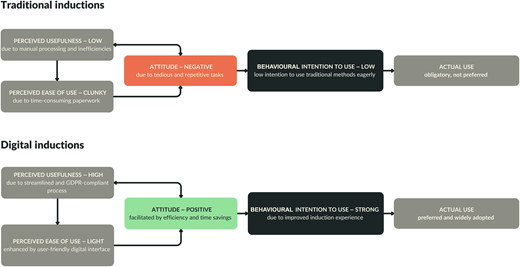
The impact of the technology adopted can be examined from a practical standpoint across the individual modules and tools, particularly within the induction process, which exemplifies the transformative leap from traditional workflows. Conventionally, the induction process is known to be admin-intensive, requiring significant worker hours and being prone to inefficiencies and data security vulnerabilities. Figure 3 outlines the end user’s behavioural acceptance model of both the traditional and digital approach to the induction process.
Traditionally, a new individual arriving on site would need to fill out multiple paper forms, which are manually checked by a site manager for compliance and then scanned for record-keeping. This method presents potential GDPR risks. Additionally, the manual handling of documents, including the briefing of risk assessment method statements (RAMS), further compounds the time-consuming nature of this process, with paper documents often being mismanaged or improperly stored. This issue is supported by Gilmour et al. (2017), who highlight the administrative burden and inefficiencies associated with traditional induction practices in the UK construction industry.
The company’s paperless approach changes this process by digitising inductions and briefings, creating a seamless, secure and time-efficient workflow. By integrating the digital induction module, new workers complete their necessary documentation electronically, which is then instantaneously available for review and approval by management to grant site access. This mitigates General Data Protection Regulation (GDPR) concerns by securely storing personal and compliance information so that it is accessible only to authorised staff.
This new approach also addresses the scheduling inflexibility of traditional, paper-based inductions. Late arrivals no longer result in productivity losses, as the digital platform allows for on-demand induction sessions, ensuring that all personnel are compliant and informed without the need for repeated manual briefings. Moreover, RAMS briefings can be conducted with greater consistency, recorded for quality assurance and made easily retrievable for future audits or inspections.
In addition, this has the potential to redefine the role of site managers and supervisors, transitioning them from administrative gatekeepers to strategic enforcers of health, safety and compliance. The result is a more agile, secure and responsive operational framework that reflects a significant departure from the industry’s norms, setting a new standard for project onboarding and ongoing risk management.
3.4 Preparing projects for digital operations
As part of the digital framework, the initial stage of any new project lifecycle is now characterised by scoping the related software and hardware solutions required. This anticipatory step is needed to tailor the digital toolbox to each project’s unique needs, ensuring that – from the outset – both digital and physical infrastructures are primed for efficient deployment.
This process often starts with a software-centric approach for smaller projects. A site-specific tablet is provisioned, serving as the digital hub for site operations. Initial training covers essential tools provided by the technology provider, including facilitation of inductions, document management (such as RAMS and Point of Work Risk Assessments) and time management. This ensures the workforce is swiftly inducted, with competencies uploaded and clock-in/out times recorded. Further training for the direct site team empowers them to fully utilise the technology’s capabilities, overseeing, exporting and managing the vast amounts of data within the platform.
For larger projects, the process mirrors the software-only approach initially, with the addition of hardware installation. Collaboratively with clients, logistics plans are reviewed to optimally place hardware, thereby streamlining site efficiency and accurately monitoring workforce distribution. The delivery and setup of the hardware is a key feature, with the technology provider’s team ensuring that these enhance site functionality without disrupting existing workflows.
With the software foundation firmly established, digital inductions are launched to compile comprehensive workforce data from the start of the project. This proactive data capture grants immediate site access to teams and lays the groundwork for extensive equality, diversity and inclusion and corporate social responsibility reporting, which is further discussed in Section 4 of this paper.
Simultaneously, it establishes a dynamic training and competency matrix within the supply chain. This also aligns with the requirements of part 4 of the Building Safety Act 2022 (2022), which includes provisions about the management of building safety risks in occupied higher-risk buildings, emphasising the need for rigorous assessment of competencies and the establishment of accountable persons (sections 72 to 74 and 81(5)). This becomes even more relevant with the introduction of the concept of ‘Safety case reports’ under sections 85 and 86, which require thorough documentation of safety measures and the competencies of individuals involved in higher-risk building projects. The company can leverage this matrix as a reliable measure to verify that all on-site personnel are properly accredited, ensuring the fulfilment of their roles with safety and competency.
Table 1 presents the full list of digital tools utilised by the company to enhance their operational efficiency and safety.
4. Operational efficiencies and real-world application
4.1 Streamlined operations
The integration of technology within the company’s operations materialises the conceptual benefits of digital transformation into tangible efficiencies. This section explores the practical outcomes and actual performance metrics of the tools previously discussed, offering a discernment of the various operational enhancements.
4.1.1 Streamlined inductions
A pivotal component of operational efficiency has been the induction process. The system’s design allows operatives to create a comprehensive profile just once, effectively becoming the ‘keys to the site’, which can then be used for inductions across multiple projects. This approach eliminates repetitive administrative tasks, permitting a seamless transition from one project to another and reducing average onboarding time by 78%. By removing the all-too-common first-day hurdles and enabling on-demand and pre-approved inductions, operatives can promptly engage with their tasks upon arrival, significantly enhancing productivity from day one.
4.1.2 Access control
The digital induction records are linked to the biometric access control system embedded within the hardware, allowing for secure and efficient site entry with facial recognition technology. This approach also negates the outdated and insecure practice of card-based systems. With 1500 h reclaimed for productive work on every project, the financial implications are substantial. Considering the average construction worker’s wage in the UK, the cost savings attributable to digital inductions represent a significant sum.
By integrating a conditional access system at the site’s turnstiles, the company mechanised the enforcement of safety protocol adherence. Entry to the site is contingent upon each operative’s attendance of RAMS briefings – a control measure that directly aligns with statutory health and safety obligations. The system uses a digital signature recorded within the operative’s profile, interfacing with the turnstile mechanisms to ensure that unbriefed personnel are not granted access.
In addition, by tying profiles directly to task management capabilities, each operative’s daily and weekly tasks are delineated with precision, fostering a more streamlined workflow. With clearly defined daily responsibilities, ‘lost in communication’ issues become sparse, paving the way for a more informed and proactive workforce.
4.1.3 Communication and actions management
The use of the technology facilitates a closed-loop communication system, with real-time alerts and messaging capabilities. This system has a positive behavioural influence on the workforce and empowers the team to assign tasks and track their progression effectively, fostering an environment where intra-team communication is streamlined and accountability is clear-cut. Real-time notifications enable a closed-loop workflow where tasks are systematically addressed and resolved. This prioritisation and efficiency in task management have been crucial in driving safety performance. The app’s tracking capability has been instrumental in reducing incident rates to well below the industry average, with a noted 23% improvement in site safety metrics.
4.1.4 Inspections
Daily and routine HSEQ inspections carried out on the platform yield structured data that link directly to action items. The ease of use of the tool is directly linked to the increased frequency of inspections due to time savings, leading to a 31.3% increase in identified safety opportunities. This allows for an in-depth review of individual and subcontractor performance and facilitates a standardised comparative analysis across various projects and the wider business as a whole.
4.1.5 Observations and reporting
The digital tools at hand enable all site participants to promptly raise safety concerns or highlight commendable practices, contributing to a culture of continuous improvement. The aggregation of this data aids the company in identifying trends and implementing pre-emptive measures where necessary. The user-friendly nature of the mobile app has led to a remarkable 78.2% increase in the reporting of safety observations and good practices. The active engagement of site teams in safety protocols has resulted in a 54% decrease in actual near-misses recorded.
4.1.6 Monthly reporting
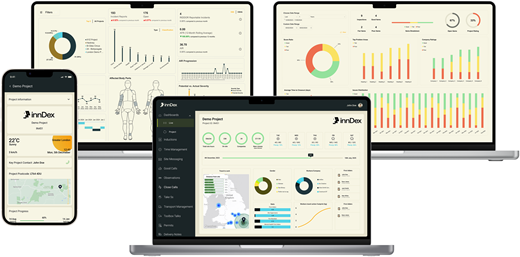
The system’s monthly reporting features, including dashboards and live data streams, equip the company with the means to engage in informed and data-driven decision making. These analytical tools serve not just as a retrospective lens but as a foresight mechanism for anticipating future operational needs. Figure 4 provides a snapshot of some of the data captured and processed by the system. The availability of these reports on desktop and mobile apps ensures that project managers and site teams can access crucial information anytime and anywhere, facilitating real-time adjustments and strategic planning even while off site. This mobility enhances responsiveness and operational agility, enabling immediate data-driven decisions that can significantly impact project outcomes.
4.1.7 Customer service and provider support
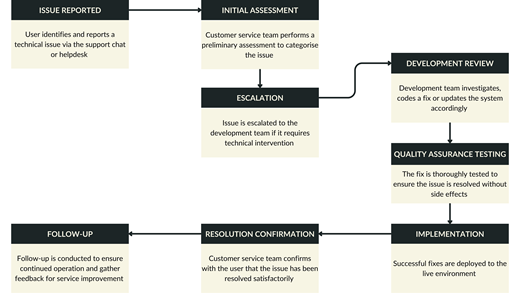
Any technological issues encountered are channelled through a dedicated support loop, involving diagnostic chats, escalation to development teams if necessary and methodical issue resolution, following a robust customer service framework. This systematic approach ensures minimal downtime and uninterrupted operational continuity.
In line with the insights of Mazurkiewicz and Poteralska (2017), this synergy is only feasible with a workforce adept in the use of advanced technologies – a requisite met by the company’s commitment to continual education and close collaboration with the technology provider.
Figure 5 provides a visual representation of the customer service feedback loop, detailing each step from issue identification to resolution, embodying the meticulous approach to maintaining operational efficiency.
When compared with other technology systems used in the market, the approach outlined in this paper demonstrates superior integration and efficiency gains. Another system claims a 50% reduction in manual processes through automation but lacks comprehensive biometric access control integrated with RAMS briefings, which is a standard feature in the company’s system (Biosite Systems, 2025). Another system focuses on digital logistics management, reporting a 30% improvement in scheduling efficiency, but does not offer the same level of real-time communication and task management integration that the company’s system provides (Datascope Systems, 2025). Additionally, another competitor highlights a 40% reduction in onboarding time, yet their solution falls short in delivering a seamless onboarding process through biometric and digital induction integration – an area where the company excels (MSite, 2025).
4.2 Managing supply chain performance
The integration of technology into daily operations has resulted in a behavioural transformation of the supply chain’s performance, fostering an environment of increased efficiency, cost-effectiveness and heightened sustainability.
The feedback loop created by the platform’s ease of use has generated positive responses from all on-site staff, from bricklayers to project managers. One bricklayer appreciated the paperwork reduction, stating ‘Everything I need is now a click away, saving me time and hassle’. A project manager noted the difference in actionable data capture, saying ‘We’re recording more actions, which leads to more engagement and proactive issue resolution on site’. These individual changes in behaviour across the workforce cascade into broader organisational benefits, reinforcing a continuous improvement culture.
Competency management creates a robust matrix that captures the qualifications and skills of the workforce. It’s a strategic asset that aligns worker capabilities with the job requirements, which is essential for maintaining safety standards and optimising productivity. The ability to track and manage medical records, while somewhat controversial, has been instrumental in ensuring job suitability, especially in roles where health conditions can impact work performance. By managing this data meticulously, it is possible to ensure that all personnel are fit for their designated tasks, promoting a safe work environment and enhancing overall workforce efficiency.
Enhanced competency management and streamlined operations have proven to lead to consistent project delivery, with fewer delays and reduced risk of errors. This creates a ripple effect of cost savings and more sustainable practices as resources are used more effectively and waste is minimised. The technology also provides a platform for clear communication across the supply chain (as described in previous sections), ensuring that all stakeholders are aware of their roles, responsibilities and progress in real time.
The literature supports these observations. According to the report Unlocking Construction's Digital Future (CITB, 2018), the heart of digitisation is a digitally skilled workforce, which is critical for leveraging technology to its full potential. This aligns with the feedback from the company’s workforce, which underscores the importance of upskilling and integrating digital into everyday workflows for enhanced supply chain performance.
In addition, the use of this technology underscores a commitment to education and training at all levels, as highlighted by Mazurkiewicz and Poteralska (2017), who emphasised the importance of such initiatives in concretising the full potential of digital adoption.
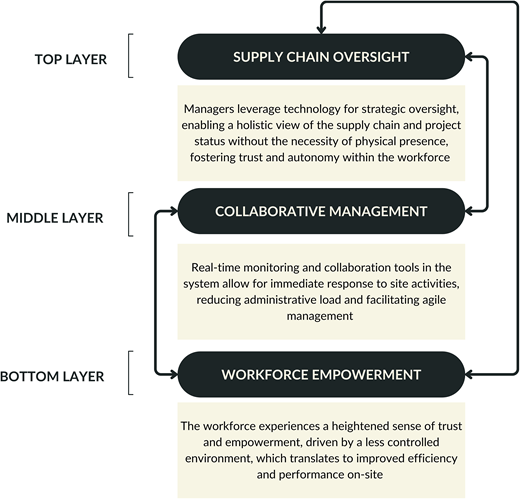
In conclusion, the behavioural transformation spurred by the use of the technology demonstrated a paradigm shift from traditional methods to a tech-empowered approach that activates efficiency and growth across the entire supply chain. This section has explored the multi-faceted impacts of this change, paving the way for the subsequent discussion on the specific benefits observed in competency management and health and safety compliance. Figure 6 describes this behavioural shift at the various organisational levels.
4.3 Real-world application: crisis management
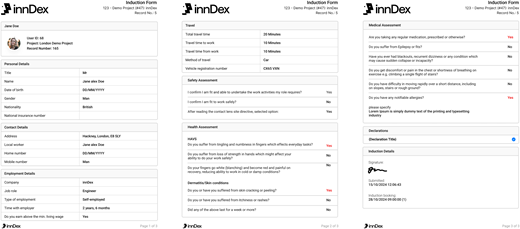
Application of the technology has proven to be pivotal not only in day-to-day operations but also in critical emergencies. One example was the swift response to a medical emergency, wherein a worker experienced a severe health issue. Thanks to the medical information recorded on the worker’s digital induction, first responders on site were able to quickly access his medical history and administer life-saving treatment appropriate to his condition and medication regimen. Figure 7 presents the format in which worker information is stored and displayed in the system, for easy access and reference by the site teams. This episode reinforces the essential role of digital tools in managing crises by providing instant access to crucial health data. The incident highlights the indispensable value of integrating technology in the construction industry, where every second counts in emergencies.
Beyond crisis management, commercial teams have leveraged the technology to streamline their financial operations. The use of digital delivery notes has allowed site teams to efficiently record goods received notices, linking the physical delivery of goods to their financial records, and enabling timely and accurate invoicing and payments. This digital integration exemplifies the operational efficiencies gained, eliminating manual entry errors and ensuring a traceable audit trail from receipt of goods to supplier payment.
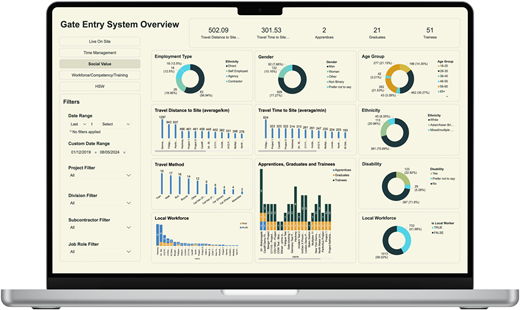
Furthermore, the company fully embraced the principles of equality, diversity and inclusion through the strategic use of technology, ensuring the hiring of a diverse and local workforce, including individuals from challenging backgrounds such as ex-armed forces and the long-term unemployed. This has not only enhanced the social impact of their projects but has also ensured simplified compliance with the increasing number of council mandates that require such reporting for planning applications as part of the s106 requirements. Figure 8 shows some of the social value and inclusion metrics the contractor regularly reports on across projects.
4.4 Real-world application: enforcing safety compliance
Before implementing the digital conditional access system, a contractor faced a critical compliance incident. During a client audit, a subcontractor on site was unable to produce evidence of having signed the required RAMS. This raised serious safety and accountability concerns, leading to the site being temporarily stood down for a comprehensive briefing. With approximately 300 operatives on site, this resulted in an estimated loss of 300 productive hours, alongside the associated financial cost. This incident underscored the importance of robust systems to ensure safety protocol adherence and avoid rework or accidents.
RAMS signing was made a mandatory part of the induction process, ensuring every operative was briefed on the required safety protocols before gaining site access. The system employs facial recognition technology to verify operatives at turnstiles, denying access to individuals who fail to meet briefing deadlines or complete their RAMS at the time of induction. Additionally, the system dynamically responds to updates in RAMS documentation: when new safety protocols are introduced, access to site is automatically restricted until workers have reviewed and acknowledged the changes. This ensures that compliance is not only established at the time of induction but maintained throughout the project lifecycle. By mechanising safety protocol adherence, the project teams can now focus on proactive risk management rather than reactive measures, setting a new benchmark for operational safety and accountability.
These real-world applications demonstrate the multi-faceted benefits of digital in driving both human and commercial success. By marrying data-driven operations with a commitment to societal benefits, the outcomes of this paper showcase the potential for the use of technology to serve as a force multiplier in the construction sector, enabling both superior project outcomes and a positive contribution to community welfare.
5. Compliance and process improvement
In the aftermath of a critical incident, the company’s adherence to stringent safety protocols and proactive commitment to continual process enhancement is paramount. This acted as a catalyst, prompting a revision of operational procedures and the instigation of a data-driven safety overhaul.
5.1 Addressing AFRs
The integration of machine learning and predictive analytics into safety management practices is grounded in a rich tapestry of research that advocates for technological intervention in enhancing safety outcomes. Andolfo and Sadeghpour (2015) demonstrated the potential of real-time locating systems in predicting accident probabilities on construction sites, underscoring the value of immediate and automated feedback mechanisms. Koc and Gurgun (2021) highlighted the effectiveness of machine learning models in analysing construction accident data, providing a methodological framework for predicting accident outcomes with greater accuracy.
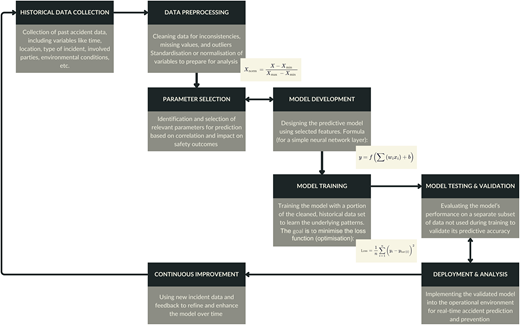
Similarly, Yoon et al. (2023) developed machine learning models that predict accident types and accident-causing objects based on construction project data including activity types, work progress, weather conditions and safety planning levels. Their research underscores the importance of identifying dangerous conditions and objects to prevent accidents on site. The XGBoost algorithm demonstrated the highest performance in predicting accident types and objects, with weighted average F1 scores of 0.874 and 0.749, respectively. Figure 9 shows a simplified version of the predictive analytics algorithm employed by the technology provider.
By employing machine learning and predictive analytics, the company worked closely with the technology provider to develop a predictive tool capable of mitigating AFRs. Through the deployment of this tool, the company reduced its AFR from 0.170 in 2020 to 0.026 in 2022. This improvement reinforces the efficacy of adopting advanced analytical techniques in forecasting potential safety hazards and taking proactive measures to avert them.
5.2 Leveraging technology for continuous improvement
The integration of digital tools within construction operations is not just about technology adoption, it is about embedding a culture of continuous improvement and operational excellence. This dynamic environment fosters data-driven decision making and real-time reporting as fundamental practices, driving project efficiency and enhancing safety protocols across the board.
At the core of this operational strategy is the comprehensive use of data and sophisticated reporting capabilities. The ability to monitor real-time site activity, manage workforce competencies and track safety performance metrics enables a proactive stance on project management and safety compliance. This reliance on data enhances operational transparency and fosters an environment where continuous improvement is ingrained in the company culture.
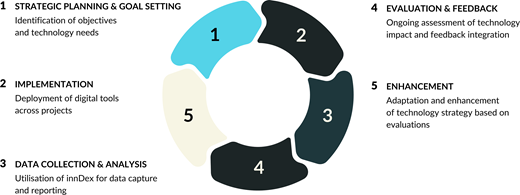
The development roadmap outlined in Figure 10 was designed to adapt continuously, incorporating technological advancements through regular check-ins and assessments. This approach ensures that technology aligns with changing project requirements and industry standards. Ongoing evaluations facilitate an agile response to new insights, integrating innovative solutions that drive the commitment to excellence.
Comparatively, other leading contractors in the industry have adopted similar strategies, demonstrating the broader impact of technology on enhancing operational efficiencies and safety standards. For instance, industry reports indicate that integrating real-time data and predictive analytics has led to significant reductions in project delays and safety incidents across various firms (CITB, 2018; Mazurkiewicz and Poteralska, 2017).
In conclusion, the implementation of a continuous improvement strategy through digital tools exemplifies a paradigm shift from traditional methods to a technology-driven approach. This shift not only activates efficiency and growth but also sets a new standard for project management and safety compliance within the construction industry.
6. Conclusion and future work
A key facet of this successful integration lies in the ability to scale operations dynamically, leveraging technology to ensure sustainable growth. This approach has yielded substantial competitive advantages, setting new industry standards for project execution models. The collaboration between the company and the technology provider has reached a state of consistency where the focus is on maintaining the standards achieved and minimising issues through proactive management and continuous improvement.
The broader impact of adopting a continuous improvement mindset extends beyond individual organisational gains, contributing significantly to the construction industry at large. This transformation can be seen across various leading contractors who are also integrating the same digital solutions to drive efficiency and safety. The literature shows that contractors using advanced analytics and digital tools report a reduction in project delays and increased productivity, indicating a larger trend within the industry towards embracing technological innovation for sustainable growth.
In the continuous pursuit of advancing operational excellence, the company, in collaboration with the technology provider, is set to enrich its tech suite with the imminent addition of an advanced permits tool. This tool will digitise permit applications and integrate multi-level electronic sign-offs, enabling rapid, on-the-go approvals and eliminating the delays of paper-based systems. Similar tools have been implemented by other contractors, also resulting in significant time savings and improved compliance (innDex, 2023a). By mandating the attachment of essential documents and linking them to the workforce’s competencies, the tool ensures that only qualified personnel can apply for and carry out the work. Real-time tracking of permit status and expiry, coupled with instant notifications, solidifies compliance and safety on site, promising considerable time savings and a significant step towards paperless project management.
Other contractors who have adopted similar digital transformation strategies report comparable improvements in efficiency and safety metrics. For instance, the integration of biometric access control and digital inductions has been noted to streamline operations significantly, with some firms reporting a reduction in administrative workload by over 50% and enhanced site security (innDex, 2023b). These insights highlight that the company’s approach aligns with broader industry trends and exemplifies best practices in leveraging technology for continuous improvement.
6.1 Limitations and future directions
While these successes underscore the transformative potential of digital tools, several limitations must be acknowledged to provide a balanced perspective. These limitations, however, present opportunities for further refinement and growth.
6.1.1 Broader application
The examples and metrics presented in this study are derived from specific projects with unique conditions, such as larger budgets, supportive stakeholders and established infrastructure. These circumstances may not be representative of smaller contractors or projects in different regions. Expanding the data set to include a broader range of projects would enhance broader application and provide more inclusive insights.
6.1.2 Barriers to wider adoption
Although this paper highlights significant efficiency and safety gains, barriers such as financial constraints, lack of IT infrastructure and resistance among smaller contractors remain. Developing modular and scalable solutions tailored to the size and complexity of projects could address these disparities.
6.1.3 Scope of data
The short-term metrics presented here, such as reduced induction times, are promising but do not fully capture the long-term impacts. Future research should focus on longitudinal studies to assess the sustainability of digital transformations and their broader implications, including worker satisfaction and organisational resilience.
6.1.4 Worker adaptation and training challenges
The success of digital transformation depends heavily on workers’ ability to adapt to and effectively use new tools. Tailored training programmes, incorporating methods like gamification and on-site demonstrations, could address generational and skill gaps.
By addressing these limitations and pursuing the suggested improvements, the construction industry can continue to evolve its digital transformation journey, making it more inclusive, scalable and impactful. These opportunities for refinement do not diminish the successes achieved but rather highlight the potential for even greater advances in operational efficiency, safety and sustainability.