

A low-cost additive for road deicing salt has been shown to reduce its corrosive effect by over 80%. Ken Atkinson, former head of highway maintenance at the GLC and now consultant to Safecote, reports.
When dealing with snow and ice on the highways of the UK and other parts of Europe, the materials of choice have traditionally been chloride salts, mainly sodium chloride as rock salt or evaporated sea salt. In the UK's moderate maritime climate these are effective, available and economically viable compared with alternative substances. A comprehensive system for their supply, storage and application methodology has been developed.
Elsewhere in Europe, such as in Scandinavia and the Alpine regions where more extreme low temperatures occur, magnesium and calcium chlorides are used due to their greater effectiveness resulting from a higher chloride content in each molecule and the ionic colligate effective available. UK use tends to be limited to pre-wetting techniques in some areas as generally sodium chloride is preferred.
Road salt damage is 25 times cost
Unfortunately, chloride salts can increase medium- and long-term highway maintenance costs. A particular problem is the damage the salts cause to highway assets—including surfaces, structures, ancillary furniture and subterranean infrastructure—and to salt-handling equipment. Data from the US suggests that the true cost of salt is more than 25 times its initial purchase price1.
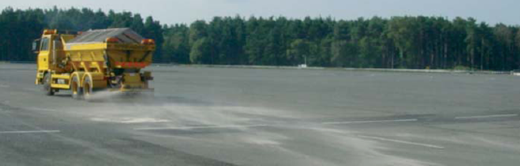
Trials at TRL Limited found that road deicing salt pre-wetted with Safecote cut its corrosive effect by 45%
Trials at TRL Limited found that road deicing salt pre-wetted with Safecote cut its corrosive effect by 45%
For sensitive structures, more expensive non-chloride materials are employed, but the transfer of brine from salt treated areas by vehicles and wind-blown aerosol effects constitutes a risk if ignored.
Over the past 10 years the US winter maintenance sector has established the beneficial use of a variety of agricultural by-products to counter and mitigate the adverse infrastructure effects of chloride use. One such product called Safecote has recently been launched as a pre-wetting additive to salt in Europe following a three-year evaluation of its effectiveness and properties by the Transport Research Laboratory (TRL)2 and Capcis.3
Salt additive reduces corrosion
The TRL research covered comparisons between the salt-plus-additive formulation and other de-icing materials and included tests for corrosion inhibition on carbon steel and aluminium, freeze/thaw damage to concrete, binder stripping of asphalt surfacing, skid resistance, ice penetration, undercutting and melting, surface application, spreading characteristics and environmental impact.
Rock salt pre-wetted with the additive was found by TRL to reduce corrosion by 45% on carbon-steel coupons when compared to rock salt alone, and was approximately comparable with potassium acetate, ethylene glycol and urea. Capcis subsequently found that corrosion reduction was up to 82%, better than most specifically designed non-chloride de-icing alternatives on the market. Results on aluminium showed no measurable corrosion. Further, the cost-benefit of coated salt was favourable compared with non-chloride alternatives.
Pre-wetted rock salt was also considered likely to be far less damaging to the environment than rock salt alone. Calculated stream concentrations in highway run-off were found to be lower than the threshold limits provided by the UK Environment Agency.
Skid resistance not affected
The salt and additive formulation showed no detrimental effect on the skid resistance of the pavement surfaces tested. For the aggregate/binder combination tested, no evidence was found of binder stripping from asphalt surfaces.
When used with calcium and magnesium chlorides, the additive showed no damage to either pavement or airport quality concrete – which is significant considering the deleterious effects to concrete of magnesium chloride. The mean results of the 10 g/m2 spread tests showed that more salt was spread into the target zone when pre-wetted with the additive.
References
FOR FURTHER INFORMATION CONTACT, Ken Atkinson, TEL +44 (0) 2072 222122, EMAIL info@safecote.com, WEB www.safecote.com

