

The UK courts have served a stark warning to civil engineers about the dangers of using assumptions about ground conditions. Shareena Edmonds of UK law firm Pinsent Masons says engineers must ensure any preliminary design assumptions are verified.
The limitations on a civil engineer's ability to use and rely on preliminary design assumptions were the subject of a recent Court of Appeal decision in a case involving an Asian power station operator and a major UK-based civil engineering consultant.
The operator was seeking damages of £36 million as a result of the consultant's negligent design of two principal boiler foundations at its coal-fired power station at Sual in the Philippines. The reinforced-concrete pads designed by the consultant settled substantially during superstructure construction and were ultimately removed and replaced.
The key issue before the court was whether the consultant had exercised due care and skill in its design of the foundations and in the verification of the assumptions on which the design was based.
Separate site and design contracts
There were two agreements in place between the operator and the consultant in relation to the Sual plant: a site services agreement, with a £4 million limitation cap, and an uncapped design agreement. Consequently, the court also closely scrutinised the inter-relationship between the work a design engineer is required to carry out as part of their design contract and the site investigation work which needs to be carried out separately and which will provide information on which the design is to be based.
The appeal court upheld the earlier Technology and Construction Court decision that the consultant had breached its design agreement by failing to produce its design with reasonable skill and care and by failing to verify the preliminary design assumption upon which its design was based.
The key facts found by the court were as follows. The consultant's senior geologist charged with responsibility for reviewing the existing data and providing a geological overview to assist in planning the further site investigation work had indicated that further steps were needed. He had specified the tasks to be undertaken in an investigation aimed at defining those rock characteristics which would have a direct bearing on the particular construction, including detailed geological mapping. This work was not undertaken.
Assumption used in final design
Furthermore, the assumption he produced thereafter, which he intended as a highly provisional assessment to enable the design to be progressed in its preliminary form, had been used in the final design for the relevant foundations without those tasks having been completed. The consultant was expecting that the person who supervised the ground investigations under the site services agreement would also be involved in these further investigation works, but these works were not, in fact, undertaken.
In reaching its decision as to the consultant's liability, the court emphasised a number of key points. The first point was that competent foundation design requires design engineers to have a sufficient knowledge of ground conditions to determine a safe bearing capacity.
Design engineers with insufficient knowledge of ground conditions to determine a safe bearing capacity may work initially upon assumptions. However, they then have an obligation to see to it that the requisite additional information is acquired to verify the assumptions. They do not necessarily have to get the additional information personally, but must see to it that someone does, and they must see to it that the client knows that the additional information has to be obtained.
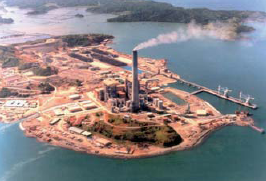
A major UK civil engineering consultant faces £36 million damages for failing to verify preliminary design assumptions it used for foundations at the Sual coal-fired power station in the Philippines
A major UK civil engineering consultant faces £36 million damages for failing to verify preliminary design assumptions it used for foundations at the Sual coal-fired power station in the Philippines
Verification obligation remains
Without an explicit warning and disclaimer, it would not be sufficient for designers, whose initial design was based on an unverified assumption, to leave it to the client alone to obtain and evaluate the additional information. The design engineers are responsible for the design, and they should normally see to it that the necessary additional information is conveyed back to them, so that they may judge it is sufficient for the purpose of their design.
The verification obligation is part of engineers' design obligations, notwithstanding that the additional information necessary to confirm the design may, in fact, be procured under a separate site agreement.
Whereas there may be contracts for which verification of design assumptions by way of surface examination of the foundation formation on site might be sufficient, it was not so on the facts of this case. It was clear from the facts that the consultant's representatives were of the view that more extensive investigations were needed and those investigations were not, in the event, completed.
Pinsent Masons acted for the operator.
FOR FURTHER INFORMATION CONTACT, Shareena Edmonds, TEL 020 7490 6596, EMAIL shareena.edmonds@pinsentmasons.com

