

The UK economy is losing up to £23 billion a year because Britain's civil and other engineering and technical professions are not employing enough women. Mary Inman of EPCglobal reports on the findings of an international survey on the shortage of women in engineering—and why things need to change.
Engineering globally remains one of the least gender-diverse professions in an era where equality of opportunity and diversity are near-universally accepted principles. Aside from these principles, there are a number of practical benefits to addressing the gender imbalance.
EPCglobal, an international engineering staffing company, recently collaborated with the Government-funded UK Resource Centre for Women in Science, Engineering and Technology (UKRC) on a survey to investigate the inadequate representation of women in all fields of engineering. The results of the survey, which received responses from over 2000 engineers across the world, were presented at the UKRC's annual conference earlier in 2006.
Civil engineers accounted for 10% of the respondent base and 28% of respondents overall were women. The actual level of female representation in engineering worldwide has been estimated at 6–10%.
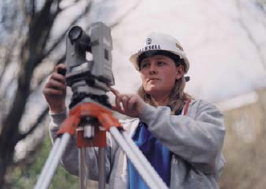
Employing more women will help solve the skills crisis in engineering as well as improve the relevance of the profession to society
Employing more women will help solve the skills crisis in engineering as well as improve the relevance of the profession to society
Need for more data
UKRC is lobbying for compulsory gender data from British employers to provide an accurate measure of progress over time. Such data would also highlight the scale of the challenge facing those trying to bring change about.
In the absence of such data, one way to assess the situation is by asking engineers for their perceptions of diversity within their own organisations. Just over a third of all male engineers claimed this of their work-places, compared to 20% of women. Just 27% of employers headquartered in the UK were perceived to have gender-diverse workplaces at all levels, but in the USA the figure is 37%.
Overcoming obstacles
To what is this lack of diversity attributed? Of barriers to entry, most (75%) engineers believe obstacles exist at the earliest stages and that education is a factor. This supports the view of the UK's recent Women and Work Commission (WWC) that Government action is required to tackle gender stereotypes at school.
Once in the career, most engineers say the single most important problems are ‘working in a male-dominated environment’ (26%) and ‘workplace culture and practices’ (21%).
In terms of the support that should be given to women who are in engineering, non-discriminatory company practices and policies was the most popular option for all engineers surveyed, at 38%. But while 19% thought flexible working would help, 18% thought nothing should be done. The WWC recommended that employers offer more flexible working hours.
Benefits of gender diversity
Initiatives to address the huge gender imbalance in engineering should not just be advocated on principle or borne from a sense of embarrassment at the profession's lowly diversity ranking. There are practical and commercial reasons why it matters, even though 38% of engineers in the survey thought it does not.
First, as a staffing provider, my company knows that engineering faces a massive skills shortage globally and we are only fishing from half the pool if women are not targeted. Second, engineers’ output is often designed for society at large, so the needs of the entire population have to be reflected. Third, women individually stand to benefit from pursuing higher-paying and technical jobs. Fourth, the WWC estimated that the UK economy alone would benefit to the tune of £23 billion a year if more women were in such jobs.
Further, if the Commission's recommendations are accepted, UK public-sector purchasers will buy only from contractors that promote gender equality and meet equal-pay requirements. The survey shows only 60% of UK engineering employers would currently make the grade by taking steps to encourage women to apply and progress within the organisation, near the international average. Again, the USA leads with 66%.
Conclusions
No-one is advocating parity in gender representation in civil or any other discipline of engineering, only that as many women as possible are given the opportunity to enter the career and progress. A concerted effort by governments and employers to make the benefits of the career apparent to all and remove any obstacles should start to help to remedy the situation.
In certain countries, great strides are being made. For example, one study in Kerala, India, shows women students account for up to 70% of entry-level engineering classes. There are now no excuses to lag behind.
FOR FURTHER INFORMATION CONTACT, Richard Spragg, TEL +44 (0)20 8600 1603, EMAIL richard.spragg@epcglobal.com, WEB www.setwomenresource.org.uk

