

Despite most engineers believing that the Middle East has become a more dangerous place to work since the invasion of Iraq in 2003, over half would still recommend a posting there—particularly civil engineers. Richard Spragg of staffing company EPCglobal reports on a recent attitude survey.
Civil engineers are often presented with rewards in return for facing degrees of risk, inconvenience or discomfort. For example, areas such as the Middle East and North Africa can leave engineers geographically and culturally isolated, exposed to extremes of temperature and potentially political instability. However, whereas environmental factors and isolation are predictable, political factors are not.
EPCglobal therefore conducted some research in August 2006 with the goal of making individuals' risk–reward calculations better informed, particularly on the issue of security, and for employers to provide insight into the concerns of staff. It was based on online responses from 2128 engineers from throughout the world and across all disciplines, over half of which were working or had worked in the region.
Although the focus was on the Middle East, there were also general lessons to learn about how much the perception of risk affects behaviour and what motivates people to work in partially unstable regions.
Engineers feel informed of risk
Nearly three-quarters of all engineers claimed to be well or adequately informed about the Middle East, and around two-thirds thought the region had become more dangerous for overseas engineers since the US invaded Iraq in March 2003. The most common single security concern was a direct physical threat from aggrieved groups or individuals, followed by a collateral physical threat from the targeting of symbolic installations and buildings.
Most engineers with experience in the region stated that security would not be the main cause, or was not the main cause previously, in encouraging them to leave the region. Of all engineers, only 8% of those with experience and 17% without would not take a position in the Middle East. However, of all engineers that would, just over half would say yes only with the right level of financial reward.
Only 8% of those with experience would advise others against working in the Middle East and North Africa. In fact, half of those with experience would recommend or highly recommend others to work there. Less than a fifth of all engineers would not choose to work in the Levant (Israel, Jordan, Lebanon and Syria) compared to 60% for Iraq, showing that they were able to discriminate between areas with varying levels of threat.
Of all engineers, just over half think the media exaggerates the level of danger in the Middle East. That figure rises to nearly three-quarters for Middle Eastern national engineers. Of engineers without experience in the region, only 44% believe media reporting exaggerates the level of danger.
Civil engineers most positive
Civil engineers with experience of working in the Middle East were less motivated by money and more by the opportunity to enhance their CVs than the average. They were also more enthusiastic than average to recommend that others should work in the region.
Both civil engineers with and without experience were among the least convinced the region had become more dangerous since 2003 and also the least convinced that the recent conflict in Lebanon would make it more difficult for engineers to work in the region. They were also more critical about media coverage of the region, with 59% believing that reporting exaggerates threats. However, security issues influenced their decision to leave in more cases than the average.
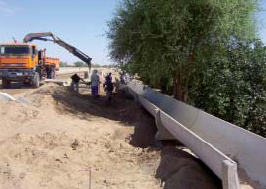
Only 8% of engineers with experience of working in the Middle East would advise others not to do so, and over half think the media exaggerates the level of danger
Only 8% of engineers with experience of working in the Middle East would advise others not to do so, and over half think the media exaggerates the level of danger
Conclusions
The findings show a clear difference in opinion between those with experience of working in the region and those without. Experienced engineers are less concerned about security than those without in the light of their familiarity with the situation ‘on the ground’.
The most encouraging findings are that those with experience in the region are six times more likely to recommend working there than advise against it. Also, the vast majority of those without experience would consider going if they received the right offer, which is encouraging for employers concerned about the effects of negative reporting on the supply of talent.
What cannot be ignored, however, is that experienced engineers perceive risks associated with working in the general area to have increased since 2003. But, in the knowledge that risks are higher in specific sub-regions, engineers are not more inclined now than in previous years to cite security as the main reason to leave the region, showing that the real effects of this general perception are limited.
FOR FURTHER INFORMATION CONTACT, Richard Spragg, TEL +44(0)20 8600 1603, EMAIL richard.spragg@epcglobal.com, WEB www.epcglobal.com

