

Discussion
P14066: Pro-poor concessions for sustainable water services: by Muhammad Sohail, Jon Bateman, Andrew Cotton and Bob Reed (May 2006 special issue)
Contribution by Tim Yates
The authors rightly stress the need, in concession contracts, for clear performance targets that will benefit the poor. However, two points are worth raising.
First, efficient identification of the poor is a precondition for ‘pro-poor’ concessions—and is largely overlooked in the paper. In the examples quoted the poor may inhabit clearly defined geographical areas, making it easy to target subsidies. However, in many cities the poor and the non-poor are not so readily distinguished and it would be a brave (and unwise) private sector participation operator which took on the task of deciding which families deserved subsidies. Instead the operator would look to the authorities for a workable criterion. Property tax level and welfare eligibility are often proposed. However, both are poorly correlated with poverty, welfare eligibility especially so as the non-poor are often the main, albeit unintended, beneficiaries.

Second, concessions are falling from favour. According to the World Bank's PPI database, the investment associated with concessions fell from US$15 billion in 1997–2000 to $3 billion in 2001–4, and the number of transactions from 61 to 43. Build-operate-transfer and management contracts showed the opposite trend. Build-operate-transfer contracts contain no scope for targeting the poor. However, management contracts can reward operational changes that turn out to be ‘pro poor’ even if not designed as such. For example, increases in hours of supply reduce dependence on expensive tanker or vendor water, a disproportionate benefit for poor families with little on-site storage.
Authors’ reply
We agree that the issue of identifying the poor is a difficult one; there are various options for doing so but no single method that would work in every situation. This is particularly true where financial income alone is not seen as an adequate indicator of poverty. The contributor's point could be an issue for another paper.
With regard to concessions falling from favour, that may be so but concessions provide incentives and a framework for the private sector to invest or secure investments. We think that where infrastructure expansion and finance is needed, concessions should still be seriously thought about. Despite instances of scandalous transactions, there are still many concessions that are performing satisfactorily. This suggests that the failures are typically due to a combination of factors rather than the nature of the concession alone. Pro-poor management and build-operate-transfer contracts should also be explored.
P14338: Trenchless technology—a modern solution for clean-flowing cities: by Dec Downey (May 2006 special issue)
Contribution by F. Gorton
From 1960 to 1970 I was principal assistant for main drainage and sewage disposal in the Norwich City Engineer's Department. A large 2 m deep intercepting sewer had been constructed to relieve the old city centre system and I was charged with designing a system to eliminate the considerable pollution of the River Yare where it flowed through the city and was used by Broads cruisers.
We studied a number of alternative schemes, but our preferred route coincided with an eggshaped sewer built by Sir Joseph Bazalgette but abandoned in the late 1800s due to severe water ingress. Most of it was below sea-level to depths of 6 m and the whole system was flooded. A series of compressed-air ejectors was installed to serve the city centre and, by the 1950s, was in a very poor condition and overloaded. Fortunately, the original drawings were still available showing the various attempts to strengthen the sewer and stop the leakage. Various reports of the period made reference to the operational problems.
Two contractors that had carried out sewerage work at Norwich were approached. William F Rees was at that time carrying remedial works at Chelsea and was using concrete invert blocks and 0·7 mm thick plastic sheeting, pop-riveted together, to line the sides and soffit. This was ultimately discounted due to lack of strength. Kinnear and Moodie, manufacturer of precast tunnel linings, explored the possibility of designing a special segmental lining for the egg-shaped sewer some 2 m high and its system was adopted. The modern composite materials were not available.
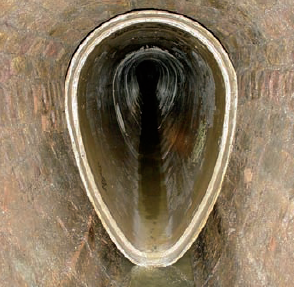
Glass-reinforced plastic sewer linings installed in London in the 1970s have shown little sign of deterioration
Glass-reinforced plastic sewer linings installed in London in the 1970s have shown little sign of deterioration
During the mid 1960s May Gurney, the local contractor, was employed to carry out investigations jointly with ourselves to gain access and to explore methods of isolating and pumping out the vast quantities of ground water entering the old sewer. We convinced the city engineer, Horace Rowley, that it was possible to reclaim the old sewer although there was the possibility of considerable unknown risks to face. The Ministry of Housing and Local Government had also to be convinced.
Open tendering followed, May Gurney was successful and the scheme was completed without any major problems. Norman Davies was resident engineer on the scheme. I was thankful for his experience, for it was not an easy contract to manage.
How well has the sewer worked? I do not know, but it would be interesting to hear how it has performed and what would the current engineers have done with today's materials. They would have to read our original paper to understand the difficulties that had to be overcome. Certainly it is most satisfying to read that the work carried out in Norwich has parallels with work which has more recently been carried out on Sir Joseph's work in India.
Author's reply
I am pleased to learn that the contributor has pioneered sewer lining with inserted pipes as early as 1970. He raises an interesting question concerning the durability of such early installations, which perhaps I can answer with respect to some personal experience. In the mid-1980s I had the privilege to work with Eric Wood, who developed and patented the Insituform process and I learned a good deal from him about the early years of pipe rehabilitation.
In October 2001 I supervised the sampling of cured-in-place pipe installed by Wood at Riverside Close, Hackney some 30 years earlier. The samples cut from the 1170 × 600 mm lining were independently tested by Bodycote and exhibited a flexural modulus of elasticity, the prime physical property value employed in design, more than 50% greater than the minimum values required in WIS 4-34-04. Accordingly I am confident that many polyester-resin-based rehabilitation products properly made and installed will exhibit similar durability and perform effectively for many years to come.
P14515: Sharing water: engineering the Indus Water Treaty: by David Birch, Aslam Rasheed and Iftikhar Drabu (May 2006 special issue)
Contribution by Graham Tombs
Tarbela dam, which is referred to in the paper, has received a fair amount of adverse press. To address the balance it should be noted that it provides about 60% of the water for an irrigation scheme that is responsible for feeding something of the order of 100 million people. It could therefore be said that Tarbela is responsible for feeding 60 million. In addition, at some times of the year, it provides nearly 40% of Pakistan's electrical power needs outside the Karachi area and is a significant flood control.
Pakistanis are highly skilled at many civil engineering trades. Many who were trained at Tarbela went on to work on other major projects overseas and their foreign currency remittances back to their families in Pakistan have been a great economic benefit. The total value of these remittances has exceeded the original foreign currency loan for the construction of Tarbela.
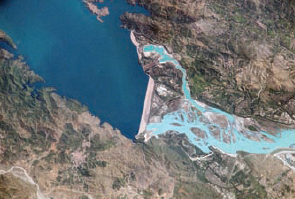
Tarbela dam effectively feeds 60 million people, despite some negative environmental impacts
Tarbela dam effectively feeds 60 million people, despite some negative environmental impacts
Authors’ reply
We would agree with the contributor that Tarbela has provided very significant benefit to Pakistan since it was commissioned in 1976. The project suffered from considerable construction problems which resulted in a two-year delay in commissioning and a 58% cost overrun. The total cost of the project, including debt service, as estimated in 1998 prices by the World Commission on Dams was very significant at US$5·9 billion. The project also required the resettlement of some 96 000 people, many of whom did not receive adequate compensation,
Tarbela dam and the other Indus basin project works resulted in a significant increase in the irrigated area served by canals from 13·3 million ha in 1974–5 to 18 million ha in 1997–8. However, the cropping intensity has not increased as much as forecast and yields of staple crops remain low. Pakistan has therefore not managed to utilise the water from the dam as effectively as it might have. The power generation benefits have, however, been far higher than anticipated, due to later increases in generating capacity at the dam, resulting in a 65% greater capacity than was foreseen at project formulation. The project also provides attenuation of about 20% of the early flood season floods, a benefit that was not foreseen at project formulation.
The dam has also resulted in a number of negative environmental impacts that were not foreseen at the time the project was formulated, including reductions in fish catch and livelihoods from the flood plains downstream of the dam and degradation and saline intrusion at the Indus delta down-stream of Kotri barrage due to the significantly reduced flows to the delta.
The dam is expected to have around an 80-year economic life and is a once-only use of the resource of this the best site for storage on the Indus. While the benefits from the dam have been significant, it is unfortunate that Pakistan has not managed to undertake the institutional reform in its irrigated agriculture sector to gain the maximum benefits from it.
P14556: Future-proof: Upton on Severn Viaduct, UK: by John Sreeves (February 2007)
Contribution by David Martin
What a pity that in the options appraisal for the bridge, the options which might have been both technically and financially advantageous had to be ruled out because land-acquisition procedures would have taken too long.
What a pity that necessary and desirable works of civil engineering cannot be accomplished, as well as those adversely affected by them appropriately compensated, with rather less delay, so that the truly optimal scheme can be adopted.
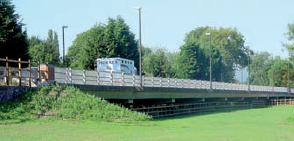
Upton on Severn Viaduct: a design compromised by protracted land-acquisition procedures?
Upton on Severn Viaduct: a design compromised by protracted land-acquisition procedures?
Author's reply
The contributor expresses a sentiment felt by all of us in the industry, but we are powerless to do anything about it.
Contribution by Garry Dyer
The temporary road diversion works were actually constructed by my company Laser Civil Engineering Ltd. We have our copy of the ICE West Midlands Project Award 2005 certificate proudly displayed in our head office reception to recognise our involvement in this scheme.
The advance road diversion works were constructed as part of the integrated transport framework contract we have with Worcestershire County Council and as such we were involved in the design process with Halcrow's Worcester office.
The project was a great example of early contractor involvement and team working within the spirit of the NEC Engineering and Construction Contract, leading to value engineering benefits and a reduced lead-in period.
Author's reply
The contributor is correct, I sincerely apologise for the error.
P14683: Is the corporation killing engineering excellence?: by Keith Clarke (November 2006)
Contribution by Simon Penny
An equivalent question is: ‘is the corporation killing retail excellence’ and Tesco would seem to belie this. Similarly Marks and Spencer (despite some recent troubles) is generally accepted as exhibiting certain aspects of retail excellence.
Peters and Waterman in their book In Search of Excellence sought out a broad example of excellent companies and made eight conclusions about how they succeed, none of which were linked to the ownership structure.
Also, singularity is an aspect of leadership which is often overlooked. An advantage of the corporation is that it usually has a single leader—the chief executive. It is obvious where the buck stops. Singularity is shown to good effect in Marks and Spencer where, under the strong leadership of Stuart Rose, it is regaining the retail excellence it once held.
A partnership usually has a managing partner but it is more a case of ‘first amongst equals’. It is more difficult to provide effective leadership if there is uncertainty about who holds responsibility.
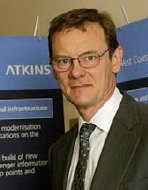
Corporations benefit from the strong leadership of a chief executive, such as Keith Clarke at Atkins
Corporations benefit from the strong leadership of a chief executive, such as Keith Clarke at Atkins
Ultimately I believe it is the marketplace or client which is the principal driver for excellence and not the ownership structure.
Contribution by Susan Martin
Although engineering–construction businesses, corporations and universities differ between the UK and USA in form, practice and delivery, I believe this paper addresses a universal truth and a relevant experience discovery of both countries.
Several themes come to mind—both locally and globally—such as
having a clear and positive knowledge of what any company offers a market by all its employees
encouraging management to enjoy, recognise, and reward works of all levels instead of simply a bottom-line profits-centered outlook
offering more in-house training or cross-training or in specific areas such as quantity surveying or estimating
augmenting the decline in engineering students with in-house collaboration with universities for acquiring engineering-related degrees
employee empowerment tools for quick, fearless and useful collaboration or brainstorming.
Except for creative strides being voluntarily taken in some companies (my company Faithful and Gould in the USA being one of them), what are corporate management structures with their personnel therein really doing to embrace what the paper espouses should happen for perhaps global corporate health? And when can one hope to see such data for proof and models of success?
Full versions of these discussions can be read along with all other discussions in the online version of the journal at www.civilengienering-ice.com.
Proceedings: RECENTLY PUBLISHED PAPERS
In addition to Civil Engineering, the ICE Proceedings includes twelve specialist journals. Papers and articles published in the most recent issues are listed here. Summaries of all these and other papers and articles published in the past three years can be read free at www.ice.org.uk/journals. ICE members can download any 15 papers published in 2007 for £25 from www.iceknowledge.com
Bridge Engineering
160, No. BE1, March 2007, 1–45
PAPERS
Garyllis River Footbridge—harmonising engineering and architectural features
A. D. Toumazis

Reliability-based evaluation of steel girder bridges
A. A. Czarnecki and A. S. Nowak
The design and construction of Itford Farm Bridleway Bridge
A. Oliver
Precast deck systems for steel–concrete composite bridges
S. R. Gordon and I. M. May
Examples of new built footbridges in Poland
J. Biliszczuk, W. Barcik, P. Hawryszkow, K. Sadowski and J. Tadla
Civil Engineering Special Issue
160, No. CESII, May 2007, 1–64

PAPERS
Thomas Telford, county surveyor
P. Cross- Rudkin
Thomas Telford's cast-iron bridges
R. Paxton
Telford's masonry bridges on the Carluke Road, Scotland
T. Day
Telford's Menai and Conwy suspension bridges, Wales
W. Day
Thomas Telford, highway engineer ahead of his time
H. Davies
Telford's Highland roads—a new way of life for Scotland
C. Ford
Telford's Holyhead Road—the first superhighway
J. Quatermaine
St Katherine's Docks, London—Telford's highspeed harbour
M. Chrimes
Birmingham Canal—a future unlocked by Telford
D. Bligh, D. Brown and N. Crowe
Thomas Telford, project manager
M. Barnes
Construction Materials
159, No. CM4, November 2006, 139–184
PAPERS
Use of sewage sludge ash (SSA) as mineral admixture in mortars
M. Coutand, M. Cyr and P. Clastres

Aggregate size and behaviour of self-compacting concrete
M. Shobha, D. Harish Mohan and P. S. N. Raju
Predicting early-age temperatures of blended-cement concrete
K. A. Paine, R. K. Dhir and L. Zheng
Material testing for sustainable pavement foundation design
J. P. Lambert, P. R. Fleming and M. W. Frost
Seismic performance of inorganic polymer concrete beam–column joints
N. J. Brooke, L. M. Keyte, W. South, J. M. Ingham and L. M. Megget
Energy
160, No. EN1, February 2007, 1–43
BRIEFING
Prospects for nuclear power
S. Dagnall

PAPERS
Energy efficiency with natural ventilation: a case study
S. D. Fitzgerald and A. W. Woods
Clean coal technologies for power generation
J. M. Farley
North Hoyle offshore wind farm: design and build
J. M. F. Carter
Renewables and the grid: understanding intermittency
R. Gross, P. Heptonstall, M. Leach, D. Anderson, T. Green and J. Skea
Engineering Sustainability
160, No. ES1, March 2007, 1–46
BRIEFINGS
BREEAM—Making what's important measurable
V. Mistry

The ‘Sustainability Shaper’: a new resource for the South West of England
L. Goldring
PAPERS
Motorway noise barriers as solar power generators
T. Parry, D. R. Carder and L. Hawker
Options for sustainable mobility
S. G. Ison and T. Ryley
Energy generation from a Severn barrage prior to a full commissioning
M. J. Watson and T. L. Shaw
Geotechnical Engineering
160, No. GE2, April 2007, 61–122
Opening ceremony shaft for the Athens 2004 Olympic Games
N. Gerolymos, I. Anastasopoulos and G. Gazetas

Effect of height on delayed collapse of cuttings in stiff clay
E. A. Ellis and A. S. O'Brien
Design charts for seismic analysis of single piles in clay
A. Tabesh and H. G. Poulos
Plane strain numerical model for drystone retaining walls
P. Walker, P. McCombie and M. Claxton
Rock socket piles at Mall of the Emirates, Dubai
L. Alrifai
Management, Procurement and Law
160, No. MP1, February 2007, 1–44
BRIEFINGS
How to achieve true quality in construction
S. Fryer

Improving management of people in construction
R. Soetanto, A. Price and A. Dainty
NEC contracts—delivering 21st century construction
R. Gerrard
PAPERS
Health and safety—matching legislation and enforcement
J. Anderson
Project design: tasks that need to be managed
A. Hamilton
The rise and rise of time-bar clauses
H. Lal
How infrastructure procurement can enhance social development
J. Hawkins and J. Wells
Maritime Engineering
160, No. MA1, March 2007, 1–45
PAPERS
Cliff recession and behaviour studies, Hunstanton, UK
A. R. Drake and P. J. Phipps

A nature conservation perspective of port-related dredging
R. Morris
The tidal flux in the Firth of Forth
A. J. Elliott and S. P. Neill
Municipal Engineer
160, No. ME1, March 2007, 1–69
PAPERS
Partnerships for improving water utility management in Africa
J. Mugabi, S. Kayaga and C. Njiru
Public–private partnerships for China's water service
S. Kayaga and L. Zhe
Partnering contracts in practice at Blackpool, UK
L. S. Cunningham and M. A. Pomfret
2020 Liver pool—performance and value for money
R. G. Kilner and C. Founds
NEC X12 at the heart of Worcestershire Highways
J. Rankin, P. Jameson and N. Yarwood
Coventry Framework Partnership
S. R. Aggus and E. J. Hiscocks
Warwickshire–Arup partnership: the first five years
K. Harwood and B. Follett
Structures and Buildings
160, No. SB2, April 2007, 63–121
PAPERS
Predicting footfall-induced vibration: Part 1
M. Willford, P. Young and C. Field

Predicting footfall-induced vibration: Part 2
M. Willford, P. Young and C. Field
Strengthening a steel bridge with CFRP composites
S. S. J. Moy and A. G. Bloodworth
Behaviour of reinforced self-consolidating concrete frames
A. Said and M. Nehdi
Stiffness and damping of infilled steel frames
M. Mohammadi Ghazimahalleh
Transport
160, No. TR2, May 2007, 47–91
PAPERS
Explaining tunnel construction by joint mapping
S. J. Knight

The Nottingham railway test facility
S. F. Brown, B. V. Brodrick, N. H. Thom and G. R. McDowell
Performance of foamed bitumen-stabilised mixtures
K. Khweir
Investigation of vehicle time headways in Turkey
Y. S. Murat and E. Gedizlioglu
Behaviour of airfield pavement subgrades under load test
K. Gopalakrishnan and M. R. Thompson
Water Management
160, No. WM1, March 2007, 1–69
PAPERS
The evolution of a river modeling system
E. P. Evans, J. M. Wicks, C. D. Whitlow and D. M. Ramsbottom
Case-based reasoning approach for managing sewerage assets
R. A. Fenner, G. McFarland and O. Thorne
Investigating hydraulic removal of air from water pipelines
M. Escarameia
Development of a catchment-wide nutrient model
R. Bockelmann-Evans, I. Schnauder, E. Fenrich and R. Falconer
Aeration efficiency with nappe flow over stepped cascades
A. Baylor, T. Bagatur and M. Emiroglu
Personal on-line subscriptions to specialist Proceedings journals start from £11 a year for members. Print subscriptions start at £21 a year and include full on-line access to the current and past three years’ issues. Please call +44 (0)20 7665 2227, email subs@ice.org.uk
Request for papers
All Proceedings journals rely entirely on papers sent in by civil engineers and related professionals, researchers, academics and students. Papers should be around 2000 to 5000 words long, in good English and with adequate illustrations and references. Project papers are particularly welcome. All papers sent in will be assessed on merit and not on the status of the author. Simply email your text and images together with your contact details to journals@ice.org.uk.
For full guidelines on writing a paper please visit www.thomastelford.com/journals or contact the editor Simon Fullalove on 020 7665 2448 or editor@ice.org.uk.
New online submissions system
Authors can now submit papers to Civil Engineering and all other ICE Proceedings journals via the internet. By clicking the ‘Online submission’ links on the individual journal home pages—which can be reached via www.ice.org.uk/journals—authors can submit, and immediately receive confirmation of receipt, 24 hours a day and from anywhere in the world. They can also track the progress of their submissions through the review process at any time. This is an important development and one that is required to support the continuing development and internationalisation of the ICE's world-class journals publishing programme.

Books: REVIEWS
Managing risk in construction projects (2nd ed.) by Nigel Smith, Tony Merna and Paul Jobling, published by Blackwell Publishing, 2006, £37·50, reviewed by Mark Rudrum, Arup
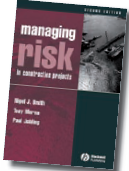
The principal objective of the book is to provide practical advice and examples of risk management applied to construction projects. It is written to be applicable to construction in its broadest sense, ranging from ship building to civil engineering and building projects.
The authors are both academics and practitioners; Paul Jobling is the project director for risk management at Parsons Brinkerhoff, and Nigel Smith and Tony Merna are lecturers on risk management at the University of Leeds and The University of Manchester respectively. This leads to a useful mix of theory and practice in one text.
A particular emphasis of the book is that risk management is a fundamental technique to facilitate decision-making where there is less than optimal information. It is recognised that decisions often have to be made where there is incomplete information and risk-management techniques are seen as a key way of structuring and recording the decision-making process such that a rational comparison of options can be made.
The first chapters of the book provide a good general introduction to risk management covering general concepts, projects, project phases and risk attitude. This is then followed by chapters covering risk techniques, human aspects such as risk workshops, risk and value management, qualitative methods and soft systems methodology, risk modelling and simulation.
The book also covers strategic and managerial aspects of risk, with chapters on risk allocation in procurement, financial risks in major construction and PFI projects and risk in a corporate, strategic business context.
Of particular interest are the two detailed case studies presented, the first related to a ship construction project, the second to a major transportation infrastructure project—the Channel Tunnel Rail Link.
Overall the book provides an accessible summary of the range of risk-management techniques, the underlying theory and practical application. It is a good practical reference guide on risk management and is essential reading for civil engineers of all ages and experience working on projects.
Earthquake design practice for buildings (2nd ed.) by Edmund Booth and David Key, published by Thomas Telford, 2006, £65, reviewed by Costas Georgopoulos, The Concrete Centre

Unlike the recently published Designer's guide to EN 1998-1 and EN 1998-5, this publication is not written for the specialist. It is a book for novice design engineers or architects embarking on earthquake engineering.
Complicated mathematics are intentionally left out and replaced by extensive descriptions of structural behaviour backed up by clear diagrams, tables and photographs. The authors' collective practical and research experience is evident in the invaluable advice offered thoughout and also in the numerous references and suggested websites for further reading.
Having taught earthquake engineering at MSc level for a number of years, I have been recommending the first edition to my students as an essential course textbook. This edition comes almost two decades later, being expanded and updated to incorporate new code provisions including Eurocode 8, better understanding of the dynamic behaviour of soils using recent ground motion data, new methods of analysis such as non-linear static (pushover) analysis, developments in assessing earthquake resistance especially for existing structures, and so on. The scope of this edition has also been limited to buildings which is a good improvement. Every student of earthquake engineering should have a copy.
Three main features which make this book an essential part of designer resources are as follows.
The book layout, with the first chapter on looking at the lessons from earthquake damage which, in my opinion, is the best way to start learning earthquake engineering.
The excellent chapter on conceptual design which, in conjunction with the Eurocode 8 provisions, should give adequate advice to both engineers and architects
The new chapter on assessment and strengthening of existing buildings, which is absolutely vital for the protection of urban centres from future earthquake damage.
Overall, I thoroughly enjoyed reading this book and highly recommend it to anybody who is interested in seismic design.
Concrete: Neville's insights and issues by Adam Neville, published by Thomas Telford, 2006, £65, reviewed by Stephen Hare, MouchelParkman
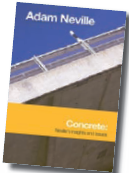
For those of us that have a copy of Adam Neville's Properties of Concrete firmly on our desks, this new book is a must-read. It will not be used in the same way, but that is not its purpose; it is not a text book but a discussion of particular subjects from the viewpoint of someone who has been involved in them, often as an expert witness. In this way, it replicates the style of his previous book Neville on Concrete.
The book has been largely compiled through adaptation of several of his most recent papers. The subjects are treated by looking at a problem or issue and then discussing the underlying aspects; as the author himself says, ‘like looking at concrete through the wrong end of a telescope’. Although he notes that this gives some new insights, it is often the way that ‘forensic engineers’ have to work.
The book is written in a very personal style, and is not restricted to purely technical subjects, but includes sections on the wider aspects of concrete such as sustainability, workmanship and the history and future of concrete. The style is easy to read and there are flashes of humour while conveying some fairly complex issues. Indeed, this must be one of very few technical books which have fewer equations in the text than quotations from operas and poems.
Although there will be some subjects that we would wish had been dealt with in this book, the overall blend between the technical issues and personal thoughts and reflections is a fitting end to over 50 years of association with concrete.
Marc Isambard Brunel by Paul Clements, published by Phillimore & Co.Ltd, 2006, £16·99, reviewed by Robert Freer

In 2006 the celebrations to remember the achievements of the ‘younger’ Brunel on his 200th birthday have tended to overshadow the work of his father Marc Isambard, who also made an individual and heroic contribution to nineteenth century engineering, and was at least equal to his son in originality, ingenuity and the practical application of his inventions.
In a new and well-researched biography Paul Clements reminds us of how Marc Brunel came to be an engineer, what he achieved and why he was the nineteenth century's ‘most innovative engineer’.
The first half of the book describes Brunel's arrival in England and his rise to national prominence as one of the leading engineers of the day during and after the Napoleonic wars. The second half is a detailed account of the successful construction of his most memorable work, the first Thames tunnel.
Engineers today will notice that he was equally accomplished in undertaking projects which we would now define separately as mechanical, chemical or civil engineering but which in those days were accepted as all part of the work of the engineer.
The detailed account of the completion of the first Thames tunnel is a remarkable tribute to Brunel's patience, inventiveness and tenacity in the face of adversity, but for the general reader some more drawings to explain the operation of the shield and how the various problems were solved would be helpful. Clements does, however, include an early photograph of Marc Brunel which must be one of the earliest portrait photographs taken of a leading engineer.
The book raises the general question of what we today can learn from the lives of the past engineers. Is the reading of biography no more than a pleasant relaxation? Engineering has always been an art to be practised as well as a science to be studied, and the works of all successful artists are worth studying.
In the art of painting, this was well expressed by Sir Joshua Reynolds in his address to the members and students of the Royal Academy in 1769 when he advised them to study the old masters. ‘The more extensive your acquaintance is with the works of those who have excelled, the more extensive will be your powers of invention, and what may appear still more like a paradox, the more original will be your conceptions.’
Engineering the ancient world by Dick Parry, published by Sutton Publishing Limited, 2005, £20, reviewed by Graham Tombs
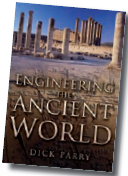
The author describes in some detail major civil engineering works and the historical and military events and trading conditions leading to their construction, and sometimes destruction, going back many thousands of years.
The result is a fascinating introduction to early history and civil engineering covering civilizations in the UK, Mesopotamia and the Mediterranean, and the Egyptian, Persian, Greek, Roman, Chinese and Inca empires, with further examples from Africa, Pakistan the USA and Ireland.
The works described include canals, river diversions, harbours, tunnels, fixed and floating bridges, roads, cities, defensive structures, palaces, tombs and temples. Descriptions are taken from biblical sources, classical writers, archaeological investigations, contemporary writings and surviving evidence. In many cases these sources provide contradictory evidence which is presented and analysed. Some theories and modern experiments carried out to show how massive blocks of stone, for such structures as Stonehenge and the pyramids, might have been transported and positioned are also described.
Many readers will be familiar with the works of the Egyptians, Greeks, Persians, Chinese and Romans and will have marvelled at their size and durability and the organisation and management required for their completion. Parry provides detailed descriptions of construction details and materials which demonstrate the exceptional engineering skills which were available to these early peoples and explain the durability of their work.
Less familiar will be some of the other structures quoted by Parry such as, ‘As early as 9000 BC the builders of Golbekli Tepe in Turkey, close to the Syrian border, constructed circular enclosures bounded by stone walls intersected at intervals by vertical limestone slabs or pillars, quarried nearby, up to 7m high and weighing up to 50 tonnes.’
There is also the Nile to Red Sea canal, which was completed by the Persian King Darius around 500 BC. ‘The main canal was a huge exercise in excavation, with a width of 100 m and a depth of 8 m.’
A vast amount of numeric data is given in the book in the form of dates and dimensions. Unfortunately there are a few errors in this data such as BC and AD sometimes mixed up, some units incorrect and a decimal point missing.
These errors will be evident to many readers but need to be corrected in any future editions.
Students of civil engineering, history and archaeology will find much of interest in this book.
These reviews can be read with all other review in the online version of the journal at www.civilengineering-ice.com. Reviews of other books received in the past three months are as follows.
Design of movable weirs and storm surge barriers by InCom Working Group 26, published by PIANC, 2006, reviewed by Graham Tombs.
NEW BOOKS
The ICE's bookshop in London carries one of the most comprehensive ranges of civil engineering books in the world. New books received in the past three months are as follows.
A guide to health and safety prosecutions
Michael Appleby and Gerard Forlin £35·00
Risk and variability in geotechnical engineering
Michael Hicks (ed.) £55·00
Civil engineering heritage Scotland—the Lowlands and Borders
Roland Paxton and Jim Shipway (eds) £17·50
Civil engineering heritage Scotland—Highlands and Islands
Roland Paxton and Jim Shipway (eds) £17·50
Civil engineering heritage Scotland (2 volume set)
Roland Paxton and Jim Shipway (eds) £30·00
Understanding the CDM Regulations
Owen Griffiths £24·99
Beginning Autocad 2007
Bob McFarlane £19·99
From trackways to motorways
Hugh Davies £17·99
Masonry arch bridges
Leo McKibbins, Clive Melbourne, Nisar Sawar and Carlos Sicilla Gaillard £120·00
Sustainability at the cutting edge
Peter Smith £27·99
People and culture in construction
Andrew Dainty, Stuart Green and Barbara Bagilhole £75·00
CDM Regulations 2007; Approved Code of Practice
Health and Safety Commission £15·00
The bookshop is in the ICE foyer, I Great George Street, London SWIP 3AA and is open from 9.30am to 5.00 pm, Monday to Friday. Books can also be ordered by calling +44 (0)20 7665 2462, emailing orders@thomastelford.com or by visiting www.thomastelford.com or the bookshop section of www.ice.org.uk
ICE review
A review of recent and forthcoming developments at the Institution of Civil Engineers by ICE director of communications and marketing Anne Moir. For further information please contact the Communications Office on +44 (0)20 7665 2150 or visit the ICE website at www.ice.org.uk
ICE / IMechE initiatives
An in-depth study into the possibility of convergence between the Institution of Civil Engineers (ICE) and the Institution of Mechanical Engineers (IMechE) led to a decision in March 2007 to stick with joint initiatives on topics where clear benefit can be identified and achieved for respective memberships.
The two institutions have already successfully worked together on topics such as waste, energy and transport. IMechE's trustee board had sought a more proactive approach towards convergence, but ICE Council preferred a more limited partnership.
ICE president Quentin Leiper said: ‘The outcome from our work with IMechE has shown us that we can reap the benefits of working together. We will continue to work in partnership with IMechE, other engineering institutions and other bodies in the built environment. It has been a very productive exercise and brought us closer to our sister institution.’
The announcement came just after the launch of the first joint project (see below). The second project, a report entitled Coast Flooding—Industry Risk and Resilience is planned for release later this year.
IMechE president Alec Osborn added: ‘We are naturally disappointed that more extensive convergence will not be pursued. We will continue to explore where we can increase benefits to members and enhance the reputations of both bodies through working together. The need to speak with a common voice has never been more apparent.’
Waste as a resource
The first joint ICE and IMechE report was launched on 7 March 2007. It advises the UK Government to work more closely with its own departments, local government and the private sector to ensure better use of household and construction waste to reduce dependence on landfill and to save the taxpayer money.
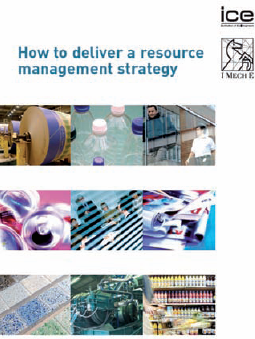
Entitled How to deliver a resource management strategy, the report calls in particular for new infrastructure to enable rubbish to be reprocessed into valuable resources.
ICE and IMechE believe the benefits of a resource management approach include energy generation, reduction of carbon emissions, creation of jobs and infrastructure to benefit the economy, as well as compliance with EU waste targets. It will also save money as the new system will cut down on increasing landfill taxes.
Author Robert Lisney commented: ‘Much of what we call “waste” should instead be considered a resource as it contains materials which can be used again or turned into energy. Our waste report is about getting people to stop thinking of rubbish as a redundant commodity.’
ICE and IMechE want to see a cross-cutting team of experts set up from across the industry and all levels of government. The introduction of an ‘agent’ for the strategic delivery of the new system is also required to influence land-use planning, economic development and finance management.
Brian Robinson, head of energy and climate change at IMechE, added: ‘Using waste as a source of energy and as a resource for industry helps reduce carbon, reduces costs, contributes to the development of de-centralised, local energy and could go a long way to fill the so-called energy gap.’
The report can be downloaded from the ICE website at http://www.ice.org.uk/downloads//Resource%20management%20report%20010307.pdf.
Rewarding the media

Former ICE president Gordon Masterton recently met Toby Gard of Eidos, creator of the popular Lara Croft: Legends computer game. He presented him with a £5000 prize for jointly winning the ICE-sponsored civil engineering category of the Engineering Media Challenge. The latest version of the game features a character called Anaya, a civil engineer working in South America.
The competition was launched by ICE, IMechE, the Royal Academy of Engineering and the Institution of Civil Engineering Surveyors in 2006 to promote engineering through highlighting fictional engineers in a positive light across stage, screen, video games, scripts and in print.
Nominations for the 2007 competition should be sent to mediachallenge@ice.org.uk by 30 June 2007.
More details of the competition can be downloaded from the ICE website at http://www.ice.org.uk/mediachallenge.

