

Discussion
BRIEFING: Civil engineers remain positive about Middle East: by Richard Spragg (November 2006)
Contribution by Richard Graham
I must challenge the statement that ‘experienced engineers’ are less concerned about security than those without experience in the light of their familiarity with the situation ‘on the ground’.
The whole of the Middle East has always been a very sensitive area in which to live and work, never more so than at the present time. This has been almost entirely due to the obvious various religious differences, which look set to continue well into the foreseeable future.
In the light of this fact, I would advise anyone who may be considering taking up a new appointment in this area of the world to forget it until all the political and religious problems have been resolved. It could be a long wait.
P14683: Is the corporation killing engineering excellence?: by Keith Clarke (November 2006)
Contribution by John Franklin
I believe it might have been of assistance if the term ‘engineering excellence’ had been given some definition. I presume we are focusing on ‘better engineering solutions’: those done quicker, with fewer materials and less manpower; with less effect on the local population/activities and the environment, and done safer. I also believe civil engineers being what they are will always be striving for these aspirations no matter what organisational type they work for.
As regards organisational types, I believe there is a significant omission from the statement that 20 years ago our profession was dominated by private partnerships and nationalised industries. The third is the contractor type—some private, the majority corporations—and much of the engineering excellence which has arisen in civil engineering and elsewhere emanates from contractors. Look, for example, at the effect of value engineering over the past 20 years.
Share prices of contractors have only been enhanced from their innovations and lateral thinking. These lead to market leadership and success in winning business through less cost, tripping into more work/turnover and then hopefully more profit.
My last point concerns safety. You cannot buy absolute safety so there will be a defined level of cash to be spent on safety in whatever walk of life. That level depends on what society will accept, and it is a different regime depending on the particular aspect of life. Society accepts 3000 road deaths a year but even has a horror at one hundredth of that on the railways. I believe even now the jury is still out on what is ‘acceptable’ in construction, and hence what has to be spent on safety in civil engineering.
What has to be spent to satisfy society, or to maintain an organisation's good name or record, will be different in many varying scenarios. The effect back on the corporation for instance is particular to the individual circumstances. A bad safety record means more to be spent next time, so for a competitive price this means less profit and lower share price. Overall this means no generalised effect for all corporations at this time.
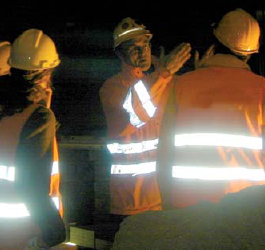
Spending on safety cannot be generalised, particularly as you cannot buy absolute safety
Spending on safety cannot be generalised, particularly as you cannot buy absolute safety
P14569: Management of rural water services in sub-Saharan Africa: by Peter Harvey, Junko Uno and Robert Reed (November 2006)
Contribution by J. Gray
The oldest reference in this paper is 1994 and there are only two from the last century, that is more than six years old. In their 1976 paper entitled Village water supply, Saunders and Warford of the World Bank stated, ‘Aware that benefits of national income growth in many countries of the developing world tend to bypass the poorest elements of society, the World Bank has…given increasing attention to investment programs and policies promising direct befits to lower-income groups.’ What goes around comes around, as some say.
Rural water supplies have been provided for years and, before 1976, on a variety of scales. They have repeatedly been overtaken by impossibly increasing population (many times) and also by war, insurrection, corruption and failure to manage. I hope the conversion to modern management-speak—with little change in content—will achieve something, but fear that unless the above are addressed, nothing much will change for another 30 years.
Many such articles should begin with a history of the provision, without which we are likely to repeat its mistakes.
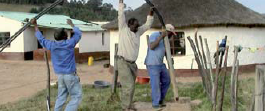
Supplying rural water supplies in developing countries is nothing new, but we risk repeating mistakes if we do not look further back than the past few years
Supplying rural water supplies in developing countries is nothing new, but we risk repeating mistakes if we do not look further back than the past few years
P14278: Strategic risks—thinking about them differently: by Neil Allan and John Davies (November 2006 special issue)
Contribution by Barry Walton
Backtracking from ruinous events, the authors conclude that causes were being signalled early enough to trigger intervention and treatment. They are probably right.
However, I wonder if they have sampled widely enough to ensure that those signals were unique and stuck out from a population of indicators on issues, most of which were overtaken by events or ebbed away?
Accepting the caveat that the event might be but a partial cause of the problem—the case for STRATrisk—the reference to paper shredding no doubt relates to a recent large collapse. It was probable that what hit the news was a symptom of risk inherently accepted in excessively protecting clients; it reflected a strategic position that had created success. Shredding undoubtedly added drama and is of forensic interest, but it is worth reflecting whether, given the circumstances, the decision to shred was smarter than not doing so once an investigation became likely.
Given that UK Government departments have taken to shredding following the Freedom of Information Act, I wonder if the authors also see that as the actions of a ‘troubled company’?
P14444: Water for the world—why is it so difficult?: by John Banyard (May 2006 special issue)
Contribution by Jon Lane
The author's overall premise—that it is inappropriate to impose water technologies and policies from developed countries onto developing countries—is absolutely correct. Indeed, most agencies working in water for development stopped trying to do this years ago. The fact that he still needs to repeat this message indicates that our engineering profession in developed countries has a lot to learn.
On finance for water in developing countries, there are indeed several different published figures. They seem confusing at first sight, but there is a fairly simple breakdown: basic water supply and sanitation for everybody in the world will cost about US$ 10 billion a year for the next 25 years or so—which is a modest sum of money compared to those habitually allocated to water and wastewater in developed countries, as the paper shows. Wastewater treatment for developing countries will cost an order of magnitude more. For those who want to study the figures more deeply, the World Water Council last year published a useful report entitled Costing MDG target 10 on water supply and sanitation (Jeremie Toubkiss, March 2006, ISBN 92-95017-13-7) that analyses the various published figures and the assumptions behind them.
Regarding water and poverty reduction, John Banyard rightly identifies the trend away from sectoral funding to support for poverty reduction. We who work in water for development have so far failed to persuade politicians and economic planners worldwide of the importance of water and sanitation for poverty reduction—that is our fault, not theirs. I commend the ICE and any other UK-based organisations that will help to overcome this lacuna by helping more young engineers to appreciate the wider societal and developmental issues and their relationship to our work in water. The next generation of water engineers must be better communicators than we have been.
Civil engineers have so far failed to persuade politicians and economic planners of the importance of water and sanitation for poverty reduction
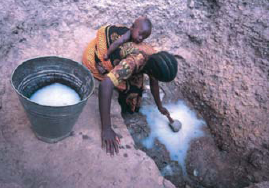
Civil engineers have so far failed to persuade politicians and economic planners of the importance of water and sanitation for poverty reduction
Full versions of these discussions can be read along with all other discussions in the online version of the journal at www.civilengienering-ice.com.
Proceedings
RECENTLY PUBLISHED PAPERS
In addition to Civil Engineering, the ICE Proceedings includes ten specialist journals. Papers and articles published in the most recent issues are listed here. Summaries of all these and other papers and articles published in the past three years can be read free at www.ice.org.uk/journals. ICE members can download any 15 papers published in 2007 for £25 from www.iceknowledge.com
Bridge Engineering
159, No. BE4, December 2006, 147–188
BRIEFING
Eurocodes implementation for highway bridges in the UK
S. Chakrabarti and S. Garden

PAPERS
GPS measurements on the London Millennium Bridge
G. W. Roberts, X. Meng, C. J. Brown and P. Dallard
An environmental comparison of bridge forms
D. Collings
Recent concrete, self-anchored suspension bridges in China
Z. Zhang, Q.-J. Teng and W.-L. Qiu
Civil Engineering Special Issue
159, No. CESI2, November 2006, 1–64
Enterprise risk management and civil engineering
C. Lewin

Strategic risks—thinking about them differently
N. Allan and J. Davis
Experience of risk management
P. Thompson and N. Thompson
Managing changing risks to infrastructure systems
J. Hall, R. Dawson, L. Manning, M. Walkden, M. Dickson and P. Sayers
Geohazard risk management for infrastructure projects
M. Free, S. Anderson, C. Milloy and J. Mian
An observational model for managing risk
J. Le Masurier, D. Blockley and D. Muir Wood
A partnership approach to managing flood risk
M. Crossman, D. Richardson and J. Milne
What causes accidents?
A. Gibb, R. Haslam, D. Gyi, S. Hide and R. Duff
Risk perception and construction safety
G. MacDonald
Managing safety risk through whole-life competency
J. Carpenter
Professional indemnity insurance—a better way
J. Baster and M. Davis
Construction Materials
159, No. CM3, August 2006, 93–137
GRP offshore: applications and design for fire
J. M. Davies and P. Currie
Effect of additives on performance of asphalt mixtures
K. Kanitpong, D.-W. Cho and H. Bahia
Behaviour of interlocking mortarless block masonry
M. S. Jaafar, A. H. Alwathaf, W. A. Thanoon, J. Noorzaei and M. R. Abdulkadir
Optimum utilisation of FGD waste in blended binders
P. S. Mangat, J. M. Khatib and L. Wright
Chloride ion penetration in bridge deck concrete
H. A. Ghanem, S. Phelan, S. Senadheera and Y. A. Daou
Engineering Sustainability
159, No. ES4, December 2006, 133–1
BRIEFINGS
New ICE Sustainability Protocol
T. Parry

From ‘securing’ to ‘procuring’ our future
Q. Leiper and C. Pepper
PAPERS
Hydroelectric power without water storage
T. L. Shaw
Widening engineering horizons: addressing the complexity of sustainable development
R. A. Fenner, C. M. Ainger, H. J. Cruickshank and P. M. Guthrie
Sustainable energy? A feasibility study for Eastside, Birmingham, UK
D. V. L. Hunt, I. Jefferson, L. Jankovic and K. Hunot
Decision-support tools and the indigenous paradigm
T. K. K. B. Morgan
Geotechnical Engineering
159, No. GE1, January 2007, 1–59
PAPERS
Volume loss experienced on open-face London Clay tunnels
P. S. Dimmock and R. J. Mair

Estimating volume loss for open-face tunnels in London Clay
P. S. Dimmock and R. J. Mair
Analytical earth thrust on walls with bilinear backface
V. R. Greco
Performance of push-in pressure cells in overconsolidated clay
D. J. Richards, J. Clark, W. Powrie and G. Heymann
Comparing dynamic and static test results of bored piles
M. Long
DISCUSSION
Assessing the contribution of vegetation to slope stability
J. R. Greenwood, J. E. Norris and J. Wint
Design of braced excavations to limit ground movements
A. S. Osman and M. D. Bolton
Maritime Engineering
159, No. MA4, December 2006, 137–182
Specifying seawall crest levels using a probabilistic method
M. T. Reis, T. S. Hedges, A. Williams and K. Keating
The interfacial processes on an entrapped saline wedge
G. A. Hamill, B. Donnelly, D. J. Robinson, P. A. Mackinnon and H. T. Johnston
Cause of beach lowering at Dunbar, Eastern Scotland, UK
N. I. Pontee
MEETING REPORTS
Emerging technologies for monitoring the coastal zone
A. S. Spratt
Inaugural coastal lecture of the UK Centre for Coastal Processes, Engineering and Management
R. J. Nicholls
DISCUSSION
Modelling circulation and vertical mixing in estuaries
W.-C. Liu
Municipal Engineer
159, No. ME4, December 2006, 181–264
PAPERS
Adaptation and mitigation in urban areas: synergies and conflicts
D. McEvoy, S. Lindley and J. Handley
Carbon reduction strategies at University of East Anglia, UK
K. Tovey and C. H. Turner
Reducing carbon dioxide emissions from UK road transport
B. J. Simpson
Assessing the impact of transport interventions on air quality
J. Pitt and G. Jones
Impact of transport policies on energy use and emissions
S. M. Nepal
Impact of climate change on London's transport network
B. P. Arkell and G. J. C. Darch
The environmental importance of front gardens
D. A. Alexander
Methods for assessing risk from climate hazards in urban areas
J. Gwilliam, M. Fedeski, S. Lindley, N. Theuray and J. Handley
DISCUSSION
Implementing Planning Policy Statement 6
B. J. Simpson
Structures and Buildings
159, No. SB6, December 2006, 307–368
PAPERS
Strengthening cast iron using FRP composites
S. Moy and D. Lillistone

Shear and normal interaction stresses via strain–moment plots
W. M. Sebastian
Theoretical treatment of crowd–structure interaction dynamics
N. A. Alexander
Improving flexural ductility of high-strength concrete beams
A. K. H. Kwan, S. L. Chau and F. T. K. Au
New algorithm for fixed-angle softened-truss model
J.-Y. Lee and M. Y. Mansour
DISCUSSION
Role of cement content in specifications for concrete durability: aggregate type influences
R. K. Dhir, M. J. McCarthy, P. A. J. Tittle and S. Zhou
Transport
160, No. TR1, February 2007, 1–46
Lateral position of traffic negotiating horizontal bends
B. Gunay and D. Woodward
Traffic-flow impact of toll booths on M50 motorway, Dublin
M. Rogers and S. Darcy
Safety and cost-effectiveness of clear zones in Iran
E. Ayati and M. Shahidian
Improving a gypsum sand roadbed soil by increased compaction
S. S. Razouki and A. N. Ibrahim
DISCUSSION
A decision model for junction improvement schemes
V. Vassou, A. Labib and M. Roberts
Waste and Resource Management
159, No. WR2, May 2006, 53–97
PAPERS
Use of waste tyre bales to construct a flood embankment
M. W. Bo and A. Yarde
Architect and contractor attitudes to waste minimisation
M. Osmani, J. Glass and A. Price
Development of the Waste Procurement Toolkit
R. J. Couth, J. Enright, J. Snape, C. Whiteman and J. N. Davies
Using recycled construction waste as aggregates for paving blocks
D. Chan and C. S. Poon
Waste and resource management: challenges through to 2010—part 2
Water Management
159, No. WM4, December 2006, 209–268
PAPERS
Reducing uncertainty in the hydraulic analysis of canals
R. W. Dun
Prediction of pollutant movement in a regulated large river
C.-S. Rim, J.-T. Lee, S.-E. Yoon and J.-K. Shin
Conveyance estimation for channels with emergent vegetation
C. S. James and M. J. Makoa
Electronic verification of flowmeters in the water industry
R. C. Baker, P. I. Moore and A. Thomas
Local scour due to free overfall jet
M. Ghodsian, B. Melville and D. Tajkarimi
Personal on-line subscriptions to specialist Proceedings journals start from £11 a year for members. Print subscriptions start at £21 a year and include full on-line access to the current and past three years' issues. Please call +44 (0)20 7665 2227, email subs@ice.org.uk or visit the ICE virtual library at www.iceknowledge.com. At the virtual library members can also download any 15 Proceedings papers published this year for £25 or any paper published over six years ago at £5 each.
Request for papers
All Proceedings journals rely entirely on papers sent in by civil engineers and related professionals, researchers, academics and students. Papers should be around 2000 to 5000 words long, in good English and with adequate illustrations and references. Project papers are particularly welcome. All papers sent in will be assessed on merit and not on the status of the author. Simply email your text and images together with your contact details to journals@ice.org.uk.
For full guidelines on writing a paper please visit www.thomastelford.com/journals or contact the editor Simon Fullalove on 020 7665 2448 or editor@ice.org.uk.
The following is a list of referees who have reviewed papers for Civil Engineering between 1 November 2005 and 1 November 2006. The Institution is very grateful for their assistance. If you would like to be considered as a referee, please contact the journal secretary Ben Ramster on 020 7665 2242 or e-mail ben.ramster@ice.org.uk
| J. Adams | R. Dawson | I. Hunter | R. Morgan | A. Sloan |
| G. Amblin | M. Dyer | Y. Hurol | M. Murray | A. Smith |
| G. Amiri | M. Chrimes | R. Huxford | D. Nethercott | D. Smith |
| J. Anderson | R. Cragg | P. Irawan | R. Nicholls | P. Smith |
| C. Arya | P. Cross-Rudkin | K. Johnson | T. Oakes | I. Smout |
| B. Attoh-Okine | A. Cunha | P. Jowitt | D. Oehlers | R. Spoors |
| S. Austin | R. Dawson | A. Kar | A. Osman | M. Sterling |
| A. Bardill | T. Day | A. Kwan | B. Otter | J. Surtees |
| M. Barnes | M. Dyer | D. Lambert | R. Paxton | J. Taylor |
| B. Barton | A. Eadon | D. Lamont | A. Pickles | W. Tizani |
| K. Baskaran | M. Emsley | R. Lark | M. Phillips | N. Thom |
| R. Brown | M. Escarameia | A. Mann | R. Powell | K. Thomas |
| R. Buckby | R. Fernie | J. Le Masurier | D. Richmond- | A. Vignoli |
| J. Burland | S. Fullalove | G. MacDonald | Coggan | Y. Vimalanathan |
| S. Caccavone | N. Fung | W. Manners | J. Sanjayan | F. Wainwright |
| T. Caccavone | M. Garnham | D. Mara | N. Sandilands | A. Warren |
| S. Cartney | M. Grant | I. May | I. Scott | G. Winch |
| B. Clarke | B. Hamer | C. McAleenan | M. Shahin | D. Wolfendale |
| V. Chandra | I. Hamilton | M. McMarthy | C. Sherwood | G. Wolters |
| J. Chapman | M. Harrison | R. McWilliam | B. Simpson | J. Wood |
| M. Cullen | P. Harvey | R. Melchers | I. Scott | M. Zhang |
| J. Davies | E. Hepper | J. Mills | B. Sinclair | P. Zheng |
Books
REVIEWS
An inconvenient truth—the planetary emergency of global warming and what we can do about it: by Al Gore, published by Bloomsbury Publishing 2006, reviewed by Graham Tombs

Al Gore's first book, Earth in the balance, was written about 17 years ago. Soon afterwards the author was elected vice-president of the USA and subsequently served eight years as a member of the Clinton–Gore administration. During this period he travelled extensively, including visits to the polar regions and discussions with leading international scientists, researching the scientific evidence of man's activities causing global warming and the consequences if these activities were left unchecked.
He experienced at first hand the fierce resistance in the US congress to the administration's new policies aimed at averting a climate crisis and watched in dismay the even greater resistance after the Republicans gained a majority in congress in 1994. He has given numerous lectures on the subject and a film has been made with the same title as this book.
The author lucidly explains in simple terms the physical and chemical processes which take place when carbon dioxide is released into the atmosphere and, in addition, the adverse effect on living organisms in the oceans. He differentiates between the natural releases and man-made releases of carbon dioxide and explains the wide variations of the former over the annual cycle.
Examples are given of the evidence of climate change over millennia derived from analysis of ice cores and recent changes taking place not only to the ice in the Antarctic, Arctic and Greenland but also to the other major glaciers of the world and to permafrost in the USA and Russia.
He explains how the research demonstrates that man-made pollution leads to the inevitable conclusion of global warming and climate change which will cause significant rise in sea level due to melting ice and reduction in the flows in the major rivers rising in the Himalayan region. The former will lead to inundation of land in many parts of the world now occupied by hundreds of millions of people and the latter to chronic water shortages throughout Asia.
This is an excellent book which provides a captivating insight into a very serious subject.
Standard method of detailing structural concrete—a manual for best practice (3rd ed.): written and published by the Institution of Structural Engineers, 2006, reviewed by Mike Byfield, University of Southampton
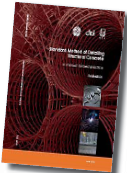
The third edition of this comprehensive publication from the Institution of Structural Engineers is suitable as a day-to-day reference manual for practising structural engineers, as well as providing a useful introduction to detailing for undergraduates engaged in project work.
It provides an introduction to the basic terminology and conventions related to reinforced-concrete detailing and scheduling. Importantly, it contains best practice examples for a wide range of common structural elements, ranging from staircases to precast and prestressed concrete elements.
The comprehensive nature of the book makes it a useful handbook, alongside other well-known industry standard publications such as the Steel Designers' Manual. While on the expensive side for most undergraduates, it is a book well worth including on reading lists for design- and project-based university modules.
The third edition includes the effects of Eurocode 2 on detailing practice and updates to account for the increased use of off-site fabrication in construction. It is recommended.
These reviews can be read with all other reviews in the online version of the journal at www.civilengineering-ice.com. Reviews of other books received in the past three months are as follows.
Engineering the ancient world: by Dick Parry, published by Sutton Publishing Limited, 2005, reviewed by Graham Tombs.
NEW BOOKS
The ICE's bookshop in London carries one of the most comprehensive ranges of civil engineering books in the world. New books received in the past three months are as follows.
Communication structures
Brian Smith £60.00
Structural foundation designers' manual (2nd ed.)
Bill Curtin et al., revised by Norman Seward £89.50
Designers' guide to EN 1991-1-2, EN 1992-1-2, EN 1993-1-2 and EN 1994-1-2
Tom Lennon, David Moore, Yong Wang and Colin Bailey £55.00
Designers' guide to EN 1992-2 Eurocode 2: Design of concrete structures. Part 2: concrete bridges
Chris Hendy and David Smith £85.00
Designer's guide to EN 1991-1-4 Eurocode 1: Actions on structures, general actions parts 1–4. Wind actions
Nicholas Cook £50.00
Future flooding and coastal erosion risks
Colin Thorne, Edward Evans and Edmund Penning-Rowsell £95.00
Graphics for urban design
Bally Meeda, Neil Parkyn and David Walton £35.00
Illustrated building pocket book
Roxanna McDonald £19.99
Ove Arup: master builder of the twentieth century
Peter Jones £25.00
Pompeii
Robert Harris £6.99
Procurement, tendering and contract administration
Mark Hackett, Ian Robinson and Gary Statham £24.99
Project management, planning and control (5th ed.)
Albert Lester £39.99
Soil liquefaction, a critical state approach
Mike Jefferies and Ken Been £80.00
Spon's architects' and builders' price book 2007
Davis Langdon (ed.) £135.00
Spon's civil engineering and highways price book 2007
Davis Langdon (ed.) £140.00
Spon's mechanical and electrical services price book 2007
Davis Langdon (ed.) £130.00
The bookshop is in the ICE foyer, 1 Great George Street, London SW1P 3AA and is open from 9.30 am to 5.00 pm, Monday to Friday. Books can also be ordered by calling +44 (0)20 7665 2462, emailing orders@thomastelford.com or by visiting www.thomastelford.com or the bookshop section of www.ice.org.uk
ICE review
A review of recent and forthcoming developments at the Institution of Civil Engineers by ICE director of communications and marketing Anne Moir. For further information please contact the Communications Office on +44 (0)20 7665 2150 or visit the ICE website at www.ice.org.uk
Solving UK water shortage

ICE's 2006 The state of the nation report called on UK water companies to reuse more effluent as drinking water as one radical solution to combat the country's long-term water shortage crisis.
ICE water board chairman John Lawson commented, ‘Parts of the UK are experiencing long-term water shortages, so we need a range of solutions to keep the water running. Effluent water reuse is still a relatively untapped way of providing drinking water to meet growing long-term needs.’
The report also highlighted that the rising demand for water, with cutbacks in existing supplies, has led to increased water provision needs in the UK. ICE called for a step change in the current level of investment in water infrastructure, which could lead to a 20% price increase for households—putting UK water charges in line with European cities like Frankfurt and Brussels. Current water infrastructure will benefit from this funding, including increases in the rate of replacement of old water mains to reduce leakage, especially in London.
The report can be downloaded from the ICE website at http://www.ice.org.uk/downloads//State%20of%20the%20Nation%20report%202006.pdf
Influencing UK Government
ICE has given a record three oral submissions to British Government parliamentary select committees in 2006.
The latest was on 22 November to the Environment, Food and Rural Affairs Select Committee.
ICE director of engineering, policy and innovation Jon Prichard and senior policy executive Seamus Heffernan answered questions about ICE's written submission of evidence on its inquiry entitled ‘Climate change: the ‘citizen's agenda'” on how to encourage the public to become more environmentally focused.
For more information visit: www.parliament.uk/parliamentary_committees/environment__food_and_rural_affairs/efra_climate_change__citizen_s_agenda.cfm
High-speed rail

ICE recently partnered with the University of Birmingham to develop the report Which way?, an assessment of the technical options for a high-speed railway in the UK. Launched on 1 December, it was part of ICE's continuing campaign to promote the potential for high-speed rail in the UK.
Earlier in 2006, ICE held a major high-speed rail conference and, in December 2005, launched its first high-speed-rail report entitled The missing link.
The decision to write Which way? arose from discussions ICE held with the UK Department for Transport after publication of the first report.
The report can be downloaded from the ICE website at www.ice.org.uk/downloads/Which%20way(2).pdf
Road pricing
ICE has brought together technical experts from a number of UK engineering and transportation organisations to form the Green Light Group. This body is seeking to promote good practice for any road-pricing scheme brought in to the UK.
The group was launched on 15 December with the publication of its first report examining the technical options for road-pricing schemes. This will be the first of a series of regular reports seeking to increase the profile of engineering solutions to politicians.
The report can be downloaded from the ICE website at fttp://www.ice.org.uk/downloads//GLG%20can%20the%20technology%20cope.pdf
Flushed Away game

ICE, Dreamworks and Aardman launched a new educational board game in November highlighting the importance of maths and science to civil engineering among 5–7-year-olds. The game is based on the animated film Flushed Away.
The Flushed Away Educational Resource aims to develop players' numeracy and problem-solving skills—key civil engineering concepts—as they help the film's characters Roddy and Rita move around the board and build a recycled sewer world to live in. Players are encouraged to reuse items in their homes to construct a recycled London.
ICE president Quentin Leiper commented, ‘It's great to see a link between the Flushed Away game and the importance of civil engineering. To get youngsters thinking about problem solving at an early age is a good way of creating tomorrow's engineers.’
The game, developed with Guy Fox Ltd and backed by the UK Department of Education and Skills as a resource for the key stage 1 national curriculum, will be distributed free of charge to 10 000 UK primary school teachers.
The game can be ordered by primary school teachers by visiting www.ice.org.uk/flushed_away.

