


Why face-to-face still matters
It is the perfect time in the Covid-19 pandemic to reassess our working locations and to recognise whether this is a short-term change, or whether we will be changed forever by the circumstances we have all faced over the past year. Civil engineers have proven to be particularly adaptable, but the profession has changed.
This book is an excellent study into the historic development of cities and working locations, and the advantages they brought. The authors recognise that we have been on a path to further develop our working style, but that Covid-19 has acted as an accelerant to change what was already recognised as needing to adjust.
We also need to recognise that while civil engineers who make their living through ‘thought work’ may be entirely flexible in their location, others may not be in the same position. As we consider how we will reform and regroup, with the effects of the pandemic being adopted as the ‘new normal’, we are all asking how the future will look.
There is an interesting discussion in the book about how much social contact is required within large companies to embed messaging. While a type of self-serving requirement, this communication reduces hours left available for actual chargeable or deliverable work. For many of us that has been a repeated tension.
I found the book thought provoking and insightful. As with all major events, the pandemic will remain long in our memory and affect the decisions we and businesses make in the future. As it states, we are all social animals, we need contact and even the marvellous communications technologies do not quite cut it. I return to thinking of the words of a past poet John Donne, ‘No man is an island entire of itself’.
Large-scale construction project management
Covering contractual forms NEC, Fidic and JCT across the broad pillars of cost, risk and change, the aspiration of the author is to facilitate improvement in the management and control of large-scale construction projects. This continues to be a hot topic.
The contract forms and the balance of risk between employers and contractors is well covered. In respect of the NEC suite, there is a useful history to its development and an explanation of each core clause. Fidic and JCT are also covered, thus helping those navigating between contract forms. There are many tables that allow readers to understand, at a glance, the different approaches under each contract, such as entitlement to extension of time.
The chapter on integrated project control provides a clear framework for setting up a project for success. The broadening approach of incorporating time, cost, risk, change, contract management and progress reporting into the umbrella of project control is very well articulated.
This is a substantial, in-depth piece of work including establishing dispute avoidance from the start and, while targeted at students, is also useful to professional practitioners, particularly those moving between contract forms.
Beaches and coasts (2nd ed.)
This is a comprehensive book: the more I read, the more engrossed I became in the subject. It is an excellent reference manual and a good source document to build an understanding of the geomorphological processes associated with coast and beach formations.
Civil engineers are well aware of climate change impacts and how they affect coastal communities. However, solutions to protect vulnerable coastal locations and people cannot be found without a solid understanding of the coastline and its systems. This book is a sound resource to ensure more sustainable and viable solutions are achieved.
What impressed me about this book was the depth of learning as well as its ability to get complex concepts across though clear explanation, diagrams and really good photographs. None of this clarity has compromised the depth of explanation and the really sound science behind the concepts.
This is a book for all professionals working in the vicinity of our coastlines, including students, clients, consultants and contractors. It achieves the requirement to educate and inform without compromise.
Designing timber structures
This book provides a comprehensive introduction to designing and engineering with timber. It is divided into easy-to-read sections with plenty of examples, pictures and charts to ensure your timber designs and detailing will last.
The introduction includes well-reasoned arguments to the sustainable credentials of using the right timber for the right project. Material properties, strength, grading and durability considerations are provided for UK timber products and species.
The sections on design take readers through the story of design, from simple timber construction to laminated designs. Worked examples of calculations supplement the text and explanatory figures make it straightforward to understand.
Detailed design considerations covered include acoustic and fire detailing as well as aesthetic and construction details. Maintenance and considerations of alterations of existing buildings are also included.
This book is obviously suited for anyone who wishes to work with timber. However, it is also a good guide for those considering alternative material usage to enable informed decisions about project sustainability.
Earthquake design practice for buildings (4th ed.)
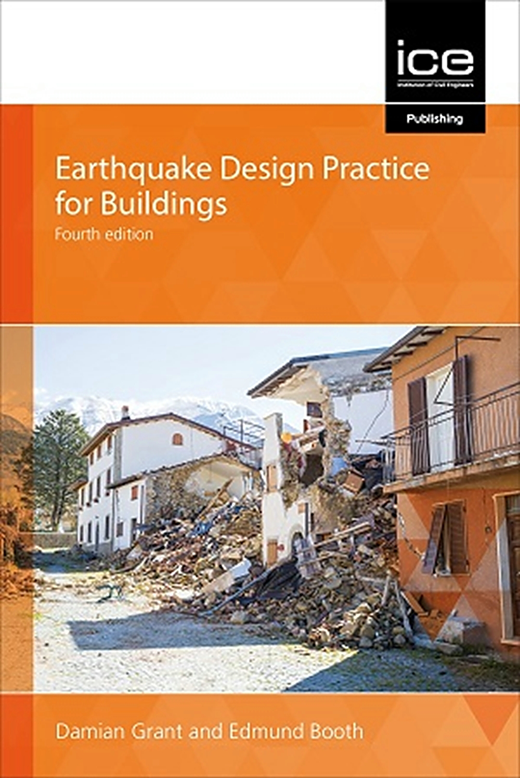
This new edition provides the latest knowledge of earthquake engineering for civil engineering designers, especially those engaged on international projects. It introduces the seismic design codes in different countries, including US standards, Eurocode 8, and Indian and Chinese codes. It also explains the latest developments in performance-based seismic design.
The book is a very comprehensive reference, with new sections on non-structural components and seismic-protective technologies. The latest supplemental damping technologies are also included, which are particularly suitable for structural design in high-seismicity zones.
In addition to seismic design engineers, this excellent, practical and easy-to-understand book will also be suitable for students new to earthquake engineering.
Fire performance of thin-walled steel structures
Thin-walled or light-gauge steel is increasingly being used as the primary load-bearing structure in low- and mid-rise buildings due to its advantages, such as high strength-to-weight ratio, easier and faster construction, recyclability, reduced energy consumption and emissions.
However, structural design of thin-walled members and systems is challenging due to the complex cross-sectional profiles, failure modes and connection details, not to mention its design in fire. This book starts from the practical applications of thin-walled steel structures in terms of different structural systems and recent innovations. It then focuses on the fire-test-correlated analysis methods for thin-walled steel structures.
Their behaviours are further explained in detail, from fundamental material properties to the level of structural members and then structural systems. Readers will gain the knowledge of key parameters of the fire resistance of thin-walled steel systems and the methods to enhance their resistance.
The book contains simplified calculation methods and the latest developments in evaluating temperatures and load-bearing capacities of thin-walled steel members, in particular in terms of robustness and accuracy. It is definitely a useful tool for researchers and fire engineers working with thin-walled steel structures.
Designing and constructing prestressed bridges
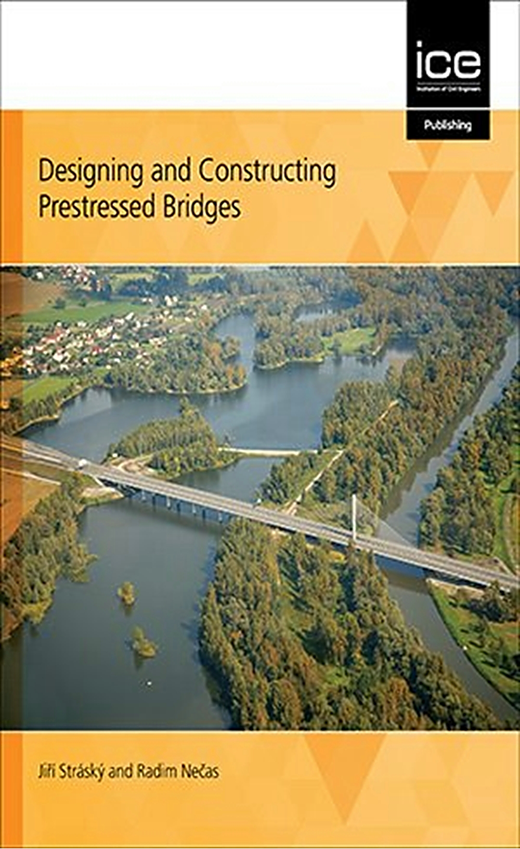
This voluminous book serves not only as an engineering textbook but also as a design roadmap.
It takes readers through the process of prestressed bridge design, from conceptualisation of structural behaviour to static and dynamic analysis of design options to produce aesthetically pleasing structures that seamlessly integrate with the landscape.
There is a good balance of cross-section details and photographs to enhance understanding. Special references are occasionally and appropriately made to more detailed leading textbooks by other authors.
Overall, the book is an excellent text for the working library of the professional engineer.
Structural analysis of multi-storey buildings
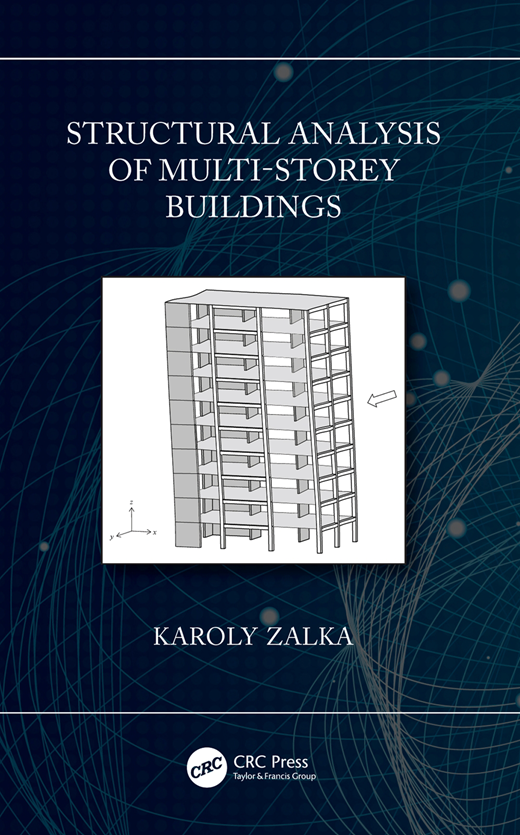
The insidious use of software tools for carrying out structural analysis right from undergraduate level has deprived students of developing the skill and confidence to carry out simple hand calculations – to be designers rather than computer operators.
The second edition of this book is a continuation of the author’s attempt to alleviate the situation. The book equips readers with simplified tools that achieve approximate but reasonably dependable results for preliminary analysis and as a validation tool for complex computer analysis. This is done by approximating the structure as a continuum and using closed-form solutions that can be easily applied by practising engineers.
The book takes the reader from the part to the whole through the various analysis parameters that need to be checked in a rigorous, comprehensive manner. A set of solved examples and worksheet templates are provided to enable readers to carry out such approximate analyses.
This book should be required reading for all undergraduate students of civil engineering interested in pursuing a career in structural engineering.
Structural restoration of masonry monuments: arches, domes and walls
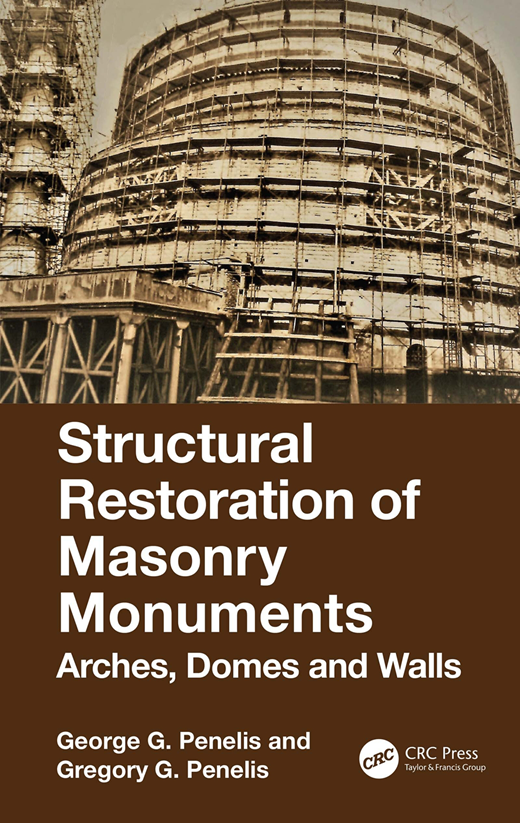
In the past two decades, earthquakes have damaged or destroyed a significant stock of historical buildings across the world. Any good, new literature for securing masonry monuments through conservation, restoration and seismic retrofitting is thus most welcome.
The authors have worked extensively in the field of structural restoration of many important projects in seismic regions worldwide, and the book reflects their dual expertise as practitioner and academic.
The first few chapters of the well-structured book focus on the evaluation of an existing masonry monument and discuss its construction technologies and materials. The book then dives into the structural mechanics, analysis and design of masonry buildings, especially for seismic loads. The latter part deals with a palette of options available for restoration, and the last chapter on case studies is particularly interesting.
The book is very strongly recommended for anyone involved in seismic conservation and restoration of masonry buildings, especially in seismic regions.
Historic construction and conservation: materials, systems and damage
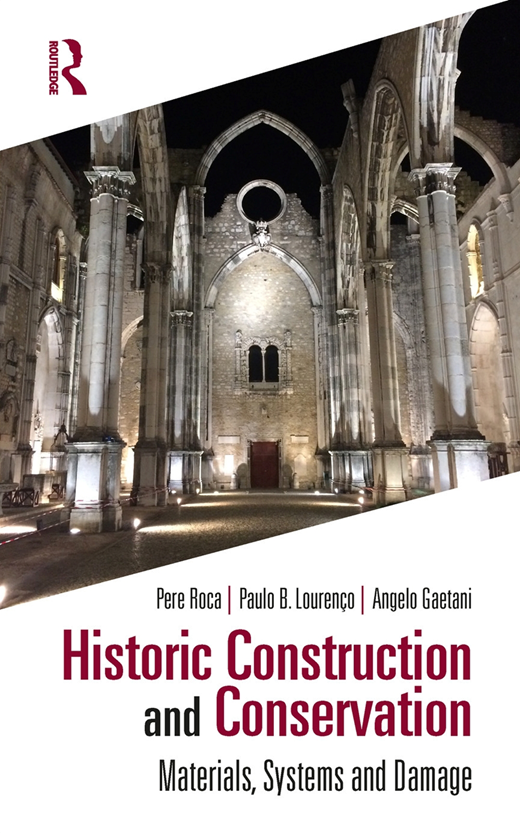
The book has emerged from the lectures of a much-feted year-long course on structural analysis of monuments and historical constructions by the first two authors. It takes the reader through a comprehensive journey that begins with a brief history of conservation strategies and guiding principles across centuries.
It then lays bare an exhaustive toolkit for anyone aspiring to practise structural conservation, from structural concepts to analysis methodologies, and from material behaviour to construction practice.
The book is replete with interesting examples of conservation in diverse materials from around the world, and is richly annotated with sketches and photographs. Through painstaking and in-depth explanation of structural behaviour at the component and system level, the authors have made the subject very accessible.
This is an extremely informative and educative book, a must-have for architects, engineers and building construction professionals involved in historical buildings.
Sports fields: design, construction and maintenance (3rd ed.)
This book concentrates on sport surface construction and maintenance, from planting grass and soil science through to mowing and watering. It explores all sports field types, from elite pitches to leisure and multi-purpose surfaces, and contrasts natural versus synthetic surfaces.
Throughout there are diagrams, photographs and examples to highlight the key issues, including the bugs and creatures that could ruin the hard work done in the design and construction stages. Regardless of size or shape, there is a need to combine durability and multiple uses.
The book explains how traction, hardness and evenness are crucial to player performance. It is clear that paying attention to the small details will result in a safe playing surface for players and a safe surrounding for the spectators – both are essential.
The third edition brings everything up to date with how wireless technology can help monitor and manage the ‘perfect pitch’. It also covers those important presentational stripes and curves seen on the pitch.
This is a textbook for sports field development, from concept to delivery.
NEW BOOKS
The ICE Library maintains one of the most comprehensive collections of civil engineering books in the world, including all titles from ICE Publishing (shown in bold below). New books acquired in the past 3 months include the following (* indicates e-book only).
| A practical course in advanced structural design* | T Huff | £89.99 |
| Advanced numerical modelling of wave structure interaction* | D Kelly et al. (eds) | £140.00 |
| Assessing the impacts of construction-induced ground movement on framed buildings – CIRIA C796 | J Schoor et al. | £80.00 |
| Bridge maintenance, safety, management, life-cycle sustainability and innovations – IABMAS 2020 | H Yokota and D Frangopol (eds) | £345.00 |
| Building procurement (3rd ed.) | R Morledge et al. | £54.95 |
| Communicating construction: insight, experience and best practice* | L Mlae and P Norton (eds) | £99.99 |
| Computer vision for structural dynamics and health monitoring* | D Feng and M Feng | £107.00 |
| Concrete gravity and arch dams on rock foundation* | V Bronstein et al. | £160.00 |
| Construction cost estimating | L Holm and J Schaufelberger | £66.99 |
| Construction law (13th ed.) | J Uff | £32.95 |
| Construction project monitoring and evaluation: an integrated approach* | C Tengan et al. | £135.00 |
| CPD in the built environment* | G Watts and N Watts | £36.99 |
| Cross laminated timber: a design stage primer | N Crawley | £40.00 |
| Cycling for sustainable cities* | R Buehler and J Pucher (eds.) | £26.00 |
| Designing a safer built environment: a complete guide to the management of design risk | J Carpenter | £60.00 |
| Eco-design of buildings and infrastructure: developments in the period 2016–2020 | B Peuportier et al. (eds) | £170.00 |
| Environmental challenges in civil engineering* | Z Zembaty et al. (eds) | £129.99 |
| Fire resistance of light steel framing – SCI P424 | R Lawson and A Way | £60.00 |
| Geomechanical behaviors of bimrocks | W Yu | £92.99 |
| Geotechnics of roads: advanced analysis and modeling | B Caicedo | £120.00 |
| Innovating construction law: towards the digital age | J Mason | £42.99 |
| Intermediate offshore foundations | S Kay et al. | £100.00 |
| Jetties and wharfs | Crow | £200.00 |
| Leadership in the construction industry: developing authentic leaders in a dynamic world | G Ofori and S Toor | £48.99 |
| Megaproject leaders: reflections on personal life stories | N Drouin et al. (eds) | £105.00 |
| Mindful safety: a multi-level approach to improving safety culture and performance | C Langer | £74.99 |
| Non-destructive in situ strength assessment of concrete | D Breysse and J Balayssac (eds) | £109.99 |
| Open channel hydraulics (2nd ed.) | A Akan and S Iyer | £91.95 |
| Piling 2020 | K Higgins et al. (eds) | £120.00 |
| Professional ethics in construction and surveying* | G Watts et al. | £112.00 |
| Reliability and safety of cable-supported bridges* | N Lu et al. (eds) | £89.99 |
| Safety leadership: a different, doable and directed approach to operational improvements | R J de Boer | £49.99 |
| Scour manual: current-related erosion (2nd ed.) | G Hoffmans and H Verheij (eds) | £115.00 |
| Small projects handbook (2nd ed.) | N Ostime | £35.00 |
| Soft clay engineering and ground improvement* | J Ameratunga et al. | £120.00 |
| Soil nailing: a practical guide* | R Cheung and K Ho | £99.99 |
| Structural renovation of buildings: methods, details, and design examples (2nd ed.) | A Newman | £73.99 |
| The future of modular architecture | D Wallance | £120.00 |
| Underwater inspection and repair of offshore structures* | J Sharp and G Ersdal | £99.95 |
| Wastewater treatment technologies: design considerations* | M Chaubey | £95.00 |
| Water, climate change, and sustainability* | V Pandey et al. (eds) | £151.00 |
| Work stress induced chronic diseases in construction* | I Kamardeen | £125.00 |
All books can be borrowed through the library’s online catalogue at www.ice.org.uk/knowledge-and-resources/ice-library or from the ICE Members’ Resource Hub at 1 Great George Street, London, SW1P 3AA – Monday to Friday, 10 a.m. to 3 p.m. (subject to Covid-19 restrictions), Library@ice.org.uk.
Recent ICE Publishing titles can also be purchased from the ICE Members’ Resource Hub or ordered online https://www.icebookshop.com/.

