Asphalts are little more than mixtures of stone (what those of us with an interest in asphalts call aggregate) and bitumen. Accordingly, observers may be tempted to conclude that all aspects of this technology must have been established many years ago. Unfortunately, or perhaps interestingly, that is simply not the case.
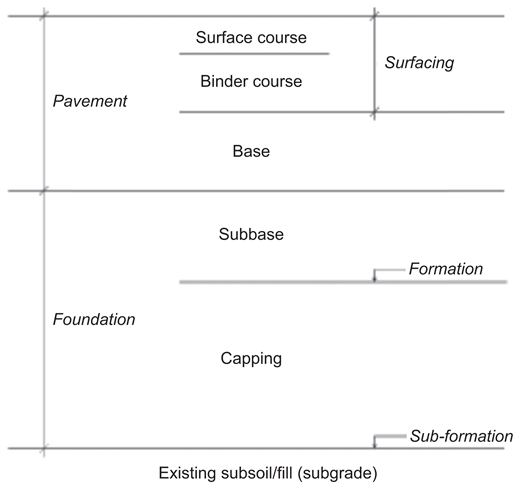
I remember many years ago when there was a significant number of instances of slippage of surface courses in the UK and several examples of this phenomenon occurred on a site on which I was the engineer's representative. This was in the days when ICE5 was the predominant form of contract – long before the NEC (which is wonderful and great fun by the way) was a twinkle in the eye of an ICE panel. Anyway, back to my slippage. The surface course is, as you will know, the top layer, that is, the running surface of an asphalt pavement. What was happening was that cracks appeared in the surface course shortly after the new pavement was opened to traffic. In those days the surface course was always a 40 mm thick chipped hot rolled asphalt surface course, a very durable material with high impermeability but unimpressive levels of noise caused by traffic tyres running over it, mediocre surface regularity and poor levels of spray generation. These cracks extended roughly laterally in an inverted V and were up to 30 mm or more in width. At locations where the cracks were quite wide, the binder course could be seen below the surface course. The binder course is the layer below the surface course and is usually around 60 mm thick. The asphalt in the binder course is usually a dense bitumen macadam nowadays called a dense asphalt concrete. By looking at the top of the binder course scratches parallel to the direction of travel of vehicles using the pavement could often be seen. Thus it appeared to me that the surface course and binder course had become debonded with the result that the surface course had to withstand the shear forces set up by traffic without the benefit of being able to transmit these forces down through the lower layers with the result that the surface course cracked. Furthermore, traffic simply exacerbated the situation and the cracks grew wider. However, what was the point of me speculating? Doubtless there were numerous papers on the subject and all I needed to do was search the appropriate journals to find out why this phenomenon had occurred. I did search but there was nothing. Indeed, because I was interested in asphalt technology I often sought answers to the occurrence of particular events, usually defects on roads, only to invariably find that no research in that particular subject area had been undertaken.
In the intervening period, much work has been done, but there remains much to do. Modern design of the proportion of components in asphalts is often little more than trial and error. The design of flexible pavements is entirely empirical. However, we need to move to proper analytical design. Sadly there appears to be little impetus in the UK for such a change. Notwithstanding, it is only by carrying out research, field trials and laboratory analysis that we shall improve our knowledge of asphalt technology. Thus, the publication of technical papers is to be encouraged which is why I welcome all the papers contained in this issue of Construction Materials.
This issue contains six papers dealing with various aspects of asphalt technology:
Mix design and performance of warm-mix recycled asphalt
Site trials and specifications for lower temperature asphalts
Crack propagation in the cyclic semi-circular bending test
Laboratory evaluation of asphalt concrete mixtures to permanent deformation
Application of surface free energy techniques to evaluate bitumen-aggregate bonding strength and bituminous mixture moisture sensitivity
The impact of European standards and CE marking on asphalts.
Traditionally, asphalts are manufactured at elevated temperatures typically 160°C to 180°C. This requires a great deal of energy. Accordingly, it comes as no surprise that there has been considerable interest in the possibility of manufacturing asphalts at significantly lower temperatures. This is reflected in the first two papers, which address issues associated with this topical matter. The first paper (Dinis–Almeida et al., 2014) looks at recycling issues in the context of warm-mix technology. The second paper (Nicholls et al., 2014) reports on site trials aimed at producing warm, half-warm and cold-mix asphalts, often described as low-temperature asphalts.
A cross section of a typical fully asphaltic pavement is shown in Figure 1.
Pavements that consist of asphaltic layers are often described as flexible pavements. Consider a point on the underside of the surface course. When a heavy load runs over the carriageway, the layers flex with most of that deformation being recovered after the vehicle passes the point being considered, hence the description.
Structural failure of a flexible pavement is generally considered to be the replacement of the pavement layer down to and including the base. Indeed, the foundation may also be replaced. In thicker pavements there are two main structural failure mechanisms (Nunn et al., 1997: p. 31). These are cracking and deformation (deformation and rutting are interchangeable terms). This issue of Construction Materials contains, in Lancaster and Khalid (2014) and Nikolaides and Manthos (2014), consideration of aspects of both these failure mechanisms.
Bond is a current issue in asphalt technology. The attention focuses on the alleged importance of inter-layer bonding but, more fundamentally, the strength of the bond between particles of aggregate and bitumen needs to be fully understood. Grenfell et al. (2014) deal with a particular aspect of that technology.
Finally, Walsh (2014) addresses the impact of the construction products regulations (CPR) on the production of asphalts. In the UK, there was no requirement for an asphalt to have a CE mark demonstrating compliance with the relevant harmonised standard. Under the CPR, all asphalts sold from 1 July 2013 must be CE marked. Walsh looks at the impact of these regulations.
As if that was not adequate enticement to study the papers in this issue of the journal allow me to highlight the quality of the writers of these documents. Contributors include Assistant Professor Dinis-Almeida of the University of Beira Interior in Portugal. The second paper's credits include Dr Cliff Nicholls, a giant of the industry and a gentleman whose papers always warrant close attention. The third paper was written by two highly respected gentlemen in the world of asphalt, Ian Lancaster and Dr Hussain Al-Khalid of the University of Liverpool. The acclaimed Professor Thanos Nikolaides of the University of Thessalonika in Greece wrote the fourth paper. The fifth paper boasts authors from both the University of Engineering and Technology in Taxila, Pakistan and the University of Nottingham and includes Dr James Grenfell and Professor Gordon Airey. The final paper is written by another giant of the industry, a source of great knowledge and a great personal friend, the oracular Professor Ian Walsh. I commend all those who made a contribution to the papers published in this journal.
I realise my editorial has served only to make you desperate to read these fine papers so I shall detain you no longer. I hope you find the contents not only interesting but also stimulating. Asphalt technology needs much, much more investigation and it is only by publishing papers such as those included in this issue of the journal that we shall begin to fully understand this area of civil engineering.