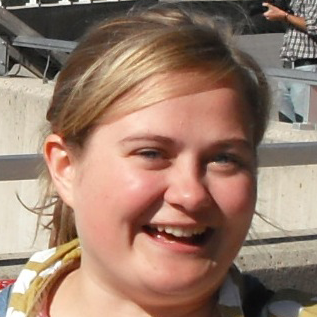
Claire Ward was the winner of the 2009 BDS student competition. Her prize was to attend a conference of her choice in 2010. Here she reports back on her experiences at the 8th ICOLD European club symposium in Innsbruck, 22–23 September 2010.
I wasn't sure what to expect when I arrived in Innsbruck. The city was beautiful and the mountains overlooking it were breathtaking, but having completed only my first year at Oxford University studying engineering science, my knowledge of the subject I was about to be immersed in was somewhat limited. I had previously attended conferences while working for Halcrow as a ‘Year in industry’ student but nothing of this scale, or outside of the UK.
My first impression of the event was the impressive organisation. Innsbruck University and Graz University were running a very smooth operation and did so very consistently throughout the 2-day conference and site visit. A student programme was being run which gave me the opportunity to meet my peers and put questions to a panel of engineers from a series of companies. The main purpose being to find out exactly what sort of graduate they were looking for in a new recruit – which seems to be a very young, very experienced, highly qualified engineer who speaks at least two languages fluently. I think the general consensus from the students was that this is an intimidating and pretty much unattainable goal. UK engineering graduates are among the youngest European graduates (even having taken a gap year, I will be only 23 when I graduate); however, it may be many years before I have ticked the other boxes on the dam engineers' wish list. Although, I suppose the engineering definition of ‘young’ could be rather different from my own.
The format of the conference was a series of lectures during the day and then entertainment in the evenings. I found the lectures about education in engineering across Europe particularly interesting as they pointed out a lot of areas in the education system in the UK which could be improved to help match the ‘production’ of engineers to companies' commercial needs. In general I think courses in British universities are much broader and, although on the surface this seems a disadvantage, it does provide a larger base of knowledge which I think is useful in the long run. We do, however, have notoriously poor language skills – having learnt German for 6 years at school I was hoping to understand at least a little, but the Austrian and Swiss students' grasp of English was significantly better than my German. In general though, the lectures were fairly easy to follow and considering I had little prior knowledge, this struck me as surprising. If I had been an experienced dams engineer I think this would have been a disappointment; for me, however, it was usually educational, when it wasn't commonsensical. Each lecture only lasted 10 minutes and I think this simply wasn't enough time for the presenters to get into the grit of their work and left a lot of the presentations feeling somewhat superficial. Perhaps I'm being too critical as there was really no other way to have heard so many varied speakers, but it would have been interesting to have learnt more detail about many of the unusual projects and innovative solutions to problems around the world.
However, I formed the impression that the main objective of the conference was, in fact, to make contacts. Attendance was high and people seemed to come from a very wide range of backgrounds; from hydrology PhD students to professionals with many years of experience. Sharing ideas at events such as this is intrinsic to the progression of the dam industry. Without these opportunities to exchange ideas, individual engineers and their employers would suffer. Also, research presented by university professors has no meaning if it isn't then combined with the commercial values of the companies. Witnessing how the skills and expertise interact to resolve problems will inspire more engineering students to follow this path. I understand that, in Europe at least, the maintenance (rather than the construction) of dams is the key issue right now, but if young people can't see the future in what is really a very interesting, international and complex area, they will move into other fields.
I really appreciated getting the opportunity to attend the conference and would like to thank the British Dam Society for giving me that chance.