


This paper aims to determine the factors that influence the consumer’s online shopping intention in the current pandemic context (COVID-19). For this purpose, a conceptual model has been developed by introducing the constructs “attitude,” “perceived utility,” “intention” as well as the variable “perceived risk of contagion.”
After collecting data from the questionnaire diffused in Moroccan e-commerce websites, this study used various statistical analyses with the multiple regression model on the SPSS statistical software to confirm or refute the research hypotheses.
The results indicate that attitude and perceived utility positively affect online shopping intention. However, the variable “perceived risk of contagion” has a weak effect on such intention, which can be explained by the period in which the survey was started (a few months after the confinement).
The scientific contribution of this study lies in the insertion of a new factor that will be called “perceived risk of contagion” in the research model. This factor has been inspired by the perceived risk theory of Bauer (1960). Furthermore, all studies dealing with this topic have been carried out in developed countries, such as France, Great Britain, Germany and the USA. For this reason, the researcher believe that it is more appropriate to study the intention to buy online during the COVID-19 pandemic in one of the developing countries, such as Morocco. This is based on the fact that to develop theories, it is necessary to examine a given problem in several countries. The context plays a determining role in such situations.
1. Introduction
COVID-19 is a contagious disease caused by a virus called coronavirus, which has affected many countries around the world. This pandemic has infected people in 185 countries. As more and more cities are locked down, many businesses are forced to close. Furthermore, the COVID-19 pandemic has led consumers to avoid meeting others and, consequently, there was an increase in the rate of non-contact consumption among both young and old people, who rarely use laptops. They are avoiding crowds and leaving their homes less often due to this crisis. Reducing the purchases needed is becoming a new norm. With the closure of many physical stores, the e-commerce strategy has gained importance during this period (Sahli, 2020).
The COVID-19 pandemic has dramatically changed consumer habits. Although pandemic crises are not common, a single pandemic wave can cause disastrous and unexpected consequences. The majority of studies dealing with diseases and epidemics are medical in nature. Thus, there is little research conducted from a social science perspective. These studies have in turn been carried out in developed countries, such as France, Great Britain, Germany and the USA (Moon, Choe, & Song, 2021). For this reason, we believe that it is more appropriate to study the intention to buy online in the context of the pandemic in one of the developing countries, such as Morocco, so as to complete the theoretical inventory related to this topic, and consequently to give the possibility to other researchers to compare these studies while taking into account the culture, economy and technology. In fact, Ajzen (1991) and Triandis (1979) have conducted some studies on the same phenomenon (adoption of technology). These researchers, who have focused on behavioral intentions, stated that by understanding the determinants of online purchasing, we will be able to develop some decision elements for marketers. The development of our model, which was conducted during the epidemic period (COVID-19), will help businesses willing to enter the online business sector to better understand the behavior of potential customers.
In this article, we intend to answer the following question: what are the factors that have favored the adoption of online shopping by consumers since the announcement of the health alert? To this end, we have proposed a model showing the determinants of the intention to buy online during the period of the health crisis (COVID-19), focusing on the various theoretical models of technology acceptance, which are related to the marketing field and specifically to the consumer behavior area. Thus, our scientific contribution lies in the insertion of a new factor that we will call “perceived risk of contagion” in our research model. This factor has been inspired by the perceived risk theory of Bauer (1960). Furthermore, all studies dealing with this topic have been carried out in developed countries, such as France, Great Britain, Germany and the USA. For this reason, we believe that it is more appropriate to study the intention to buy online during the COVID-19 pandemic in one of the developing countries, such as Morocco. This is based on the fact that to develop theories, it is necessary to examine a given problem in several countries. The context plays a determining role in such situations.
Our article is structured as follows: first, in Section 2, we present a related work section that describes previous research. Then, in Section 3, we present the research methodology used in our study. Next, in Sections 4 and 5, we discuss the results obtained. In Section 6 , we summarize our study and suggest future research directions.
2. Literature review and hypotheses development
2.1 Theories explaining the consumer’s online shopping behavior
Over history, consumer habits have undergone many changes. Since then, all shopping activities have been carried out through retail shops, convenience stores and supermarkets. Today, the consumption pattern appears to be oriented toward online retailing through the Internet. Recently, online shopping behavior has been studied using different models or theories, such as the Theory of Reasoned Action (TRA), Theory of Planned Behavior (TPB), Technology Acceptance Model (TAM), Innovation Diffusion Theory (IDT) and Consumption Value Model (CVM). These theories and models will be explained in detail as follows:
TRA: The precursors of the theory of reasoned action, Ajzen and Fishbein (1975), have proposed a model that aims to explain and understand the behavior of individuals in various situations. This theory considers that each behavior is directly determined by the individual's intention to emit this behavior. In turn, behavioral intention is affected by two variables: the attitude toward the behavior and the subjective norm. As justified in Ajzen and Fishbein's (1975) work, attitude is determined by behavioral beliefs (beliefs about the probability of consequences) and evaluations of the quality or severity of those consequences. The second determinant of behavioral intention, which is the subjective norm, depends on beliefs about what people think they should do. Indeed, Sutton's (1998) meta-analysis confirms that the TRA has good validity, with the exception of being under-controlled only by intentional behavior, and lacking situational factors. This has led several researchers to test other ways of improving this theory. For these reasons, Ajzen (1991) was motivated to revise the theory of reasoned action while proposing the theory derived from the TRA which is the TPB.
TPB: To improve the TRA, Ajzen (1991) has developed a new theory derived from the TRA, which is the TPB. In this context, an additional determinant has been added: perceived behavioral control (Ajzen, 1991; Emin, 2004). According to Ajzen's (1991) theory of planned behavior, any behavior that requires some reflection and/or planning, such as the realization of an online purchase, is affected directly by intention; the latter is determined by three variables: the attitude toward the behavior; the subjective norm; and the perceived behavioral control. The two first variables are previously defined. The third corresponds to the factors that facilitate or inhibit the execution of a given behavior (Ajzen, 1991). In the context of our study, Moon et al. (2021) showed that when the consumer adopts a negative attitude toward COVID-19 and strongly perceives the subjective norm, he will choose online shopping channels over traditional ones. In addition, they indicated that the consumer would opt for online shopping channels when perceived behavioral control is significantly high; and vice versa.
TAM: In 1985, Fred Davis suggested a conceptual framework under the name of the TAM. He stated that the actual use of the system constitutes a response likely to be explained or predicted by the user's motivation. Davis, Bagozzi, and Warshaw (1989) showed that the latter can be explained by three factors: perceived ease of use, perceived usefulness and attitude. Davis suggested that the user's attitude constitutes a key factor in determining the user's use or rejection of the system. This attitude, in turn, is influenced by two major beliefs, namely, perceived usefulness and ease of use. Davis et al. (1989) defined the first belief as the level on which the person believes that the use of a particular system would improve their professional performance. Regarding the second belief, as the name suggests, it implies that the person uses a system without any effort (Sharp, 2006). According to Marangunić and Granić (2015), both beliefs are positively influenced by the design features of the system. Over time, Davis et al. (1989) found that attitude does not directly influence perceived usefulness and perceived ease of use. Based on these complementary results, a parsimonious TAM was suggested. The new model has incorporated behavioral intention as a new variable, which directly influences the perceived usefulness of the system (Davis et al., 1989). The other change introduced to the original TAM was the inclusion of certain factors called external variables.
IDT: Innovation diffusion theory was introduced in 1962 by Rogers. Its principal aim is to understand why, how and at what rate technologies spread through a social system (Rogers, 1995). According to Al-Rahmi et al. (2019), an innovation that brings benefits, low complexity, perceived compatibility with existing beliefs and potential trialability, is likely to be diffused quickly and widely. Innovation diffusion theory adopts an opposite logic to that of behavioral change studies. It sees change primarily as a question of evolving or “reinventing” products and behaviors so that they better meet the individual's and group's requirements (Wani & Ali, 2015). In this approach, it is not the people who change, but the innovations themselves (Robinson, 2009). The innovation diffusion theory can be divided into four main elements, namely: innovation, time, communication system and social system.
CVM: Daily consumption is highly dependent on price-quality ratio, convenience, health concerns, habit and the individual's responses to institutional and social norms (Biswas, 2017). According to Thye Goh, Mohd Suki, and Fam (2014), the model of consumption values is based on three major principles: (1) The benefits of each consumption value vary significantly from one situation to another; (2) consumption behavior depends on several consumption values; and (3) all consumption values are fully independent of each other. In fact, CVM takes into account various components of consumption values, such as attractiveness, price, emotions, quality and environmental impact (Hur, Yoo, & Chung, 2012; Phau, Quintal, & Shanka, 2014). Some researchers have combined these components into just three factors, such as functional value, psychological value and environmental value (Biswas & Roy, 2015; Biswas, 2017).
2.2 Online shopping intention
Today, online shopping has significantly increased the level of competition in the online market (Akroush & Al-Debei, 2015) and changed consumer habits (Kühn & Petzer, 2018; El Moussaoui, Benbba, & El Andaloussi, 2022; El Moussaoui, Benbba, & El Andaloussi, 2022, El Moussaoui, El Moussaoui, Benbba, Jaegler, & El Andaloussi, 2022). Indeed, several research studies have concentrated on consumers' online shopping intentions in different contexts. Table 1 summarizes these studies (conducted over the last 5 years), by identifying the main factors influencing online purchase intention, the methodology used including sample size and the theory or model used to explain such intention.
Main research dealing with online shopping intention
| Authors | Year | Theory | Methodology | Sample | Constructs |
|---|---|---|---|---|---|
| Addo, Jiaming, Kulbo, and Liangqiang | 2020 | – | Mediated analysis | – |
|
| Ait Youssef, Jaafari, and Belhcen | 2020 | TPB TAM | Multiple regression Correlation | 302 |
|
| Akar and Dalgic | 2018 | TPB | PLS Correlation | 558 |
|
| Audrey, Wiguna, Ramadhani, and Gui | 2022 | – | PLS | 526 |
|
| Chiu, Kim, and Won | 2018 | TPB | SEM | 317 |
|
| Dang and Pham | 2018 | TAM | SEM | 221 |
|
| Eti, Horaira, and Bari | 2021 | – | SEM | 240 |
|
| Ha and Nguyen | 2019 | TPB TAM | Multiple regression | 423 |
|
| Jain | 2022 | TAM | Multiple regression Correlation | 233 |
|
| Jordan, Leskovar and Marič | 2018 | – | SEM | 190 |
|
| Kühn and Petzer | 2018 | Stimulus-organism response framework | SEM | 165 |
|
| Li, Xu and Xu | 2018 | – | SEM ANOVA Correlation | 263 |
|
| Li, Wang, Li and Liao | 2021 | TPB IDT | Mediation analysis | 1853 |
|
| Ling, Chen, Ho and Hsiao | 2021 | IDT CVM | PLS | 249 |
|
| Liu, Feng and Hu | 2022 | – | Comparative analysis | – |
|
| Ozturk | 2020 | TPB | SEM | 556 |
|
| Ramayah, Rahman and Ling | 2018 | TRA TPB TAM CVM | PLS | 127 |
|
| Redda | 2019 | TPB | SEM | 215 |
|
| Rehman, Bhatti, Mohamed and Ayoup | 2019 | TPB TAM | PLS-SEM | 187 |
|
| Singh and Srivastava | 2018 | TRA TPB TAM | SEM | 344 |
|
| Verhagen and Bloemers | 2018 | Effects hierarchies | SEM | 198 |
|
Source(s): Table by authors
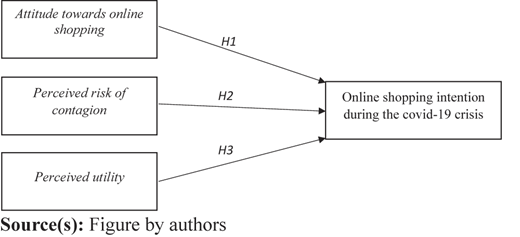
Based on the studies illustrated in Table 1, we developed our conceptual model by referring to Davis et al.' (1989) TAM. We introduced the constructs “Attitude towards online shopping,” “perceived utility” and the variable “perceived risk of contagion.” These variables will be explained in detail as follows:
Attitude: a major component of the individual's voluntary behavior was introduced for the first time in the TRA. It is a key variable in understanding decision-making (Akar & Dalgic, 2018). It corresponds mainly to the feelings of pleasure, joy, satisfaction or dissatisfaction that the consumer relates to a given behavior. The literature has shown that there is a positive link between attitude and customers' online purchase intentions (Singh & Srivastava, 2018; Yang, Li, & Zhang, 2018; Ha & Nguyen, 2019; Rehman, Bhatti, Mohamed, & Ayoup, 2019). Indeed, when consumers favor online shopping, they tend to adopt this behavior. According to Karahanna, Straub, & Chervany (1999), attitude determines the intention to use information technology. Thus, a favorable attitude to Internet usage tends to generate a positive intention to purchase online. Simultaneously, the literature (Sabik, 2014; Ezzahi & Jazi, 2018; Bourchich & Nejjar, 2021) confirmed that the attitude toward Internet usage positively affects the intention to buy products online. In terms of the context of this study, consumers around the world have all experienced a shift in their shopping behaviors due to health concerns, anxiety and confinement (Ozturk, 2020). Consumers' attitudes toward online shopping had an impact on their intentions to purchase products and services during the pandemic. According to a study conducted in Morocco on the basis of 114 respondents, Hajraoui and Chalabi (2021) found that only 4% of consumers surveyed adopted online shopping during the COVID-19 health crisis, against 96% who still prefer to make their purchases in physical stores (supermarkets, souk municipal, retail stores…), this explains that the Moroccan consumers have a low orientation toward the electronic commerce. This is what we seek to confirm through our study while supporting the idea that attitude affects behavioral intention during a health crisis. Hypothesis H1 is developed as follows:
There is a positive and significant relationship between the attitude (favorable, unfavorable) toward online shopping and the intention to buy online during the health crisis.
Perceived risk of contagion: Since the 1960s, perceived risk by consumers has been discussed extensively in the literature. It is demonstrated to affect all purchase decisions, as well as the intention (Cox, 1967). Perceived risk guides consumer behavior significantly since people are interested in avoiding mistakes (Mitchell, 1999). A situation is considered risky if the decision involves discomfort (Taylor, 1974) or uncertainty (Engel, Blackwell, & Miniard, 1990). According to Liao, Palvia, & Lin (2010), consumers are generally worried when they cannot be sure that purchases will achieve their desired goals. Some research has shown that online shopping presents a risk for consumers (Bourlakis, Papagiannidis, & Fox, 2008; Bianchi & Andrews, 2012). In the current epidemiological situation, we can say that the perceived risk variable will allow us to better explain the obstacles that consumers may have before committing to an act of purchase. Bauer (1960) has divided this risk into five types: financial, performance, physical, psychological and finally social. These last two risks are often combined into a single variable, which is the psychosocial risk (Kaplan, Szybillo, & Jacoby, 1974). Similarly, Gabarino and Strahilevitz (2004) decomposed perceived risk into two components: uncertainty about the decision's effectiveness, and the probable losses incurred during the purchase or consumption. With the appearance of the Coronavirus, the world has changed completely. COVID-19 has caused instabilities in many sectors of society (Good, 2020). Customers preoccupied with the pandemic had to prevent, cope with or respond to these changes (Ozturk, 2020). In this context, another dimension of risk that has been identified is the risk of contagion. This is the risk of being contaminated through gatherings, for example, in public spaces such as stores, buses, schools... This observation is based on a study conducted by the Criteo6 cabinet in March 2020. The investigation shows that 52% of consumers in the US and UK prefer the Web as a purchasing channel and that more than 70% of consumers in South Korea prefer to buy online. As for the countries that present a moderate rate, we can observe Spain with a percentage of 42% and France with 36.7%. Therefore, we can state that the fear of catching the virus has pushed consumers to adopt online shopping as a channel to make their purchases. Consequently, we would like to study this dimension of risk on the basis of the idea: the perceived risk (risk of contagion) has an impact on the intentions to purchase on the internet. The H2 hypothesis is proposed as follows:
There is a positive and significant relationship between the perceived risk of contagion and behavioral intention to purchase online during the health crisis.
Perceived utility: The concept of perceived utility can be defined as the evaluation of the probable rewards for achieving a given behavior (Bourchich & Nejjar, 2021). Barkhi, Belanger, and Hicks (2008) have suggested in their study that consumers develop favorable attitudes toward products and/or services that they believe offer benefits or sufficient attributes to a solution. Other studies have also found that this perceived utility may influence the intention to buy online (Sabik, 2014; Ezzahi & Jazi, 2018). According to Triandis (1979), the probability of performing a behavior is relative to the expected value. For example, in our case (online shopping during the health crisis period), the consumer can evaluate the benefits of buying online, such as avoiding crowds and saving time during the crisis. So, we suggest the idea that the consumer who thinks that online shopping during the health crisis period is useful, may increase the probability of performing this behavior via behavioral intention. We formulate our last hypothesis as follows:
H3.There is a positive and significant relationship between the perceived utility of online shopping in the COVID-19 period and the behavioral purchase intention.
The research model and relationships proposed in this study are illustrated in Figure 1.
3. Research methodology
3.1 Research design and sampling
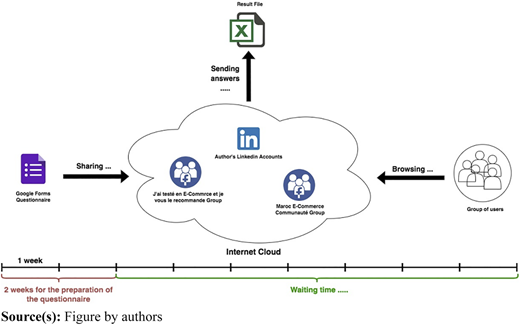
In this study, we adopted the quantitative methods approach using the questionnaire as a technique of collecting data. We have chosen this approach for two reasons. First, is to prevent crowds and, therefore, to avoid the risk of being contaminated by the coronavirus. Second, we opted for this method to collect a high number of data and in a minimal time, which is not the case for the qualitative study. The questionnaire is written in French since this language is the second language of the kingdom after Arabic. It is composed of three parts, and each part gives us specific information on the intention to buy online during Covid-19. Firstly, the questionnaire was submitted to a sample of 30 respondents to check its clarity and consistency. Then, we shared it on Linkedin and in the Facebook groups of e-commerce in Morocco (Maroc E-Commerce Communaute and J'ai testé en E-Commerce et je vous le recommande). We specifically selected these two social networks as they are the most popular and most used by consumers in the world (El Moussaoui et al., 2023). We waited seven weeks to collect the maximum possible number of responses (Figure 2). In total, we received 220 completed questionnaires (Linkedin: 93; Facebook: 127) from 21 October to 8 December 2022.
3.2 Measurement instrument
To develop our measurement instrument, we have focused on the literature review. The existing documentation allowed us to develop our own items, from a set of items used by researchers. Table 2 shows the items chosen with the reference authors. All constructs in the study were operationalized as reflective constructs and adapted from past studies. The construct “Attitude towards online shopping” was measured by adapting six items from Limayem and Rowe (2006), Sabik (2014) and Bourchich and Nejjar (2021). The “Perceived utility” was measured by adapting six items from Zaoui (2009) and Ezzahi and Jazi (2018). The two measurement items for “Perceived risk of contagion” were proposed by us. As for the dependent variable “Online shopping intention during Covid-19,” the four items were adapted from studies conducted by Ajzen (1991) and Moon et al. (2021). It should be noted that the choice of variables was made on the basis of the acceptance model, incorporating the epidemiological factor “perceived risk of contagion.”
Constructs and items
| Constructs | Items | Sources |
|---|---|---|
| Attitude toward online shopping | Online shopping is enjoyable I like to buy products on the Internet Online shopping is exciting I appreciate online shopping I hate purchasing products online Online shopping is boring | Limayem and Rowe (2006) Sabik (2014) Bourchich and Nejjar (2021) |
| Perceived utility | Online shopping saves time Online shopping is less fatiguing than going to the store Online shopping allows us to choose the products quietly Online shopping offers promotions not available in stores Online shopping allows to benefit from home delivery Online shopping allows to avoid the crowd | Zaoui (2009) Ezzahi and Jazi (2018) |
| Perceived risk of contagion | By purchasing online, I reduce the risk of getting the virus -By purchasing online, I reduce the risk of spreading the virus, if I am infected | Authors |
| Online shopping intention during COVID-19 | I intend to buy on the Internet I will probably buy products online I plan to purchase online during the health crisis I will purchase online during the health crisis | Ajzen (1991) and Moon, Choe, and Song (2021) |
Source(s): Table by authors
3.3 Data processing method
Following an initial verification of received questionnaires, some weaknesses were found in the dataset, allowing us to eliminate 8 incorrectly completed questionnaires. The total number of correctly filled questionnaires obtained was 220. The data processing was carried out with SPSS statistical software. There were two stages of analysis. The first one concerns the test of the reliability of measurement scales. It was realized through Principal Component Analysis (PCA), which is a factorial analysis technique. The second phase was devoted to testing the research hypotheses on the basis of the data collected (El Moussaoui, Benbba, & El Andaloussi, 2022; El Moussaoui, Benbba, & El Andaloussi, 2022, El Moussaoui, El Moussaoui, Benbba, Jaegler, & El Andaloussi, 2022). There are various statistical tools for testing relational research hypotheses. In this article, we have opted for multiple linear regression, an analytical model designed to explain the variance of a specific factor through a combination of explanatory variables (El Moussaoui, Benbba, & El Andaloussi, 2022; El Moussaoui, Benbba, & El Andaloussi, 2022, El Moussaoui , El Moussaoui, Benbba, Jaegler, & El Andaloussi, 2022).
4. Data analysis and results
4.1 Description of consumer profile
The survey was conducted with a sample of 220 Moroccan consumers of various profiles. As we see in Table 3, the sample is composed of 101 men and 119 women, mostly aged between 18 and 45 years, with an education level of bac, bachelor, master or PhD.
Descriptive analysis: Respondent profile
| Variable | Number | Percentage (%)/Approx | |
|---|---|---|---|
| Gender | Men | 101 | 45.90 |
| Women | 119 | 54.10 | |
| Age (years) | 18–25 | 31 | 14.10 |
| 26–35 | 134 | 60.91 | |
| 36–45 | 46 | 20.90 | |
| 46–60 | 06 | 02.72 | |
| Plus de 60 | 03 | 01.36 | |
| Marital Status | Single | 142 | 64.54 |
| Married | 67 | 30.44 | |
| Others | 11 | 0.05 | |
| Education level | Without | 02 | 0.91 |
| Bac | 31 | 14.09 | |
| Bachelor | 120 | 54.55 | |
| Master/PhD | 67 | 30.46 | |
| Profession | Student | 73 | 33.18 |
| Functional employee | 35 | 15.90 | |
| Salaried employee | 77 | 35 | |
| Self-employed | 18 | 08.18 | |
| Unemployed | 16 | 07.27 | |
| Retired | 01 | 0.45 | |
| Frequency of Internet usage | One a week | 02 | 0.91 |
| 1 to 3 per week | 32 | 14.54 | |
| Everyday | 186 | 84.54 | |
Source(s): Table by authors
4.2 Reliability of measurement scales
Before proceeding to the statistical analyses, we checked the internal reliability of the measurement scales by calculating Cronbach's alpha, which is an index that estimates the internal consistency of the items in our constructs. According to Nunnally (1978), Cronbach's alpha value must be between 0.70 and 0.79 for the scale to be acceptable, between 0.80 and 0.90 to be “perfectly coherent” and above 0.95 to indicate that there are probably “redundant item.” On the other hand, a value between 0.60 and 0.69 is considered “minimally acceptable”; between 0.50 and 0.59, it is qualified as poor; and when the Cronbach's alpha value is lower than 0.50, the scale is “unacceptable.”
As presented in Table 4, we obtained for the variable “Attitude” a Cronbach's alpha of 0.518, which represents a very low value. Therefore, we removed only one item (Attitude 5) to improve the quality of the model and reached a value of 0.732 (Table 5). Doing the same thing for the variable “Perceived utility,” we obtained a value of 0.698, but with the removal of the item (Utility 4), the Cronbach's alpha value became 0.729. In the end, for the two variables “Perceived risk of contagion” and “Intention,” we kept all the attributed items since we obtained for the perceived risk of contagion a Cronbach's alpha of 0.875 and for the intention 0.870. So, both values are above 0.7, which means that they have a good reliability index. In the following, we will move to test the research hypotheses.
Cronbach’s alpha values
| Constructs | Number of items | Cronbach’s alpha value | Interpretation |
|---|---|---|---|
| Attitude toward online shopping | 6 | 0.518 | Poor |
| Perceived utility | 6 | 0.698 | Minimally acceptable |
| Perceived risk of contagion | 2 | 0.875 | Perfectly coherent |
| Online shopping intention during COVID-19 | 4 | 0.870 | Perfectly coherent |
Source(s): Table by authors
Cronbach's alpha values after removing some items
| Constructs | Cronbach’s alpha value (original) | Cronbach’s alpha value after removing some items |
|---|---|---|
| Attitude toward online shopping | 0.518 | Removing the item 5: 0.732 |
| Perceived utility | 0.698 | Removing the item 4: 0.729 |
| Perceived risk of contagion | 0.875 | – |
| Online shopping intention during COVID-19 | 0.870 | – |
Source(s): Table by authors
4.3 Hypothesis testing
In this section, we will review the research hypotheses and test them on the basis of Pearson correlation analysis (Table 6).
H1: There is a positive and significant relationship between the attitude (favorable, unfavorable) toward online shopping and the intention to buy online during the period of the health crisis (COVID-19). From Table 6, we can observe that there is a significant relationship between attitude and purchase intention (Sig = 0.000; P = 0.463). Therefore, both variables are positively correlated with a medium intensity. This means that the H1 hypothesis is validated.
H2: There is a positive and significant relationship between perceived risk of contagion and intention to purchase online during the health crisis period. The examination of the results presented in Table 6 shows that there is a highly significant relationship between the perceived risk of contagion and the intention (Sig = 0.000; P = 0.452). Thus, the two variables are positively correlated with moderate intensity. It can be concluded that the H2 hypothesis is validated.
H3: There is a positive and significant relationship between the perceived utility of online shopping in the COVID-19 period and the behavioral purchase intention. The results presented in Table 6 indicate that there is a highly significant relationship between the perceived utility variable and the intention to purchase (Sig = 0.000; P = 0.581). Therefore, the two variables are positively correlated with high intensity. We can conclude that hypothesis H3 is validated.
Person correlation analysis
| Attitude | Perceived risk | Intention | Perceived utility | |
|---|---|---|---|---|
| Pearson correlation Attitude Sig (bilateral) N | 1 220 | 0.189** 0.005 220 | 0.463** 0.000 220 | 0.405** 0.000 220 |
| Pearson correlation Perceived Risk Sig (bilateral) N | 0.189** 0.005 220 | 1 220 | 0.452** 0.000 220 | 0.403** 0.000 220 |
| Pearson correlation Intention Sig (bilateral) N | 0.463** 0.000 220 | 0.452** 0.000 220 | 1 220 | 0.581** 0.000 220 |
| Pearson correlation Perceived utility Sig (bilateral) N | 0.405** 0.000 220 | 0.403** 0.000 220 | 0.581** 0.000 220 | 1 220 |
Note(s): **The correlation is significant at the 0.01 level (bilateral)
Source(s): Table by authors
In addition to the correlation analysis, we will ensure that there is no multi-collinearity effect between the variables. For this purpose, we need to examine the indicator of multi-collinearity which is the VIF (Variance Inflation Factor) (see Table 7). Following these results, we observe that all the values of the VIF are lower than 10, meaning that there isn't an inflation of high variance. Therefore, we can conclude that no variable is redundant, as well as no effect of multi-collinearity exists between the variables studied. Therefore, we can continue the analysis.
4.4 Model testing (multiple linear regression)
In the previous section, we tested the relationship of each of the explanatory variables with the variable that we want to explain (Intention). In this part, we will test the entire research model through multiple linear regression, using the “stepwise” method. This method allows us to analyze the influence of a selection of explanatory variables (independent) on the variable that we want to explain (dependent), as well as to keep the most economical model while maintaining only the significant variables in our research model. Table 8 shows a summary of the multiple regression analysis using the “stepwise” method.
Summary of the models
| Model | R | R2 | R2 adjusted | Standard error of estimation | Fisher's significance |
|---|---|---|---|---|---|
| Model 1 | 0.581a | 0.338 | 0.335 | 0.519 | 0.000 |
| Model 2 | 0.632b | 0.400 | 0.395 | 0.495 | 0.000 |
| Model 3 | 0.673c | 0.454 | 0.446 | 0.473 | 0.000 |
Note(s): a. Predicted values: (constants), ADVANTAGE
b. Predicted values: (constants), ADVANTAGE, ATTITUDE
c. Predicted values: (constants), ADVANTAGE, ATTITUDE, RISK
Source(s): Table by authors
In the model quality analysis, we opted for the stepwise method to keep only the significant variables and eliminate the redundant and unimportant variables. Then, we selected the third model with a coefficient of determination R2 = 0.454, which signifies that the chosen model explains 45.40% of the total variance of the dependent variable “intention.” In terms of Fisher's significance, we have obtained a better level of significance (SIG.F = 0.000). In other words, the regression equation performs very significantly and allows us to conclude that the three explanatory variables (attitude, perceived risk of contagion and perceived utility) contribute significantly to the dependent variable (intention) scores. We did not retain models 1 and 2 for the reason that blocks a and b included only two variables Advantage and Attitude. Whereas, we are looking for a significant model that contains all of the study variables, including the risk of contagion, the latter variable significantly improved model 2 with an R-squared of 0.40 to 0.45 at the level of block c. In Table 8, we present the importance of each explanatory variable in our research model.
The standardized coefficient “Beta” is interpreted in the same way as the Pearson regression coefficient. If Beta in absolute value is less than 0.29, the effect is low; if Beta is between 0.30 and 0.49, the effect is medium. Finally, if Beta in absolute value is higher than 0.50, the effect is high. It is important to remember that the objective of this step is to extract the variables that contribute significantly to the explanation of the phenomenon studied. Following the analysis of Table 9, we note that the standardized coefficient of 0.371 of the variable “perceived utility” is the highest coefficient, then comes the variable “attitude” with a standardized coefficient Beta of 0.264 and finally the variable “perceived risk of contagion” comes last with a standardized coefficient Beta 0.252. The results obtained in Table 9 allow us to conclude that the variable “perceived utility” is the most important factor influencing consumers' intentions toward online purchases during the health crisis (COVID-19). This conclusion is perfectly in line with the analysis of Pearson's correlation coefficient since the variable “perceived utility” obtained the highest Pearson's coefficient (P = 0.581).
The importance of each explanatory variable in our research model
| Model | Unstandardized coefficients | Standardized coefficients | t | Sig | Collinearity statistics | ||
|---|---|---|---|---|---|---|---|
| A | Standard error | Beta | Tolerance | VIF | |||
| Constant | 0.100 | 0.303 | – | 0.330 | 0.740 | – | – |
| Attitude | 0.371 | 0.76 | 0.264 | 4.824 | 0.000 | 0.834 | 1.197 |
| Perceived utility | 0.426 | 0.67 | 0.371 | 6.311 | 0.000 | 0.724 | 1.378 |
| Perceived Risk of contagion | 0.215 | 0.46 | 0.252 | 4.602 | 0.000 | 0.836 | 1.194 |
Source(s): Table by authors
5. Discussion
5.1 Effect of attitude toward online shopping in COVID-19 period on behavioral intention
The hypothesis that assumes a link between attitude and online shopping intention was validated in our sample. This finding is consistent with the TRA (Ajzen and Fishbein, 1975), planned behavior (Ajzen, 1991) and with TAM (Davis et al., 1989). Our result remains in agreement with previous works. It was found that even with this climate of the pandemic, attitude remains one of the determinants that can predict consumer behavior in the adoption of online shopping. This is exactly the case with the studies conducted by Sabik (2014), Ezzahi and Jazi (2018), and Bourchich and Nejjar (2021) which confirmed that the attitude toward internet usage positively affects the intention to buy products online.
5.2 Effect of perceived utility on behavioral intention in the COVID-19 period
The hypothesis that assumes a positive and significant relationship between perceived utility and online purchase intention in the COVID-19 period is supported. The regression analysis shows that perceived utility has the greatest effect on behavioral intentions to purchase products on the Internet during the COVID-19 period. This finding follows the TAM of Davis et al. (1989), which shows that intention is impacted by the perceived utility through attitude (mediating variable). This means that the consumer develops an intention to shop online during this epidemiological period only when he sees a benefit toward online shopping, such as avoiding crowds, home delivery and time-saving, etc.
5.3 Influence of perceived risk (perceived risk of contagion) on behavioral intention
The hypothesis that assumes a positive and significant relationship between the perceived risk of contagion and the intention to buy online during the COVID-19 period is verified. The regression analysis gives the first variable the last rank in terms of effect. The fact that the variable “perceived risk of contagion” has a weak effect can be explained by the period in which we started our survey (a few months after the confinement), meaning that the panic and fear of the COVID-19 pandemic has visibly diminished among consumers. This result was unexpected, as it was predicted that this variable would have the highest effect, following the worsening epidemiological situation day after day. Indeed, this finding is in line with previous research results, especially the results of the Criteo study in 2020 conducted in five countries, namely, France, Spain, the UK, South Korea and the USA, which confirms that most consumers are oriented toward online shopping for epidemiological reasons. This approves that the perceived risks influence the behavioral intention to buy online (Vijayasarathy & Jones, 2000).
6. Conclusion/implications/limitations
6.1 Conclusion
This paper aims to determine the factors that influence online shopping in the current pandemic context. For this purpose, we developed our conceptual model by referring to Davis et al.' (1989) TAM. We introduced the constructs “Attitude,” “perceived utility,” “intention” as well as the variable “perceived risk of contagion.” The results indicate that attitude and perceived utility positively affect online shopping intention. However, the variable “perceived risk of contagion” has a weak effect on such intention, which can be explained by the period in which we started our survey (a few months after the confinement).
6.2 Implications
The results of this study provided additional empirical support for the constructs of the technology acceptance model. The inclusion of the variable “perceived risk of contagion” reinforces the original model and provides a contribution to their influence on online shopping intention during the COVID-19 pandemic. This, in turn, will allow us to better understand consumer behavior. This study is one of the first studies that incorporate the variable “perceived risk of contagion” into the TAM. This highlights the necessity of adapting models to different contexts for a better understanding of behavioral intention. Academics have frequently worried about the role of national factors in the adoption of technology by the consumer. Furthermore, they have discouraged researchers from modeling technology acceptance patterns, as they still believe that such a pattern differs completely from one country to another. In the context of the COVID-19 crisis, this study was conducted to fill this gap by providing insights into the factors that determine consumers' online purchase intention. In this way, the study increases the generality potential of the research instrument. This fact once again underlines the central role of context in the design of theories. Indeed, it is crucial to understand the contexts in which theories begin to break down, as these form a basis for future research and knowledge creation.
The results of this paper can be applied and exerted in the context of the new crown pneumonia epidemic. For example, it can guide e-commerce website policymakers to make decisions that are beneficial to consumers. It is recommended that e-commerce actors focus on the experience of the Internet users, by proposing fluidity in the whole process of the orders and making the navigation on the website and the purchase pleasant. We should also note that even though epidemics are no longer epiphenomena, they pose real managerial challenges. In this context, the marketing department of companies must devote its efforts essentially to media and non-media communication, to create a favorable attitude among website visitors. We also suggest that practitioners of the field focus more on the advantages mentioned above (avoiding crowds, home delivery and time-saving) through the different communication tools in order to develop the willingness of consumers to purchase on the Internet, and ultimately to have a good level of conversion in their e-commerce websites. In addition, the managers of online websites are required to clearly communicate the protective actions and measures they take in the preparation and delivery processes to support the consumer's sense of security.
6.3 Limitations/future research
This study has some limitations:
The multiple linear regression model used in the article is mainly designed to explore the correlation between the variables. More rigorous research models and methods are needed to prove the causal relationship between the variables.
The consideration of the variables is not rich enough. Based on the TAM technology acceptance model, this paper investigates the impact of attitude, perceived utility and perceived risk of infection on online shopping intention during COVID-19. Many factors can affect consumers' online purchasing intention, such as perceived benefits, perceived costs, perceived value and other factors. Future research can take these limitations into consideration by including all these variables.
The data collected through the questionnaire is not always accountable for the user's purchasing behavior. During this process, we observed that some questionnaires were not 100% completed, which allowed us to leave them out of the statistical study. Also noting that our research model has been statistically validated, but we cannot generalize it because our sample size is relatively small. Therefore, future research can adopt the same conceptual model we proposed with a large sample size. In addition, all the measurement scales were selected from the literature, except for the scale measuring the variable “perceived risk of contagion” which we proposed ourselves and which has never been used in other works. It should be noted that this variable had the lowest score in the correlation analysis, which calls into question the internal reliability of the scale used, even though we obtained a high Cronbach's alpha. This limitation could be the subject of future research.
The questionnaire is not written in Morocco's first language. Thus, it can be alluded that this study is particularly addressed to people with a high level of education. For better clarity, future research in Morocco should take a significant sample by writing a questionnaire in Arabic, so that all Moroccan citizens will be able to answer it.

