This study aims to investigate different traits of generative pre-trained transformer (GPT) in information technology (IT) students’ enhancement of coding skills within Jordanian undergraduate education. These characteristics are perceived customization, simulations, usefulness, ease of use, risks and complexity.
Using a quantitative research design, this study analyzes data from a survey of IT undergraduate students interacting with GPT-based coding tools and simulations (Three filtration steps). Structural equation modeling (SEM) is used to assess the relationships between GPT attributes and coding skill enhancement outcomes, providing a robust examination of the theoretical models proposed.
The findings reveal that perceived customization, generated simulations, ease of use and usefulness of GPT models significantly positively affect coding skills enhancement (CSE). In contrast, complexity and perceived risks are found to negatively impact these outcomes.
This study underscores the necessity for educators, curriculum designers and technology developers to prioritize the ease of use and customization capabilities of GPT tools to enhance coding experiences. Organizations must ensure robust data security measures to protect user data and build trust. An international body/commission should be launched to regulate the AI industry (including GPT) and ensure adherence to ethical and privacy standards.
Exploring perceived customization, usefulness and ease of use in addition to highlighting potential drawbacks, such as complexity and perceived risks, calls for improved security measures and ethical standards in AI education and application. The study also contributes to the growing body of knowledge on the application of AI in IT education by linking two robust frameworks to explore GPT aspects of CSE.
List of abbreviations
- AI
= artificial intelligence;
- AVE
= average variance extracted;
- Ca
= Cronbach's alpha;
- CFA
= confirmatory factor analysis;
- CLT
= cognitive load theory;
- CR
= composite reliability;
- CSE
= coding skills enhancement;
- GPT
= generative pre-trained transformer;
- GPT-4o
= GPT-4 omni;
- GPT-C
= GPT-complexity;
- GPT-GS
= GPT-generated simulations;
- GPT-PR
= GPT-perceived risks;
- IT
= information technology;
- LLMs
= large language models;
- NLP
= natural language processing;
- SEM
= structural equation modeling; and
- TAM
= technology acceptance model.
1. Introduction
Globalization, environmental concerns and the development of digital technology are causing a swift and significant upheaval in the business sector (Saarikko et al., 2020). For companies of different sizes and industries, in addition to the training and education of students, these shifts present both new possibilities and risks (Mian et al., 2020). It’s important to explore how artificial intelligence (AI) can assist information technology (IT) students in improving their coding and programming skills to keep up with the rapidly changing and complex global market (Kuleto et al., 2021; Renz and Hilbig, 2020).
All of the technologies that enable robots to do tasks which usually need human intellect are collectively referred to as AI (Abaddi, 2023; Sharma and Garg, 2021). Among these technologies, the Generative pre-trained transformer (GPT) is the most prominent and promising. When given an input or prompt, this massive neural network can produce natural language documents on various subjects and areas. GPT is a technology that’s good at processing and generating human-like text. It was first trained on a large bank of text from the internet and then fine-tuned to carry out specific tasks or work within certain areas (Liu et al., 2023).
GPT shows much potential and prowess in a wide domain of fields: Content generation, text completion, question answering, text summarization and conversational bots (Abaddi, 2023). These models may completely revolutionize the entire IT landscape for students by opening the doors of access to global insight, offering them huge opportunities for programming and troubleshooting. They integrate personalization, personal feedback and interactive simulations for several learning goals. GPT capabilities for scanning, analyzing and editing human input, including codes of various languages boost students’ performances. It is also capable of synthesizing information from international sources, making it easier for the programmers to perform their work and keep up-to-date with international trends. Challenges include data privacy, reinforcement of biases, quality of outputs and dependence on technology (Kasneci et al., 2023). Also, its usage and impacts on students, including IT students, have not been thoroughly surveyed and assessed. This study fills this gap by investigating how GPT (GPT-4 or beyond – such as GPT-4o and GPT-4o mini-models etc.) can support IT students in performing CSE activities in Jordan. The detailed aims of the study are to:
Examine the impact of GPT-Generated Simulations (GPT-GS) and GPT-Perceived Customization (GPT-PC) on enhancing coding skills for IT students in Jordan.
Determine the influence of GPT-Perceived Risks (GPT-PR) and GPT-Complexity (GPT-C) on enhancing coding skills for IT students in Jordan.
Analyze the effects of GPT-Perceived Usefulness (GPT-PU) and GPT-Perceived Ease of Use (GPT-PEU) on enhancing coding skills for IT students in Jordan.
Aligning with the previous three objectives, the study tries to investigate the following research questions:
To what extent do the simulations developed through GPT and perceived customization affect the CSE for IT students?
How do perceived risks and complexity of GPT relate to the development of coding skills?
To what degree do perceived usefulness and ease of use of GPT influence the CSE of IT students?
The study is delimited to the use of GPT models in IT education. It investigates how AI models can enhance CSE from a local perspective among undergraduates. The geographical scope of the study is limited to Jordan, a country in the Middle East. Undergraduate IT students are the main focus of the study since they have basic coding and programming skills and due to the fact that many are currently seeking assistance from AI tools post the GPT revolution. The importance of this study lies in its potential to revolutionize IT education. As we move toward a more digital world, coding skills become not limited to IT students and professionals but increasingly significant in wider domains. Consequently, this study provides directions into how GPT models can enhance CSE and learning, thereby future generations for the rapidly transformative markets.
The remainder of this manuscript is structured as follows: Section 2 is the Literature Review, where research on GPT models in education is critically analyzed. Section 3 is the Methodology, which details the research design, data collection methods and data analysis techniques used in the study. Section 4, the Analysis and Results, thoroughly analyzes the data. This leads into Section 5, where the key findings and implications are discussed. Finally, the study concludes with Section 6, which summarizes the main findings, discloses the limitations and guides future researchers.
2. Literature review
2.1 Generative pre-trained transformer models in education
GPT models have transformed natural language processing (NLP) because of their exceptional performance across various tasks. They can produce logical and realistic writing since they have been trained on a vast quantity of text data; this makes them valuable in different applications like language modeling, chatbots and content creation (Alqahtani et al., 2023). Large language models, such as GPT-4 and GPT-4 Omni (4o), have opened vast perspectives in many diversified fields rather than just educational purposes (Grassini, 2023).
According to Bai et al. (2023), the potential with regard to being able to understand and retain language knowledge at the level of higher education is great. For instance, ChatGPT has passed graduate-level exams from schools of law and business. Even scholarly journals have recognized its performance; many studies mention it as a co-author, as mentioned by Li et al. (2023). GPT models can make learning more personal, help create educational materials and overcome language challenges, making them useful in education. For instance, these models could help teachers make assignments, tests and engaging tools such as simulations and games that match different students’ ways of learning (van den Berg and du Plessis, 2023). It is of equal importance to identify and mitigate potential risks or problems arising from their usage. Large Language Models are biased, for example, to repeat prejudices from a user based on some data set they were trained on, and spewing information that is not veridical. AI should be responsible and ethical in their applications within education (Borenstein and Howard, 2020).
The applications of the GPT model have become very common and efficient in blending text and images into useful outcomes, especially in areas such as computer vision and science. Such models can also be used to enhance student skills in coding by making all sorts of resources available to them (Steele, 2023). However, large sizes, high processing overloads, intricate deployment procedures, moral dilemmas and closed development cycles are some intrinsic drawbacks and difficulties when it comes to GPT models (Ray, 2023). These cysts prevent these systems from mass adoption and also raise very many questions with regard to responsible development and usage. This, in fact, is the reason why Hadi et al. (2023) attest to the need to look into other GPT models that are user-friendly, relatively small, open-sourced and have techniques for efficient deployment and fine-tuning.
While GPT models have exciting potential for educational development, it is critical to comprehend and address inbuilt vulnerabilities and vulnerabilities. GPT models, having been trained with massive data sets, can replicate and amplify prevalent social biases, and in educational settings, can generate unbalanced and discriminatory output (Blodgett et al., 2020). Besides, overreliance in GPT-created solutions can discourage development of critical thinking and problem-solving capabilities (Holmes, 2020). Yet a further issue is that GPT models can generate factually incorrect but sounding-plausible information, posing a significant challenge in educational settings in which accuracy is a paramount concern (Crawford, 2021). Overcoming these interconnected challenges will require a multi-faceted intervention.
2.2 Customization and simulations of generative pre-trained transformer
GPT models apply to many aspects, including but not limited to CSE. Another critical aspect of the model is that it encompasses allowing users to make personal modifications to suit their demands, for the fact that it is customizable allows students to adapt AI models according to the needs and preferences of individual students. Personalization in GPT models enhances the learning experience considerably through customized content and interactions (Yu et al., 2023). Furthermore, educators can customize GPT models to generate content that aligns with their curriculum, teaching style and students’ learning needs. This level of customization in recent technologies has led to more engaging learning experiences (Abaddi, 2024).
The modern-day trend in enhancing the ability of learners, students or professionals in some areas is by customizing technology that addresses their needs (Xie et al., 2019). Recently, some works have searched how customization of technology could help in developing skills. For example, Alamri et al. (2020) and Shemshack and Spector (2020) have focused on how technology can be helpful in the skills development among students in terms of their digital skills. The work has done much to highlight the role of technology in customization, which meets the unique needs of the learners. According to Vandewaetere and Clarebout (2014), immersive technology and adaptive systems could make possible personalized learning and instruction in higher education. The effect of new technology advancements on the nature of labor and how modifying the technology might improve classroom settings for ongoing vocational education and training is discussed by Beer and Mulder (2020). The aforementioned emphasizes how important technological customization is for improving learning and development. Thus, H1 can be formulated as depicted:
The GPT-PC has a significant positive impact on CSE for IT students in Jordan.
Simulations possess a range of use cases, simplifying theory in a range of subjects, including engineering, medicine and academia. Simulations enable a safe-to-fail environment in which learners can practice and make mistakes with no real-life consequences (Abaddi, 2025). Simulations can also play a key role in CSE. Through interactive learning experiences, these simulations offer students the chance to apply their IT knowledge in a secure setting (Glaser, 2023). Generated simulation is the generative AI that can create interactive content, including audio, code, images, text and videos. Yu and Guo (2023) performed an in-depth review regarding how generative AI, including GPT models, is currently applied in skills learning such as coding. Additionally, simulations can increase the germane cognitive load for learners by providing them with meaningful and engaging experiences. However, among the main issues raised are creating fair and understandable algorithms, advancing encryption technology and creating pertinent rules and laws to safeguard learners’ data. Moreover, Giabbanelli (2023) provided practical guidance for modelers on how to use GPT-based models for simulation tasks.
One of the theories that can be applied to explain how GPT-PC and GPT-GS influence CSE is the cognitive load theory (CLT). The CLT theory postulates that the quantity of cognitive load placed on a learner’s memory, which has a limited capacity and duration, influences him (Duran et al., 2022). Three categories of cognitive burden are distinguished by CLT: intrinsic, external and relevant. Intrinsic cognitive load is determined by the learning material’s inherent complexity and difficulty. The instructional material’s poor layout and presentation lead to unnecessary cognitive stress. Processing and integrating the learned material efficiently is the focus of germane cognitive load (Skulmowski and Xu, 2021). Klepsch and Seufert (2020) state that instructional design should minimize superfluous cognitive burden, maximize intrinsic cognitive load and promote relevant cognitive load and that the entire cognitive load should not be more than the working memory capacity. In addition, the theory offers a range of instructional strategies and recommendations to accomplish these objectives, including goal-free tasks, split-attention effect, modality effect, guidance fading and working examples (Sweller et al., 2011). CLT helps hypothesize about CSE since it underlines the role of cognitive load management during learning activities (Duran et al., 2022). According to CLT, simulations and customized feedback from tools like GPT can decrease extraneous cognitive load and give learners more time for problem-solving and skill acquisition. Drawing from the preceding, H2 may be expressed as depicted:
The GPT-GS has a significant positive impact on CSE for IT students in Jordan.
2.3 The uncertainty and complexity of generative pre-trained transformer
GPT is a family of LLMs that use a deep neural network architecture based on transformers (Abaddi, 2023) to generate natural language texts. After extensive pre-training on vast volumes of data, GPT models are optimized for specific tasks or domains. With 175 billion parameters, the most recent iterations of GPT, GPT-4 and GPT-4o, can produce varied and unlimited content across various genres and disciplines (Thirunavukarasu et al., 2023).
The intricacy of technology and its impact on skills enhancement and development have been the subject of several recent studies. Studies have shown that technology may improve learning chances, motivation, creativity and problem-solving abilities, among other beneficial effects (Goodman, 2001; Henriksen et al., 2021). On the other hand, further studies have pointed out the ill effects of technology on cognitive load, reduction of fine motor skills and self-esteem and social skills of children (Chang et al., 2021; Eksi et al., 2020; Romero-López et al., 2021). In the same direction, Yu and Guo (2023) examined the effects of technology on attention and executive functions. These findings then suggested that while digital technology may facilitate some aspects of cognition, the complexity builds burdens, especially at the level of the current generation of digital users. Furthermore, Beer and Mulder (2020) reported that increased complexity in continuing vocational education and training systems affects mental work, especially with automated systems and robots. They suggested that systems sophistication increases the cognitive load and potentially hinders learning. Reciprocally, the CLT sets the crucial background for the analysis of the consequences of GPT complexity for CSE. According to the view of Klepsch and Seufert (2020), skills development actually occurs when the cognitive load is at an optimum. In such respect, Beer and Mulder (2020) have suggested that it is the complexity of the GPT models that influences this cognitive load, since it impacts the way information will be processed and as a consequence, the way the skills will be developed. Based on the above reasoning, H3 can be formulated as depicted:
The GPT-C has a significant negative impact on CSE for IT students in Jordan.
GPT models are useful tools for learning skills like coding. However, they also come with risks and challenges that need to be managed (Bai et al., 2023). One of the main problems with using GPT models for skills development is the risk of plagiarism and copyright issues. GPT is seen as a significant academic infraction that has the potential to damage educational integrity as well as the reputation of the educators and students involved (Dien, 2023). Spreading or providing inaccurate information is known as misinformation, and it is another major concern associated with the use of GPT models in education. Misinformation within education can hamper validity and reliability for sources of information, cause confusion and misunderstanding among the students and educators, and impact learning outcomes and decision-making processes (Najee-Ullah et al., 2022). According to Zack et al. (2024), another danger related to using GPT models in a variety of arenas is bias. Bias in education can take many shapes, such as fostering or perpetuating discrimination, prejudice or stereotypes; it can also have an impact on student diversity and the justice and equity of educational opportunities. In the same way, Lucy and Bamman (2021) conducted a study to measure and mitigate the bias of GPT-3 and uncovered that the model could generate biased content in stories. The authors suggested developers implement mechanisms and interventions to avoid social biases. Wu et al. (2023) raised awareness about the security, privacy and ethical challenges of using ChatGPT despite its benefits in further domains. The study has called for responsible and ethical AI development. Despite the previous, Crowther and Hamdan (2024) noted that using AI, especially for making decisions and assessing risks, marks a big change in how technology helps improve human skills. They point out that AI can quickly process large amounts of data, which is similar to how GPT tools help IT students get better at coding by providing solutions and access to a lot of information. Subsequently, H4 is formulated as the following: be depicted as follows:
The GPT-PR has a significant negative impact on CSE for IT students in Jordan.
2.4 The usefulness and ease of use of generative pre-trained transformer models
The technology acceptance model (TAM) is a widely recognized paradigm in the fields of information systems and technology adoption. The idea states that consumers’ behavioral intentions to use an invention are predictive of their adoption of it based on their evaluations of its value and ease of use (Chau, 1996). The degree to which a person feels that using a certain technology is straightforward is referred to as ease of use (Marangunić and Granić, 2014). When it comes to GPT models, ease of use has a big impact on how these models are accepted and used in skill enhancement for learners. The majority of students had a favorable opinion of ChatGPT. However, there were notable variations in usage based on Yilmaz et al. (2023). When examining the “Ease of use” component, female students believed that ChatGPT was more difficult than their male counterparts. On the variable’s influence on educational environments, there was consensus. Abaddi (2023) revealed that GPT models could assist digital entrepreneurs in initiating their digital ventures. Their entrepreneurial learning and CSE, which includes creating company models, elevator presentations and programming the front and back-end interfaces of their platforms, are shaped by how simple GPT models are. Nevertheless, Faruk et al. (2023) found no evidence of a substantial impact of the dimension on ChatGPT use and acceptability. Based on that, H5 may be depicted:
The GPT-PEU has a significant positive impact on CSE for IT students in Jordan.
The degree to which a user believes that using a certain technology or system would increase their performance is known as perceived usefulness (Marangunić and Granić, 2014). The use of GPT in CSE is driven by its perceived usefulness. Faruk et al. (2023) compared the behavior of students from two different nations and found that ChatGPT’s usefulness was the sole technological feature that motivated the students to use it. Focusing on professionals and students who have used e-learning modules, Kashive et al. (2020) revealed that perceived e-learning usefulness and ease of use are critical factors. Further, it was established that the attitude and satisfaction of the users were influenced by the degree to which they perceived that e-learning was easy to use, affecting their desire to apply it. Finally, a recent research initiative established that ChatGPT’s usefulness and ease of use affected students’ performance and happiness and enhanced their skills. Consequently, H6 is formulated as depicted:
The GPT-PU has a significant positive impact on CSE for IT students in Jordan.
2.5 Conceptual framework
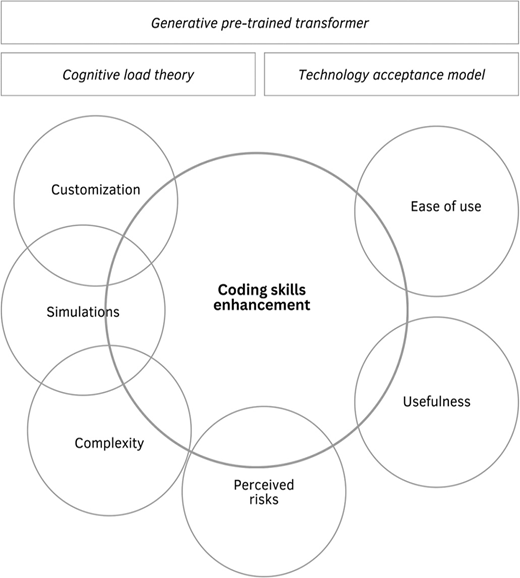
This study integrates the TAM and CLT to introduce a rich model for describing GPT’s role in enhancing skills in coding. Perceived ease of use and perceived usefulness have, according to TAM, been argued to be key drivers of technology acceptance and use (Davis, 1989). In GPT, perceived ease of use and perceived usefulness can then refer to students’ trust in GPT’s ability to enhance skill in coding, and students’ ease in using GPT, respectively. According to CLT, learners’ cognitive capabilities and instruction’s role in regulating cognitive load for effective instruction have, in contrast, been stressed. Integrating TAM and CLT in this study, therefore, suggests that students’ perceived ease of use and perceived usefulness of GPT have a direct role in students’ cognitive load in using GPT, but not necessarily positively, when GPT is perceived to be complex to use, and therefore, frustration and heightened cognitive load could become barriers to effective instruction, even when its value in enhancing skill is appreciated. Besides, GPT interfaces’ design and types of activity for which GPT is used can have a direct role in cognitive load, too. Efficient interfaces and simple, unobstructed activity allow learners to pay attention to key dimensions of coding, and deepen processing and skill development.
The model in Figure 1 demonstrates how GPT characteristics, such as ease of use, complexity, simulations, perceived risks, usefulness and customization, relate to each other and affect the CSE of IT students.

3. Methodology
The present investigation uses a quantitative research strategy to methodically examine the possibilities of GPT models in the context of computer skills development, particularly coding and programming. Data from a sample of undergraduate IT students were gathered for the cross-sectional design (between December 2023 and February 2024).
The approach of stratified random sampling is used. It guarantees that the population is represented in terms of perspectives, professional levels and educational backgrounds. The power analysis is used to establish the sample size to guarantee that the study’s conclusions are statistically significant. It was essential to make sure the sample size was representative and sufficient to approach saturation given the vast number of IT students in the country. Therefore, this study adhered to the rule proposed by Krejcie and Morgan (1970), which suggests a minimum sample size of (n 384). However, since the study focuses on those who have tried GPT-4 models specifically and used the creative simulation features (Check eligibility part), the sample size is expected to be more specific and narrowed.
The instrument was created with Google Forms and is broken up into five different sections. Section 1 (Welcome and consent) introduces the study’s objectives, outlines the rules and ethical conduct, and obtains participant consent through a checkbox question. Section 2 (Eligibility of participation) verifies participant eligibility through three questions:
If the participant is an undergraduate IT student.
If they have used any GPT-4 tools.
If they have tried any of the simulation or creative generation modes of GPT-4 or beyond such as DALL-E, Codex and Whisper.
Demographic data is gathered in Section 3 (Background), which includes the students’ gender, study level, major and the number of hours per day spent using GPT tools for CSE.
The seven variables (6 independent and 1 dependent) are assessed using a seven-point Likert scale in Section 4, “Measurement”, where 1 represents “strongly disagree” and 7 represents “strongly agree”. All the questionnaire statements were imported from earlier research ( Appendix 1). There are optional open-ended questions in the last section (the “Open part”) for further explanations or remarks. The respondent’s interaction with the questionnaire is depicted in Figure 2.

The variables in the present study were measured using items drawn from a range of well-established scales, allowing for a deeper examination of each of the constructs in the specific GPT use for CSE improvement scenario. Most constructs, with one source, captured the most important dimensions of that specific scale (e.g. perceived customization drawn from Guilabert (2005) and perceived simulations drawn from Unver et al. (2017). Certain constructs, nevertheless, acquired items drawn from a range of sources. For example, items for perceived usefulness were drawn from Yilmaz et al. (2023) and Mathwick et al. (2010). The same is true for the CSE variable, which was drawn from Bergdahl et al. (2020) and Shaikh et al. (2023). Drawing items for such constructs through a range of sources enabled a fuller examination of a construct, in consonance with the objective of providing a rich, in-depth analysis of factors driving CSE through GPT use in the present study.
In the first two weeks, the response rate was lower than expected. An innovative mechanism was adopted to address this: A draw on a 3-month subscription to a GPT model or learning platform. The premium subscription includes a GPT model like ChatGPT-4 by OpenAI or a platform like Coursera or edX. Besides incentivizing participation, this approach provides winners with further opportunities for CSE. To guarantee the rights and efforts of previous respondents. All previous submitters were asked to re-submit their responses. The old responses were deleted, and the data collection started again. This method is supported by Hamari et al. (2014)), who reported that gamification and prizes can increase engagement and participation rates. Although the reward was posted afterward in response to a low initial reaction, and all such early submissions have been withdrawn with respondents encouraged to submit again, even then, the opportunity for recruiting participants with a high motivation for reward in preference to a genuine concern with the issue of investigation cannot be totally avoided. It could bias the sample toward participants with high motivation for technology use and/or toward access to high-value services and, in consequence, affect the generalizability of the findings (Kuvaas et al., 2015).
This strategy led to a significant increase in the response rate in February 2024. Approximately (n = 630) questionnaires were sent. The total responses received were (n = 461). However, (n = 132) respondents answered “No” on at least one of the three filtration/eligibility questions. Consequently, (n = 329) responses were initially eligible and considered for screening. After screening and preliminary cleaning, (n = 21) replies were eliminated and the rest (n = 308) passed to the analysis stage (completely eligible). The retrieval rate was ( ≈ 73.17%), and the eligibility ratio was ( ≈ 66.81%).
The study’s procedures were carried out systematically, starting with the questionnaire design and development using Google Forms. The questionnaire was then distributed, and participants were invited to participate and enter the draw. The responses received were screened and cleaned, excluding incomplete or missing responses. The remaining responses were analyzed. Selection bias, response bias and nonresponse bias were among the potential causes of bias that were taken into account and countered. The common bias was tested through Harman’s single-factor test. With seven variables in our model (six independent and one dependent variable), an exploratory factor analysis (EFA) for all 32 items was conducted. Sufficient common method bias exists when a single factor can explain a high proportion (typically 40% and over) of variance in the data (Podsakoff et al., 2003). EFA revealed that all seven factors extracted eigenvalues over 1. The first one extracted a mere 8.9% of the variance, below 40% and does not disclose any significant common method bias. All seven factors extracted cumulatively extracted 41.4% of the variance, and items loaded onto several discrete factors in conformation with a theoretical model.
A number of analyses were carried out using the Python programming language to guarantee the accuracy and relevance of the results. Confirmatory factor analysis was conducted to affirm the validity of the model and ensure that the measured variables accurately represented the constructs of interest. Additionally, reliability tests were conducted to assess the consistency of the measurements. Later, the analysis’s pillar was structural equation modeling (SEM), which made it possible to examine and analyze the framework and conceptual foundations simultaneously. However, dividing the information into groups reduces observations in each group and, in consequence, can reduce one’s ability to detect statistically significant effects. Consequently, the generalizability of any conclusion drawn about subgroup comparisons must then be taken with caution. In future studies with increasingly larger and larger samples, a strong recommendation is for them to correct for this flaw.
4. Findings
4.1 Participant’s demographic
Section 3 of the research instrument addresses the participants’ backgrounds and demographics. There were (n = 5) questions under this section, and (n = 4) of them were required, which are shown in Table 1. Students studying computer science make up 23.4% of the responders. Computer information systems, business information systems and AI students comprised 20.1%, 16.2% and 15.6% of the sample, respectively. Male students constitute (48.7%), and fourth-year students and after were the most at (41.6%). The sample reported a broad variation in the frequency of using GPT resources for CSE on a daily basis. The highest frequency of users (32.5%) used the models for 1–2 h each day, while the lowest percentage (12.0%) used them for longer than 4 h daily.
Characteristics of the sample
| Question | Options | Frequency | % |
|---|---|---|---|
| Gender | Male | 150 | 48.7 |
| Female | 140 | 45.5 | |
| Prefer not to say | 18 | 5.8 | |
| Study level | First year | 40 | 13.0 |
| Second year | 58 | 18.8 | |
| Third year | 82 | 26.6 | |
| Fourth year and after | 128 | 41.6 | |
| Student major | Computer science (CS) | 72 | 23.4 |
| Computer information systems (CIS) | 62 | 20.1 | |
| Business information systems (BIS) | 50 | 16.2 | |
| Artificial intelligence | 48 | 15.6 | |
| Other IT majors | 76 | 24.7 | |
| Daily GPT tools usage for learning | Less than 1 h | 70 | 22.7 |
| 1–2 h | 100 | 32.5 | |
| 2–3 h | 62 | 20.1 | |
| 3–4 h | 39 | 12.7 | |
| More than 4 h | 37 | 12.0 |
4.2 Credibility measures
The study’s constructs show strong validity and reliability. Significant correlations between items and their constructs are shown by the fact that all factor loadings (λ) are higher than the cutoff of 0.7. Good internal consistency and reliability are indicated by Cronbach’s alpha (Ca) values ranging from 0.7235–0.9185 and composite reliability (CR) values ranging from 0.8725–0.9354. The range of average variance extracted (AVE) values, which are over the 0.5 criterion and show good convergent validity, is 0.6315–0.7436. Table 2 shows the validation and reliability measures.
Reliability and validity measurement
| Variable | Item | λ | Ca | CR | AVE |
|---|---|---|---|---|---|
| GPT-Perceived customization | GPT-PC1 | 0.8364 | 0.7764 | 0.8945 | 0.6802 |
| GPT-PC2 | 0.7970 | 0.9183 | |||
| GPT-PC3 | 0.8811 | 0.8792 | |||
| GPT-PC4 | 0.7807 | 0.8988 | |||
| GPT generated simulation | GPT-GS1 | 0.8804 | 0.9146 | 0.9354 | 0.7436 |
| GPT-GS2 | 0.9130 | 0.8223 | |||
| GPT-GS3 | 0.8627 | 0.8956 | |||
| GPT-GS4 | 0.8522 | 0.9021 | |||
| GPT-GS5 | 0.7992 | 0.9001 | |||
| GPT complexity | GPT-C1 | 0.7717 | 0.7927 | 0.8881 | 0.6660 |
| GPT-C2 | 0.8273 | 0.8287 | |||
| GPT-C3 | 0.7611 | 0.8197 | |||
| GPT-C4 | 0.8970 | 0.8525 | |||
| GPT perceived risks | GPT-PR1 | 0.7956 | 0.8471 | 0.8994 | 0.6418 |
| GPT-PR2 | 0.8001 | 0.8680 | |||
| GPT-PR3 | 0.8241 | 0.7336 | |||
| GPT-PR4 | 0.8415 | 0.9019 | |||
| GPT-PR5 | 0.7407 | 0.8909 | |||
| GPT perceived ease of use | GPT-PEU1 | 0.8504 | 0.7638 | 0.8854 | 0.7206 |
| GPT-PEU2 | 0.8120 | 0.8239 | |||
| GPT-PEU3 | 0.8827 | 0.8124 | |||
| GPT perceived usefulness | GPT-PU1 | 0.7622 | 0.8629 | 0.8725 | 0.6315 |
| GPT-PU2 | 0.8512 | 0.8272 | |||
| GPT-PU3 | 0.7710 | 0.7235 | |||
| GPT-PU4 | 0.7913 | 0.7371 | |||
| CSE | CSE1 | 0.7710 | 0.9089 | 0.9228 | 0.7060 |
| CSE2 | 0.8870 | 0.8082 | |||
| CSE3 | 0.7816 | 0.8906 | |||
| CSE4 | 0.8562 | 0.7505 | |||
| CSE5 | 0.8970 | 0.8113 |
Table 3 presents the Fornell–Larcker criterion results, which are crucial for assessing discriminant validity in the study’s constructs. The diagonal elements, which are the square roots of the AVE for each construct, demonstrate that each construct shares more variance with its measures than other constructs, thus satisfying the primary condition for discriminant validity.
Fornell–Larcker criterion
| Construct | GPT-PC | GPT-GS | GPT-C | GPT-PR | GPT-PEU | GPT-PU | CSE |
|---|---|---|---|---|---|---|---|
| GPT-PC | 0.825 | ||||||
| GPT-GS | 0.598 | 0.862 | |||||
| GPT-C | −0.625 | −0.603 | 0.816 | ||||
| GPT-PR | −0.610 | −0.570 | 0.605 | 0.801 | |||
| GPT-PEU | 0.533 | 0.556 | −0.602 | −0.532 | 0.848 | ||
| GPT-PU | 0.547 | 0.5335 | −0.581 | −0.591 | 0.490 | 0.795 | |
| CSE | 0.695 | 0.652 | −0.681 | −0.674 | 0.658 | 0.665 | 0.840 |
4.3 Hypotheses testing
All GPT features show strong connections with CSE for undergraduate IT students based on the correlation analysis. With a correlation of (r = 0.707), the GPT-GS and CSE had the strongest connection, indicating that the immersive and interactive aspect of simulations is crucial in enhancing coding skills for IT students. The association between GPT-PC and CSE, which has a r = 0.695, comes second. GPT-PEU and GPT-PU had the lowest correlation, with an (r = 0.490), on the bottom end of the range.
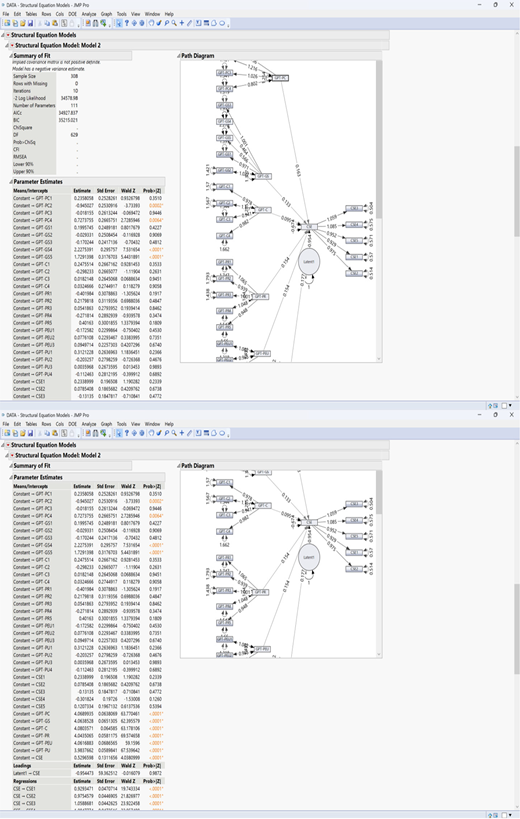
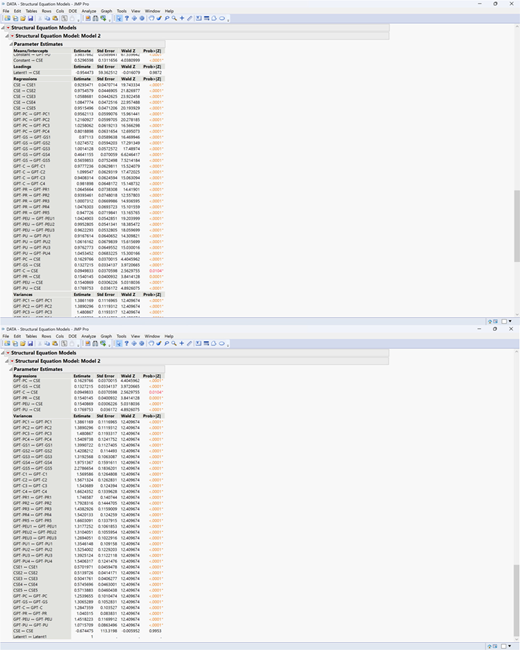
The SEM results in Table 4 provide strong insights into the correlations between the GPT characteristics and CSE. The statistical analysis confirms the six hypotheses associated with the effects on CSE (see Appendix 2).
SEM results
| Regressions | Estimate | Std error | Wald Z | Prob>|Z| |
|---|---|---|---|---|
| GPT-PC → CSE | 0.1629766 | 0.0370015 | 4.4045962 | <0.0001* |
| GPT-GS → CSE | 0.1327215 | 0.0334137 | 3.9720665 | <0.0001* |
| GPT-C → CSE | 0.0949833 | 0.0370598 | 2.5629755 | 0.0104* |
| GPT-PR → CSE | 0.1540145 | 0.0400932 | 3.8414128 | 0.0001* |
| GPT-PEU → CSE | 0.1540869 | 0.0306226 | 5.0318036 | <0.0001* |
| GPT-PU → CSE | 0.1769753 | 0.036172 | 4.8926075 | <0.0001* |
Note(s): *Significance of 0.05 (5%) level
GPT-PC positively impacted CSE with an estimated β = 0.1630, standard error SE(β) = 0.0370 and a statistically significantly different Z statistic and value of Z = 4.4046 and p < 0.0001*, respectively. It interprets that customized GPT features to enhance the coding skills of IT students. For H2, the estimate was β = 0.1327, with Z = 3.9721 and p < 0.0001*, respectively, showing that GPT-GS also enhances the coding skills of IT students. These findings highlight the critical role that simulation aspects play in GPT tools for coding learning. Nevertheless, complexity adversely affected CSE (β = 0.0950, p = 0.0104*) in light of the reverse coding and hypothesis statement, suggesting that complexity levels in GPT applications might impede learning coding by posing a variety of difficulties to users. Perceived risks also revealed a negative connection (β = 0.1540, p = 0.0001*) with CSE, suggesting that the factor could dissuade the learning strategy for IT students. Conversely, GPT-PEU has shown a favorable impact on CSE (β = 0.1541, p < 0.0001*), highlighting the significance of intuitive GPT applications in promoting coding knowledge. Finally, GPT-PU significantly improved CSE (β = 0.1770, p < 0.0001*), emphasizing the critical role that perceived usefulness plays in CSE for learners in the digital era. All of these results point to the importance of customization, utility, usability and simulations of GPT technologies in improving coding skills for future programmers. However, learning functionality is hindered by these systems’ perceived hazards and complexity. The empirical results obtained from the SEM path plot depicted in Figure 3 strongly support the 6 hypotheses related to the impact of GPT characteristics on the CSE of IT students in Jordan.

Analysis and results in the SEM section focused on the check for any overfitting. Though all hypotheses were significant, further steps had to be taken to ensure that the model was robust enough and the validity was appropriate. In particular, model fit indices were examined in detail to make sure this model did not show any signs of overfitting. These acceptable fit values – RMSEA below 0.08 and CFI values above 0.90 – Strongly suggest that the findings are consistent with the theoretical framework rather than an artifact of overfitting aligning with Hu and Bentler (1999). Additionally, steps were taken to ensure that the model did not include unnecessary parameters that could compromise its interpretability. Examples are the Akaike Information Criterion and Bayesian Information Criterion parsimony tests; this process increases the veracity of the results and reduces the risk of overfitting in analyses.
5. Discussing the findings
The way in which the outcomes of the first two hypotheses are discussed is based on how technology is becoming more and more integrated into the CSE industry. Regarding this, the initial hypothesis (H1) posited that GPT customization positively affects the CSE of IT students. This hypothesis aligns with the literature that underscores the pivotal role of technology customization in enhancing learner engagement and outcomes. This hypothesis is supported by the significant positive relationship of r = 0.695 that existed between GPT-PC and CSE. This result came close to what Olakanmi et al. found in 2020, which underscores the need for fine-tuning technology tools to suit the specific demands of learners with cognitive and developmental disabilities. In addition, as explained by Vandewaetere and Clarebout (2014), technology is exemplified in the context of GPT-PC, enhancing the personalization and interactivity of learning experiences, a sentiment echoed in the corporate learning environments analyzed by Beer and Mulder (2020). The second hypothesis (H2) considered the impact of GPT-GS on CSE, highlighting the increasing importance of interactive and immersive learning experiences as outlined by Glaser (2023). The positive effect of GPT-GS on CSE is corroborated by the SEM results, reflecting the efficacy of simulations in enhancing germane cognitive load.
These findings, in real-world contexts, show that GPT technologies should be used in those educational programs that have the most robust potential for customization and simulation-based support of learners’ cognitive architectures. For example, in business education, this implies applying GPT-driven tools to generate case studies attuned to the different levels of learning by IT students or to simulate market scenarios where students can make strategic decisions without risk. DALL-E (An OpenAI model) can be leveraged to create visual aids and custom simulations for complex concepts, thereby aiding in reducing extraneous cognitive load and bolstering germane cognitive processing.
GPT-4 enables business executives and students to build market strategy acumen and cross-cultural negotiation competencies by using AI-driven communication scenarios through dynamic trade simulations. It enhances language capability with interactive practice and localization exercises. Simulated dilemmas explain international legal and ethical standards, sharpen financial forecasting by using reactive economic models, enhance the resilience of supplies by virtual disruption management and allow practical experience with simulated internships and business projects from a global perspective. Such applications foster engagement and motivation and significantly enhance learning by aligning with individual learning paths and reinforcing concepts through practical application.
The third and fourth hypotheses – concerning the complexity and perceived risks of GPT models, respectively – present a nuanced picture of the influence of advanced technologies on CSE. Contrary to the positive effects anticipated from technological integration into educational settings, the results indicate a negative impact, necessitating a critical examination of GPT deployment in educational contexts. H3 predicted that the complexity inherent in GPT models, such as GPT-4, could impede learning by overburdening students with information that exceeds their cognitive processing capabilities. Additionally, students may have trouble choosing the appropriate GPT model or alternating between many of them (DALL-E, Codex, Whisper, MuZero, etc.). Practically speaking, this may show itself as a situation where foreign business students struggle to understand and use the complex features of a GPT-based tool in real-world business analyses, which would slow down their learning curve. Similarly, the possible consequences of careless technology usage are highlighted by the perceived threats, which include the spread of false information, plagiarism and the maintenance of prejudices. Crowther and Hamdan (2024) contend that AI’s effectiveness is often circumscribed by the simplicity and direct utility perceived by its users. This alignment is crucial in educational settings where the complexity of AI tools can either facilitate or hinder the learning process. These risks facilitate the spreading of incorrect or biased information, hence putting educational outcomes at risk. Furthermore, as Wu et al. (2023) affirm, due to their huge data-learning ability, GPT models might be capable of compromising users’ security and privacy. In the event that the data contains sensitive information (passwords, user IDs, payment details), the model may provide outputs that disclose personal information. Finally, hackers might target LLMs, meaning that they can alter data or gain unauthorized access to users’ personal information, posing a big risk to users, including learners.
The findings from the fifth and sixth hypotheses are backed by the TAM, which shows that how useful and easy to use a technology is significantly influences its acceptance and beneficial use in educational environments. The GPT models’ simplicity of use improves learning results and aligns with Yilmaz et al’s. (2023) findings, which highlighted students’ favorable sentiments with ChatGPT. This is corroborated by Abaddi (2023), indicating that the simplicity of using GPT technologies can shape the learning curve of digital entrepreneurs, facilitating the development of business acumen. For example, the student efficiently performing market research with the help of some GPT-based system could approach rather complex business ideas and create effective learning performance or practical skills. A user-friendly interface, pertinent replies, instant responses or short ones, usefulness and flexibility are possible features of GPT-PEU.
The most important factor, based on the findings, was the GPT models’ utility. This validates Faruk et al.’s (2023) research, which emphasizes that the practical benefits of ChatGPT drive its adoption among learners. In a similar vein, Kashive et al. (2020) have highlighted the role that users’ feelings about the utility and the ease of use of e-learning platforms play in their satisfaction with them, directly impacting their desire to use them. GPT models make available real-time market analysis, feasibility studies and company plans to global business experts and IT students, enhancing their ability immensely both to remain competitive and to make very informed decisions. Moreover, these models may help with language translation, which simplifies the process of comprehending foreign business reports as opposed to distracting users with several tabs or programs during learning. The model’s capacity to condense extensive business case studies, educational materials or intricate business principles that require hours of study and effort is another illustration of its utility. The models are handy and suitable since they can also capture notes and save them in many formats (written, voice, picture, etc.).
5.1 Implications
The study’s theoretical ramifications contribute to our comprehension of CLT and TAM in relation to cutting-edge AI technology, GPT. The design and application of AI technology in educational contexts may be revised, according to this study, especially for IT students. It necessitates striking a harmonic balance between reducing complexity and decreasing perceived risks to prevent cognitive overload and improve learner satisfaction and using the sophisticated capabilities of GPT models to deliver individualized, interesting and practical learning experiences. The undesirable outcomes that ensued underscore the need for careful thought concerning CLT – in particular, striking a balance between intrinsic, extrinsic and germane cognitive loads. The simplicity and clarity of instructional design in AI-based learning aids are further underscored by the study’s position that overly complicated GPT functions may cause cognitive overload in learners and reduce learning effectiveness. Additionally, the perceived risks, like incorrect information or ethical problems, can create extra mental stress, making it harder for students to focus on the crucial parts of their learning.
Several practical implications guide how GPT models can be integrated within the framework of CSE. First, educators and technology developers should embrace the customization that different GPT tools allow to develop and adapt programming learning experiences to the needs and preferences of a single learner; second, practical risk-free simulation environments can be fostered where theory can be bridged into practice. Third, developers should pay attention to user interfaces and provide clear instructions to reduce cognitive load and facilitate seamless learning experiences. Fourth, educational institutions should launch awareness campaigns concerning disinformation, data privacy and moral dilemmas. GPT models can act as supporters rather than rely on them absolutely. In parallel, organizations must ensure robust data security measures to protect user data and build trust. Mitigating perceived danger entails prioritizing security and transparency in terms of information and responsible AI use for students and instructors, respectively and overcoming academic integrity concerns. Similarly, minimizing perceived complexity entails ease of use in terms of interfaces and orderly training for students and instructors, transforming potential barriers into channels for accessible instruction. Finally, an international body has to be launched that will preside over developing NLP and AI models, including GPT. It should make sure that they all work within the rigid ambit of ethical standards with due respect for user privacy.
5.2 Ethical considerations
The ethical school environment for AI, particularly in terms of GPT models, must be addressed with care. Two such concerns in this case include security and academic integrity. GPT models require that information must be shared with its users, and with it, security and privacy concerns about its use arise. Schools and individual students must attend to security concerns in information sharing and have strong information protection protocols in place. Secure platforms, information anonymization wherever possible, and compliance with relevant information privacy legislation (e.g. GDPR) must be in place. Transparent information regarding use policies and information access for its users must exist for trust and responsible AI use to build up.
Academic integrity is yet another critical ethical concern. How easily GPTs can generate code or text creates cheating concerns and disrespects the actual creation of learning. Teachers will have to adapt evaluation methodologies to assess high-order thinking, problem-solving and application of information, not simple use of easily generated output. Having specific policies for proper use of GPT in academic settings is critical. That could include specifying when GPT can function as an aide, when it cannot, and under what terms its use must be acknowledged. Inoculation with an academic integrity ethic and a regard for original thinking and mental work is critical for overcoming AI’s ethical challenges.
Based on the overall ethical concerns regarding GPT in educational environments, we present some guidelines for safe and responsible use of these models:
Implement robust controls for protecting user’s data, including secure platforms, anonymization and compliance with data protection legislation and regulations.
Adopt explicit policies for the academic use of GPT in academic settings. Reorient testing and evaluation methodologies toward testing for deeper thinking and instilling an atmosphere of academic integrity.
Incentivize GPT models with explanations for their output, allowing for transparency and critical analysis.
Warn users about the vulnerability of AI-generated output to bias and encourage critical thinking when dealing with information received via GPT models.
Implement human supervision in using GPT in educational environments so that AI collaborates with humans and does not substitute them.
Regularly evaluate the ethical implications of GPT usage in education and adapt guidelines and practices as needed to address emerging challenges.
6. Conclusions
The influence of GPT model features, including perceived customization, risks, ease of use and usefulness, on CSE among IT students was thoroughly examined in this study. This study found, using the TAM and CLT as propositional guiding frameworks, that complexity and perceived risks diminish CSE, while perceived ease of use, usefulness, simulations and customization positively enhance CSE. As a result, instructional technology has to be simple to use and effectively incorporated into classroom settings. It is advised to strike a delicate balance between making the most of the GPT models’ inventive potential and guaranteeing their privacy and safety.
Future studies should examine the long-term impacts of integrating GPT into educational environments, particularly how it affects the development of coding skills and information retention over time. Additionally, investigating the role of individual differences, such as learners’ prior knowledge, learning styles and attitudes toward AI, could provide deeper insights into how to optimize GPT-based learning experiences. Coming studies can also explore the long-term GPT tool impact on skill development in coding via longitudinal studies. Longitudinal studies can use a range of methodologies, such as experimental studies contrasting a control group with conventional instruction in coding with a group with GPT-facilitated instruction and real-world coding projects to evaluate real use. Asking about teacher experiences with adding GPT to instruction via the survey will also provide useful information. Comparative analysis with competing AI coding assistants, such as GitHub, Gemini, Copilot and AlphaCode, is merited.
A main study limitation is its generalizability. The study is conducted in Jordan and the findings may not apply to other nations. Another limitation is its focus on IT students (based on the selection of the dependent variable), which might restrict how broadly the results could be applied to other settings and fields. Furthermore, given how quickly GPT technologies are developing, their effects and educational uses must be regularly reevaluated. Finally, after large effort the sample size reached (n = 308), future research is recommended to expand the sample for better representations.
The author(s) extend their sincere gratitude to the editors of the Journal of Ethics in Entrepreneurship and Technology, and the anonymous reviewers for their invaluable feedback and insightful suggestions.
References
Further reading
Appendix 1. Questionnaire
The instrument of the study/source: author’s creation
| Variable | Item# | Question | Link |
|---|---|---|---|
| GPT-PC | GPT-PC1 | “The features of GPT are adaptable to meet my individual needs” | Guilabert (2005) |
| GPT-PC2 | “The technology utilized allows for a high degree of customization to align with my requirements” | ||
| GPT-PC3 | “It seems that the services offered by GPT models are highly customizable” | ||
| GPT-PC4 | “GPT is tailored to suit my specific needs” | ||
| GPT-GS | GPT-GS1 | “I learned new concepts while using the GPT simulation” | Unver et al. (2017) |
| GPT-GS2 | “The simulation provided various ways to enhance my coding skills through GPT models” | ||
| GPT-GS3 | “Experiencing the simulation was clear, straightforward, and easy to comprehend” | ||
| GPT-GS4 | “GPT simulations are tailored to match my specific level of knowledge and skills” | ||
| GPT-GS5 | “The simulations in GPT accurately reflect my prompts” | ||
| GPT-C | GPT-C1 | “The process of creating an account or logging in requires significant time and effort” | Paré and Sicotte (2001) |
| GPT-C2 | “I find the dictation, audio, and video input system in GPT models to be complex” | ||
| GPT-C3 | “Switching between GPT modes is quite sophisticated” | ||
| GPT-C4 | “Choosing the correct mode I want to use is challenging” | ||
| GPT-PR | GPT-PR1 | “I feel insecure when using GPT” | Chiu et al. (2014) |
| GPT-PR2 | “I worry that utilizing GPT might lead to accusations of plagiarism” | Sallam et al. (2023) | |
| GPT-PR3 | “The information provided by GPT could potentially be misleading or unreliable” | ||
| GPT-PR4 | “There is a concern that the use of GPT models may unintentionally introduce or perpetuate biases in the coding skills enhancement process” | ||
| GPT-PR5 | “Using GPT could likely result in a loss of control over the privacy of my personal and payment information” | Giovanis et al. (2012) | |
| GPT-PEU | GPT-PEU1 | “I find GPT models to be user-friendly tools” | Yilmaz et al. (2023) |
| GPT-PEU2 | “Using GPT models is straightforward”.them to do” | ||
| GPT-PEU3 | “It is easy for me to get GPT models to accomplish what I need” | ||
| GPT-PU | GPT-PU1 | “I can quickly and easily find the information I need with the help of GPT” | Yilmaz et al. (2023) |
| GPT-PU2 | “For answering my questions, GPT serves as a valuable resource” | ||
| GPT-PU3 | “My ability to enhance coding skills is significantly improved with GPT” | ||
| GPT-PU4 | “By using GPT, I will save time in my coding skills development” | Mathwick et al. (2010) | |
| CSE | CSE1 | “To enhance my coding skills, I currently use GPT as a supportive tool” | Bergdahl et al. (2020) |
| CSE2 | “In the future, I envision utilizing GPT for my coding skills development” | Shaikh et al. (2023) | |
| CSE3 | “I believe that many students and professionals will rely on GPT for coding skills enhancement in the future” | ||
| CSE4 | “When I incorporate GPT models into my coding process, I find that my knowledge retention improves significantly” | ||
| CSE5 | “The use of GPT models greatly optimizes my experience in developing coding skills” | Bergdahl et al. (2020) |
Note(s): Minor adjustments were made to all items to align with the study’s purpose
Appendix 2. Analysis using JMP pro