The pandemic, disruptions to transportation networks, geopolitical conflicts and trade restrictions over the past five years have intensified attention to supply chain resilience (SCRes) from both academia and industry. At the same time, rapid digitalisation is transforming traditional supply chains. Although numerous studies have examined digital technologies or SCRes independently, limited attention has been given to the reciprocal interrelationships among digital technologies and SCRes dimensions. Given the interconnected nature of digital technologies and the multidimensional characteristics of SCRes, examining these reciprocal interrelationships is essential for capturing their collective influence. Therefore, this study aims to identify the digital technologies that influence SCRes and examine their interrelationships with the dimensions of SCRes, thereby clarifying the relative roles and influence of both digital technologies and SCRes dimensions in strengthening more resilient and sustainable supply chains.
We conducted a structured literature review (SLR) and consulted a hybrid panel of seven academic and industry experts to identify the key dimensions of SCRes and the digital technologies influencing them. We then worked with experts to prioritise these factors using the analytic network process (ANP), an extension of the analytic hierarchy process (AHP) that is well-suited to modelling the strong interdependencies and feedback relationships among digital technologies and SCRes dimensions. Data were collected in both 2023 and 2025 from the same experts to capture the changes in expert judgements over time.
We found that collaboration and Internet-of-Things (IoT) have exerted the strongest relative influence on SCRes. In particular, collaboration becomes the highest priority factor overall, whereas IoT is the highest priority digital technology within the proposed decision framework. Visibility and velocity follow as the next most influential resilience dimensions, while AI and blockchain, although lower ranked, exhibit increasing relative influence across the two assessment periods. We also argue that no single digital technology on its own is sufficient to achieve supply chain resilience. Successful adoption and implementation require an understanding of how these technologies mutually interact with SCRes dimensions. By explicitly accounting for these interdependencies, the proposed decision framework prioritises both digital technologies and SCRes dimensions according to their relative influence on supply chain resilience, providing practical guidance for organisations seeking to strengthen resilience.
This study advances the SCRes literature by proposing an integrated ANP-based framework that models the interdependencies and feedback relationships between digital technologies and SCRes dimensions. Unlike prior studies that examine technologies in isolation or treat resilience dimensions as independent constructs, the present study evaluates both the combined and individual influence of digital technologies within a multidimensional resilience framework. The study further contributes by organising the literature around digital technologies and SCRes dimensions, revealing their interplay through expert judgement and providing a temporal comparison of evolving priorities between 2023 and 2025. The findings further demonstrate that SCRes emerges through reciprocal interdependencies between digital technologies and multiple resilience dimensions rather than through isolated technological effects.
1. Introduction
Digital technologies in this study encompass digital systems and technologies for collecting, processing, communicating, integrating and automating supply chain activities including Internet of Things (IoT), blockchain, cloud computing, ERP systems, big data analytics, artificial intelligence (AI) and industrial robots (Yang et al., 2021). Natural disasters require mobilising all available resources across a supply chain. Geopolitical tensions (US–China trade war as well as ongoing wars in Ukraine and Palestine) force supply chain managers to rethink their sourcing, production and distribution (Roscoe et al., 2020; Lu et al., 2024; Moradlou et al., 2025). Digital technologies enhance visibility, support better anticipation of potential disruptions, facilitate collaboration and enable agility and flexibility within supply chains (Al-Talib et al., 2025). They play a significant role in mitigating risks to supply chain operations, preparing for disruptions, responding to disruptions and enabling recovery after the supply chain suffers from a disruption.
Supply chain resilience (SCRes) is a complex and multifaceted construct (Alikhani et al., 2021; Malekzadeh et al., 2025; Namdar et al., 2021). It indicates the ability of a supply chain to withstand disruptions as well as its capacity to recover quickly from them and grow (Pettit et al., 2013; Al-Talib et al., 2025). This holistic approach to resilience helps organisations maintain their competitiveness and customer satisfaction in an increasingly dynamic and unpredictable business environment. Although prior studies show that digital technologies support SCRes, much of the literature either examines individual technologies in isolation (Wu et al., 2025) or treats resilience dimensions as if they were independent. As a result, the reciprocal relationships between digital technologies and the multiple dimensions of SCRes remain insufficiently understood. Accordingly, this study examines three closely related research questions:
What are the interactions among the multiple dimensions of supply chain resilience?
How do digital technologies influence and shape these interactions?
How has the relative importance of digital technologies and resilience dimensions evolved between 2023 and 2025, when AI became a highly discussed subject?
In line with these research questions, this paper aims to identify digital technologies that affect SCRes and understand the interrelationships between these technologies and dimensions of SCRes. To address this gap, we develop a three-phased research methodology to answer the research questions and achieve the aim of this paper. We first conduct a literature review on digital technologies used in supply chains and factors that affect SCRes to systematically identify the resilience dimensions and technology categories that form the basis of our model. We then collect expert judgements from academics and practitioners to understand the relationships between these factors in the second phase. Because these relationships reveal mutual dependencies and feedback loops rather than a simple hierarchy, we employ the analytic network process (ANP) to model and prioritise them. The outcome of the second phase shows that the digital technologies and SCRes dimensions form an interdependent network rather than a set of isolated factors. Therefore, finally, in the third phase, we assess the influence of each factor in achieving SCRes using the ANP.
Our contribution to knowledge can be summarised in three main points. First, we provide a clear organisation of the literature in terms of digital technologies and dimensions of SCRes. Second, we reveal the interplay between digital technologies and SCRes backed with expert judgements, showing that resilience is shaped by reciprocal organisational and technological dependencies rather than by any single technology in isolation. Third, we collect data in 2023 and then in 2025 to show how the influence of digital technologies and dimensions of SCRes changed over time. This temporal comparison captures how expert judgements and relative priorities evolved across two points in time. While the priorities have shifted from 2023 to 2025, the overall influence ranking remained stable, with collaboration at the top as the most influential factor affecting SCRes. The present research adds to the existing body of knowledge by progressing from the mere identification of digital technologies or SCRes components towards a priority architecture that recognises the importance of dependency among them.
2. Literature review
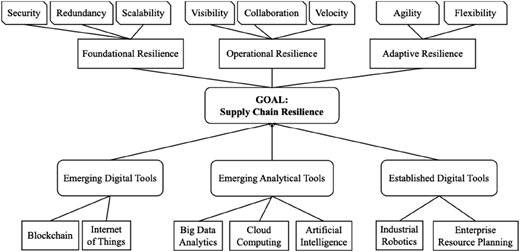
The literature review is structured to first introduce the concept of SCRes and categorise it into foundational, operational and adaptive dimensions for taxonomy clarity (Figure 1). It is important to note that while this conceptual framework organises the literature, these dimensions do not operate in a strict, top-down hierarchy. In practice, they are highly interdependent and exhibit significant feedback loops. This initial taxonomy provides a basis for identifying the variables that will subsequently be modelled as an interconnected network to examine how digital technologies influence SCRes. Accordingly, Figure 1 should be interpreted as a conceptual grouping of resilience dimensions rather than as the operational decision structure itself. These three categories (foundational, operational and adaptive resilience) are used as a parsimonious classification scheme rather than as comprehensive or mutually exclusive classifications. Visibility, collaboration and velocity are grouped as operational resilience because they facilitate continuity, coordination and responsiveness during disruptions, while agility is grouped as adaptive resilience because it facilitates reconfiguration under changing conditions. Consequently, this categorisation is more analytical in nature rather than designed as a substitute for traditional SCRes approaches.
We then present emerging and established digital technologies that contribute to building resilient supply chains. The emerging/established distinction is used only to provide contextual background and should not be interpreted as a strict or permanent taxonomy. Finally, we synthesise the literature to identify the technologies and resilience dimensions that are consistently represented across prior studies and can be operationalised in our analytical model. We then ask the experts about the relationships between these technologies as well as SCRes dimensions, and we argue for the use of multiple criteria decision making (MCDM) and, more specifically, the ANP, because these relationships involve mutual dependencies and feedback effects rather than independent criteria.
2.1 Supply chain resilience
SCRes is widely recognised as a multifaceted construct. However, many dimensions identified as essential to SCRes are often examined in isolation, with limited attention to their synergistic and interdependent effects (Jiang et al., 2024). Supply chain digitalisation, which is defined as the adoption and management of digital products and services, digitally enabled operational processes and digital business models, has been shown to positively influence supply chain performance by strengthening resilience capabilities (Zhao et al., 2023). Building on this perspective, we conceptualise SCRes as an integrated construct comprising foundational, operational and adaptive dimensions, which are analytically separated for clarity but understood to be highly interdependent in practice. The resilience-related factors included in this framework were derived through the structured literature review (SLR) and refined through expert consultation. Specifically, dimensions that appeared repeatedly in prior SCRes studies and could be clearly distinguished conceptually were retained for further analysis. These literature-derived dimensions were then reviewed with the expert panel to confirm their relevance, clarity and suitability for ANP modelling. Foundational resilience refers to baseline protective capacity, operational resilience to continuity and coordinated response during disruption, and adaptive resilience to the ability to reconfigure and evolve under changing conditions. The following sections explicate these dimensions.
2.1.1 Foundational resilience
Resilience is the ability of a system to: (1) provide continuous operation, (2) recover effectively if a failure does occur and (3) scale to meet rapid or unpredictable demands. We consider security, redundancy and scalability (Ivanov, 2022; Trucco and Petrenj, 2023) as the core aspects of resilience and refer to them as “foundational resilience”. Without security, redundancy and scalability, resilience is impossible. These dimensions are not intended to exhaust all resilience-related concepts identified in the literature; rather, they represent a parsimonious set of foundational elements that emerged consistently in the structured review and could be clearly modelled in the ANP framework. We elaborate on these aspects in the following subsections.
Security refers to the organisational or technical methodologies available to make the supply chain less vulnerable to threats such as cybersecurity, terrorism, smuggling, malicious activities, fraud, contraband, criminality, non-compliance, piracy, etc. (Annarelli et al., 2020). Security, as an umbrella term, includes cyber-security, information security, physical security and freight security. Cybersecurity aims to protect against the unauthorised or criminal use of electronic data (Garay-Rondero et al., 2020); however, the risks associated with connecting data sources need to be recognised and mitigated. Information sharing and security are related to SCRes, as many organisations underestimate the protection of information as an intangible product in supply chain management (Sadeghi et al., 2025). Freight and physical security is concerned with building and sustaining a security-conscious culture, implementing measures to detect and prevent counterfeiting and developing cooperative strategies with supply chain partners (Moatari-Kazerouni et al., 2025). The human–machine interface is a combination of hardware and software that allows developing industrial applications to monitor and visualise real-time data (Ardanza et al., 2019). It should meet all security requirements as well as those necessitated by certifications and regulations.
Redundancy is the maintenance of extra capacity or capability in case of supply deficiencies. For example, in the context of digital maturity, maintaining access to duplicate or redundant facilities and equipment is considered a part of making assets available to sustain production levels (Zouari et al., 2021; Kamalahmadi et al., 2022).
Scalability refers to a system's ability to handle and accommodate increased or decreased demands, workloads or growth. It provides flexibility. Scalability is related to the role of inter-organisational relationships in aligning incentives (risk and reward) to advance SCRes (Fayezi and Ghaderi, 2022) in the face of increased market demand.
2.1.2 Operational resilience
Operational resilience refers to an organisation's ability to withstand, adapt and recover from disruptions, ensuring operational stability, robustness and continuity. The concepts of visibility, collaboration and velocity are critical enablers of operational resilience in modern supply chains and business operations (Razak et al., 2021).
Supply chain visibility (SCV) refers to the degree to which participants within a supply chain can access timely and accurate information that they deem essential or valuable for their operations (Barratt and Barratt, 2011; Barratt and Oke, 2007; Agrawal et al., 2024). SCV empowers stakeholders, such as suppliers, manufacturers and distributors, to make informed decisions, adapt to changes and coordinate efficiently, thereby enhancing the overall responsiveness, and hence, SCRes. More specifically, it refers to the visibility of demand and inventory information across the SC as well as the status and capacity of transport routes (Somapa et al., 2018). Visibility is seeing the supply chain from one end to another. Digitalisation can provide real-time visibility of inventory levels, shipments and other key information across the supply chain. This enables companies to quickly identify potential disruptions and take action to mitigate their impact. However, while digital supply chains increase visibility, insights and flexibility, the risk of losing control over data should not be underestimated (Garay-Rondero et al., 2020).
Collaboration within supply chains refers to the process of two or more partners working together to achieve shared goals, often through the joint planning and execution of operations, mutual information sharing and coordinated decision-making (Togar and Sridharan, 2002). Unlike simple cooperation, collaboration involves a deeper, recursive process marked by collective commitment and trust, aiming to create a competitive advantage that benefits all involved parties.
Digitalisation has further enhanced collaborative capabilities by enabling more seamless communication and integration among suppliers, manufacturers and stakeholders, thereby improving responsiveness to disruptions and fostering stronger relationships. As such, collaboration has become one of the most frequently discussed themes in supply chain literature, reflecting the growing recognition that firms must look beyond their organisational boundaries to remain agile and competitive in the face of market and supply chain uncertainty (Liao et al., 2017; Zaman et al., 2024).
Velocity is the speed at which goods or services move through the supply chain, as well as the speed at which data are generated and shared across the different nodes of the network. The information assets characterised by high volumes and velocity require dedicated technology and analytical methods to generate value (Huynh et al., 2023).
2.1.3 Adaptive resilience
Anticipation refers to an organisation's ability to foresee changes and potential disruptions before they materialise (Radhakrishnan et al., 2018). At a strategic level, supply chain adaptability refers to a firm's capacity to sense long-term, structural changes in the market and supply chain environment, such as economic, political, social, demographic or technological shifts, and to respond by reconfiguring supply chain structures, including sourcing strategies, production locations and outsourcing decisions (Eckstein et al., 2015).
Adaptive resilience is operationalised through agility and flexibility. Agility reflects the supply chain's ability to respond rapidly and effectively to short-term fluctuations, disruptions and changes in demand. It can be conceptualised as having cognitive and physical dimensions where managerial attention is usually on the physical dimension (Gligor et al., 2013). Digitally enabled supply chains enhance agility by supporting real-time data exchange and coordinated decision-making across interconnected actors, allowing swift and synchronised responses (Garay-Rondero et al., 2020). In this study, agility is positioned within adaptive resilience because it reflects the supply chain's capacity to reconfigure and respond under changing conditions, even though it is supported by operational capabilities such as visibility and velocity.
Flexibility, in turn, provides the structural capacity that enables such responses by allowing adjustments across multiple levels of the supply chain, including shop-floor operations, individual plants, firms and supply networks. It encompasses operations management and information systems flexibility (Malhotra, 2024). Digitalisation strengthens both agility and flexibility by enabling rapid reconfiguration of resources, suppliers and production schedules, thereby reinforcing adaptive resilience in the face of disruption.
2.2 Digital technologies
Digital technologies comprise a broad set of systems and tools that enable data collection, processing, communication and automation across organisational activities (Yang et al., 2021). In supply chains, technologies such as the Internet of things (IoT), artificial intelligence (AI), blockchain and advanced analytics directly support key dimensions of SCRes by enhancing visibility, facilitating collaboration and strengthening information integration and decision-making capabilities (Wu et al., 2025). These technologies enable firms to sense disruptions earlier, coordinate responses more effectively and adapt operations with greater agility and flexibility. Accordingly, supply chain information processing capability plays a pivotal role in resilience building, as it significantly improves the ability to anticipate, respond to and recover from disruptions across interconnected supply networks (Lu et al., 2024).
2.2.1 Emerging digital technologies
Blockchain technology, a decentralised digital ledger, enhances SCRes by improving transparency, traceability and security by enabling verifiable tracking of materials, processes and ensuring compliance across the network (Saberi et al., 2019; Jiménez-Castillo et al., 2024). By recording and sharing data across multiple nodes, blockchain reduces the risk of disruptions, as no single point of failure can compromise the entire system. In the event of a disruption, the decentralised nature ensures continuous access to information, facilitating faster recovery (Lohmer et al., 2020).
Furthermore, blockchain enables proactive risk management through smart contracts, automating purchasing processes and reducing human error. Its cryptographic techniques protect against data breaches and fraud, while its immutable audit trail captures organisational and network risks, helping to identify and address vulnerabilities (Syed et al., 2022). Overall, blockchain strengthens supply chains by providing a secure, transparent and resilient framework (Singh et al., 2023).
IoT refers to a network of interconnected physical devices embedded with sensors, software and other technologies that enable the collection and exchange of data over the Internet (Kumar et al., 2019). IoT is pivotal to the digital transformation of industries, supporting real-time data acquisition and analysis that drive operational efficiency and innovation across diverse sectors (Zhang et al., 2024). The integration of blockchain-based data aggregation techniques further enhances IoT network performance by improving data integrity, scalability and security within modern technological infrastructures (Tong et al., 2025).
RFID (Radio Frequency Identification) technology is integral to IoT, particularly in tracking and managing assets within industrial environments (Tan and Sidhu, 2022). RFID tags enable automated data collection, which is essential for IoT systems to function efficiently, especially in logistics and supply chain management. The adoption of IoT in manufacturing has also led to the rise of digital servitisation, where companies shift from selling products to offering services, thus innovating their business models (Paiola and Gebauer, 2020).
IoT applications are vast, ranging from smart cities and industrial automation to healthcare and agriculture (Mu and Antwi-Afari, 2024). These technologies enable industries to increase supply chain visibility, optimise operations, reduce costs and enhance productivity (Da Xu et al., 2014; Guo et al., 2021; Mu and Antwi-Afari, 2024). As IoT continues to evolve, its integration with digital technologies such as AI and blockchain strengthens its role as a cornerstone of modern innovation, opening new avenues for research and development (Ng and Wakenshaw, 2017; Shah and Yaqoob, 2016). In particular, blockchain-based solutions can effectively address critical challenges related to data integrity, security and transparency in IoT-enabled systems (Aoun et al., 2021).
2.2.2 Emerging analytical technologies
Big data analytics is the process of examining large and complex data sets to uncover hidden patterns, correlations and insights that can inform decision-making across various sectors (Elgendy and Elragal, 2014; Tsai et al., 2015; Ojeda et al., 2025). The field has evolved rapidly, with significant applications in areas such as intelligent manufacturing systems, where it enhances operational efficiency and supports the development of advanced production processes (Wang et al., 2022). Big data analytics is also increasingly integrated into automation and management systems, leveraging AI to optimise energy usage and improve sustainability (Himeur et al., 2023).
Despite its benefits, big data analytics faces challenges, including managing data uncertainty and the complexity of integrating diverse data sources (Hariri et al., 2019). The field's ongoing development is crucial for organisations aiming to gain a competitive edge by leveraging big data to drive innovation and strategic decisions (Ranjan and Foropon, 2021). As big data analytics continues to evolve, it will play a pivotal role in advancing technology and improving operational efficiencies across various industries (Wamba et al., 2017; Chen et al., 2016; Vassakis et al., 2018).
Cloud computing has transformed how data is stored, processed and accessed, offering scalable and flexible solutions for individuals and businesses. Broadly defined, it involves delivering services such as storage, computing power and networking over the Internet, enabling users to access data and applications from any location (Malik et al., 2018). This technology supports the growth of big data, which refers to vast datasets that can be analysed to identify patterns and trends, commonly used in business intelligence and scientific research (Xu et al., 2024).
Recent trends include the integration of cloud computing with the IoT, where cloud platforms manage data from IoT devices (Gammelgaard and Nowicka, 2024). Additionally, there is an increasing focus on enhancing security measures to address challenges related to data breaches and privacy (Alouffi et al., 2021).
Cloud computing is extensively utilised across sectors like healthcare, finance and education, offering solutions for data management, application deployment and collaboration (Marston et al., 2011). The flexibility of cloud services enables organisations to scale operations without significant upfront infrastructure investments (Durao et al., 2014; Lal and Bharadwaj, 2016), making them an essential element of resilience in dynamic environments (Ambilkar et al., 2025). Its role in integrating with IoT and blockchain suggests a growing impact across various sectors.
AI refers to the simulation of human intelligence in machines that are designed to think, learn and adapt autonomously. In the digital era, AI has emerged as a pivotal technology, transforming industries by enabling machines to perform tasks that typically require human intelligence, such as decision-making and problem-solving (Borges et al., 2021). AI's integration with digital technology has sparked significant innovation, particularly in areas such as big data analytics, automation and the IoT (Brem et al., 2021).
Recent trends in AI include the development of more sophisticated machine learning (ML) algorithms beyond large language models (LLMs), the rise of AI-driven digital assistants and the increasing focus on AI ethics and governance (Acharya et al., 2025; Stahl, 2021). AI's strategic application in digital transformation efforts has allowed organisations to enhance operational efficiency, personalise customer experiences and innovate product offerings (Brock and Von Wangenheim, 2019). AI's influence extends to various sectors, including healthcare, finance and manufacturing, where it drives advancements through predictive analytics, robotic process automation and intelligent systems (Ågerfalk, 2020).
As AI continues to evolve, its integration with digital technologies is increasingly shaping organisational processes, work practices and information flows (Bughin et al., 2017). While AI-driven digitalisation offers substantial opportunities for efficiency and value creation, it also raises important concerns related to ethical use, data privacy and security (Bughin et al., 2017). Beyond current task-specific applications, emerging discussions around artificial general intelligence (AGI) highlight the longer-term trajectory of AI development and its potential implications for the digital economy and sustainable development (Shalaby, 2025). Overall, AI represents a critical enabler within the broader digital transformation landscape, with impacts that continue to unfold incrementally rather than disruptively. This gradual but expanding role of AI helps explain why, in our findings, AI gains influence over time while remaining lower-ranked within the broader network of SCRes dimensions and digital technologies such as industrial robotics and redundancy.
2.2.3 Established digital technologies
Industrial robotics significantly impacts flexibility in manufacturing and production processes by enabling rapid adaptability, precision and scalability (Ardanza et al., 2019). On the digital side, ERP systems enhance flexibility in business operations, data management and decision-making, creating a synergistic effect on overall flexibility (AlMuhayfith and Shaiti, 2020). In practice, organisations often integrate both industrial robotics and ERP systems to enhance flexibility.
Industrial robotics refers to the use of programmable machines, primarily within manufacturing environments to perform repetitive, hazardous or high-precision tasks that exceed human capabilities (Liu et al., 2022). Although industrial robotics has a strong physical dimension, it is treated here as an established digital technology because its contemporary applications depend heavily on interconnected data, automation, sensing and intelligent control systems. As a core component of Industry 4.0, industrial robots exemplify the integration of automation with digital technologies to support smart, interconnected manufacturing systems (Bhadra et al., 2023). Recent advancements increasingly embed AI, ML and the IoT into industrial manufacturing and service operations, enabling greater adaptability, operational efficiency and predictive maintenance (Sanneman et al., 2021; Aivaliotis et al., 2023).
A significant trend in industrial robotics is the adoption of dynamic digital twins, which are virtual models that evolve with their physical counterparts to predict maintenance needs and optimise performance (Aivaliotis et al., 2023). This trend is part of a broader shift toward intelligent systems, particularly in logistics, where robots streamline supply chains (Attaran, 2020).
Industrial robots are widely used in sectors such as automotive, electronics and logistics, where they improve efficiency, precision and safety. Innovations like advanced sensors and control systems have further enhanced robot autonomy and adaptability in complex environments (Ge and Sadhu, 2025).
As digital technologies advance, industrial robots become more intelligent and capable of being reprogrammed or reconfigured for various tasks (Liu et al., 2022). This transformation enables the automation of supply chain processes, including inventory tracking and order processing, thereby reducing errors and enhancing efficiency (Goel and Gupta, 2020). Industrial robotics continues to play a critical role in modern manufacturing, driving innovation and efficiency across industries and supporting flexibility within resilient supply chains (Adebayo et al., 2024).
Enterprise resource planning (ERP) systems are integrated software platforms that unify key business functions such as procurement, production, inventory management and logistics within a centralised infrastructure. This consolidation facilitates seamless data sharing and real-time communication across departments, thereby creating a coordinated and holistic view of organisational operations. In the context of supply chain management, ERP systems align internal processes and enhance responsiveness to disruptions, making them vital enablers of SCRes. Recent research further highlights that ERP systems help mitigate the adverse effects of downstream complexity by improving the effectiveness of information sharing within secure systems, thereby contributing to the development of cyber-resilient supply chains (Sadeghi et al., 2025).
One of the core contributions of ERP systems to resilience lies in their ability to provide end-to-end visibility across the supply chain. This transparency enables organisations to monitor operations in real time, track inventory accurately and identify potential disruptions at an early stage (Ivanov and Dolgui, 2021). By consolidating data from various sources, ERP systems ensure that consistent, accurate and up-to-date information is available across the enterprise, facilitating coordinated decision-making and efficient responses to emerging risks (van den Adel et al., 2022). This level of integration is essential for maintaining supply chain continuity under volatile conditions.
Moreover, ERP systems enhance risk management and operational agility, which are two critical components of supply chain resilience. As supply chains become more complex, achieving sustained value creation and competitive advantage becomes increasingly challenging; ERP-enabled integration and coordination play an important role in addressing this challenge. With tools for forecasting, demand planning and scenario analysis, ERP systems support proactive risk assessment and contingency planning. They also enable rapid adjustments to production schedules, inventory levels and supplier interactions, which are critical for adapting to disruptions (Oliveira-Dias et al., 2022). In sum, ERP systems contribute to SCRes by fostering visibility, data integration, risk preparedness and flexibility, thereby supporting sustained performance amid uncertainty and complementing other digital technologies and organisational resilience dimensions.
2.3 Synthesis of the literature
Digitalisation influences SCRes in multiple ways. By deploying advanced digital technologies and capabilities, firms can strengthen the adaptability and sustainability of their supply chains, enabling them to better withstand unexpected disruptions and deliver greater value to customers. Empirical evidence supports this relationship: Yuan et al. (2024) find that digital transformation exerts a significant positive impact on SCRes.
The SLR was used to identify SCRes dimensions and digital technologies that appeared repeatedly in prior studies and were directly relevant to digitally enabled resilience. These concepts were then grouped based on conceptual similarity and refined with expert input to ensure clarity, relevance and suitability for ANP modelling. Accordingly, the elements reported in Table 1 represent literature-derived and expert-validated criteria that served as the direct inputs for the ANP model. Based on this process, we identified two “main concepts” presented in (Table 1) SCRes outcomes, i.e. the elements of the SCRes concepts and 2) technologies influencing SCRes. As presented in Table 1, these literature-derived elements served as the direct inputs for the ANP model. By grounding the model in the SLR, we ensured that the elements our expert panel subsequently evaluated for interdependencies were comprehensively supported by existing academic frameworks. In Table 1, the elements column provides a breakdown of the technologies needed for SCRes (established digital technologies, emerging digital technologies and emerging analytical technologies) as well as the outcomes expected to be affected by these technologies. These outcomes are grouped under foundational resilience, operational resilience and adaptive resilience. Thus, the SLR did not merely provide background literature; it directly informed the structure and content of the ANP network evaluated in the next stage of the study.
3. Methodology
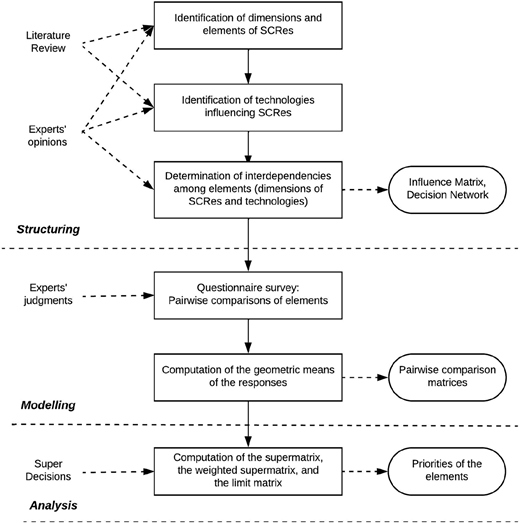
To address the research questions, this study follows a structured, three-phase methodology comprising problem structuring (Phase 1), modelling (Phase 2) and analysis (Phase 3). The overall methodological flow is illustrated in Figure 2.
3.1 Justification of selected method
Before detailing the phases, it would be beneficial to justify the methods selected for this study.
First, a SLR was chosen for the initial problem-structuring phase because the intersection of digital technologies and SCRes is highly fragmented. An SLR ensures a reproducible, systematic identification of both the multidimensional elements of SCRes and the diverse digital technologies influencing them.
Second, while several distance-based methods such as TOPSIS and VIKOR, and outranking methods such as PROMETHEE and ELECTRE are available, they are effective for evaluating alternatives with respect to a set of independent criteria. Similarly, the AHP structures problems in a top-down hierarchy, operating on the assumption that criteria do not interact with each other. These traditional MCDM methods often rely on linear, hierarchical structures that assume independence among criteria. However, initial expert interactions in this study revealed strong mutual dependencies and feedback among digital technologies and SCRes dimensions. Therefore, as the factors constitute a network rather than a hierarchy, the ANP was selected as the most appropriate modelling technique. ANP systematically handles these dependencies and feedback, allowing for a more accurate and robust prioritisation of the elements. This makes ANP particularly suitable for modelling the reciprocal relationships identified between resilience dimensions and digital technologies in this study.
3.2 Methodological procedures
3.2.1 Phase 1: problem structuring
We started by reviewing the literature and consulting a purposefully selected panel of seven academic and industrial experts to systematically identify the dimensions of SCRes, as well as the relevant digital technologies that affect SCRes, as aforementioned in Section 2. After these two steps, as a third step, we invited the experts to determine the interdependencies among the elements. The outcome of Phase 1 was the influence matrix and the decision network it entails, obtained as a result of expert opinions. While conducting the research, recurrence was assessed by retaining concepts that appeared repeatedly in the reviewed literature. Conceptual distinctiveness was addressed by merging overlapping terms and keeping clearly defined elements. Suitability for ANP was assessed by ensuring that each element could be meaningfully compared through expert pairwise judgements without making the model overly complex.
3.2.2 Phase 2: modelling
We conducted a pairwise comparison questionnaire survey to assess the judgements of the experts on the relative priorities of the elements (SCRes dimensions and technologies influencing SCRes). Once the pairwise comparisons were completed, we synthesised experts' judgements using the geometric means of their responses to fill the entries of the pairwise comparison matrices, the outcome of Phase 2.
3.2.3 Phase 3: analysis
We -elicited the priorities of the factors affecting SCRes: Computation of the unweighted supermatrix, the weighted supermatrix and the limit matrix using Superdecisions software.
To capture changes in expert judgements over time, Phases 2 and 3 were conducted with the same expert panel in both Fall 2023 and Summer 2025. Because the same seven experts participated in both rounds, the comparison reflects changes in the same panel's perceived priorities. The 2025 analysis was performed as a check for temporal stability, since the same panel assessed the ANP structure obtained in the problem structuring phase.
3.3 Expert profiles
Unlike empirical studies that depend on statistical inference and require large sample sizes for generalisability, MCDM methods such as ANP utilise purposive sampling. The emphasis is primarily on the depth, quality and consistency of the domain expert judgements rather than statistical representation. The AHP and ANP literature (Saaty and Özdemir, 2014; Tsyganok et al., 2012; Kucukaltan et al., 2016) establishes that a small panel of highly qualified experts is fully adequate, as larger groups do not inherently add value to the theoretical structure. Therefore, large sample sizes are neither required nor strictly beneficial.
Thus, we deliberately curated a panel of seven experts to capture a comprehensive view of both current industry operations and future technological trajectories. Although five experts currently hold academic positions, several possess substantial direct industry experience spanning industrial consultancy, logistics, ERP/SAP implementation and supply chain operations. The panel was deliberately designed to combine complementary academic and practical expertise in digital technologies, supply chain management and supply chain resilience. This hybrid composition was intentional because the study required expertise in both established digital technologies currently used in practice and emerging technologies whose strategic implications continue to evolve. The demographic and professional characteristics of the experts are provided in Table 2.
Expert 1 is a supply chain professional with nearly a decade of experience across logistics, operations and supply chain management. Expert 1 currently oversees supply chain operations and logistics improvement initiatives to support operational continuity. Previous roles include program management, global operations management, carrier relationship management, rail operations supervision and warehouse operations oversight. Expert 2 is a seasoned supply chain professional with extensive experience in logistics, business development, and operational optimisation. Expert 2 has led process improvement, training, and client management initiatives, and has prior experience in international business expansion, business development, and freight operations across Europe. Expert 3 has professional experience as a senior system analyst, IT and business consultant and deputy chief of staff. Currently a professor in Business Analytics and Information Systems, Expert 3 has taught domestically and internationally and conducts research on IT adoption, cybersecurity, fintech and e-business. Expert 4 is a distinguished professor of Operations Management at a US university, with internationally recognised expertise in supply chain management, business analytics and operations. Expert 4's research focuses on applying MCDM methods to supply chains, particularly in blockchain, big data analytics and sustainable digital operations. Expert 4 also brings extensive consulting and international academic experience, including ERP program leadership and MBA-level teaching using SAP S/4HANA. Expert 5 is a professor of business analytics with a senior role at the Institute for Applied Data Analytics. Expert 5 holds advanced degrees in Management Science and Industrial Engineering, teaches supply chain, analytics and operations courses and has industry experience in major US railways and logistics. Expert 6 is an associate professor of Industrial Engineering at a Turkish university. Expert 6's work focuses on transportation and logistics modelling, optimisation, decision sciences and machine learning. Prior to academia, Expert 6 held industry roles at SAP and multinational athletic apparel and footwear company and has also conducted visiting research in Germany on logistics and location planning. Expert 7 is a professor in Business Analytics and data-driven decision-making. Expert 7 has taught courses in data management systems, big data, e-commerce technology and intelligent systems and conducts research on digital transformation, fuzzy decision-making and data science.
3.4 Analytic network process
ANP, developed by Saaty (1996, 2005), is a widely applied methodology (Haktanir and Kahraman, 2022) for structuring, modelling and analysing complex decisions, drawing from both mathematics and psychology. ANP provides a robust framework for multiple criteria decision-making, offering a systematic approach to evaluating all relevant factors and their interdependencies. This is particularly valuable in situations involving numerous interconnected elements.
Traditional decision-making can be flawed because individuals often struggle to process large amounts of information simultaneously. They tend to rely on mental shortcuts that may oversimplify complex issues, potentially leading to poor choices. ANP addresses these limitations by providing a structured way to model the relationships between various factors. Unlike most MCDM methods, which rely on decision matrices to evaluate alternatives, ANP uses a network-based approach, which allows it to account for interdependencies among factors, leading to more accurate assessments and better decisions.
As a result, ANP is a powerful decision-making methodology that helps combine and evaluate the judgements of decision-makers. It enables them to effectively rank alternatives, select compromise solutions and predict outcomes, while supporting the analysis of feedback and dependence among criteria.
To systematically execute the ANP methodology, this study follows three procedural steps, directly corresponding to the phases outlined in Figure 2, supported by foundational MCDM literature (Saaty, 1996, 2005):
3.4.1 Step 1: network structuring
The first step of the ANP is to identify the key elements of the decision model, including criteria and their interrelationships. These criteria are then grouped into clusters to break the problem into smaller, more manageable parts. Based on expert consultations, the mutual interconnections and feedback loops between these elements are mapped. This results in a network model that effectively captures the nonlinear complexity of the problem at hand. This is the “structuring” phase in Figure 2. In this study, these elements correspond to the SCRes dimensions and digital technologies identified through the SLR and refined through expert input.
3.4.2 Step 2: pairwise comparisons and eigenvector calculation
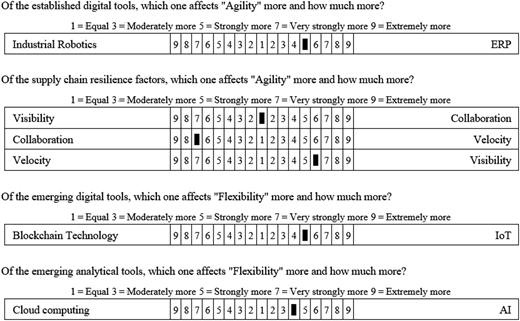
During the second step, decision-makers are asked to perform pairwise comparisons of the sub-elements within a cluster, assessing their relative impact on a parent element. This involves answering the question: “Which of the influencing elements has a greater effect on the influenced element, and by how much?” To quantify these judgements, Saaty's 1 to 9 Fundamental Scale (Saaty, 1980) is used. In group decision-making, the geometric mean of the responses is calculated to synthesise the aggregated group judgements. As established by Aczél and Saaty (1983) and Forman and Peniwati (1998), the geometric mean is the uniquely appropriate method for combining ratio-scale judgements, as it acts as a robust mechanism to smooth individual biases and prevent extreme outlier evaluations from disproportionately skewing the final priorities. These aggregated judgements are then compiled into pairwise comparison matrices, with each matrix reflecting the comparisons of sub-elements relative to their parent element. The eigenvectors (local priority vectors) and inconsistencies of these matrices are subsequently calculated (see Saaty, 1980, for details). This is the “modeling” phase in Figure 2.
3.4.3 Step 3: supermatrix formation and limit matrix
In the final analysis step, the global priorities are computed through the formation of three sequential matrices: the unweighted supermatrix, weighted supermatrix and limiting supermatrix (limit matrix).
The unweighted supermatrix represents the direct relative local priorities revealed by comparing affecting elements with respect to an affected element, thereby evaluating how individual factors directly influence one another locally. Each element is represented in both the rows and the corresponding columns of the unweighted supermatrix. The eigenvectors calculated for the sub-elements with respect to their parent element in Step 2 are placed in the columns representing the parent elements and in the rows representing the sub-elements.
The weighted supermatrix then standardises these priorities, adjusting and balancing the initial scores so their total equals 1. If the sum of any column in the supermatrix exceeds 1 (indicating multiple eigenvectors), the eigenvectors are weighted according to the importance of their respective clusters. This results in a column stochastic supermatrix, where the sum of each column equals 1, referred to as the weighted supermatrix.
Finally, the limit matrix reveals the global priorities across the entire network. For this purpose, the weighted supermatrix is raised to a high power until the row values converge and stabilise. These stable values in the limit matrix represent the global priorities of the elements in relation to the overall goal. This is the “analysis” phase in Figure 2.
4. Findings
4.1 Phase 1: influence matrix and decision network
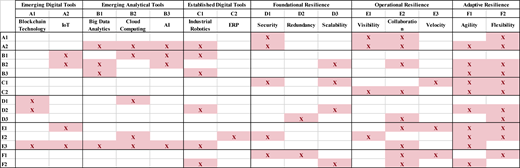
Seven experts evaluated a list of elements related to SCRes (see Table 1) and identified the influences of each element on the others. Their judgements were then aggregated using a majority rule, resulting in an aggregated influence matrix, as shown in Figure 3. In this matrix, “x” signified agreement by at least four experts that the row element affected the column element. For example, reading the matrix reveals that IoT adoption and effectiveness are influenced not only by emerging analytical tools such as Big Data Analytics and Cloud Computing but also by operational resilience factors such as visibility and velocity. This demonstrates a feedback loop where improved operational velocity and visibility drive further integration of IoT. Similarly, adaptive dimensions such as agility and flexibility are influenced by nearly all digital technologies and SCRes dimensions.
Structurally, the aggregated influence matrix is asymmetric, meaning that relationships represent unidirectional influences from the row element to the column element rather than assumed bidirectional ties. Where reciprocal influences exist between two elements, they are modelled as two distinct, independent directional flows rather than a single symmetric tie.
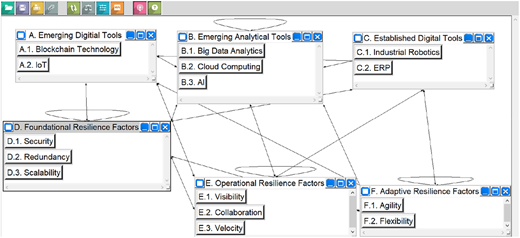
Superdecisions software (Link to the website) was used for the computations required by the ANP method in this study. To construct the decision network (Figure 4), the relationships were systematically mapped directly from the aggregated expert judgements captured in the influence matrix (Figure 3). In accordance with ANP methodology, this mapping process explicitly defined both inter-cluster dependencies (outer dependence) and intra-cluster dependencies (inner dependence). Specifically, an inter-cluster relationship (represented by straight directional arrows between clusters) was established whenever the expert majority rule indicated that at least one element in one cluster influences at least one element in a different cluster. Similarly, intra-cluster relationships (represented by looped arrows on the clusters) were defined when experts agreed that elements within the same group influence one another.
4.2 Phase 2: pairwise comparisons of the influences of elements
In the next stage, experts were invited to assess the pairwise comparisons of the impacts of sub-elements within a cluster on their parent elements. The questionnaire included explanations, evaluation examples and 22 pairwise comparison questions (see Appendix A). Figure 5 shows an excerpt of the pairwise comparison questions.
We used both interviews and an online questionnaire to gather experts' judgements. Some experts were familiar with the methodology, and they filled in the online questionnaire. For the experts who are not familiar with the methodology, we opted for interviews to explain the methodology and obtain their judgements. One of the authors conducted the interviews. First expert judgements were elicited in the fall of 2023, before the recent surge in attention to AI-related applications in business and supply chains. The second round of data collection took place in the summer of 2025 with the same expert panel. This repeated elicitation enabled us to compare changes in expert judgements over time.
4.3 Phase 3: priorities of elements affecting supply chain resilience
After entering the pairwise comparison matrix obtained by aggregating experts' individual assessments of priorities in Phase 2, we provided the combined pairwise comparison matrix to the Superdecisions software as input and obtain the final rankings of the elements. As explained in the methodology, we performed Phase 2 and Phase 3 twice, once in 2023 and once in 2025, to examine how the same expert panel's perceived priority rankings of the elements affecting SCRes changed over time. Therefore, the comparison should be interpreted as evidence of evolving expert judgements, not as a longitudinal causal analysis of objective SCRes performance outcomes. For full methodological transparency and reproducibility, Unweighted Supermatrices, Weighted Supermatrices and Limit Matrices generated during this phase are provided in Appendix B.
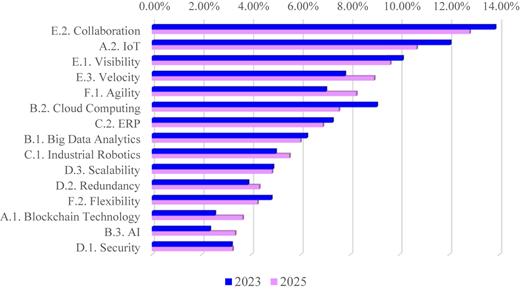
Table 3 provides the priorities obtained in both years, sorted by the scores of 2025, whereas Figure 6 visually shows the changes.
From both the 2023 and 2025 prioritisations, we can deduce that visibility and velocity are amongst the highly prioritised aspects within the proposed decision framework. In the 2025 ranking, they come right after collaboration and IoT but above agility. When we statistically compare the ranks of both years, we do not find evidence to conclude they changed significantly from 2023 to 2025. However, the priorities appear to be more balanced in 2025 compared to 2023 (Table 3 and Figure 6). The differences between the priorities of the elements have decreased, i.e. the average priority was 0.067 for both years, but the standard deviation of priorities was 0.034 in 2023 as opposed to 0.029 in 2025. The analysis for 2025 was repeated to examine how expert priorities evolved over time. Because the same hybrid expert panel analysed the same ANP structure for both time periods, the largely stable rankings indicate consistency in the overall prioritisation structure, while changes in the priority weights reveal shifts in the relative emphasis assigned to individual dimensions and technologies.
Surprisingly, Collaboration remained the most influential SCRes element, surpassing even digital technologies. It ranked first in both 2023 (13.83%) and 2025 (12.82%), although its relative importance declined slightly as Velocity and Agility gained ground. Velocity rose from 7.78% in 2023 to 8.96% in 2025, while Agility increased from 7.01% to 8.24%, suggesting that rapid and coordinated response is becoming increasingly important. Among digital technologies, IoT was consistently the most important in both years, ranking second overall. Like collaboration, however, IoT lost some ground to Velocity and Agility. Visibility also maintained its importance, registering 9.63% in 2025 compared to 10.12% in 2023.
Some traditional technologies declined in relative priority: Cloud Computing dropped from 9.06% to 7.54%, ERP from 7.28% to 6.90% and Big Data Analytics from 6.25% to 5.99%. By contrast, the share of Industrial Robotics increased from 4.98% to 5.54%, reflecting not only the momentum toward automation but also its strategic role in long-term digital transformation. Beyond immediate efficiency gains, robotics adoption positions firms to build smarter, more adaptive supply chains that align with Industry 4.0 objectives and evolving competitive pressures. While Redundancy increased from 3.87% to 4.32%, Security (3.21% → 3.25%) and Scalability (4.88% → 4.84%) remained largely stable. Emerging technologies such as Blockchain (2.53% → 3.66%) and AI (2.33% → 3.36%) remain relatively low in relative priority but are steadily gaining traction. The priority of Blockchain increased by 45%, and that of AI by 44% from 2023 to 2025. The results show that Visibility remained a consistently important driver of SCRes, with only a minor decline between 2023 and 2025. Overall, the most significant upward shifts are in Agility and Velocity, while declines are most notable in IoT and Cloud Computing (Table 3 and Figure 6).
5. Discussion
The results suggest a gradual rebalancing in the relative importance of SCRes dimensions and digital technologies between 2023 and 2025, reflected in the decline in standard deviation from 0.034 to 0.029. Although the overall ranking structure remained largely stable, the narrowing differences among elements indicate modest shifts in the relative influence of resilience dimensions and digital technologies between two assessment periods.
These findings provide insight into the three research questions guiding the study. With respect to RQ1, the influence matrix indicates that SCRes dimensions are interrelated rather than independent, whereas ANP results show that collaboration, IoT, visibility, velocity and agility exert particularly strong influence on SCRes. Regarding RQ2, the findings demonstrate that digital technologies affect SCRes not only directly but also through their interactions with resilience dimensions. Among the technologies considered, IoT consistently emerged as the most influential. Regarding RQ3, the comparison between 2023 and 2025 indicates that the overall ranking structure remained relatively stable, while the distribution of priorities became more balanced and emerging technologies such as AI and blockchain gained relative importance.
Nevertheless, the findings also show that certain elements, particularly collaboration, IoT, visibility and velocity continue to play a dominant role in shaping SCRes. Their sustained prominence highlights the ongoing importance of information sharing, real-time visibility and rapid response capabilities in managing disruptions within increasingly complex and digitally connected supply chains.
Across both periods, collaboration consistently emerges as the most influential dimension of SCRes, surpassing all digital technologies. This suggest that resilience depends not only on technological capabilities but also on how organisations collaborate, share information and responses across supply chain. At the same time, the increasing importance of velocity and agility reflects growing attention to rapid and adaptive responses in disruption management. Redundancy also exhibited a modest increase, indicating continued managerial interest in buffering strategies amid persistent global disruptions.
Among digital technologies, IoT remains the most influential, primarily because of its contribution to real-time visibility and data driven decision making. However, its slight decline in relative importance, together with the decline observed for collaboration, reflects a broader rebalancing effect on other dimensions, particularly agility and velocity become more prominent. Visibility remained relatively stable across both periods, further confirming its foundational role in effective disruption management.
A key pattern emerging from the results is the differentiation in the maturity and role of digital technologies. Established technologies, such as cloud computing, ERP and big data analytics, show a decline in relative priority, suggesting that they are increasingly perceived as embedded and infrastructural capabilities rather than primary sources of competitive advantage. This interpretation is consistent with prior research that characterises such technologies particularly ERP systems as foundational elements supporting resilient supply chains rather than drivers of strategic differentiation (Sadeghi et al., 2025).
In contrast, industrial robotics demonstrates an increase in relative importance, reflecting growing recognition of automation as a strategic capability that supports operational continuity and adaptability. This trend aligns with Industry 4.0 perspectives, where robotics plays a central role in enabling intelligent and interconnected production systems (Bhadra et al., 2023).
AI and blockchain demonstrate increasing influence over time; however, they remained lower ranked within the broader network of SCRes dimensions and digital technologies. Their substantial relative growth indicates that they are becoming increasingly relevant to SCRes, although their role is still emerging. In the case of AI, the comparatively low ranking may partly reflect the timing of the initial data collection in Fall (2023), which presided the rapid expansion of AI-related awareness, investment and adoption across business and supply chain contexts. Nevertheless, the observed increase in AI's relative influence between 2023 and 2025 indicates growing recognition of its potential contribution to agility, visibility and data driven decision-making in digitally enabled supply chains. This pattern reflects how emerging digital technologies are gradually moving from experimental application towards broader strategic integration (Wu et al., 2025).
Overall, these findings support an interaction-based view of SCRes, in which resilience is shaped by the interdependencies and feedback loops among digital technologies and resilience dimensions. The findings further demonstrate that the relative influence of individual technologies and resilience dimensions cannot be fully understood when they are examined independently. Instead, their influence emerges from their reciprocal interactions within an integrated network. This interaction-based perspective emphasises the socio-technical nature of SCRes and demonstrates that supply chain resilience emerges from the combined effects of technological and organisational capabilities rather than from isolated technological or organisational factors. This explains why collaboration remains the most influential resilience dimension despite the increasing importance of advanced digital technologies, while IoT retains its position as the most influential digital technology. Likewise, the continued prominence of visibility, together with the increasing relative influence of velocity and agility, demonstrates that resilience is strengthened through complementary capabilities that collectively support information sharing, rapid response and adaptive decision-making.
Together, these findings provide a systems-level understanding of SCRes that extends prior literature which has typically examined digital technologies independently or treated resilience dimensions as separate constructs (Wu et al., 2025). Our findings demonstrate that the effectiveness and relative influence of digital technologies and resilience dimensions depend on how they are configured and combined within a broader system of reciprocal interrelationships rather than on their individual contributions alone.
6. Implications
The findings offer several important implications for theory, practice and policy. This study presents a framework that captures the interdependencies and feedback relationships between digital technologies and SCRes dimensions. By accounting for these relationships, the framework moves beyond linear and technology-centric perspectives and supports a more systems-based and multidimensional conceptualisation of SCRes. The findings demonstrate that digital technologies and resilience dimensions do not operate independently but instead influence and reinforce one another.
Prior studies show that digital transformation positively influences SCRes and evaluate the effects of individual digital technologies. However, they devote limited attention to how resilience dimensions shape the use and effectiveness of these technologies (Yuan et al., 2024; Bhatnagar and Dixit, 2025). In contrast, this study indicates that supply chain resilience emerges through reciprocal interdependencies between digital technologies and resilience dimensions. In particular, collaboration emerges as the most influential factor, underscoring the role of organisational and relational mechanisms in complementing and amplifying digital initiatives.
By integrating expert insights and modeling these interdependencies, the study offers both theoretical novelty and practical relevance. The framework enables decision-makers to understand not only which technologies and resilience dimensions are most influential but also how their interdependencies contribute to strengthening SCRes in increasingly complex and disruption-prone supply chain environments.
From a managerial perspective, the findings indicate that investments in digital technologies alone are insufficient to achieve resilience. The results show that digital technologies and SCRes dimensions derive their greatest value through their reciprocal interrelationships, highlighting the importance of an integrated resilience strategy that simultaneously enhances collaboration, visibility, velocity and agility. This insight complements prior studies emphasising the role of digital transformation in enhancing SCRes by demonstrating that the effectiveness of digital technologies depends on their alignment with key resilience dimensions (Yuan et al., 2024; Jum'a et al., 2025). Furthermore, the results show that digital technologies generate greater value when implemented in combination, rather than in isolation, highlighting the importance of an integrated approach to strengthening SCRes. The proposed ANP framework can also serve as a decision-support tool for managers when prioritising digital transformation initiatives. Rather than evaluating digital technologies independently, managers can assess how alternative technologies contribute to multiple, interrelated resilience dimensions and identify those that provide the greatest overall contribution to SCRes within their organisational context. This enables decision makers to align digital technology investments with resilience objectives while recognising the reciprocal interrelationships among technological and organisational capabilities.
From a policy perspective, the findings highlight the importance of developing digital infrastructures and integrated platforms that enable information sharing and collaboration across supply chain actors. Policies that focus solely on promoting technology adoption may be insufficient. There is also a need to support data-sharing infrastructures and standards that facilitate seamless integration across systems, as well as collaborative platforms that allow organisations to make more effective use of digital technologies. This perspective is consistent with emerging research emphasising the role of digital ecosystems in enhancing resilience capabilities (e.g. Zhou et al., 2024). Such support becomes particularly critical in the context of increasing global disruptions, where coordinated and information-rich responses are essential for maintaining supply chain resilience.
7. Concluding insights, limitations and further suggestions
This study examined how digital technologies contribute to SCRes by analysing their interdependencies with key resilience dimensions and comparing their relative influence across two assessment periods. The findings provide a broader understanding of SCRes as a multidimensional capability shaped not only by the adoption of digital technologies but also by how these technologies interact with resilience dimensions such as collaboration, visibility, velocity and agility.
By incorporating expert judgements, this study develops a comprehensive framework that captures the dynamic and reciprocal relationships between digital technologies and SCRes dimensions. The results demonstrate that digital technologies, when deployed in combination, generate synergistic effects that enhance critical resilience capabilities such as visibility, agility and adaptability. At the same time, the findings highlight that collaboration remains central, reinforcing the view that resilience is co-created through both technological and organisational mechanisms. The comparison between the 2023 and 2025 assessments further indicates that, although the overall ranking of elements remained relatively stable, the relative influence of some technologies changed across the two assessment periods. Emerging technologies such as AI and blockchain gained influence, while established technologies became more embedded within supply chain infrastructures. This shift underscores the importance of viewing digital transformation as an ongoing and adaptive process rather than a one-time investment.
Overall, this research advances the literature by offering a more integrative and interaction-based perspective on SCRes, highlighting the importance of aligning digital technologies with resilience dimensions to effectively manage disruptions in complex supply chain environments. The findings further suggest that resilience cannot be achieved through isolated technological capabilities alone, but through the interdependencies between digital technologies and key resilience dimensions within broader supply chain systems.
The dimensions considered in this study are not intended to exhaust all resilience-related concepts identified in the literature; rather, they represent a parsimonious set of foundational elements that consistently emerged from the SLR and could be systematically modelled within the ANP framework. Additional dimensions, such as reliability, interoperability, robustness, coordination, responsiveness, learning and innovation capability, may further enrich the conceptualisation of SCRes and should be examined in future research. However, incorporating a larger number of interdependent dimensions into ANP models may substantially increase model complexity and comparison burden, highlighting the need to balance comprehensiveness with methodological tractability. Accordingly, future research should continue examining the conceptual boundaries and interrelationships among resilience-related constructs before incorporating additional dimensions into integrated ANP models. Such extensions should be approached carefully to preserve conceptual clarity and avoid excessive model complexity arising from highly interdependent comparisons.
Future research can extend this work in several directions. First, persona-based or archetype-driven modeling could be used to represent the decision-making approaches of different types of supply chain actors (Riemer and Peter, 2024). By developing personas such as digitally advanced, cost-focused or collaboration-driven organisations, researchers may better capture how different strategic orientations influence the prioritisation of resilience dimensions and digital technologies. Second, comparative studies across regions could provide valuable insights into how institutional environments, market conditions and geopolitical factors shape resilience strategies, enabling more context-sensitive approaches to SCRes. Integrating such approaches within MCDM) frameworks may further enhance understanding of how different organisational contexts influence the configuration of digital technologies and resilience dimensions, thereby improving both the explanatory power and practical relevance of future SCRes research.
The comparison between 2023–2025 is based on the judgements of a carefully selected panel of experts rather than on direct observations of technology adoption or organisational performance. Consequently, the observed differences should be interpreted as changes in the relative priorities derived from expert judgements rather than as evidence of industry-wide temporal trends. The use of the same expert panel across both assessment periods enhances the consistency and comparability of the results. Nevertheless, future research could apply the proposed framework using larger and more diverse panels of experts representing additional industries and geographical regions, thereby capturing a broader range of perspectives. Future research may also validate the relationships and priorities identified by the proposed ANP framework using large-scale empirical studies. In particular, PLS-SEM with a broad sample of supply chain managers could be employed to examine the generalisability of these findings across different organisational and industrial contexts. Complementary empirical studies conducted in broader organisational settings could further examine the relationships identified in this study and provide additional evidence regarding their applicability across different supply chain contexts.
The supplementary material for this article can be found online.