Very few people would dispute that effective and reliable infrastructure is essential to society. Talk of infrastructure tends to conjure images of new mega-projects, but the reality is that developed countries rely most on infrastructure built over long periods time. The effective maintenance, repair and development of this aging infrastructure is essential to keep the country moving and services operational. The structures and installations also form part of our heritage and culture, and this is strongest where they can continue to be useful and not simply monuments to the past.
The process of listing assesses a range of criteria including age, rarity, architectural interest and historic significance, and can ensure that attention is given to protecting particular features and ensuring their survival. Listing is applied to a wide range of buildings and civil engineering structures, including bridges, and is not exclusively applied to those which may immediately be considered heritage structures; Humber Bridge, Kingsgate Bridge and Erskine Bridge (Figure 1) are among the more recent UK bridges listed in the highest category (Grade I in England and Grade A in Scotland). Finding the balance between preservation and useful life extension can be difficult and requires a collaborative approach.
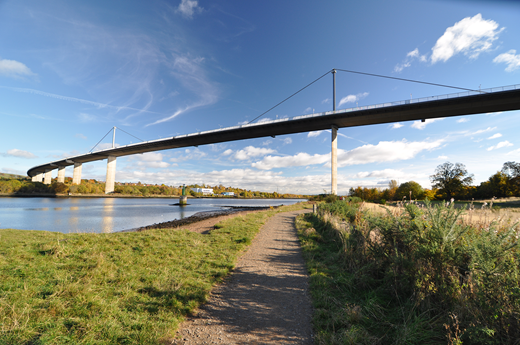
The Erskine Bridge (UK) opened in 1972 and was awarded Category A status by Historic Environment Scotland for special architectural interest in November 2018
The Erskine Bridge (UK) opened in 1972 and was awarded Category A status by Historic Environment Scotland for special architectural interest in November 2018
Prolonging the life of or repurposing existing construction can pose many challenges to engineers and requires them to look outside current codes, do research and innovate. Issues such as design life that are relatively straightforward in new-build design can become complex when working with existing infrastructure with deterioration already in progress, uncertainty in condition and physical constraints on work. This journal serves to share knowledge not only of the history of civil engineering structures but also how engineers are keeping them alive. The papers provide a rich source of case studies to draw on and lessons learned are often applicable across many types of project. This issue is a good example of the wide range of topics covered.
Wilde (2019) gives a detailed and fascinating insight into the rehabilitation of a redundant tunnel to serve the new Elizabeth Line (UK), bringing back to life a significant piece of infrastructure that had already seen many changes over its lifetime. The range of pragmatic solutions adopted and described will be of great help to engineers facing similar challenges, even if on a smaller scale. Many of the key challenges, such as addressing future design life, reducing maintenance requirements and finding the balance between capital investment and maintenance investment, are covered. These themes are applicable to a wide range other engineering structures undergoing refurbishment.
The contribution from Wesley and Preene (2019) explores the history of a key area of theory in the design of water-retaining structures. This specific historical review will enable engineers to understand the background to the design of existing infrastructure, which relies on the analysis of groundwater seepage. Comparing original design assumptions with more-developed understanding can be important in developing appropriate solutions for continued use of infrastructure. This is an example of the wide skillset required in conservation.
Friedman (2019) continues Engineering History and Heritage’s series of country profiles with a whistle-stop tour of the civil engineering heritage of the USA. One of the most interesting aspects is the inter-relation between the development of different types of structures and the way knowledge spread and developed internationally and across the USA. Freidman also explores the drivers for conservation and the reasons why conservation of engineering structures is challenged in the US (outside a few prominent examples). Can we as engineers find appropriate times to challenge the initial economic arguments and drive for absolute certainty? Can we make the case for the cultural value of ensuring the continued use of historic engineering structures? This approach is surely consistent with wider sustainability considerations.
On a final note, the Editorial Panel for this journal needs to reflect the breadth of the subjects covered and the term of panel members is time-limited, so we are always looking for new members. Interested readers are invited to submit a CV to Rebecca Rivers (rebecca.rivers@icepublishing.com).