Located in the middle of England, Sheffield, which received its municipal charter in 1843 and became the City of Sheffield in 1893, is well known for its strong ties with and its critical role in the Industrial Revolution; many inventions and technologies were developed in the city. When stainless steel was developed locally in the nineteenth century, Sheffield saw a significant expansion. The city has gone through an economic downturn since the 1970s, initially due to the oil crisis and then through international competition in the steel industry. The city is also the home of the world’s oldest football club, Sheffield FC.
Duncan Froggatt is a chartered engineer educated in Loughborough University (civil engineering) and then the University of Sheffield (historical archaeology). Drawing on his experiences of working in Sheffield, he has published a thematic book on Sheffield.
Sheffield – A Civilised Place is more than just a comprehensive book about Sheffield, illustrated with photographs, drawings and maps. It also explores the developments of the city from prehistoric times to the present day. In many cases, it puts the historical developments in a national or an international context.
At the start, the book sets out the background of the City of Sheffield, including its surrounding natural resources. Following this, there is a list of notable people, civil engineering firms and steel manufacturers that shaped the history of the city. The core of the book features a gazetteer of places that made the city. The gazetteer consists of seven sections by location; these are the City Centre, Mid Don Valley, Lower Don Valley, Rother Valley, Sheaf Valley, Inner West Sheffield and the North West Sheffield. Each section of the gazetteer highlights notable places and buildings, which range from small cottages to modern buildings, expanding over several hundred years in Sheffield’s history. Some of the important civil engineering infrastructures in the Sheffield area include bridges, tunnels, aqueducts, reservoirs and rail stations. Each place in the gazetteer includes a UK Grid Reference to make it easy to find.
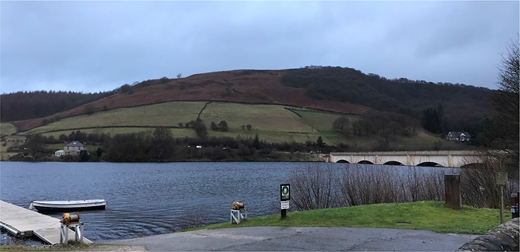
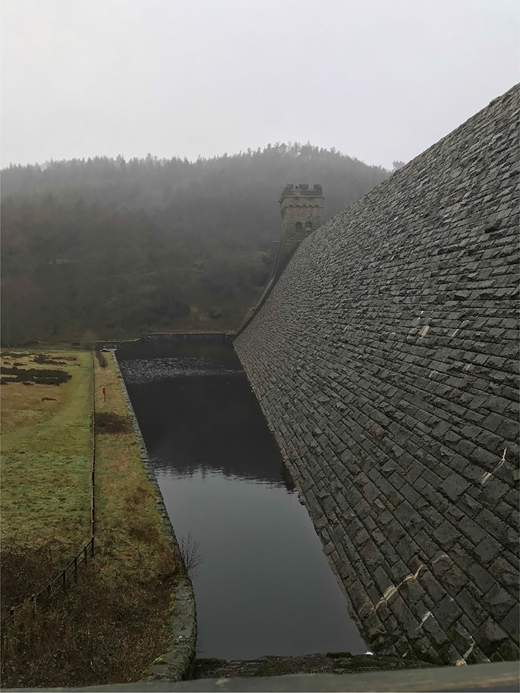
Readers are able to use the book in many different ways. Civil engineers who are interested in gaining more knowledge of the area around Sheffield can find useful information about the engineering heritage around the city and understand its history and background. For local residents, it is a good guidebook to explore the surrounding area. The book has enabled me to take my family to explore the water infrastructure in the Sheffield area, taking us to Ladybower Reservoir (Figure 1) and Howden Reservoir (Figure 2) in the Peak District. The book gives a detailed description of the location and history of this fascinating infrastructure. To summarise, this book, which has 332 pages, with more than 350 photographs and drawings, is a useful and interesting resource for readers who want an in-depth understanding of the history of the Sheffield and its surrounding area.