

This is a review of a report produced by the Transport Research Laboratory (TRL) as part of an industry and research consortium led by Tarmac, with funding from the Waste Resources Acton Programme (WRAP) and the Department of Trade and Industry. The work looked at the potential use of recycled rubber crumb from used tyres and waste plastic as aggregates in asphalt and concrete and included product development trials.
1. INTRODUCTION
It is now widely acknowledged that the use of secondary and recycled aggregates in construction products will contribute to more sustainable construction. By replacing part of the natural aggregate, the need for both quarrying and waste disposal is reduced with the associated benefits of reduced environmental and social impacts. However, it is not enough to consider good technical performance in isolation. For the use of alternative aggregates to be sustainable, there must be an economic supply of sufficient quantity, methods of quality assurance and specification and a market for products of a value appropriate to the costs of the processed materials. These factors have been investigated in a report produced by the Transport Research Laboratory (TRL) and are reviewed here.1
2. RUBBER AND PLASTIC WASTES
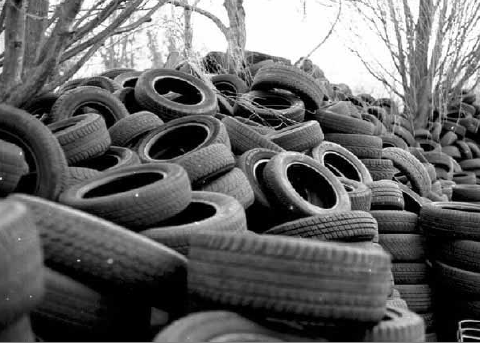
In the UK, around 0·5 million tonnes of used tyre rubber arise each year and about 0·3 million tonnes are reused in some form (Fig. 1). Specifications exist for rubber crumb produced from waste tyres, which could be adopted to partly specify this material as an aggregate.
During the course of the work no other suitable sources of waste rubber were identified and product development was, therefore, confined to the use of rubber crumb. Prices of hundreds of pounds per tonne mean that, in the short-term, the use of rubber crumb as an aggregate in asphalt and concrete will need to be in relatively high-value applications. Current changes in waste legislation on the disposal of used tyres mean that future disposal routes and market prices are difficult to predict.
About 0·2 million tonnes of plastic are recycled each year (Fig. 2) and as with rubber crumb, single-polymer recycled plastic can also cost up to several hundred pounds per tonne. Waste plastic arisings do exist and although difficult to separate and process, are potential sources of plastic ‘aggregates’, including mixed plastics and shredder wastes. Two small-scale sources of processed waste plastic were used in the work but the infrastructure does not currently exist to provide these materials in bulk. However, changes in waste management regulation mean that this may need to be provided in the near future.
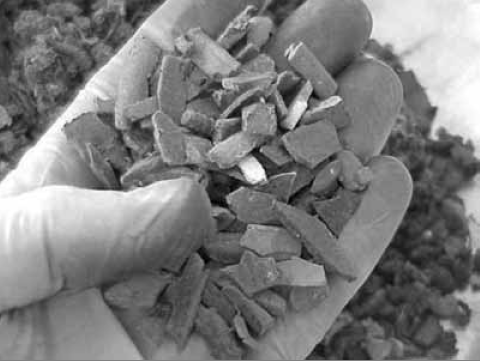
No form of specification of recycled plastic exists which would be suitable to specify their use as aggregate. However, the general protocol developed by the Building Research Establishment,2 and adopted in the Specification for Highway Works,3 would be suitable for specifying both plastic and rubber.
A significant disincentive to using aggregates generated from waste exists in the current interpretation of waste licensing regulations. This requires that alternative aggregates be subject to waste licensing until they are incorporated in a product.
3. SPECIFICATIONS AND MARKETS FOR ASPHALT AND CONCRETE
New European Standard specifications for aggregates explicitly include manufactured and recycled materials. Similarly, when those for asphalt are implemented there will be greater opportunity for the use of rubber and plastic in generic asphalt mixtures, such as hot rolled asphalt. In the case of lightweight aggregates in concrete, the Standard does not discriminate between natural, secondary or recycled aggregates. These Standards are generally written in performance terms, with a potential for wider use of alternative aggregates in the concrete industry. However, the report identifies some concern about rubber aggregates meeting the sulphur content requirement for use in concrete.
Apart from applications of proprietary asphalt mixtures in roads, other possible markets for asphalt include playgrounds (Fig. 3), footways and cycle paths, tennis courts and car parks. The highest-value applications of rubber and plastic in concrete are probably in lightweight and thermal insulating applications because these requirements can be difficult to achieve with conventional natural aggregates.
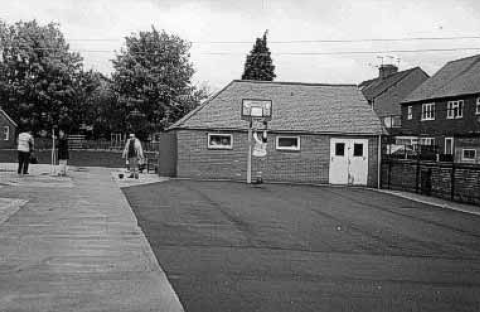
Playgrounds could benefit in health and safety terms from asphalt mixtures incorporating rubber
Playgrounds could benefit in health and safety terms from asphalt mixtures incorporating rubber
4. PRODUCT DEVELOPMENT
The sources of tyre-rubber crumb and processed waste plastic were characterised prior to product development trials. This confirmed that low molecular weight species migrate between rubber and bitumen during mixing. As a consequence, this information can be given to bitumen suppliers to help them adjust their products to compensate for any migration that may occur when rubber is blended with them. There is evidence that the use of a proprietary bitumen modifier could reduce the impact of this process on the physical properties of the asphalt mix.
Experiments have shown that it is unlikely that there are health and safety problems associated with fumes produced during the mixing or laying of asphalt containing the rubber or plastic investigated. The report recommends that personal monitoring be used to confirm this view.
Preliminary trial mixtures of asphalt incorporating rubber were found to have low stiffness and high levels of deformation, coupled with good resistance to moisture damage. These are suitable properties for applications such as school playgrounds, which may also be of sufficient value to balance the high cost of rubber crumb. A trial was undertaken on a school playground (Fig. 3) and a good level of safety, measured as head impact criterion, was achieved.
Concrete incorporating rubber has low compressive strength along with a reduction in workability. The use of rubber in concrete may therefore be restricted to applications with an upper strength limit, such as foamed concrete for use in trench reinstatement. Further work on the needs of these markets is required before product development can continue.
An asphalt binder course material incorporating plastic aggregate showed adequate fatigue and deformation resistance for use in roads. It is possible that this may provide a use for waste plastic if an adequate and economic supply of material can be established. However, the mixture showed a degree of moisture sensitivity which would limit its use in surface layers.
In concrete blocks, up to 50% of coarse aggregates could be replaced with plastic, achieving adequate strength and lightweight properties, while normal-strength concrete could be produced using 15% replacement plastic aggregate.
The TRL report concludes that product development trials of asphalt and concrete, incorporating waste plastic and rubber crumb from tyres as replacement aggregates, have been successful at this pilot stage. It is anticipated, taking into consideration supply, specification, cost and market applications in the choice of products developed, that some of these products will be commercially viable within the medium term.

