This study investigates how actual donations towards social causes within fashion supply chains can be increased in the face of negative country-of-origin effects.
Literature reports a lack of sustained consumer support for social causes within fashion supply chains. Driven by perceived psychological distance between the manufacturer and the fashion consumer, negative country-of-origin effects have an impact on donation behaviour. Using two online experiments, this study shows that including a garment worker’s image in swing tags mitigates negative country-of-origin effects on actual donations.
Fashion consumers’ actual donations towards worker rights increased with the presence of a garment worker’s image. In the higher psychological distance condition, exposure to the image reduced negative country-of-origin effects, increasing actual donations. This increase in actual donations is driven by pleasure-seeking, thus indicating that consumer support for social causes within fashion supply chains is underlined by hedonism.
This study focuses on a visual cue-based mechanism of promoting actual donations towards social causes and the role of pleasure-seeking in this process – two previously under-explored areas in the fashion marketing literature. The use of an incentive-compatible measure that required participants to donate real money allows the demonstration of actual donation behaviour, providing robust evidence of the impact of visual cues and their potential to be applied in the real-world.
Introduction
Worker welfare within fashion supply chains has been a concern for years (Chan et al., 2020). Exploitative working conditions including modern slavery and child labour contribute to this persistent concern (Chan et al., 2020; Rashid and Byun, 2018). Modern slavery is defined by a range of practices that include – trafficking, servitude, forced labour, debt bondage and deceptive recruiting for labour or services often found in global supply chains (Mende, 2019). To address this issue, fashion retailers continue to invest in fair trade initiatives (Musa and Gopalakrishna, 2021) and social responsibility efforts (Nguyen et al., 2023). Fashion consumers contribute through increased involvement in related conversations (Chan et al., 2020), consumer activism (Khan and Richards, 2022) and monetary donations to uplift worker conditions (Romani and Grappi, 2014). Given the decisive role consumers play within the fashion supply chain (Bubicz et al., 2021), such consumer driven strategies are gaining momentum. Particularly, given its targeted nature and direct applicability, monetary donations are viewed as a positive driver of social change. This focus is particularly important as research shows that social causes are often undermined by consumers in comparison to environmental sustainability and animal welfare (Carrigan and Attalla, 2001; Hustvedt et al., 2008; Stringer et al., 2022). A contributing factor to this may be the effect of Country of Origin (COO), where consumers associate certain product qualities with the country of manufacture. For example, negative COO effects such as negative image perceptions emerge when there is a psychological distance between the consumer and the manufacturer, which is often the case for products made in the “Global South” and consumed in the “Global North” (Casado-Aranda et al., 2021). Global North and South are terms that are often used interchangeably with “developed” and “developing” countries, respectively. The Global North is typically made up of countries in Northern America and Europe, while the Global South is made up of countries in Africa, Asia and Latin America (English, 2013).
The effect of COO on consumer perceptions and purchase decisions is well-documented in the literature (Kumar and Gautam, 2021). However, there has been little research exploring means of mitigating the negative COO effect, particularly in relation to prosocial behaviours like supporting social causes. Evidence already suggests that consumers’ prosocial behaviour is affected by the social connectedness they feel (Cavanaugh et al., 2015; Duclos and Barasch, 2014). Accordingly, it is important to address the issue of perceived psychological distance between the consumer and the country of manufacture which diminishes the concern for garment workers’ rights, creating a barrier to consumer engagement with social issues (Casado-Aranda et al., 2021). This disconnect discourages prosocial behaviours, such as contributing to or paying a premium to ensure safe working conditions for garment workers—one of several critical measures needed to address labour exploitation in global supply chains.
While many fashion retailers have responded to increasing stakeholder pressure through fair trade initiatives (Musa and Gopalakrishna, 2021) and social responsibility efforts (Nguyen et al., 2023), the mere communication of labour practices remains ineffective in mitigating negative COO effects (Ginder and Byun, 2022). Existing literature highlights the challenge of communicating Corporate Social Responsibility (CSR) initiatives, particularly the social elements of sustainability, in ways that resonate with consumers (Skarmeas and Leonidou, 2013; Stringer et al., 2022). CSR communications are also met with scepticism, with consumers perceiving them as “fair-washing” or reputation-driven rather than genuine efforts to address labour issues (Ginder and Byun, 2022). Moreover, while Fair Trade messaging has been shown to positively impact consumer evaluations (Rashid and Byun, 2018), research suggests that consumers are more responsive to environmental issues than labour concerns, making it harder for retailers to bridge the gap between ethical sourcing and consumer behaviour (Carrigan and Attalla, 2001; Stringer et al., 2022). As such, there is a need to explore strategies that go beyond Fair Trade disclosures or CSR communication to address negative effects of COO on prosocial behaviour of fashion consumers.
In response to this need for insight, the purpose of work is to examine how fashion marketers can encourage prosocial consumer behaviour by addressing negative COO effects. Firstly, this research investigates how fashion consumers’ psychological distance can be reduced to encourage donations to Fair Trade initiatives that ensure worker welfare. For this, a visual cue based intervention is tested with a garment worker’s personal image. By using an incentive-compatible measure (i.e. asking participants to spend a percentage of their earnings from survey completion), this research demonstrates how negative COO effects can be mitigated to encourage actual donations using the visual cue based mechanism. Secondly, this research tests the mediation effect of pleasure seeking. Pleasure-seeking is often portrayed as immediate gratification linked to low prices and trendy designs that gains precedence over ethical concerns like labour exploitation. In this work, pleasure-seeking is tested within a context of prosocial consumer behaviour to uncover new insights about its role in consumer decision making. The findings of this research provide valuable insights for fashion retailers, NGOs and governments seeking to develop strategies to foster consumer support for ethical and sustainable fashion.
Theoretical background
Construal Level Theory (CLT) and psychological distance
CLT and psychological distance refers to an individual’s cognitive separation of themselves from other influences, which may include other people, places, time or events (Liberman et al., 2007). Within CLT, psychological distance is a key condition that determines how individuals construe the world. Trope et al. (2007, p. 83) explain how CLT assumes that people mentally construe objects that are psychologically near as low-level, detailed and contextualised, whereas at a distance they construe the same objects or events as high-level, abstract and stable. In the case of modern slavery, the experiences of garment workers in the Global South are beyond the perception of consumers in the Global North and may be constructed in a way that is predicted or imagined (Stephan et al., 2011). Thus, concerns surrounding modern slavery within fashion supply chains may remain psychologically distant from the fashion consumer. This psychological distance could propel consumers to focus on their basic needs, personal pleasure or their desire for cheap clothing, instead of “who” made those garments and “how”.
Psychological distance is measured across four dimensions: spatial, social, temporal and hypothetical (Liberman et al., 2007). However, within fashion consumption, proximal distance (spatial distance) (Zhang and Wang, 2009) and social (sociocultural) distance were barriers to consumer concern towards garment workers (Stringer et al., 2022). Spatial distance refers to the physical distance at which an event takes place, for example, the geographic distance between the countries in the Global South and Global North (Holmqvist et al., 2015). Sociocultural distance refers to who is impacted and their perceived closeness to those experiencing the event (Chen and Kim, 2021). For example, garment workers who fashion consumers in the Global North consider dissimilar to themselves may be considered distant. CLT suggests that increased psychological distance can lead to diminished consumer engagement and empathy, thereby reducing willingness to act on social issues. This is particularly relevant in the fashion context, where spatial and sociocultural distance prevail. This research is set within the boundaries of spatial and sociocultural distance by considering fashion consumers from the Global North and countries of manufacture from the Global South.
Country of origin (COO)
Research highlights the significant role of COO effects on consumer perceptions across various product categories in B2C (Insch and McBride, 2004; Iyer and Kalita, 1997; Tseng and Balabanis, 2011) and B2B markets (Koerber and Schiele, 2024). Specifically, COO can affect consumers’ evaluations of product quality, perceived performance risk and their willingness to pay a premium for certain products (Cordell, 1993; Koschate-Fischer et al., 2012; Rashid and Byun, 2018). More recent studies suggest that consumers tend to prefer domestically produced goods, which reinforces the significance of COO in shaping purchase decisions (Casado-Aranda et al., 2021; Yu et al., 2022). However, the preference for domestic products is not universally applicable across all product categories. For instance, Swiss-made watches are perceived as symbols of craftsmanship and luxury, whereas fast fashion items produced in Bangladesh are associated with lower quality due to negative COO effects (Insch and McBride, 2004; Kaynak et al., 2000). As many fashion retailers outsource their apparel manufacturing to developing Asian economies such as India and Thailand for cost advantages (Bradsher, 2013; Taplin, 2014), the consideration of COO effects is vital within the fashion context.
The outsourcing of manufacturing means that fashion production and consumption are largely distant from one another (Stringer and Michailova, 2018). The accompanying psychological distance between manufacturing countries and consumers may have an impact on consumer perceptions, creating negative COO effects. Psychological distance plays a critical role in amplifying negative COO effects, particularly when consumers perceive manufacturing countries as lacking ethical labour practices or product quality standards. For example, luxury goods labelled “Made in Italy” are generally viewed more favourably compared to those labelled “Made in India,” despite India’s expertise in textiles and high production volume (Cheah et al., 2016). This psychological distance, created by spatial and sociocultural distance, can lead to negative biases that affect not only consumer perceptions but also their behavioural intentions, such as willingness to donate to causes that support garment workers (Akdeniz Ar and Kara, 2014). The persistence of these negative perceptions has been linked to lower engagement with Fair Trade initiatives, as consumers in the Global North often fail to connect with the working conditions of garment workers in the Global South (Stringer et al., 2022). Overcoming these negative COO effects is essential to fostering greater prosocial consumer behaviour.
Donation behaviour and the impact of psychological distance
Concerning donation behaviour, individuals often feel a greater moral obligation towards those who are geographically close to them. For instance, studies show that the geographical location of charitable beneficiaries can have an impact on individuals’ willingness to donate (Kogut and Ritov, 2007; Touré-Tillery and Fishbach, 2017). Conversely, individuals’ sense of obligation towards others may decrease as perceived distance increases (Hart and Robson, 2019). One reason is the diminishing level of emotion felt toward a victim’s distress as psychological distance increases (Kogut et al., 2018). Thus, psychological distance can be seen as actively preventing donation behaviour. In the fashion context, this creates the challenge of gathering fashion consumer support for social issues such as worker rights that are occurring at both a physical and social distance. It also aligns with previous evidence in fashion marketing literature that psychological distance has a negative impact on consumers’ level of concern for garment workers (Stringer et al., 2022). Considering these explanations, the following hypothesis is proposed for testing:
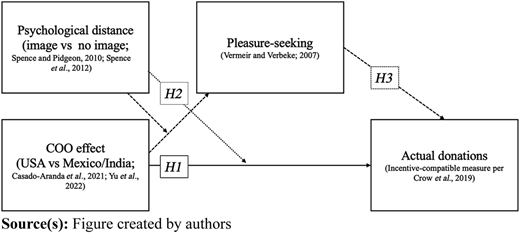
When the COO is at a greater (vs smaller) psychological distance from the consumer, their willingness to donate is reduced.
Use of images to mitigate psychological distance
Images serve as a powerful communication tool that can effectively drive action and foster change, particularly in addressing social and environmental issues (Joffe, 2008). For instance, research indicates that imagery, compared to text alone, elicits stronger responses from consumers (Joffe, 2008; O'Neill and Smith, 2014). The use of images has also been shown to reduce psychological distance associated with climate change (Spence and Pidgeon, 2010; Spence et al., 2012). Such reduction in psychological distance can, in turn, increase perceived social similarity (Jones et al., 2017; Stephan et al., 2011). This could be because images are concrete, low-level representations that in most cases truly characterise their referent object bringing psychologically distant objects closer (Amit et al., 2013). This contrasts with texts, which, relative to images, are abstract representations that carry only an essence of the object they portray or describe (Amit et al., 2013). Drawing from that evidence, it is argued that the use of personal images on garment swing tags may reduce psychological distance between the manufacturer and fashion consumer, mitigating the negative effects of COO on actual donations. With that, the following hypothesis is offered:
The inclusion of personal images on swing tags mitigates the negative effect of a psychological distant COO.
Impact of pleasure-seeking on actual donations
Pleasure-seeking is about the “gratification of desires” (Schwartz, 1992), loosely translating to feeling good. It is hedonistic in nature (Schwartz, 1992), aligning well with the inherent hedonistic nature of fashion consumption (Alba and Williams, 2013). This alignment and the ability of value priorities to guide people’s behaviour (Schwartz, 1992) motivated this work to consider pleasure-seeking as a mediator. Specifically, in prosocial contexts, pleasure-seeking tendencies serve as a motivation given their link to self-actualisation, self-esteem and personal life satisfaction (Gebauer et al., 2008). Other research reinforces this idea by proposing that pleasure-seeking pushes people towards prosocial behaviour (Sneddon et al., 2020). This means that pleasure-seeking could have a positive impact on donation behaviour towards human rights issues. Together with this, considering the influential role positive emotions play in fashion consumption (Ki et al., 2017), this paper builds on the proposition that the use of a positive emotive cue – in this case, a personal image of a garment worker – will mitigate the issues associated with perceived psychological distance and negative COO effects. That is, the image would make the previously psychologically distant garment worker proximally close, thus enhancing consumers’ pleasure-seeking tendencies of wanting to feel good about the purchase and “doing good”. This means that pleasure-seeking would mediate the interactive relationship between psychological distance (image) and COO on actual donations. Considering this, the final hypothesis is proposed as follows:
The inclusion of personal images (vs no image) increases pleasure-seeking and thereby positively impacts actual donations to ensure fair working conditions in a psychological distant country of origin.
Bringing these arguments together, a conceptual model of the role of psychological distance and its influence on donation behaviour is presented in Figure 1.
Method
This work investigates how fashion consumers’ psychological distance can be reduced to encourage donations to Fair Trade initiatives. It also tests the mediation effect of pleasure seeking in this process. The context of Fair Trade was chosen as it is a widely used strategy to address social issues such as worker welfare (Musa and Gopalakrishna, 2021) with a relatively positive response from consumers (Rashid and Byun, 2018). With theoretical foundations in CLT, it is posited that psychological distance associated with COO can be reduced through a visual cue based intervention. Specifically, personal images of garment workers are used to reduce the psychological distance by creating a sense of social connectedness. Images have previously been used to reduce psychological distance within contexts of environmental sustainability (Spence and Pidgeon, 2010; Spence et al., 2012).
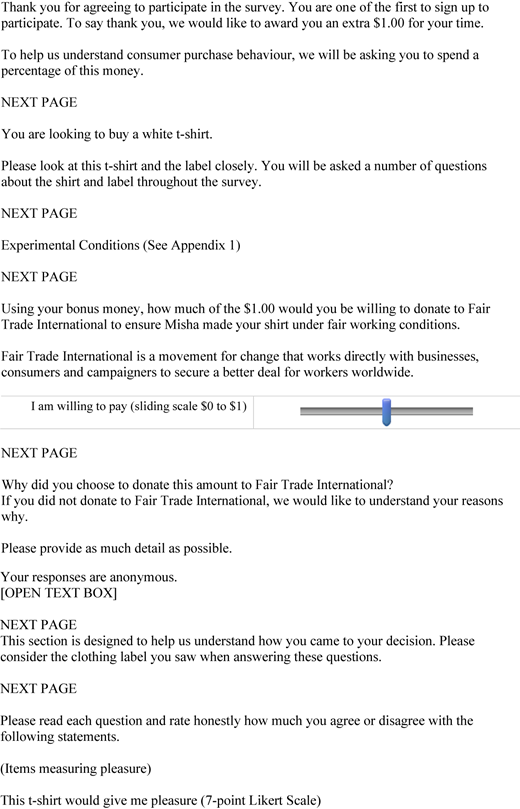
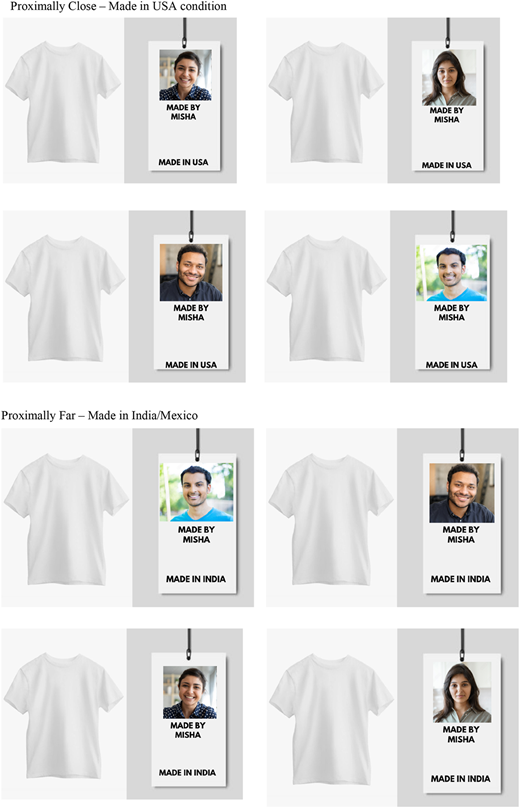
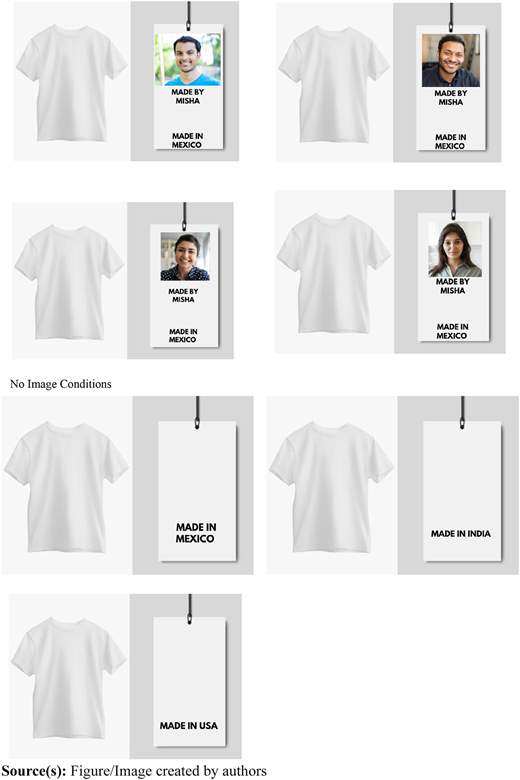
This study followed all ethical guidelines and was conducted in compliance with the requirements of the affiliated University. Ethical approval was obtained before commencing the research, and participants were fully informed of their rights, ensuring that the study adhered to established ethical standards. Two separate online experiments were conducted. Study 1 focused on testing the effect of personal images on psychological distance. Study 2 focused on testing the effect of COO on actual donations and the mediating effect of pleasure-seeking. Both studies employed a 2 × 2 experimental design and used images of garment workers (see Appendix 1). Participants were shown an image of a white t-shirt and its label, with the experimental conditions manipulated to vary the presence or absence of personal images of garment workers and the COO (USA vs India/Mexico). The donation measure involved asking participants how much of their bonus $1.00 they would be willing to donate to Fair Trade International to support ethical labour practices, using an incentive-compatible measure. This approach ensured the capture of actual donation behaviour (as participants at the time of response were under the impression, they would be donating a percentage of their bonus earnings), which is often a more accurate reflection of consumer intentions compared to hypothetical measures.
In addition to donation behaviour, the survey incorporated a measure to assess the role of pleasure-seeking in influencing consumer engagement with ethical causes ( Appendix 2). Specifically, the item “This t-shirt would give me pleasure” was included to evaluate participants’ emotional response to the t-shirt and its associated cause. Single-item measures are widely used in behavioural research due to their efficiency and effectiveness in capturing a targeted construct without introducing redundancy. Moreover, such measures reduce the risk of response biases, such as demand effects, by limiting the number of items assessing the same variable (Podsakoff et al., 2003).
All images were sourced from Adobe, with usage rights. In terms of measurements, donations were measured using an incentive-compatible measure where participants were asked whether they would donate their bonus payment to Fair Trade International. Pleasure-seeking was measured as adapted from Vermeir and Verbeke (2008). To test for different COO with varying levels of psychological distance; “Made in USA”, “Made in Mexico” and “Made in India”, tags were used. As data were collected from a US population, it was critical to ensure the choice options included small psychological distances (a t-shirt made in USA) versus greater psychological distances (a t-shirt made in Mexico/India). Further, both India and Mexico are in the “Top 5” countries that export apparel and textiles to North America (United States International Trade Commission, 2020). Accordingly, to set up experiments with realistic stimuli – a reasonable US consumer would encounter low priced t-shirts in US discount stores that were made in Mexico/India – these two psychologically distant countries were chosen.
Study 1
Study 1 tested the effect of personal images on psychological distance in an online experiment. US nationals aged 18 years and above (N = 416) were recruited using the general population sample of Amazon Mechanical Turk (M-Turk). While M-Turk has a risk of data quality (Webb and Tangney, 2022), integrity-check questions were included to mitigate this. Attention checks are a recommended strategy to improve data quality in M-Turk samples (Lu et al., 2022). The gender distribution of the sample was female (35%), male (64%) and gender-diverse/non-binary (1%). Five age categories were identified in the sample: 18–24 (6%), 25–30 (39%), 31–39 (34%), 40–49 (8%) and 50+ (13%) years. In a 2 × 2 experimental design, participants were randomly assigned to one of four conditions (N = 104 per condition) that manipulated psychological distance (Made in the USA or Made in India) and personal images (image vs no image). For each condition, the image used depicted a garment worker who was given the gender-and culture-neutral name “Misha” in a swing tag. The pictures sourced were stock images of garment workers and included two images of males and two of females to minimise bias (refer to Appendix 1). To encourage participation, a small financial incentive (USD1) was offered. On agreeing to participate, all participants were awarded an additional bonus of USD1. Given that donation behaviour was operationalised as an incentive-compatible measure, after the participants completed the experiment, they were asked if they would donate their bonus payment to a not-for-profit organisation (Fair Trade International) that seeks to ensure safe working environments for workers (such as the worker in the image, Misha) globally. This approach was used to help minimise the impact of social desirability bias (Clavin and Lewis, 2005) and ecological validity (Crow et al., 2019).
Manipulation check
An independent samples t-test yielded the expected effect of image (image vs no image) manipulation on psychological distance (t(1,412) = −1.8, p < 0.05). As intended, the higher psychological distance condition (no image) returned significant results, indicating that when an image of Misha is shown, psychological distance was reduced (M = 3.50, SD = 1.47) as opposed to when participants were shown a swing tag with no image (M = 3.79, SD = 1.41).
Main effect
An independent samples t-test yielded the expected effect of the COO condition on actual donations (t(1,412) = −4.04, p = < 0.001). As anticipated in H1, the average donations for the Made in USA t-shirt were higher (USD0.54, SD = 0.39) than for the Made in India t-shirt (USD0.39, SD = 0.37).
Conditional effects
In the next step, the main effects of (A) USA versus India (USA = 1; India = 0) and (B) psychological distance (no image = 0; image = 1), together with their interaction (A × B), were entered into a linear regression analysis. As hypothesised in H2, the predicted two-way interaction between the image and COO on pleasure-seeking was positive and significant (β = −0.65, p < 0.05). The results of the conditional effects analysis revealed two simple effects of the COO conditional on each level of the moderator: no image versus image. The effect of COO on donations was significant and positive in the no-image condition (β = 0.58, SE = 0.21, t = 2.78, p < 0.1, 95% CI: [0.17, 0.99]) but insignificant in the image condition (β = −0.7, SE = 0.21, t = −0.33, p = 0.75).
Conditional indirect effects
The potential mediating role of pleasure-seeking was investigated using a bootstrapping analysis with the PROCESS macro for SPSS (Model 8: Hayes, 2013). To conduct the analysis, the proposed mediator of pleasure-seeking on (A) psychological distance, (B) COO and their interaction (A × B); and the dependent variable on image versus no image (A), COO (B), their interaction (A × B) and pleasure-seeking (M) were regressed on the dependent variable, donations. Importantly, the confidence intervals for the index of moderated mediation did not include 0 (95% CI [–0.11, −0.005]), indicating a statistically significant moderated mediation. This finding aligns with H3, which conjectures that pleasure-seeking mediates the interactive relationship between psychological distance (image) and COO on actual donations. Providing further evidence of the directionality of the effects, the conditional indirect effect was positive in the image condition (β 0.01, boot-strapped CI [–0.00, 0.03]) and negative in the no-image condition (β −0.01, boot-strapped CI [–0.02, 0.03]).
Study 2
Study 2 tested the effect of COO on actual donations and the mediating effect of pleasure-seeking. For this, US nationals aged 18 years and above (N = 484) were recruited using the general population sample from the Online Research Unit – a professional marketing research sample provider. Gender statistics show a distribution of female (66%), male (33%) and gender-diverse/non-binary (1%) across the sample. Five age categories were identified: 18–24 (7%), 25–30 (13%), 31–39 (29%), 40–49 (23%) and 50+ (28%) years. In a 2 × 2 experimental design, participants were randomly assigned to one of four conditions (N = 121 per condition) that manipulated psychological distance (Made in the USA or Made in Mexico) and the role of images (image vs no image). Actual donations were operationalised as an incentive-compatible measure, as per Study 1.
Main effect
An independent samples t-test yielded the expected effect of the COO condition on actual donations (t(1,481) = −2.75, p = < 0.05). As anticipated in H1, the average donations for the Made in USA t-shirt were higher (USD0.66, SD = 0.39) than for the Made in Mexico t-shirt (USD0.56, SD = 0.38).
Conditional effect
In the next step, the main effects of (A) USA versus Mexico (USA = 1, Mexico = 0) and (B) psychological distance (no image = 0, image = 1), together with their interaction (A × B), were entered into a linear regression analysis. As hypothesised in H2, the predicted two-way interaction between the image and COO on pleasure-seeking was positive and significant (β = −0.73, p < 0.05). The results of the conditional effects analysis revealed two simple effects of the COO, conditional on each level of the moderator: no image versus image. The effect of COO on donation was significant and positive in the no-image condition (β = 0.43, SE = 0.21, t = 1.99, p < 0.1, 95% CI: [0.01, 0.85]) but insignificant in the image condition (β = −0.31, SE = 0.22, t = −1.39, p = 0.17).
Conditional indirect effects
As in Study 1, the potential mediating role of pleasure-seeking was investigated using a bootstrapping analysis with the PROCESS macro for SPSS (Model 8: Hayes, 2013). To conduct the analysis, the proposed mediator of pleasure-seeking on (A) psychological distance, (B) COO and their interaction (A × B) and the dependent variable on image versus no image (A), COO (B), their interaction (A × B) and pleasure-seeking (M) were regressed on the dependent variable. The confidence intervals for the index of moderated mediation did not include 0 (95% CI [–0.05, −0.002]), indicating a statistically significant moderated mediation. This finding again aligns with H3, which predicts that pleasure-seeking would mediate the interactive relationship between psychological distance (image) and COO on actual donations.
Table 1 highlights a summary of the results.
Summary of results
| Hypotheses | Study 1 | Study 2 | |
|---|---|---|---|
| H1 | When the COO is at a greater (vs smaller) distance from the consumer, their willingness to donate is reduced | Supported | Supported |
| H2 | The inclusion of personal images on swing tags mitigates the negative effect of a distant COO | Supported | Supported |
| H3 | The inclusion of personal images (vs no image) increases pleasure-seeking and thereby positively impacts actual donations to ensure fair working conditions in a distant country of origin | Supported | Supported |
Source(s): Table created by authors
Discussion
Key findings
The present research investigates the role of personal images in mitigating negative COO effects on fashion consumers’ actual donation behaviour, revealing the significant role that psychological distance plays in fashion consumers’ willingness to engage in charitable behaviour. Drawing on the Construal Level Theory (CLT), this study reveals that COO negatively affects actual donations for both the “Made in India” and “Made in Mexico” conditions compared to the “Made in USA” conditions. Participants demonstrated a higher willingness to donate to the proximally close “Made in USA” cause (USD0.54 in Study 1 and USD0.66 in Study 2) compared to the proximally distant causes (“Made in India” at USD0.39 and “Made in Mexico” at USD0.33). These insights underscore the powerful psychological barrier that geographical and cultural distance creates, often leading to a reduced moral obligation toward garment workers in the Global South. Importantly, this negative effect was mitigated when a personal image of the garment worker was used, increasing actual donations made to Fair Trade. Personal images appear to evoke empathy and reinforce the hedonistic underpinnings of donation behaviour, as consumers derive emotional satisfaction and pleasure from helping others in need. This suggests that the increase in donations is driven by pleasure-seeking, indicating that consumer support for social causes in fashion supply chains is influenced by hedonistic values. The findings provide evidence that visual cues, such as personal images, can effectively mitigate negative COO effects, leading to increased financial contributions towards social issues. Given that worker rights issues have received little attention in the literature (Ginder and Byun, 2022), this study highlights the significance of visual cues in fashion marketing revealing a critical strategy to mitigate the negative impacts of the COO effect.
These findings contribute to the broader literature on consumer donation behaviour by providing empirical evidence that links pleasure-seeking tendencies with actual donation behaviour. This study diverges from traditional research that often focuses on hypothetical intentions to donate and instead uses an incentive-compatible measure, offering a more accurate depiction of how consumers behave in real-world contexts.
Theoretical and managerial implications
Two theoretical implications are offered. First, earlier calls for quantitative examination of effective communication methods for social initiatives are addressed (Ginder and Byun, 2022; Stringer et al., 2022; Wright and Heaton, 2006). While psychological distance has been shown to impact consumer perceptions of climate change (Spence and Pidgeon, 2010; Spence et al., 2012), this research extends that impact to prosocial behaviour toward social issues. By examining responses concerning India and Mexico—psychologically distant locations for US fashion consumers—confirming the negative effect of COO on actual donation behaviour and introduces personal images as a mechanism to reduce these negative effects. The study posits that personal images can diminish psychological distance by reinforcing consumer pleasure-seeking priorities. This research contributes to the literature on psychological distance by extending the concept beyond climate change and other global issues to encompass social issues within fashion supply chains. Results demonstrate that psychological distance, as conceptualised in Construal Level Theory, negatively impacts prosocial behaviour, particularly in the context of proximally distant countries. Additionally, this research contributes to the CLT literature by showing that personal images can shift a high-level abstract event (worker rights issues in the Global South) to a low-level concrete event, enhancing a sense of proximity (Rim et al., 2014). This is a critical advancement, as it highlights the barriers to consumer engagement with distant social causes and the importance of strategies aimed at reducing psychological distance.
Employing an incentive-compatible measure for actual donations demonstrates that reduced perceived psychological distance leads to increased donations. The use of an incentive-compatible measure underscores the potential for consumers to act on their ethical beliefs, directly aligning with recent discussions in the literature around consumer willingness to pay a premium for ethically produced goods (e.g. ethical fashion, fair-trade products). These findings suggest that when brands and social enterprises effectively communicate the impact of their social initiatives—particularly through visual cues like personal images of workers—consumers may not only engage in prosocial actions like donations but may also translate these values into other financial decisions. This is particularly important for fashion brands that face increasing pressure to demonstrate transparency and ethical practices in their supply chains.
The second theoretical implication pertains to the critical role of pleasure-seeking in promoting donation behaviour. Pleasure-seeking as a mediator between COO, image interventions and donation behaviour offers an exciting area of exploration within both the COO and donation behaviour literature. The results indicate that pleasure-seeking mediates the interactive relationship between psychological distance (image) and COO on actual donations. In the COO literature, pleasure is linked to favourable product perceptions (Visbal et al., 2017). Extending this to Fair Trade consumption, it is confirmed that addressing consumers’ pleasure-seeking tendencies can reduce negative COO effects on actual donations when personal images are used. By addressing consumers’ hedonistic tendencies, the study shows that donations to ethical causes are not just about moral obligation, but also about the emotional satisfaction that comes with helping others. This insight is critical in understanding how fashion retailers and social enterprises can encourage consumer involvement in social issues by aligning these causes with pleasure-seeking motives, rather than relying solely on guilt or moral appeals. By using an incentive-compatible measure, this research contributes a critical advancement to the study of consumer donation behaviour, as it captures real-world actions rather than relying on hypothetical intentions, providing more robust and practical insights into how consumers respond to social causes and their willingness to contribute to ensure ethical working conditions. These findings support the notion that consumer support for social causes within fashion supply chains is rooted in hedonism, whereby consumers are inclined to incur a prosocial cost only if it aligns with their pursuit of pleasure (Sneddon et al., 2020).
The insights gained from this research have practical implications for fashion retailers and social enterprises seeking effective ways to communicate social initiatives. While existing literature highlights challenges in conveying social elements of sustainability (Stringer et al., 2022; Wright and Heaton, 2006), it is proposed the use of personal images of garment workers as a strategy to mitigate these concerns. By integrating explicit representations of garment worker experiences into communication strategies, organisations can bridge the psychological distance between workers and consumers, fostering positive behavioural change. This study also brings out the potential of swing tags to be used as a tool to educate consumers about fashion supply chain issues. This aligns with the idea that labels are an important communication tool for the organisations’ sustainability efforts, specially within fashion (Gam et al., 2014). Lastly, evidence is provided to support the claim that donations are a practical consumer-driven strategy to garner support for worker welfare issues.
Limitations and suggestions for future research
Like much empirical research, this work is not without limitations, which serve as viable avenues for future research. In particular, the first experiment, Study 1, was conducted online using M-Turk. Previous work has identified legitimacy concerns regarding M-Turk, such as the potential for sampling bias and concerns surrounding representativeness (Babbie, 2016; Follmer et al., 2017; Smith et al., 2016). Efforts were made to for control these issues, with two integrity-check questions and a duration check. Further, M-Turk’s access to a greater diversity of age, education and income (Park, 2018), and its high test–retest reliability and high internal consistency (Mason and Suri, 2012; Paolacci et al., 2010) was leveraged. Given the use of M-Turk, this study included US residents, who represent only a cross-section of fashion consumers in the Global North. A broader sample may provide opportunities for cross-cultural comparisons.
While the inclusion of personal images was found to positively impact actual donations, the experiments conducted in this study only used images of a single garment worker at a time. This limitation presents an opportunity for future research to explore how different types of imagery, such as those depicting group settings or work environments, may influence donation behaviour. It would be valuable to investigate how images showing a collective group of workers or the broader context of the working environment could alter the consumer’s emotional engagement and willingness to contribute. In addition, the phenomenon of compassion fade—where empathy and compassion diminish as the number of people in need increases—warrants further examination in this context (Butts et al., 2019). Future studies could explore how the number of individuals depicted in the imagery influences consumer response. Furthermore, the effectiveness of shocking images—those highlighting exploitative working conditions or distressing labour practices—could also be investigated. Such images have been shown to prompt action in other contexts (An et al., 2020; Marcus, 2018), and examining their impact within the context of negative COO effects and worker rights issues could provide valuable insights into how more visceral images might influence consumer behaviour and donation intent.
Additionally, this study provides a foundation for further investigation into the interplay between hedonism, ethical consumption and donation behaviour. As the findings suggest that pleasure-seeking plays a key role in moderating the impact of COO on donation behaviour, future research could further explore the role of pleasure in promoting prosocial actions in ethical consumption, particularly in the context of fashion. Understanding how hedonic values shape consumer engagement with social causes could deepen insights of what drives donations and involvement in fair trade or other ethical initiatives. Another important avenue for future research could focus on the local vs global dynamic in donation behaviour. While this study focused on psychological distance in the form of COO, research could expand this to investigate how consumers respond to issues that are perceived as more local versus those that are seen as more global. This is especially pertinent in the context of social causes where some issues may feel more immediate to consumers based on their geographical location.
Finally, future studies could explore these impacts long-term through a longitudinal study. With the current discussions surrounding ethical consumerism, modern slavery and the impact of consumer consumption habits, rapidly changing, a longitudinal study would help examine whether the positive effects of images and pleasure-seeking on donations are sustained over time or whether the impact diminishes – Do consumers continue to donate after repeated exposure to personal images, or do other factors come into play over time? This could help marketers understand how to create long-term strategies for increasing charitable donations through emotional and ethical appeals. Understanding these dynamics could offer insights into how to more effectively present social causes in marketing strategies to increase consumer engagement and donation behaviour. Within this context, it is proposed to give further academic attention to exploring the use of positive visual cues to promote prosocial behaviours among fashion consumers.
References
Further reading
Appendix 1 Experimental conditions
Appendix 2 Survey build