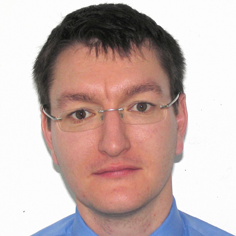
As chairman of the Geotechnical Engineering (GE) editorial advisory board I would like to welcome you to the last issue of 2014. This will be my final editorial contribution as I step down as chairman of the board and end my 6 years of direct involvement with the panel. During my time on the panel there has been significant change to the journal and its operating procedures with faster publication of papers, greater internationalisation of the journal (including panel members), and confirmation and definition of the journal's identity. This has been achieved through the hard work of many people including several journal editors from ICE Publishing and many different panel members that have given up significant time to support me and ensure the continued quality and impact of the papers published in GE. I would like to say thank you to all of them.
The new chairman will be Dr Trevor Orr from Trinity College Dublin, Ireland, who began his term in November 2014 (when this editorial was written). Trevor was a relatively recent member of the editorial panel and frequent contributor to the journal (2013 Crampton Prize-winning paper) so he is familiar with how the journal operates. Trevor has a background both in academia and industry and undertakes research that appeals to both areas. He is well known for his work on the development of Eurocode 7 and I assume he will be for its future evolution. I wish Trevor every success with the journal in the future.
At the beginning of the year the GE editorial panel set themselves several goals. The main one was to enhance further the international standing of the journal and increase the take-up, use and impact of the papers published. Hopefully this is reflected in the sustained increase in the journal's impact factor (1·056) with a significant jump from last year (0·569). Our other aims were to maintain a clear identity and vision of what constitutes a GE paper – that is, material should be of immediate use or value to a practising engineer and where possible should actively demonstrate potential application. The panel has also endeavoured to attract key papers that have the potential to change current geotechnical practice and educate in technology developments. I would like to think that our 2014 themed issue on deep basements and retaining walls (Roscoe and Nowak, 2014) highlights the panel's vision for the journal with its capture of historically important and innovative case studies from leading industrial and academic authors from around the world. As always though, it is not the panel that should take the credit for the papers in GE but the authors, as they play the most significant part in the success of the journal through the submission of work that highlights and demonstrates the impact on practice but at the same time always draws on relevant academic findings.
At the close of the year it is usual to acknowledge the contribution of board members who are standing down after 3–4 years of valued input to the journal. I would like to express my thanks to nine members who are leaving the editorial panel at the end of 2014. We are grateful for the support and hard work provided by William Craig, Fleur Loveridge Jonathan Black, Stuart Haigh, Howard Roscoe and Ioannis Anastasopoulos. We also very much appreciate the service provided by our international panel members, Michael Dobie, Chris Barker and Berrak Teymur who are retiring from the panel this year. We had a very good response to our call for new panel members and they will be introduced in the New Year.
In October I was lucky enough to attend the annual Institution of Civil Engineers awards ceremony. In the case of the journals, the occasion recognises papers published in the previous year; once again the panel was pleased to submit a number of GE papers for consideration. Two GE papers were selected to receive awards. The Crampton Prize, awarded annually for the best paper on practical geotechnical engineering, went to Winter et al. (2013) for their paper ‘Landslide hazard and risk assessment on the Scottish road network'. The journal also nominated the paper that won the Safety in Construction Prize, ‘Unexploded ordnance risk assessment on Crossrail project in London – pre-empting best practice' by Smith et al. (2013). It was very rewarding to help celebrate the authors' success; a brief report of the awards will be included in the February 2015 issue. All prize-winning papers are free to download from http://www.icevirtuallibrary.com/info/awards2014.
This issue contains eight papers and two discussions, reflecting a wide variety of material. I have grouped the first two together under the theme of soft soils and settlement prediction. The first paper, by McCabe et al. (2014b), looks at deriving correlations for the compressibility coefficient (Cc) of soft soils with easy-to-measure parameters such as moisture content or liquid limit. Often determining Cc directly for soft soils may not be practical on a small commercial project where sampling such soils to obtain undisturbed or representative samples may be difficult and/or prohibitively costly. The paper includes a useful summary of many previously proposed empirical correlations and determines ones specifically for Irish soft soils based upon data from 16 sites/studies including the Limerick Tunnel project. This paper helps to add to wealth of knowledge previously published by the journal on the problematic soils encountered in Ireland, for example Boylan and Long (2014) and Zhang and O'Kelly (2014). Continuing the theme of simplifying selection of parameters for settlement calculation, Prakash et al. (2014) look at the use of Asaoka's field assessment method to determine the end of primary settlement and the coefficient of consolidation from one-dimensional consolidation testing rather than using the more commonly adopted Taylor or Casagrande techniques.
The next three papers may be linked together by the theme of large urban underground developments and installation effects, their mitigation, modelling and measurement. From a full-scale field trial Wang et al. (2014) demonstrate that the use of controlled discharge horizontal jet grouting has the potential to reduce disturbance when this technique is used to form horizontal jet grouting columns as a tunnel support. As well as this technique minimising soil disturbance, increased pressures or heave of nearby structures, it was shown that the technique formed much more consistent columns of predictable diameter due to improved spoil discharge techniques. Such improvements have the potential for reduced tunnel settlement and greater safety of the workforce during construction. The link with the next paper is that the advanced Brick model for finite-element analysis (FEA) introduced by Yeow (2014) was originally developed for the prediction of ground and structural movements during tunnelling and large excavation formation. The model was originally derived for use in heavily over consolidated London Clay but has also been used successfully in soft, normally consolidated Bangkok Clay and marine clay in Singapore to assist in the design of many large underground urban developments. In this paper Yeow (2014) is particularly interested in how the requirements of Eurocode 7 can be incorporated in FEA using the Brick model and demonstrates the versatility of the model in deriving new input parameters when the necessary partial factor is applied in a specific design approach. London Clay is used as the basis for material parameter generation and several simple hypothetical cases are used to test the findings. The paper by Wan and Standing (2014a) compares the use of multi-level vibrating wire pore pressure monitoring systems backfilled with cement–bentonite grout to spade cells and conventional standpipe piezometers monitoring tunnel response for the Crossrail tunnelling operations in London. This paper represents part of a significant contribution by the authors to the journal on the theme of monitoring of tunnels and deep excavations during 2014 with a co-authored paper in the 2014 themed issue on ‘Deep excavations: monitoring mechanisms of ground displacement' (Fearnhead et al., 2014) and ‘Lessons learnt from installation of field instrumentation' (Wan and Standing, 2014b) in the October issue.
The next two papers are associated with how soil behaves in a suspension and the flow of fluid through soil, respectively. Lam et al. (2014) consider the use of synthetic polymer fluids as borehole support during the construction of cast in situ concrete-bored piles. Based upon case study investigations for silty fine sand deposits in Glasgow (UK), the authors propose working techniques that, if adopted, significantly reduce the risk of soft pile toes or concrete contamination. This paper has been made open access and is free to download from the journal website. Vakili and Selamat (2014) look at the choice of filter materials for dam core protection and show how material assessment by standardised methods may lead to non-conservative material specification in different material types. Alternative more appropriate testing techniques are proposed.
The final paper in the issue (Balunaini et al., 2014) is concerned with the use of a specially designed large hydraulically driven direct shear box (1 m by 1 m) which has been used to investigate the reinforcing effects or behaviour of tyre shreds – that is, elongated lengths of waste vehicle tyres rather than the more commonly adopted and tested tyre chips. Such a large device is required owing to the shape and size of the waste tyre inclusions and the tendency to elongate during testing. Such waste material is often used for lightweight or replacement fills.
Also in this issue are two discussions based upon previously published papers ‘Potential damage assessment in buildings undergoing tilt' (Namazi and Mohamad, 2013) by Namazi et al. (2014) and ‘Ground heave induced by installing stone columns in clay soils' (McCabe et al., 2013) by McCabe et al. (2014a). If you feel compelled to write a discussion piece on any of the papers in this issue or previous journal issues you can find further instructions on the preparation and submission of a discussion at the end of each paper.
For up-to-date information on GE and ahead of print (AOP) papers please visit http://www.icevirtuallibrary.com/content/serial/geng.