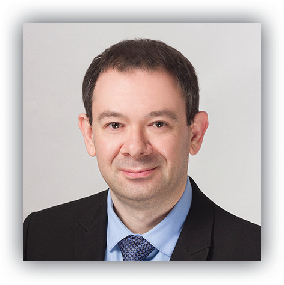
1 Dariusz Wanatowski
On behalf of the Editorial Board of Geotechnical Research, I would like to welcome our readers to the last issue of 2018, which includes five very interesting papers.
In the first paper, Rahman et al. (2018) combined triaxial tests on sand and three-dimensional discrete-element method cubical assembly consisting of ellipsoids under triaxial condition to investigate the effect of consolidation on the undrained behaviour and its characteristic features. Both density indices and the critical state soil mechanics framework were used to develop the correlations for characteristic features of micromechanical undrained behaviour. The micromechanical measures were also analysed to understand how the micromechanical characteristics affect the macromechanical behaviour of sand.
In the next paper, a new method for the inverse modelling of leakage from the body and foundation of earth dams considering a transient flow model is introduced by Vaezinejad et al. (2018). The proposed method was used for the inverse modelling of leakage in the Baft dam in Kerman, Iran. The results presented by the authors demonstrate the applicability of the suggested method in inverse modelling of real large-scale problems, leading to the reduction of computation cost while increasing reliability and efficiency of the analysis.
Wang et al. (2018) present a numerical simulation of multilayered geogrid-reinforced piled embankments. Their analysis shows that the inclusion of geogrids can effectively help transferring stress from subsoil to the pile cap, particularly for stiffer geogrids. The parametric study presented in the paper further shows that the combination of very soft subsoil and a geogrid with low stiffness results in relatively large settlement and may cause intolerable geogrid strain. Finally, the pile spacing was found to be the most sensitive factor influencing the maximum settlement of the subsoil.
O’Kelly (2018) describes necessary procedural modifications to standard geotechnical laboratory testing methods, including associated analyses and data-interpretation procedures, to obtain meaningful physical properties and strength parameters of biosolids and sewage sludge. The author demonstrates that many of these modifications may be transferable to testing of other biodegradable soil and soil-like materials.
Finally, Clarke (2018) in his review of the formation of glacial tills has highlighted a number of points that should be considered when engineering these soils. His overview of the formation of glacial tills and their properties shows that representative design properties of glacial tills can be assigned using frameworks developed for composite soils.
With the conclusion of my 5-year term as Editor-in-Chief it is time to express my gratitude to colleagues and to introduce the new joint Editors-in-Chief. These have been very productive and exciting years for me and for the journal. The main aim of Geotechnical Research to disseminate knowledge through the gold open access model to geotechnical engineers working in research and practice worldwide has been achieved. Articles published in the journal have come from many different countries and have covered a wide range of modern geotechnical problems. More importantly, the high quality of the articles published in the journal resulted in successful admission to Scopus, Thompson Reuters’ Emerging Sources Citation Index (ESCI) and the Directory of Open Access Journals (DOAJ).
As the outgoing Editor-in-Chief, I would like to take this opportunity to thank all the members of the Editorial Board for their hard work in promoting the journal as well as their timely reviews and assessments of submitted papers. Last, but not least, I would like to thank ICE Publishing for their excellent support to the journal. Without them, a successful launch in 2014 and the significant progress Geotechnical Research has made in the last 5 years would not have been possible.
Finally, it is my pleasure to announce that Dr Dominic Ong from Griffith University, Australia and Dr Mizanur Rahman from the University of South, Australia have been appointed jointly as my successors for 2019–2021. Based on the high quality of their work and excellent international reputation, I am confident that under their joint leadership the journal will continue strengthening its position as the leading gold open access journal for publishing stimulating papers with a significant geotechnical impact. I wish them all the best in the coming 3 years and I will support them in everything they may need in their new roles.
2 Dominic E. L. Ong and Md Mizanur Rahman
It is with great pleasure that both of us (Dominic E. L. Ong and Md Mizanur Rahman) are given the opportunity to pen our thoughts and visions for Geotechnical Research – the Institution of Civil Engineers’ gold open access journal for soil mechanics and geotechnical engineering – in this editorial piece as the newly appointed joint Editors-in-Chief for the next 3 years (2019–2021).
We were both appointed to the Editorial Board at the inception of Geotechnical Research in 2014. Since then, we have witnessed the exemplary leadership of Prof. Dariusz Wanatowski as the Founding Editor of Geotechnical Research through the gold open access model funded by article publication charges (APC). Although gold open access was a relatively new model for geotechnical academics and practitioners at that time, Geotechnical Research is now established and has been successfully disseminating new knowledge in many aspects of modern geotechnics.
After 5 years of stalwart leadership, Prof. Wanatowski is moving forward on his new endeavours and thus will be handing over the responsibilities of being the Editor-in-Chief to both of us. On behalf of the editorial office, Editorial Board members, reviewers, authors and the geotechnical communities, we would like to take this opportunity to sincerely acknowledge and thank Prof. Wanatowski whole-heartedly and unreservedly for his excellent contributions to the management of Geotechnical Research and also to the international geotechnical communities through this journal.
As the joint Editors-in-Chief of Geotechnical Research, we shall continue the good work of the Founding Editor and continue to strive for excellence. We have strong commitment to maintain the upward trajectory of the success of the journal by
disseminating new knowledge on any aspects of modern geotechnics, particularly case studies and practical applications, through a fast but effective review process (less than 1 month)
contributing high-impact research outcomes to the greater geotechnical communities and international audience
We welcome all the valued Editorial Board members, reviewers and authors to Geotechnical Research and humbly seek their continuous support in charting new heights for this journal. We also believe that there are scopes which may require additional expertise in the existing Editorial Board and, therefore, will be considering new applications, which should be directed to sam.hall@icepublishing.com.