


Bio-cementation is a new sustainable approach that has gained popularity due to its low energy and carbon dioxide footprint compared with those of existing technologies for geotechnical and geoenvironmental engineering applications. Bio-cementation is a soil improvement technique that involves binding the pore space of soil particles with calcium carbonate minerals by microbially induced carbonate precipitation (MICP) and filling the soil pore space. The purpose of this paper is to present the current state of the art and a comprehensive discussion on the development of bio-cementation for soil improvement/reinforcement. Premixing, injection, immersing and surface percolation are identified as four distinct bio-cementation treatment techniques. Furthermore, scholars have reported employing ureolytic bacteria such as Sporosarcina pasteurii, Bacillus sphaericus and Lysinibacillus sphaericus isolated from corals, limestone caves, soils, waste materials, seawater and other sources to accomplish effective bio-cementation. Some of the major issues (bacterial cultivation costs and ammonium production) that impede its industrial potential and promising remedial techniques are also discussed. This state-of-the-art review also discusses the benefits and drawbacks of bio-cementation compared with traditional approaches. The significance of enzyme-induced carbonate precipitation as a soil bio-cementation alternative to MICP is also highlighted. Finally, the sustainable procedure, bio-cementation principles and future implications are discussed.
Introduction
The bio-cementation process occurs at ambient temperature, is low energy and has a minimal carbon dioxide (CO2) footprint (‘carbon footprint’) compared with conventional cement manufacturing (Ivanov et al., 2015; Myhr et al., 2019). Instead of using pyro-processing technology to produce cementitious building materials, bio-cementation is an alternative method for improving soil engineering properties by using microorganisms and their products (e.g. enzymes and biominerals) (Omoregie et al., 2016). Geological conditions often impact the design of infrastructure projects such as tunnelling (Choo and Ong, 2020; Peerun et al., 2020), road construction (Sun et al., 2021; Zhalehjoo et al., 2018), subgrade stabilisation (Liu et al., 2022; Luis et al., 2019) and ground improvement (Fatehi et al., 2021; Omoregie et al., 2017). Globally, the building and construction sector consumes a large amount of global energy and continues to contribute to climate change through its greenhouse gas (GHG) emissions. Therefore, it is important to focus on developing environmentally friendly materials and processes. Additionally, urbanisation and infrastructure development have generated a lot of environmental waste and pollution (Ojuri et al., 2022).
Sustainable options for manufacturing construction materials are a top priority due to the need to reduce GHG emissions and the air pollution associated with cement production (Farajnia et al., 2022). The construction industry needs a built environment with fewer cement-based materials and more environmentally friendly and innovative construction technologies (Mirkouei et al., 2017; Scrivener et al., 2018). If appropriate environmental actions are not taken, the construction industry will contribute significantly to GHG emissions, resource depletion and landfill overflow. In recent decades, the use of cement alternatives such as bio-cementation for soil improvement has increased due to the need for net-zero carbon dioxide emission construction practice (Kahani et al., 2020). As a result, researchers from various disciplines, such as biotechnology, chemical engineering, geoscience, environmental engineering and civil engineering, are increasingly using bio-cementation for soil improvement and other important applications. The bio-cementation treatment technique uses microbially induced carbonate precipitation (MICP) to produce calcium carbonate (CaCO3) to increase the strength and rigidity of granular soil. It also can be applied at a large scale (Figure 1). The bio-cementation process significantly improves the interface shear strength of geo-structures, according to assessment trials, with an interface efficiency factor of at least 2 and up to 7. Friction piles, earth-retaining structures, strengthened slopes and embankments may benefit from this eco-friendly soil improvement technique (Mortazavi et al., 2021).
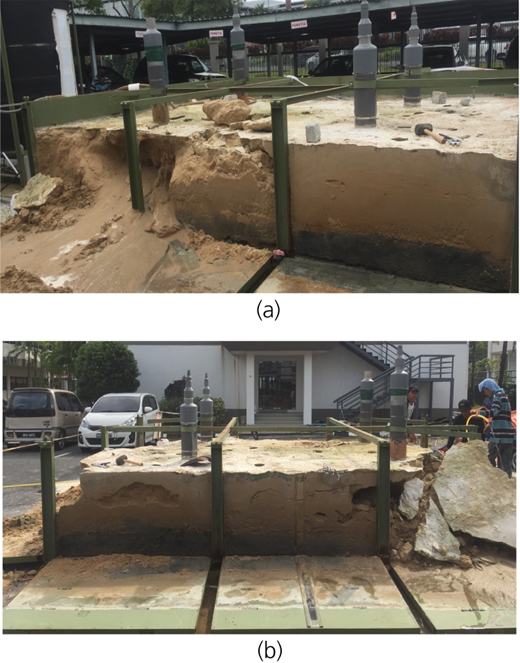
A sandbox (10 m3) was subjected to bio-cementation treatment. (a) Front view of the treated soil mass after an outdoor trial treatment; (b) rear view of the treated soil mass
A sandbox (10 m3) was subjected to bio-cementation treatment. (a) Front view of the treated soil mass after an outdoor trial treatment; (b) rear view of the treated soil mass
The efficiency of calcium carbonate precipitation is primarily determined by factors such as biological (enzymatic activity), chemical (cementation ingredients and concentration) and physical factors (soil nature) (Omoregie et al., 2021). While bio-cementation technology is becoming more popular, several factors still need to be standardised to optimise bacterial activity and allow real-time implementation of the method in a variety of planned operations (Hadi et al., 2022). In addition, while there have been many publications on the use of ureolytic bacteria in calcium carbonate precipitation, the appropriate nutrients required to promote microbial activity and high biomass production (Lapierre et al., 2020) and specific MICP conditions that help target desired calcium carbonate polymorphs during bio-cementation are yet to be established (Mokhtar et al., 2021). To be feasible and practical at the field level, certain conditions are necessary. Another key issue to consider is bio-cementation life-cycle assessment (LCA), which is used to evaluate the environmental impact of any product. LCA quantifies and assesses the inputs and outputs that affect the environmental performance of a product, process or activity throughout its life cycle (Le et al., 2019). Therefore, LCA supports a more sustainable planning process and practice. Al-Gheethi et al. (2022) recently conducted a comparative study of the health of raw materials and their environmental impact on bio-cementation. Al-Gheethi et al. (2022) reported that calcium acetate (Ca(CH3COO)2) (the calcium source required for calcium carbonate precipitation) contributes nearly 60% to ozone layer depletion, while urea (CO(NH2)2) (which is a substrate for catalysing urease production and calcium carbonate precipitation) and molasses (a nutrient source for bacterial cultivation) contribute 38% and 13% to marine eutrophication, respectively. However, it would be helpful to know the health and environmental impact of calcium chloride (CaCl2) and yeast extract, which are the commonly used reagents in bio-cementation.
During the bio-cementation process, the extracellular polymeric substances (EPSs) released by bacterial cells increase the calcium carbonate that fills the sand pores and improves sand solidification. The EPSs bind the soil particles together, creating a more stable and cohesive soil structure. The microstructure of bio-cemented soil is characterised by the presence of EPSs, which form a network of filaments and strands throughout the soil (Figure 2). This network helps bind the soil particles together and improves the mechanical strength and stability of the soil. The MICP process is typically carried out with active bacterial cells after being grown in a suitable medium. Once the bacterial culture has been prepared, its ability to produce urease is determined before the bacteria are mixed with the cementation solution and applied to the soil (Figure 3). The biomineral precipitates formed in the solution or soil columns can act as a binding agent. The MICP process for bio-cementation can result in improved soil engineering properties such as reduced hydraulic conductivity, reduced porosity, better shear strength and improved stiffness and unconfined compressive strength (UCS) (Gomez et al., 2018).
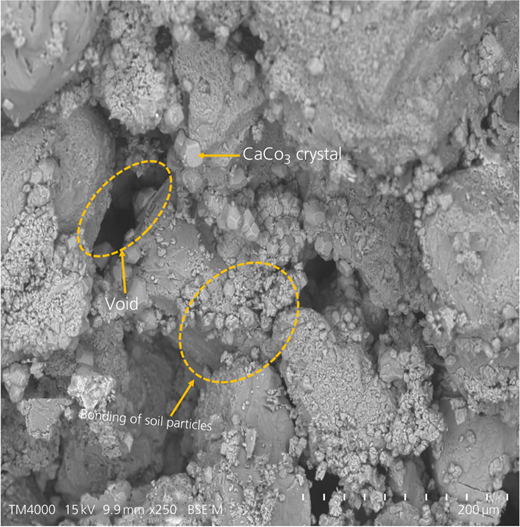
Scanning electron microscopic image showing calcium carbonate formations in a soil specimen and interparticle contact bonding after soil bio-cementation treatment
Scanning electron microscopic image showing calcium carbonate formations in a soil specimen and interparticle contact bonding after soil bio-cementation treatment
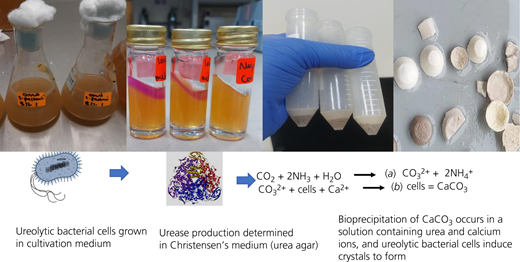
The improvement of soil engineering properties by calcium carbonate crystal precipitation with the attendant low GHG production demonstrates that soil bio-cementation is an environmentally advantageous strategy that should be considered in the present construction era (Charpe et al., 2019). As a result, researchers are exploring the use of inorganic cementitious materials during MICP to cement loose soil particles during various treatment phases (Yu and Rong, 2022). Researchers are also seeking appropriate reagents to ensure that adequate cementitious materials are precipitated for effective soil reinforcement. Xiang et al. (2022) recently suggested that calcium acetate should be used in future bio-cementation studies because it reduces ammonia (NH3) emissions by 54% compared with standard bio-cementation that uses calcium chloride as a calcium source, resulting in a cleaner bio-cement production method. They also observed that the unit prices of these two chemicals are comparable (US$5.3/kg for calcium chloride and US$5.5/kg for calcium acetate) (Xiang et al., 2022).
Bio-cementation is generally effective in improving the stability and strength of sandy and silty soil. The efficiency of bio-cementation in enhancing the qualities of clayey soil and loamy soil, on the other hand, varies depending on the kind and condition of the soil and the individual microorganisms used. Furthermore, factors such as the pH and moisture content of the soil and the presence of additional soil additives or contaminants may influence the efficiency of bio-cementation. However, a growing body of research in the literature investigates the utility of bio-cementation for clayey and loamy soils. Overall, bio-cementation can be a useful strategy for improving the quality of clayey soils. However, further research is needed to understand fully its benefits and limitations in various soil types and situations.
Many scholars have addressed important parameters that influence bio-cementation treatment and the MICP mechanism, including its potential treatment procedures, ureolytic bacteria, various biological pathways for acquiring calcium carbonate precipitates, optimal soil improvement conditions and some environmental challenges faced by this technology (Achal et al., 2015; Al-Salloum et al., 2017; Arias et al., 2017a; De Muynck et al., 2010; Omoregie et al., 2021; Osinubi et al., 2020; Tang et al., 2020). This state-of-the-art review provides a comprehensive overview of bio-cementation technology for soil fixation and improvement, including a thorough examination of the mechanism of urease-mediated calcium carbonate mineralisation and various bio-cementation soil improvement treatment methods. It also covers methods for reducing the cost of the growth medium for large-scale bacterial production, environmental safety concerns with bio-cementation and durability issues with MICP performance. The review also outlines potential MICP applications.
Bioprecipitation of calcium carbonate through the ureolysis-driven MICP process
Among the various MICP methods/techniques (e.g. photosynthesis, ureolysis (urea hydrolysis), sulfate reduction, ammonification and denitrification (nitrate reduction)), ureolysis appears to be the simplest pathway for microorganisms to exploit their environmental conditions and aid carbonate precipitation (Al-Salloum et al., 2017). When suitable ureolytic bacterial cells such as Sporosarcina pasteurii (also known as S. pasteurii) are supplied with urea and a calcium source (e.g. calcium chloride) in a solution, several biogeochemical reactions occur. During the ureolysis process, urease (Enzyme Commission number: 3.5.1.5) produced by the bacterial cells breaks down urea into ammonia and carbamate acid (NH2COOH), which instantaneously hydrolyses to form ammonia and carbonic acid (H2CO3) as shown in Equations I and II (Shougrakpam and Trivedi, 2021; Svane et al., 2020). This reaction is followed by ammonia, resulting in the formation of ammonium (2NH4+) and hydroxide (2OH−) ions (Hadi et al., 2022) (Equation III). Carbonic acid forms a bicarbonate (HCO3−) ion in the aqueous solution, as shown in Equation IV (Stocks-Fischer et al., 1999). The production of hydroxide ions increases the pH level of the solution. These occurrences cause a shift in bicarbonate equilibrium and subsequently form carbonate (CO32−) ions (Equation V) (Gomez et al., 2018). It is carbonic anhydrase (Enzyme Commission number: 4.2.1.1) rather than the urease enzyme that converts carbonic acid to carbonate ions (Omoregie et al., 2022a). The negatively charged cell walls of ureolytic microorganisms attract the positively charged calcium (Ca2+) ions (i.e. calcium chloride) to their cell surface, thus allowing the formation of a nucleation site and the precipitation of calcium carbonate. The calcium ions present in the solution then react with carbonate ions to produce calcium carbonate crystals, leading to bio-cementation (Equation VI) (Mujah et al., 2017).
Ureolytic microorganisms are widely distributed and have been isolated from many sources, as shown in Table 1. These microbes, sourced from various places such as caves, soils, corals and seawater, serve as microbial agents for MICP applications. Urease activity is determined by measuring the relative conductivity changes in a solution containing urea (1.0–1.5 M) and bacterial cultures at room temperature. One unit of urease activity is defined as the amount of enzyme that catalyses the breakdown of 1 mM urea per minute (Omoregie et al., 2022a). These ureolytic microorganisms can treat beach erosion caused by wave scouring due to climate change, improve soil fixation and solidification and sequester harmful heavy metals, among other applications. The ureolytic microbial species necessary for the MICP process are mostly non-pathogenic, making them easy to cultivate and implement. This has made the MICP process recognised as a green engineering practice for various applications (e.g. surface stabilisation, dust control, coastal and monumental protection, soil liquefaction mitigation and erosion control) (Gowthaman et al., 2022). The ureolysis-driven MICP process speeds up the rate of bio-cementation, allowing calcium carbonate precipitation to occur within a relatively short period.
List of ureolytic microorganisms isolated from various sources for MICP applications
| Ureolytic microorganism | Sampling location | Urease activity | Calcium carbonate crystalline phase | Reference |
|---|---|---|---|---|
| Citrobacter freundii and Pseudomonas azotoformans | Soils from Beni Suef City, Egypt | 45.5 and 54.9 U/ml | Calcite and aragonite | Abdel-Aleem et al. (2019) |
| Bacillus sp. CR2 | Mine tailing soil from Urumqi, Xinjiang, China | 389–432 U/ml | Aragonite and vaterite | Achal and Pan (2014) |
| Brevundimonas sp. | Soil from a mining site in Fengxian, China | Nil | Vaterite | Ali et al. (2022) |
| Rhodococcus erythropolis TN24F strain | Water and sediment from San Pedro de Atacama, northern Chile | Nil | Monohydrocalcite, struvite and halite | Arias et al. (2017b) |
| Staphylococcus edaphicus | Peatland soils from Hokkaido, Japan | Nil | Calcite | Chen et al. (2021) |
| Sporosarcina soli, S. siberinisis, S. pasteurii and Pseudogracilibacillus auburnensis | Soil from the Brahmaputra riverbank in Guwahati, Assam, India | 3–9.7 mM urea hydrolysed/min/OD600 | Calcite | Dubey et al. (2021) |
| Lysinibacillus sp. | Saline soil from a paddy field in Surin, Thailand | Nil | Calcite or aragonite | Ekprasert et al. (2020) |
| Stenotrophomonas maltophilia, Bacillus simplex and Rhodococcus degradans | Water samples from Baradla cave, Hungary | Nil | Amorphous calcium carbonate and calcite | Enyedi et al. (2020) |
| Alkalibacterium iburiense EE1 strain | Sandy soils from coastal regions in Egypt | 20 mmol urea hydrolysed/min | Calcite | Ezzat and Ewida (2021) |
| Penicillium chrysogenum CS1 strain | Cement sludge, China | 42.8 U/ml | Calcite | Fang et al. (2018) |
| Bacillus sp. AF1 strain | Desert soils from Yazd and Isfahan Provinces of Iran | Nil | Calcite | Farajnia et al. (2022) |
| Psychrobacillus sp. | Expressway slope soil from Hokkaido, Japan | 0.10 and 0.41 U/ml | Calcite | Gowthaman et al. (2019) |
| Sporosarcina siberiensis | Sediment and water from the Altiplano of northern Chile | 5.0 and 5.5 mM hydrolysed urea/min | Calcite | Marín et al. (2021) |
| S. pasteurii strains | Limestone cave, Sarawak, Malaysia | 24.66–39.21 mM urea hydrolysed/min/OD600 | Nil | Omoregie et al. (2017) |
| Pseudomonas sp. | Activated sludge from the Xi’an wastewater-treatment plant, China | Nil | Nil | Wang et al. (2021a) |
| Aneurinibacillus tyrosinisolvens | Gold-smelting plant in Baotou, inner Mongolia Autonomous Region, China | Nil | Calcite | Wang et al. (2021b) |
| Variovorax boronicumulans and Stenotrophomonas rhizophila | Mine calcareous soils, Iran | 1.65 and 0.85/ml | Nil | Jalilvand et al. (2020) |
| Lysinibacillus sp. WH strain | Saline soil from a paddy field in Surin Province, Thailand | Nil | Calcite | Ditta et al. (2022) |
| Lysinibacillus boronitolerans YS11 and Bacillus sp. AK13 strains | Soil from Seongbukche, South Korea | Nil | Nil | Lee and Park (2019) |
| Bacillus sp. | Soil from Magu Town, Guizhou Province, China | 0.83 mmol/min/OD600 | Nil | Zhao et al. (2017) |
| Bacillus thuringiensis | Deep-sea sediment from Barren Island coast, India | 554.03 U/ml | Calcite | Rangamaran and Shanmugam (2019) |
| Aspergillus sydowii and Bacillus sp. DB-6 strains | Coal samples from Tai’an City, Shandong Province, China | 0.31–3.24 mM urea hydrolysed/min | Vaterite and calcite | Fan et al. (2020) |
| Acinetobacter guillouiae and Staphylococcus caprae | Soil and coal from Pinglu District, Shuozhou City, Shanxi Province, China | 7.44–7.63 mM urea hydrolysed/min | Vaterite | Song et al. (2021) |
| S. pasteurii, Atopostipes suicloacalis and Pseudomonas caeni strains | Carbide sludge from the acetylene production industry in Singapore | 3–6 U/ml | Calcite | Yang et al. (2022) |
| Bacillus muralis, B. lentus, B. simplex, B. firmus and B. licheniformis | Alkaline soil, Nigeria | Nil | Nil | Šovljanski et al. (2022) |
Note: OD600, optical density measured at a wavelength of 600 nm; U, units
The crystalline structure of calcium carbonate formed by ureolytic bacterial species results in polymorphs such as calcite, vaterite and aragonite. The process begins with the formation of amorphous calcium carbonate, which plays a crucial role in biomineralisation (Enyedi et al., 2020). The formation of other calcium carbonate polymorphs follows this. The result of calcium carbonate crystallisation can be influenced by various biological factors (e.g. bacterial strain and cell concentration), chemical factors (e.g. cementation reagents and purity level) and environmental factors (e.g. pH and temperature). Calcite is the most thermodynamically stable calcium carbonate polymorph under normal conditions and provides the best results for bio-cementation. Amorphous calcium carbonate is the least stable calcium carbonate polymorph, but it can quickly transform into crystalline calcium carbonate minerals under certain conditions (Enyedi et al., 2020). While many test tube experiments have shown the formation of vaterite or aragonite crystal states, MICP studies in soil columns typically result in calcite crystal formation.
Many ureolytic bacterial species, including Helicobacter pylori and Streptococcus salivarius, rely on urease to adapt to their environment. For example, S. salivarius produces urease by using salivary urea as a nitrogen source while avoiding acid stress (Chen et al., 2000). Microbial urease is encoded by the urease gene cluster UreABCEFGD, which is critical for ureolysis (Debowski et al., 2017). The ureC, ureB and ureA genes encode the subunits that make up the apoenzyme, while the ureEFGD genes code for auxiliary proteins (Zhou et al., 2019). It has been observed that these seven genes, which are involved in urease assembly and activation, are present in the genome of ureolytic microorganisms (i.e. S. pasteurii) as a gene cluster (Svane et al., 2020). Urease enzymatic activity is activated only when nickel (Ni) is introduced into the active regions of the accessory proteins. Additional ancillary proteins, including ureD, ureF, ureG and ureE, are essential for creating catalytically active urease and enabling proper folding and assembly (Farrugia et al., 2013). Furthermore, other genes encode nickel permeases (e.g. ureH or ureJ) or urea transporters (Veaudor et al., 2019). Due to the variety of supplementary roles, there are several urease gene clusters, each with its function.
During biofilm formation, urease genes are heavily transcribed (Debowski et al., 2017). It is important to understand the metabolic actions of these urease genes, as they can be used to improve urease efficiency in the biomineralisation process in the future. The ureolytic activity performance for calcium carbonate precipitation can be boosted by adding supplementary nickel and urease transporter genes (Hoffmann et al., 2021). The more strongly this metabolic activity changes supersaturation conditions, the more likely precipitation will occur. Alterations to the composition of urease genes significantly affect the urease activity and calcite precipitation ability of microbial cells (Hoffmann et al., 2021). The crystal structure of urease exhibits a pair of non-equivalent nickel atoms, with about 3.5 Å between Ni1 and Ni2 (Yu et al., 2022). The nickel atom is connected to two histidine residues in the protein, and one carbamylated lysine binds the two nickel atoms. Water molecules at both ends converge to form a spherical shape, with Ni1 producing a distorted tetragonal pyramid structure and Ni2 making an asymmetric octahedral structure (Yu et al., 2022). Therefore, these two nickel atoms play distinctive roles in the ureolysis reaction.
Optimising and regulating MICP through genetic engineering will provide valuable knowledge. In addition to metabolism, the surfaces of bacteria also play a role in mineral precipitation (Hoffmann et al., 2021). Functional groups such as carboxyl and phosphate groups control surface charge. Teichoic acids, which have many phosphate groups in their backbone and hence have a negative charge, represent a significant portion of the surface charge in Gram-positive bacteria (Brown et al., 2013). The microbial surface charge of ureolytic microorganisms plays a critical role in forming calcium carbonate (Gat et al., 2014). It was reported that S. pasteurii has a zeta potential of 67 mV, while some non-calcium carbonate-precipitating bacteria (i.e. Bacillus subtilis and Escherichia coli) have a range of potentials between 26 and 41 mV (Gat et al., 2014). This means that S. pasteurii has a higher negative surface charge than these non-mineralising bacteria. S. pasteurii has a substantially higher negative surface charge than other non-mineralising bacteria, even without urea, which suggests that it has more negative functional groups on its surface. Furthermore, it is also essential for their digestive activity and the generation of soil bubbles. Bio-cementation is also considered a consolidation technique that improves soil strength by converting the soil from fully saturated condition to partially saturated. It may also help bind more metal ions, such as calcium ions, in the same ionic environment (Ma et al., 2020). Biofilms, which extend beyond the immediate cell surface, create an extracellular environment that may facilitate precipitation by trapping ions and providing favourable functional groups for the crystal nucleation (Hoffmann et al., 2021).
Bio-cementation treatment strategies
Submerged treatment method
The submerged treatment method, also known as immersing or soaking (Figure 4), has previously been proposed for in situ soil improvement of submerged or undersea sediments (Cheng and Cord-Ruwisch, 2012). Some researchers have suggested that to immerse soil samples fully in MICP treatment solution, a flexible geotextile mould may be necessary for sample processing (Zhao et al., 2014b). However, most studies on soil bio-cementation use syringes, test tubes or cubic or cylindrical columns as mould specimens. There is no evidence to suggest that this procedure is equivalent to the treatment of submerged or undersea sediments. This submerged treatment method seems more suitable for bio-concrete production or crack repairs, as calcium carbonate precipitates often from within and on the outer part of soil columns (Khan et al., 2021; Manzur et al., 2017, 2019).
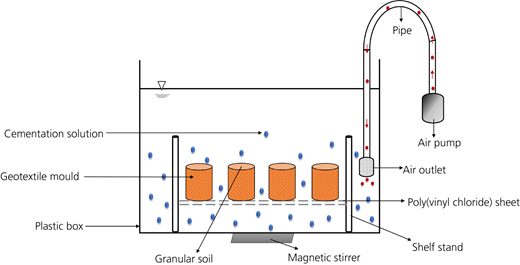
Illustrative diagram of soil bio-cementation using the submerged treatment method. This illustration was adapted from previous studies by Zhao et al. (2014a) and Liu et al. (2021)
Illustrative diagram of soil bio-cementation using the submerged treatment method. This illustration was adapted from previous studies by Zhao et al. (2014a) and Liu et al. (2021)
In a study, soil columns were immersed in a mechanically powered tank reactor containing 85 ml of S. pasteurii and cementation solution (Zhao et al., 2014a). The bacterial cells had an optical density (OD) of 0.3–1.5. According to the soil MICP test by Zhao et al. (2014a), cementation precipitates dispersed from higher- to lower-concentration locations in the analysed soil specimens. The researchers also obtained UCS values ranging from 1.76 to 2.04 MPa, indicating that this treatment strategy stabilises soil. Zhao et al. (2014a) also showed that treating soil specimens prepared in a full-contact flexible geotextile mould resulted in a significantly more uniform bio-cemented soil sample and the development of homogeneous calcium carbonate residues inside the soil particles. Therefore, this method can help prevent the formation of common bio-clogs during MICP treatments.
Wen et al. (2019) used a full-contact flexible mould developed by Zhao et al. (2014a) as a column for their soil specimen (200 g/m2). The full-contact flexible mould had an opening size of 0.15 mm, a water flow rate of 34 mm/s and a thickness of 1.5 mm. The study by Wen et al. (2019) aimed to determine the effectiveness of the submerged treatment method and various concentrations of cementation solution on the mechanical properties of soil. Wen et al. (2019) found that soil bio-cementation could be significantly improved under specific concentrations of cementation (i.e. 0.25–0.75 M) with repeated treatments, with a UCS of 6400 kPa, which was higher than the values obtained by Zhao et al. (2014a). Gao et al. (2019) studied the mechanical behaviour of soil at various cementation levels and relative densities. The sand specimens were housed in cylindrical moulds (100 mm height and 50 mm diameter) with bottom covers. S. pasteurii procured from the China General Microbiological Culture Collection Center (CGMCC), designated strain CGMCC 1.3687, was cultivated for 24 h to achieve urease activity ranging from 6.66 to 11.10 mM urea hydrolysed/min. This study used cementation components of identical molarity (0.5 mol/l) of urea and calcium chloride (according to stoichiometry). Before adding and uniformly compacting dry sand, the treatment liquid (100 ml) containing a 1:1 volume ratio of bacterial culture and cementation solution was placed in the mould. The treatment was maintained for 3 days, and the researchers found that MICP treatment was effective, significantly improving soil strength and reducing deformation. The triaxial test also showed improved MICP treatment performance at various relative density levels.
Surface percolation treatment method
The second method of soil bio-cementation is termed ‘surface percolation treatment’ or ‘spraying’, shown in Figure 5. It allows the entry of cementation fluid and bacterial cultures to penetrate the soil matrix. It is used with simple pouring or spraying procedures with the help of gravitational flow and capillarity (Cheng and Shahin, 2016). Percolating the treatment fluid through free-draining soil resulted in similar or improved uniformity of cementation distribution within the soil matrix compared with soil specimens subjected to the pressure injection treatment method (Ghasemi and Montoya, 2020; Montoya et al., 2013; Omoregie et al., 2019). The treatment is typically performed from the surface region of the granular soil. The main advantage of using this treatment method for soil solidification is its simplicity. Introducing the cementation solution and bacterial culture does not require heavy machinery due to the easy flow movement of the fluid (Mujah et al., 2017).
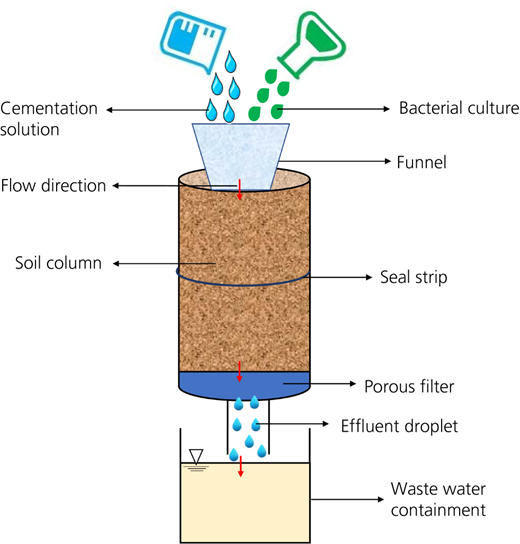
Illustrative diagram of soil bio-cementation through the surface percolation treatment method. This illustration was adapted from MICP experiments performed by Omoregie et al. (2019) and Hoang et al. (2020)
Illustrative diagram of soil bio-cementation through the surface percolation treatment method. This illustration was adapted from MICP experiments performed by Omoregie et al. (2019) and Hoang et al. (2020)
This method is an inexpensive, simple and practical soil bio-cementation treatment (Omoregie et al., 2017). However, surface percolation is not often selected for soil bio-cementation, requiring treatment at a metre-scale depth. MICP treatment through surface percolation has increasingly been employed for erosion mitigation and stabilisation of sandy slopes under unsaturated conditions (Kou et al., 2021). Because of its ease of administration onto the soil body and ability to cement soil surfaces successfully, some researchers have adopted this technique for soil bio-cementation.
Furthermore, this method creates a more manageable treatment environment for an injection scheme (i.e. arrays of injection and extraction wells) (Montoya et al., 2013). Cheng and Cord-Ruwisch (2012) were among the first to study the productive potential of surface percolation for soil bio-cementation. Their research compared surface percolation with submerged treatment methods. Cheng and Cord-Ruwisch (2012) revealed that alternating Lysinibacillus sphaericus cultures or the cementation solution (i.e. equimolar concentrations of 1 M for calcium chloride and urea) might complete the bio-cementation process in the soil column (1 m). Their obtained UCS and calcium carbonate content resulting from the soil column subjected to surface percolation treatment were 390 kPa and 0.12 g/cm3, respectively. In contrast, UCS and calcium carbonate content findings from samples subjected to the submerged treatment method were 340 kPa and 0.14 g/cm3, respectively.
Ghasemi and Montoya (2020) discovered that the maximum calcium carbonate precipitation was concentrated in the upper 5 cm depth and decreased with depth. However, measured values for the mass reached 1% at a depth of 18–20 cm, despite the decrease in concentration with depth. Also, the maximum mass (5–5.5%) of calcium carbonate was concentrated at the surface region, which was not surprising for MICP treatment with the surface percolation method. Ghasemi and Montoya (2020) also acknowledged that industrial-grade chemicals for MICP treatment made this method a cost-effective and viable replacement for traditional soil stabilisation methods. Omoregie et al. (2019) investigated technical-grade cultivation media and cementation ingredients to replace standard laboratory-grade ones for MICP application. They found that the cost of this treatment method when using technical-grade cementation solutions (0.25–1.0 M) ranged from US$0.07/l to US$0.26/l, while that when using analytical-grade reagents ranged from US$3.33/l to US$13.29/l. Despite the significant cost difference (47- to 51-fold), results from the MICP tests showed comparable outcomes for surface strength (11 448.00 ± 69.00 to 4826.00 kPa) and calcium carbonate content (5.56 ± 1.15 to 33.24 ± 0.59%). Karimian et al. (2021) studied the impact of the surface percolation treatment technique on sand strength improvement and microstructure. Karimian et al. (2021) procured ureolytic bacteria from the Persian Type Culture Collection (PTCC). S. pasteurii strain PTCC 1645 and cementation solution (100 ml) were used to percolate a mould tubing (internal diameter of 5 cm, length of 10 cm) with gravity at a flow rate of about 3 l/h. The MICP treatment was repeated for 10 days, and the results showed that the strength (18–324.47 kPa) of the treated soil depended on the location of the crystal formation, the particle binding site and calcium carbonate contents (3.0–12.6%). They obtained heterogeneous measurements of UCS and calcium carbonate contents along specimen lengths, while the calcium carbonate contents were less variable in the horizontal direction.
Pressure injection treatment method
The pressure injection treatment method is also referred to as the flushing or injection treatment method (Figure 6). There are two types of pressure injection treatment methods: stop-flow pressure injection and continuous-flow pressure injection. The stop-flow approach is more effective than continuous-flow pressure injection because it achieves more homogeneity of calcium carbonate generation throughout the depth of the soil columns (Barkouki et al., 2011). Because it necessitates the injection of a significant volume of treatment fluids, this technique is best suited for large-scale, field-scale MICP investigations (Gomez et al., 2016).
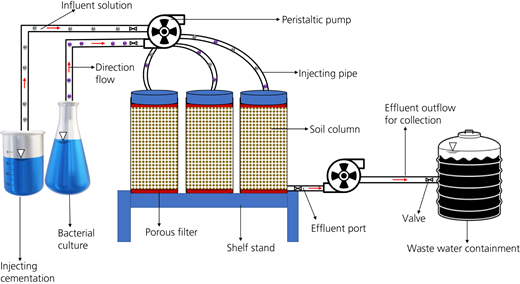
Schematic illustration of soil bio-cementation using the injection treatment method. This diagram was adapted from Gomez et al. (2018)
Schematic illustration of soil bio-cementation using the injection treatment method. This diagram was adapted from Gomez et al. (2018)
Due to the efficient transmission of cementation fluid, the injection technique can readily be applied to firm soil layers at greater depths. Martinez et al. (2013) studied 50 cm long sand columns using peristaltic pumps to maintain one-direction flow conditions. They observed non-uniform calcium carbonate distribution along the treated soil column, which is common with this treatment method. Martinez et al. (2013) discovered that most of the calcium carbonate content was generated around the injection zone, impeding the cementation process in the deeper part of the column. Treatment fluids are supplied under pressure to guarantee that the solutions are dispersed into the soil columns at controlled flow rates. To achieve successful fluid fixation and spatial distribution of calcium carbonate content within soil columns, injection procedures, chemical concentration, bacterial biomass concentration, injection flow rates and pH levels must be optimised. Harkes et al. (2010) previously reported the use of a two-phase pressure injection procedure (i.e. injection of bacterial culture followed by injection of the cementation solution) earlier developed by Whiffin (2004) to promote bacterial cell retention and spatial distribution of calcium carbonate during the treatment process.
Harkes et al. (2010) injected a culture of diluted ureolytic bacterial cells with an OD of 2.88 and urease activity of 3.1 mS/min into a soil column. The column was positioned vertically, followed by the introduction of the fixation fluid (bacterial cells) for absorption within the soil grain. The cementation solution was injected at a flow rate of 200 ml/h. However, Harkes et al. (2010) could not provide information on UCS results and the actual distribution of cementation flow at the end of their study. However, analysis from the effluent samples indicated that bacterial activities and ammonium production occurred throughout the columns. This suggested the distribution of the cementation fluid in the entire soil column. As a result, many scholars adopted sequential phases of MICP injection treatment to promote soil solidification. Harkes et al. (2010) further discussed the demerit of using diluted bacterial cells in a saline solution. They suggested that this might cause osmotic shock to the bacterial cells, requiring a greater volume of bacterial cultures to be acquired and injected for sufficient urease activity. It might also lead to undesired fluid fixation and bacterial cells being washed out during treatment.
Kakelar et al. (2016) described a pressure injection treatment approach that used a sequential batch mode (multistep injection). The scientists injected bacterial cells (OD of 2.5) and calcium chloride solution (0.05 M) into a coarse sandy soil column at a flow rate of 200 ml/h. Three injection cycles lasted 24 h to increase flocculation and bacterial retention. Kakelar et al. (2016) demonstrated that, in contrast to the standard treatment injection approach, the multistep injection strategy reduced the required volume for soil treatment by half and assisted in avoiding bacterial cell washout during MICP treatment. They reported a consistent calcium carbonate distribution and a UCS of 525 kPa at the end of the trial. Sharma et al. (2021) evaluated the durability of biotreated sand under 0–20 freeze–thaw (F-T) cycles on the shear strength and shear modulus of Narmada River sand. This MICP evaluation was conducted in non-sterile and uncontrolled environmental settings, similar to those in the study by Omoregie et al. (2020). Sharma et al. (2021) studied the effect of cultivation medium (non-autoclaved and autoclaved) and cementation solution on the MICP performance. These cultures were injected into soil columns with two cycles (12 and 24 h) to treat alluvial Narmada River sand placed in a poly(vinyl chloride) mould. The non-sterile cementation solution was injected into the mould using different pore volumes (i.e. 1.0, 0.75 and 0.5), and this was repeated for 18 days. Sharma et al. (2021) found that the treatment of sand specimens with S. pasteurii resulted in a 31% higher strength than the treatment with L. sphaericus. Higher shear strength and calcium carbonate precipitation were achieved after the MICP 12 h treatment cycle and 1 pore volume injection of the treatment solution.
Premixing treatment method
Soil bio-cementation by the premixing treatment method requires the mechanical mixture of soil with bacterial stock and chemical solutions before being placed in a mould specimen (Cheng et al., 2017). The premixing of bacteria or cementation reagents with soil to improve the bio-cementation process may not be practical underneath infrastructure. However, this method is applicable when deep mixing is used, which may enhance the viability of the cells (Irfan et al., 2019). Premixing can be used when the improved soil is used as a backfill around engineered structures or in any other situation where engineered fill is needed. It has been suggested that the premixing treatment method may lead to the development of pseudo-strength during premixing, complicate the stress history of soil and result in undesired uncertainties during mechanical testing. Premixing soil with bacterial cultures and cementation solutions before performing other treatment methods can improve the MICP process (Cheng et al., 2017). For example, adding a calcium chloride solution to soil allows the solution to act as a flocculant and initiate the coagulation of bacterial cells before subsequent MICP treatments (Al-Thawadi, 2008). Premixing bacterial cells with soil could improve the UCS of treated soil by three- to fourfold.
Cheng and Shahin (2016) presented a method for promoting cementation distribution across the soil column during the MICP process. Cheng and Shahin (2016) suggested preparing a bio-slurry by introducing a precise amount (molarity) of urea and calcium ions into glassware containing a ureolytic bacterial culture, followed by 12 h of stirring (600 revolutions/min) to generate the needed precipitate. Later, before injecting the cementation solution, the soil was premixed with the fluid. According to Cheng and Shahin (2016), simply using bio-slurry for soil treatment without adding cementation solution or bacterial culture failed to produce bio-cementation because it lacked the requisite bonding force to solidify soil particles. However, by adding cementation solution to soil premixed with bio-slurry it resulted in an even distribution of cementation within the tested soil column and a UCS of 1 MPa.
Chen et al. (2021) investigated the viability of using bamboo fibre in conjunction with the MICP procedure to improve peat soil solidification. Chen et al. (2021) isolated native ureolytic bacteria (Staphylococcus edaphicus) from peat soil samples and used them in their subsequent MICP experiments. A cementation solution column was filled with the bacteria culture (15 ml) and 150 g of peat soil. Before curing for 7 days, different concentrations of cementation components (1–3 mol/l) were poured into the column. The scientists discovered that a concentration of 1 mol/l resulted in successful bio-cementation, whereas a higher concentration resulted in weak bio-cementation. Chen et al. (2021) further tested the effect of oven-dried bamboo fibres on peat soil at various ratios (5 and 10–50%). They reported that adding 5 and 10% bamboo fibre to peat soil before bio-cementation treatment had no significant impact. On the other hand, the incorporation of 50% bamboo fibre increased the strength of the treated peat soil by 40 times. The work of Chen et al. (2021) suggested that MICP treatment of peat soil would require a lower concentration of cementation ingredients and a high bamboo fibre content. Safdar et al. (2021) evaluated the effectiveness of upgrading peat soils in the East Anglia railway network. They combined peat soil with bacterial cultures (Bacillus licheniformis) before placing it in a cylindrical mould. Then, they added cementation solutions with varying amounts of urea and calcium chloride. Safdar et al. (2021) reported that MICP-treated soil with 0.5 or 0.75 M cementation solutions produced higher UCS results than those treated with 1 M. However, the scientists also stated that premixing bacteria with soil to increase soil bio-cementation might be impractical under existing infrastructure unless deep mixing would be performed. This might reduce bacterial cell viability due to stress from the industrial mixing process.
Major issues affecting bio-cementation
Lowering the growth medium cost for ureolytic bacterial cultivation
Bio-cementation for field-scale treatment is expensive, and this cost should be decreased drastically. For diverse MICP experiments, most researchers employ commercially viable reagents (Omoregie et al., 2021). The high cost of analytical-grade growing media is a financial concern that will continue to impact bio-cementation until it is addressed. The cost of ureolytic bacterial culture nutrients accounts for roughly 60% of the entire cost of the MICP process and will rise as the application is scaled up (Yoosathaporn et al., 2016). For bacterial cultivation, the in situ MICP technique requires a large volume of growth ingredients (Lapierre et al., 2020). It can be carried out in reactors for bioaugmentation of the MICP process or biostimulation of native ureolytic microbial communities (El Enshasy et al., 2020). For large-scale bacterial production, it is necessary to find an inexpensive substrate that supports a good level of urease activity (Cuzman et al., 2015). Many ways (e.g. growth nutrient alternatives and cementation chemical reagent replacements) have been intensively researched to lower the cost of MICP procedures for field-scale application. The focus of this review is on growth nutrition options. In recent years, many researchers have investigated a way to replace expensive laboratory-grade culture materials with acceptable alternatives that are practical for MICP application.
Kahani et al. (2020) studied the possibility of replacing conventional growth media (peptone) with alternative nutrient sources (corn steep liquor, whey, commercial yeast extract and soy flour). Since peptone provides vital carbon and nitrogen sources for microbial growth and enzyme activity, Kahani et al. (2020) used various analytical-grade peptone-based medium sources instead of alternative substrates. Yang et al. (2020) suggested a novel method for enriching ureolytic bacteria in large-scale production under non-sterile conditions for MICP field use. The scientists suggested using waste activated sludge to save up to 30% on bacterial cultivation costs. Yang et al. (2020) also gave a breakdown of expenses in their MICP work, revealing that just 5% of the budget was spent on bacterial sources and transportation, while materials (60%) and sterilisation (30%) were more expensive. Hong et al. (2021) later investigated the use of perilla meal, rice bran, sesame meal, soybean meal, soybean pulp and wheat bran as inexpensive nutrition sources for MICP. Bacillus miscanthi strain AK13 (previously isolated from the rhizospheres of Miscanthus sacchariflorus, Republic of Korea) was cultivated in these substrates and compared with a laboratory-grade Difco sporulation medium. Hong et al. (2021) reported that sesame meal had the highest spore amount, while perilla meal and rice bran recorded the lowest spore formation compared with the control medium. However, they also reported that while sesame meal medium was preferred to enhance high spore formation, it failed to propagate bacterial cells efficiently.
Meng et al. (2021) investigated the use of kitchen waste to cultivate ureolytic bacteria purchased from the American Type Culture Collection (ATCC). S. pasteurii (designated as strain ATCC 11859) was used for wind erosion control of desert soil through MICP. Meng et al. (2021) compared the performance of kitchen waste medium with those of yeast extract medium, nutrient broth medium and tryptic soy broth medium. Meng et al. (2021) observed that bacterial cultivation using kitchen waste resulted in the precipitation of vaterite (a polymorph of calcium carbonate). Their research also revealed that kitchen waste (0.375 g/l) was less expensive (less than US$1) than traditional media (US$1–5). Since kitchen trash can be easily sourced globally at no or little cost from residential houses, retail regions and manufacturing and food sectors, it can serve as an alternative nutrition source for cultivating ureolytic bacteria, particularly on a large scale. Babakhani et al. (2021) demonstrated that incorporating 10% (v/v) corn steep liquor in a medium containing yeast extract, ammonium chloride (NH4Cl) and urea (but not sterile) could cultivate S. pasteurii (designated as strain ATCC 11859TM). Their bio-cementation test also achieved a UCS of 811 kPa. These experiments showed that agricultural waste effluent could be an alternative medium to reduce bacterial production costs for field-scale MICP application.
Ammonium production during the ureolysis process
Waste management and pollution control are frequently overlooked during or after soil bio-cementation. However, depending on the calcium source utilised for calcium carbonate precipitation, careful attention is required to avoid undesired generation of ammonium ions. Soil acidification occurs when a substantial amount of ammonium is abruptly emitted into the environment. Ammonium is a positively charged ion produced by the reaction between ammonia and a hydrogen proton (Nvs and Saranya, 2020). After soil bio-cementation, what remains in soils may be volatilised into toxic gas and ammonia when it dissolves in water and causes severe nitrogen pollution. However, when ammonium concentrations surpass the capacity to detoxify, this results in harmful health effects on living species such as people and animals (Gowthaman et al., 2022). If MICP effluents are not treated in soils, they may contaminate groundwater and water bodies (e.g. lakes and rivers) through run-off. High aqueous ammonia levels in surface water promote harmful algal blooms, deplete dissolved oxygen and result in aquatic toxicity (the process is referred to as eutrophication) (Gowthaman et al., 2022). The MICP effluent can be pumped out in an extraction well, but there will still be the possibility of leaking effluents that will permeate into the soil and contaminate the groundwater (Ashraf et al., 2021; Shanahan, 2016). This issue was previously encountered in a 10 m3 sandbox bio-cementation treatment trial. The unexpected leakage polluted the soil and damaged some existing plants/trees (Figure 7). Several recent studies explore reducing the number of products formed during bio-cementation treatment (Gowthaman et al., 2022; Lee et al., 2019; San Pablo et al., 2020; Wang et al., 2021a). However, the experiments performed so far have been bench-scaled. The Occupational Safety Health Administration of the USA recommends a permissible exposure limit of 35 mg/m3 for ammonium concentrations (Ivanov et al., 2019). Also, the maximum allowable amounts of total ammonium for aquatic life have been reported to be 17 and 1.9 mg/l for acute and chronic exposure, respectively (Huff et al., 2013).
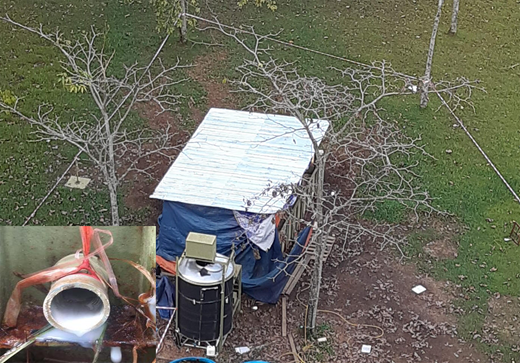
Leakage of ammonium-rich effluent in a 10 m3 sandbox during an outdoor bio-cementation treatment
Leakage of ammonium-rich effluent in a 10 m3 sandbox during an outdoor bio-cementation treatment
According to the reaction stoichiometry (shown in Equations I–VI), the ammonium concentration is twice that of the urea concentration. Moreover, previous studies indicated that during soil bio-cementation treatment, ammonia production occurred within 50–500 mmol/l (Lee et al., 2019; Martinez et al., 2013). The first author of the present study measured the concentration of ammoniacal nitrogen in MICP effluent solution, which was higher than the acceptable value (1300 mg/l) by the Occupational Safety Health Administration of the USA. This implied that an efficient post-MICP treatment process was imperative for the ammonium remover/remediation. Furthermore, to treat the MICP effluent successfully, it is critical to characterise physiochemical properties properly. These include ammoniacal nitrogen concentration, nitrate concentration, nitrite concentration, dissolved oxygen level, total suspended solids and volatile suspended solids, turbidity and pH level.
It seems simplistic and a little hyperbolic to say that the ammonium concentration is critical during soil bio-cementation without considering other conditions. In addition, various factors affect this (ammonium concentration) during the bio-cementation treatment process, including whether shallow or profound soil improvement is being carried out, whether bio-cementation in applied under saturated or unsaturated conditions and whether there is a receiving body of water for ammonium-impacted water. Therefore, a fate and transport analysis is required to determine how critical the ammonium production rate is during soil bio-cementation. Researchers have recently recommended using a new method, called the microbially induced struvite precipitation (MISP) process, to reduce/prevent ammonium production. MISP converts the ammonium produced into struvite, which could be further used as a fertiliser (Yu et al., 2021). Gowthaman et al. (2022) showed that combining rinsing techniques and struvite precipitation could help minimise the environmental impact of MICP effluent. The applied rinsing solution removed around 99% of ammonium from the sand and achieved 90% removal in the MICP effluent through precipitation as struvite. Gowthaman et al. (2022) were able to treat ammonium waste water through the struvite precipitation technique. However, it requires high contents of magnesium and phosphate. Yu et al. (2021) compared the total masses of ammonium in effluent samples after soil treatments using MICP and MISP methods. They found that the ammonium content from MICP was twice that obtained from the MISP soil sample. They suggested that MISP reduces 75% of the ammonia produced during their soil bio-cementation test. Thus, this method may be an appropriate approach to improving soil without harming the environment.
Ashraf et al. (2021) developed an MICP model by employing the response surface method to optimise the current MICP treatment process. They argued that manipulating the cementation solution could optimise the urea content for the MICP process and minimise the high production of unwanted ammonium ions. By reducing the urea substrate, which is the main instigator of urease production and contributor to ammonia development, researchers could more efficiently conduct soil treatment through the MICP process. The model by Ashraf et al. (2021) showed that using 75% less urea than the typical treatment process made it possible to achieve the desired UCS result for the treated sand columns. However, findings by Ashraf et al. (2021) did not elaborate on how ammonium by-products can be reduced without reducing carbonate formation. It seems stoichiometrically impossible to use a balanced cementation solution for ammonium reduction. Hence, even if the model may have suggested ammonium can be reduced if 75% less urea is employed, it does not seem feasible for actual MICP application. Ammonium and carbonate will be released as urea is used for MICP, irrespective of its concentration (or amount). Almajed et al. (2018) suggested potentially reusing/recycling bio-cementation waste water as a urease source to reduce soil treatment during ureolysis. However, they noticed no precipitation occurred when effluents from the previous treatment process were reused for bio-cementation. Almajed et al. (2018) suggested that this was due to the absence of urease denaturation, which might have been affected by the high ionic strength (Almajed et al., 2018). While the opinion/suggestion of reusing effluent may be promising, it still would not resolve the ammonium pollution/production issue during soil bio-cementation. Other studies have recommended optimising the urea usage rate to minimise high ammonium production, but they encourage the need to consider the recovery of the ammonium content (Hu et al., 2021a; Zeng et al., 2021).
Ammonium might be collected using a biofiltration system or sustainable cleaning agents to produce fertiliser, generating financial benefit. According to the research, MICP can potentially use saline or marine water for bio-cementation. It has the potential to be a low-cost nutrition source for MICP applications. Peng et al. (2022) researched on the influence of a marine environment and different calcium sources on coral sand strengthening. According to the study, the pH values differed between freshwater and marine habitats. The real calcium carbonate generation, according to the findings from Peng et al. (2022), is 20% lower than the theoretical figure described in the literature. Also, calcium carbonate precipitation was lower in the seawater environment than in the freshwater environment, thus having a minor impact on the calcium chloride group. Also, the most acidic substance for calcium sources was ammonium chloride, followed by ammonium nitrate, while ammonium acetate was neutral (Peng et al., 2022). Also, Fu et al. (2022) cultivated S. pasteurii in a seawater medium to determine its adaptability in the marine microenvironment. Peng et al. (2022) observed that the bacterium required a more extended period to grow in a seawater medium compared with that in a freshwater medium. However, the ureolytic bacterium was able to induce calcium carbonate precipitates effectively to fill cracks and reduce permeability in the samples.
Durability of bio-cemented soil
Subjecting uncemented soil bodies to MICP can improve the properties of the soil. Durability refers to the ability of a material to last for an extended period without obvious deterioration (Coronado et al., 2015). Long-lasting materials can benefit the environment by conserving resources, reducing waste and minimising the environmental impact of maintenance and replacement. Based on the binding nature of MICP and the pore size, porosity and particle size distribution of bio-cemented soil, a soil matrix treated by MICP will have greater durability. However, these engineering characteristics can be damaged by external environmental influences. Therefore, it is important to assess the durability and sustainability of bio-cemented soil. The durability of MICP-treated soil is not yet well understood, as there are few scientific publications on the topic. Future research should focus on the long-term exposure of MICP-treated soil to various atmospheric and climatic conditions to increase understanding of the level of tolerance of bio-cemented soil to long-term uncontrolled climate conditions. Weak soils are often encountered during the construction of foundations, formation levels and subgrades for new roads and infrastructure. Before soil stabilisation treatment is implemented, these weak soils have low mechanical strength. MICP-treated (stabilised) soils last longer in engineering performance than untreated weak soils because they have greater strength and stability. Durability is the property of a geotechnical material that reflects its performance under wetting–drying (W-D) and F-T cycles. W-D and F-T cycles are used in the laboratory to simulate exposure to adverse environmental and weather conditions for stabilised and treated soils. Previous studies have shown that the strength and stability of MICP-treated aggregates are greatly influenced by the calcium carbonate formed within the voids (Gowthaman et al., 2021). Moreover, it has been found that crystallised calcite clusters at particle contacts facilitate cementation between soil particles, serving as the primary source of strength and stability. However, the cementation level also significantly impacts the durability of MICP-treated soil. The higher the cementation level, the lower the loss of mass and UCS, which enhances the durability or long-term performance of the treatment. In a related study, F-T tests revealed that MICP-treated slope soils are durable in the face of F-T-induced erosion (Gowthaman et al., 2020).
Farajnia et al. (2022) examined the use of ureolytic bacteria to manufacture bio-cemented bricks. Their study on soil solidification resulted in a compressive strength of 3000 kPa. Water absorption percentage and the W-D cycle tests could determine the durability of soil bio-cementation after treatment. These qualities could drastically affect the mechanical properties of construction materials (Farajnia et al., 2022). The data by Farajnia et al. (2022) showed an increased mass-loss rate in the initial cycle of the W-D cycle tests. In addition, there were visible changes in the soil specimens. Sharma and Satyam (2021) investigated the synergistic impact of bacteria-mixed cultures (S. pasteurii and Bacillus sphaericus) on soil bio-cementation. After treatment, they also examined the W-D resistance of poorly graded liquefiable sand since this property should be determined before bio-cementation is implemented in the field. Sharma and Satyam (2021) exposed the treated specimen to 0–20 W-D cycle tests and stored it in an uncontrolled temperature environment from 0 to 6 months. This was a comprehensive test and a suitable way of evaluating the potential durability of bio-cementation. Sharma and Satyam (2021) reported that the hybrid cultures had a better impact on the treated soil when compared with individual bacterial strains. Interestingly, Sharma and Satyam (2021) reported increased compressive strength (up to three times) after subjecting the soils to a 6-month curing period in a non-temperature-controlled environment.
Sun et al. (2022) combined addition of polyacrylamide (PAM) with bio-cementation treatment of loess soils and studied the effect of F-T cycles on the durability of MICP-treated soils. Sun et al. (2022) placed bio-cemented soil specimens in a refrigerator (−20°C) for 12 h and then defrosted the samples for another 12 h at the same temperature (−20°C), which was one F-T cycle. The PAM addition enhanced the soil shear force resistance. The stable precipitation of calcium carbonate resulted in the highest surface strength, indicating optimum erosion control and which was achieved using 1.5 g/l PAM while the soil was exposed to 40 min of rainfall. Increasing the number of F-T cycles up to 12 rounds for MICP–PAM-treated soil resulted in less weathering of the treated sand (Sun et al., 2022). The cementation effect on loess particles was weakened by F-T exposure, with fractures appearing on the surface of MICP–PAM-treated samples. However, adding PAM to the MICP-treated soils helped improve their durability and stability. Sharma et al. (2021) studied the durability of bio-cemented soil under F-T cycles since not much attention has been given on this aspect. They showed that the reduction in compressive strength was not significantly less (5–10%, in the order of magnitude of the strength loss) after five and ten F-T cycles of the bio-cemented specimens, irrespective of treatment conditions. Sharma et al. (2021) demonstrated that with a calcite content of 9–12% of the soil samples, the influence of ten F-T cycles did not affect the overall performance of bio-cementation. The bio-cemented specimens retained about 90% of their shear strength. However, after 15 and 20 F-T cycle tests, the compressive strength of the treated poorly graded liquefiable sand decreased to 31–35%. The mechanical characteristics of calcareous rocks and sandstone materials have also been considerably deteriorated by the W-D process in several studies. Because the reactions of MICP-treated soils (cemented by calcium carbonate) were generally comparable with those of natural carbonate and sandstone sediments, the treated samples were more likely to deteriorate when repeatedly exposed to the cyclic W-D process (Velardo et al., 2022). The W-D treatment technique altered the microstructure of soil aggregates and lowered both shear strength and compressibility. The most commonly observed degradation mechanisms for sedimentary materials include fracture energy reduction and corrosive chemical activity.
When exposed to a cementation solution, ureolytic bacteria can immediately induce calcium carbonate precipitation. Temperature, nutrition, pH, salinity and concentration or supply of urea/calcium ions are various factors that can alter the biochemical characteristics and survivability/lifetime of these ureolytic microorganisms. Also, microbial endospores can allow them to live in harsh environments. Some researchers have demonstrated that ureolytic bacterial cells can survive up to 20 days while retaining cell viability or enzyme function (Erdmann et al., 2022; Peng and Liu, 2019). However, future researchers will be able to investigate the effect of long-term hunger on the ability to produce calcium carbonate or enzyme activity for an extended period. This information will be valuable for determining the durability of bio-cementation. There is no clear understanding of the MICP treatment, which involves either a periodic/repeated injection of bacterial cells or a one-time introduction. Nonetheless, research has shown that, regardless of whether microorganisms are introduced on a regular or sporadic basis, both approaches can promote soil fixation or calcification.
Sustainability process and principle of soil bio-cementation
It is pertinent to assess proactively the cost and environmental benefits and identify the potential consequences of bio-cementation as an emerging technology. A complete life-cycle sustainability assessment (LCSA) identifies the capital costs and environmental and social impacts and benefits of all parts of a given process or product from the cradle to the grave or cradle to cradle. Martin et al. (2020) used LCSA to compare alternative processes/products for bio-cementation. The production of urea was pointed out as the flashpoint for energy consumption. Non-fat milk powder and urea were identified as the flashpoint for carbon dioxide equivalent emissions. The release of ammonium by-products due to the hydrolysis of urea was identified as the flashpoint for eutrophication potential. The LCA was conducted to compare conventional soil stabilisation using Portland cement (PC) with bio-cementation through enzyme-induced carbonate precipitation (EICP) in terms of environmental impacts in a related study. EICP is gaining lots of attention due to its suitability for MICP applications without the need to culture ureolytic microorganisms (Hu et al., 2021a). MICP requires active microbial cells, while EICP employs purified urease from various plants such as jack bean (Canavalia ensiformis), potato (Solanum tuberosum), soya bean (Glycine max), pumpkin (Cucurbita maxima) and watermelon (Citrullus vulgaris) (Dilrukshi and Kawasaki, 2019; Imran et al., 2021).
The use of commercially available pure urease from agricultural sources is an excellent alternative to MICP for urease activity and calcium carbonate precipitation (Hu et al., 2021b). Furthermore, EICP technology strongly depends on the interaction of urease, urea and calcium transport during the bio-cementation treatment. EICP has been tried on different soil types (silty sands, clayey sand and silt) (Arab et al., 2021; Yuan et al., 2020). Chandra and Ravi (2021) recently showed that a urease concentration of 8 kU/l could hydrolyse practically all of a urea–calcium chloride solution at 0.5 mol/l, resulting in a higher amount of calcium carbonate precipitated as it approached the 100% precipitation level. An LCA study on EICP bio-cemented soil revealed that the bio-cementation treatment process has nearly 90% less abiotic depletion and 3% less global warming potential than PC in soil stabilisation. However, due to by-products of the hydrolysis process, EICP in soil stabilisation has higher acidification and eutrophication potentials than PC. The research suggested that EICP is potentially a better environmental option, in terms of carbon footprint, at a lower compressive strength of the treated soils (Alotaibi et al., 2022).
The reliance on chemicals and nutrients and ammonium waste production for the bio-cementation process suggests that environmental implications must be addressed, particularly when establishing this technology as a sustainable building process alternative for industrial applications. The principal/significant bio-cementation components are calcium, urea and the growth medium. If bio-cementation becomes an ecologically sustainable construction technology, reusing its effluent (by-products) or naturally existing materials must be adopted (Porter et al., 2021). Using recycled wastes (palm oil mill effluents and organic manure) as a naturally occurring source of nutrients for microbial growth and cementation reagents rather than commercial reagents will enhance the sustainability of bio-cementation practice (Omoregie et al., 2022b). Another factor that affects the principle of bio-cementation as a sustainable practice is researchers’ continuous use of urea for calcium carbonate precipitation. Many researchers often suggest that bio-cementation by MICP is a sustainable, low-energy, low-carbon-footprint soil stabilisation/reinforcement method. However, the literature does not support this frequently stated assertion.
Some research groups have argued that the carbon footprint of bio-cemented soil may exceed that of PC-stabilised soil due to the embodied energy in urea (which is generated from natural gas) (DeJong et al., 2010; Lee et al., 2019; van Paassen, 2009; van Paassen et al., 2009; Whiffin, 2004). On the other hand, urea should be omitted due to its large carbon footprint, such as carbon dioxide (total emissions of 0.133 million tonnes carbon dioxide equivalent (MtCO2e) per year); the energy required for its production; and its eutrophication potential (Porter et al., 2021). Another recent report stated that urea production for fertilisers directly emits 438.5 ± 37.1 MtCO2e, while transportation emits 29.8 ± 4.0 MtCO2e, and carbon dioxide liberation from urea usage is 86.0 ± 39.1 MtCO2e (Menegat et al., 2022). Thus, a shift towards available resources rich in urea could reduce environmental costs and promote bio-cementation sustainability. Hence, animal urine waste (i.e. from cows) will serve as an excellent source of urea and has recently been reported as a suitable alternative to synthetic urea soil improvement (Comadran-Casas et al., 2022). Additionally, crushed silicate rocks, or dolerite (4 mm), a byproduct of the quarry sector and alternative source of calcium to calcium chloride, have recently been described (Casas et al., 2020). Therefore, researchers should explore alternative bio-cementation components: crushed fish or chicken bones, clamshells and blood cockle shells as calcium sources; horse urine and leachate as urea sources; and agricultural waste water (i.e. from sugarcane bagasse and animal farmlands) as nutrient sources.
Advantages and disadvantages of the bio-cementation treatment approach
Bio-cementation is driven by naturally occurring mechanisms to precipitate carbonate minerals for potential activities and applications. The benefit of bio-cementation is that the building material can be induced by the metabolic activities of ureolytic bacteria, which are abundant and quickly recovered/isolated. Developing bio-mediated processes for soil improvement has several advantages over current techniques. These are discussed around the sustainability triple-bottom-line (economic, social and environmental) framework, also known as profit, people and the planet.
Advantages of bio-cementation
Considering the economic perspective, an advantage of bio-cementation is that the cementitious material can be naturally induced by the metabolic activities of ureolytic microorganisms, which are ubiquitous and quickly recovered/isolated. This reduces the economic burden of the energy-intensive processing of traditional cementitious materials. Although the initial production cost of bio-cementation may be prohibitive, it requires low-cost maintenance practices (Achal et al., 2010). Additional advantages of bio-cementation technology include controlled treatment/monitoring, adaptive duration/flexible deployment in confined subsurface/retrofit construction and penetration into fine soils. Moreover, several papers have shown that high-purity media or chemicals are not entirely needed to obtain desirable calcium carbonate precipitates. Hence, low-grade reagents and industrial-waste materials can significantly lower bio-cement production costs, particularly in real-world use (Liu et al., 2019; Meng et al., 2021; Pakbaz et al., 2020; Wei et al., 2022). Both reduced construction costs with the use of natural materials and the reduced infrastructure maintenance cost due to the enhancement of self-repair characteristics in bio-cemented soils underscore economic advantages and improved sustainability in congruence with the UN Sustainable Development Goals (SDGs). Bio-cementation technology addresses environmental challenges within the UN SDGs (goals 9, 12 and 13) that include industry, innovation and infrastructure; responsible consumption and production; and climate action, respectively.
The socio-economic benefits of bio-cementation are becoming unveiled with the increasing capacity for prosperity in local communities through the new bio-based and circular economy concept derived from the bioeconomy vision (Lange et al., 2021). This entails unlocking the full potential of all types of sustainability by transforming bio-based improved soil and biomass into value-added brownfields and products. An example is the biologically hardened concrete masonry units that do not require thermal hardening and thus could yield a significant reduction in embodied carbon dioxide in structures, given that concrete production makes up 5% of overall global carbon dioxide emissions (Iezzi et al., 2019). Notably, a bio-based product portfolio comprises a broad spectrum of value-added products that address societal and consumer needs. Given the increasing scarcity of suitable land for development, an important factor in circular land management is the reduction of both greenfield consumption and brownfield production. This can be achieved by maintaining land in productive use as far as possible and, where it falls out of use, making sure its transition to new land use is as rapid as possible. Land usage could be for built redevelopment including creating urban green space, to lessen the scarcity of land (Bardos et al., 2016). Brownfield site remediation through a bio-cementation process fosters sustainable site remediation and restoration of the biodiversity of the ecosystem. Thus, the critical interdependencies necessary for socioecological health can be re-established (De Garine-Wichatitsky et al., 2021). Bio-cementation has also successfully shown its ability to preserve, protect and restore historical monuments without causing any damage to existing bodies/structures (Snigdha and Latkar, 2020).
Concerning the environment, bio-cementation can immobilise heavy metals. The calcium carbonate from MICP can co-precipitate with heavy metal ions in tailings sand, preventing the heavy metals from diffusing into the surrounding environment (Kang et al., 2022). It may also be used to sequester (biomineralise) radionuclides and metal contaminants (e.g. strontium and cadmium) in groundwater, a significant problem at some US Department of Energy sites. Biomineralising metal contaminants by stimulating native denitrifying bacteria may provide a more sustainable means of remediating groundwater impacted by radionuclides and metal contaminants than hydrolytic ureolysis (Kim et al., 2021). Another advantage of bio-cementation over previous technologies is that it requires only a modest calcium source. Calcium chloride is a required chemical reagent for bio-cement precipitation, whereas other conventional processes necessitate chemical stabilisers such as lime. It was recently shown that to achieve the same compressive strength (700 kPa after 28 days of curing), the conventional cement injection amount should be 2.5 times more than that in the MICP approach (Naeimi and Haddad, 2021). MICP technology has been successfully/effectively tested on sandy soil. Other types of soils from various locations worldwide have also been tested (peat soil, silty soil, calcareous soil and lateritic soil). While the MICP process for soil stabilisation has been rigorously studied on sand, new findings on the potential of MICP on expansive soil (i.e. soft clay) enhancement have been increasing lately (Ouyang et al., 2022; Xiao et al., 2020).
Disadvantages of bio-cementation
Some disadvantages associated with bio-cementation include the formation of desiccation cracks, leading to an increase in hydraulic conductivity in clayey soils; non-uniform permeation of bio-grout/bio-cementation solution in highly heterogeneous soils/field-scale applications with diverse climatic conditions; ammonium removal during ureolytic MICP; and the regulatory mechanisms of crystal morphology (Jiang et al., 2022). Bio-cementation has successfully shown its ability to preserve, protect and restore historical monuments without causing any damage to existing bodies/structures (Snigdha and Latkar, 2020). The limitations regarding the field application of bio-cementation include the high cost of chemical-grade reagents and cost-prohibitive laboratory-grade cultivation media, as well as issues with ammonium production as a by-product, non-uniformity of precipitation and slow and complex environmental factors. Additionally, there are challenges with transporting healthy ureolytic bacteria in large quantities to the site and optimising the treatment process given site-specific conditions, as well as the need for monitoring the treated soil during treatment and periodically throughout the service life of the system. Finally, bio-cementation cannot be used to treat soils with no sand or fine content, and the calcite precipitate may degrade during loading (DeJong et al., 2010; Dubey et al., 2021; Snigdha and Latkar, 2020). It has also been noted that utilising a more significant concentration of cementation chemicals results in greater strength but may cause the environment to become saltier, affecting some bacterial development (Umar et al., 2016). Another disadvantage of bio-cementation is the need for costly microbiological nutrient supplies to maintain pure bacterial culture. Another drawback of bio-cementation technology is the need for a very alkaline environment for the growth of ureolytic bacteria and the MICP process (Marín et al., 2021). Several studies have shown that exogenous ureolytic bacteria can be isolated from extreme environments such as limestone caves (Omoregie et al., 2017). However, their biomass and performances are hindered when exposed to harsh environmental conditions. Hence, it has been suggested to stimulate indigenous/native ureolytic microorganisms to achieve this feat or explore microbial consortia since they have shown higher resilience to harsh environments than pure bacterial cultures (Gowthaman et al., 2018, 2020; Marín et al., 2021).
Some recent directions of MICP applications
Soil erosion control
Aside from soil stabilisation/improvement, erosion management using the MICP technology constitutes a major global application. The adoption of MICP technology can significantly improve soil erosion resistance. Crystals are formed, filling the pores and binding to the particles of weathered soil, allowing for effective cementation and bridging (Wang et al., 2021b). Xiao et al. (2022a) employed an artificial rainfall system to simulate the erosion of model slopes caused by rainfall. After MICP treatment, erosion on slopes with uniformity coefficients of 4.7 and 9.7 was significantly reduced, with total soil loss reduced by 64.8 and 84.4% (relative to the total mass of sand on slopes), respectively, compared with those of untreated slopes (Xiao et al., 2022a). Dubey et al. (2021) recently investigated the ability of Brahmaputra riverbank native ureolytic bacterial communities in erosion control due to its significant socio-economic impacts. Dubey et al. (2021) reported that for the soil strength test, the distribution of needle penetration resistance was non-uniform. However, producing ammonium during MICP treatment may cause environmental issues to the river ecology and geoenvironment for field application. If MICP is used at riverbanks, ammonium contents may be diluted to an insignificant level and possibly be treated by the presence of flora and fauna (Dubey et al., 2021). Kou et al. (2021) recently studied the potential of MICP in coastal erosion control/prevention. They tested the model-scale mechanism of erosion of sandy slopes under laboratory conditions. Also, the thickness of the crust following surface percolation and its penetrating resistance were studied. Kou et al. (2021) reported that the water retention capacity of an MICP-treated sandy slope is crucial under surface percolation and thoroughly drained circumstances. A three-dimensional (3D) printing method can be adopted to improve further the homogeneity of consolidated soil samples suitable for erosion control (Nething et al., 2020). Studies have shown that this method has the potential to generate resource-efficient sustainable construction components. However, it was noted that the practical use of the 3D printing process is restricted due to the size restriction of the print bed and the requirement of several print bed enclosures (Nething et al., 2020). Nonetheless, a recent study (Erdmann et al., 2022) demonstrated that the printing nozzle (150–250 μm) that is applied under varied pressure levels (0.69–2.76 bar) could significantly improve the homogeneity of the soil column. This will further support the implementation of MICP technology for erosion control.
Improvement of the road soil base
There are currently no large-scale instances of MICP use for road construction or a geotechnical purpose, such as bio-cementation as soil improvement for a road pavement layer. Chu and Wen (2015) were the first to demonstrate the utility of MICP for road repair. Their brief research demonstrated that fine limestones and maize cobs might be used as low-cost alternative raw cementation materials to produce the soluble calcium required for field-scale MICP trials. Following the success of laboratory-scale trials, bio-grouting (on-site soil strengthening) has been investigated, which includes pumping biological fluid into the soil (Porter et al., 2018). A laboratory-scale trial on the performance of MICP in reinforcing road bases reconstituted with calcareous or silica sands was successful. This study used the surface percolation approach to create four testing models at two cementation levels. A series of tests for the California bearing ratio (CBR) and UCS were also carried out to investigate the strength of biotreated samples at the model and element scales. CBR is the most important criterion for analysing subgrade soil strength and improving the engineering features of road construction pavement layer materials (Nezhad et al., 2021; Tan et al., 2021). S. pasteurii was cultured in a nutrient solution consisting of 24 mg/l nickel (II) chloride hexahydrate (NiCl2·6H2O), 12 mg/l manganese (II) chloride monohydrate (MnCl2·H2O), 10 g/l ammonium chloride and 20 g/l soya peptone extract (Porter et al., 2018). The nutrition solution was created at a pH of 9 since the bacterial strain was more active in an alkaline environment. Bacteria were grown in a shaking incubator at a velocity of 200 revolutions/min and a constant temperature of 30°C. After 24 h of incubation, bacteria were extracted from the supernatant in a 0.9% sodium chloride (NaCl) solution and centrifuged at 5000g at 4°C. The cementation solution, which comprised 0.5 mol/l calcium chloride and 0.5 mol/l urea, acted as a sufficient reactant during the cementation process. This study used one-phase MICP treatment with the surface percolation approach to stabilise the sand models (Porter et al., 2018). The one-phase cementation solution was first prepared; then, the bacterial solution was combined with the cementation solution. The mixed solution was then created in a volume equivalent to 1.1 pore volume of the sand sample and equally splattered on the sample surface, penetrating the sand matrix under gravity. The researchers discovered that bio-cementation might have reinforced cement-stabilised sand and road base materials. The CBR value of the high-treatment sample reached 75%, demonstrating high strength and performance for stabilised road bases. Furthermore, when the MICP technique was used with the cement-road base material, the UCS increased by 35–50%.
Porter et al. (2018) established that bio-cementation would considerably enhance road building by reducing the use of cement-based materials in road bases, improving environmental sustainability. Recently, Xiao et al. (2022b) were inspired to investigate the efficacy of bio-cementation as a stand-alone stabilising method and as a supplement to cement-stabilised road base materials. They concluded that the low bearing capacity of the pavement or road base frequently resulted in tyre tracks and cracking. Xiao et al. (2022b) investigated bio-cementation strength and reinforcing effectiveness using four biotreated road base models. Xiao et al. (2022b) noted that the increment and decrease in soil strength correlated with the penetration depth after treatment. Due to the differences in void ratios, the overall strength of the biotreated calcareous sand specimens was higher than that of the biotreated silica sand specimens at the model scale. Yang et al. (2022) suggested that clogging in the upper layer of the base might have influenced this outcome. Successful laboratory-scale trials reviewed are on the performance of MICP in reinforcing road bases reconstituted with calcareous or silica sands. This investigation prepared four testing models by using the surface percolation method at two cementation levels.
Remediation of soils contaminated with heavy metals
Heavy metal contamination of natural surroundings through industrialisation has become a widespread environmental problem (Eltarahony et al., 2021). Many sewage and solid wastes containing heavy metals are discharged into the environment due to poor waste treatment in industrial activities. Because these heavy metals cannot be destroyed, they will continue accumulating in the environment. Furthermore, these heavy metals penetrate food chains, endangering the health of animals, plants and humans. Contamination from these sources exposes the environment and human health to heavy metal pollution (e.g. lead (Pb) and mercury (Hg)). In addition, their non-degradable nature keeps them in food chains to likely cause harm to the entire ecosystem. Previous researchers showed that urease-producing microorganisms could catalyse the hydrolysis of a urea substrate into carbonate ions and other subsequent biochemical reactions/products under suitable conditions. This metabolic process can immobilise metal ions (i.e. lead and mercury) to form precipitates. This sequestration process limits heavy metal migration and decreases heavy metal toxicity in the environment. Carbonate sediments are typically generated when microbial metabolites interact with calcium ions. The bacterial cells (being negatively charged) react with cations (heavy metals) during heavy metal remediation through the MICP process (Tamayo-Figueroa et al., 2019). These toxic metal ions have ionic radii that allow integration into the calcium carbonate crystal by calcium ion substitution (Ali et al., 2022).
Eltarahony et al. (2021) reported using Metschnikowia pulcherrima and Raoultella planticola to remediate lead and mercury. Their results indicated about 95% removal of these heavy metals after 48 h of MICP treatment. It was achieved with urease activities of 884 and 639 U/ml for M. pulcherrima and R. planticola, respectively. This bioremediation method enables stable heavy metal detoxification and sequestration (Eltarahony et al., 2021). Aneurinibacillus tyrosinisolvens was employed by Wang et al. (2021b) to degrade cyanide in tailings. This deadly chemical (cyanide) is a hazardous waste. Wang et al. (2021b) used the ureolytic strain to break down cyanide (88–95%) before solidifying it in block form using the bio-cementation procedure. MICP sequesters these compounds within precipitated calcium carbonate, causing cyanide metal to convert into a benign form. The MICP sequestration procedure was chosen to ensure that this heavy metal does not leach into the environment. Wang et al. (2021b) demonstrated that their innovative method, a clean disposal approach for heavy metals, could be helpful to researchers interested in mine backfill and other sectors. Wang et al. (2021b) reported a novel approach for seeding crystal and ureolytic bacterial cultures to remove fluoride from groundwater. They were able to remediate 70% of the fluoride content after 14 treatment cycles by utilising the MICP technique, with a residual fluoride concentration of 0.96 mg/l in their tested sample. Wang et al. (2021a) proposed that MICP might be employed as a more environmentally friendly and cost-effective alternative defluorination approach to present technologies (i.e. adsorption, membrane filtration and ion exchange). Another low-cost approach studied by Chiwetalu et al. (2020) demonstrated the remedial ability of corn steep liquor on lead-contaminated soil. This study indicated that the extraction of lead by the plant system increased with increased lead concentration in the soil and extent of vegetation attained by the crop. Therefore, soil enhancement approaches such as bio-cementation are explored when the natural soil does not meet construction engineering standards. For example, if the soil is too weak to support a structure on a shallow foundation, there are two alternatives: deep foundations or soil remediation combined with a shallow foundation. The presence of xenobiotic (artificial) substances causes soil contamination, soil pollution or land pollution due to land deterioration (Chiwetalu et al., 2020).
Mitigation of soil liquefaction
Soil liquefaction is a condition during which soil loses shear strength and suffers significant deformation relatively quickly. Desaturation is a technique that continues to gain popularity for preventing sand liquefaction because of its cost-effectiveness (Jia and Jian, 2014). Microbial denitrification is a nitrogen reduction reaction mediated through the MICP process by denitrifying bacteria (He et al., 2016). This approach is a new method of mitigating soil liquefaction. During the microbial denitrification treatment process, gas bubbles in soils are gradually removed under both upflow and downflow circumstances, and the degree of saturation increases from 89 to 100% within 96 h (He et al., 2016). This further helps improve the soil significantly, ensuring the distress shifts from a stress–strain to a strain-hardening mode. MICP is also beneficial for granular soils subjected to liquefaction. A two-stage process is employed to reduce earthquake-related liquefaction through MICP: ureolysis and denitrification. This is because ureolytic microorganisms can stimulate denitrifying bacteria. This allows the desaturation of soil through the generation of nitrogenous and carbon dioxide gases (O’Donnell et al., 2017). During soil desaturation to prevent liquefaction through MICP, the gas is generated and collected at the top of the soil column but with a low/moderate pore pressure. In contrast, carbonate precipitation proceeds mainly at the bottom near the substrate intake, which helps stabilise the soil (Pham et al., 2018).
Recent work was performed to comprehend better the impact of calcium carbonate bio-cementation on the liquefaction behaviour of loose sands. During their inquiry into inducing remediating soil liquefaction, Pham et al. (2018) discovered bio-cementation subjected to shear wave velocity measurement (0-100 m/s) drastically increased the number of treatment cycles required. Pham et al. (2018) highlighted that despite the significant increment (tenfold) in their data, there was a slight improvement in strain build-up before and after initial triggering. More work on soil mitigation liquefaction through MICP can help to understand better the behaviour of weakly bio-cemented soils subjected to earthquake-induced undrained cyclic loads (Lee et al., 2020). Another study on ground improvement through MICP by denitrification revealed that the substrate solution had an optimum carbon–nitrogen ratio of 16, confirming that merging nitrate reduction and calcium carbonate precipitation results in effective conversion. According to sand column tests, the volume and distribution of the gas phase are largely dependent on the stress conditions (Pham et al., 2018). Future investigations are needed to enhance the knowledge on and potential of MICP for the prevention/mitigation of soil liquefaction.
Future considerations
When soil bio-cementation is accepted for commercial or practical application in the future, the existing substantial obstacles (environmental issues, durability over time and bacterial cultivation cost) highlighted in this research should be given more consideration. The cost of large-scale cultivation of ureolytic bacteria will increase the production cost of the MICP process. This is due to the scarcity of inexpensive or easily obtained growth media. A large-scale reactor would also be required to scale-up microbial cultures. Future researchers may be able to investigate how easily modifiable and inexpensive reactors can be improved for easy application and long-term development of ureolytic bacteria. Furthermore, incorporating physiological factors to maintain/observe optimal and sustainable microbial products could ensure that the commercial application and cost competitiveness of MICP technology are not jeopardised.
Biostimulation of native ureolytic bacteria is another technique that should be supported. Bio-cementation is accomplished through a biostimulation process that necessitates activating indigenous microbial activity for calcium carbonate deposition, which binds sand particles together. The calcium carbonate bioaugmentation technique produces precipitates and is used in most of standard bio-cementation research. After being cultured in shake flasks or reactors, exogenous ureolytic bacteria are added to the sandy or silt soil columns for treatment. However, the biostimulation method for soil bio-cementation has received little attention in the literature. Many factors must be considered during bio-cementation treatment for the bioaugmentation approach, including bacterial strain cultivation and inoculation; unbalancing the natural ecosystem (presence of indigenous microorganisms); survivability of exogenous bacteria; mass oxygen transfer; spatial variations; relatively long time required for bacterial permeation, higher cultivation costs and special precautions needed when mixing; and environmental considerations. As a result, adopting the bioaugmentation approach to accomplish bio-cementation raises several concerns. Researchers stimulated indigenous microorganisms capable of producing a significant amount of calcite precipitate for soil enhancement to solve bioaugmentation issues. The biostimulation method necessitates the stimulation of soil-dwelling natural microorganisms. Just nutrients and cementation reagents are required to produce calcium carbonate deposition in the soil. Also, detailed/robust, scalable culture experiments must be undertaken in the laboratory- and pilot-scale settings before these alternative nutrients are deployed in field-scale trials to ensure the economic or commercial feasibility of MICP.
Inadequate understanding of the post-MICP process or post-bio-cementation treatment of soil and waste water has resulted in a considerable negative impact on this field. For example, no existing study in the literature has conducted a detailed examination of the bio-cementation effluent to determine/identify correctly its physiochemical or biochemical features. As a result, scientists frequently prefer to evaluate the ammonium level of waste water before and after treatment. However, to treat waste water sustainably, researchers should complete the effluent evaluation. Researchers are becoming more interested in the durability of bio-cemented soil. While recent data indicate that climate change may not impact the overall compressive strength of bio-cemented soil, additional research is needed. Researchers should investigate how harsh or rapidly shifting climate changes affect bio-cementation. When testing the influence of bio-cementation durability through time, it is also necessary to evaluate the effect of various ureolytic microorganisms. These conditions should be accomplished under uncontrollable external conditions so that MICP can be practically sustainable. The significant parameters utilised to test the durability of bio-cemented soil are W-D and F-T cycles. Finally, in addition to exposing bio-cemented soil to various temperatures and rainfall amounts, obtaining more information regarding climate variables such as wind, humidity and snow would be helpful.
Conclusions
This state-of-the-art review comprehensively discusses the present bio-cementation treatment strategies used for soil stabilisation. The concluding remarks of this paper are summarised as follows.
An assessment of ureolytic bacteria bio-cementation methods indicates that changes in urease gene composition considerably alter the urease activity of microbial cells and calcite precipitation capacity, emphasising the need to increase and regulate MICP through genetic engineering and biofilms.
The pressure injection treatment method is the most desired field-scale approach among scholars due to its adaptability and the capacity to deliver a high volume of treatment solutions into deep soil regions while allowing solution recirculation.
By substituting alternative materials for laboratory-grade culture media and high-purity chemical reagents, MICP approaches for field-scale deployment can minimise total costs. For example, maize steep liquor and low-grade yeast extract can be employed as alternate nutrition sources to standard bacterial growth media. Eggshells, urine and technical-grade chemicals (urea, calcium chloride), on the other hand, can be used as reagents instead of the more expensive standard chemicals. Furthermore, some of these alternative materials are inexpensive and simple to obtain.
MISP is a novel bio-cementation technology with the potential to reduce/prevent the creation of ammonium and thereby minimise this critical environmental concern. MISP converts the ammonium produced into struvite, which can be used as fertiliser. The emission of ammonia into the environment or water bodies must be avoided in future bio-cementation technology.
Optimising the urea utilisation rate to reduce high ammonium production or recovering ammonium contents through the use of a biofiltration system or scrubbing agents will increase economic sustainability through fertiliser manufacturing and financial income generation.
Despite these upcoming issues, bio-cementation remains a feasible alternative for future use. Furthermore, considerable development by scholars in recent years has proven that bio-cementation practice is currently focusing on heavy metal sequestration from polluted soil and waste water, wave-scouring action erosion treatment and road-based soil improvement.








Acknowledgement
The authors gratefully acknowledge Universiti Teknologi Malaysia for the funding (05E84) supporting the production of this review paper.

