

Pressure-sensitive adhesive (PSA) is a kind of viscoelastic material with the viscous properties of liquids and the elastic properties of solids that can adhere to the surfaces of various substrates only under light pressure without phase change. PSAs derived from petroleum-based materials are generally non-biodegradable and disposable; therefore, a large amount of waste is generated from PSA products. Preparation of PSAs using renewable vegetable oil as raw material is an effective way to reduce dependence on petrochemical resources and environmental pollution. This paper summarizes the recent progress on vegetable-oil-based PSAs. Vegetable-oil-based PSAs mainly include epoxy resin, acrylic resin, fatty acid derivatives, polyester and polyurethane according to the chemical structures of vegetable-oil-based polymers. The design ideas and modification methods of vegetable-oil-based PSAs are introduced, including the development of functional vegetable oil monomers and the optimization of the polymer structure, so as to provide theory and reference for the design and development of new bio-based PSAs.
1 Introduction
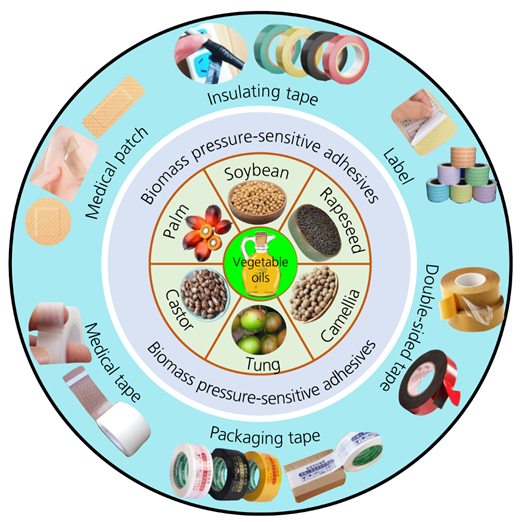
Pressure-sensitive adhesive (PSA) is a special viscoelastic polymer that can adhere to the surfaces of various substrates only under pressure without phase change.1,2 It can achieve reliable bonding force on the substrate surface after applying light pressure at room temperature, producing a good bonding effect.3–5 The advantages of PSA, such as fast adhesion speed, easy and durable adhesion, precise film thickness control and removability, make it widely used in various fields, including packaging tape, double-sided tape, labels, binding tape and pressure-sensitive tape (Figure 1).6,7
The components of commercial PSAs mainly include polymer matrix, tackifying resin, filler, plasticizer, antioxidant and other chemical additives.1 PSAs can be divided into polyacrylate,8 polyurethane,9,10 rubber11–13 (e.g. styrene–isoprene–styrene block copolymer, styrene–butadiene–styrene), polysiloxane14 and so on according to their chemical structures. The polymer requirements of PSA are as follows: it has good thermal stability; does not oxidize and decompose at the melting temperature; has certain durability, heat resistance, cold resistance and flexibility; has certain compatibility with the components of the combination; and has strong adaptability, high bonding strength and adjustable viscosity at a certain temperature.15,16 Generally, petroleum-based PSAs are non-biodegradable and disposable, which leads to generation of a lot of waste from such products. At the same time, regulations and restrictions are being implemented to support the development of sustainable alternatives.17 With the exhaustion of petrochemical resources and the increasingly serious environmental pollution, it is extremely urgent to find biomass raw materials with excellent performance that can replace petroleum resources and develop environmentally friendly and renewable PSAs.1,4,18
Bio-based adhesives have been used as bonding materials for a long time.19 In fact, the early use of adhesives was as glue produced from plants or animals for defense or hunting.20 These natural adhesives are still in use today but do have inferior performance (low water resistance, poor corrosion resistance etc.) and technical limitations (large variability of raw materials, low level of technology etc.) compared with current petroleum-based PSAs. These limitations need to be overcome to compete with their existing crude-oil-based counterparts in technical applications.
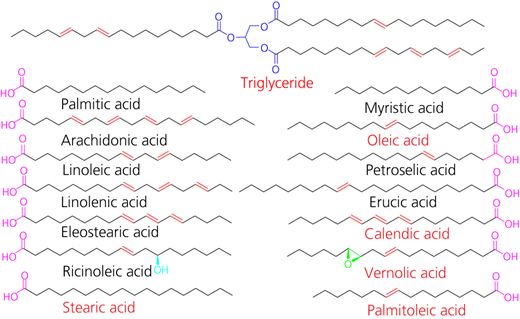
The synthesis of biomass-based PSAs, particularly vegetable-oil-based PSAs, has been reported widely in recent years.21–23 Vegetable oils come from a variety of plants (soy, palm, rapeseed etc.). Their main components are triglyceride molecules containing three fatty acids. These three fatty acids can all be the same, two the same or all different, with the most common carbon chain lengths being evenly numbered and containing either 16, 18 or 20 carbon atoms, which may be saturated or unsaturated.24 The saturated fatty acids contain unreactive fatty chains, such as stearic or palmitic. The unsaturated fatty acids contain active double bonds in the structure, such as oleic, linoleic, linolenic and ricinoleic (Figure 2).25–27 Vegetable oil has attracted much attention because of its advantages of having a wide source of raw materials, low price, environmental protection, and renewable and easy modification.1,29 Furthermore, there are high-reaction sites such as double bonds, allyl groups and ester groups in triglycerides, which can be used to synthesize varieties of polymers, such as, notably, epoxy resins, polyamides, polyesters and polyurethanes.28,30
To further study vegetable-oil-based PSAs, this paper summarizes the research advances in vegetable-oil-based PSAs such as epoxy resin, acrylic resin, fatty acid derivatives, polyester and polyurethane. The design ideas and modification methods of vegetable-oil-based PSAs are introduced, including the development of functional vegetable oil monomers and the optimization of the polymer structure, so as to provide theory and reference for the design and development of new bio-based PSAs.
2 Epoxidized vegetable-oil-based PSAs
Vegetable oils with a variety of compositions (triglycerides derived from glycerol and different long-chain unsaturated fatty acids) are promising renewable alternatives to conventional starting materials for polymers and have been widely used in different applications due to their low toxicity, low cost and easy accessibility.31–35 Researchers have been utilizing plant oils to prepare PSAs because of their flexibility, elasticity, hydrophobicity and low glass transition temperatures (Tg) derived from fatty acids.36,37 Soybean oil (SO) is the second most widely available plant oil next to palm oil, and epoxidized SO (ESO) is similar to epoxidized palm oils and has a wide range of application fields, including the preparation of PSAs. In the early stage, the preparation approaches of oil-based PSAs have usually involved the addition of petrochemicals such as poly(methyl methacrylate), ethylene glycol dimethacrylate and butanediol diacrylate.38,39 Recently, PSAs derived from fully bio-based resources have been reported. For example, fully bio-based PSAs were successfully prepared by reacting epoxidized fatty acids (EFAs) with different dicarboxylic acids or anhydrides, and their properties could be tailored by changing the chemical composition.40,41
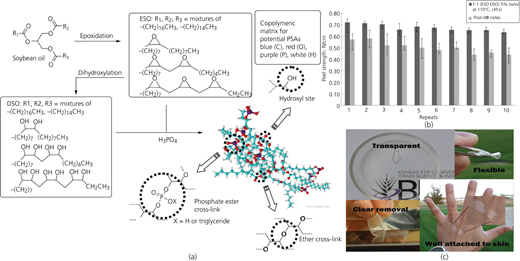
Epoxidation of vegetable oil is the reaction of converting the double bond in unsaturated fatty acid into an epoxy group under the action of a catalyst, which mainly includes peroxy acid epoxidation, inorganic or organic peroxide epoxidation and lipase catalysis.42 Due to the high cost of inorganic or organic peroxide epoxidation and lipase catalysis, peroxy acid epoxidation is usually used in actual production. ESO can undergo a ring-opening reaction with perchloric acid as a catalyst to obtain dihydroxyl SO (DSO) (Figure 3). Ahn et al.43–45 prepared vegetable-oil-based PSA with epoxidized and hydroxylated SO as a raw material and phosphoric acid as a catalyst. At the beginning, they prepared ESO-based PSA tape through a one-pot, single-step, fast reaction (5 min) at medium temperature (50°C) and carried out a simple air-drying process within 30 s at 110°C. The peel strength (according to the ASTM D 3330/D 3330M-04 method)46 of the prepared ESO-based PSA tape was equivalent to that of commercial PSA tapes. Figure 3 shows this transparent adhesive. Then, the PSA was modified. They used phosphoric acid as a cross-linker to prepare phosphate ester cross-linked DSO (PDSO) or DSO-containing phosphoric esters. ESO-based PSAs were prepared from a mixture of ESO/PDSO. The PSA showed better peel strength. Additionally, phosphate enhanced the attraction of PSA to metal, so that ESO-based PSA on an aluminum carrier displayed higher peel strength than commercial PSAs. Ahn et al.47 successfully prepared solvent-free PSA with a biological content of 97% by cationic polymerization initiated by ultraviolet (UV) light with ESO, DSO and rosin ester as raw materials. Similarly, Wang et al.48 developed new bio-based PSA tapes with ESO and carboxyl-terminated polyesters as raw materials and did not use any organic solvents or toxic chemicals in the preparation process. Additionally, the introduction of rigid groups containing phosphorus improved the Tg and stability of the PSAs, so that the PSAs showed good flame-retardant properties. Li and Sun49 and Lin et al.50 discussed changing the amount of each component of the prepared PSA and observed the effect on the properties of the PSA. It was found that the different hydroxyl values and contents of DSO significantly affected the peel adhesion strength of PSA. In another study, they analyzed the effects of the compositions of ESO, 3,4-epoxycyclohexylmethyl 3,4-epoxycyclohexanecarboxylate (ECHM), DSO, rosin ester and a cationic photoinitiator on the adhesion properties of PSAs. When the dosage of ESO and the photoinitiator remained unchanged, the amounts and interaction of ECHM, DSO and rosin had a significant effect on the peel adhesion strength of PSAs.
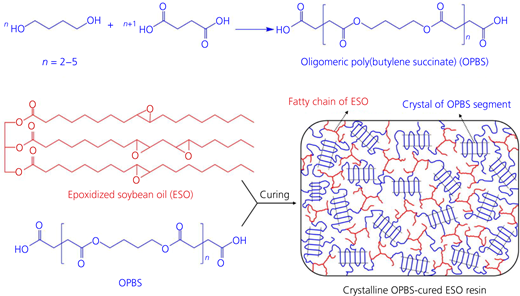
Jian et al.51 used a bio-based crystalline oligomeric poly(butylene succinate) (OPBS) as a long-chain crystalline curing agent for ESO resin to enhance its mechanical properties and heat resistance (Figure 4). With the increase in OPBS segment length, the mechanical strength of cured ESO resin was greatly improved, and its thermal stability was good. The initial and maximum decomposition temperatures were greater than 325 and 417°C, respectively.
Kim et al.52 prepared camellia-oil-based PSA by polymerization under UV light of dihydroxylated epoxidized camellia oil and ESO; the adhesive showed higher peel adhesion. Wu et al.21 prepared polymers by copolymerization of acrylic acid-functionalized adenine/thymine-containing monomers (AAc/TAc) and acrylic acid-functionalized epoxidized camellia oil (ECO) monomer (Figure 5). PSAs containing adenine had better adhesion properties due to the strong π–π stacking of purine. Also, intermolecular hydrogen bond interactions could be formed due to supramolecular mixtures with complementary bases, which enhanced peel strength and shear strength compared with supramolecular mixtures with single bases. More importantly, the long alkyl chain of vegetable oil also gave the adhesives good hydrophobicity, so that the adhesives had a better adhesion effect under water.
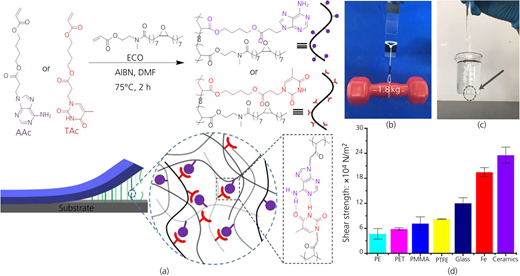
(a) Fabrication of robust plant-oil-based supramolecular PSAs and (b–d) their properties.21 AlBN, azobisisobutyronitrile; DMF, dimethylformamide; PE, polyethylene; PET, polyethylene terephthalate; PMMA, poly(methyl methacrylate); PTFE, polytetrafluoroethylene
(a) Fabrication of robust plant-oil-based supramolecular PSAs and (b–d) their properties.21 AlBN, azobisisobutyronitrile; DMF, dimethylformamide; PE, polyethylene; PET, polyethylene terephthalate; PMMA, poly(methyl methacrylate); PTFE, polytetrafluoroethylene
3 Vegetable oil acrylate-based PSAs
Acrylic and methacrylic acids are used for synthesis of (meth)acrylic monomers, which can be obtained from renewable resources. Acrylic acid (AA) can be produced from fermented corn dextrose by hydration of 3-hydroxypropionic acid (3-HP). This 3-HP process was developed by a partnership between BASF, Novozymes and Cargill in 2012.53 Dow and OPX Biotechnologies, now Cargill, also collaborated in a similar project to scale-up this process.54 Bio-based AA can also be obtained by metathesis transformation of fumaric acid55 or oxidation of acrolein.56,57 Bio-based AA was also generated from the aldol condensation of acetic acid with formaldehyde from dehydrogenated methanol,58–60 the fermentation of lactic acid (LA)61,62 or poly(3-hydroxypropionate).63
Acrylic vegetable oil monomers can be synthesized by in situ acrylation on the basis of epoxidized vegetable oil, which can be used to prepare PSAs by free radical polymerization.64,65 Ahn et al.66 demonstrated the possibility of preparing transparent PSAs from pure acrylated ESO (AESO) by rapid and simple UV radical polymerization, with a bio-based content of 97–100%. The degree of free radical polymerization could be controlled by adjusting the amount of UV radiation, so as to obtain balanced cohesion and bonding strength for PSA applications. Li and Sun67 studied the effect of the degree of acrylation on the properties of PSAs. Firstly, ESO was partially acrylated, and then the remaining epoxy groups were dihydroxylated to prepare acrylic polyols (APs). APs containing 1, 1.5 and 2 acrylates per triglyceride were synthesized, and PSA was formed by free radical polymerization in the presence of UV radiation. The Tg, rubber plateau modulus and cross-linking density of the polymer increased with the increase in the amount of APs and the acrylic functional group of the resin. Lee et al.22 successfully prepared a UV-curing crack repair patch with high chemical resistance and adhesion with AESO, cross-linker triethylenetetramine, photoinitiator 2-hydroxy-2-methylpropiophenone (HDA) and 2,4,6-trimethylbenzoyl-diphenyl phosphine (TBDP), which was used to repair the cracked surface of a chemical reservoir (Figure 6). When cracks appeared in the chemical reservoir, the patch could be quickly attached to the damaged area and then cured with a portable UV source to prevent further diffusion of toxic chemicals.
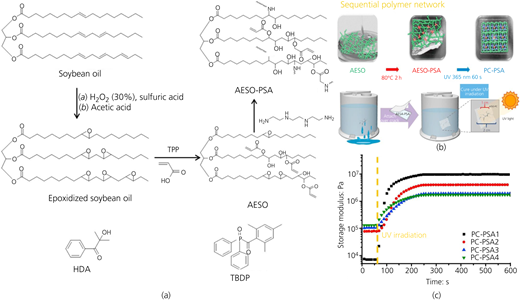
(a) Synthesis mechanism and (c) properties of AESO-based PSAs (AESO-PSAs); (b) schematic overview of the UV-curable crack repair patch system.22 TPP, triphenyl phosphine; PC-PSA, UV-cured PSA
(a) Synthesis mechanism and (c) properties of AESO-based PSAs (AESO-PSAs); (b) schematic overview of the UV-curable crack repair patch system.22 TPP, triphenyl phosphine; PC-PSA, UV-cured PSA
Sun et al.68 constructed a new type of UV-induced peelable silicon-chip-cutting PSA with a castor-oil (CO)-based polyurethane acrylate oligomer (CO-PUB), a copolymer containing hydroxyl AA, a multifunctional acrylate monomer and a photoinitiator (Figure 7). The peeling strength of PSAs was more than 20 N/25 mm before UV irradiation. Under UV irradiation, the unsaturated vinyl bonds were copolymerized with the multifunctional acrylate monomer to form a fully cross-linked film, which could reduce the peel strength to less than 1 N/25 mm. Compared with other UV-induced exfoliable adhesives prepared by using other curing agents, the dose of UV required reduced when the PSAs prepared with CO-PUB were cured. After curing, the cross-linking degree of the film was improved, and the gel content could reach 95%. After stripping, the residual adhesive could be reduced to about 0.32%.
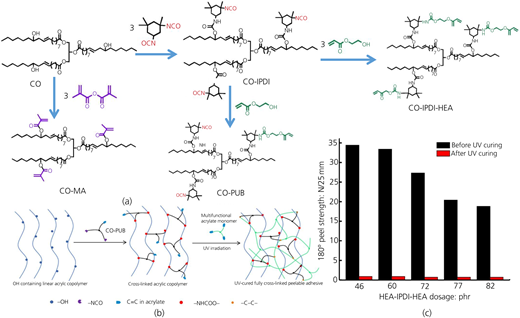
(a) Synthetic routes of PSAs from CO-PUB and (b) their curing process and (c) properties.68 MA, maleic anhydride; IPDI, isophorone diisocyanate; HEA, 2-hydroxyethyl acrylate; phr, parts per hundred rubber
(a) Synthetic routes of PSAs from CO-PUB and (b) their curing process and (c) properties.68 MA, maleic anhydride; IPDI, isophorone diisocyanate; HEA, 2-hydroxyethyl acrylate; phr, parts per hundred rubber
Badía et al.69 produced water-based PSAs with a high bio-based content (up to 72%) with bio-based 2-octyl acrylate derived from CO and isobornyl methacrylate (IBOMA) derived from pine resin by emulsion polymerization. Compared with pure oil-based adhesives, when the mass fraction of IBOMA was 15% and the gel content was about 60%, PSAs had a copolymer microstructure with similar peel resistance and ring viscosity, the failure temperature of shear adhesive (135°C against 70°C) was significantly better and the shear strength increased by 45 times.
Sajjad et al.70 synthesized bio-based high-performance ABA tri-block PSA with dodecyl acrylate derived from vegetable oil by reversible addition fragmentation chain transfer (RAFT) (Figure 8). The PSA was found to exhibit excellent adhesion, the peeling force was adjustable and was up to 8 N/cm, the adhesive force was up to 7 N/cm, when rosin ester adhesives were used, and there was no shear failure within 100 h. The results indicated that this potential sustainable adhesive was competitive with commercial products. Singh et al.71 proposed a novel sustainable PSA with acrylic epoxidized linseed oil (AELO) derived from renewable biomass raw material instead of 2-ethylhexyl acrylate (2-EHA). After adding AELO, the Tg of PSA did not change significantly; the result indicated that PSA had good machining performance at room temperature. Li and Sun72 prepared bio-based PSAs with camelina oil by UV polymerization. AP was synthesized by using partially acrylated epoxidized and dihydroxyl of camelina oil; PSAs were prepared with AP and 2-EHA by copolymerization. The Tg of PSAs increased with the increase of the ratio of AP to 2-EHA. When the amounts of AP and 2-EHA were the same and rosin ester was the viscosifier, the PSAs had good peel strength (3.86 N/inch or 152 N/m), viscosity (5.2 N/inch or 205 N/m) and shear resistance (>30 000 min).
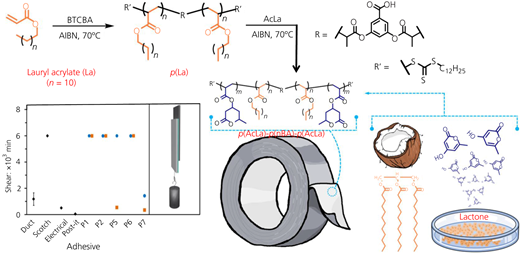
Schematic process of ABA tri-block PSA with dodecyl acrylate derived from vegetable oil and its properties (inset).70 BTCBA, 3,5-bis(2-dodecylthiocarbonothioylthio-1-oxopropoxy)benzoic acid
Schematic process of ABA tri-block PSA with dodecyl acrylate derived from vegetable oil and its properties (inset).70 BTCBA, 3,5-bis(2-dodecylthiocarbonothioylthio-1-oxopropoxy)benzoic acid
4 Vegetable oil fatty acid (methyl ester) based PSAs
Fatty acids obtained by hydrolysis of vegetable oil cannot be directly used for polymerization. There are various methods to modify fatty acids – for example, the double bond can be modified into epoxy or acrylate groups and then used to synthesize PSAs.1 Wu et al.73 obtained an EFA mixture by epoxidation and selective hydrolysis reaction of SO on ester groups. Adding a small amount of dicarboxylic acid or anhydride to the EFA mixture improved the polymerization and curing speed and adjusted the PSA properties of the copolymer to make it suitable for different kinds of applications. Maassen et al.74 and Maaßen et al.75 modified methyl oleate obtained by cracking vegetable oil; the synthesis pathways of oleate and erucate derivatives and polymers are shown in Figure 9. The obtained polymers showed excellent adhesion to low-energy substrates and good water resistance.
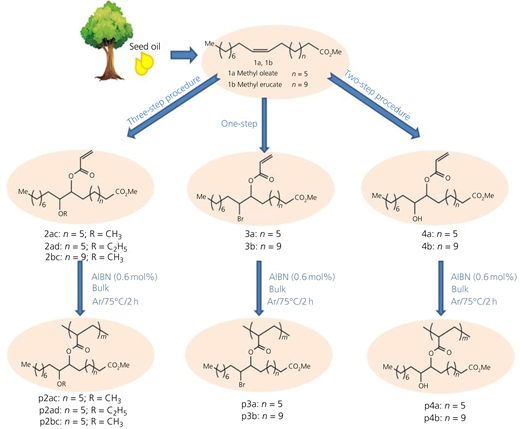
Wu et al.73,76 successfully prepared bifunctional monomer epoxidized oleic acid (EOA) containing a carboxylic acid group and an epoxy group with purity of 97%. PSAs prepared by curing prepolymerization of EOA with a very small amount of a cross-linking agent had high peel strength, excellent shear resistance, high tack force, excellent thermal stability and excellent aging resistance.
5 Vegetable-oil-based polyester PSAs
Vegetable oil polyester PSAs can be prepared by cross-linking reaction with carboxy-terminated polyester and an epoxy group or by direct reaction with ESO and carboxylic acid.1 Vendamme et al.77 synthesized a vegetable-oil-based polyester PSA with adjustable viscoelasticity using a dimer fatty acid and a dimeric fatty diol through the Diels–Alder reaction. Hydroxyl-terminated polyesters with different structures (linear and branched) were synthesized by melt polymerization of a dimeric fatty acid and a dimeric fatty diol and then cured with maleic anhydride (MA)-modified triglycerides (maleinized SO) in the presence of an amidine catalyst. The obtained vegetable-oil-based polyester PSA showed good adhesion. Vendamme and Eevers78 prepared a carboxylic acid-terminated polyester with viscoelasticity and adhesion that can be adjusted by adding the cereal-based monomer 1,4:3,6-dihydro-d-glucitol (isosorbide) and polycondensation with several diols (e.g. dimer fatty diol, butanediol or isosorbide) and then curing with epoxidized vegetable oil (Figure 10).
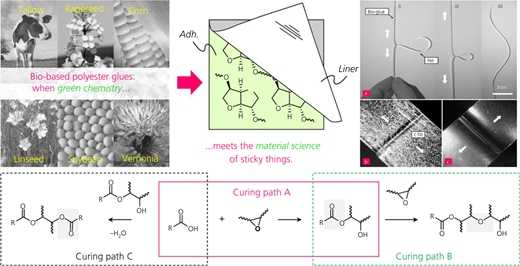
Schematic diagram of preparation of PSAs from lipid biofeedstocks and their possible curing pathways and properties78
Schematic diagram of preparation of PSAs from lipid biofeedstocks and their possible curing pathways and properties78
Li and Li41 explored a new method for preparing bio-based PSA through direct reaction of ESO and dicarboxylic acid. Dicarboxylic acids were used in the experiment, including dimer acid (DA), sebacic acid, adipic acid and a bifunctional polymeric carboxylic acid. AMC-2 (a chromium (III)-based organometallic compound) was found to be the most effective catalyst for prepolymerization. The PSA had a peel strength of 1.4–5.0 N/cm and a back viscosity of 7.1–12.6 N and had strong shear strength and aging resistance. Li et al.79 synthesized PSAs using LA oligomers (OLAs) (different molecular weights) and ESO copolymerized without any catalysts or solvents. With the increase in OLA chain length, the Tg of the copolymer increased from −21 to 5°C. Copolymers based on short-chain OLA showed a peel strength of 3.8 N/cm and strong adhesion. Li and Sun80 synthesized two kinds of bio-based polyols with ESO, glycolic acid and LA without any solvent and catalyst. In the presence of a photoinitiator, polyol and ESO were polymerized to PSA polymers by UV light; all PSA tapes exhibited high static shear values (20 000+ min). Torron et al.81 adjusted the viscoelastic properties of materials by adding different sugars to fatty-acid-based monomers. Under the catalysis of 1,8-diazabicyclo[5.4.0]undec-7-ene, a soft polyester network was formed by combination of monomers with biological dibasic acid. Kim et al.82 synthesized a new aliphatic polyester with a long alkyl substituent, poly(pentadecyl caprolactone) (PPDCL) derived from cashew nut shell liquid. As the central block, PPDCL was used to synthesize a symmetric triblock copolymer with poly(lactide) end blocks and to produce sustainable PSAs. The resultant PSAs showed competitive adhesion properties with many common commercial adhesives, and the triblock copolymers hydrolytically degraded at 50°C under acidic conditions (Figure 11).
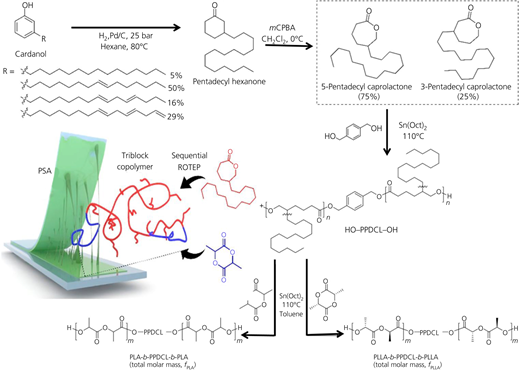
Synthesis pathway of sustainable PSAs derived from cashew nut shell liquid.82mCPBA, meta-chloroperoxybenzoic acid; PPDCL, poly(pentadecyl caprolactone); PLLA, poly-l-lactic acid; ROTEP, ring-opening transesterification polymerization; Sn(Oct)2, stannous octoate
Synthesis pathway of sustainable PSAs derived from cashew nut shell liquid.82mCPBA, meta-chloroperoxybenzoic acid; PPDCL, poly(pentadecyl caprolactone); PLLA, poly-l-lactic acid; ROTEP, ring-opening transesterification polymerization; Sn(Oct)2, stannous octoate
6 Vegetable-oil-based polyurethane PSAs
Polyurethanes are important linear, branched or cross-linked polymers with excellent properties and wide applications,83–87 which are obtained by addition reaction with diisocyanate (or polyisocyanate) and oligomer polyol (low-molecular-weight polymer with terminal hydroxyl).84 The polyurethane structure contains strongly polar and reactive isocyanate (–NCO–) and carbamate group (–NHCOO–), which can form hydrogen bonds or chemical bonds with the substrate containing active hydrogen to produce adhesives.88 Polyurethane derived from renewable resources is of great economic and ecological significance. There is a large number of studies that take vegetable oils such as SO,89,90 rapeseed oil,23,91 palm oil92–94 and CO95,96 as renewable resources for the preparation of polyols required for polyurethane manufacturing. Polyurethane PSAs based on vegetable oil have attracted more attention.
Liu et al.97 synthesized a series of waterborne polyurethane PSAs with CO and two novel internal emulsifiers. The internal emulsifiers were synthesized with ESO and adipic acid or pimelic acid by a solvent-free self-catalytic method (Figure 12). The shear resistance of bio-based PSAs was 1.18 h to more than 100 h, the bonding strength was 1.78–5.66 N and the peel strength was 1.23–2.77 N/mm. All PSAs showed good pressure-sensitive bonding properties.
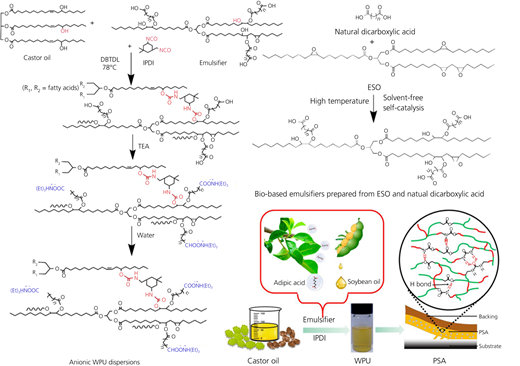
Preparation route of bio-based emulsifiers and waterborne polyurethane PSAs.97 IPDI, isophorone diisocyanate; TEA, triethanolamine; WPU, waterborne polyurethane
Preparation route of bio-based emulsifiers and waterborne polyurethane PSAs.97 IPDI, isophorone diisocyanate; TEA, triethanolamine; WPU, waterborne polyurethane
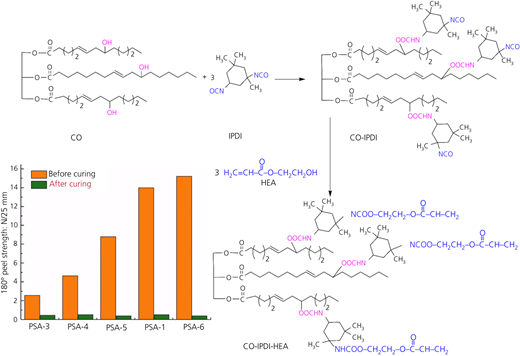
Ren et al.98 prepared UV-curable PSA using polyurethane acrylate synthesized with DA-based polyester diol and hydrogenated CO (HCO). With the hydroxyl ratio of DA polyester diol/HCO (OHDiol/OHHCO) and hydroxyl ratio of HCO and DAPD/2-hydroxyethyl acrylate (OHpolyol/OHHEA) increased, UV-cured PSA had higher storage modulus, loss modulus and complex viscosity. Norhisham et al.99 prepared soft polyurethane elastomers with bio-based polyol derived from palm oil fatty acid methyl ester and palm olein polyols cured with diphenylmethane diisocyanate, which had properties characteristic of PSA. Hao et al.100 synthesized a polyurethane oligomer (CO-IPDI) with CO and isophorone diisocyanate (IPDI) without any organic solvent, and then a kind of UV-curable stripping PSA was constructed with CO-IPDI, an acrylic copolymer, a three-function acrylic monomer and a photoinitiator (Figure 13). The PSA had a high peel strength of 13.99 N/25 mm before UV curing, which met the recommended requirements of the silicon-wafer-cutting process. After UV curing, the peeling strength was significantly reduced to 0.49 N/25 mm, and the adhesive residue was about 0.96%.
7 Other vegetable-oil-based or vegetable-oil-derived polymers PSAs
There are many inedible woody oils (tung oil, rubber seed oil etc.) that can be used in industrial production, as plasticizers, curing agents, composites, polyurethane and other materials.101–105 Tung oil in particular has several conjugated double bonds in its structure, which can be easily reacted with MA, maleimide and acrylate through the Diels–Alder reaction, and PSAs can be also prepared from tung oil modified by the Diels–Alder reaction.1 Li and Li106 synthesized an adduct of tung oil and MA (TOMA) through the Diels–Alder reaction, and then PSAs were prepared with TOMA and diols through a cross-linking reaction using a new, simple and solvent-free method (Figure 14). PSAs had a peel strength of 0.3–4.5 N/cm, a tack back of 1–13 N and good aging resistance. Gallart-Sirvent et al.107 prepared PSAs using tung oil and poly(propylene glycol diacrylate) (PPGDA) or bisphenol A glycerolate diacrylate (BPAGDA) through the Diels–Alder reaction. The PSAs from tung oil and PPGDA or BPAGDA had peel strengths ranging from 0.1 to 0.2 N/cm.
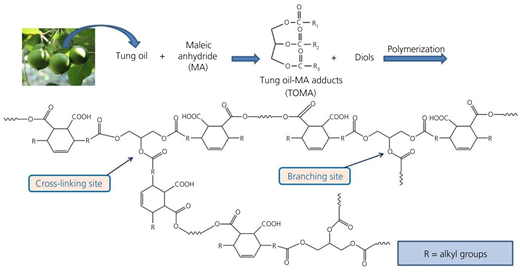
Schematic representation of possible polymeric networks resulting from the polymerization of TOMA and a diol106
Schematic representation of possible polymeric networks resulting from the polymerization of TOMA and a diol106
As an auxiliary agent of PSAs, the polymers derived from vegetable oil can improve the performance of PSAs. Lee and Gan108 synthesized an alkyd resin solution using palm kernel oil to blend natural rubber (NR) to improve the properties of NR-based PSAs. The result showed that the peel strength, shear strength and energy storage modulus of NR-based PSAs improved. Lee et al.109 designed a renewable PSA using plant-based thermoplastic polyester elastomers, a rosin ester tackifier and an ESO plasticizer (Figure 15). When the dosages of the plasticizer and tackifier were 15–30 and 50%, respectively, the peel strengths of PSAs were 1.9–2.6 N/cm, the probe tacks were 2.2–3.0 N and the static shear resistance were more than 20 000 min, which were comparable with those of current thermoplastic elastomers and PSAs. Thus, these novel PSAs could hold promise for sustainability and high adhesive performance.
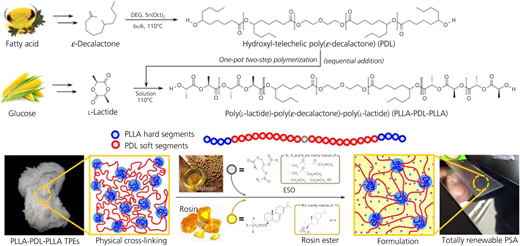
Synthesis of semicrystalline thermoplastic polyester and renewable PSA formulation thereof.109 DEG, diethylene glycol; TPE, thermoplastic elastomer
Synthesis of semicrystalline thermoplastic polyester and renewable PSA formulation thereof.109 DEG, diethylene glycol; TPE, thermoplastic elastomer
Typical block copolymers are composed of hard blocks and soft blocks. A hard block provides physical cross-links, which give superior resistance to creep of PSAs; a soft block provides the viscoelastic properties of PSAs. Because of their unique structure, block copolymers have been extensively used as the base polymers for PSAs.110 Moreover, vegetable oil can also be used as a chain segment of block copolymers to achieve the sustainability of PSAs. Sotoodeh-Nia et al.110 developed a diblock PSA with polystyrene and polymerized AESO. The result showed that PSA was comparable in performance with conventional styrene–isoprene–styrene polymer PSA. Noppalit et al.111 synthesized soft–hard–soft and hard–soft–hard terpene-based triblock copolymer aqueous PSA by RAFT miniemulsion polymerization, and the PSA showed good adhesive performance.
8 Conclusion and prospect
PSAs based on vegetable oil (ESO, CO etc.) have the prospect of large-scale application due to their excellent performance, sustainability and environmental friendliness. With the increasing awareness of health and environmental protection, more laws and regulations on environmental protection have been made. The environment-friendly characteristics (e.g. high solid content, no solvent, water, light curing) of PSAs will be paid more attention.
As sustainable raw materials for preparing PSAs, vegetable oils, especially edible vegetable oils, still have the problem of taking up part of the edible oil resources of human beings. However, PSAs derived from non-edible vegetable oils (e.g. tung oil, CO) are important commercializable products for realizing high-value utilization of non-edible vegetable oils. At the same time, in the development of vegetable-oil-based PSAs, it is essential to study deeply the molecular structure and modification methods of various vegetable oils, including molecular orientation design and green synthesis strategy of functional monomers. The overall performance of PSAs should be considered to realize gradually the fundamental goal of replacing petroleum raw materials. Moreover, functional groups can be introduced into PSA systems to give them different characteristics, broaden their application fields and make them develop in the direction of functionalization and diversification.
Acknowledgement
This work was supported by the Fundamental Research Funds from Jiangsu Province Biomass and Materials Laboratory (JSBEM-S-202001).

