

In a world increasingly conscious of the need for sustainable practices, the field of green chemistry stands at the forefront of development, driving efforts to reduce environmental impacts and promote human health. By focusing on sustainability, renewable materials, and minimizing environmental impact, green chemistry aims to create processes and products that are efficient and environmentally benign. The essence of green chemistry lies in its commitment to sustainability. This requires developing new methods that reduce or eliminate the use and generation of hazardous substances. It prioritizes using renewable materials, designing safer chemicals and products, and employing energy-efficient processes. By reimagining and redesigning new chemical reactions, processes, and materials we can build new sustainability concepts. This approach is vital for tackling global challenges but requires rebuilding and rethinking the educational portfolio for chemical sciences. Indeed, the true catalyst for this transformation is the investment in human capital by nurturing a new generation of scientists and professionals dedicated to advancing sustainable green. This will require a multidisciplinary approach drawing on chemistry, biology, engineering, and environmental science to innovate and implement sustainable solutions. By equipping scientists and engineers with the principles and practices of green chemistry, a new generation of innovators dedicated to sustainability can be developed. Moreover, investment in human capital is not only about technical skills but also about cultivating a mindset that values environmental stewardship and social responsibility.
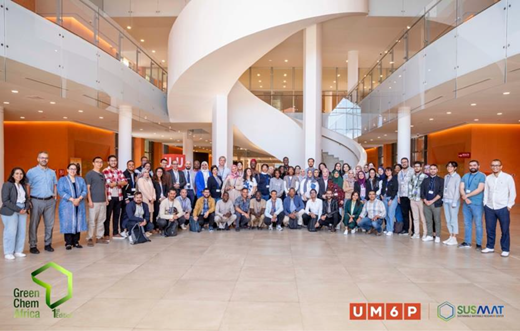
Considering this, while there is a focus on Africa’s potential as a source of raw materials, the African Training School on Green Chemistry and Environmental Sustainability (GreenChemAfrica) initiative distinguishes itself by emphasizing both the investment in human capital and the rich potential of African raw materials to reimagine chemical processes, reactions, and materials in line with new concepts of sustainability. This initiative held at the University Mohammed VI Polytechnic (UM6P) in Morocco from April 21st until 27th 2024 was the first-in-kind initiative in Africa dedicated to educating and training doctoral students and early career scientists from across Africa on the principles of green chemistry. The program covered concepts related to greening organic and inorganic synthesis, greening media and solvents, strategies for greening chemical processes, and also the applicability of Life cycle assessment in green chemistry. Participants had the opportunity to engage with international leaders in green chemistry, such as John Warner, James Clark, and Mary Kirchhoff, as well as other distinguished professors who are renowned for their contributions to the field. Taught in a collaborative learning environment, these interactions provided invaluable insights into the latest research and practices in the field, fostering a sense of global community and a shared purpose. During this first edition, the organizing committee along with these new ambassadors of green chemistry launched ‘the African Green Chemistry Mouvement’ to tighten globally with other initiatives in this noble mission.
In alignment with the goals of GreenChemAfrica and other schools dedicated to sustainable chemistry, the papers of this issue highlight the tangible advancements and a prime illustration of the potential of green chemistry in the development of bio-based phosphorylated furan compounds for flame-retardant alkyd resins. These compounds, derived from plant sources, enhance the thermal stability and fire resistance of alkyd resins used in paints and varnishes. This innovative approach not only reduces reliance on fossil resources, but also demonstrates the integration of sustainable materials in high-performance applications. The successful synthesis and application of these compounds underscore the potential for greener alternatives in industrial processes.
In the realm of packaging, sustainable starch-based foams reinforced with wastepaper fibers present a promising alternative to petroleum-based materials. These foams, produced via microwave foaming, exhibit improved mechanical properties and cushioning performance. This advancement highlights the potential of using renewable resources and waste materials to create environment-friendly packaging solutions, thereby reducing the environmental impact of traditional foams. Such innovations are key to transitioning towards a circular economy.
The search for safer alternatives to bisphenol A (BPA) in epoxy resins is another critical area of green chemistry. Researchers are exploring bio-sourced aromatic compounds that match BPA’s performance while avoiding its endocrine-disrupting effects. This comprehensive review underscores the importance of finding sustainable substitutes that do not compromise on mechanical properties, ensuring a balance between performance and safety. The efforts to replace BPA reflect the broader goals of green chemistry to safeguard human health while maintaining material efficacy.
In the innovative field of 4D printing, the use of sustainable raw materials as printing inks is being explored to reduce reliance on non-biodegradable polymers. By incorporating natural and synthetic biodegradable polymers, researchers aim to create environmentally benign 4D-printed entities that transform properties under specific stimuli. This approach aligns with the UN Sustainable Development Goals, paving the way for sustainable manufacturing technologies and expanding the possibilities of additive manufacturing.
Lastly, the development of agar/cassava starch bioplastic films through the extrusion technique exemplifies the potential for industrial-scale production of environmentally friendly materials. These bioplastic films offer superior mechanical properties and biodegradability, showcasing the promise of renewable resources in creating sustainable packaging solutions for food products. This innovative approach not only addresses environmental concerns but also opens avenues for commercial applications.
Through these examples, it is evident that the principles of green chemistry are being actively applied to create sustainable solutions across various industries. The integration of renewable materials, innovative processes, and a strong focus on human capital is driving the transformation towards a greener and more sustainable future. As we continue to face global challenges, the commitment to green chemistry and the investment in human capital will be crucial in building a sustainable and prosperous world.

