

This study aims to determine the factors and dynamic systems behaviour of essential medicine stockout in public health-care supply chains. The authors examine the constraints and effects of mental models on medicine stockout to develop a dynamic theory of medicine availability towards saving patients’ lives.
This study uses a mixed-method approach. Starting with a survey method, followed by in-depth interviews with stakeholders within five health-care supply chains to determine the dynamic feedback leading to stockout and conclude by developing a network mental model for medicines availability.
The authors identified five constraints and developed five case mental models. The authors develop a dynamic theory of medicine availability across cases and identify feedback loops and variables leading to medicine availability.
The need to include mental models of stakeholders like manufacturers and distributors of medicines to understand the system completely. Group surveys are prone to power dynamics and bias from group thinking. This survey’s quantitative output could minimize the bias.
This study uniquely uses a mixed-method of survey method and in-depth interviews of experts to assess the essential medicine stockout in Nigeria. To improve medicine availability, the authors develop a dynamic network mental model to understand the system structure, feedback and behaviour driving stockouts. This research will benefit public policymakers and hospital managers in designing policies that reduce medicine stockout.
1. Introduction
Essential medicines (EM) cater to the medical needs of most of a country’s population. Hence, medicines stockout is the bane of achieving goal three of the United Nations Sustainable Development Goals (SDGs), which focuses on the global attainment of good health and well-being for citizens (WHO, 2019; Olutuase et al., 2022). Nigeria is a developing country in West Africa that runs a federal political system with Abuja as the capital city. Nigeria has 36 states comprising of 774 Local Government Areas (LGAs) (Federal Ministry of Health, 2020). Health-care services in Nigeria are public sector driven (67%) in contrast to private health facilities, constituting only 33% of health facilities (Federal Ministry of Health, 2020). The public health sector has three levels of care, primary, secondary and tertiary care levels. Public Health-care Supply Chains (PHSCs) provide EM for the citizens through clinics and hospitals at all levels under the supervision of authorities at LGAs, state and federal governments (Hafez, 2018). These PHSCs are mainly fragmented and vertical, with inadequate funding, infrastructure and coordination with ongoing efforts to integrate public health programmes at the national level (Byrnes, 2004; Federal Ministry of Heath, 2016). Though the health sector is social and not profit-driven, the availability of EM is a priority for saving lives.
Kaduna State is in the northwestern part of Nigeria and operates the Drug Revolving Fund (DRF) model to deliver EM to patients. The DRF model is a brainchild of the Bamako initiative, introduced in 1987 to sub-Saharan African countries as a financing mechanism for the continuous availability of EM (Hardon, 1990). The DRF model provides medicines to patients at a subsidised rate, and the cash from sales is used to procure more medicines. Different versions of the model have evolved over the years while stakeholders still grapple with the implementation and sustainability of the DRF model (Tran et al., 2020; Ogunsola et al., 2021). Success stories of the model abound from extant studies, but some studies have also questioned the inequities and rational use of medicines that arise in different implementation settings (Uzochukwu and Onwujekwe, 2004; Uzochukwu and Onwujekwe, 2005; Tran et al., 2021). The controversies surrounding different DRF models make it imperative for user countries to continue to research methods and strategies for ensuring equitable drug distribution models to save the lives of citizens and ensure economic development in line with the SDGs (WHO, 2019). Thus, measuring and improving the EM Supply Chains (SCs) is critical for developing countries to achieve the SDGs.
To improve the EM SC, Kaduna State launched a transformation initiative to save lives and promote the well-being of its citizens through an integrated, gold-standard SC management system. The transformation initiative seeks to foster a performance-driven and self-sustaining system to deliver quality and sustainable health supplies to end-users and minimise medicines stockout. Essential medicine stockout in hospitals leads to treatment failures and loss of lives. The health-care industry is complex, where different stakeholders have varying expectations and attempting to reform a particular aspect might have an unwanted effect on another (Paina and Peters, 2011; Bigdeli et al., 2012). Hence, the need to assess the effect of these reform initiatives on the availability of medicines in the DRF SC. Research on medicines performance measurement (PM) in health-care SCs are scarce, particularly in developing countries where health-care systems are weak and rely on government support (Dixit et al., 2020). This study aims to determine the essential medicine stockout factors and dynamic systems behaviour in revolving fund SCs. The specific objectives of this study are:
To determine the constraints leading to medicine stockout;
To examine whether mental models improve understanding of medicine availability (MA); and
To develop a dynamic theory for improving medicine availability performance (MAP).
This article attempts to answer the following research questions (RQ):
What are the constraints preventing medicine availability in essential medicines supply chains?
Did using a dynamic approach identify the structure, feedback and delays leading to medicine stockout in essential medicines supply chains?
How has a dynamic approach affected medicine availability in essential medicine supply chains?
Our theoretical proposition for this case study will show why MA only increases in organisations with a network systems perspective and not just internal and external organisational focus on increasing EM availability. This research will also show why staff monitoring of medicine stockout alone was insufficient to increase EM in the PHSCs.
1.1 Sequence of the research article
We arrange our article in the following sequence: firstly, we conduct a comprehensive review of the literature on EM stockout in health-care SCs to determine the research gaps and propose using system thinking and dynamics to fill the gaps. Secondly, we conduct the main study to measure MA and constraints with the Global Health Supply Chain Maturity Model (GHSCMM) tool and build on the process by determining key informants’ perceptions and mental models using the dynamics approach. Thirdly, we provide a case-by-case causal loop diagram (CLD) of individual mental models, which leads to the developing of a cross-case network mental model. Fourthly, we develop the network mental model as a dynamic theory for improving MAP. Finally, we conclude by considering the benefits and limitations of this study and propose areas for future studies.
2. Literature review on medicine stockout in public health-care supply chains
There is a frequent stockout of medicines in health-care facilities across Africa, including Nigeria (Kuwawenaruwa et al., 2020), where local markets drive the prices of medicines (Russo and McPake, 2009). Medicines stockout in PHSCs prevents access to care, leading to increased cost of care in private hospitals and inequitable distribution of medicines (Fitzpatrick, 2022). Medicines must be available and affordable to improve the elimination of diseases such as malaria (Lussiana, 2015; Lee et al., 2017), diabetes (Gong et al., 2018) and the treatment of childhood diseases (Kiplagat et al., 2014). Strategies to reform ineffective health-care SCs have been investigated over the years to save costs, make medicines accessible (Fu et al., 2017; Orubu et al., 2019) and improve efficiency and performance (Geng et al., 2017). Lack of competent personnel to handle medicines and manual inventory management practices lead to medicine stockout (Zuma, 2022). Countries receiving medicines as donor support have also experienced stockout due to funding uncertainty and inadequate performance monitoring (Gallien et al., 2017). The multi-tiered structure of EM SCs, complex delivery channels and delayed information flow prevent access to medicines (Vledder et al., 2019). Table 1 below summarizes the factors responsible for medicine stockouts in health-care SCs.
2.1 Measuring medicine availability performance
To determine the efficiency of SCs, measurements of service, asset and speed performance metrics across functions and organisations support continuous improvement across extended networks (Hausman, 2004). Avelar-Sosa et al. (2019) define SC performance as the capacity of organisations to understand the needs of their customers and fulfil customer needs with sufficient inventory levels through product availability and on-time deliveries. Besides the use of online measurements to improve information sharing and time to order and deliver medicines (Kasparis et al., 2021), the use of PM, information and technology and other management practices is crucial to MA in government hospitals (Dixit et al., 2019). The use of digital technology platforms for PM reduces medicines stockout by tracking and enabling decision-making through enhanced information flows and reduced delays in order fulfilment (Wang et al., 2022). PHSCs are humanitarian with a focus on service and not profit-driven. A lack of robust PM systems in non-profit SCs, when compared to commercial businesses (Adair et al., 2006), can lead to medicines stockout (Gallien et al., 2017). Measuring health-care systems’ performance guides the development of suitable policies (Aristovnisc, 2015) and affirms the value creation process from multiple stakeholders (Nuti et al., 2018). Medicine stockout rate, a critical component of SC performance, decreases with information technology platforms (Mwencha et al., 2017). Poor inventory management performance, budget and funding constraints and oversupply of medicines with short shelf lives contribute to medicine stockout (Gurmu and Ibrahim, 2017; Kebede and Tilahun, 2021), leading to calls for strengthening demand forecasting capacities (Leung et al., 2016).
2.2 Identifying the research gaps
Most studies identified some of the causes of medicine stockout in PHSCs and proposed strategies to prevent stockout (Table 2). However, none of the studies explores the dynamic role of mental models of the system operators in improving MA. In contrast, system dynamics studies like Bam et al. (2017) and Kumar and Kumar (2018) use dynamic models to measure and prevent specific medicine stockouts. Hence, our research attempts to fill these gaps by using system dynamic methods to understand the structure, feedback and delays leading to medicines stockout and develop the mental models of system operators to build a dynamic theory for improving MA. This research will benefit from using multiple case study methods as essential medicine stockout in hospitals is a contemporary issue globally. We do not have control over the hospitals, which necessitates using the case study method (Yin, 2015). Using a multiple case study approach will allow comparisons between cases and support building a dynamic theory for improving MA in hospitals using replication, pattern matching (Eisenhardt, 1989) and combining multiple mental models.
This study presents five case studies assessing medicine stockout from a system thinking and dynamics perspective. We use the GHSCMM tool to measure SCs operations and constraints leading to stockout (Association for Supply Chain Management, 2020). Furthermore, we use the interview protocol to explore the feedback mechanisms responsible for medicine stockouts, develop SC for the managers’ mental models and propose a dynamic theory of MA. We build on the works of Kim and Andersen (2012), Turner et al. (2013) and Tomoaia-Cotisel et al. (2022) that use only qualitative interviews for system dynamics model. In contrast, our study combines output from quantitative surveys and in-depth interviews to design and interpret CLDs in a mixed-method framework for building a systems dynamics model (Figure 1).
3. Methodology
3.1 Rationale for using quantitative and qualitative methods
Firstly, we use the quantitative GHSCMM survey to measure MA and the constraints leading to medicine stockout. The survey helps address objective one by identifying the factors hindering MA and providing vital input into developing interview protocol to evoke the causal statements responsible for medicine stockout. Using statistical data analysis from the survey provides details of the pattern of responses across cases and identifies the SC operations constraints responsible for stockout. We collect data on all the processes of providing medicines, from procurement planning to customer fulfilment, to understand the end-to-end operations of the DRF programme and identify underperforming areas that lead to stockout. The questions are analysed using statistical analysis on Qualtrics and viewed online with participants. Secondly, we collect interview data on participants’ perceptions of managing the DRF SC to understand the challenges affecting the provision of medicines in conformance to objective two. The interview questions probe causal statements from stakeholders working in the SCs. We rigorously interpret, analyse and standardise quotations from interview transcripts into variables to draw words and arrow diagrams and CLDs (Tomoaia-Cotisel et al., 2022). This grounded theory approach clarifies participants’ mental models of how the systems operate within the identified constraints to provide medicines and deepens understanding of factors leading to medicine stockout. We analyse the standardised variables into categories of MAP that affect the organisations internally, externally, and at the network level to help address objective three by developing a dynamic theory of MA. The rationale for mixed methods supports data triangulation (Yin, 2015) by building scientifically sound and transferable results (Ivankova and Wingo, 2018) through the integration of findings into a general theory (Kopainsky and Luna‐Reyes, 2008). See the methodology roadmap in Figure 2 below.
3.2 Quantitative and qualitative pilot study
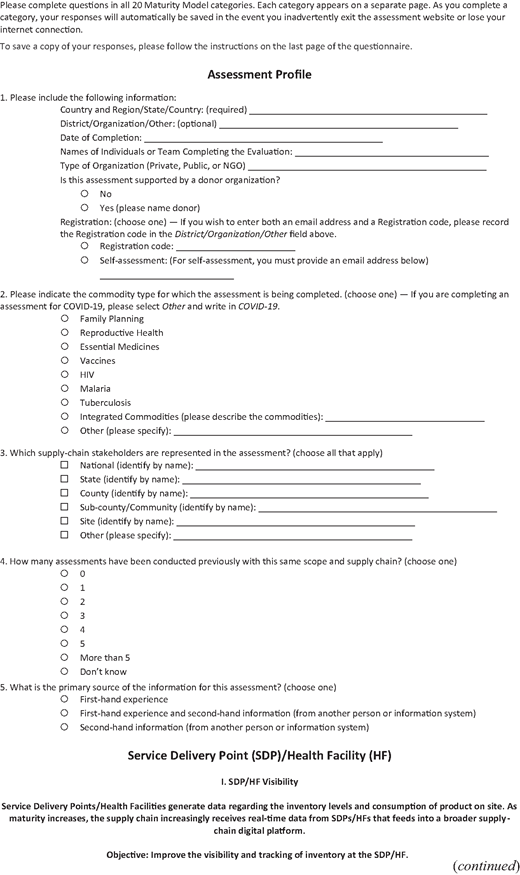
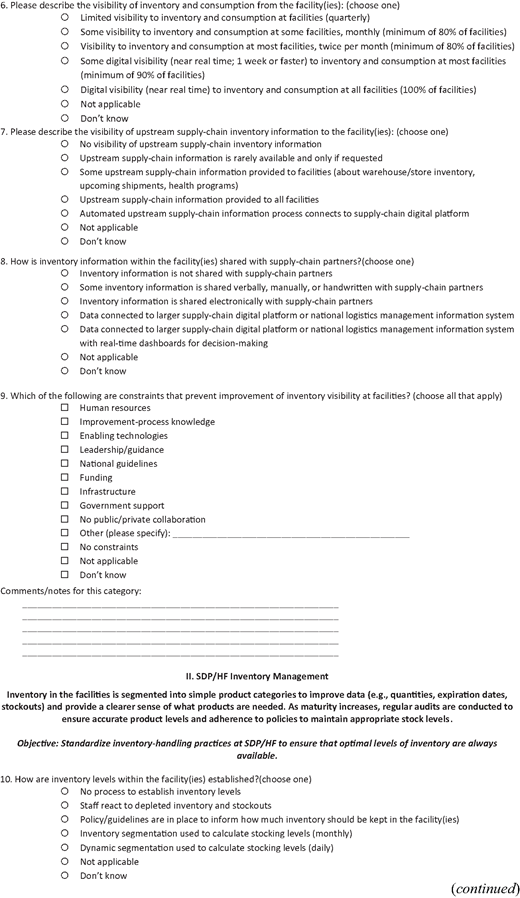
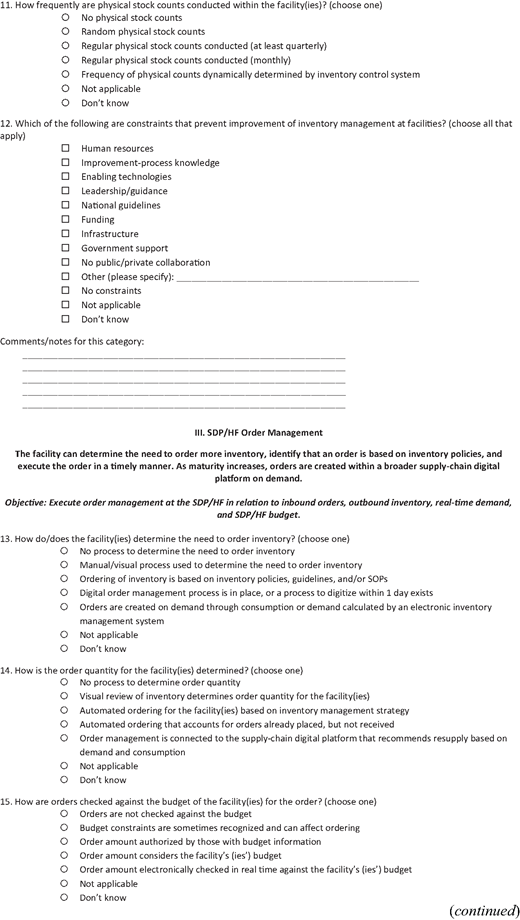
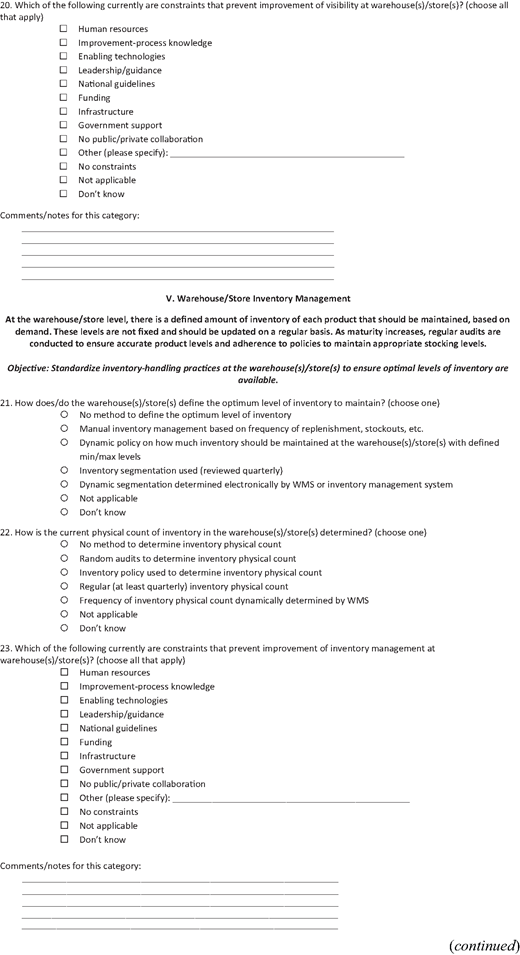
We test the GHSCMM online assessment questionnaire ( Appendix 1) for reliability using test-retest and content validity in a pilot study (Polit and Beck, 2006). The insights gleaned from the qualitative study pilot ( Appendix 2) led to the design of an in-depth interview protocol for the main study (Figure 3). The in-depth interview is necessary from the systems perspective to understand how the hospital network operates to provide medicines to patients. The pilot was important as this study started in 2020 at the beginning of the COVID-19 pandemic. Adjustments were required to minimise the risk of exposure to the disease, like changing face-to-face interviews into telephone sessions.
We use an explanatory multiple-case method with replication logic design (Yin, 2015) to explore medicine stockout performance in five PHSCs, as described in Table 3. Multiple case studies broaden the analysis of result and provide convincing proof of this study’s robustness (Yin, 2015). The case study selection criteria include PHSCs in Kaduna State that operate a DRF programme (Figure 4). Ethical clearance was received from Liverpool John Moores University and the five case study organisations.
3.3 Medicine availability performance measurement
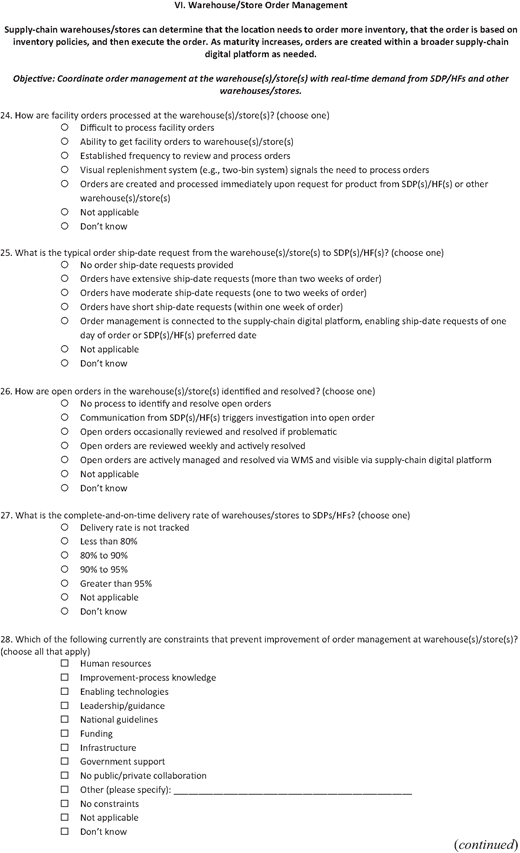
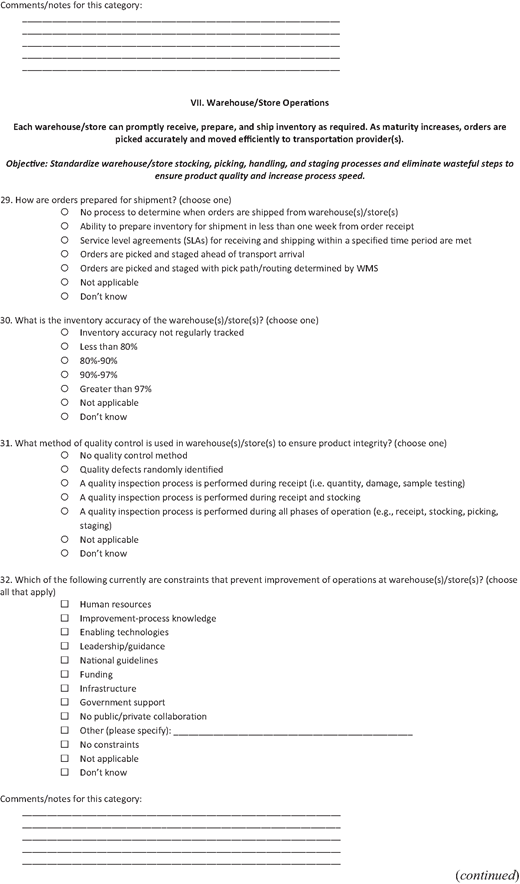
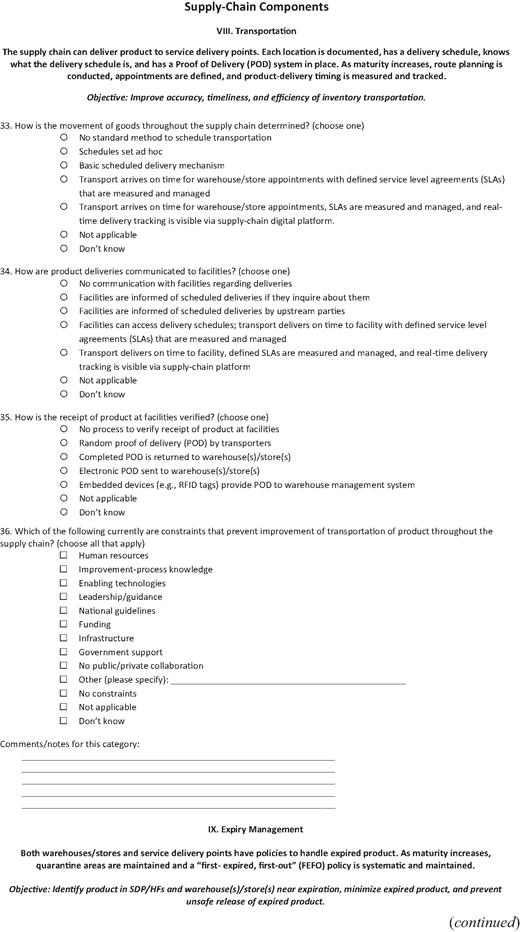
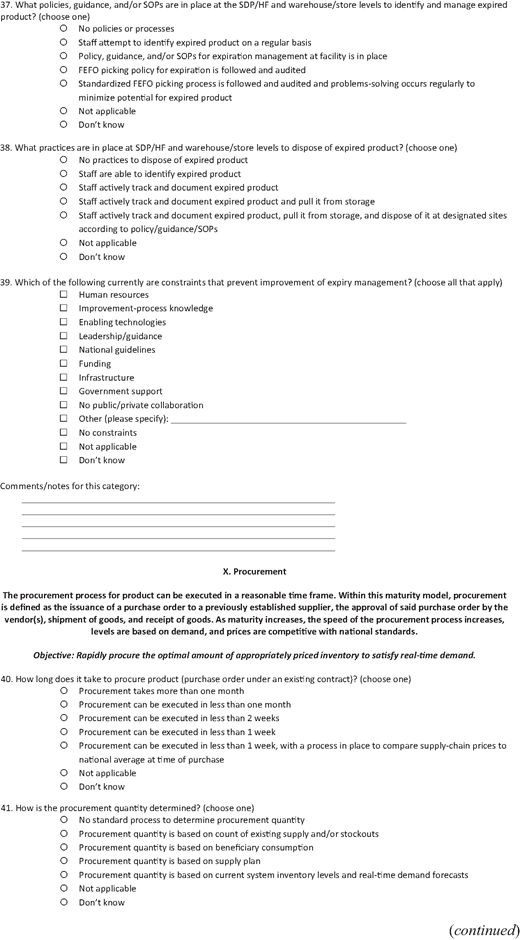
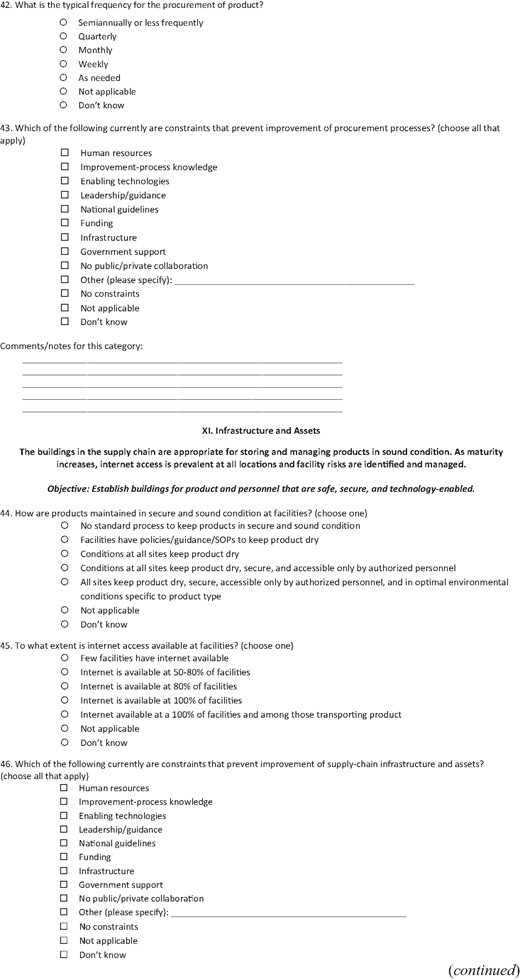
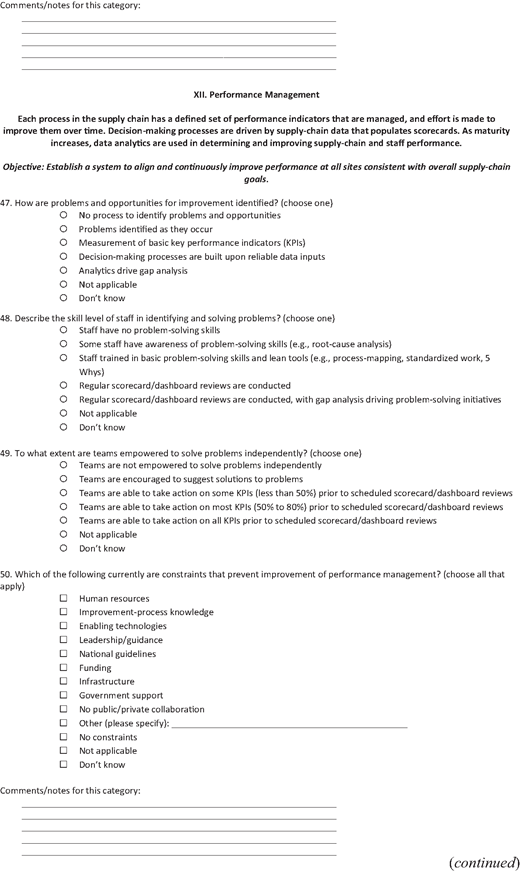
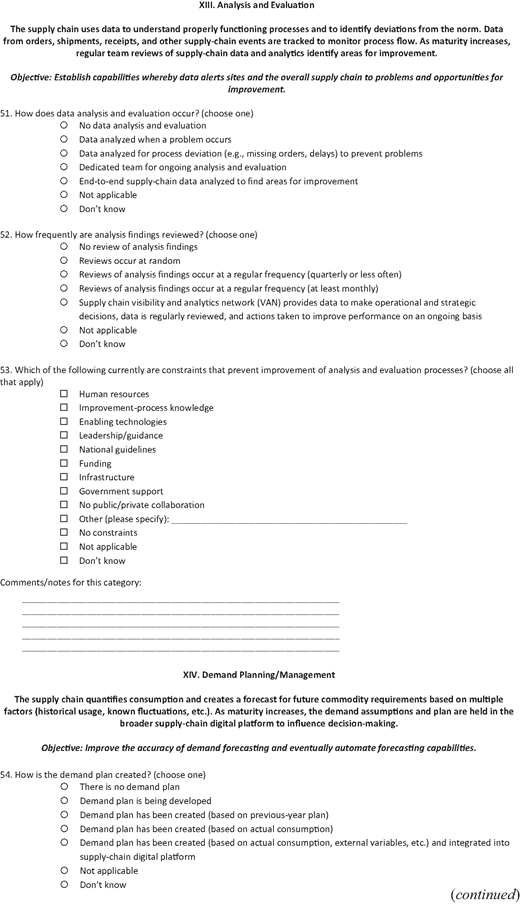
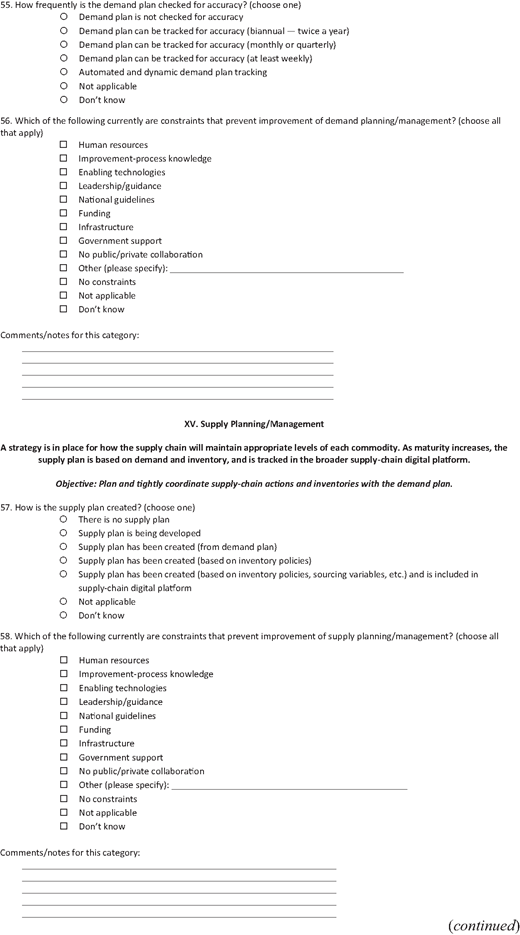
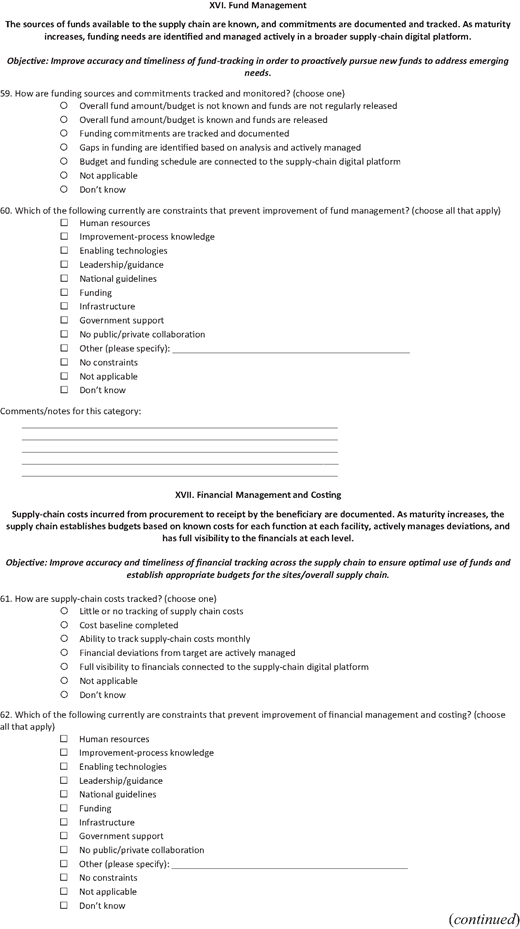
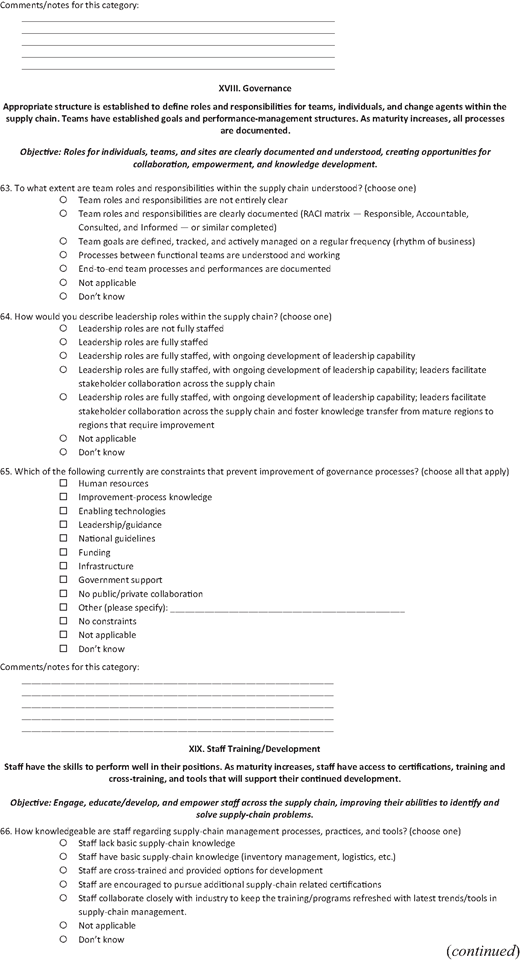
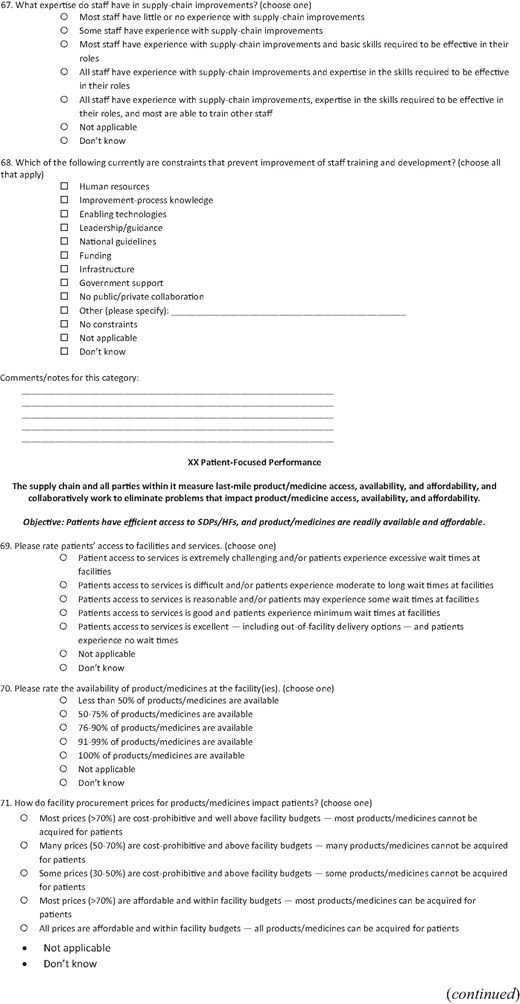
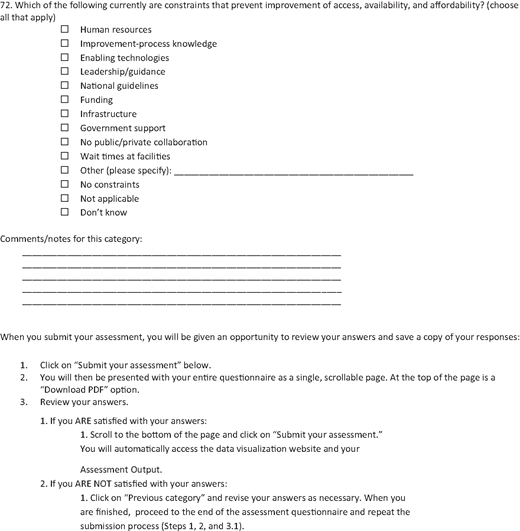
We conduct a 4-h workshop from March to May 2021 in each of the five case study organisations using the ASCM GHSCMM version 8.0 (Association for Supply Chain Management, 2020) to determine five public health SC MAP ( Appendix 1). We administered 72 questions to 78 respondents that were selected using criterion sampling (Miles and Huberman, 1994) from departments responsible for DRF operations with inclusion criteria in Figure 4. Case A had 15 respondents, Case B (9), Case C (19), Case D (20) and Case E (15) respondents, as shown in Table 4. The workshops were a combination of virtual for Case A and face-to-face for Cases B, C, D and E. COVID-19 protocols were strictly adhered to, including physical distancing and use of personal protective equipment during face-to-face workshop sessions. We compute the data electronically and analyse it with Qualtrics software (2021). At the end of each session, we review the results with the respondents.
3.4 Semi-structured key informant interview for the main study
We use in-depth interview questions to elicit responses from heads of pharmacy departments and SC managers selected based on the criteria in Figure 5. The interview provides detailed information about the operations of EM and challenges leading to stockouts. We conducted interviews with five purposively selected respondents from July to August 2021. Each interview session lasted 40–60 min and was recorded and transcribed with Otter software. The respondents included four pharmacists (PH) and one supply chain manager (SM). We use open-text analysis of the transcripts to identify cause and effect statements and draw words and arrow diagrams which is combined and pruned into participants’ mental models (Kim and Andersen, 2012; Turner et al., 2013; Tomoaia-Cotisel et al., 2022). This article uses the Tomoaia-Cotisel et al., 2022 quotation analysis method to build the mental model of each manager in the system with Vensim PLE Plus 2022. The mental models allow us to visualise the system’s structure and comprehend how the participants perceive their operations structure, feedback and delays leading to medicine stockout.
4. Results and discussion
4.1 Global health maturity model assessment output
The GHSCMM findings showed that Case A had previously measured the DRF SC operations once, while Case B, C, D and E have never measured their entire DRF operations. In total, 80% of the case study sites reported never measuring the SCs, while 20% reported measuring operations using the online GHSCMM version once. The average scores for the five SCs were Case A (75%), Case B (66%), Case C (61%), Case D (55%) and Case E (45%) across categories of SC operations. The lowest category and constraint for Case A was infrastructure and assets (50%), fund and financial management was the lowest category and constraint for Case B (46.7%), Case C (40%), Case D (36%) and Case E (28.9%). The results showed that 80% of the case study sites (Case B, C, D and E) had funds and financial management as the constraint, while 20% (Case A) had infrastructure and assets (Table 5).
4.1.1 Medicine stockout performance at case study sites
We identify the connection between the constraints from the MM assessment and medicine stockout performance. The availability of medicines was 50%–75% in Cases A, B, D and E. Cases A, B, D and E reported a 25%–50% medicine stockout. While Case C had availability of less than 50% of the product with a stockout greater than 50%. More than 70% of products were affordable, within the health facility budgets and could be acquired for patients in Cases A, B and C. In total, 30% to 50% of products were cost-prohibitive and above the health facility budget in Cases D and E.
4.2 Case-by-case quotation analysis of interview transcript
System dynamics methods help us explore the structure and feedback driving the dynamics of the DRF system (Sterman, 2000). We use open-text analysis and systems dynamics methods of interpreting quotations from in-depth interviews with participants to draw words and arrow diagrams for each quotation (Kim and Andersen, 2012; Tomoaia-Cotisel et al., 2022). We use the words and arrow diagram to draw CLDs, which represent the mental model of each participant as the hospitals try to provide EM for the treatment of diseases and the perception of DRF operations in meeting the needs of patients.
4.2.1 Case A interview quotation analysis
Case A is experiencing problems in delivering medicines to patients, as observed by the response of the SC manager (SM01). For example, when asked about teamwork and getting medicines to patients:
[…] They should communicate information, get information together to get work done to achieve our goals as an organisation. […] The procurement [team] will need to know what the budget looks like, before they start quantifying or forecasting on what they will […] procure for the organisation. The data visibility [team] will have to come up with the data. […] The warehousing will have to inform the team […] to keep all the commodities that are needed to be procured. There has to be information sharing and communication among teams. It can be in form of […] sharing of reports […] or having data so that everybody could see or […] use the data to create a dashboard that every team can see and interpret what is going on in the organisation.
From this response, we can see that time delay in getting information across teams affects MA. When teams do not get information on time, it reduces the effectiveness of the process and leads to stockout. Information sharing delays affect medicine production by manufacturers. Teamwork and aligning processes increase the ability of cross-functional teams to get medicines to patients and minimises competition among functional units. The MM constraint of infrastructure and assets could be information and technology systems to provide visibility, as shown in the visibility loop where an increase in information sharing increases the production of medicine by the manufacturer. The mental model of SM01 and interpretation captures the feedback and delays in Figure 6. Full details of the quotation analysis for SM01 is shown in Appendix 3.
4.2.2 Case B interview quotation analysis
We observe fund leakages and disharmony between the treasury single account policies and the DRF, which connects to the financial constraint that prevents access to funds for the procurement of medicines. Inadequate staff inventory and procurement management capacity hinder the provision of medicines and information to patients and SC partners, as noted by the pharmacist (PH01):
[…] Only the head of department that has direct communication with the suppliers, no other person is expected to communicate with suppliers regarding any medication or drugs supply, […] the pharmacist communicates with the head of department[…] when the stock gets too low. […] usually the restocking is quarterly, due to procurement bureaucracy, It usually goes into like six months before drugs get replenished.
This statement and the mental model in Figure 7 show that bureaucracy and system’s structure delay information sharing leading to extended periods of stockout. Full details of the quotation analysis are in Appendix 4.
4.2.3 Case C interview quotation analysis
Quantification of medicines for procurement depends on available funds. Using digital platforms to share information with SC partners increases trust, which improves the ability to deliver medicines to the hospital. Transparency and accountability with digital tools increase sales and cash flow in the DRF programme and reduce patient wait time by increasing fill rate as indicated by PH02 statement:
Working together means, we should have a transparent policy, transparent in the sense that what goes on in pharmacy should be open to accounts at any time. […] transparency can be enhanced maybe through electronic data collection. […] when we digitalize or computerise the whole process, everybody will see what is happening at one point or the other. So, there should be no hidden agenda. […] that can only be done when all processes are computerised.
This statement shows that a lack of trust in the system and the perception of a “hidden agenda” affects the procurement process in a reinforcing loop and links to the fund and financial management constraint as shown in Figure 8. See full details of quotation analysis in Appendix 5.
4.2.4 Case D interview quotation analysis
Improving staff procurement capacity and deploying technology platforms ensures on-time ordering before stockout. Supply delays reduce with increasing payment of outstanding invoices, as stated by PH03:
For patients, we make sure there's constant supply of drugs. […] sustainability of medicines so that patients can have access to the drugs it's important to reduce lead times during order to be able to meet customer needs. Make sure we prepare list of medicines that are about to be exhausted on time. […] timely submission of data for procurement. There should be prompt payment of suppliers whenever they deliver medicine.
Delays from manual processes and minimal alignment of the DRF programme lead to a reinforcing stockout loop impervious to the balancing loops of initiating procurement and sending multiple orders (Figure 9). Shrinking inventory due to pilferages and expiries links to MM constraints of financial management, which affect the procurement planning process due to inaccurate inventory records ( Appendix 6).
4.2.5 Case E interview quotation analysis
Delays in medicine shipment led to medicine stockout in a reinforcing loop, while external government funding will increase MA through procurement and better customer satisfaction. Procurement is hampered by bureaucracy as stated by PH04:
[…] The collaboration can be better, if the pharmacist is given more to operate like sometimes, because before a major decision is taken, every part of this team […] has to be carried along, or when […] purchases are made, the approval has to come from somewhere, this can affect how often we get drug into the facility. I think that if the pharmacists are given more free room to operate and we get drug into the facility, […] people can see the need that we don't have to wait for bureaucracy for drugs to be brought in […].
Delays due to an increase in lead times decrease MA of the DRF programme and increase medicine stockout (Figure 10). Measuring performance and working hard, as seen in the performance balancing loop does not prevent stockout as delays in shipment continue to deplete medicine inventory. The inability to pay suppliers on time due to financial constraints and the subsequent reluctance of suppliers to deliver orders traps the system in a vicious cycle ( Appendix 7). See the sample quotation analysis of PH04 in Figure 11.
4.3 Dynamic hypothesis across cases
We combine and prune the CLDs from Cases A, B, C, D and E (Kim and Andersen, 2012; Tomoaia-Cotisel, 2018) to draw the network mental model of medicines stockout in public health-care DRF SCs. The reinforcing feedback loops of sending multiple orders and paying suppliers outstanding invoices increase stockout as shrinkage and associated leakage of funds makes stockout worst. The staff need visibility of the cash collected from patients and available for procurement. Suppliers continue receiving orders for replenishment but cannot deliver the products leading to supply delays as they demand outstanding payments from the hospitals. The staff selling the medicines presuppose that the accounts staff have collected all cash from customer sales. The accounts department cannot pay suppliers for previous deliveries, and suppliers are not delivering medicines fast enough leading to continuous medicine stockout. The balancing loops of initiating procurement and replenishment do not prevent stockout as the suppliers do not get paid on time to enable the delivery of new orders, as shown in Figure 12 below. The dynamic hypothesis of MA proposes the consideration of four internal medicines availability loops, which includes sending multiple orders, restocking medicines, procurement capacity and MA. The five external MA loops of interest include paying suppliers, initiating procurement, trust, increased collaboration and performance. The two network medicines availability loops of collecting cash and sharing information with stakeholders complete the 11 loops driving MA.
A cross-case analysis of mental model variables shows that Case A is gravitating towards network MA performance compared to Cases B, C, D and E, which are more internally focused. Case A considers collaboration, medicine production and equity as critical factors in making medicines available at the network level. We observe that supplier and stakeholder trust is a big issue at the level of external MA performance for all cases. Cases C and E note the influence of government and partner trust on external supplier and customer performance. We observe that price visibility was only mentioned by Case A as a factor in satisfying customer medicine orders. Case B has no variables for network performance, while Cases A, C, D and E indicate the importance of the visibility of medicines in the network (Table 6).
4.4 Discussion
Findings from this study show that all five cases are similar as they struggle with internal and external MA challenges, but Case A is advanced in the provision of medicines as the SC uses data analysis and demand-driven decision-making to provide medicine to patients. Case A also has nine SM, while the remaining cases did not have a single SM. Inadequate SC capacity hinders operations for Cases B, C, D and E, likely the reason behind their slow external and network progress towards MA. Staff capacity is a requirement for medicine stockout performance improvement. In addition, the network orientation of Case A towards collaboration, medicine production and equity in increasing MA supports our theoretical proposition for this case study that MA only increases in organisations with a network systems perspective and not just internal and external organisational focus to increasing EM availability. Monitoring medicines stockout alone does not increase MA as internal, external and network variables drive the provision of medicines in PHSCs. Exploring collaboration with manufacturers and medicines suppliers can reduce stockout by fostering trust and visibility. The price visibility variable observed in Case A improves trust in the network, which leads to an increase in medicines availability corresponding to Nakambale and Bangalee’s (2022) findings. We use grounded theory and case study approach for model conceptualisation by rigorously interpreting interview data to develop a dynamic hypothesis and identify the concepts of internal, external and network MA. Our mixed-method research helps us to assess the relationships between variables and compare data to validate the working hypothesis. In addition, the multiple case study method integrates findings across cases into a general theory of MA (Kopainsky and Luna‐Reyes, 2008). This study’s dynamic hypothesis mental model helps users dissect and understand the underlying variables behind medicine stockout in their SCs and shift their thinking towards network MAP. Understanding the medicine SC as a network helps users see beyond the boundaries of their organisations to explore other external variables affecting suppliers and customers, such as trust and price visibility. A lack of understanding of dynamic health-care systems is likely responsible for the failed implementation of strategies to reduce essential medicine stockouts in the performance-based financing system (Sieleunou et al., 2020).
The network mental model combines the perceptions of the five participants, SM01, PH01, PH02, PH02 and PH04, across five cases to understand the behaviours driving medicine stockout and serves as a dynamic framework for shifting participants’ mental models in health-care SCs for network medicine stockout improvement. The network model gives a clear picture of the behaviours that need to be addressed to reduce medicine stockout and improve availability of medicines. Systems thinking and dynamics clarifies the structure, feedback and delays leading to stockout in the DRF system. Increasing MA at the hospital level is sub-optimization when medicine production constraints from external suppliers and price sensitivity of customers are not considered. We propose the network mental model as a grounded dynamic theory of MA in revolving fund SCs. The network orientation of Case A might be responsible for the higher MAP, as observed with the MM assessment. Even though Case E considers visibility for network performance, it is the only organisation with staff attrition which could explain its poor performance during the MM assessment. Staff attrition limits the capacity to deliver the needed services even when funds are available to procure medicines. Overworked staff will make mistakes in the customer fulfilment process and increase lead times, further reinforcing staff dissatisfaction and reducing internal MA performance.
5. Conclusions
Our study identifies the dynamic variables driving medicine stockout in PHSCs. The dynamic network mental model shifts the perceptions and understanding of health-care SC practitioners away from internal to a network systems orientation of increasing MAP. The network model serves as a dynamic theory of MA and a learning tool for advocacy to stakeholders. The model helps users reflect on their roles and stakeholders towards improving MAP by working on the structure, feedback and delays in the DRF system. We recommend that Cases B, C, D and E collaborate and leverage the SC capacity of Case A to reduce capacity gaps. Knowledge sharing across the SCs will improve the network’s MAP since they all share the same suppliers, customers and other stakeholders as reference hospitals. The five cases can explore other areas of synergy like pooled procurement, sharing technologies and best inventory management practices to increase the availability of EM to serve patients.
Our study bridges the gap between practice and theory by proposing a dynamic theory of MAP in PHSCs. We contribute to the systems thinking and dynamics body of knowledge by fusing five PHSCs mental models into a network model. This study helps SC managers see the mental models of medicine stockout and the dynamic complexity of increasing MA building on Tomoaia-Cotisel et al. (2022) study. We develop a dynamic theory of MA in revolving fund SCs to bridge the gap between theory and practice and support our theoretical proposition that MA only increases in organisations with a network systems perspective and not internal and external organisational focus to increasing EM availability.
Healthy citizens contribute positively to societies and the economic development of nations. This research will benefit public policymakers and hospital managers as they strive to improve MA by providing a dynamic systems perspective of health-care SCs to address the challenges towards achieving goal three of SDGs. Hospital managers and policymakers will design sustainable policies with an increased understanding of system feedback and behaviours to improve essential MA and save lives, as noted in Aristovnisc’s, 2015 study. The findings from this study can be generalised to revolving fund PHSCs in other African countries and can help increase MA in other donor-supported programme SCs.
The limitations of this study include the need to expand the model boundary to gain insights from other stakeholders like medicine manufacturers and suppliers, which we will be addressing in subsequent studies. The dynamic theory will be tested and validated in subsequent studies. We also need to build a stock and flow model for simulating and testing policies to improve the availability of medicines in the PHSCs. Finally, we will expand this study by modelling and simulating policies to reduce medicine stockout and improve availability in the DRF network.
The authors would like to thank the management and staff of the National Ear Care Centre, Kaduna State Health Supplies Management Agency, National Eye Centre, Ahmadu Bello University Teaching Hospital, and Federal Neuropsychiatric Hospital who participated in this study.
References
Appendix 1. Global health supply chain maturity model v8.0

Appendix 2. Pilot study interview protocol
Stage 1 – Pilot key informant interview questions
How does the organisation carry out demand forecasting of medicines?
How does the organisation carry out procurement of medicines?
How does the organisation carry out warehousing of medicines?
How does the organisation carry out inventory management of medicines?
How does the organisation carry out delivery of medicines to patients?
Which departments/units are responsible for making medicines available to end-users?
Has the organisation experienced stock out of medicines?
How do you manage stockout of essential medicines?
Stage 2 – Revised in-depth interview questions derived from pilot study to be used for the main study
How do inter-departmental teams (pharmacy, accounts, procurement, etc.) work together in the organisation to make medicines available?
What should be done to improve how teams work together?
Can you describe how your inter-departmental teams work with your patients and suppliers to provide medicines?
Can you describe how the teams work with suppliers to make medicines available?
In your own perspective, how can inter-departmental teams improve working relationship with patients?
In your own opinion, how can inter-departmental teams improve working relationship with suppliers?
In your own opinion, how can inter-departmental teams improve working relationship with critical stakeholders (donor/partner, government/regulators/civil society organisations (CSOs), etc.)
Can you describe how you share information about medicines and other health supplies with patients, suppliers and other critical stakeholders (donor/partner, government/regulators/CSOs)?
Describe how you share logistic information (stock level, available medicines, expiries, expected medicines, etc.)?
In your opinion, what should be done to improve information-sharing with patients, suppliers and other critical stakeholders (donor/partner, government/regulators/CSOs)?
In your opinion, what do you think about the use of digital technology for making medicines available?
What type of digital technology do you have experience with in making medicine available?
In your opinion, explain how would you measure the performance of medicine availability in your organisation?
In your opinion, describe how the inter-departmental teams can improve performance by working with patients, suppliers and other critical stakeholders (donor/partner, government/regulators/CSOs)?


