Whilst there is a growing body of research which discusses the use of remotely piloted aircraft systems (RPAS) (otherwise known as “drones”) to transport medical supplies, almost all reported cases employ short range aircraft. The purpose of this paper is to consider the advantages and challenges inherent in the use of long endurance remotely piloted aircraft systems (LE-RPAS) aircraft to support the provision of medical supplies to remote locations – specifically “medical maggots” used in maggot debridement therapy (MDT) wound care.
After introducing both MDT and the LE-RPAS technology, the paper first reports on the outcomes of a case study involving 11 semi-structured interviews with individuals who either have experience and expertise in the use of LE-RPAS or in the provision of healthcare to remote communities in Western Australia. The insights gained from this case study are then synthesised to assess the feasibility of LE-RPAS assisted delivery of medical maggots to those living in such geographically challenging locations.
No insuperable challenges to the concept of using LE-RPAS to transport medical maggots were uncovered during this research – rather, those who contributed to the investigations from across the spectrum from operators to users, were highly supportive of the overall concept.
The paper offers an assessment of the feasibility of the use of LE-RPAS to transport medical maggots. In doing so, it highlights a number of infrastructure and organisational challenges that would need to be overcome to operationalise this concept. Whilst the particular context of the paper relates to the provision of medical support to a remote location of a developed country, the core benefits and challenges that are exposed relate equally to the use of LE-RPAS in a post-disaster response. To this end, the paper offers a high-level route map to support the implementation of the concept.
The paper proposes a novel approach to the efficient and effective provision of medical care to remote Australian communities which, in particular, reduces the need to travel significant distances to obtain treatment. In doing so, it emphasises the importance in gaining acceptance of both the use of MDT and also the operation of RPAS noting that these have previously been employed in a military, as distinct from humanitarian, context.
The paper demonstrates how the use of LE-RPAS to support remote communities offers the potential to deliver healthcare at reduced cost compared to conventional approaches. The paper also underlines the potential benefits of the use of MDT to address the growing wound burdens in remote communities. Finally, the paper expands on the existing discussion of the use of RPAS to include its capability to act as the delivery mechanism for medical maggots.
1. Introduction
The state of Western Australia (WA) is not only vulnerable to disasters such as cyclones, it is also extremely sparsely populated with isolated communities frequently located at some distance from the single north/south highway. For example, the Federal Constituency of Durack (which covers much of the north of the state) has an area of some 1,629,858 km2 – approximately the area of France, Germany, Spain and Portugal combined (or the states of California, Texas and Montana) – but has only just under 100,000 registered electors (Australian Electoral Commission, 2016).
Unsurprisingly, as noted by the Australian Institute of Health and Welfare (2016), in 2009-2011 those living in remote and very remote areas of the country had mortality rates 1.4 times higher than those living in major cities. Examples of this disparity include coronary heart disease with mortality rates 1.2-1.5 times higher, death following land transport accidents >4 times higher, and death rates due to diabetes between 2.5-4 times higher. Many of these conditions could be ameliorated by the timely and efficacious treatment of wounds for which maggot debridement therapy (MDT) is a potential solution.
MDT is the use of fly larvae for the treatment of problematic wounds that contain dead tissue and/or are infected as a result of trauma or a chronic inability to heal. MDT was widely used in the 1930s and 1940s, and in recent decades it has enjoyed a revival as an efficacious therapy in modern clinical wound care (Kruglikova and Chernysh, 2013). In particular, MDT is a highly attractive approach for austere and remote community wound care because, as distinct from surgical debridement, it can be performed by nurses, making it suitable for telemedicine treatment. Likewise, in the case of disasters where the patient burden is overwhelming, it can free up physicians to treat more demanding injuries (Stadler et al., 2016). However, the use of MDT requires the temperature controlled transport of medical maggots (between 6 and 25°C), and application to the wound within 48 hours of dispatch (Čičková et al., 2015). This is clearly challenging to achieve in a timely and cost-efficient manner in the case of remote communities that are poorly serviced by conventional transport infrastructure.
In parallel, there has been considerable publicity surrounding the development and use of remotely piloted aircraft systems (RPAS) (otherwise known as unmanned aerial vehicles (UAVs), Unmanned Aerial Systems or “drones”) as a means of delivering supplies in both a commercial and humanitarian context (Tatham et al., 2017). Thus, companies such as Amazon (2016) and Domino’s (2016) are trialling the use of RPAS to deliver parcels/pizzas, whilst a number of case studies relating to the movement of medicines by RPAS have recently been published by Swiss Mine Action (FSD). These reports are part of a two-year project to determine if, how and under what circumstances RPAS can add value to humanitarian operations in disaster areas (Soeliso et al., 2016).
Indeed, arguably, RPAS may become the preferred mode of delivery for time- and temperature-critical medical goods such as medicines, blood, vaccines and pathology specimens. This is exemplified by recent report in which RPAS were used to deliver snake bite anti-venom and blood samples to a remote region of Peru. This was achieved in 35 minutes, compared with the six hours that are normally required to access the remote community of Pampa Hermosa (Mosur, 2016). Thus, in the context of remote area wound care, it is highly relevant to investigate whether long endurance remotely piloted aircraft systems (LE-RPAS) can also provide the transport medium through which medical maggots can be supplied for MDT.
2. Aim
With this introduction in mind, the aim of this conceptual paper is to review the benefits and challenges inherent in the use of LE-RPAS to transport medical maggots for the treatment of wounds in remote communities.
In doing so, the paper will integrate three lines of investigation: first, the potential for the operation of LE-RPAS (as distinct from RPAS in general) in the provision of humanitarian aid. Second, the benefits and challenges inherent in the use of MDT in disaster, development and remote area medicine. Third, a qualitative case study exploring the feasibility of using LE-RPAS to make emergency medical deliveries to a remote community in the north west of WA.
To achieve the above aim, the next section will provide an overview of the use of MDT, after which Section 4 will summarise the current status of RPAS. Section 5 contains a review of the relevant literature, after which Section 6 draws on a series of interviews to discuss the benefits and challenges of the use of RPAS as the delivery mechanism for medicines in remote WA. Section 7 migrates the learning from the case study to the broader disaster response/development context, before the final sections consider the steps that would be needed to operationalise the use of RPAS to support MDT.
3. MDT
MDT (otherwise known as larval debridement therapy) typically employs the larvae of the green bottle fly Lucilia sericata to remove dead or dying tissue from a patient’s wounds, thereby controlling infection and stimulating regeneration and wound healing (Parnés and Lagan, 2007). Although MDT was very popular in the 1930s and 1940s, the convenience of modern antibiotics led to a post-second world war decline, and subsequent demise, in its use. However, since the late 1980s the situation has been changing with the USA, the UK and Germany leading the renaissance (Whitaker et al., 2007). This has resulted in maggot production facilities being developed in many countries including the USA, Europe, Africa, South-East Asia and Australia.
From a clinical perspective, there is clear evidence of the efficacy of MDT in the treatment of wounds from a broad number of causes (Sherman et al., 2007; Sun et al., 2014), whilst both the clinical and the biochemical principles of MDT-mediated wound healing have been identified and are under active investigation (Cazander et al., 2013; Kruglikova and Chernysh, 2013; Pritchard et al., 2016). Likewise, there are clear guidelines and recommendations for MDT in clinical and nursing practice, both in hospital and community care (Jones, 2009; Hyfywedd and Gyfan, 2013; Chadwick et al., 2015).
In addition, MDT can support the management of healthcare bottlenecks because, as distinct from surgical wound care performed by physicians, MDT can be applied and managed by nurses, thereby allowing physicians to focus on other tasks. This is a key consideration in the aftermath of a disaster when the number of patients vastly exceeds the assistance that is available, or when the distances are such as to limit the ability for doctors to visit their patients on a regular basis (Stadler et al., 2016).
The maggots themselves are bred in sterile conditions, placed into sterile primary packaging (generally plastic specimen jars or tubes) and then shipped in insulated cooler boxes with cool elements. The transit temperature should be maintained between 6-25°C, and for optimal performance, application to the wound should occur within 48 hours of dispatch to prevent maggots from dying prematurely (BioMonde, n.d.; Čičková et al., 2015).
The number of medical maggots required per wound, depends mainly on the wound area and, although dosage recommendations vary from 5 to 30 maggots per cm2 of wound, Wilson et al. (2016) have established that the ideal number of maggots for MDT lies somewhere between 5 and 8 per cm2. Two dressing technologies are used to retain maggots on the wound. In the first (also referred to as “free-range” application), the maggots are applied directly to the wound and retained via a securely fastened netting (Steenvoorde et al., 2005). The alternative is the application of the medical maggots sealed inside porous mesh bags that permit feeding but retain the maggots within, thus making the treatment more convenient (Grassberger and Fleischmann, 2002). After use, the maggots and soiled dressing material is considered clinical waste and must be disposed of in line with local environmental health/waste management or World Health Organisation (WHO) guidelines (Fear, 2004).
It is a prerequisite for the use of MDT that the treatment is acceptable to patients on emotional, cultural, social and religious grounds but, in relation to the general acceptability of MDT, research by Petherick et al. (2006) and Spilsbury et al. (2008) indicates that there is no evidence of wide-spread patient resistance towards MDT. Moreover, if there is a need for medical maggots to be raised meat-free, halal or kosher, then there are production methods that cater for such niche markets (Zhang et al., 2009).
Finally, and importantly in the context of this research, trials undertaken by the Walter Reed Army Institute of Research indicate that medical maggots are able to withstand conditions found during military evacuation and transfer flights (Peck et al., 2015), and thus there is no a priori reason why they should not be transported as part of the payload of an RPAS mission.
4. RPAS
First, it should be noted that the use of the terminology “RPAS” reflects the nomenclature adopted by the International Civil Aviation Authority, and also emphasises the end-to-end nature of such a system. RPAS is, therefore, preferred to alternatives such as “UAVs” or “Drones” as these tend to focus on the flying vehicle rather than the system as a whole. Thus, when referring to the aircraft (as distinct from the overall system), the acronym RPA (or RPAs) will be used.
RPAs themselves range from small rotary wing platforms that cost around US$2,000 (DJI, 2016) to high end aeroplanes such as the USAF Global Hawk that is the size of a small executive jet and has a unit cost of >US$130 M (United States Government Accountability Office, 2013). However, their key feature is the ability to be flown by an operator who remains on the ground at a distance from the aircraft itself. Although such RPAs can be operated with a payload that includes video or still cameras, in the context of this research the core capability is that of transporting a removable payload such as equipment or medicines (Amazon, 2016; Mosur, 2016; Wells and Stevens, 2016).
RPAs can employ either fixed or rotary wings (or a hybrid combination thereof), and be powered by fuel or battery-driven engines – as a result their endurance varies from minutes to hours, with a summary of three exemplars shown in Table I. However, and as will be explained in greater detail in Section 6, this paper will review the potential use of the class of platforms referred to as “LE-RPAS”, “Low Altitude Long Endurance RPAS” or, using the United States Department of Defence terminology, “Group 2 RPAS” (US Army, 2010) which typically are able to fly for some 8-15 hours. Given the unsettled nature of the nomenclature that is found in the literature, the LE-RPAS variant will be used for both its descriptive benefit and also for simplicity.
5. Literature review
Given the potential benefits of using RPAS to transport medical maggots over long distances where the terrain is unsuitable for regular road traffic, a review of the literature was undertaken based on Kunz and Reiner’s (2012) methodology in which the following databases were searched: ABI/INFORM Complete (ABI), Business Source Complete (BSC) and Web of Science (WofS) for academic journals.
5.1 Use of RPAS in disaster response
The review was carried out in two phases, the first of which was focussed on the use of RPAS in a disaster response, and the second in to respect their potential use in support of medical activities. To simplify the analysis, these will be presented separately, thus the first used the keyword and Boolean operator string:
(“unmanned aerial vehicle” OR “UAV” OR “unmanned aerial system” OR “UAS” OR “drone” OR “remotely piloted aircraft system” OR “RPAS”) AND (“disaster response” OR “emergency response” OR “humanitarian logistics”) in the time frame 2005-2016.
It will be noted in this regard that the search string parameters were kept relatively broad as a way of helping to ensure that all relevant contributions were captured. The starting point for the search timeframe was based on the first reported use of RPAs in a humanitarian context which took place in the aftermath of the 2005 Hurricane Katrina (Tatham, 2009).
The results of this review (Table II) were used to update an earlier review by Tatham et al. (2017) which discussed the general operation of RPAS in support of the logistic response to disasters. Each of these papers was examined and, notwithstanding the search string, 41 were found to be not directly relevant as they discussed, for example, the use of RPAS in agriculture (Zhang and Kovacs, 2012) or the broader challenge of post-disaster information management (Milliken and Linton, 2016). This category also included literature reviews of the HL field (such as those of Kunz and Reiner, 2012; Leiras et al., 2014) and more general discussions of the HL challenges offered by Tatham and Pettit (2010) and by Tatham and Christopher (2014), both of which mentioned the potential use of RPAS without offering any specific analysis.
As can be seen from Table II, a significant proportion of the literature was devoted to the actual operation of the RPAS and their associated sensors. These papers considered ways in which the RPAS capabilities could be improved through, for example, the use of particular mathematical algorithms. Contributions included discussion of route planning (Zheng et al., 2015), collision avoidance techniques (Holt et al., 2014) and dispatching and loitering policies (Bednowitz et al., 2014). However, given the focus of this research into the ways in which LE-RPAS might support the transport of medical supplies at a conceptual level, these papers are considered to be out of scope.
Unsurprisingly given the growth of micro/miniature RPAS, a significant element of the literature was related to their operation. Examples included their use in a post-earthquake response (Nedjati et al., 2016), their control by means of smart-phone technology (Wong et al., 2015), and their potential application in a civil engineering context (Liu et al., 2014). Again, however, these are considered out of scope in view of the focus of this research.
A particularly important theme emerging from the literature was discussion of the ethical operation of RPAS and the general implications of the restrictions imposed by various national aviation authorities. Whilst multiple authorities across the globe are actively engaged in developing regulations that provide a balance between concerns related to safety and privacy vs the potential benefits of RPA operations, it is clear that the current legislative environment (both in Australia and other countries) severely restricts their use. As will be discussed further in Section 7, this is a key area of challenge that will need to be overcome if RPAS are to become part of the normal mechanism for the provision of medical support to remote communities.
A key element of this challenge was found in the discussion of the ethical aspects of the use of RPAS which reflected their migration from their original role as a military weapons (i.e. armed “drones”), and the resultant ethical issues surrounding their use. This element of the challenge is summarised by Soesilo and Sandvik (2016) who offer the results of recent research on the perceptions and applications of RPAS in a humanitarian context.
This research consisted of a survey of humanitarian organisations, donors, United Nations (UN) agencies, national governments, private business and other respondents. Whilst the response rate was not provided, the survey was reported to have elicited 194 inputs during the period 15 November 2015-15 January 2016. The results of the research can be summarised in the authors’ observation that:
A majority of survey respondents [66%] expressed confidence that drones have the potential to strengthen humanitarian work, and that drones can greatly enhance the speed and quality of localized needs assessments, while a significant minority [22%] viewed the use of drones in humanitarian work unfavourably
(Soesilo and Sandvik, 2016, p. 3).
Whilst the authors of this report fully acknowledged the limitations of their work (p. 4), they nevertheless argued that it provides a baseline against which future trends can be determined.
In particular, the survey respondents emphasised (on the positive side) the ability of RPAS to support various logistic processes including needs assessment and material delivery; whilst on the negative side, the core concerns were related to their association with military applications and their potential to increase the “distance” between the beneficiaries and the aid workers. Survey respondents also underlined the need for clear/improved guidance, whilst the development of a dedicated RPAS service for humanitarian operations received considerable support (61 per cent).
A number of other themes emerged from the literature review including the use of RPAS for mapping (Choi et al., 2009; Piero et al., 2015), for the post-disaster structural evaluation of buildings (Hong et al., 2015), fire detection (Ambrosia et al., 2011), emergency communications (Tuna et al., 2014), environmental monitoring (Bogue, 2011; de Sousa and Goncalves, 2011) and search and rescue (Bogue, 2016) but, again, these are out of scope.
More focussed contributions were found within two papers, namely: Tatham (2009) and the American Red Cross (2015). In addition, by following the reference trails, two further important contributions were located in the form of Office for the Coordination of Humanitarian Affairs (OCHA) (2014) and Soeliso et al. (2016).
First, the paper by Tatham (2009) was an early contribution to the debate in which the author discussed the suitability of RPAS to support the initial needs assessment in the aftermath of a rapid onset disaster, and in which he suggested that such systems do, indeed, have potential to support this process. Whilst this paper did not specifically, include the use of RPAS as a transport mechanism, arguably it represents the first discussion of their use in a disaster response/development logistic context.
Second, OCHA (2014) was one of a series of discussion papers that are designed “[…] to serve as a basis for promoting discussion and policy analysis […]” (inside cover). The paper surveyed the recent use of RPAS and its analysis suggested that: “One promising area is delivery of vaccines or other small medical supplies […]” (p. 8). However, it went on to note that “[…] the range limits on small UAVs (perhaps 40km) would make them unviable where villages are too widely spaced like much of the DRC [Democratic Republic of the Congo]” (p. 8).
This latter observation captures an important theme that emerged from the literature in which, as far as the authors have been able to ascertain, discussion around the use of RPAS in a humanitarian context generally, and in relation to their potential use for the delivery of medical supplies, only considers small (i.e. US DOD Group 1) RPAs. Such systems are similar to the DJI Inspire, the capabilities of which are summarised in Table I.
Thus, whilst authors such as Mendelow (2015) and Kuo (2016) gave a clear view of the potential for RPAS in the medical supply context, the case studies that formed part of the final report from Swiss Foundation for Mine Action (FSD) reflect the reality of the endurance challenge (Soeliso et al., 2016). For example, the authors of the final FSD report described a project that took place in Papua New Guinea (PNG) in which Médecins Sans Frontières, together with the commercial company “Matternet”, used multi-rotor RPAs (similar to the DJI) to collect tuberculosis sputum samples and transfer them to a central testing laboratory (Soeliso et al., 2016).
Further details are contained in the case study of this trial (FSD, 2016) but, in particular, the distance of the furthest clinic was some 40 km (25 miles) from the base hospital. However, given that the particular RPA being employed (similar to the DJI in Table II) had a range of only 25 km (15 miles) it was necessary to fly to an intermediate location and undertake a battery swap on both the outbound and return legs. This was noted as a significant constraint and as a result, the report from this trial recommended that “[…] platforms should be hybrid designs, automatic and very simple to use with a range minimum of 60 km and a minimum payload capacity of 1 kg” (Soeliso et al., 2016, p. 37). On the positive side, the actual transit time by RPAS (including battery exchange) was some 55 minutes vs 4 hours by car – a journey time prone to further delays due to bad weather and/or degradation of the roads (FSD, 2016).
A further observation in relation to this case study is that it reflects the speed of development of RPAS. Thus, the PNG trial was undertaken in 2014 using a quadcopter with a range of some 25 km (15 miles) whereas, in the broadly similar example of the movement of medicines in Peru that took place in 2016, the quadcopter had a range of 40 km (25 miles) (Mosur, 2016).
The American Red Cross (2015) undertook a comprehensive review of the potential of RPAS in a disaster response context. Their report concludes that:
Aerial drones [RPAS] are one of the most promising and powerful new technologies to improve disaster response and relief operations. […] When a disaster occurs, drones may be used to provide relief workers with better situational awareness, locate survivors […] perform structural analysis of damaged infrastructure, deliver needed supplies and equipment, evacuate casualties, and help extinguish fires – among many other potential applications (p. 4).
The report went on to analyse previous cases where RPAS have been used and, in particular, suggested that one of appropriate tasks to be “Supply Delivery” (p. 7), and the report also indicated a number of ways in which RPAS could provide such a capability in a medical context – with a particular emphasis on the use of large payload RPAs.
The final important source was the website of the UAViators organisation (www.uaviators.org). This supports a community of practitioners who are striving to develop improved ways of using RPAS to support those affected by disasters. Not only does this website contain a large number of case studies (including those found in Soeliso et al., 2016), but it also provides a set of operational guidelines (UAViators, 2016) which are currently under consideration by the UN, IFRC and NGO communities, and which are recommended for use by OCHA (2014).
5.2 Use of RPAS in medical response
As indicated above, the second phase of the literature review focussed on the potential use of RPAS in a medical context and, again using Kunz and Reiner’s (2012) methodology, the following databases were searched: ABI/INFORM Complete (ABI), BSC and WofS for academic journals using the following keyword and Boolean operator string:
(“unmanned aerial vehicle” OR “UAV” OR “unmanned aerial system” OR “UAS” OR “drone” OR “remotely piloted aircraft system” OR “RPAS”) AND (“medical”) in the time frame 2010-2016.
The timeframe used for this element of the review reflected the relatively recent indications of the use of RPAS as a transport medium that emerged from the initial review (Section 5.2) (Table III).
In the case of the ABI database, notwithstanding the large number of papers identified, in practice only one (United Nations Population Fund (UNPFA), 2016) was relevant. Of the 11 papers returned by the BSC search, only one (Sachan, 2016) discussed the issues at the core of this research. In respect of the WofS search, it returned 24 papers, of which six were relevant, and these will be discussed in the following paragraphs.
At the macro level, the paper by Schroeder and Meier (2016) discussed the whole area of the potential impacts of automation in a humanitarian context. In doing so, the authors emphasised the fact that the current generation of RPAS represents the “first wave of robotics to impact the humanitarian space” (p. 24), and they argued that it will not be the last. In particular, they envisaged a scenario in which trained medical workers identify the needs in remote communities and arrange for the supply of appropriate medicines, etc. by RPAS, with commensurate savings of time and cost. This, as well be seen in Section 6, is precisely the arrangements that have been studied in the field element of this research.
A similarly relatively strategic discussion was offered by Sachan (2016) who summarised the current use of RPAS for the delivery of medicines, although the author cautioned that the movement of such materials must reflect their relative fragility. This paper also made mention of a “proof-of-concept” trial undertaken by the United Nations Population Fund in which contraceptives were delivered by RPAS to a remote part of Ghana (UNPFA, 2016). Importantly, both of these contributions were focussed on the use of DJI (or equivalent) short range RPAS (see Table I).
The paper by Haidari et al. (2016) reviewed the economic and operational value of RPAS to transport vaccines in LMICs and is, thus, highly relevant to this research. These authors used a simulation model of the WHO’s immunisation programme in Southern Mozambique. Whilst the actual RPAS on which the research was based has not been specified, it was stated to be battery powered with a range of 75 km, and capable of carrying 1.5 L of vaccines. By implication, therefore, it is similar to the DJI RPA described in Table I. Based on their simulation, the authors indicated that, not only did the use of an RPAS (rather than the traditional multi-tiered land transport system) improve the availability from 94 to 96 per cent, but it also reduced the cost/dose by 20 per cent.
Following a broadly similar theme, Pulver et al. (2016) conducted a computer-based analysis of the improved response time in the event of a cardiac arrest through the use of RPAS fitted with an automated external defibrillator and compared this with traditional vehicular-based emergency medical services (EMS). The study focussed on Salt Lake County in Utah, USA, and concluded that, under current EMS approaches, only 4.3 per cent of cardiac arrests are reached within one minute. However, the authors argued that, by implementation of a network of RPAS based around 39 of the existing EMS stations together with 12 new locations, this could be increased to 90.3 per cent. A similar approach has also been described by Prigg (2014) in a Northern European context.
Thiels et al. (2015) addressed the highly relevant potential use of RPAS to transport medical products, including blood samples and derivatives to hospitals, mass casualty events and offshore locations in the event of critical demand. The authors’ US-based research provided a conceptual analysis of the associated benefits and challenges but, although acknowledging the existence of LE-RPAS, it used a short range multiple-rotor RPA (similar to the DJI, Table I) as the exemplar aircraft. The research concluded that “the use of UAVs would be a viable mode for the transport of medical products in times of critical shortage” (Thiels et al., 2015, p. 108), and that the costs are likely to be significantly lower than those of conventional medical transport. Importantly, these authors also stressed the need for appropriate packaging to minimise the risk of exposure and/or tampering during transit – clearly a relevant issue in the MDT context.
Unsurprisingly, the challenge of the ethical use of RPAS also featured in the literature (e.g. Emery, 2016), and this has led to a recommended set of operational rules published by the US Association of Air Medical Services (Lillian, 2015).
5.3 Summary of the literature relating to the use of RPAS in a humanitarian context
This section of the paper will summarise the emerging cannon of academic literature that discusses the use of RPAS to support post-disaster/development-focussed logistic activities, noting that information related to the specific use of such systems to transport medical supplies is limited. It will not discuss the specifics of MDT per se as these as this have been outlined in Section 3.
Although the literature is almost entirely focussed on the use of short range RPAS (such as the DJI), the discussion around the relative benefits of RPAS (when compared to alternative transport means) emphasised this as a key reason for their use – especially in remote locations and/or those where the road networks have been disrupted. Unsurprisingly, there was no consideration in the literature of the use of RPAS for the distribution of medical maggots. Not least, this reflects the overall reality that there has been very little effort to identify the need, feasibility and supply chain solutions for MDT in compromised healthcare settings (e.g. Peck et al., 2015).
Importantly, the existing evidence would indicate that the humanitarian assistance community is generally supportive of the use of RPAS, notwithstanding their roots as military weapons. However, the literature was clear that further work is needed to ensure community engagement and understanding of the benefits, challenges and implications of the use of RPAS as an element of a medical supply chain.
In summary, it was also clear from the literature that the whole field of the employment of RPAS to transport medicines post-disaster or on a development setting is, as yet, in its infancy. Thus, the next section of this paper is designed to support the development of thinking in this area through a small case study that researched the potential for the use of LE-RPAS to support the treatment of patients in a remote geographic location in WA.
6. The medical supply chain to support a remote Australian community
6.1 Overview of the case
The case study described in this section of the paper was designed to support the move from theory to practice by considering how LE-RPAS might mitigate the challenges posed in the timely provision of medical care to members of a remote community in WA. Whilst the focus of this study was related to the use of LE-RPAS as the transport medium of medicines, the insights gained from engagement with healthcare providers and LE-RPAS experts have been used to inform an assessment of the feasibility for LE-RPAS to deliver medical maggots to remote communities.
It is important to note that this community was as an instrumental case, an exemplar of multiple other similar remote townships across Australia and the following data are designed simply to provide a context for the research. The community is located 1,590 km (990 miles) from the WA state capital (Perth), and 180 km (110 miles) by road from the nearest town with a hospital (Broome), although the direct distance to Broome is only 90 km (55 miles). The community has a population of some 750, and the local health clinic has ten staff (one manager, five health workers and four registered nurses (RNs)). In addition, it is supported by twice weekly visits by general practitioners who fly to the community by plane. The clinic also operates a bus service that takes patients to Broome on a daily basis, and this bus is used to collect medicines as required. The regular journey time is 1.5 hours, but the route is both unreliable and extremely dangerous in the wet season due to flooding and road degradation. In the event of an emergency, the Royal Flying Doctor Service (RFDS) provides air lift support, but response times are dictated by weather conditions and service demand pressures.
The scenario used to ground the case study was that of a patient suffering a medical condition in which rapid treatment and administration of medication (<2 hours) is necessary to improve the chance of survival and/or to minimise long-term effects. Thus, the overall concept envisages an initial assessment of the patient’s condition at the clinic, after which the medicinal requirements are messaged to Broome Hospital. An RPA is then programmed with route data and despatched by a qualified operator, after which it is received at the clinic in a designated landing zone with support as required from a trained operator located at the clinic site. An RN unloads the RPA payload and administers the medicine to the patient. The RPA then returns to Broome Hospital.
It should be noted that the RPA is but one tool that has the potential to be used within a medical supply network response, and is not the sole solution. For example, if a stroke patient needed a higher level of support then he or she would be airlifted by the RFDS to the Broome hospital. Thus, the core advantage that an RPA brings to this emergency medical response is one of “buying time”.
With this in mind, and as discussed in Section 4 (above), existing RPAs cover a spectrum of capabilities that reflect a balance between weight, endurance and the mode of control. However, the case study scenario requires that the RPA is able to fly some 180 km (110 miles) (round trip) plus a safety margin. This results in the need to employ an LE-RPAS such as the fixed wing Aerosonde Mk 4.7 (speed 100 kph; range 1,000 km; payload 4.5 kg) or the hybrid Latitude HQ-i60B (speed 75 kph; range 1,125 km; payload 5.5 kg) (see Table I).
The key differentiators between these two exemplars are as follows:
Aerosonde: a faster transit speed together with either launching from the roof of a 4×4 or via a catapult, plus belly landing or a catch net.
vs:
Latitude: vertical take-off and landing (VTOL) together with a slightly slower transit speed, but a slightly larger payload.
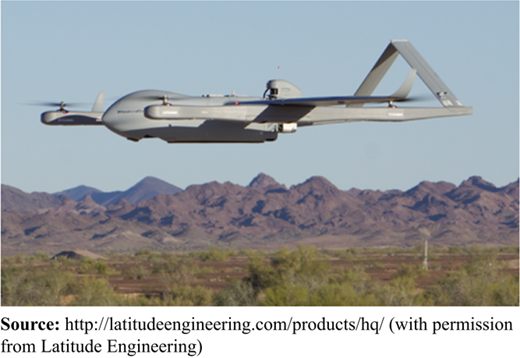
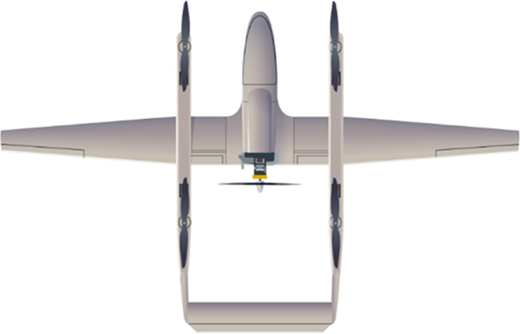
Given the context of a remote community with limited availability of technical aircraft handling skills, it is argued that the latter presents a less risky option as it minimises the infrastructure requirements. Furthermore, the ability of the Latitude to operate VTOL (it requires a clear area of diameter 5 m (15 ft)) would increase the operational flexibility whilst minimising the airfield to hospital/clinic transit times. The Latitude also has a greater payload, and has thus been selected as the exemplar platform for the purposes of this case study (Plate 1 and Figure 1).
It should also be noted that the RPA will need to be flown in beyond line of sight (BLOS) (sometimes referred to as beyond visual line of sight (BVLOS)) mode. This requires the capability to hook up to a satellite network for command and control.
6.2 Interview protocol
The research underpinning this element of the paper was undertaken in mid-2016 and consisted of 11 semi-structured Skype-based interviews, the details of which can be found in Table IV. The choice of organisations was based on the identification of specific areas of focus surrounding the research topic, and the interviewees were selected on the basis of their associated knowledge and expertise. However, it is recognised that the resulting sample distribution does not represent a uniform position within the organisational hierarchies, and this is a limitation of the study.
Nevertheless, in summary, information and views were sought from Australian organisations that currently provide commercial RPAS services in order to explore opportunities for, and limitations on, their use. Operations personnel from the emergency services sector were selected in order to gain insights into how the use of RPAS technologies are being, or might be, used as part of their response to a disaster. Regulatory impacts are an ongoing concern for the RPAS industry, warranting discussions with an interviewee directly involved in the development of such regulations. Other vital sources of information for this paper came from the health industry and from an individual who is directly supporting the particular exemplar community.
In each case, as part of the pre-interview discussions/e-mail exchange, the interviewee was presented with the scenario of the need to provide urgent medical supplies to a remote community in WA (as outlined above), and then invited to reflect on the benefits and challenges of the use of an LE-RPAS to meet this requirement. Each interview was recorded and transcribed by one of the research team using manual coding with Post-ItTM notes and coloured highlighters.
6.3 Findings
The overall issues emerging from these interviews will be discussed in terms of the benefits and challenges of the use of LE-RPAS to transport medicines as they relate to technology, processes and people – albeit, there are clear overlaps between these categories.
6.3.1 Technological benefits and challenges
Overall, the interviewees with expertise in the technological aspects of RPAS operations were very supportive of the proposed use. Indeed, Interviewee B pointed out that in the period 2002-2016 there has been a step increase in the number of certified RPA operators in Australia, with just under 850 currently qualified as of December 2016 (Australian Civil Aviation Safety Authority, 2016a). The interviewee argued that there is an increasing recognition that RPAS is “a viable technology that works”. Furthermore, although the use of RPAS by the emergency services is in its relative infancy, successful trials have been undertaken by the Melbourne Fire Brigade which, in turn, have informed similar trials in both New South Wales and Queensland. Based on these, Interviewee H indicated that the key challenges are related to the need for the appropriate infrastructure as well as the restrictions imposed by the Australian Civil Aviation Safety Authority regulations (see Section 6.3.2, below).
In terms of the actual operation of the RPAs, the scenario used in this research was not perceived to present any insuperable challenges – indeed, the requirement was regarded as relatively straightforward with a vertical launch, a transit some 90 km (55 miles) in a straight line, vertical landing and a similar return flight. However, there was a clear view amongst the technical experts that the inclusion of “sense and avoid” (SAA) technology would be essential if the RPAs are to be fully integrated with manned flight operations.
The development of such SAA systems is clearly seen as a priority by both regulatory authorities and manufacturers, and this is exemplified by the work of the European Defence Agency’s Research and Technology Joint Investment Programme (JIP). One stream of the JIP was started in 2009, and it resulted in successful test flights and associated simulation of a Mid Air Collision Avoidance System. The focus is now on the development of the technical standards which will then be incorporated into national regulations (European Defence Agency, 2016).
The interviewees did introduce some concerns over the potential for a rogue RPA to interfere with commercial flight paths and/or infiltrate restricted/sensitive air space – albeit the latter is a theoretical rather than real concern in the specific geographic context of this case. Discussion of the detailed solutions to these problems are beyond the scope of this paper, suffice to say that both industry and regulators are very much aware of these challenges, and are actively developing appropriate response measures (Karpowicz, 2016).
6.3.2 Process benefits and challenges
The exemplar (Latitude) RPA under consideration in this case weighs 45 kg and is, therefore, classified as a “medium” aircraft under the Australian Civil Aviation Safety Regulation 101. Consequently, it could not be flown under the “Standard Operating Conditions” that apply to lightweight RPAs, and specific exemptions (Australian Civil Aviation Safety Authority, 2016b) would need to cover:
operating in BLOS mode;
operating within 3 nm of an aerodrome (Broome airport);
any extended area of operations (AO) – for future operations outside the Broome to exemplar community flight corridor;
night time flying; and
operating within 30 m of people – although this could be overcome if the RPA is deployed/received using VTOL from a segregated safe landing zone (SLZ) at both the hospital and clinic locations.
Such applications would be considered by the chief air traffic controller based on an assessment of:
RPAS equipment levels and capability;
the locations and heights of the requested operations;
the operational terrain and associated obstacles; and
the Remotely Piloted Aircraft Operator’s Certificate (ReOC) conditions.
The interviewees with relevant industry experience were of the view that, with appropriate risk assessments (in accordance with ISO AS/NZS 31000:2009 risk management principles and guidelines) and due diligence during the ReOC process, there would be a reasonable expectation that the required exemptions would be approved due to the nature of the project’s intent and its AO characteristics.
More broadly, key considerations in relation to the rules governing RPAS operation are, unsurprisingly, related to risk. In this regard, the UAViators Code of Conduct developed to support RPAS operations in a humanitarian context (UAViators, 2016) clearly lists “safety” as the first principle.
There are multiple safety concerns that are unique to RPA operations, including those stemming from operator error, technical problems or a communication breach/break. In this regard, researchers from RMIT and Edith Cowan Universities in Australia have recently analysed 150 global RPAS incidents and accidents in the period 2006-2016, and their report suggests that the underlying cause of 64 per cent were technical issues and not human error (Wallace, 2016). Given the relative newness of the technology, it might reasonably be anticipated that this technical malfunction rate will reduce, but in any event a range of other causes cannot be discounted when addressing safety. It will also be appreciated that the alternative, which is using road transport, is not accident free – especially in the context of a remote location with poor roads and the impact of seriously inclement weather.
The below list provides a summary of the key areas of risk and their mitigation strategies that have been developed by the authors with input from the interviewees.
Key risk areas and mitigation strategies:
extensive and ongoing risk management in order to de-conflict RPAS operations with all air users and citizens (including emergency organisations, property owners and citizens);
see and be seen – paint the RPA in bright and unique colours;
ensure a SLZ away from people at the take-off and landing points, 5 m diameter at a minimum;
crowd control at the SLZs to ensure no unauthorised contact with the RPA;
set communication protocols during take-off, flight and landing;
utilising satellite or mobile phones establish aircraft in an orbit overhead with a trained member of the clinic staff acting as a spotter in order to manage the landing;
develop emergency procedures for aircraft malfunction;
identification of an alternative landing zone if VTOL fails, for example, the landing strip at the community or Broome Airport;
issue a Notice to Airman prior to a flight and broadcast to all in the AO that an RPA will be operating;
develop a community of practice via engagement with UAViators Network; and
purchase insurance cover.
Given the nature of the payload (medical supplies) in the case study, particular attention must be paid to their security, and the authors would suggest that a number of specific measures (summarised in the following below list), should be considered.
Specific risk mitigation strategies in relation to the RPA payload of medical supplies:
pin code locked box with only the sender and receiver issued with the codes;
temperature controlled storage box to transport the medicine (see Section 7);
tracking device to locate a missing RPA;
system redundancies that reduce the chances/impact of failures; and
hazardous goods images affixed to the package to discourage ingestion/use if found.
6.3.3 People benefits and challenges
The whole issue of the acceptability of the use of RPAS in a disaster response and/or development environment has been highlighted by OCHA (2014), American Red Cross (2015) and, in particular, by Soeliso and Sandvik (2016) in their survey of attitudes towards the use of RPAS in the humanitarian sector. One of the key issues raised by those who had concerns over the benign use of RPAS was that it had the potential to increase the “distance” between the aid workers and the beneficiaries. A similar concern was also raised by Interviewees I and K who emphasised the importance of building on the established relationships that exist between the clinic and the community.
More broadly, in terms of the overall operation of the RPAS, this is not perceived to create major barriers. Whilst it is assumed that the process would be managed and controlled from Broome by licensed operators, the clinic itself would require a number of staff able to receive and despatch the RPA as necessary. Their role would include ensuring that the land/launch area is clear of hazards (including people), unloading/loading the RPAS (a relatively simple operation), conducting any pre-flight checks and then liaising with the Broome operators to initiate the return flight. Furthermore, given the endurance of the exemplar RPAS, it is not anticipated that refuelling would be needed. Despite literature identifying a high turnover in remote healthcare centres (Reeve et al., 2015), Interviewee K advised that the clinic staff are “long termers” so ongoing training costs should not be a major factor in the decision-making process.
6.4 Cost considerations
The following section provides an overview of the costs of the proposed LE-RPAS in the particular case context discussed in this paper. In an ideal world, some understanding of comparative costs would have been offered; however, as noted by Mailey (2013), there is no standardised way of generation “cost/flight hour” or a similar metric. Nevertheless, Table V provides a summary of the key costs.
Clearly the financial benefits of utilising an RPAS within a remote medical emergency response can only be achieved if the system is used extensively enough to outweigh the capital costs. Health industry expert, Interviewee J, suggested that, in order to justify costs, the system should be used in collaboration with other agencies within a regional interagency network. Sharing the costs of establishing an RPAS network would help minimise risk and also help to ensure a shared return on investment across the health industry. This is a particularly relevant observation in the context of MDT and medical maggot logistic solutions. It is highly unlikely that infrequent and low-volume delivery of medical maggots alone would justify investment in LE-RPAS technology.
7. Flying maggots
As indicated earlier, the specific research reported in this paper has focussed on the challenges and benefits associated with the use of LE-RPAS to transport medical supplies to support patients affected by a condition that requires the urgent provision of medicines in a remote community of WA. This relatively benign scenario was chosen as a means of understanding the core issues and potential mitigation approaches. In parallel, however, the goal of this paper has been to extend the research to support the transport of medical maggots for the purposes of MDT, and the aim of this section of the paper is to integrate the two streams.
From a transport perspective, medical maggots differ slightly from regular medication on one hand, and vaccines on the other. While regular medication is not particularly heat sensitive and can be stored at room temperature or colder, most vaccines require strict cold chain transport in which some can be frozen but others must be stored at between 2 and 8°C (Ateudjieu et al. 2013). Because medication is sealed in air and water tight packages, environmental humidity should not be an issue in unopened packages. Medical maggots, however, are fragile living organisms that are heat sensitive, require oxygen and adequate humidity.
Thus, although LE-RPAS have a limited payload capacity both in terms of weight and volume, treatment-ready young medical maggots (even if shipped in large numbers) will not weigh much more than a few grams as they are only around 2.6 mm long (Čičková et al., 2015). Given the low dosage of 5-8 maggots per cm2 of wound (see Section 3), the weight and volume of medical maggot shipments would, even for large numbers of patients, be mainly determined by the packaging and temperature control solutions used to maintain maggot quality in transit.
In this regard, it is current practice that, in order to provide sufficient oxygen, maggots are placed into sealed plastic containers that are much larger by volume than might otherwise be necessary – although this volume can be reduced if vented vials are used. However, the required insulation and cooling requirements will depend on the environmental conditions and the exact technical specifications and the resultant design would need to be developed during operationalisation as proposed in Section 8 (Step 2(d)).
With this in mind, the core requirements are that:
primary packaging must maintain sterility, adequate humidity and be escape proof;
secondary packaging must maintain an internal temperature range of 6-25°C; and
primary and secondary containers must provide sufficient ventilation either via excess air within an air-tight system or via vents and air inlets that do not compromise temperature control.
The key outstanding issue relating to the successful use of MDT remains the acceptability of MDT to the particular community. Prior research into the use of medical maggots indicates that there is no evidence of wide-spread patient resistance towards MDT (Petherick et al., 2006; Spilsbury et al., 2008), but this cannot be automatically assumed for remote communities, or for the healthcare workforce servicing these communities. Therefore, information programmes for healthcare professionals and patients would need to be a vital component of any MDT implementation irrespective of the mode of transport for medical maggots.
8. Operationalising the use of LE-RPAS to transport medical maggots
The above analysis of the benefits and challenges surrounding the use of LE-RPAS as the means of transporting medical maggots clearly suggests that there are no insuperable challenges to the implementation of the concept. However, its operationalisation will, inevitably, require some investment, and the following steps represent a proposed way forward:
Step 1: select a pilot location to act as a “pathfinder”. The selection would be based on:
the prevalence of wounds in the community that are amenable to MDT;
timely access to laboratory-raised medical-grade maggots;
the willingness of local wound care providers to use MDT, and the patients to accept this treatment;
the extent to which the community is supportive of the use of RPAS as a means of providing swift and effective transport for medical supplies, including medical maggots; and
the geography and topology of the chosen location both in terms of the need for LE-RPAS services to that location as well as the safe operation of the aircraft.
Step 2: representatives of the pathfinder community together with RPAS experts in the various domains (the aircraft operations; air traffic control; risk management, etc.) should collaborate to undertake the following activities:
establish appropriate air traffic control protocols to enable RPAS operations;
capture baseline data that will enable the downstream impact analysis;
conduct appropriate training and education at all levels to facilitate the RPAS operations; and
develop (as necessary) appropriate payload containers that will ensure the delivery of high-quality viable medical maggots during all environmental and weather conditions.
Step 3: conduct live operations on a limited basis in order to evaluate and improve the above people-, process- and technology-related requirements for safe, effective and efficient RPAS use. Thereafter, and assuming that the trial proves both efficient and effective, the use of RPAS to support MDT could be expanded to include other countries and scenarios.
9. Summary
In summary, it is perceived that the use of LE-RPAS has significant potential to support the logistic processes underpinning the provision of MDT in remote locations. Whilst the paper used a remote community in WA as an exemplar case study, there would appear to be no a priori reason why the generic approach and the specific technology should not be used in other contexts such as remote regions of Africa, South America or Asia – subject, of course, to the acceptability of the use of MDT and of RPAS. However, a number of important hurdles remain before the concept can be operationalised. Key amongst these are the development of an air traffic control regime that supports (rather than constrains) the RPAS use, together with the required people and process-related mechanisms.
Importantly, the paper reflects the authors’ analysis of the existing literature in the HL, RPAS and MDT fields, and it has been amplified by the insights developed from a series of interviews with key informants whose spheres of expertise have covered the key issues relating to the use of RPAS. Nevertheless, it should be noted that the whole area of RPAS operations is moving extremely quickly, not least reflecting the interest of commercial organisations such as Amazon and Domino’s. Although both of these companies are focussing on the use of mini-UAVs (i.e. US DOD Group 1), the lessons identified, and associated developmental activity, in relation to all three aspects of the people, processes and technology triangle are likely to benefit the efficient and effective operation of LE-RPAS. Moreover, implementation of MDT in the disaster response context may require medical maggots to be delivered with mini-UAVs to cut-off communities, as opposed to the long-range delivery with LE-RPAS discussed in this paper.
It is argued, therefore, that the next critical step in understanding the reality of the potential for LE-RPAS to support the transport of medical maggots is to undertake a field trial in a controlled (benign) environment through which the reality and magnitude of the challenges can be better understood. Assuming a positive set of results in such a trial, this would enable a more robust plan to be developed and costed, and the resultant proposition given due consideration by governments and the global humanitarian assistance community.