The purpose of this paper is to present the initial results of the Camp Performance Indicator (CPI) system to illustrate the importance of self-reliance of refugee camp dwellers with regard to infrastructure and service investments.
Data, derived from a field trip to Zaatari in autumn 2016 and thorough literature research, were taken to develop a new CPI system. The findings from the literature research were merged with available camp data to validate each other.
Self-reliance is a fundamental human right and anchored in the UN sustainable development goals. Yet, presented findings reveal that even in one of the most modern refugee camps in the world – Zaatari – the level of self-reliance is rather low. However, organisations and humanitarian logisticians can influence self-reliance by identifying clearly where challenges are.
Data from a diverse range of reports were extracted. As most of these reports lack reliable and comparative quantitative data, the limitation of the study must be taken into account. So far data were only validated on one case study. To develop the tool further, more data need to be taken into account.
To this point, there is no performance measurement tool available focusing on self-reliance of encamped refugees. In addition, no academic research has measured the interrelation between the level of investments in infrastructure and services and the improvement of the lives of camp residents, especially regarding the level of self-reliance.
1. Introduction
In the wake of the Asian tsunami in 2004 and the ensuing humanitarian crisis, scholars all over the world started to look more intensively into the performance of humanitarian logistics and supply chain management (Jahre and Heigh, 2008; Kovács and Spens, 2011; Leiras et al., 2014; Natarajarathinam et al., 2009; Thomas and Kopczak, 2005). To date, many scholars in the field of disaster relief economics and logistics have had a rather narrow focus on short-term emergencies (Bealt et al., 2016; Hong et al., 2015; Krejci 2015; Tatham and Houghton, 2011). A smaller group of academics has analysed relief chains of longer-term disasters, such as food crises (Haile, 2005; Wood et al., 1995) or protracted refugee camps (Kovács et al., 2010; Olivius, 2014). Taking into account that an estimated 14.2 million people reside in refugee camps for an average of 17 years (UNHCR, 2004, 2016a), researchers might be interested in taking a closer look at the situation of refugee camps, their dwellers and their structures (Betts et al., 2017).
Governments and host communities often consider refugees a burden to the economy, environment, infrastructure, and security system (Betts et al., 2017; Hartmann, 2013; Jacobsen, 2005; WANA and FES Jordan and Iraq, 2017). They claim that refugees increase the pressure on resources like land and water, especially since human crises intensify and refugee influxes increase. As a consequence – and sometimes only to silence political opponents – host governments frequently impose restrictions on the treatment of refugees by limiting their rights, including freedom of movement or access to the local labour market (Betts et al., 2017; Kibreab, 2003; UNHCR, 2016c), leaving encamped refugees feeling “warehoused” (Betts et al., 2017). Nevertheless, donors, as well as organisations like the Office of the United Nations High Commissioner for Refugees (UNHCR), aim to improve lives of encamped refugees as well as host communities, and thus invest in infrastructure and services (KfW Development Bank, 2017; JRP, 2017). The aims of such investments are – according to international donors – to save costs in the long run, to reinforce local capacities and sustainability, to prevent conflicts, and also to increase refugees’ self-reliance and resilience (JRP, 2017). Different entities, like Joint IDP Profiling Service, Solutions Alliance or Global Knowledge Partnership on Migration and Development (KNOMAD), engage in data and performance management regarding displaced persons. However, there has been no academic research which measures the interrelation between the level of investments in infrastructure and services and the improvement of the lives of camp residents regarding the level of self-reliance. To analyse this interrelation, a view only on logistics and supply chain management would not give satisfying results. Research in this field must also include views from fields like economics and management as well as politics and social sciences.
In the following sections, the development of the so-called Camp Performance Indicator (CPI) system is described based on a visit to Zaatari camp in Jordan in autumn 2016. In Section 2, after a short description on self-reliance in refugee camps, an overview of performance measurement in humanitarian aid is given. The research method behind the CPI is introduced in Section 3, followed by the key findings of six rounds of data acquisition (Section 4). A case study of Zaatari Camp is presented in Section 5. Section 6 offers a discussion on this topic, relating human rights and the sustainable development goals (SDGs) to present research. Conclusions are drawn in Section 7.
2. State of the art: self-reliance and performance measurement
The state of the art of performance measurement is taken to develop a CPI system regarding self-reliance. Thus, both topics are introduced in this section.
2.1 Self-reliance in refugee camps
Policies of keeping refugees in designated areas, typically camps, can be found in most refugee-hosting countries in the south (Betts et al., 2017; Kibreab, 2003). A refugee camp is defined as a place where refugees reside and, generally, host governments and/or humanitarian actors provide assistance and services in a centralised manner. They often include reception centres, public housing and tents or containers (UNHCR, 2014). Even if most refugee camps are managed by the UN organisation UNHCR, camps vary heavily in size, quality, type of equipment, location, etc., as the setup usually depends on the funding the camp receives and on the hosting country’s policies. Just as there is a wide variety of policies regarding refugees and camps, there are also great differences in the level of self-reliance in camps. Hereinafter, we use three categories of camps, related to different levels of self-reliance: the traditional camp, the urban camp, and the city-like camp:
Traditional camps have a minimum level of self-reliance. These camps only provide the basic needs at a minimum standard, so people can survive but do not have the opportunity to choose which commodities and/or service they need. Market activities exist, but are limited through the unavailability of opportunities and resources.
Urban camps have a medium level of self-reliance as shown in Section 5. Urban camps provide fixed infrastructure and services, like pre-fabricated houses (instead of tents), schools, hospitals, and a working security system. The camps also offer water, sanitation and hygiene (WASH), sewage, garbage, and electricity systems as well as a market, where people can buy the goods they need and prefer. Market opportunities in urban camps are more abundant, but still too many refugees depend on external aid.
City-like camps do not yet exist, but would have a maximum level of self-reliance. They have all benefits urban camps offer along with better education systems, well-paid job opportunities and decent working conditions for refugees and host community members seeking work. In this utopian settlement, residents are able to care for themselves and have the financial means to pay for the services they use.
Denying refugees to work affects their dignity and their well-being. If refugees remain unemployed in the long-term, dependent on external aid, or are generally unable to participate in social structures, they tend to develop associated problems. Those problems include psychological and health problems, down-skilling (meaning the loss of obtained qualifications), and socio-cultural as well as social isolation including stigmatisation, familial tensions and conflicts, feeling of guilt, aggressiveness and poverty (Oschmiansky, 2010; Rawlence, 2016; UNHCR, 2016c; Kibreab, 2003). Thus, increasing the level of employment should be a priority to camp managers, host governments, and the international community.
2.2 Performance measurement
Performance measurement can be defined as “the process of quantifying the efficiency and effectiveness of action” (Neely et al., 1995). In the commercial field, including logistics and supply chain management, such actions are usually supposed to help either to reduce cost or to increase services in order to meet customer requirements (Pfohl, 2010; Schulte, 2013; Bölsche, 2009). Translated into humanitarian terms, this would mean to help either more beneficiaries or to be able to help them faster (Bölsche, 2009). These goals – to be efficient and effective in order to increase aid for beneficiaries – are not only important for humanitarian organisations, but in addition they also are often requirements set by donors (Kovács and Spens, 2007; Haavisto and Goentzel, 2015). Only few organisations have set up a consistent and thorough performance measurement system (Davidson, 2006; Blecken, 2010). Especially smaller organisations, which often work project based, do not evaluate their actions after finishing their work. In discussions with the authors, project operators of non-governmental organisations have often cited tight budgets as a reason, stating that there is no money available to go back to the project’s location to see the long-term outcomes for the beneficiaries. Beside financial restrictions, the factor of “urgency” also plays an important role: while gathering accurate data, lifesaving actions stand still (Haavisto and Goentzel, 2015). Conversely, academics emphasise in various publications how important it is to measure the performance regarding costs, flexibility and efficiency, and other factors (Abidi et al., 2013; Blecken, 2010; Davidson, 2006; Haavisto and Goentzel, 2015; Lu et al., 2016).
Further, Haavisto and Goentzel (2015) pointed out the benefits of measuring indicators for humanitarian assistance: connecting the performance with the objectives of both – the organisation and the individual operation – could shed light to the actual impact of the latter, including its quality.
3. Research method
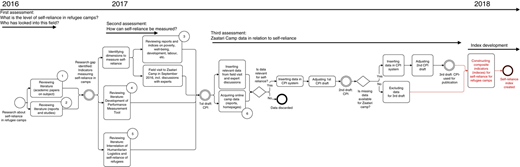
In order to achieve the level “city-like camp”, it is important to identify which investments in infrastructure and services help refugees to become more self-reliant. Such measurement and systems are lacking in both literature and research. Thus, three different assessments (Figure 1), including six reviews on literature and online data (cf. findings 1-6), were executed to evolve a first version of a performance measurement system, denoted as CPI system.
The research started in autumn 2016 and will continue for about two more years. Each assessment was and is resumed repeatedly to widen the findings.
As can be seen in Figure 1, the authors conducted two literature reviews to approach the topic: a literature review on academic papers (findings 1) and one on reports and studies from organisations and institutes (findings 2). The findings are explained in the next section. After the first assessment, no indicator systems measuring self-reliance in camps were found (only the well-being index of the Women’s Refugee Commission for refugees in general, which is not yet fully elaborated and has different objectives as the CPI). The idea was to create a measurement tool to support camp managers in assessing the level of self-reliance of encamped refugees. The next necessary assessment (2) was related to the creation of the tool. Again, as non-descriptive research for refugee camps is lacking (most research emphasises on examining processes of organisations), the authors reviewed existing indices regarding development, poverty, well-being, etc. (findings 3), and handbooks/guidelines to the matter to adapt dimensions from other authors and learn how existing performance measurement tools were built (findings 4). As the tool is supposed to help camp managers, it needs to include mainly performance indicators which can be improved by the international community and their executers – the international organisations (e.g. UNHCR, cf. Figure 2). Thus, the researchers tried to figure out existing interrelations between humanitarian logistics and self-reliance of refugees in order to decide on which aspects to focus on. Findings 5 show that the indicators usually used by humanitarian logisticians are not useful for present research. The first CPI draft was established.
In order to prove the validation of the first CPI draft, Zaatari camp was chosen as a case study. As mentioned in Section 1, data were acquired online and on the field trip to compare the performance of the camp from 2013 to 2016 as well as statistics from Jordan. The main purpose at this step was to analyse the impact of investments made in infrastructure and services on the camp dwellers’ lives using the timeline of the camp. A setback for the research team was the revelation that most organisations only conduct assessments once and do not regularly follow up. Many reports tend to quote each other, which makes it difficult to understand how the stated data were assessed. Thus, the authors could not gather all required data for the first draft of the CPI (e.g. information about micro loans) and had to adjust it, as indicator fields should not be left blank (second draft of CPI). Further, the researchers found data which were not included in the first place. After evaluating a relation to self-reliance (e.g. women-led households) new indicators were inserted. Adjusting the CPI again (third and here published draft), the authors have gathered 27 indicators for six dimensions. Data for Jordan could not be collected for all indicators. Thus, the tool and its application are not completely elaborated and a comparison of different data cannot be provided yet. But still this paper gives an overview on the CPI and the application to a first case from Jordan. The next section reveals the main findings and sheds light to some major decisions the authors have made regarding the CPI.
4. Findings – development of research tool
4.1 Findings 1 – self-reliance not yet in focus of academic research (Table I)
Mainly scholars from research areas like anthropology (Agier et al., 2002; Harrell-Bond, 1986), politics/social sciences (Bowles, 1998; Achilli, 2015), and urban planning/architecture (Misselwitz, 2009) have addressed refugee camp residents. Apart from a few exceptions (Werker, 2007; Jacobsen, 2005), economists have only recently started to take a closer look at the situation of refugee camps, their dwellers and their structures (Betts et al., 2017). To date, scholars have only dealt with similar topics, like economics of refugees (Betts et al., 2017; Werker, 2007), economics of host country members (Whitaker, 2002; Zetter et al., 2012; Zetter and Ruaudel, 2014), or innovations in the humanitarian sector (Betts et al., 2015; Ramalingam et al., 2015). Concerning the methods used, the majority of research regarding refugees is based on interviewing the beneficiaries (Betts et al., 2015; Werker, 2002; Abdi and Awa, 2008; Achilli, 2016; Holzer, 2012).
4.2 Findings 2 – self-reliance not new to humanitarian organisations (Table II)
The term “self-reliance” can be read in a vast range of organisational and institutional documents and reports. The most important ones of the findings are mentioned henceforth. UNHCR developed a “Handbook for Self-Reliance” in 2006, which was based on the millennium development goals (MDGs). The MDGs were created in 2000 and are succeeded by the SDGs. UNHCR defines self-reliance as following:
Self-reliance is the social and economic ability of an individual, a household or a community to meet essential needs (including protection, food, water, shelter, personal safety, health and education) in a sustainable manner and with dignity. Self-reliance, as a programme approach, refers to developing and strengthening livelihoods of persons of concern, and reducing their vulnerability and long-term reliance on humanitarian/external assistance
(UNHCR, 2006).
But even before developing the Handbook on Self-Reliance, UNHCR mentioned self-reliance in different reports, e.g. Jamal (2000) and Kelley et al. (2004). Kelley et al. (2004) emphasised the international collaboration on the topic with partners like IMF and the World Bank. In addition, other organisations mention the term (or synonyms), like the Norwegian Refugee Council in its Norwegian Refugee Council (2008) as well as Crisis Report Plans regarding the Syrian situation (Government of Lebanon and United Nations, 2017; International Crisis Group, 2016; JRP, 2017).
Not only UNHCR bases its goals on the MDGs or SDGs, but this paper also uses the SDGs’ Knowledge Platform, as it summarises the understanding of all United Nations members to improve lives of all human beings. The SDGs were adopted on 25 September 2015 and although they were not explicitly created for refugees, they aim to “end poverty, protect the planet, and ensure prosperity for all”.
4.3 Findings 3 – dimensions for CPI identified on base of literature review (Table III)
Before choosing or creating indicators, the researchers had to agree on categories (dimensions) in order to provide a framework for the measured data. First, the authors focused on the more obvious categories, which humanitarians define as basic needs and which are mentioned in the definition of self-reliance: protection, food, water, shelter, personal safety, health, and education. Not only health, education, and security, but also food and water were included in a closer selection, as the authors have come across these categories in all reports regarding development and poverty alleviation. These are categories which are also mentioned by a diverse range of reports, like the Human Development Index by the United Nations Development Programme 2016 and indicators gathered in the World Bank (2017) database. Further, the authors had a close look on the aforementioned SDGs. SDGs 1 (No Poverty), 3 (Good Health and Well-being), 4 (Quality Education), 6 (Clean Water and Sanitation), 8 (Decent Work and Economic Growth), 11 (Sustainable Cities and Communities), and 16 (Peace, Justice and Strong Institutions) were especially considered. As self-reliance is strongly related to employment or paid work in general, the authors further looked into existing indicators regarding labour (Eurostat, 2017) as well as quality of employment (Expert Group on Measuring Quality of Employment, 2015). The objective is not only to increase the employment rate of encamped refugees, but employment should also be “good”– free of exploitation and serving one’s well-being.
The decision about the dimensions was made when the authors came across the Stiglitz et al.’s (2009) report and their categorisations regarding well-being: material living standards, health, education, personal activities including work, political voice and governance, social connections and relationships, environment (present and future conditions), insecurity, of an economic as well as a physical nature. For the third draft of the CPI, these dimensions were reduced to material living standards, health, education, personal activities including work, and insecurity, because no relevant figures could be found for Zaatari camp related to the other dimensions. The dimensions were expanded to demographics, as this category is necessary to (later) compare different camps and to calculate ratios and percentages. However, the excluded dimensions will not be discarded, as they will be useful for further research. The authors are aware that some indicators could be categorised in different dimensions (e.g. access to electricity is not only part of material living standards, but could also be part of education or well-being – cf. column “Objective and examples for relation to self-reliance and/or other dimensions” in Table VII).
4.4 Findings 4 – main challenge: balancing degree of complexity of CPI (Table IV)
The ambition to measure performances is not new to the humanitarian organisations, as displayed by the Logistics Operational Guide by LOG Cluster (2015). But, instead of measuring processes and operational flows on the part of the humanitarian organisations, the CPI is created to assess the status quo of a camp, mainly but not only, regarding the camp’s infrastructure in relation to the level of self-resilience of the encamped refugees. The difficulty here is to find the balance between creating an easy-to-use tool, and one that assesses the camp deeply enough for valuable results. As the CPI is divided into different dimensions, each one has to be developed by itself, again without producing too much complexity (OECD/OCDE, 2008). Bandura (2011) provided a good overview for different indices, which are used as inspiration on how to build a performance measurement tool for a refugee camp.
Examples from humanitarian logistics do not meet these research objectives, as they mainly focus on the part of measuring processes of organisations (Widera and Hellingrath, 2016; Abidi et al., 2014). Further, researchers used and adapted existing methods, like SCOR (Lu et al., 2016) or the balanced scorecard (Davidson, 2006; McLachlin et al., 2009; Lin Moe et al., 2007). These methods are not appropriate for present research due to the different dimensions (findings 3). Thus, the authors used the Handbook on Constructing Composite Indicators (OECD/OCDE, 2008), which was inspired creating the framework in Table VII. Studying the working paper of Statistical Commission and UN Economic Commission for Europe (2005) showcased the complexity of developing a useful tool. Which factors should be inserted? Which data can camp managers realistically assess? Which indicators do increase the quality of the CPI, which overcomplicate the tool? Which information gives answers to the question of self-reliance and which are interesting, but irrelevant for the scope? As these questions are not easy to answer, the authors started – simultaneously to the choice of alleged fitting indicators – an online search for data of Zaatari camp in order to validate the findings of the tool. This approach allowed us to create a first validated CPI version (Table VII). Initial results of identified constraints regarding the indicators are presented in column “Constraints” in Table VII.
4.5 Findings 5 – increasing self-reliance is also task of humanitarian logisticians (Table V)
Humanitarian logisticians have understood the importance of measuring the performance of their processes; however, existing tools majorly are neither yet applied nor applied properly (Widera and Hellingrath, 2016; Abidi et al., 2014). Reasons therefore are the challenges illustrated by Abidi et al. (2014), among others: the achievement of results-based management, especially in terms of input and short-, mid- and long-term outputs, and the disappointment standard indicators evoke as they often cannot meet special cultural nuances which influence humanitarian activities. These challenges can be adapted to the CPI. First, for instance, by measuring a low school-children ratio the answer to the camp manager could be to build more schools, without investing in the improvement of the schools’ quality. Further, it is difficult to assess if the number of schools for the children of today really improve the self-reliance of the adults of tomorrow or if other measures would have improved their situation to a higher degree. Second, as the CPI system is supposed to be able to assess different camps worldwide, more general indicators need to be used ignoring cultural differences. Moreover, to validate the system, it is created on basis of existing indicators, even if adapted for the purpose of assessing self-reliance.
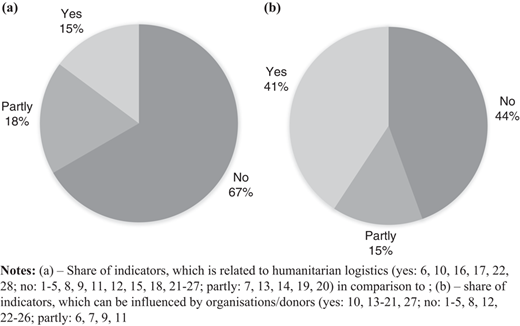
The authors support the call made by Aubone and Hernandez (2013) for a refugee camp database in order to cross-analyse camps. This would not only facilitate analyses as conducted for this research, but also improve transparency and visibility regarding information, assets, infrastructure, and overall performances. These visibility gaps were also uncovered by Maghsoudi and Pazirandeh (2016) for humanitarian supply chains. Again, the researchers draw parallels between humanitarian logistics and its need for performance measurement and the CPI, also because 33 per cent (yes + partly) of the indicators are related to logistics (Figure 2).
4.6 Findings 6 – state of available camp data is lacking (Table VI)
Many reports about the situation in Zaatari camp are descriptive, neither present figures in tables, nor reveal sources of data, which make it hard to reproduce. If sources of data are demonstrated, many figures derive from interviews with a non-representative number or were taken from a previous report. Most of the organisations elaborating reports do work on their own – each concentrating on different challenges (e.g. education, health, labour). Even if regular meetings take place in a camp, the reports reveal that there is room for improvement regarding exchange of data and reporting. The data material is lacking, which decreased the number of indicators to be included in the CPI and makes it impossible to come up with answering the question of which investments in infrastructure and services improve the self-reliance of refugees at this stage. The reports which the authors could use best were Kattaa (2015), Stave and Hillesund (2015), and REACH (2014) for data regarding employment and work in the camp; Human Rights Watch (2016) and UNICEF, Save the Children (2014) for data about children’s condition (education, child labour); and Castro Serrato (2014) for shedding light on security and safety. The UNHCR (2016a, b) factsheet gave a short, but detailed overview of demographic data and current infrastructure.
5. Case study: Zaatari camp
The purpose of this case study was to validate the 27 indicators presented in Table VII and to give background information for a deeper understanding about Zaatari camp. Each dimension (demographics, material living standards, personal activities including work, health, well-being, education, and insecurity) are shortly described after giving an overview of Jordan’s legal treatment of refugees and general camp information.
5.1 Current context
Jordan is not part of the 1951 Convention on Refugees or its 1967 Protocol (Saliba, 2016). Thus, it treats its refugees as “visitors” or “guests”, not having a legal meaning under domestic law. Nevertheless, UNHCR and Jordan signed a memorandum of understanding in 1998 in order to provide international protection to persons being defined as refugees according to UNHCR. Jordan also provides land for the two Syrian refugee camps Zaatari and Azraq. In the beginning, the Jordanian Government was quite restrictive with handing out working permissions, but the pressure of donors as well as the increasing problem of illegal work and thus precarious working conditions, supported the decision of the Jordanian Government to open their labour market to Syrians (ILO, 2017).
Zaatari camp opened on 29 July 2012 and covers some 5.3 square kilometres (km²). The camp is located 10 km from the Syrian border and is near the city of Mafraq. Currently, it hosts about 80,000 refugees, but more than 460,000 people have cumulatively passed through the camp (UNHCR, 2016a). Thus, Zaatari camp is one of the biggest refugee camps in the world. Over the years, it has faced various challenges, ranging from violent riots to the development of unique infrastructural improvements, like a water and recycling system as well as the implementation of an iris-scan payment system and innovative projects like a “Fab Lab” (IPA | switxboard (2017); Kleinschmidt, 2015). Its shelter conditions have improved significantly since its beginning. Every household has received a pre-fabricated caravan/container and tents are only used as canopies or to provide shade (Field Visit, 2016). Additionally, the average number of people housed has decreased from 8.2 to 3.31 per household per caravan (UNICEF, Save the Children, 2014; UNHCR, 2016b, 2017).
5.2 CPI and its application to the case Zaatari camp
Demographics
Camp inhabitants (pp. 1-5, cf. column “Indicator”, Table VII): in comparison to Jordan, the number of children is significantly higher in Zaatari camp, decreasing the percentage of working-age inhabitants. About 57 per cent of the refugee population are adolescents and almost 20 per cent are under the age of 5. Women head approximately 20 per cent of all households, and each week about 80 children are born (UNHCR, 2016b).
Material living standards
Access to next market (6): the camp is well connected with other cities, like Amman (time to commute: approx. 75 min.) and Mafraq (time to commute: approx. 30 min.) through a new, tarred road (Field Visit, 2016).
Inhabitants-shop-ratio (7): over the last years, Zaatari’s inhabitants set up about 3,000 (illegal, but tolerated) shops using the provided containers (Field Visit, 2016). These shops are supplied by Jordanian mass traders, which are allowed to center the camp to supply the shops with a vast variety of goods. Even if the shop owners do not pay taxes to the Jordan Government, their businesses are tolerated, as it helps to create some income and keeps the flexibility of the Syrian population. In addition to the 3,000 shops and a daily bread distribution, two supermarkets of different brands are based on the camp ground (“Tazweed Commercial Solutions” and “Jordanian Investment and Supply LLC”). The supermarkets are allowed to sell 300 different necessary food items, like chicken, vegetable, oil, rice, etc. including variations, e.g. different tastes of sauces, the total number of different sold items is 500. One supermarket has 45 employees; around 30 per cent are Syrians from the camp, earning around JD200 per month. The other 70 per cent are Jordanians, earning around JD300 per month. Its turnover is approx. JD80,000 per month. The prices of the supermarkets’ goods are comparable to the ones outside. Every registered Syrian refugee in Jordan receives JD20 (approx. USD28) per person per month instead of receiving food rations. Since October 2016, this money can be spent via iris scanning in the supermarket as well as in 200 shops outside the camp. Within seconds, the system confirms the identity of the refugee, checks the bank account with Jordan Ahli Bank and the Middle East Payment Services, confirms the purchase and prints out the receipt (WFP, 2016). By getting the choice what to consume, there is no urgency in selling unwanted food. The greater choice given to refugees increases their dignity and reduces misuse.
No. of shops owned by refugees (8): only 1.5-3 per cent of the 3,000 shops within Zaatari camp are owned by refugees (Kattaa, 2015).
Refugees with sufficient income to meet basic needs (9): despite receiving JD20 per person per month, over 40 per cent of Zaatari camp dwellers have a monthly deficit of some JD84 (WFP, Unicef, UNHCR, 2014).
Access to electricity (10): a solar power plant is planned for construction in 2017, funded by KfW Development Bank (Lahn et al., 2016). At the time of the Field Visit (2016), UNHCR provided eight hours of constant electricity in the afternoon/evening to all camp residents, at a cost of USD500,000 per month. Apparently, the solar power plant will be the largest electricity grid ever built in a refugee camp. Benefits are to reduce the pressure on the existing grid, to save costs long term and to provide constant electricity to the camp residents.
Personal activities including work
Income generating inhabitants (11-12): of the 60 per cent engaged in work, 6,500 refugees have found some kind of labour opportunity (like cash-for-work (CfW) activities). About 8 per cent participate in CfW activities (UNHCR, 2015b). In total, 74 per cent of those working under these activities are carrying out semi-skilled labour, like committee volunteering, cleaning, or guarding; they earn 1.0 Jordanian Dinar (JD) per hour as an incentive rate. A far smaller proportion (26 per cent) of those working in CfW earn JD1.5 per hour since they work at skilled levels, e.g. as tailors, hairdressers, or teachers. CfW jobs, with the exception of guards and cleaners, rotate regularly on a weekly, bi-weekly, or monthly basis. The rest of the 60 per cent of the working-age refugee population either have legal work permits (this amounts to an estimated 10 per cent of Syrian refugees across Jordan) or work illegally outside of the camp (Stave and Hillesund, 2015) (Table VIII).
When considering the indicators 25-28 with the employment situation (Table VIII) the encamped refugees had in Syria, the figures are put into perspective since only a small proportion of these jobs requires better education. It reaffirms the reason why 23 per cent earned their living in agricultural production, 12 per cent in agricultural waged labour, 23 per cent in skilled daily labour, and 11 per cent unskilled non-agricultural daily labour. Only 11 per cent worked in teaching and public service. Most people in Zaatari camp come from the Dara’a region, which is considered Syria’s “breadbasket”. Back in Syria, the rather low level of education did not seem to have been a problem in comparison to their current living situation – living in a camp, situated in a desert (Stave and Hillesund, 2015; REACH, 2014). Now, their job situation changed dramatically. For instance, of the 23 per cent who formerly were farmers, only 1 per cent currently works in agricultural production. This small percentage working in the agricultural sector (1 per cent instead of 35 per cent) is due to the lack of farms within the camp as well as to the lack of land possession in and outside of Zaatari (REACH, 2014; Human Rights Watch, 2016).
Health
Availability of health facilities (13-15): patients find health support in two hospitals with 55 beds and nine health care centres as well as one delivery unit. In total, 120 community health volunteers support these facilities. The neonatal mortality rate is slightly higher than in Jordan (26.6 vs 14.7).
Waste water (16): on a daily basis, sewage trucks collect some 2,100 cubic metres (m³) of sludge and approximately 80 per cent of this wastewater is treated in a treatment plant.
Well-being
Available drinking water (17): every camp dweller receives 35 litres of water per day. The infrastructure of the camp counts three internal boreholes, providing an estimated 3.2 million litres of drinking water daily, which are distributed by 82 trucks (UNHCR, 2016b; Field Visit, 2016).
Child labour (18): about 13.3 per cent of all Syrian refugee children work (whereas the number of working Jordanian children (aged 9-15) is 1.6 per cent). Usually, child labour is part of households’ coping mechanisms when money is scarce. Of the percentage of working Syrian refugee children, 94 per cent are boys and only 6 per cent are girls. Nevertheless, girls frequently work up to 17 hours on household chores or get married off at a very young age (UNICEF, Save the Children, 2014; Save the Children, 2014; Kattaa, 2015).
Community centre-inhabitants ratio (19): 27 community centres provide psychosocial support and recreational activities.
Education
Quality of school (20-21): in terms of education for youth, the number of available schools has greatly improved in the last three years. In Zaatari camp alone, the number of schools has increased over the last three years from 3 to 24 schools. Nine of them are formal schools (Human Rights Watch, 2016; LIVED, 2017; The Jordan Times, 2016). Still, this does not seem to be enough with each teacher taking care of an average of 50 students and schools working double shifts to cover all children. This has also led to a lower quality of education, as children have less school hours (Human Rights Watch, 2016). Schools in the camp cover primary and secondary education, but tertiary education is unavailable in the camp (UNHCR, 2016b).
Educational level of adults (22-26): see details above in “Income generating inhabitants (11-12)”.
Insecurity
Safety (27): the camp has a police station (Field Visit, 2016). In addition, the number of security staff increased from 37.7 stationed per area in 2013 to 42.8 in 2016, which influenced the perceived security in percentage terms from 64 per cent in 2013 to 80 per cent in 2016. The intimidation of humanitarian staff has decreased by 83 per cent between 2013 and 2014, according to UNHCR (Castro Serrato, 2014; UNHCR, 2015a).
6. Discussion
Humanitarian logistics’ and humanitarian supply chain management’s main objectives are to provide goods in a flexible, efficient, and effective manner to “the customer” (here beneficiary/refugee) (Scholten et al., 2018). The meaning of self-reliance, though, insists on not serving the beneficiary – at least not by delivering daily/basic goods. Does this make humanitarian logisticians dispensable? Is humanitarian supply chain management useless for protected refugee situations? The authors negate this; however, services provided by humanitarians must change if the long demanded request for more self-reliance is to be taken seriously. Three main areas are proposed hereafter: first, the more protracted crises become, the more humanitarian organisations need to shift from being providers of basic needs’ to service-oriented partners, accompanying processes towards more self-reliance. Second, in order to create self-reliance, hence jobs, camp managers could become “urban developers” and “business persons” through advocating the establishment of necessary infrastructure and the attraction of suitable, non-exploiting businesses and corporations. Third, organisations should become (more than ever) the “voice” of the camp dwellers regarding the compliance of human rights.
The first and second proposals are related with each other. As Jacobsen (2005) suggested, education, health, and financial services should remain in the hands of organisations, including special attention to the most vulnerable regarding nutrition and psychological services to treat mal-/undernourishment and traumas, etc. The main tasks of the organisation would not be to execute all these tasks, but to seek best fitting staff for the different purposes – mainly from camp dwellers and the surrounding community. If suitable staff cannot be found, the organisations could facilitate trainings and thus create jobs, raising the level of self-reliance. Hence, managing organisations would function rather as employers. The CPI tool could support these tasks by detecting gaps regarding self-reliance and thus reveal which fields to tackle first. As Figure 2(b) shows, 56 per cent (yes + partly) of the CPI indicators can be – at least partly – influenced by organisations or donors. In order to create jobs, the right infrastructure must be available. Building infrastructure demands logistical activities, such as resource and process management, coordination and information management, prevention and management of backlogs and delays, streamlining procedures and processes (Scholten et al., 2018). These rather coordinating and managing than operational tasks are not new to humanitarians, especially not to logisticians. As presented in Figure 2(a), 33 per cent of the current CPI indicators are related to logistics. Camp managers, as already happening in Zaatari camp, become “mayors” of the camp, deciding on which infrastructure needs to be built and which businesses are allowed or even attracted to the camp environment. For a camp like Zaatari, these tasks are easier to fulfil than for camps situated in remote areas, like many African camps. It is difficult to attract businesses if neither enough water nor electricity is available. The same applies if the state of the roads connecting the camp with the next bigger markets does not allow a predictable flow of goods. This makes the third proposal even more important. Too often refugees are refused to enjoy the basic human rights, especially the rights to work and the rights to move freely. Without these rights, it can be argued that none of the efforts made by humanitarian organisations to accomplish a higher level of self-reliance will ever bear fruits. This might also be the reason why the level of self-reliance is also, in a state of the art camp like Zaatari, rather low. Thus, organisations could negotiate more firmly with the host countries to grant refugees their rights.
In 1948, the United Nations General Assembly proclaimed the Universal Declaration of Human Rights as a common standard of achievements for all peoples and all nations (United Nations, 1948). As these rights include “all members of the human family”, they also include refugees. The SDGs were built upon these rights and were used as main material to establish the CPI. For example, SDG 4 encourages efforts to achieve universal education goals, e.g., including more children in higher education. SDG 8 promotes the rights of working people to be able to live decently from their salaries, too. It requests that societies create conditions for people to have quality jobs, so the economy can be stimulated without harming the environment. People – including refugees – should obtain job opportunities along with decent working conditions. To gain development, a country needs industrialisation. To gain industrialisation, technology and innovation are necessary according to SDG 9. Innovation does not only apply to organisational response (Noori und Weber, 2016; Ramalingam et al., 2015; Betts et al., 2017), but can and should also be applied by refugees themselves (Kleinschmidt, 2015; Miller and Kleinschmidt, 2016; Betts et al., 2015). For refugee camps, this could mean on the one hand to increase the opportunities of vocational trainings. On the other hand, the implementation of innovative ideas through handing out micro credits and necessary resources and infrastructure to start a business, like electricity, transportation, telecommunications, and the internet (Betts et al., 2017) could be facilitated to approximate the definition of a city-like camp.
7. Conclusion
Refugee camps are not yet places where “ambitions, aspirations and other intangible aspects of life are realized” (UNHABITAT, 2012), a city-like camp – as defined in Section 1 – is a rather utopian concept. It is a place for refugees where they can obtain the level of education and employment they seek, provide for themselves and their families, pay for the services they use, and lead fulfilled lives. In these camps, aid organisations and commercial stakeholders create quality jobs and build infrastructure, like roads, hospitals, enough schools for all educational levels, and provide electricity for all so people have the opportunity to take care of themselves (Aleinikoff, 2015). To facilitate the decision of which of these tasks challenge first, the authors develop the so-called CPI system.
Given the burden organisations face by collecting and measuring data (Dunlop, 2011) as well as the growing number of measurement tools (Kelley et al., 2004), the question concerning the development of yet another measurement tool is justified. The purpose of the CPI is not to make life more difficult for camp managers, but to create an efficient and effective tool, which is quickly filled out (in case all required data for other tools were assessed at that point). The inserted data are then supposed to tell the camp manager the camp’s level of self-reliance including its major gaps. Thus, the following steps of this research project are to construct composite indicators based on the aforementioned dimensions and to test it on two case studies. Expert interviews will be used to validate the choice of indicators, which must be based on existing indicators with available data sets (e.g. country data). In addition, this approach is supposed to decrease the current constraints of the indicators (Table VII). Data sets from the World Bank database and the SDG indicators might make computing indices, using methods like the principal component analysis, possible. This work would be simplified if performance measurement based on implemented projects was already state of the art for every organisation, making data accessible and comparable for scholars and other organisations. This would avoid the duplication of projects, help to make better decisions on investments and support research projects like the development of the CPI.
The authors are grateful for comments on the paper received from Ekram el-Huni, member of the World Food Programme. The authors would like to thank Martin Ohlsen, former WFP member for his comments and support during the entire research phase. To add, the authors thank a WFP staff member, who wishes to remain anonymous, for giving us an insight in his work (Rome/Italy, 7 July 2016). The authors express thanks to UNHCR, UNICEF, and International Relief & Development staff as well as to youth committee members who the authors talked to on 18 September 2016 in Zaatari Camp. The authors special thanks go to World Food Programme members in Jordan who received the authors in their headquarter in Amman as well as in the Al-Mafraq office.