


The purpose of this paper is to identify the underlying issues of humanitarian disaster relief logistics in order to provide an understanding of the challenges facing humanitarian organisations in a wider context.
The paper takes a qualitative approach, adopting a two‐dimensional multi‐strategy research design, culminating in a model of theoretical understanding.
The results suggest that operational issues encountered in humanitarian logistics are symptomatic of wider issues affecting humanitarian organisations. In understanding this, challenges were identified that, if overcome, could make for more effective relief missions.
In terms of implications, this paper provides an opportunity for further research, including the testing of the suggested model against an extended sample size which could include senior managers of humanitarian organisations (involved in strategising), and United Nations representative(s).
The research raises an awareness of the characteristics of humanitarian organisations that may well be acting as barriers to greater effectiveness and efficiency.
Rather than maintaining an operational focus throughout, the scope and nature of this study provide an insight into humanitarian organisations that allows for a deeper level of understanding to be gained in terms of their characteristics, which broadens the context against which the ensuing discussions/arguments can prevail. The resultant model provides a catalyst for further research and discussion.
1. Introduction
On 12 January 2010, 220,000 people died and 1.5 million people were made homeless after the biggest earthquake in Haiti for over 200 years (DEC, 2010a). World leaders quickly pledged their support but despite best intentions, delivering on the promises of relief aid proved a “logistical nightmare” and “chaos” ensued (The New York Times, 2010).
Even allowing for the devastation of the country's infrastructure, why was the flow of relief aid still being hampered weeks after the earthquake? After all, this was not the first time an earthquake had happened and would not be the last. A United Nations (UN) report (Tatham et al., 2009, p. 1008; UN, 2006) suggested both man‐made and natural disasters are seemingly increasing in impact, frequency and scale. Whilst more recent analysis depicted a relative decline in disasters during the past decade (Emdat.be, 2011), Thomas and Kopczak (2005) suggest the number of disasters will increase fivefold over the next 50 years. It is suggested this longer term forecast is part of an increasing trend over the past 100 years, as demonstrated in Figure 1.
At the heart of any humanitarian relief programme is logistics, accounting for 80 per cent of effort (Trunick, 2005, p. 8) in a sector that attracted US$16.9 billion in 2008 (GHA, 2011). Notably, Whiting and Ayala‐Ostrom's (2009, p. 1082) claim that approximately 40 per cent of disaster relief costs are typically spent on logistics, compared to 15 per cent of operational costs in the commercial sector.
The focus of this research is to gain an understanding of the challenges facing humanitarian organisations engaged in disaster relief in order to answer the following research questions:
- (1)
How do the perceived logistical issues derived from available literature compare with those perceived by practising humanitarian logisticians?
- (2)
What are the underlying causes of the key issue(s)?
- (3)
What challenges do humanitarian organisations need to overcome in order to address the issues?
The literature review will first seek to understand the distinguishing characteristics of humanitarian organisations, and then uncover current logistical issues. The latter culminates in a conceptual framework, the validity of which is determined by interviewing humanitarian logisticians. The findings are then analysed to answer the research questions.
2. Literature review
2.1 Distinguishing characteristics of humanitarian organisations
Literature suggests that humanitarian organisations can be distinguished from their private and public sector counterparts by several characteristics (Najam, 1996; Nerfin, 1986, p. 172; Power et al., 2002, p. 273). For example, they act autonomously, in the sense that they do not seek governmental or economic power (Lewis, 2003, p. 327). They also adopt a normative technique for gaining worker compliance, rather than remuneration or coercion (Etzioni, 1961, as cited by Lewis, 2003, p. 328). This normative technique uses shared ideology as both a recruitment and management tool (Najam, 1996, as cited by Brown and Korten, 1991). Examples of shared ideology can be found in “The Code of Conduct” for the International Red Cross and Red Crescent Movement and NGOs in Disaster Relief; and the Sphere Project (Hilhorst and Schmiemann, 2002). Common themes centre round humanity, impartiality and neutrality.
In relation to recruitment, Hilhorst and Schmiemann (2002) suggest the dynamic nature of humanitarian organisations is more likely to appeal to the “can do” and “want to make a difference” mentality of the same people who share their ideological principles and values. However, it is argued these pragmatic tendencies often lead workers to ignore, circumvent and sometimes abuse management systems (Paton, 1998, as cited by Lewis, 2003, p. 329; Hilhorst and Schmiemann, 2002). It is also suggested that the culture of “action” is endemic, leading to many traditional management tools and techniques being ignored, such as basic financial planning and recruitment (Dichter, 1989; Lewis, 2003, pp. 330‐6).
In terms of humanitarian workers, whilst they appear self regulating and non confrontational (Hilhorst and Schmiemann, 2002), it is argued that by protecting this unity they avoid development opportunities, at both individual and organisation levels (Power et al., 2002, p. 274; Snyder and Cummings, 1998; Lewis, 2003).
2.2 Issues facing humanitarian logistics
The four areas of assessment and planning, collaboration, supply chain and logisticians relate to the key findings of a Fritz Institute Survey (Fritz, 2005). The findings appear to have provoked much of the subsequent research and discussion into problems associated with humanitarian logistics (Maspero and Ittmann, 2008; Kovacs and Spens, 2009; Whiting and Ayala‐Ostrom, 2009; Chandes and Pache, 2010). These areas will therefore act as a departure point for the remainder of this literature review.
In terms of assessment and planning, there appears contention between those favouring proactive techniques involving preparedness (Longo, 2005; Nisha de Silva, 2001; Barbarosoglu et al., 2002; Thomas, 2003) to those who appear resigned to humanitarian logistics as always having to be reactive in light the dynamic nature of disasters (Pettit and Beresford, 2005, p. 314; Ozdamar et al., 2004). There is support for utilising technology more in planning (DeJohn, 2005, p. 8) although others highlight the problems, including the remote/underdeveloped regions where disasters often happen; or when infrastructure does exist, it is invariably destroyed from the onset of a disaster (Chandes and Pache, 2010, p. 321; Perry, 2007, p. 410).
The biggest problem however, acknowledged by academics and practitioners, in using preparedness techniques to inform planning, is seemingly donors. Murray (2005) suggests donors tend to insist that their money is used to help the victims of disasters after the event has occurred, which often means avoidance techniques are ignored, particularly by developing countries (Kovacs and Spens, 2007, pp. 101‐2). Whiting and Ayala‐Ostrom (2009) concur, observing donors provide money for tangible outcomes from disasters, not for investing in preparedness, as they do not appreciate the impact of “poor logistical preparation”. The causal effect of this donor preoccupation is captured by research that concluded it actually prevents humanitarian organisations from developing processes and systems to improve relief efficiency and effectiveness (Thomas, 2003, p. 7).
Switching focus to the limited levels of collaboration and coordination highlighted in the Fritz Survey, several researchers (at a micro level) have described a general lack of collaboration (McClintock, 2005; Murray, 2005; Sowinski, 2003). Simpson (2005) argues this creates duplication of effort and wastage (as cited by Kovacs and Spens, 2007, p. 103), propelling prices for local services as much as tenfold (Thomas, 2003, p. 6).
Attempting to explain the lack of collaboration, Thomas suggests the emerging competition for funding is to blame by discouraging organisations from realising the benefits that greater collaboration could provide, such as joint disaster preparedness strategies for vulnerable regions; collective bargaining; shared investment in technology; and developing a pool of shared knowledge/competences amongst logisticians in the field. Thomas also recognised greater efficiencies could be gained from organisations standardising their processes, documentation and training (Thomas, 2003, p. 7). However, Hilhorst and Schmiemann (2002) suggest this is not conducive to humanitarian organisations involved in emergencies, given the unpredictability of disasters, the short time scale of relief missions and high staff turnover rates. However, they do acknowledge van Brabant's (1997) argument that high staff turnover allows cross fertilisation, and therefore standardisation by default.
At a macro level, there appears greater appetite for closer working as Whiting and Ayala‐Ostrom (2009) reflect on how collaborative efforts have increased since the Asian Tsunami in 2004. Most noteworthy is the introduction of nine Clusters (one of which concerns logistics) that coordinate efforts between UN agencies, the military and humanitarian NGOs in the event of a major disaster. Formed in 2005 these UN‐managed Clusters have been deployed in several disasters with apparent success. However, the authors suggest some humanitarian organisations, mindful of the UN's political alliances, are reluctant to buy‐in to the concept.
In terms of supply chain, less than a quarter of organisations working in the Asian Tsunami who responded to the Fritz Survey had access to track and trace software, and those that did were using home‐grown solutions like Excel spreadsheets. Also, reporting was scarce, limited to speed of delivery metrics (Fritz, 2005).
Whilst acknowledging a balance between cost/performance and actually saving lives/alleviating suffering (Maspero and Ittmann, 2008), practitioners and academics alike support management systems. Examples include highlighting and mitigating performance risks and issues, and measuring continuous improvement (Thomas, 2003). Others include enabling factually accurate reports to be produced, facilitating “lessons learned” (Thomas and Kopczak, 2005).
This raises the question of compatibility in terms of the recognised management tools of the private/public sector. Erring caution, Billis (1993), cited by Lewis (2003), suggests simply borrowing tools from the management tool box is not sufficient for the third sector (including humanitarian organisations). He argues that third sector management should be treated as a subset of traditional management and avoid adopting management tools “magpie like”, accepting that whilst some fundamental tools may fit, others will need to be customised. Smillie and Hailey (2001) further suggest this should be a continuous process, as humanitarian managers should be constantly looking to acquire/customise management tools to fit their ever‐changing needs.
Following these arguments, Davidson (2006) undertook a study into performance metrics in a humanitarian disaster context. Working with the International Federation of the Red Cross, Davidson utilised data from the 2004 Asian Tsunami, captured in their Humanitarian Logistics Software system (HLS, 2010), and constructed scorecards based on key indicators. Describing the challenges surrounding the implementation of these measures, Davidson once again cites the lack of standardisation as a prominent feature, as each organisation operates differently. Maspero and Ittmann (2008) concurred, acknowledging that whilst there appears a strategic will to adopt performance metrics, organisations are developing their own standards and systems. Despite this, Davidson argues the biggest challenge in adopting management systems was the culture within humanitarian organisations, describing how performance measurement is treated with suspicion, as it highlights inefficiency. Instead, Davidson suggests organisations need to embrace it as a management tool for improvement. In contextualising the consequences of not adopting common performance measurement tools, Chandes and Pache (2010) claim that unless humanitarian actors “learn how to collaborate and co‐manage relief chains” performance will not be enhanced, which has “dramatic consequences for stricken populations”.
The final finding from the Fritz Survey noted that Tsunami relief efforts were adversely impacted by the lack of available trained and experienced field logisticians (Fritz, 2005). In offering an explanation to the apparent shortage, Chandes and Pache (2010) suggest the work of humanitarian logisticians is stressful, which together with the absence of any real career path makes for high staff turnover rates. Whiting and Ayala‐Ostrom (2009) further suggest the reason is down to humanitarian organisations not acknowledging logistics as a professional discipline in its own right. In doing so, they cite work done by Mangan and Christopher (2005) who researched competencies that commercial logistics managers of the future should possess. This culminated in Table I.
Whiting and Ayala‐Ostrom (2009) suspected humanitarian logisticians would require additional personal characteristics and skills sets. To ascertain what these were, they reviewed a sample of job descriptions for humanitarian logistics managers. The study revealed that most included some knowledge areas traditionally associated with supply chain management such as inventory management, warehousing fleet management and procurement. They also noted some non‐supply chain associated areas such as asset management and communication technology. However, none of the samples contained the core logistics competences Mangan and Christopher had provided. Whiting and Ayala‐Ostrom described this as “worrying”. A more recent study of logisticians suggested problem solving and interpersonal skills are still deemed more important than functional logistics skills, with specific emphasis by the humanitarian cohort being placed on negotiation and purchasing skills (Kovacs and Tatham, 2010, pp. 36‐9).
In terms of formal logistics training, Alexander (2003) recognised the importance of professionalising standards in emergency planning. He suggested a framework for a suitable qualification that would recognise emergency planning as a specialist area and establish an international set of standards, which could help emergency management amongst humanitarian organisations. In 2006 The Fritz Institute, in conjunction with the Chartered Institute of Logistics and Transport (amongst others), introduced a Certification in Humanitarian Logistics (CHL) to allow humanitarian organisations to strengthen their logistics expertise by teaching its logisticians the basics of humanitarian logistics and supply chain operations (Whiting and Ayala‐Ostrom, 2009).
2.3 Summary of issues: a conceptual framework
In accepting the challenging nature of disasters, it is suggested the issues identified appear to be evolutionary, meaning developed over time by social actors. It could therefore be argued that these man‐made issues affect the effectiveness and efficiencies of supply chains, and logistics in the wider sense, and are inadvertently/unintentionally increasing beneficiary suffering and loss of life. However, by virtue of the fact that these issues are deemed man‐made infers they could and should be challenged.
The following attempts to capture the issues uncovered in a “cause and effect” diagram (Figure 2).
Several of the challenges identified in Figure 2 are similar – for example, L2 and SC2 or SC3 and C1. Also, this simple yet effective analysis identifies common themes such as the prominence of donors in assessment and planning, supply chain and collaboration. To avoid repetition and capture the emerging themes, the issues are regrouped in the conceptual framework shown in Figure 3 together with their underlying causes.
By definition, the conceptual framework is an assumption, derived from literature review of humanitarian logistical issues. These assumptions will therefore be tested by primary research.
3. Methodology
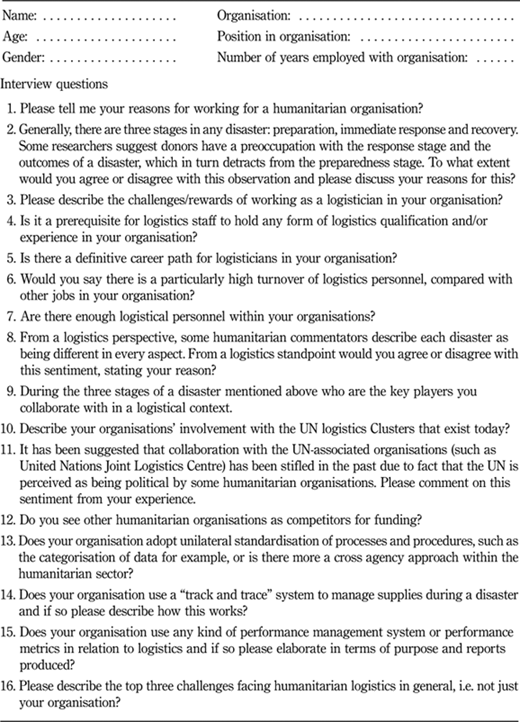
The research design adopts a two dimensional strategy (Bryman and Bell, 2007, p. 482). The first dimension, complementarity, entailed two different research methods. The first involved a comprehensive literature review of issues affecting humanitarian logistics and, at a more strategic level, the characteristics of humanitarian organisations. The second method involved interviewing humanitarian logistics practitioners, which was facilitated (the second dimension) by the first. The facilitation element took the conceptual framework of issues (and causes), developed from the literature review concerned with logistics, to inform the development of an interview guide (see Appendix).
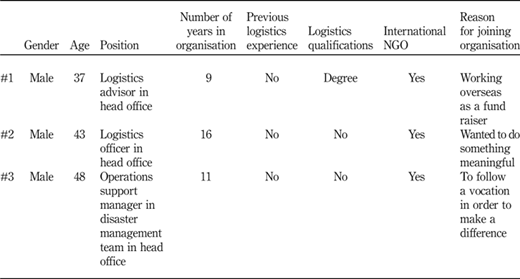
The sampling for the primary research targeted appropriate practising humanitarian logisticians. Appropriateness was assessed by first, the prospective informant should currently be a logistics expert working for a humanitarian organisation and second, they should have experienced working in connection with the Haiti earthquake (to ensure a degree of currency by being able to convey relatively up to date experiences). The Disasters and Emergency Committee web site (DEC, 2010b) was used to identify 12 humanitarian organisations involved in the Haiti disaster. Of the 12 approached, representatives from three agreed to be interviewed. A larger sample would have been preferred, however, the 2010 Pakistan floods were happening at the time and resources were understandably stretched.
Data for the primary research were collected by semi‐structured interviews, using an interview guide. The interviews were tape recorded and fully transcribed. The concept of grounded theory (Strauss and Corbin, 1998) was adopted for coding purposes, similar to that of Perry (2007): testing assumptions made through initial research by qualitative interviewing, from which the transcripts were iteratively analysed using open, axial and selective coding techniques.
In terms of validity and reliability, the multi‐strategy approach of using secondary and primary sources is a useful tool to validate research methods as it is essentially a process of “cross‐checking findings”. To provide further validity in the second stage, a copy of the interview guide is included in the Appendix. Also, a process described as respondent validation was adopted, whereby interviewees were asked to validate the transcripts of their own interviews. To summarise, the methodological approach adopted, the fully referenced sources of literature, the type of organisations that were targeted for interviews, and the transparency offered in term of availability of the interview guide and respondent validations, all contribute in meeting the alternative criterion of how good a qualitative study is, according to Lincoln and Guba (1985), as cited by Bryman and Bell (2007, p. 35) – that of “trustworthiness”.
4. Findings and analysis
Table II represents a summary of the logistics personnel interviewed.
The following discussion and analysis uses the themes from the conceptual framework as its departure point.
All the interviewees could understand the theoretical rationale of donor focus being on the response stage, or the “sexy stage”, as one described. However, none of them talked specifically, or could recall any experience of being directly impacted by donor influence. Not being able to give a real insight into the influence donors exert is noteworthy. Donors are arguably a humanitarian organisation's second most important stakeholder (after beneficiaries), yet the senior logistics managers displayed a lack of experience, or insight to their strategic importance. Whilst the purported underlying issue of donor influence adversely affecting logistics remains unsubstantiated, the findings indicate a lack of logistical involvement at a strategic level, or a lack of the strategic importance placed on logistics at an organisational level.
Two out of the three managers stated that the lack of perceived importance of logistics in their organisations, and NGOs in general, was a major challenge. Other challenges included:
[…] pressure to be seen as doing something
[…][…] long hours
[…][…] stressful situations […]
Apart from the perceived lack of importance placed on the role, none of them gave any indication of frustration or anger when discussing the other challenges. There was almost a sense of passive acceptance that these challenges “came with the territory”, which also concurred with the findings of Hilhorst and Schmiemann (2002) in their study of field volunteers.
The lack of importance placed on logisticians appears to have manifested itself in a distinct lack of career path, observed by all three. In a related topic, none of the three organisations represented had any prerequisite for prospective logistics staff to hold logistics qualifications. Pay and conditions were cited as one reason for this.
Whilst all three managers had heard of the CHL, with some of their logistics staff currently working towards it, time and funding were the reasons cited that prevented more people pursuing it, including themselves. More traditional qualifications in commercial logistic were not deemed appropriate, with two out of the three managers stating experience of working in the field for a humanitarian organisation would be perceived as more important than holding a logistics qualification. This is summarised in the following statement:
We want to send in logistics staff that can think on their feet and make decisions confidently and comfortably. You’re not going to get that from a text book.
Another statement captures the perception that humanitarian logistics is distinctly different:
Well, they may use track and trace bar code systems for example in private industry, so one of the first things I would say is welcome to the world of paper!
In terms of perceived rewards, all three interviewees described them in terms of personal gratification, certainly not monetary:
I am doing something worthwhile and am able to help.
[…] you can make a real difference.
Well I took a 50% drop in pay when I moved from the private sector […]
These statements reflect discussion in the literature review that suggested people undertook humanitarian work as it appealed to their ideologies of wanting to make a positive contribution to humanity. Similarly, the appealing “can do” nature of the job was specifically referenced by one interviewee:
You don’t tend to get the run of the mill personality clashes you may experience working in the UK, for example, as you simply get on with the job and get on with the people, and it's great!
Workers enjoying the “fruits of their labour” appears as a common theme and could well substantiate the observations made on the culture of humanitarian organisations in the literature review; that the work and management ethic appears deep rooted in ideology, that impacts behaviour in terms of a passive acceptance of the status quo, which is inadvertently contributing to the apparent low profile of logistics.
Some issues appeared in the conceptual framework as a result of a mentality that “every disaster is different”. The inference is that this mentality is hindering humanitarian organisations becoming more effective, as they fail to accept that opportunities for standardisation could exist. Whilst two out of the three interviewees agreed on the principle of each disaster being different, each could see commonalities at a macro level, and therefore opportunities for standardisation, with one in particular stating:
[…] that storage to us would be the central store where our work begins. The UN would see that as the end of their work. The most difficult part is from storage to beneficiary, but the literature tends to stop with the UN, e.g., getting the supplies to a central warehouse. So the commonalities that do exist do so up to that point.
This suggests the academic focus is at too higher level, or that the managers interviewed perceive their roles as “response during the last mile”, the more tangible part of “making a difference”.
In terms of collaboration, academic observations suggest a lack of interagency collaboration, and that a UN scepticism exists in some humanitarian organisations. The first point appears quite strongly contested by the research findings:
Examples of when we may work with others, is say Oxfam working on providing water as that is their forte, whilst we may do the public health and Med Air provide shelter. There is a scramble but it is an organised scramble often including a joint needs assessment. We all tend to recognise one another's strengths and weaknesses.
We also deal with a number of NGOs through the Inter Agency Procurement Group (IAPG) on an ongoing basis, collaborating with them when a disaster happens, lending each other emergency stocks, sharing specifications, details of suppliers etc.
The phrase “There is a scramble but it is an organised scramble […]” best sums up the level of collaboration between humanitarian organisation, as it appears to happen when events dictate, appealing to the pragmatic nature of the humanitarian worker perhaps.
In terms of humanitarian ethics being perceived as a barrier to more collaboration with the UN, the findings from the interviews found no evidence of this. Indeed, all three were very positive in their views of the UN, in particular when reporting favourably on their experiences in Haiti, when the UN Cluster coordinated many of the activities. However, one manager in particular described the increasing “power” of the Clusters:
Clusters also have access to the Central Emergency Response Fund (CERF) which a lot of the donors donate to. This is attractive to larger donors as they do not have to go through the whole proposals process for relatively small amounts of funding, with relatively small in size but large in number NGOs. Instead they would rather provide the funding into a central pool. As they continue to do this it effectively reduces the amount of funding available to individual NGOs and NGOs cannot access CERF on their own without going through their relevant Cluster. The problem for us is that whilst the Cluster may deem road or air bridges to be priority we cannot get trucks for that last mile. So whilst I see the benefits of greater collaboration there are also the downsides to it.
To summarise this particular perception, the interviewees demonstrated an awareness of potential contrasting drivers that governments and organisations such as the UN may have, but as long as their values and principles of helping the beneficiaries are not compromised, these alone would not deter them from working with them, although they would not be dictated to.
Regarding the suggestion of emerging competition for funding existed that adversely impacted the level of cooperation between logistics staff in the field, whilst two of the interviewees could understand the rationale to this theory, no evidence was found. Indeed, from the excerpts extracted above there is clearly a level of cooperation, with one interviewee commenting specifically …
During the response stage there has to be cooperation and anyone who is not cooperating is looked down upon by the professional organisations
… whilst another describes the “camaraderie” that exists between aid workers as being one of the rewards of the job, accusing the commentators of “looking for smoke when there is no fire”.
Humanitarian ethics and culture may well be an underlying issue but not as perceived in the conceptual framework perhaps. In essence, the issue appears more related to those characteristics of humanitarian organisations, and those of their workers, described in the literature review. These are the values and principles that promote the “can do” attitude and appeal to the “making a difference” culture. However admirable these may be, focusing on the job at hand and then moving onto the next in the same manner, may be hindering development. Essentially, a lack of learning and strategising at organisation and sector level may well mean opportunities to make an even bigger difference are being missed.
In term of standardised processes, procedures and systems, two interviewees reported their organisations having recently introduced elements of standardisation, in terms of basic processes and procedures. However, they perceived unilateral standardisation as a big enough challenge and doubted whether there would be the appetite to attempt standardisation across the sector. Indeed they could not see the benefit. The other manager interviewed reported having limited amounts of standard practice in his organisation but could see the benefits for widening this, but only within his own organisation.
In terms of track and trace systems all three reported using bespoke systems, normally incorporating Excel and/or Access. There seemed an apparent lack of enthusiasm amongst the interviewees towards automated track and trace systems. Perhaps a sense of realism was behind this, with one in particular commenting:
I’d like to go fully electronic but until electricity is available around the world 24/7 [disaster often bring down any available power] and people are fully trained this isn’t going to happen any time soon.
Turning to management systems and in particular performance, all three appeared inquisitive. This stemmed from the fact that all three had no experience of performance management, and therefore lacked the know‐how, or appreciation of how such a system could be fully utilised. However all three showed a willingness to learn, with one manager in particular commenting:
I think this is one area we are lagging behind the commercial sector and is an area where collaboration between commercial and humanitarian sectors could bring real benefits. We don’t really do it and I understand this is common across the sector, but it's something I think we should be embracing as a sector and engage with the commercial sector to learn how best we can utilise these tools.
However, this was countered somewhat by another of the comments that proved insightful:
[…] so I can measure outputs but not outcomes although we don’t do that much to be honest. We are not asked to measure, we don’t do much measurement and to be honest we tend to be too busy in the doing rather than how are we doing. I work far longer hours than I should perhaps do but this is because of my moral obligation not because my manager is on my back telling me to do so, or measuring my performance; but I agree measurement can improve efficiency.
The last extract was reminiscent of Davidson's suggestion that the culture of humanitarian organisations needed to change into one that embraced performance management as a management tool, rather than seeing it as an audit of inefficiency. It could also be conceived as to add credence to Power and his colleagues who had suggested that an element of self‐preservation exists in human‐based systems, rather than searching for and embracing new (technological) ways of working. For example, the earlier comment about lack of power negating any opportunity for a fully automated system could have been challenged. In today's world of solar‐powered chargers (Powertraveller, 2010) and phone/internet access via satellite technology (Globalcom, 2010), communications and management systems are not dependant on electricity or cabled infrastructure being available. This questions whether the apparent naivety is a mask for protecting the “hands on” human(itary) side of logistics. Or, in other words, are automated (management) systems per se, seen as taking the human aspect out of humanitarian, divorcing the workers from “the fruits of their labour”?
Moving on, despite the apparent reluctance to fully embrace technology, all three representative organisations are part of the 18‐month HELIOS management system pilot project (HELIOS, 2010). However, all three managers appeared somewhat sceptical, citing implementation costs as likely to be prohibitive, as each organisation would have to host and support their own version and train all their staff. Once again it is argued that in today's world of virtual hosting, or cloud computing (Commensus, 2010), and intuitive open source applications (Android, 2010), these obstacles are not insurmountable. In light of relatively recent technological advances, it could also be argued an 18‐month project appears a long time for something that appears inappropriate and outdated from the outset. However, as an attempt is being made to harness management systems by the HELIOS project, and the fact that the three organisations are embracing it by taking part, could the earlier inference of protectionism be discounted in this instance? This again opens up the wider argument, that the culture of action in this sector effectively blinkers its social actors, so when moving forward they do so somewhat haphazardly, not taking time out to conduct a comprehensive needs analysis for example, or scanning the horizon for developing technology. However, the analysis of this aspect concludes that whilst this may be a contributing factor, the lack of know‐how and expertise cannot be dismissed.
Whilst the semi‐structured nature of the interviews attempted to steer a course which allowed for diversions along the way, the final part attempted to draw out any issues not covered by asking “what are the most important issues for you, as a logistics manager, in your organisation?”
All three managers described how the recruitment and retention of appropriate staff was a key issue. In describing the reasons why this is an issue, they all cited the lack of importance placed on logistics with the perception being “anyone can do it”. This appears to contradict the rise in profile amongst both academic and practitioner communities that the literature review discovered. The following provides an interesting take on this:
Certainly, academia seems to be taking us seriously after the Asian Tsunami and the Logistics Clusters have heightened our profile somewhat, but it needs to be happening at NGO level with the senior teams and managers who have to be made aware of the ramifications of [poor] logistics.
In summary, the conceptual framework from the literature review is developed further to reflect a summary of the findings (Table III).
4.1 Root cause analysis of issues
In identifying the challenges facing humanitarian organisations engaged in disaster relief, a core issue emerged – the low profile of logistics. Analysis suggests the core issue is a manifestation of several key operational issues that are effectively feeding off one another. These operational issues were derived from the review and subsequently legitimised by the research and analysis that is summarised in Table III. However, the table also captures emerging themes that suggests the operational issues are also symptoms of higher‐order problems at an organisational level. The following model attempts to reflect this by layering the issues, therefore implying that the core issue cannot be resolved until the problems at the organisational level, and then the operational level, are addressed.
4.2 Organisational challenges: opportunities for further discussion/research
Culture and behaviour
The culture of humanitarian organisations is based on their principles and values. These appear integral to their work, influencing the make‐up of the organisation, as it attracts people with similar ideology. This research is not suggesting humanitarian organisations change their value and principles. However, it does suggest they acknowledge that the cultural characteristics of humanitarian organisations are synonymous with direct action in order “to make a difference”. This leads to humanitarian organisations being made up of people who are pragmatic in nature, risk takers and achievers. Having workers of the same ilk creates a one‐dimensional team. Evidence discussed suggests this single dimension characteristic is manifesting into different issues, whether it be too narrow a focus on response stage by donors, organisations and logistics personnel, stress on workers, or a propensity to move on to the next disaster, without learning lessons from the last one. There is little opportunity for organisational learning and so little organisational development is happening.
Know‐how
The lack of know‐how covers a multitude of areas. This is because humanitarian logisticians appear to have little in the way of up to date experience in working in the private or public sectors and “learning on the job” is common. Appealing to private and public sector social responsibility agendas could provide opportunities for organisational learning. This could be by secondments from either the third sector to private/public sector or vice versa.
As discussed, management tools in some sectors may not be appropriate in others, but some elements may be. To appreciate what is available, organisations could contact companies at the cutting edge of technology as a way of organisational learning. For example, solar‐powered chargers, phone/internet access via satellite technology, cloud computing and android technology have been discussed. Developers of humanitarian logistics systems such as HELIOS might consider engaging companies such as Apple, Google, Wikipedia and Microsoft. It need not be on an individual level, appealing to their social agendas, these companies could be invited to speak at humanitarian conferences to facilitate shared learning.
Career paths could also be forged. Experience in the field, the secondment opportunities mentioned and CHL could form an apprenticeship ladder.
Strategising
Finally, the challenge here is for humanitarian organisations to realise the importance of logistics to their relief efforts. Headline facts and figures from the review suggested:
logistics accounts for 80 per cent of disaster relief efforts;
40 per cent of a typical relief programme costs can be attributed to logistics, compared to 15 per cent in the commercial sector;
there was a 55 per cent rise in disasters from 2000 to 2004 when compared to 1995; and
that this upward trend is set to continue, with the number of disasters set to increase fivefold over the next 50 years.
Against this backdrop, logistics should be integral to strategic planning across the sector, in order to make it more effective and efficient, which can only be of benefit to the beneficiaries.
5. Conclusion
In meeting its aim the paper accumulatively achieved its objectives and answered the research questions. The development of the conceptual framework, and its subsequent testing, enabled the underlying issues of humanitarian logistics to be captured and fed into the findings and analysis. From the results presented in Table III, it transpired there was more than a 70 per cent compatibility match between the perceptions of issues derived from the available literature, and those perceived by practicing humanitarian logisticians. Whilst this suggests a significant degree of compatibility between the two communities, the findings of this paper argue that the issues are symptoms of issues/challenges of a higher order, at organisational level as depicted in Figure 4. These challenges were discussed further in order to offer a constructive answer to the final research question and provide focus for further discussion and research, which may benefit from testing the findings of this research with an extended sample that could include strategic decision‐making managers of humanitarian organisations.
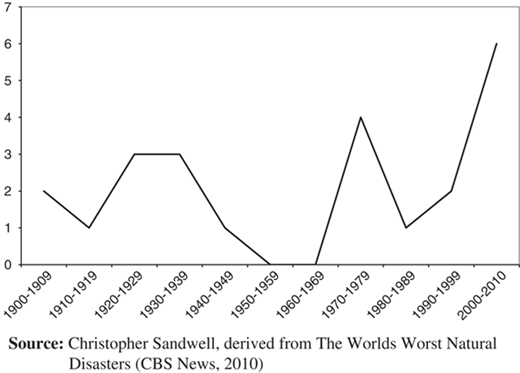
Frequency of worst natural disasters since 1890
Frequency of worst natural disasters since 1890
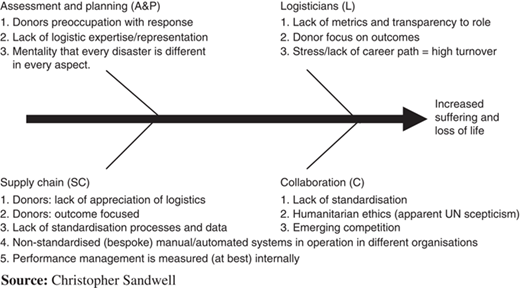
Cause and effect of evolutionary issues
Cause and effect of evolutionary issues
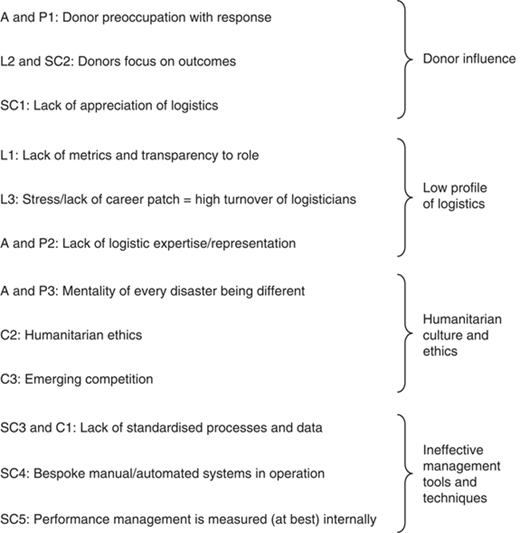
A conceptual framework of issues and underlying causes
A conceptual framework of issues and underlying causes
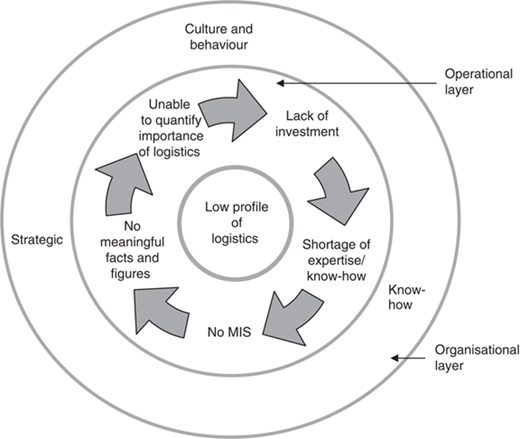
Model depicting the challenges facing humanitarian organisations
Model depicting the challenges facing humanitarian organisations
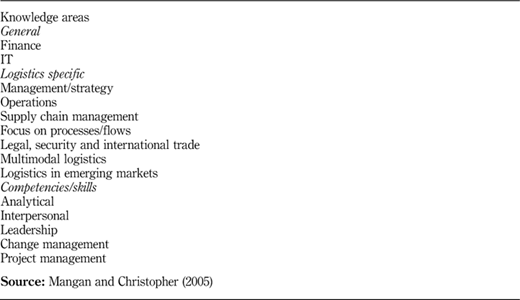
Competencies relevant for logistics managers of the future
Competencies relevant for logistics managers of the future
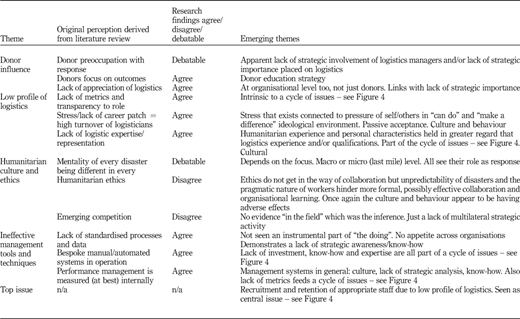
A summary of the research results
A summary of the research results
References
Appendix. An interview guide
About the author
Christopher Sandwell, Business Consultant, graduated from the Lancashire Business School's MBA programme with Distinction. Having enjoyed 15 years of various senior/strategic management roles, Christopher recently spent time in a volunteer programme with a community‐based organisation for the blind in Uganda, during which he developed a variety of capacity building projects. Christopher Sandwell can be contacted at: chrissandwell@hotmail.com

