


– Proactive planning strategies for “slow-onset” disruptions that affect humanitarian supply chains (SC) developed to address chronic pressing societal problems, can have a significant impact on boosting the operational and financial performance of these chains. The purpose of this paper is to develop a methodology that quantifies the impact of a risk mitigation strategy widely employed in commercial SCs, namely emergency sourcing (ES), on the performance of humanitarian SCs taking into account backorders’ clearance time, unsatisfied demand, and cost.
– Discrete event simulation is employed in order to evaluate alternative ES strategies based on a total cost criterion, which incorporates inventory-related costs, as well as premium contract costs paid for emergency replenishment. Backorders’ clearance time and time-to-recovery are also employed as a design parameters.
– The results document the significant impact of disruptions on expected total cost, and the beneficial role of ES in hedging against disruptions. To that end, the proposed methodology determines the optimal emergency contracted capacity for a given premium, or alternatively the maximum premium cost value that ensures the feasibility of the implemented ES strategy in the long-run, along with the associated cost and time savings, and reduction of the unsatisfied demand.
– The fundamental objective is to provide a decision-making support methodology for deciding on whether to implement an ES strategy or not in humanitarian SCs, and the level of the optimal contracted reserved capacity. The results could be of great value to aid providers, policy-makers, and regulators.
Introduction
Disasters, either natural (e.g. earthquakes, hurricanes, droughts, etc.) or man-made (e.g. terrorist attacks, refugee crises, civil wars, etc.), can inflict serious problems and damages to local communities (e.g. infrastructures, transportation networks, buildings, etc.), while they are usually associated with injuries, fatalities, and often waves of refugees (Van Wassenhove, 2006; Tomasini and Van Wassenhove, 2009; Kovács and Spens, 2007; Tatham and Houghton, 2011). The assessment of the disasters impact is very important given that only for the last decade there were on average 385 catastrophic events annually with more than 200 million people seeking for relief (Duran et al., 2013). Moreover, both natural and man-made disasters are expected to increase another five-fold over the next 50 years due to environmental degradation, rapid urbanization, and the spread of HIV/AIDS in the developing world (Thomas and Kopczak, 2005), while their global economic impact is estimated at approximately $960 billion (EM-DAT CRED, www.emdat.be). Consequently, the need for enhanced disaster management strategies and increased operational efficiency has arisen as a vital issue for the global economy in general, while humanitarian logistics/supply chain (SC) management has clearly a critical role toward this direction (Van Wassenhove, 2006). This is further heightened by the fact that logistics-related processes account for about 80 percent of the total costs in disaster relief operations (Trunick, 2005), while 65 percent of these expenditures are related to procurement activities (Falasca and Zobel, 2011).
According to Van Wassenhove (2006), 97 percent of the disasters are man-made disasters, while only 3 percent are classified as natural disasters. Additionally, disasters are partitioned into “sudden-onset” disasters (e.g. terrorist attacks, earthquakes, hurricanes, chemical leaks, etc.) and “slow-onset” disasters including both natural (famine, drought, etc.) and man-made disasters (political, refugee crises, etc.). In this work we focus on “slow-onset” disasters. Thus, the humanitarian SCs under study are established for a longer period of time and are operated under the auspices of governmental and/or non-governmental organizations. The target in these cases is two-fold; the relevant chains aim to be effective in assisting people, while operating at a sustainable cost. Sourcing and procurement strategies, as well as the associated SC design activities play a pivotal role toward attaining both goals.
In this work we address the issue of supporting local communities against “slow-onset,” recurrent disasters by effectively providing them with humanitarian aid in a cost efficient manner, through well designed, resilient SCs. “Slow-onset” disasters are characterized as “known-unknown” since local communities are often familiar with them, whereas the corresponding onsets are stochastic. Their slow-evolving nature allows for humanitarian aid preparation, and well-coordinated reactions, while despite the fact that the community life is seriously affected, public infrastructure is often not completely debilitated. Given the recurrent nature of the “slow-onset” disasters, there is merit in designing for chronic aid providing supply networks. In this context, we focus on established humanitarian SCs that have been developed to address such chronic societal problems in the aspect of long-term sourcing. To this end, motivated by best practices adopted in commercial SCs, this work explores the potential improvements in humanitarian system performance through the adoption of an emergency/dual sourcing strategy. Specifically, the aid distributor, apart from the primary supplier, further activates a contractual agreement with an alternative supplier, who can take over the sourcing during the recurrent disruptions of the local SC. According to this contract, the alternative supplier reserves a part of her capacity at a premium cost that has to be paid independently of the occurrence of the disruption. The system performance is evaluated in terms of cost and time in the long-run.
Specifically, a discrete event simulation methodology is developed in order to: quantify the impact of such disruptions on total cost and backorders’ clearance time of the humanitarian aid’s delivery, document the feasibility of the emergency/dual sourcing strategy in the long-run, and determine the optimal decisions that minimize expected total cost. In the rather dominated by qualitative studies literature where quantitative research efforts is very limited (e.g. Falasca and Zobel, 2011; Bagchi et al., 2011; Ertem et al., 2010; Trestrail et al., 2009), this work provides a quantitative methodology for estimating sourcing disruption impacts on humanitarian SCs, as well as the cost savings gained from the implementation of a hedging strategy. Specifically, the contribution of this manuscript includes the determination of the maximum premium to be paid in advance to the emergency supplier, in order to reserve the necessary capacity in a dual-sourcing context. Alternatively, the developed methodology can be employed to determine the reserved capacity level of the emergency supplier, given the premium cost for the corresponding capacity reservation contract, in order to decrease the exposure to disruption risks and ensure the feasibility of the applied risk mitigation strategy in the long-run.
The remainder of the paper is organized as follows. A literature review on the types and challenges of the humanitarian SCs is presented in Section 2. The analysis in this section further motivates the merit of the proposed risk mitigation strategy. Section 3 summarizes key issues of risk mitigation strategies for commercial SCs that could well serve as best practices for humanitarian SC management. Sections 4 and 5 present the system under study and the developed simulation model, respectively. Numerical experimentation follows in Section 6 that further illustrates the applicability of the proposed methodology. Finally, we sum-up with conclusions and future research in the last section.
Literature review
In general, there are four typical phases of decision making related to a disaster:
mitigation (pre-operation);
preparedness/preparation (pre-operation);
immediate response (during operations); and
reconstruction/rehabilitation (post-operation) (Altay and Green, 2006; Van Wassenhove, 2006; Kovács and Spens, 2007; Lee and Zbinden, 2003).
Additionally, on a time-based approach, Van Wassenhove (2006) distinguishes the aftermath of a disaster into two successive phases according to the needs that arise and the associated undertaken efforts by local and global NGOs, governmental agencies, and local authorities: a first crucial period with duration of approximately 72 hours, where “speed at any cost” is the main priority, and a second period with duration of about 90-100 days, where there is a trade-off between effectiveness in assisting people, and cost efficiency. The existing literature has focussed primarily on the mitigation and preparation phases, while there is a lack of research body on the recovery phase (Duran et al., 2013; Kovács and Spens, 2007). On the other hand, humanitarian organizations often focus on short-term relief and distribution operations (Oloruntoba and Gray, 2006).
The main goals toward providing effective humanitarian aid are to reach the affected area within the shortest possible time, while transporting an adequate size of supplies to the scene of the disaster. Furthermore, there are several attributes that have been identified by both academicians and practitioners alike, in achieving the provision of an effective disaster relief while being efficient at the same time. Oloruntoba and Gray (2006) recognize three axes that a humanitarian SC should focus on, namely: the development of a planned approach in order to increase its efficiency, the adoption of a longer-term/strategic perspective, and the coordination of its functions. Balcik et al. (2010) examine the vital issue of pre- and post-disaster coordination amongst actors in humanitarian relief chains, in the aspect of current and emerging practices, challenges, and opportunities. Moreover, Duran et al. (2013) recognize the build-up of emergency response capacity, as well as preparedness, as key elements of a successful aid, and propose the assurance of high availability of relief supplies through advanced procurement (inventory pre-positioning).
Further, Kovács and Spens (2007) underline the role of risk management for regional actors regarding the “preparation for disasters” phase, as well as the role of extra-regional actors concerning the strategic planning of disaster relief operations. In addition, local suppliers have been recognized by several researchers and relief organizations as critical partners of a humanitarian SC, as local sourcing can have a beneficial role in stimulating the local economy, while it provides faster and low cost deliveries (Duran et al., 2013; Sowinski, 2003; Falasca and Zobel, 2011). On the other hand, global (usually distant) suppliers have also a vital place in the humanitarian sourcing framework (Blecken, 2010), usually providing competitive prices, high quality, and unaffected adequate capacity. In this context, there is a need for alternative suppliers in order to be better prepared and respond effectively to a disaster (Van Wassenhove, 2006).
Procurement and sourcing have a critical role among humanitarian logistics activities (i.e. disaster preparedness and planning, procurement, transportation, warehousing, tracking, and tracing, and customs clearance) (Thomas and Kopczak, 2005) as they account for approximately 65 percent of the expenditures of the relevant disaster relief operations (Falasca and Zobel, 2011). Moreover, the relevant coordination mechanism has been recognized by Balcik et al. (2010) as critical toward increasing efficiency in humanitarian relief chains. In spite of coordination’s vital role, the relevant literature is rather limited and mostly qualitative, while few quantitative research efforts were developed just during the last four years. In this context, Falasca and Zobel (2011) present a quantitative model in order to provide practitioners with a decision-making support tool regarding humanitarian procurement in a stochastic environment. More specifically, their proposed two-stage procurement strategy allows for an initial supply order that is placed just after the disaster’s onset (stage one, when demand is unknown), and for amendments at a later second stage, when demand for relief and available resources have become known. Moreover, Ertem et al. (2010) propose a multiple-buyers (humanitarian organizations)/multiple-bidders (suppliers) framework that integrates the three critical phases of procurement auctions, i.e. announcement construction, bid construction, and bid evaluation, into a comprehensive entity. Their framework is verified using simulation and integer programming techniques and aims at facilitating and increasing the efficiency of both immediate response and long-term procurement activities. Additionally, Trestrail et al. (2009) propose a decision support tool which employs mixed-integer programming modeling to assist food aid carriers and suppliers in improving their bidding strategies in the field of humanitarian logistics. Finally, Bagchi et al. (2011) present an optimal auction mechanism so as to deter and minimize bidders’ gaming, promote pre-bid synergies among carriers and suppliers, enhance bid participation, and deliver higher food aid volumes.
The efficiency of a humanitarian SC in providing relief to local populations is captured by employing traditional performance metrics such as disaster response time, fill rate, percentage of demand supplied fully, and meeting donors’ expectations, a rather particular performance evaluation indicator different from the classic SC performance metrics (Ertem et al., 2010). Moreover, the speed of onset of the disaster has also a critical role in the relevance of the selected measures. On the one hand, the response to a “sudden-onset” disaster is time sensitive, while on the other hand, in the case of a “slow-onset” disaster or recurrent disasters, the role of time is less critical and the cost of providing timely, uninterrupted, and sufficiently goods and services gains more attention by NGOs, governmental authorities and local or global suppliers.
Generally, differences and similarities between commercial and humanitarian SCs have been identified and studied by several authors (e.g. Balcik et al., 2010; Van Wassenhove, 2006; Ertem et al., 2010). The main goal of a typical SC, i.e. “getting the right goods, at the right time, to the right place and distributed to the right people” is indisputably applicable to the general humanitarian framework (Van Wassenhove, 2006). Additionally, the core concept of risk management regarding business supply networks that aims to manage risks (including disasters), uncertainties and vulnerabilities in a timely manner, while being cost-efficient (Kovács and Tatham, 2009), is generally in line with the corresponding humanitarian risk management framework. Of course, a typical humanitarian chain is focussing toward the reduction of lead times, and is less sensitive to costs at least for the very first hours in the aftermath of a disruption. On the other hand, there are several structural (e.g. demand pattern, supply pattern, stakeholders, physical environment, etc.) and operational/procedural (lead times, political climate, social media, performance measurement, equipment, etc.) differences between commercial and humanitarian SCs. These differences pose the need for the development of specialized and/or ad hoc SC risk management strategies and practices in the humanitarian aid field.
Evaluating both types of logistics networks, Van Wassenhove (2006) remarks that humanitarian organizations are more than a decade behind the corresponding private sector ones. The merit of transferring and adapting certain business logistics concepts from the commercial to the humanitarian field has further been supported by Ernst (2003) and Kovács and Spens (2007). A brief and up-to-date discussion of such promising ideas from risk management of commercial SCs that could be modified and then implemented to humanitarian SC management is provided in the following section.
In conclusion, this work aims to add to the currently limited quantitative literature regarding sourcing in “slow-onset” humanitarian SCs by focussing onto the associated recovery process from a long-term perspective. In this context, we capture the purely stochastic nature of humanitarian supply disruptions and sourcing problems and propose a new simulation methodology so as to support the relevant decision-making processes. Exploiting the advantages of the similarities between commercial and humanitarian logistics, we present an alternative approach to sourcing operations in humanitarian SCs. To our knowledge, this research constitutes a first effort in identifying and quantifying the beneficial aspect of tailoring emergency sourcing (ES) strategies to humanitarian SCs. Finally, the proposed simulation methodology provides estimates for sourcing costs by taking into account both disruption and contractual agreement costs (between the aid distributors and suppliers). These estimates could guide policy-makers, regulators, and managers alike, in adopting an emergency/dual sourcing policy, and/or utilizing supplier selection criteria.
Lessons from risk management for commercial SCs
Two issues that have clearly emerged as critical throughout the Supply Chain Risk Management (SCRM) literature are vulnerability and resilience. SC vulnerability is a field of business and academic interest broader than integrated SCM, business continuity planning, and commercial corporate risk management, as it has additional critical political and public policy dimensions (Peck, 2005). It has evolved and been extended in several cases to include the degree of corporate vulnerability, which further is proportional to the levels of time, functional and relational dependencies, and the negative consequence of these dependencies in a SC (Svensson, 2004). A company’s vulnerability to a disruptive event can be viewed as a combination of the likelihood of a disruption and its potential severity. Furthermore, managers have been aware for some time of its critical role in SCRM since even earlier studies documented that the degree of corporate vulnerability was expected to rise (Jüttner, 2005).
There are two perspectives on proactive risk management that companies can focus on, namely, the pre- and post- event management:
(i) risk management/security (pre-event): reducing the vulnerability to SC disruption events; and
(ii) resilience (post-event): building up capabilities to bounce back quickly from various SC disruption events.
Evidence suggests that management concerns regarding the disruptive effects of catastrophic events are well founded. In terms of probability, findings from a GM analysis of catastrophic events suggest that the collective probability that certain parts of the SC will face a disruption is high, even if the likelihood that any single facility or supplier will be affected is small (Sheffi and Rice, 2005). Further, a comprehensive analysis was provided to highlight the need for managers to examine the concept of resiliency in their SCs. Resiliency refers to a firm’s capacity to survive, adapt, and grow in the face of change and uncertainty (Fiksel, 2006). Thus, the challenge is to establish a proactive process to identify possible sources of catastrophic risk, to measure potential effects on the SC, and then to develop appropriate countermeasures that may prevent or mitigate the effects. Indicatively, examples of countermeasures might include moving a warehouse to a hurricane-safe area, maintaining excess inventory or building additional protective infrastructure to prevent flooding, etc.
Specifically, there are three strategies that a firm can employ to manage SC risk, particularly for risk sources which are labeled as “unknown-unknown” such as natural disasters, geopolitical problems and epidemics (Simchi-Levi, 2010): creating capacity redundancy, increasing velocity in sensing and responding, and adding flexibility to the SC. Capacity redundancy needs to be built-in at the design stage, while speed in sensing and responding requires accurate and timely information, and finally, a flexible SC requires partners that embrace flexibility, work synergistically toward the same objectives, and are willing to share the costs and benefits.
Risk mitigation strategies imply multiple impact scenarios for the different risk categories, which can impact distinctly the business operations. Iakovou et al. (2009) provide a comprehensive methodological framework for designing effective and resilient SCs for logistics service providers. The identification of the appropriate risk mitigating strategy leads to the avoidance of disruption impacts as it can deal effectively with risk, improve resilience and reduce vulnerability of the SC at the same time (Vlachos et al., 2012). Companies need to assess SC disruptions from a business continuity planning perspective and understand what levels of infrastructure their chains deal with, and finally to set up reaction plans having taken their specific SC environments into consideration (Park et al., 2013).
Lately, Simchi-Levi introduced the risk exposure index (RI), a novel concept to capture SC risk, utilizing the time-to-recovery (TTR) (Simchi-Levi, 2012). TTR captures the length of time it takes for a SC to fully recover from a major disruption, such as by ramping up production elsewhere, finding new sources of supply, utilizing new materials, or by other countermeasures. That in turn, leads to the estimation of the financial impact of the disruption through its lost sales during TTR.
Focussing on the time-to-recovery after a disruption, companies need to employ effective and economically feasible proactive risk management strategies. The first step is focussing on the supplier network, and especially on how the delivery of parts can ensure uninterrupted operations in any case. Researchers have considered sourcing decisions related to insourcing and outsourcing (Tsai et al., 2010), off-shoring and near-shoring (Allon and Mieghem, 2010), and the number of sources (Zhou and Fang, 2009).
Although single sourcing (SS) improves communication due to a close buyer-seller relationship and can further lead to lower costs as a consequence of economies of scale (Zeng, 2000), the uncertainty of a specific buying-selling situation makes dual/multiple sourcing an attractive strategy (Zhou and Fang, 2009). Dual sourcing has grown into a widely accepted and efficient sourcing strategy in real-world corporate practice (Wang et al., 2010; Yu et al., 2009; Tang, 2006; Chopra and Sodhi, 2004). Yu et al. (2009) document that dual sourcing may be the optimal sourcing strategy in several SCs. Wang et al. (2010) prove that dual sourcing is more efficient than processes improvement when the reliability of the suppliers is quite different. Moreover, Lyon (2006) stipulates that dual sourcing can lower significantly procurement costs. To this end, it is crucial to find out the level of uncertainty at which the SC should shift to dual sourcing (e.g. Yu et al., 2009).
An ES risk mitigation strategy further provides an organization with the opportunity of rerouting following a disruption. However, problems of monopoly could rise after disruption, and the company could lose bargaining power over their suppliers. In this case, the “go-to” supplier could increase or renegotiate prices. Iakovou et al. (2010) and Xanthopoulos et al. (2011) provide quantitative analytical models for SCRM in systems with dual sourcing. While in the dual sourcing strategy the setup cost could be higher due to the additional supplier, intense competition among the suppliers could lead over time to price reduction. Additionally, when a company reroutes its supply to alternative suppliers, the latter might not be able to provide the buyer with his entire demand, as they might have limited ability to increase production levels. Consequently, the step of calculating the supply share before disruption is followed with investigating supply share after disruption. The decisions are made in order to minimize the long-run average costs comprised of setup, ordering, quality, and lost order related costs (Davarzani et al., 2011).
Humanitarian SCs for “slow-onset” disasters exhibit several common characteristics with commercial chains thus indicating the potential merit of adopting similar design and management strategies. Indicatively, cost and response speed for all such chronic humanitarian SCs can be improved by designing resilient chains. Finally, another commonality hinges upon the need for flexibility in the context of collaboration among aid workers, governments and public services, NGOs, global organizations, and local or even multinational enterprises.
Description of system under study
We consider a region with chronic needs for humanitarian aid where an aid distributor (e.g. NGO, local government, or a business partner) has already established a local SC to satisfy the local demand for specific goods (e.g. food). Demand is assumed stochastic and stationary, i.e. the probabilistic behavior of demand for the particular goods is assumed to be the same before, during, and after the disruptive event. While this condition holds for a significant number of humanitarian aid cases, it still does not capture humanitarian SCs that are hastily developed in the aftermath of a disruption. Therefore, the proposed methodology applies in humanitarian aid where demand is directly related to the population that resides in the region (e.g. for food) and it cannot be applied, at least in the form that ES is considered in this work, during literally unpredictable “sudden-onset” man-made or natural disasters, where demand explodes in the aftermath of the disruption. Furthermore, the distributor employs a popular periodic review ordering policy for replenishing his inventory. We assume that the local SC operates with limited capacity, but sufficient enough to cover the demand.
The region is characterized by instability (e.g. political), which from time-to-time triggers disruptions in the local SC. When a disruption incident occurs, it is assumed that the local chain is completely “on-hold,” not being able to satisfy any outstanding orders. The duration of the disruption event is assumed to be stochastic, while all unsatisfied demand is backordered and is fulfilled later when adequate quantities become available.
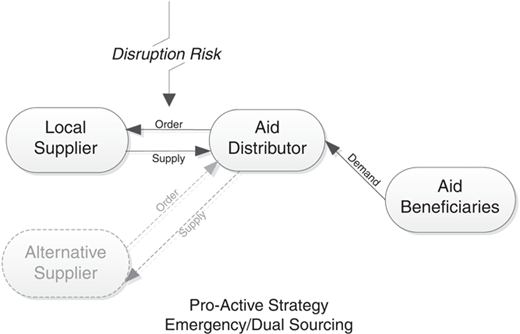
An option to mitigate this situation is for the aid distributor to contract an alternative supplier (emergency/dual sourcing strategy) with similar capabilities. According to the contracted partnership, the aid distributor reserves a part of the alternative supplier’s capacity that may be activated in case of the local supply disruption, acting as a “stand-by” capacity. The overall humanitarian SC structure is depicted in Figure 1.
The aid distributor has to decide on the reserved capacity level (contracted capacity to be allocated to the alternative supplier), which is defined as a percentage of the local SC’s capacity. This percentage may range between 0 percent (single local sourcing) and 100 percent (full substitution of the primary local supply channel). According to a contractual agreement, the aid distributor is obliged to pay the alternative supplier a premium cost (reservation cost), which is accrued linearly proportional to the reserved capacity. In exchange for this charge, the alternative supplier is committed to release the agreed capacity at the time that the aid distributor raises the relevant claim.
Moreover, it is assumed that the switch from the local supply channel to the alternative one, takes place instantly (with information sharing there is no delay in the emergency supplier’s response), and that the local and the emergency suppliers cannot suffer a disruption simultaneously; hence, there is at least one operating supplier at any time. When the disruption period terminates, all new orders are directed back to the primary supplier, while the alternative supplier continues to deliver his outstanding orders.
In this context, the aid distributor has to answer two critical questions:
Is an emergency/dual sourcing risk mitigation strategy beneficial in the long-run?
If yes, what is the optimal emergency supplier’s capacity to be contracted/reserved for a given premium cost, or alternatively, what is the acceptable premium cost for a given reserved capacity level?
In order to obtain meaningful managerial insights the following alternative strategies are considered herein:
Single sourcing (SS) strategy: no action is undertaken from the aid distributor to mitigate the impact of a potential disruption.
Emergency/dual sourcing strategy (ES): an additional capacity (emergency supplier) is reserved from the aid distributor to mitigate the impact of a potential disruption.
Additionally, a reference scenario is also employed, namely the basic scenario (BS) for which there is no disruption and no risk mitigation action undertaken by the aid distributor.
The aforementioned strategies are assessed based on the following key performance metrics:
Expected total system cost per time period, which includes: ordering cost, holding cost, backordering cost, as well as the capacity reservation cost/premium cost that is charged when the ES strategy is implemented. The purchase cost is the same for all options and therefore it does not affect the decision-making process.
Expected time for the system to bounce back in its original stage prior to disruption (TTR).
Average time for which there are outstanding backorders (backorders’ clearance time); this KPI is especially critical in humanitarian logistics as it captures the time for which the affected population will have to suffer a lack of critical goods.
The discrete event simulation model
The nature of SCRM problems is purely stochastic and complex encompassing the effects of a considerable number of stochasticity sources; thus, the analytical solution of these problems is usually mathematically intractable. Therefore, simulation methodologies are widely accepted as tools of high reliability, versatility, and practicability, and thus they are frequently used in the fields of SC and risk management analyses (Schmitt and Singh, 2009, 2012). In this context, discrete event simulation (DES) is employed in the analysis of the dual sourcing system under study.
A DES model was developed to emulate the system’s SC-related operational procedures, such as the typical inventory management processes (order placement, demand fulfillment, production/transportation lead time, etc.), the risk factor (disruption event), and the risk mitigation strategy (emergency/dual sourcing, reserved capacity level). The model can be readily fine-tuned to describe the different scenarios under study.
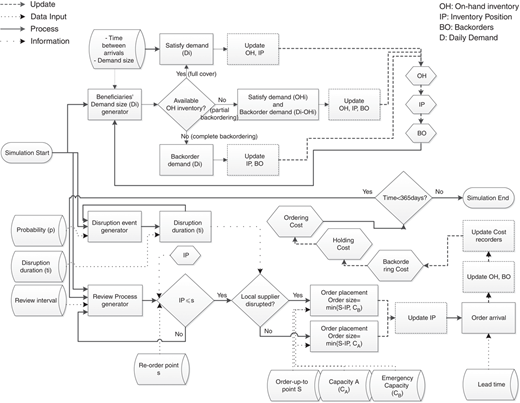
Figure 2 exhibits the diagram of the DES algorithm. From a technical point of view, the model includes three main loops: first, the demand generation and fulfillment, second, the periodic review ordering policy, and third the disruption event and implemented strategy loop.
The first loop generates the beneficiaries and the relevant demand needs, and the demand fulfillment process; the demand is either satisfied by the aid distributor on-time, whenever on-hand inventory is available, or the relevant claims are backordered. The second loop emulates the inventory control policy implemented by the distributor, namely the associated periodical review of the inventories, the supply order placement procedure, and the order delivery process, where the distributor receives the order from the local or the alternative supplier. The third loop emulates the disruption and risk mitigation concepts, namely the triggering of the disruption event and the associated local supply channel disruption for a random time period, along with the implementation of a particular sourcing strategy by the aid distributor, including the shift from the primary to the alternative supplier in case of a disruption, and vice-versa. Finally, a performance metrics mechanism measures in real-time the system’s performance key indicators (time-to-recovery, costs, backorders’ clearance time), as well as several secondary metrics (such as inventory position, backorders, and on hand inventory).
The beneficiary’s demand is modeled as a Poisson process with rate λ>0 individuals (per time unit), while the demanded quantity for each order follows a Poisson distribution with a parameter μ>0 product units. The aid distributor employs a periodic review (s, S) inventory policy, where the review period is R time units and the reorder and order-up-to points are s and S (sS), respectively. The capacity of the local SC, denoted by C product units per time unit is adequate to satisfy the aid distributor’s orders in the long run, while the supply lead time is assumed to follow a triangular distribution with parameters d>0, e>0, f>0.
The disruption risk is modeled as follows. The local SC faces a disruption event with a probability p. In case of a disruption, the local SC operations are suspended for a random time period (disruption duration) which follows a triangular distribution with parameters l>0, m>0, n>0. In order to hedge against supply disruptions, the aid distributor reserves an extra capacity from the alternative supplier at the level denoted as the proportion RC of the overall capacity C, reserved at a premium/reservation cost of (Inline Equation 1) monetary units per reserved capacity unit.
The evaluation of the ES strategy is conducted by employing the expected total cost minimization criterion, taking into account the following cost elements: ordering cost k (per order), inventory holding/carrying cost h (per time unit and product unit), and backordering cost b (per time unit and product unit).
The nomenclature of the system under study is provided in Table I.
The developed models were verified in order to ensure that they are accurate representations of the system under study by employing a set of different practical tests, including: the checking of the model elements one-by-one, the checking of the intuitively expected outcomes by tracking each possible event along the flow diagram and the simulation run, and the examination whether the outputs are reasonable under various input parameter settings, or not. Moreover, the validation process included a few more empirical procedures such as the observation and checking of the results based on experience, and the comparative evaluation of the results for various scenarios and problem settings.
The models were developed in the Arena™ Simulation Software. A set of 1,000 replications was executed for each problem configuration corresponding to each one of the scenarios. The simulation time-length of a replication was one year (time horizon of the analysis). The average time of a simulation run was 2 minutes using an Intel® Pentium® CPU 3.60 GHz.
Numerical example
The evaluation of the ES mitigation strategy was conducted by measuring the disruption’s impact on both cost and backorders’ clearance time. To that end, the SC’s operation was simulated for a period of one year employing the parameter values of Table II. To capture the transitional stage following a disruption event, it is assumed that only one disruption may occur during the year. Furthermore, to be able to conduct meaningful comparative analysis of all scenarios it is assumed that if a disruption occurs, the corresponding event takes place on the same time epoch (Day 50). This time epoch was chosen so that the system has plenty of time to attain steady-state prior to its disruption.
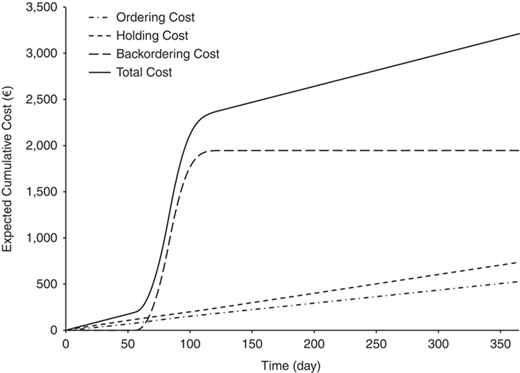
Figure 3 illustrates the dynamic behavior of the expected total cumulative cost as well as of its components (ordering, holding, and backorder costs) under a SS strategy, as captured after running the simulation model and averaged over a repetition of 1,000 annual cycles of operations. In this case, the aid distributor sustains the more severe consequences of the SC disruption.
It is observed that the slopes of the expected total cost and all its components remain constant (steady-state operation) for the period before Day 50 (disruption time epoch) and the period after Day 100, i.e. the time period before the disruption, and in the aftermath of the disruption, when the system has resumed its sourcing from its primary supplier. Moreover, the disruption event results in a rapid increase in the expected backorder cost just after Day 50 that significantly affects expected total cost. The system establishes stability (end of transitional state) after Day 100, with a TTR of 50 days.
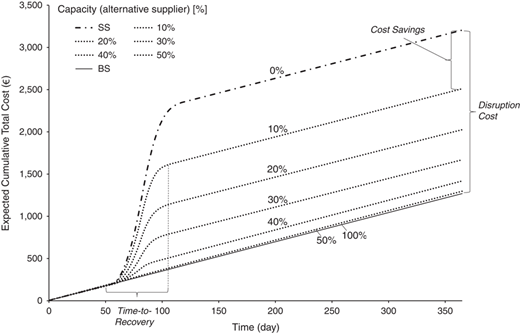
By contrast, when applying an ES strategy the expected impact of disruptions on total cost is significantly reduced. Figure 4 depicts the effect of the implemented ES strategy with different reserved capacity levels on the expected cumulative total cost.
The upper curve in Figure 4 that corresponds to the highest average cost, represents the SS strategy (RC=0 percent) and is identical to the expected cumulative total cost curve of Figure 3. Actually, this is the worst scenario for the problem under study, as the aid distributor is facing the full-scale consequences of the disruption, given that she has decided earlier to do nothing to hedge her supply process against such events. The lowest curve corresponds to the ES strategy, where the aid distributor retains a full back-up (RC=100 percent) of her standard supply capacity. In this case, the disruption does not have any impact on system cost, given that the SC does not experience any disruptions or even delays as the adoption of the ES strategy ensures the full continuity or the supply process. Eventually, the system behaves as in the BS strategy case, i.e. the case where any kind of disruption effect is counterbalanced. All the other intermediate curves correspond to ES strategies for incremental levels of RC that range between 0 and 100 percent.
Useful insights regarding the additional cost that is induced to the system due to the disruption, along with the corresponding cost savings resulting from the implementation of a specific risk mitigation strategy can also be obtained employing Figure 4. Specifically, the “disruption cost” can be defined as the difference of the expected total cost at the end of the planning horizon between the Basic Scenario (BS) and the SS strategy. The maximum “disruption cost” is observed when no hedging strategy is employed and captures the increased additional cost that the humanitarian SC has to sustain.
The adoption of a risk mitigation strategy may further reduce the disruption cost. That can be viewed as “cost-savings.” Indicatively, the “cost savings” that are accrued from an ES strategy with RC=10 percent are illustrated in Figure 4. These cost savings may not be fully recovered due to the premium that has to be paid to the alternative supplier for reserving the back-up capacity; thus, the aid distributor buys off the aforementioned “cost savings” at a given premium cost that, of course, should not exceed her benefits (cost-savings). Therefore, these “cost savings” represent an upper bound for any premium price that is to be paid to the alternative supplier in order to be acceptable and thus for the ES strategy to be justified. Thus, the overall effective cost after a disruption under an ES strategy is simply:
A more intense scrutiny of Figure 4 reveals another interesting insight. The curves for RC values of more than 50 percent are very close to each other and almost coincide with the BS curve, thus documenting that at least for the case under study, the aid distributor could regain almost the entire disruption cost by reserving only 50 percent of the original capacity. As a matter of fact, irrespective of the specific parameters of the system realization under study, it appears that in any case, there exists an upper bound (<100 percent) for the capacity that should be reserved from the emergency supplier.
Figure 5 further illustrates the effect of the ES strategy on the expected backorders’ clearance time and on the time of recovery for various contracted capacity levels. Specifically, it illustrates the average number of days needed to clear out any beneficiaries’ orders. The horizontal axis corresponds to the time elapsed since the disruption date. It is observed that in the case of no emergency supply option, the expected backorders’ clearance time can exceed six days, while when an alternative supplier has been contracted, this time is considerably lower. Moreover, the figure further identifies the time to recovery, i.e. the elapsed time needed for the system to regain negligible response time to an order.
The results indicate that there are several improvements to the humanitarian SC performance, when tailoring and implementing dual/ES to humanitarian aid chains. Given that disruption-related costs are extremely high, and that these costs are increased dramatically in the specific type of disasters that humanitarian aid logistics deal with, the proposed dual sourcing strategy appears to significantly reduce sourcing costs while further leading to substantial cost savings. Moreover, the results demonstrate that such improvements can be attained at a rather reasonable premium cost.
Additionally, the methodology provides an upper limit for the relevant sourcing operations in order for them to be cost effective. This upper bound could act as a threshold milestone in contracting suppliers for the long term, as a criterion in the corresponding suppliers’ selection process, and/or as a point for shifting to another risk mitigation strategy of lower cost. Furthermore, dual/ES strategies appear to have a beneficial effect on the expected backorders’ clearance time to a disruption. The obtained backorders’ clearance times when employing the proposed emergency/dual sourcing context are intuitively sound. Finally, there is an additional significant reduction regarding the time-to-recovery in the aftermath of the disruption, while this significant improvement can also be attained at a reasonable cost.
Conclusions
In this manuscript, we tackle the issue of implementing a pro-active risk mitigation sourcing strategy as a countermeasure against recurrent “slow-onset” disruptions in humanitarian SCs. For this kind of chains, providing the necessary aid in a cost-efficient manner is a focal point, while backorders’ clearance time remains a critical decision-making parameter. Exploiting the similarities between the aforementioned and commercial SCs, we examine the potential improvements to the humanitarian chains’ performance that could be induced by implementing widely accepted sourcing strategies. To this end, a DES methodology is developed in order: to first, quantify the impact of the corresponding disruptions on total cost, backorders’ clearance time and unsatisfied demand for humanitarian aid, second, document the feasibility of the emergency/dual sourcing strategy in the long-run, and third, determine the optimal decisions that minimize expected total costs. The methodology incorporates various criteria that are usually employed to evaluate sourcing strategies in humanitarian logistics, namely, total cost, backorders’ clearance time, and recovery time.
In this context, emergency/dual sourcing appears to have a beneficial effect on several aspects of the humanitarian aid performance. In the exchange of a rational premium cost paid for implementing the strategy, i.e. employing an alternative supplier and reserving a part of her capacity for hedging against risk, the humanitarian SC, and more specifically the aid distributor, receives a significant reduction in disruption costs, time needed to clear backorders, and time-to-recovery. Moreover, the proposed methodology identifies a cost range that can ensure economic sustainability, thus playing a key role in the supplier selection process.
The developed methodology, to our knowledge, is a first effort in highlighting the substantial role of simulation-based decision-making tools in ensuring the adequate, cost-efficient, and timely provision of humanitarian aid in the aftermath of real-world recurrent “slow-onset” disasters. In this direction, the study of this particular type of humanitarian chains of lower variability and more stable demand, which, all the while, account for the vast majority of the relevant humanitarian relief operations around the globe, could be extended to further provide a quantitative methodology toward developing more sophisticated models regarding the efficient management of relief operations. The proposed methodology adequately serves its goals by proposing a comprehensive methodology for evaluating sourcing strategies, while engaging commercial logistics strategies to humanitarian sourcing decision-making process.
In the future, we intend to examine the extended overall supply network in order to obtain additional managerial insights regarding the role and the effects of distribution and sourcing strategies on system performance in the aftermath of “sudden-onset” disasters. Indicatively, an interesting exploration would be that of identifying the role of Bayesian post-event forecasting, and how early information could modify the implemented strategy. Moreover, future research could focus on the determination of threshold levels regarding critical performance indicators that could guide aid providers into efficiently dealing with disruption incidents (e.g. when should one switch to an emergency mode?). Additionally, an interesting research issue is the investigation of the manner that supply disruption effects are gradually propagating in multi-tier humanitarian SC networks with tight production constraints. Finally, the investigation of additional alternative risk mitigation strategies, as well as the determination of critical areas where each specific strategy could be beneficial (e.g. local vs global suppliers, emergency vs long-term humanitarian aid chains, etc.), appears to be of great practical value to real-world humanitarian logistics managers.
Humanitarian supply chain structure diagram
Humanitarian supply chain structure diagram
Total cumulative cost (SS strategy)
Total cumulative cost (SS strategy)
Impact of dual sourcing policies on total cumulative cost
Impact of dual sourcing policies on total cumulative cost
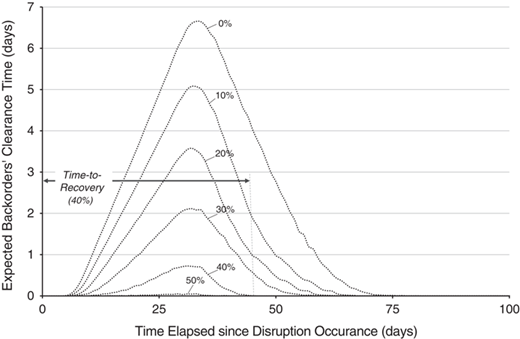
Impact of dual sourcing policy on backorder's clearance time and time to recovery
Impact of dual sourcing policy on backorder's clearance time and time to recovery
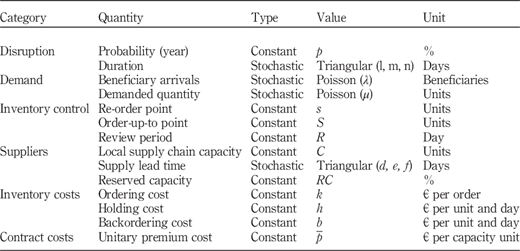
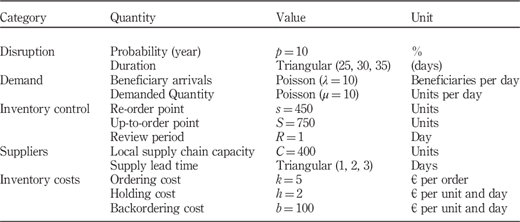
Numerical values for system parameters
Numerical values for system parameters


References
Further reading
About the authors
Dr Eleftherios Iakovou is a Professor in the Department of Mechanical Engineering of the Aristotle University of Thessaloniki (AUTh), Greece, a Visiting Professor at the International Hellenic University, Greece and at the University of Miami, USA, and the President of the Alexandrian Innovation Zone S.A., Greece. His teaching, research, and consulting interests include supply chain management, port management, logistics, innovation management, applied operations research, production systems, revenue management, emergency response management, and strategy development. He has published extensively (more than 140 papers) in top peer reviewed journals and refereed conference proceedings. Furthermore, Professor Iakovou has consulted extensively for a number of governmental and corporate organizations both in the USA and in EU, and has been conducting executive educational and training programs for Fortune 500 companies for more than 15 years. Dr Eleftherios Iakovou is the corresponding author and can be contacted at: eiakovou@auth.gr
Dr Dimitrios Vlachos is an Associate Professor at the Department of Mechanical Engineering of the Aristotle University of Thessaloniki. He has developed research activities in the fields of inventory control in supply chains (logistics), operational research, stochastic methods, and business evaluation. He has participated in more than 40 research projects (in three of them as a scientific coordinator and in five of them as project manager). He has authored or co-authored more than 30 papers in scientific journals and more than 50 publications in conference proceedings. He has also contributed in the authoring of five book chapters.
Dr Christos Keramydas is a Senior Researcher at the Laboratory of Quantitative Analysis, Logistics, and Supply Chain Management, Division of Industrial Management, Department of Mechanical Engineering, Aristotle University of Thessaloniki (AUTh), Greece. He holds a Diploma degree in Mechanical Engineering (School of Engineering, AUTh), a MSc degree in Statistics and Modeling (School of Sciences, Department of Mathematics, AUTh), and a PhD diploma in Logistics and Supply Chain Management. His research interests, and his teaching experience (teaching assistant) are spread in the fields of statistics, operations research, simulation applications, supply chain management, logistics, and supply chain risk management. He has published more than 20 articles in several refereed scientific journals, and national/international conferences’ proceedings.
Daniel Partsch is a PhD Candidate in the Laboratory of Quantitative Analysis, Logistics, and Supply Chain Management, Division of Industrial Management, Department of Mechanical Engineering, Aristotle University of Thessaloniki (AUTh), Greece. He received his BBA from the University of San Diego, USA and his MSc degree in Logistics and Supply Chain Management from Cranfield University, UK. His research interests concentrate on simulation based supply chain risk management. He has published articles in refereed scientific journals, and international conferences. His working experience is in the area of supply chain management, production and engineering at BMW Group and now functions as COO and VP APAC at Shainin.
This research paper has been conducted in the context of the GREEN-AgriChains project that is funded from the European Community’s Seventh Framework Programme (FP7-REGPOT-2012-2013-1) under Grant Agreement No. 316167. All the above reflect only the authors’ views; The European Union is not liable for any use that may be made of the information contained herein.

