This study has two objectives: to identify sector-specific sustainability indicators from the literature and industry and to evaluate their importance through expert input.
The analysis was conducted using the Fermatean fuzzy entropy and WASPAS method.
The study found that, according to experts, the most important sustainability dimension was economic, followed by environmental and social. However, the analysis conducted using the sub-indicators indicated a difference in the experts’ perceptions based on the three dimensions of sustainability and when examples were given of practical applications related to these dimensions.
To identify and prioritize logistics sector-specific indicators by integrating sustainability dimensions to support sustainable logistics practices. Also provides a methodological framework for improving and benchmarking sustainability performance in the sector by aligning these indicators with the SDGs.
Offers a holistic assessment of sustainability in logistics by integrating its three dimensions and aligning with SDGs to highlight their contributions. Provides valuable insights for countries with emerging sustainable logistics sectors and distinguishes itself methodologically. Also, experts were grouped and weighted based on prioritizing the input of highly qualified participants.
1. Introduction
Humanity's acquaintance with the concept of sustainability started with the traces left by environmental and climate disasters in the social lives of societies in recent years. This has led to businesses being criticized for their economic and technological contributions to social and environmental problems (Panwar et al., 2006; Doğaner Duman et al., 2022). In order to prevent such disasters, various steps have been taken, especially in developing a collective consciousness, and as a result, the concept of sustainability has recently emerged.
Achieving economic growth through sustainability has spread to a wide range of social areas, including international and national law, transportation, supply chain management, local and individual lifestyle and ethical consumption. Consumers are increasingly prioritizing the sustainable use of resources and sustainable supply chains, putting pressure on businesses to manage their business processes responsibly. Sustainability reporting has become the fastest growing type of non-financial reporting over the last decade (GRI, 2021), as more and more businesses seek ways to implement environmental protection efforts as part of their strategic, tactical and operational procedures (Yazar Okur et al., 2024). As in many sectors, sustainability practices and reporting are becoming increasingly important in the logistics sector, which attracts particular attention due to its extremely high energy consumption (Yazar Okur et al., 2024). Companies also pay attention to sustainability factors besides other service quality factors when choosing logistics service providers (LSPs) (Gupta et al., 2022). The logistics sector is a sector that includes the planning, implementation and control processes of the movement of goods, services and information from the supplier to the end user and includes activities such as transportation, storage, inventory management, order processing and distribution. This sector is the cornerstone of the global supply chain and aims to increase the efficiency, cost effectiveness and customer satisfaction of businesses. For example, more than 80% by weight and 70% by value of the world's traded goods are transported by maritime transport, while the largest shipping lines carry more than 3% of global gross domestic product. Logistics and transportation systems are increasingly becoming a fundamental tool for sustainable economic growth and development (Koyuncuoğlu et al., 2023). The sector offers several opportunities to contribute significantly to achieving the United Nations Sustainable Development Goals (UN SDGs) (Doğaner Duman et al., 2022; Mollaoğlu et al., 2024). Logistics activities have far-reaching impacts due to their nature and these impacts can create risks or opportunities for sustainable development. Logistics activities can match with multiple SDGs with their broad scope. Many reasons, such as the carbon emissions it causes, its direct relationship with economic growth, the integration of waste management and recycling processes in business processes, or the use of renewable energy sources in logistics infrastructure, allow sector activities to be associated with the SDGs.
Since sustainability indicators may vary according to the sector, using general indicators may create difficulties in accurately discussing specific practices in specific sectors and making intra-sector comparisons (Krajnc and Glavič, 2005). Most organizations today struggle to find the right guidance to develop and implement strategies for sustainable operations in the era of the circular economy. While many sectors also have common sustainability indicators, these need to be specified on a sectoral basis. In the context of the logistics sector, as will be detailed in the literature analysis section, studies on creating indicators are few in number and sometimes do not examine the sector in three dimensions and sometimes focus on specific areas such as city logistics. Inadequacy of indicators that examine sustainable activities in the logistics sector makes it difficult for logistics companies to implement sustainable practices and benchmark their performance (Barbosa-Póvoa et al., 2018). Therefore, there is a great need to identify sector-specific sustainability indicators that will guide the adoption and implementation of sustainable logistics activities, express the importance of indicators for the sector, and that businesses can use in their audit and evaluation processes. The present study aims to identify sustainability indicators in the logistics sector from a sectoral perspective, considering the above-mentioned challenges in sustainable logistics processes. The study also aims to determine how to prioritize the indicators and practices of sustainability when building a more sustainable logistics performance and reporting sustainable initiatives in the logistics sector. The study will serve as a baseline study that will enable performance measurement with the indicators it will present. In addition, sustainable logistics practices that are linked to the UN SDGs will be matched, and the impact of improvements in these areas on the achievement of SDGs will be revealed. The main research questions are as follows:
What are the most suitable and commonly used sustainability indicators in the logistics sector?
Which sustainability dimension is most important for the logistics sector?
Which sustainability indicators are more important for the logistics sector?
The study differs from the literature with the methodology used, which allows experts more freedom and makes it easier to evaluate linguistic terms. For that, the analysis was conducted using a multi-criteria model combined with Entropy and WASPAS (Weighted Aggregated Total Product Assessment) under Fermatean fuzzy sets (FFSs). The present study also differs from previous studies by providing comprehensive indicators in line with new trends and the current needs of organizations. To do so, it took the views of 35 experts working in different roles in international transportation and logistics using an innovative data analysis methodology. In the remainder of this paper, the first section reports the results of a detailed literature analysis that identifies the areas in which the topic has been previously studied. In the second section, the methodology and the analysis phase are detailed. In the following sections, the findings of the analysis are interpreted, the research questions are answered and the theoretical and practical contributions of the study are presented.
2. Literature review
Sustainable logistics is an increasingly important subject due to growing public pressure and legal regulations, with sustainability also widely discussed in the logistics literature (Gunasekaran et al., 2013). Increasing demands from logistics stakeholders and customers regarding environmental and social issues reflect a growing awareness of the need to reduce environmental degradation (Wilhelm et al., 2016). Sustainability is defined generally as an “act of continuing,” “capacity to sustain” and “a system that maintains its viability.” While some believe it to be an old custom described in numerous religions (Mebratu, 1998), the modern idea of sustainability is considered to have first arisen and seen frequent use in the forestry industry Examining the idea of sustainability from a historical perspective, Mebratu (1998) characterizes it as ongoing change. Elkington (1994) explained sustainability with its three dimensions which are still popular and used as environmental sustainability, social sustainability and economic sustainability.
The academic literature covers a variety of sustainability topics. In their report on SDG implementation status in the shipping industry, Wang et al. (2020) allocated one SDG to each paragraph of the report’s main topics. To improve sustainability reporting, Doganer Duman et al. (2022) evaluated the content quality of container line operators’ sustainability reports. They concluded that the sector needs to significantly improve its sustainability reporting to achieve its purpose. The literature includes various studies of sustainable practices and their reporting in terms of the three dimensions. The majority of research (Papoutsi and Sodhi, 2020; Aldakhil et al., 2018) concentrates on the adoption of sustainable logistics techniques while balancing between the three dimensions. From their study on the challenges of implementing sustainability logistics services, Björklund and Forslund (2019) concluded that the quantitative indicators for the social dimension need more development and research. Because environmental and economic factors have a greater impact on sustainability than social factors, Markman and Krause (2016) suggested that the environment, society and economy should come first when it comes to sustainable practices.
Dovbischuk (2021) examined the key elements of logistic service providers regarding sustainability performance. The findings identified several crucial standards for achieving social, environmental and economic sustainability, specifically efficient resource use, good health and ethical political participation. Evangelista et al. (2018) conducted a systematic literature review of publications in the field of environmental sustainability in third-party LSPs (3PLs) between 2000 and 2016. The authors identified a need for research aimed at identifying standard metrics for measuring the environmental performance of green 3PLs. Gupta et al. (2022) conducted their study within the framework of sustainable service quality and they indicated that the selection of appropriate LSPs greatly influences the performance of supply chains in terms of sustainability indicators. Lin and Ho (2011) identified three major factors affecting logistics performance, namely technology advancements, environmental considerations and business competitiveness. Gan et al. (2017) discussed the selection of appropriate weighting and aggregation methods for constructing sustainability indices.
From their literature review, Colicchia et al. (2013) identified seven macro areas within the logistics industry: distribution strategies and transportation execution, warehousing and green building, reverse logistics, packaging management and internal management, cooperation with customers and external collaborations. From this, a model was proposed for environmental sustainability assessment. Finally, Zhao et al. (2020) conducted a literature review to identify the important topics and research gaps related to sustainable logistics. One of the most important research gaps concerns sustainable transport indicators and the performance model.
As seen in the previous section, the issue of sustainability in the logistics sector has been discussed from many different angles in the literature. Table 1 summarizes studies of sector-specific sustainable logistics indicators relevant to the present study’s aims. It is noteworthy that insufficient studies are identifying, measuring and improving logistics sustainability performance. Instead, most studies, both those in Table 1 and others, deal with public rather than freight transportation and focus on sub-sectors like city and urban logistics. Furthermore, some studies only cover one sustainability dimension. In short, very few previous studies have comprehensively addressed sector-specific sustainability indicators in logistics.
This study has some important differences and novelties from the above studies in the literature. Although sustainability in logistics is a subject that is studied from different perspectives and arouses curiosity, the number of studies conducted on sustainable logistics indicators is not many. In addition, as can be seen in the above studies, some of the studies in this topic focus on only one dimension of sustainability (for example, only environmental sustainability), while some focus on a specific area such as reverse logistics or city logistics instead of addressing the logistics field holistically. Unlike these studies, this study addresses logistics holistically and also provides a more comprehensive assessment by focusing on the three dimensions of the sustainability concept together. In addition, another novelty of this paper is that the criteria obtained at the end of the study are matched with the UN SDGs for which they are appropriate, emphasizing the benefits they will provide in achieving the goals. These indicators can guide companies and authorities in supporting the UN SDGs by developing more sustainable logistics networks. The study is planned to provide important evaluations for countries that need and are open to new applications in the field of sustainable logistics and where this sector is newly growing. In addition to all these, this study also differs methodologically from similar studies in the field. The study differs from the literature with its methodology that provides more freedom to experts and makes it easier to evaluate linguistic terms. For this, the analysis was conducted using a multi-criteria model combined with Entropy and WASPAS under FFSs. To increase the efficiency of the analysis, the experts were grouped by scoring them in terms of age, position in the industry, length of experience, educational background and subject expertise. Thus, the opinions of participants with higher levels of expertise in the field were given higher weight.
The following sections detail the study’s methodology, explain its application and present the analysis results.
3. Methodology
For many years, uncertainty was defined and expressed only as an element of probability theory. During these periods, uncertainty was used synonymously with randomness. In the 1960s, this perspective changed with the development of theories that characterize uncertainty in different dimensions other than probability theory. With the newly proposed theories, uncertainty started to be considered as a multidimensional concept and it was accepted that randomness constitutes only a sub-dimension of the concept of uncertainty (Yıldırım, 2019).
The concept of Fuzzy Set, developed by Zadeh (1965), has been recognized as an effective tool to overcome ambiguity and uncertainty and has been successfully applied in many different fields such as economics, engineering and management. The Fuzzy Set concept was developed based on the inadequacy of classical sets expressed by binary membership functions in real-world problems and complex systems involving human judgments and thoughts. The degree of membership, which forms the basis of fuzzy sets, suggests that attributes should be expressed by graded membership functions. The degree of membership, which takes the value 0 or 1 in classical sets, can take all values in the range [0,1] in fuzzy sets.
Due to the exclusion of the non-membership function in fuzzy set theory and ignoring the possibility of hesitation margin, studies have been carried out to improve the theory (Ejegwa, 2019). In the past few decades, the fuzzy set theory proposed by Zadeh has been extended as different approaches with different additions by different researchers. Among these, intuitionistic fuzzy set (IFS) theory, which has been accepted in the literature and has applications in many fields, was developed by Atanassov (1986). Studies have shown that it is more effective than traditional fuzzy set theory in overcoming uncertainty (Xu, 2007).
While Zadeh's fuzzy set theory is modeled to show only the membership degree defined in the interval [0,1], Atanassov's IFS theory defines the non-membership degree in addition to the membership degree. In IFS theory, both membership and non-membership degrees are in the range [0,1]. From this point of view, in traditional fuzzy set theory, the sum of membership degree and non-membership degree is calculated as 1. However, in IFS theory, the sum of these two parameters does not have to be 1. Atanassov defined a third parameter called hesitancy degree to complement this sum to 1.
There are situations where addition of membership and non-membership degrees is greater than or equal to 1, unlike the cases capture in IFSs. To overcome this limitation, Yager (2014) introduced Pythagorean fuzzy sets (PFS) that satisfy a restriction that the addition of the squares of membership and non-membership degrees is less than or equal to 1 (Li and Zeng, 2018; Rani et al., 2020).
As a generalization of PFS, Yager (2017) established the theory of q-rung orthopair fuzzy set such that the addition of qth power of membership and non-membership degrees is bounded by 1.
Senapati and Yager (2020) specialized q-rung orthopair fuzzy set by setting q parameter as 3 and introduced it as FFS such that the sum of cubes is defined in a closed unit interval (Gül, 2021). FFS has a broader representation domain of human judgments and allows us to capture uncertain information more effectively (Sivadas and John, 2021).
Today, it is accepted that the basis of the concept of uncertainty is the lack and inadequacy in the level of information in the system. Many limitations such as technological inadequacies, systems that change and transform depending on time, limitations in the biological sensory system of humanity, etc. cause uncertain systems to exist in every field. Compared to most other fuzzy set approaches, FFS has three advantages. First, it allows the degree of uncertainty to be determined independently and gives greater flexibility to experts by assigning parameters from a wider range. Second, the total of FFS memberships and non-memberships cannot exceed one, which gives experts more freedom. Third, the FFS linguistic terms used by the experts for evaluation can be converted into mathematical expressions. Given these advantages, FFS was selected for the present study. Sections 3.1, 3.2, 3.3 and 3.4 provide details of the methodology. Section 4 presents the analysis results.
3.1 Preliminaries
This section presents eight basic definitions regarding the method.
Intuitionistic fuzzy sets (Atanassov, 1986).
The IFS is defined for a universe of discourse as objects having the form given by Equation (1):
where and are the membership function and non-membership function respectively and satisfy the following condition:
The parameter is the indeterminacy degree, given by Equation (3):
Pythagorean Fuzzy Set (Yager, 2013).
For a universe of discourse , the Yager’s PFS is defined as,
where and indicate the membership and non-membership degrees of element , and satisfy the following condition:
The parameter is the indeterminacy degree of element .
3.2 Fermatean fuzzy sets
FFS, which are derived from IFS and PFS, are tools for handling uncertain information more flexibly. This sub-section defines the features and operators of the FFS used in the present study.
Fermatean fuzzy set (Senapati and Yager, 2020).
Considering to be a discourse universe, the FFS in is an object having the form given by Equation (7):
where and .
This includes the following conditions:
The parameters and serve as the membership degree and the non-membership degree of element in set , respectively. The parameter is the indeterminacy degree of element in set with the following relationship:
Fermatean fuzzy arithmetic operators.
Assume , and be three Fermatean fuzzy numbers and . The arithmetic operations are defined as follows Senapati and Yager (2020):
Fermatean fuzzy score function (Senapati and Yager, 2019).
If is a Fermatean fuzzy number, then the score function of is defined as follows:
where .
Fermatean fuzzy weighted average (FFWA) (Senapati and Yager, 2019).
If is an a Fermatean fuzzy number and is the weight vector, including condition , then the FFWA operator is defined as follows:
Fermatean fuzzy weighted geometric (FFWG) (Senapati and Yager, 2019).
If is a Fermatean fuzzy number and is the weight vector, including condition , then the FFWG operator is defined as follows:
3.3 Fermatean fuzzy entropy
The objective weight for decision group can be calculated as in the following definition (Deng and Wang, 2021; Zeng et al., 2023):
Let be an FFS in the universe of discourse . The entropy measure is defined as follows:
3.4 Fermatean fuzzy WASPAS
The WASPAS method was first proposed by Zavadskas et al. (2012). WASPAS combines two well-known MCDM methods: the weighted sum model (WSM) and the weighted product model (WPM). WASPAS determines the total relative importance by combining the weighted relative importance of WSM and WPM based on the parameter, ranging from 0 to 1 (Barbara et al., 2023).
Suppose that and denote the number of alternatives and criteria, then and denote the Fermatean fuzzy performance score of the alternative according to the criterion, and the importance degree of the criterion, respectively.
The measure of the Fermatean fuzzy WSM for each alternative is calculated as follows:
The measure of the Fermatean fuzzy WPM for each alternative is calculated as follows:
The combined measure of the WASPAS method for each alternative is calculated as follows:
where .
4. Analysis and findings
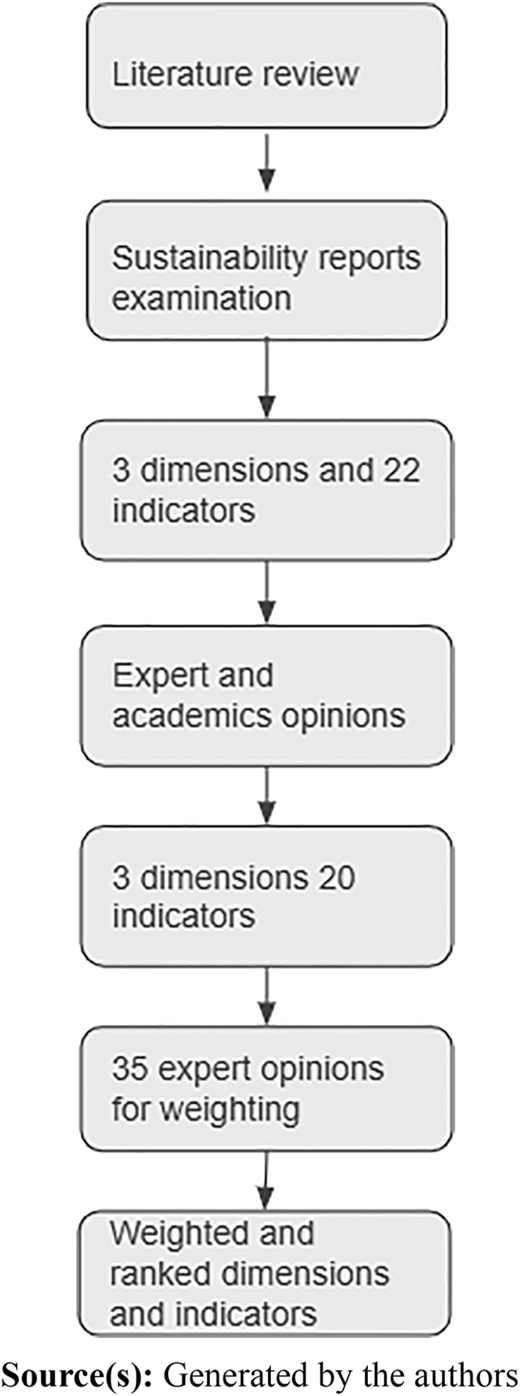
Figure 1 shows a flowchart describing the stages of the analysis. First, the authors identified the sustainability indicators used in the literature through a literature review. Then, the most recent sustainability reports of the companies publishing sustainability reports in the logistics sector were analyzed one by one by the authors and the activities included were noted. In this way, the scope of sustainability practices of these companies was understood. Thus, while creating sustainability indicators, indicators that are included in their reports but missing in the literature could be added. In particular, sustainable finance practices, which, as far as we know, have not been directly mentioned in the literature before, although they are applied in the logistics sector, have been added as indicators. Sustainable finance practices are a critical indicator for both reducing environmental impacts and increasing financial resilience in logistics operations. Financial instruments such as green bonds, sustainability credits and carbon credits enable investments in energy efficient technologies and reduce carbon emissions. These practices support compliance with environmental, social and governance (ESG) criteria, increase competitiveness and facilitate compliance with legal regulations (Canikli, 2022). At the same time, it provides transparency and accountability, allowing sustainability performance to be measured. It is possible to find data on sustainable finance practices in the sustainability reports of various logistics companies. Therefore, it is of great importance to use sustainable finance, which is either practiced by these global companies or stated in their plans for the coming years, as a basic indicator that supports achieving sustainability goals in the logistics sector.
Based on the literature and the reports analyzed, logistics sector sustainability indicators were determined as 3 main dimensions and 22 sub-dimensions. These indicators were evaluated by consulting three academicians and three sector employees who are experts in the field of logistics via e-mail or face-to-face. In the evaluation, situations such as the comprehensibility of the indicators and whether they are suitable for the sector were taken into consideration. As a result of the evaluation, some indicators were merged and some were renamed. Finally, a new set of indicators was created with 3 main dimensions and 20 sub-dimensions.
The identification of indicators plays two important roles in sustainability studies. First, selecting suitable sustainability indicators can provide more detailed knowledge about social-ecological systems; second, the correct construction of sustainability indicators can greatly assist in policy and management decision-making. Sustainability indicators, derivable from a wide range of economic, social or environmental sources (Hak et al., 2007), can contribute to the five stages of policy analysis: (1) clarifying objectives, (2) identifying trends, (3) analyzing conditions, (4) anticipating developments and (5) inventing, evaluating and selecting alternatives based on concision and ease of interpretation (Clark, 2002).
To reflect the views of all sector experts, opinions were gathered from experts in different working groups serving in Türkiye and having differing sector experiences in logistics. Table 2 provides information about the experts whose opinions were taken. Experts were selected from employees with different experiences in enterprises serving in different fields in the logistics sector.
To improve effectiveness and facilitate analysis of their opinions, the experts were scored in terms of age, position in the industry, length of experience, educational background and subject expertise, and then placed in one of three groups based on their scores (1–3, 4–6, 7–9).
The number of experts to be consulted is not clear in studies where the group decision-making approach is adopted. There is no consensus in the literature about the number of experts. In order to determine the adequacy of the expertise of the decision-making group on the relevant subject, individual responses are evaluated and combined, or a single decision matrix is obtained by having the group of experts give joint responses. Dozens of papers can be found in the literature on MCDM using different MCDM techniques for various applications using experts ranging in number from 5 to 10. There are hardly any articles with more than 15 experts.
The identification of indicators plays two important roles in sustainability studies. First, selecting suitable sustainability indicators can provide more detailed knowledge about social-ecological systems; second, the correct construction of sustainability indicators can greatly assist in policy and management decision-making. Sustainability indicators, derivable from a wide range of economic, social or environmental sources (Hak et al., 2007), can contribute to the five stages of policy analysis: (1) clarifying objectives, (2) identifying trends, (3) analyzing conditions, (4) anticipating developments and (5) inventing, evaluating and selecting alternatives based on concision and ease of interpretation (Clark, 2002). Table 3 lists the indicators of sustainable logistics. Comprehensive explanations of the indicators are also included in the table. Some explanations are based on the literature, while others are compiled by the authors.
Table 4 presents the analysis results. According to the experts’ evaluations, the most important sustainability dimension was economic sustainability (W:35.20%), followed by environmental sustainability (W:33.42%) and social sustainability (W:31.38%). Within the economic dimension, the three most important indicators were “occupancy and load optimization of transport vehicles” (LW:14.62%), “cost monitoring and reduction” (LW:14.54%) and “strengthening company image and increasing market share” (LW:14.52%). As shown in Table 4, the three most important environmental sustainability indicators were “appropriate transport mode selection and route optimization” (LW:15.32%), “waste and leakage management” (LW:14.52%) and “compliance with environmental policies, standards, and certification” (LW:14.31%). For the social dimension, the three most important indicators were “occupational health and safety practices” (LW:17.41%), “measuring employee satisfaction” (LW:17.16%) and “diversity at work, fair and equal working environment” (LW:17.13%).
Considering the overall ranking of indicators regardless of sustainability dimension, the four most important indicators according to the experts were all social sustainability indicators: “occupational health and safety practices” (GW:5.46%); “measuring employee satisfaction” (GW:5.38%); “diversity at work, fair and equal working environment” (GW:5.37%); and “customer privacy and satisfaction.” The fifth most important indicator was “occupancy and load optimization of transport vehicles” (GW:5.15%) from the economic sustainability dimension.
5. Discussion and conclusion
If logistics businesses are to support the UN’s SDGs by developing more sustainable logistics systems, it is important to identify and analyze the indicators that demonstrate sustainable logistics operations and performance. Based on the 3BL theory, this study identified 20 key sustainability indicators in three categories: economic, social and environmental. Expert prioritization of the sustainability dimensions and indicators was analyzed using multi-expert FF Entropy and WASPAS methodology.
The analysis indicated that the most important sustainability dimension according to experts is economic sustainability (W:35.20%), followed by environmental sustainability (W:33.42%) and social sustainability (W:31.38%). This ranking reflects the fact that a critical goal for every organization, regardless of sector, is to achieve long-term economic growth while responsibly balancing the management of existing resources. To achieve these goals, it is crucial to sustain the organization’s financial success and economic value. This requires cost monitoring and reduction. Experts considered this to be one of the most important indicators in economic sustainability. In addition, occupancy and load optimization of transport vehicles was another important indicator. This can provide a significant sustainable economic advantage by reducing resource waste. Hence, the experts considered this the most important economic sustainability indicator, which aligns with Yontar (2021), whose Pareto analysis demonstrated the importance ranking of this sustainability indicator.
Regarding the environmental sustainability dimension, experts have identified appropriate transportation mode selection and route optimization as the most important indicators. The logistics sector is a subject of discussions as a significant source of greenhouse gas emissions due to the intensive use of fossil fuels. Strategic selection of transportation modes and routes will minimize fuel consumption and emissions while increasing efficiency. Appropriate transportation mode selection and route optimization will provide a critical strategy in dealing with constraints such as traffic congestion in urban areas and inadequate road infrastructure in developing countries. Another important issue identified by experts is the effective management of waste and leakage, which helps preserve marine and soil biodiversity. Especially in developing countries, waste management systems are often inadequate. Due to the failure of this management, chemical or fuel leaks during logistics operations can lead to pollution of local water resources and agricultural areas. Successful management in this area is very important for environmental protection.
Occupational health and safety indicator found as the most important indicator regarding the social dimension and also even among all dimensions. Due to inadequate measures and regulations, occupational accidents can frequently occur in logistics operations. Occupational health and safety practices will not only ensure employee health and safety but also reduce business responsibilities. Following this indicator, another of the most important indicators found in the social dimension is measuring employee satisfaction. High employee satisfaction will contribute to providing a stable workforce by reducing employee turnover. Customer privacy and satisfaction is another important criterion. In today's world where digital transformation is rapidly increasing, the need to protect customer data is also rapidly increasing. Secure data management is important for establishing long-term customer relationships.
One of the important findings concerns the perception of the concept of sustainability and its dimensions. Through this study, it is aimed to contribute to discussions about how sustainability is perceived. When asked which sustainability dimension is more important, the experts considered the social dimension as the least important; yet, this changed when they evaluated the individual indicators for each dimension. In particular, the four most important sustainability indicators were “occupational health and safety practices,” “measuring employee satisfaction,” “diversity at work, fair and equal working environment” and “customer privacy and satisfaction,” which are all from the social sustainability dimension. This indicates that perceptions depend on whether the social, environmental or economic sustainability dimensions are perceived as a whole or whether they are considered in terms of practical applications. This difference was seen most intensively regarding social sustainability.
Considering which indicators were considered most important in the study, it is noteworthy that the focus on sustainability has changed in the logistics sector. That is, the focus of sustainability concern and performance has gradually shifted from only prioritizing the environmental dimension to including the social and economic sustainability activities analyzed in this study. In summary, the importance of and focus on sustainability indicators in logistics are no longer just one-dimensional.
The finding that logistics experts prioritize social sustainability factors more than those in the economic and environmental dimensions in developing sustainable logistics systems parallels the findings of Prabodhika et al. (2021) and Jayarathna et al. (2022). Regarding the findings of other studies in this field, Gonzalez et al. (2023), who weighed the indicators by taking opinions from experts serving in Europe, found that providing employment (a social criterion) and energy consumption reduction (an environmental criterion) were considered the most important indicators. In contrast, monitoring and reducing the use of energy, fuel and other resources was a less important indicator in this study. Similarly, Martins et al. (2020), in a study of Brazil, found that environmental indicators had higher scores, with the adequacy of environmental policies and fuel consumption monitoring being the highest scoring indicators. That is, these Brazilian experts acknowledged that social indicators matter for managing and promoting sustainability in logistics systems but considered them as secondary to environmental indicators. Other studies have also ranked social indicators as being of secondary importance (Chhabra et al., 2018; Khan et al., 2019; Lee and Wu, 2014; Narayana et al., 2019; Nikolaou et al., 2013).
Recent steps taken by official institutions and governments on sustainability have increased the importance of the issue for all parties. This importance, which is also felt in logistics, has also been recognized by experts. For this reason, and also due to the difficulty in perceiving the indicators, there were no major differences in the weighting of the indicators. That is, sector experts may believe that all indicators should be met for the most active compliance with sustainable logistics practices. This conclusion is also supported by the fact that studies evaluating sustainability indicators produce different results while the criterion weights in the present study were close to each other.
6. Limitations, future research recommendations and theoretical and practical implications
The present study aimed to define and prioritize generally accepted sector-specific sustainability indicators to guide the adoption and implementation of sustainable operations in the logistics sector. The findings of this paper have both theoretical and practical implications. It also aimed to offer recommendations to future researchers, practitioners and public authorities.
This study identified 20 key sustainability indicators classified into three categories—economic, social and environmental. Consequently, business performance has become measurable and assessable from multiple dimensions. The inclusion of a greater number of criteria compared to existing studies in the literature necessitated the application of a more sophisticated and sensitive analytical model. Additionally, the study identified strategic indicators designed to assist managers and policymakers in developing sustainable logistics operations. Beyond supporting the advancement of enterprises, the study also established a set of indicators that can be utilized by governmental organizations for sectoral audits at a macro-level, ensuring alignment with current regulations and sanctions. Sustainable strategic improvement in logistics is no longer an option but a necessity. Companies that invest in green technologies, circular economy practices and digitalization will not only reduce their environmental impact but also achieve long-term operational efficiency and market competitiveness. As industry leaders increasingly prioritize sustainability, it is imperative to identify and implement the most critical criteria that align with evolving market conditions. The findings of this study highlight the tangible benefits of integrating sustainability-oriented logistics practices for industry stakeholders. For instance, the adoption of intermodal transportation and route optimization strategies can significantly contribute to reducing carbon emissions while enhancing overall logistics efficiency. Large-scale logistics providers can leverage alternative transportation modes, such as integrating maritime and rail freight, to minimize fuel consumption and improve operational sustainability. Similarly, enhancing waste and leakage management practices is crucial for mitigating the environmental impact of logistics operations. The implementation of recyclable packaging materials and advanced leakage prevention technologies in storage and transportation processes can improve environmental compliance while generating cost savings for firms. Additionally, occupational health and safety measures play a pivotal role in ensuring workforce well-being and long-term operational resilience. Strengthening regulatory compliance through structured audits and comprehensive employee training programs can substantially reduce workplace incidents and operational disruptions. Furthermore, improving vehicle load factors and optimizing freight consolidation are fundamental strategies for enhancing both economic and environmental sustainability. The deployment of technology-driven planning tools enables logistics firms to consolidate shipments effectively, minimizing unnecessary transport movements, reducing costs and improving fuel efficiency. These practical applications illustrate how the sustainability indicators proposed in this study can be translated into actionable strategies, providing valuable guidance for decision-makers seeking to advance sustainable logistics practices in alignment with both regulatory frameworks and market demands. By considering the findings of this study, businesses can determine to which area and how much they should allocate their managerial and financial resources to enhance sustainability in logistics.
In addition, matching the criteria with the SDGs will facilitate businesses to better position their activities in the context of sustainability. These indicators can guide companies and authorities in supporting the UN SDGs by developing more sustainable logistics networks. Using these results, companies and authorities can determine where to begin and how to prioritize the dimensions and indicators of sustainability. One of the future goals of the study is to create an index from these indicators and evaluate logistics businesses. Thus, the most active and effective companies in the sector in terms of sustainability will be identified and a benchmarking opportunity will be provided for other businesses to make comparisons.
Each of the logistics sustainability indicators identified in this article is closely related to the SDGs. Compliance with environmental policies and standards promotes the fight against climate change and the protection of natural resources. Increasing compliance with environmental policies, standards and certification indicators will contribute to the support of SDG 13 – Climate Action and SDG 12 – Responsible Consumption and Production. Measurement and mitigation of greenhouse gas emissions and other environmental impact indicators, it supports the reduction of greenhouse gas emissions, energy efficiency and sustainable infrastructure goals. This indicator is related to SDG 13 – Climate Action, SDG 7 – Affordable and Clean Energy and SDG 11 – Sustainable Cities and Communities. The waste and leakage management indicator is important in protecting water resources and supporting marine biodiversity. Such efforts contribute to SDG 12 – Responsible Consumption and Production, SDG 6 – Clean Water and Sanitation and SDG 14 – Life Below Water. Appropriate transport mode selection and route optimization is critical for sustainable transport and emissions reduction and is closely linked to SDG 11 – Sustainable Cities and Communities and SDG 13 – Climate Action. Monitoring and reducing the use of energy, fuel and other resources increases clean energy and resource efficiency. Improvements made related with this indicator will contribute to achieving SDG 7 – Affordable and Clean Energy, SDG 12 – Responsible Consumption and Production and SDG 9 – Industry, Innovation and Infrastructure. Monitoring the sustainability of suppliers and sustainable procurement processes promotes responsible production and global partnerships and is closely linked to SDG 12 – Responsible Consumption and Production, SDG 8 – Decent Work and Economic Growth and SDG 17 – Partnerships for the Goals. Implementation of recycling and use of sustainable materials contribute to SDG 12 – Responsible Consumption and Production and SDG 11 – Sustainable Cities and Communities by supporting the conservation of natural resources and the reduction of waste.
Cost monitoring and reduction promotes economic growth and efficiency by providing cost control. These efforts link to SDG 8 – Decent Work and Economic Growth and SDG 9 – Industry, Innovation and Infrastructure. Strengthening company image and increasing market share supports sustainable business models and economic growth. This contributes to SDG 8 – Decent Work and Economic Growth, SDG 9 – Industry, Innovation and Infrastructure and SDG 12 – Responsible Consumption and Production. Improvements in occupancy rate and load optimization of transport vehicles reduces emissions and contributes to efficient transport systems, supporting SDG 11 – Sustainable Cities and Communities, SDG 9 – Industry, Innovation and Infrastructure and SDG 13 – Climate Action. Sustainable finance practices promote economic growth and responsible investment. This indicator aligns with SDG 8 – Decent Work and Economic Growth, SDG 17 – Partnerships for the Purpose and SDG 9 – Industry, Innovation and Infrastructure. Improving R&D, innovation and technological capabilities of the business supports sustainable industrial and economic growth, contributing to the achievement of SDG 9 – Industry, Innovation and Infrastructure and SDG 8 – Decent Work and Economic Growth. Flexibility and responsiveness help strengthen infrastructure. This indicator can be linked to SDG 9 – Industry, Innovation and Infrastructure and SDG 8 – Decent Work and Economic Growth. Monitoring and increasing sustainable profitability is important for long-term economic growth and sector development. Such efforts contribute to SDG 8 – Decent Work and Economic Growth, SDG 9 – Industry, Innovation and Infrastructure.
Measuring employee satisfaction improves well-being and productivity in the workplace. This indicator can be linked to SDG 8 – Decent Work and Economic Growth and SDG 3 – Good Health and Well-Being. Occupational health and safety practices is critical to the safety and health of workers and supports SDG 3 – Health and Quality of Life and SDG 8 – Decent Work and Economic Growth. Education and training opportunities for employees support the development of a skilled workforce and contribute to SDG 4 – Quality Education and SDG 8 – Decent Work and Economic Growth. Diversity at work, fair and equal working environment promote gender equality and inclusion. This indicator can be linked to SDG 5 – Gender Equality, SDG 8 – Decent Work and Economic Growth, SDG 10 – Reduced Inequalities and SDG 16 – Peace, Justice and Strong Institutions. Alignment with local communities and local investments support local economies and sustainable cities, contributing to the achievement of SDG 11 – Sustainable Cities and Communities, SDG 8 – Decent Work and Economic Growth and SDG 9 – Industry, Innovation and Infrastructure. Customer privacy and satisfaction are important for building trustworthy and strong institutions. This indicator can be linked to SDG 16 – Peace, Justice and Strong Institutions and SDG 9 – Industry, Innovation and Infrastructure.
Identifying sector-specific indicators may enable performance comparison among similar organizations and guide managers in evaluating for sustainable performance. Companies can also benchmark their performance and practices with appropriate peers. To improve corporate sustainability, corporations may be required to identify common goals and projects for sustainable outcomes, which makes it important for corporations to lead and develop their own SWOT analysis-derived strategies and projects according to appropriate sustainable indicators. These indicators can provide policymakers and industry stakeholders with a clear tool for the necessary evaluations and improvements. The findings of this study can also help the logistics sector to avoid confusion in reporting sustainable initiatives.
Furthermore methodologically, the MCDM framework based on FFS that was used in this study can capture and process uncertainties better than traditional techniques. Especially in new and expanding areas such as sustainability, the methodology can provide clear and sensible results compared to other methods, despite the uncertainties in defining the evaluation criteria. Furthermore, it can increase the reliability and validity of expert evaluations. Thus, it provides a more flexible yet stable evaluation environment.
Regarding limitations, the sample size was small and some considerations were adopted, although the exploratory nature of the study should be noted. Given that countries differ in ways of doing business, company culture and legal regulations, they may differ in terms of which sustainability indicators they prioritize. This also in turn affects the question of where to start improving sustainability for each country. The experts consulted in this study all worked in international logistics companies in Türkiye. Thus, future studies could expand the scale of research by gathering opinions from experts providing international services in different countries in order to compare regional differences concerning sustainability indicators.
We would like to thank the editors and anonymous reviewers for their thoughtful comments and efforts toward improving our paper.
Data availability: Data will be made available on a reasonable request.
Conflict of interest: The authors declare that they have no known competing financial interests or personal relationships that could have appeared to influence the work reported in this paper, and that there is no conflict of interest in the manuscript neither internally among authors nor externally within other authors.
Author contribution: All authors contributed to the study conception, design, methodology, literature search, and writing-original draft preparation; İlknur Gizem Yazar Okur; Bükra Doganer Duman; Ebru Demirci, writing—review and editing: İlknur Gizem Yazar Okur; Ebru Demirci; Bahadır Fatih Yıldırım; review idea: İlknur Gizem Yazar Okur; Bükra Doganer Duman.