


Urban centers in the Middle East and North Africa (MENA) face a distinct “human bottleneck” hindering sustainable last-mile delivery (SLMD), despite rapid technological advancements. This study aims to explore behavioral drivers – including consumer habits, courier motivations and cultural norms – that critically influence SLMD success, shifting focus from technology to human decision-making.
A systematic literature review following Preferred Reporting Items for Systematic reviews and Meta-Analyses guidelines analyzed 56 peer-reviewed studies from 2016 to 2025. Combining bibliometric mapping with thematic coding, the study integrates behavioral psychology, sustainability metrics and MENA-specific logistical challenges.
The analysis reveals a persistent “intention-behavior gap,” where stakeholder support for sustainability is undermined by economic constraints and perceived risks. Technological innovations like artificial intelligence (AI) routing and electric fleets are necessary but insufficient alone, as fragmented governance and diverse socio-cultural expectations slow progress. Technology currently operates in a behavioral vacuum, neglecting local context.
Future studies should move beyond descriptive accounts by employing revealed preference data, longitudinal designs and mixed-methods approaches to validate behavioral determinants. Particular attention should be given to socio-cultural moderators – such as trust, gender norms and informal networks – that shape adoption in MENA contexts. Expanding comparative research across regions will also clarify the generalizability of the hybrid SLMD framework and strengthen its theoretical contribution to urban mobility transitions.
Logistics providers and policymakers must pair technical upgrades with human-centered strategies, adopting culturally tailored incentives over generic models. Urban planners should incorporate behavioral insights as core infrastructure alongside physical assets to build resilient smart cities.
Challenging the dominant “tech-first” narrative, this research foregrounds behavioral determinants as key levers for SLMD in the MENA region. While existing studies often focus on algorithmic efficiency, this paper introduces a hybrid SLMD framework that bridges behavioral science, urban planning and logistics innovation, offering a culturally grounded roadmap tailored to the region's unique blend of rapid digital adoption and traditional governance.
Coding process flow diagram
1. Introduction
Last-mile delivery represents the final and most critical link in supply chains and logistics, where products reach the end consumer directly. In the Middle East and North Africa (MENA) region, this sector has gained increasing importance due to the rapid growth of e-commerce, demographic shifts and unregulated urbanization. While last-mile delivery is globally considered the most costly and complex challenge in the supply chain, the specificities of the regional context add new dimensions related to infrastructure, governance and societal behaviors.
The MENA region is witnessing significant growth in delivery markets, with projections indicating that the last-mile sector in the Middle East and Africa will expand at a compound annual growth rate exceeding 10% between 2024 and 2031 (Bagekari, 2025). This growth is driven by increasing demand for fast and flexible delivery services, particularly in major cities such as Riyadh, Dubai, Cairo and Casablanca. However, challenges related to weak infrastructure, inadequate urban planning and multi-cultural and diverse consumer behaviors make achieving sustainability in this sector a complex task.
In addition, some Gulf states have begun adopting innovative solutions such as drones and autonomous robots to reduce costs and enhance efficiency, while others, such as Iraq, Syria, Lebanon and Tunisia, still face obstacles related to geopolitical and economic conditions. This disparity reflects the need for multi-layered approaches that combine technological innovation, behavioral interventions and public policies to ensure that last-mile operations in the region are more sustainable, equitable and efficient.
Sustainable last-mile delivery is a critical challenge for rapidly urbanizing MENA cities, driven by the explosive growth of e-commerce, rising consumer expectations and mounting environmental pressures (Karlı and Tanyaş, 2024; Kervola et al., 2022; Shehata, 2023). While technological innovations such as drones, electric vehicles (EVs) and artificial intelligence (AI)-driven logistics have dominated the research agenda, there is growing recognition that behavioral determinants (consumer preferences, courier motivations and socio-cultural norms) are equally vital for the adoption and effectiveness of sustainable delivery solutions (Karlı and Tanyaş, 2024; Prisco et al., 2025; Ganjipour and Edrisi, 2023). The MENA region's unique urban fabric, governance structures and socio-demographic diversity further complicate the landscape, demanding context-sensitive approaches that move “beyond the algorithms” (Shehata, 2023; Chaudhry et al., 2025; Hadoud, 2024).
Despite the rapid digitization of the MENA supply chain, a critical disconnect remains between the technical feasibility of sustainable last-mile delivery (SLMD) and its practical implementation. Current scholarship has predominantly focused on the “hard” infrastructure of logistics – such as the integration of EV fleets or the mathematical optimization of delivery routes – treating the urban environment as a static set of variables. However, in the high-context cultures of the MENA region, the “soft” variables – human agency and socio-cultural norms – often act as the primary gatekeepers of change. There is a significant scarcity of empirical research exploring how consumer psychological constructs (e.g. environmental self-identity vs price sensitivity) and courier behavioral drivers (e.g. job precariousness vs technological self-efficacy) interact to influence the adoption of green logistics (Oflaç and Özcan, 2025). In cities like Amman or Riyadh, where social trust and informal networks play a vital role in the delivery process, ignoring these behavioral determinants results in a “performance gap” where sophisticated algorithms fail to yield sustainable outcomes (Alsoussi, 2025).
The central problem addressed by this study is the widening “intention-behavior gap” observed among MENA e-commerce stakeholders. While regional governments have signaled a strong commitment to sustainability through initiatives like Jordan's Economic Sophistication strategy or Saudi Arabia's Vision 2030, the daily logistics operations remain heavily reliant on carbon-intensive practices. Consumers express a verbal preference for “green” delivery but frequently default to high-frequency, low-efficiency home delivery options due to cultural expectations of “immediacy” and the lack of social incentives for using shared parcel lockers. For couriers, the pressure of performance-based pay models often incentivizes aggressive, fuel-inefficient driving over eco-friendly protocols. Without a clear understanding of these behavioral levers, SLMD interventions risk being perceived as alien impositions rather than localized solutions (Zami et al., 2025).
By pivoting the research lens toward the behavioral determinants of SLMD, this paper seeks to provide a more holistic framework for urban logistics in developing centers. The rationale for this focus is twofold: first, behavioral changes often require significantly less capital investment than large-scale infrastructure overhauls, making them more viable for immediate implementation in resource-constrained urban environments. Second, addressing the socio-cultural specificities of the MENA region such as the gendered nature of delivery reception and the unique geocoding challenges ensures that the proposed solutions are resilient and socially inclusive (Gonzalez et al., 2023). This study contributes to the literature by moving beyond the “Western-centric” models of logistics, offering a context-sensitive analysis of how behavioral change can be engineered to meet the dual goals of economic growth and environmental preservation.
This study introduces a hybrid SLMD framework that integrates behavioral science, governance and technological innovation to explain sustainable last-mile delivery (SLMD) in MENA urban centers. The novelty lies in extending established behavioral theories theory of planned behavior (TPB) that explains the intention-behavior by showing how attitudes, norms and perceived control influence delivery choices, yet often fail to translate into action due to cost sensitivity and infrastructural barriers (Ajzen, 1991), value-belief-norm theory that highlights the role of cultural and moral values, particularly environmental and religious norms, in motivating pro-environmental practices (Stern et al., 1999) and technology acceptance model (TAM) that interprets stakeholders' acceptance of emerging technologies, emphasizing perceived usefulness, ease of use and trust in novel systems such as drones or blockchain (Davis, 1989) – into a logistics context shaped by socio-cultural diversity and governance fragmentation. Unlike existing sustainable urban logistics or smart-city frameworks, which emphasize infrastructure and algorithmic optimization, this model foregrounds human agency and its interaction with institutional and technological systems.
By weaving these theories together, the framework demonstrates how behavioral intentions are mediated by governance structures and enabled or constrained by technology. It explicitly incorporates MENA-specific moderators such as social trust, informal networks, gender roles and economic pragmatism, extending Western-centric models to capture regional realities.
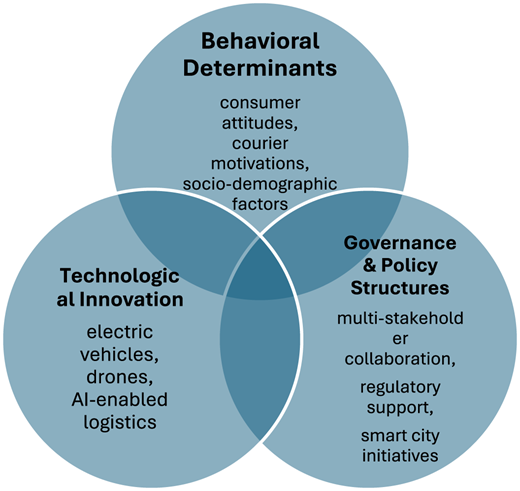
The framework's conceptual insight is that sustainable delivery outcomes emerge at the intersection of three domains: behavioral determinants, governance structures and technological innovation as shown in Figure 1. This integrative approach moves beyond descriptive accounts to explanatory and predictive modeling, offering a more inclusive and context-sensitive lens for SLMD research. In doing so, it challenges the “tech-first” narrative and provides a novel interdisciplinary contribution to sustainable urban logistics.
2. Critical literature synthesis
The literature on SLMD in MENA urban centers reveals a robust body of work focused on technological and operational innovations but a comparatively underdeveloped integration of behavioral determinants within this context. Existing studies extensively document advancements such as EVs, drones, blockchain and AI-driven logistics optimization (Ferreira and Esperanca, 2025; Askri et al., 2025; Engelhardt et al., 2022). These innovations promise substantial environmental and economic benefits, including reduction of emissions and cost efficiency (Lingkon and Ali, 2024; Mahmoodi et al., 2025). However, literature often treats technology as a panacea, neglecting the complex socio-cultural and governance factors that mediate technology adoption and effectiveness.
Behavioral determinants – including consumer preferences, courier motivations and socio-cultural norms – are increasingly recognized as critical but remain insufficiently theorized and empirically explored (Karlı and Tanyaş, 2024; Cauwelier et al., 2024; Alharbi, 2025). While consumer studies highlight price sensitivity, delivery speed, convenience and sustainability information as key drivers (Karlı and Tanyaş, 2024; Thomas et al., 2022), there is a persistent attitude-behavior gap whereby positive environmental attitudes do not consistently translate into sustainable choices (Cauwelier et al., 2024). This gap is compounded by socio-demographic variations, such as age, gender and education, which influence openness to innovative delivery methods (Montero-Vega et al., 2025; Kader et al., 2023).
Courier motivations are shaped by work autonomy, hedonic factors and economic incentives, with technological enablers like blockchain and AI improving trust and operational transparency (Alromema et al., 2025; Kadadha et al., 2023). Yet, organizational culture and lack of clear strategies impede widespread adoption in several MENA markets (Sultan et al., 2023; Ismail and Jokonya, 2023).
Socio-cultural factors, including religious values, social trust and informal networks, act as significant moderators in behavioral adoption (Alharbi, 2025; Al-Kenane et al., 2025). Gender dynamics and environmental knowledge further influence consumer and courier behavior, underscoring the necessity of culturally tailored interventions (Gonzalez et al., 2023; Alawadh et al., 2024).
Governance fragmentation and infrastructural deficits are recurrent themes that limit the scalability and effectiveness of SLMD innovations (Rosales and Haarstad, 2023; Wanganoo and Patil, 2020). Public-private cooperation and smart-city initiatives show promise but face challenges related to institutional barriers and data governance (Chaudhry et al., 2025; Gura et al., 2022).
Critically, literature tends to present behavioral, technological and governance factors as parallel strands rather than interdependent elements. Few studies systematically interrogate the tensions and synergies among these dimensions, particularly in relation to the unique MENA context characterized by rapid urbanization, socio-political instability and cultural heterogeneity (Cauwelier et al., 2024; Rodriguez-Palero et al., 2025).
Moreover, the predominance of stated preference data introduces biases that limit the understanding of actual behaviors, emphasizing the need for empirical validation through revealed preference studies and field experiments (Alkhazali et al., 2025). The scarcity of comprehensive datasets and transparency from local institutions further constraints research depth, particularly outside the Gulf states where infrastructural and governance conditions are more favorable (Alsoussi, 2025).
In summary, the literature calls for deeper theoretical integration of behavioral science frameworks with urban planning and governance models to move beyond descriptive accounts toward explanatory and predictive understanding. This integration should explicitly address the intention-behavior gap, socio-cultural moderators and institutional dynamics unique to MENA urban logistics. Multi-disciplinary, hybrid methodologies combining qualitative and quantitative approaches, including digital twins and stakeholder engagement, are recommended to capture the complexity of SLMD systems (Illahi and Mir, 2021; Shaker et al., 2025).
2.1 Thematic decomposition of literature
2.1.1 Behavioral determinants: definitions and scope
Behavioral determinants encompass the psychological, social and cultural factors shaping the actions of consumers, couriers and other stakeholders in last-mile delivery. Key elements include:
Consumer preferences: Price sensitivity, delivery speed, convenience and sustainability information (Karlı and Tanyaş, 2024; Thomas et al., 2022);
Socio-demographic factors: Age, gender, education, income and urban/rural residence (Prisco et al., 2025; Ganjipour and Edrisi, 2023);
Courier motivations: Work autonomy, hedonic motivation, economic incentives and job satisfaction (Alromema et al., 2025) and
Psychological influences: Attitudes, perceived risk, trust, personal norms and the attitude-behavior gap (Prisco et al., 2025; Ganjipour and Edrisi, 2023).
2.1.2 Sustainable last-mile delivery: criteria and innovations
SLMD is defined by the triple bottom line (TBL):
Environmental: Emissions reduction, energy efficiency and modal shift to green vehicles (Kervola et al., 2022; Lingkon and Ali, 2024; Ferreira and Esperanca, 2025);
Economic: Cost efficiency, operational viability and business model innovation (Kervola et al., 2022; Anika et al., 2021);
Social: Job creation, equity, safety and consumer satisfaction (Kervola et al., 2022; Rodriguez-Palero et al., 2025) and
Key innovations include EVs, drones, blockchain, AI and urban consolidation centers (Ferreira and Esperanca, 2025; Askri et al., 2025; Engelhardt et al., 2022).
2.1.3 MENA urban centers: regional context and challenges
MENA cities are characterized by:
Rapid urbanization and informal housing (Shehata, 2023; Chaudhry et al., 2025; Hadoud, 2024);
Environmental pressures: Water scarcity, heat waves and air pollution (Taye et al., 2025; Mohammed Qasem and Scholz, 2025);
Governance structures: Fragmented authority, public-private cooperation and smart-city initiatives (Chaudhry et al., 2025; Gura et al., 2022) and
Infrastructural challenges: Lack of formal addresses, legacy logistics systems and digital divides (Wanganoo and Patil, 2020; Balfaqih and Alharbi, 2022).
3. Method
This study employs a systematic literature review (SLR) methodology designed to rigorously synthesize the existing body of knowledge on SLMD in the MENA region, with a particular focus on behavioral determinants. The approach integrates quantitative bibliometric mapping and qualitative thematic content analysis to capture both the breadth and depth of relevant research, ensuring methodological rigor, transparency and contextual relevance.
Note: AI language tools were used to assist in refining the clarity and readability of the manuscript text. These tools were employed only for language editing and did not contribute to the research design, data analysis, or conclusions.
3.1 Design and scope
The SLR follows a pre-defined protocol aligned with the Preferred Reporting Items for Systematic Reviews and Meta-Analyses (PRISMA) guidelines (Page et al., 2021), enabling a transparent, replicable and unbiased selection and evaluation of literature. The review targets both peer-reviewed journal articles and primary conference proceedings (published between 2016 and 2025), as proceedings in this field often undergo peer review and provide relevant empirical insights. The geographic focus is on urban centers within the MENA region, capturing studies that operationalize behavioral constructs alongside sustainability outcomes framed within the triple bottom line (environmental, economic and social).
3.2 Search strategy and information sources
A comprehensive search was conducted across two primary academic databases, Scopus and Web of Science, selected for their extensive indexing of logistics, urban planning, environmental management and social science literature. The search combined keywords across three thematic blocks using Boolean operators:
Logistics terms: “last-mile delivery,” “urban logistics,” “e-commerce logistics and” “final-mile”;
Behavioral concepts: “stakeholder behavior,” “consumer preference,” “courier motivation,” “perceived risk” and “trust” and
Contextual terms: “MENA,” “Middle East,” “North Africa,” “GCC,” and specific urban centers such as “Dubai,” “Riyadh,” “Amman” and “Cairo”.
3.2.1 Eligibility criteria
Inclusion criteria were strictly applied to ensure relevance and quality:
Peer-reviewed journal articles and primary conference proceedings published in English from 2016 to 2025;
Studies explicitly address behavioral operationalization (psychological or socio-demographic factors) in SLMD;
Research focusing on sustainability outcomes within the triple bottom line framework and
Geographic focus on MENA urban centers or comparative studies including the region.
Exclusion criteria filtered out:
Grey literature, book reviews, editorials, theses and conference abstracts;
Studies focusing solely on long-haul freight modes (maritime and air cargo) and
Research without explicit urban or regional contextualization.
Table 1 below outlines the applied parameter to ensure the review remained focused on behavioral and regional dimensions. This structured filtering ensures that the review remains centered on contemporary urban challenges rather than general logistics theory.
Systematic literature review – eligibility criteria (researcher)
| Criterion | Inclusion criteria (accepted) | Exclusion criteria (rejected) |
|---|---|---|
| Timeframe | Studies were published between 2016 and 2025 | Research published prior to 2016 (to ensure technological relevance) |
| Document type | Peer-reviewed journal articles and primary conference proceedings | Book reviews, editorials, theses, and “grey” literature |
| Language | Full-text available in English | Studies in other languages without official translations |
| Stakeholder focus | Research addressing consumers, couriers or policymakers (stakeholder behavior) | Purely mechanical or engineering-focused studies with no human element |
| Sustainability | Focus on the Triple Bottom Line (environmental, economic or social) | Studies focused solely on profit maximization or traditional logistics |
| Geographic scope | MENA Urban Centers or direct comparative studies involving the region | Studies focused exclusively on rural areas or Western-only contexts (e.g. EU/US) |
| Delivery mode | Last-mile delivery, e-commerce logistics and urban freight | Long-haul shipping, maritime logistics or air-cargo mid-stream |
3.2.2 Study selection and screening
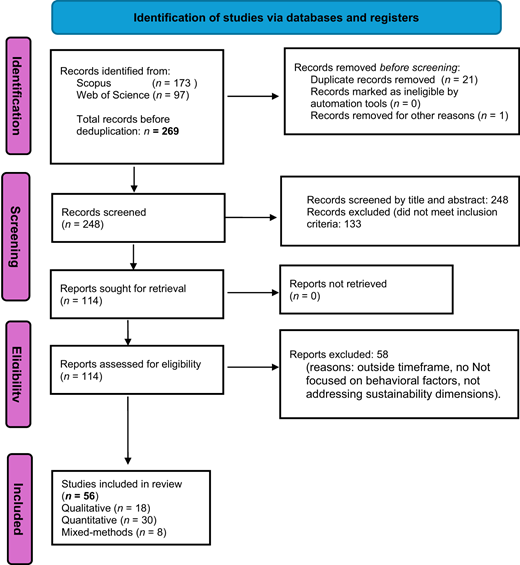
The initial search yielded 269 records imported into Zotero for management. Following deduplication, titles and abstracts were screened against eligibility criteria, resulting in 114 articles for full-text review. Further screening excluded 58 studies lacking sufficient behavioral focus or urban context, leading to a final corpus of 56 studies included for synthesis. The selection process is documented in the PRISMA 2020 flow diagram (Figure 2).
3.3 Data analysis and synthesis strategy
To capture both macro-level trends and micro-level behavioral insights, a dual-strategy synthesis was employed:
3.3.1 Bibliometric mapping
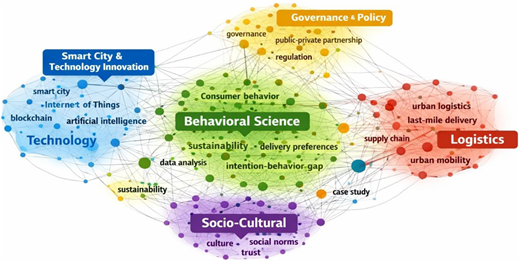
Metadata from the 56 studies (publication year, keywords, authorship and geographic focus) were analyzed using science-mapping techniques, including co-citation and keyword co-occurrence analyses. This quantitative mapping visualized research clusters, temporal trends and dominant thematic areas within MENA SLMD literature, informing the qualitative coding framework.
Figure 3 displaying co-citation networks and keyword co-occurrence clusters. Visualization highlights dominant thematic areas, temporal trends and research clusters across the 56 selected studies.
3.3.2 Thematic coding
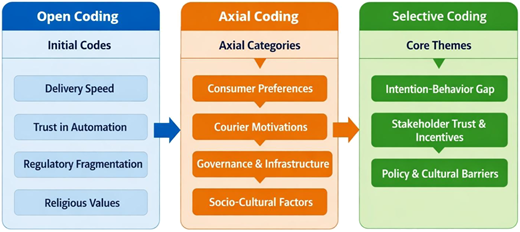
The qualitative synthesis followed the three-step coding process suggested by Saldaña (2021), Figure 4 illustrating the progression from raw codes – such as delivery speed, trust in automation, regulatory fragmentation and religious values – to axial categories (consumer preferences, courier motivations, governance and infrastructure and socio-cultural factors) and finally to selective themes (intention–behavior gap, stakeholder trust and incentives, policy and cultural barriers).
This figure visually represents Saldaña's three-step coding process (open, axial and selective), clarifying how behavioral, technological and governance dimensions were systematically synthesized within the SLMD context. It enhances methodological transparency by showing the logical progression from individual insights to overarching themes.
3.3.3 Quality assessment (critical appraisal)
Each study underwent critical appraisal using a modified mixed methods appraisal tool (MMAT) (Hong et al., 2018), assessing: methodological transparency and rigor, appropriateness of sampling strategies and validity and reliability of conclusions.
Studies rated below a “moderate” quality threshold were excluded from the final synthesis to ensure robustness of evidence. Inter-coder reliability for thematic coding was established through double coding of 20% of the sample, yielding a Cohen's Kappa coefficient of 0.82, indicating strong agreement (Cohen, 1960; McHugh, 2012).
3.3.4 Meta-synthesis of sustainability outcomes
Finally, the review analyzed the reported “outcomes” of sustainable innovations. This involved categorizing findings into the triple bottom line (TBL) framework. We specifically looked for “trade-offs” – for instance, where an environmental gain (e.g. using electric drones) might result in a social loss (e.g. noise pollution or job displacement for traditional couriers).
4. Critical analysis of findings
4.1 Behavioral determinants of sustainable last-mile delivery
Consumer Preferences and Acceptance
Key drivers: Delivery price, speed, convenience and sustainability information are primary factors influencing consumer acceptance of sustainable last-mile options (Karlı and Tanyaş, 2024; Thomas et al., 2022);
Socio-demographic variation: Younger, urban and more educated consumers are more open to innovative and green delivery methods (e.g. parcel lockers and autonomous robots) (Montero-Vega et al., 2025; Kader et al., 2023);
Psychological factors: Social influence, hedonic motivation and personal norms positively affect adoption, while perceived risk and need for human interaction are barriers (Ganjipour and Edrisi, 2023; Kenesei et al., 2025).
Attitude-behavior gap: Positive environmental attitudes do not always translate into sustainable choices, highlighting the need for targeted interventions (Cauwelier et al., 2024).
Courier motivations and workforce retention
Work autonomy and hedonic motivation are critical for attracting and retaining couriers in crowd-sourced models, especially in Saudi Arabia (Alromema et al., 2025);
Economic incentives are important but less decisive than autonomy and enjoyment, particularly for occasional workers (Alromema et al., 2025) and
Technological enablers: Blockchain and AI improve transparency, trust and operational efficiency, supporting workforce sustainability (Kadadha et al., 2023; Elmay et al., 2024).
Socio-demographic and cultural influences
Cultural norms and social influence (including religious values) shape consumer intentions, with notable effects in Gulf countries (Alharbi, 2025; Al-Kenane et al., 2025);
Gender and education affect delivery preferences and openness to new technologies (Montero-Vega et al., 2025; Kader et al., 2023) and
Environmental knowledge and altruism enhance green behavior, suggesting the importance of education and awareness campaigns (Alawadh et al., 2024).
Psychological factors and perceived risk
Perceived risk (privacy, safety and theft) is a major barrier to autonomous delivery adoption; trust-building and transparent communication are essential (Kenesei et al., 2025; Wu et al., 2024);
Personal norms mediate the effect of social norms on sustainable behavior, with hedonic motivation varying across demographic groups (Prisco et al., 2025; Polisetty et al., 2024) and
Technology-related anxiety and complexity reduce adoption; regulatory support and user education can mitigate these effects (Zhou et al., 2025; Alharasees et al., 2024).
Barriers and gaps in behavioral adoption
Organizational culture: Lack of clear strategies, technical knowledge and collaboration impede adoption in Egypt and other MENA markets (Sultan et al., 2023; Ismail and Jokonya, 2023);
Consumer priorities: Economic criteria often outweigh environmental concerns, creating a cultural barrier to sustainability (Boggio-Marzet et al., 2023) and
Infrastructure deficits: Poor addressing systems and legacy logistics reduce efficiency and satisfaction (Wanganoo and Patil, 2020).
Synthesis:
Behavioral determinants are increasingly recognized but often under-theorized or treated as secondary to technological and economic factors. There is a need for deeper, context-specific behavioral research, especially integrating cultural and psychological dimensions unique to MENA (Karlı and Tanyaş, 2024; Cauwelier et al., 2024; Alharbi, 2025).
4.2 Sustainable last-mile delivery: models, innovations and Trade-offs
Business models and multi-stakeholder approaches
Traditional vs crowd-shipping: Crowd-shipping emphasizes social sustainability (job creation and flexibility), while traditional models focus on employer responsibility and carbon neutrality (Kervola et al., 2022; Rodriguez-Palero et al., 2025);
Hybrid models: Combining commercial vehicles, micro-depots and green vehicles enhances efficiency and sustainability (Jazbec and Rogic, 2024; Ninovic et al., 2025) and
Multi-stakeholder governance: Collaboration among public, private and community actors is critical but often hampered by unclear priorities and institutional barriers (Rodriguez-Palero et al., 2025; Plazier et al., 2024).
Technological innovations beyond algorithms
EVs, drones and autonomous robots are increasingly adopted, reducing emissions and operational costs but requiring supportive infrastructure and policy (Ferreira and Esperanca, 2025; Silvestri et al., 2025).
Blockchain and AI improve transparency, trust and efficiency, but face scalability and regulatory challenges in MENA (Askri et al., 2025; Guerriero et al., 2023).
Connected vehicle technologies and Internet of Things (IoT) enable real-time optimization and resource sharing (Hmama et al., 2025).
Cost-benefit and operational trade-offs
Electric bikes and drones: Offer significant emissions reductions (up to 92%) but may increase costs and face operational constraints (battery life, weather) (Lingkon and Ali, 2024; Mahmoodi et al., 2025);
Automated delivery robots: Reduce costs and congestion but require efficient scheduling and consumer acceptance (Anika et al., 2021; Edrisi and Ganjipour, 2022) and
Hybrid fleets: Mixed strategies (drones, bikes and trucks) optimize for different urban contexts and delivery types (Mahmoodi et al., 2025; Lazarevic et al., 2024).
Urban consolidation centers and micro-depots
Strategic location of micro-depots reduces delivery distances, emissions and costs, especially when combined with green vehicles (Guerrero and Diaz-Ramirez, 2017; Dridi et al., 2025) and
Multi-modal integration is essential for dense MENA cities with complex urban fabrics (Guerrero and Diaz-Ramirez, 2017; Tanyas and Ozkanlisoy, 2025).
Incentives and consumer engagement
Financial incentives (e.g. surcharges on unsustainable options) are effective but may reduce satisfaction (Kokkinou et al., 2024);
Non-financial incentives (sustainability messaging and information sharing) can shift preferences, especially among younger consumers (Rose et al., 2025; Veličković et al., 2025) and
Blockchain-based rewards show promise for encouraging sustainable choices (Raza et al., 2023).
Synthesis:
Technological and business model innovation is robust, but the behavioral dimension – how consumers and couriers respond to these innovations – is less systematically integrated. Multi-stakeholder and incentive-based approaches are promising but require further behavioral research (Kervola et al., 2022; Rodriguez-Palero et al., 2025; Ros et al., 2025).
4.3 MENA urban centers: regional context, governance and infrastructure
Urban governance and policy frameworks
Institutional barriers: Weak institutions, fragmented governance and political instability hinder sustainable delivery system implementation (Rosales and Haarstad, 2023; Poudineh et al., 2018);
Public-private cooperation: Networks like business improvement districts enhance stakeholder engagement and sustainability (Emami-Skardi et al., 2025) and
Smart-city governance: Digital platforms and information and communication technology (ICT) improve efficiency and participation but require robust data privacy and security frameworks (Gura et al., 2022; Bastos et al., 2022).
Environmental and infrastructural challenges
Water scarcity and heat waves: Drive the need for energy-efficient, resilient logistics solutions (Mohammed Qasem and Scholz, 2025; Saad and Boussi, 2025).
Rapid urbanization and informal housing: Create spatial inequalities and infrastructure deficits, complicating last-mile delivery (Taye et al., 2025; Tajudeen et al., 2025).
Lack of formal addresses: Reduces efficiency; Global Positioning System, IoT and Transportation Management System are needed for improvement (Wanganoo and Patil, 2020).
Smart city technologies and digital governance
Citizen participation: Enabled by ICT, digital platforms and smart contracts but challenged by privacy and digital divides (Gura et al., 2022; Hysa et al., 2023).
Data governance: Essential for trust and effective smart-city logistics (Jarour and Mocanu, 2025; Subrahmanyam, 2025).
Institutional barriers and best practices
Best practices: Regional cooperation, innovative regulatory frameworks and sustainable development goal-aligned, community-oriented approaches are effective (Anwana and Owojori, 2024; Aburamadan et al., 2024) and
Education and awareness: Critical for building support for sustainable governance (Wodon, 2023).
Synthesis:
MENA urban centers present unique challenges and opportunities for sustainable last-mile delivery. Governance, infrastructure and environmental pressures are well-documented, but the integration of behavioral determinants with these contextual factors is limited (Shehata, 2023; Chaudhry et al., 2025; Hadoud, 2024).
5. Real-world implications
SLMD in MENA urban centers must be situated within the broader paradigm of sustainable urban mobility transitions, particularly under the emerging CalmMobility framework developed by Turoń (2025). CalmMobility emphasizes a shift from policy uncertainty and fragmented governance toward integrated, human-centered urban mobility systems that prioritize environmental sustainability, social equity and quality of life (Marsden and Reardon, 2017). This paradigm aligns closely with the hybrid SLMD framework by highlighting the interplay between behavioral logistics, urban planning and governance within wider urban mobility transformations.
Within this context, behavioral logistics addresses the human agency component – how consumer preferences, courier motivations and socio-cultural norms influence delivery behaviors and acceptance of sustainable mobility options. These behavioral determinants mediate the effectiveness of technological innovations and infrastructural investments, underscoring that sustainable outcomes depend on aligning individual and collective behaviors with urban mobility goals (Karlı and Tanyaş, 2024; Shehata, 2023).
Urban planning, under CalmMobility, advocates for integrated land-use and transport strategies that facilitate multi-modal freight and passenger flows, reduce dependency on carbon-intensive delivery modes and support infrastructure such as urban consolidation centers, micro-depots and dedicated lanes for low-emission vehicles (Taniguchi, 2015; Guerrero and Díaz-Ramírez, 2017). This planning approach ensures that SLMD operations are embedded within the broader mobility ecosystem, enabling modal shifts and reducing congestion and emissions.
Governance plays a crucial role in transitioning from policy uncertainty to CalmMobility by fostering multi-level coordination, stakeholder engagement and adaptive regulatory frameworks that support innovation while addressing socio-cultural diversity and infrastructural challenges typical of MENA cities (Chaudhry et al., 2025; Dimitropoulos and Lokhandwala, 2021). Effective governance integrates behavioral insights into policy design, ensuring that incentives, regulations and public-private partnerships resonate with local contexts and encourage sustainable mobility behaviors.
Together, these dimensions create a dynamic feedback loop where behavioral logistics inform urban planning and governance decisions, which in turn shape the conditions for sustainable last-mile delivery within the evolving urban mobility landscape. Embedding SLMD within the CalmMobility paradigm advances a holistic, context-sensitive approach that transcends technology-centric solutions, emphasizing human-centered, equitable and resilient urban mobility transitions in MENA.
6. Critical synthesis
The existing literature on SLMD in MENA urban centers provides a strong descriptive foundation, particularly around technological innovations and operational models. Yet, behavioral drivers – such as consumer preferences, courier motivations and socio-cultural norms – remain undertheorized and often treated as secondary. This gap contributes to the persistent intention–behavior divide, where positive sustainability attitudes fail to translate into consistent pro-environmental actions due to economic pragmatism, infrastructural constraints and fragmented governance.
Critically, current studies tend to silo behavioral, technological and governance factors rather than examining their dynamic interdependencies. For example, socio-cultural norms both enable and constrain technology adoption, while governance fragmentation undermines coordinated behavioral interventions. Regional disparities between Gulf and non-Gulf states further complicate these relationships. Moreover, reliance on stated preference data limits empirical robustness, underscoring the need for revealed preference studies and field experiments.
Promising approaches – such as multi-stakeholder governance models, incentive-based interventions and smart-city initiatives – show potential but remain weakly integrated with behavioral insights. Advancing SLMD research therefore requires a paradigm shift toward interdisciplinary frameworks that systematically link behavioral science with urban planning and governance. Hybrid methodologies – including digital twins, participatory stakeholder engagement and behavioral experiments – can better capture the complexity of logistics systems in culturally diverse and infrastructurally constrained environments.
To consolidate these insights, Table 2 summarizes the extent of literature coverage, key gaps and directions for future research. The synthesis highlights that while technological and operational innovations are extensively documented, behavioral determinants and their integration with regional governance remain underexplored. Identified gaps point to the need for cross-disciplinary methodologies, context-sensitive behavioral analysis and policy innovation tailored to socio-cultural realities. The proposed directions for future research emphasize deepening behavioral inquiry, contextualizing interventions and advancing hybrid models that combine digital simulations with stakeholder engagement.
Synthesis and research gaps
| Dimension | Findings/coverage | Key references |
|---|---|---|
| Extent of literature fit and coverage | Behavioral determinants: Moderately covered, with emphasis on consumer preferences and some attention to courier motivations and psychological factors. Limited deep behavioral theory and cross-country cultural analysis | Karlı and Tanyaş (2024), Cauwelier et al. (2024) and Alharbi (2025) |
| Sustainable last-mile delivery: Extensively covered, especially technological and operational innovations, but less so in relation to behavioral interventions | Kervola et al. (2022), Lingkon and Ali (2024) and Ferreira and Esperanca (2025) | |
| MENA urban centers: Regional context and governance addressed, but integration with behavioral determinants remains superficial | Shehata (2023), Chaudhry et al. (2025) and Hadoud (2024) | |
| Identified gaps and underexplored areas | Integration of behavioral and regional analysis: Few studies systematically link behavioral determinants with MENA-specific urban challenges | Cauwelier et al. (2024), Rodriguez-Palero et al. (2025) and Illahi and Mir (2022) |
| Cross-disciplinary methodologies: Limited use of hybrid approaches combining behavioral experiments, digital twins and stakeholder engagement | Illahi and Mir (2021) and Shaker et al. (2025) | |
| Policy innovation: Need for regulatory and incentive frameworks tailored to MENA's socio-cultural and infrastructural realities | Dimitropoulos and Lokhandwala (2021) and Alkhazali et al. (2025) | |
| Directions for Future Research | Deepen behavioral research: Apply advanced behavioral science methods (e.g. field experiments and nudges) in MENA urban logistics | Alkhazali et al. (2025) |
| Contextualization of interventions: Develop and test interventions reflecting cultural, demographic and infrastructural diversity in MENA cities | Mogire et al. (2025) and Dimitropoulos and Lokhandwala (2021) | |
| Hybrid models: Combine digital twin simulations with stakeholder analysis and behavioral modeling for comprehensive assessment | Illahi and Mir (2021), Shaker et al. (2025) | |
| Policy and governance innovation: Investigate flexible, multi-level governance arrangements encouraging public–private–community partnerships and citizen engagement | Dimitropoulos and Lokhandwala (2021) and Gura et al. (2022) |
7. Discussion and conclusion
7.1 Evidence from the review
The reviewed literature situates SLMD within the broader landscape of urban freight and mobility transitions, emphasizing that logistics cannot be disentangled from governance, planning and socio-cultural realities. Technological and operational innovations – such as electric fleets, drones and smart-city platforms – are extensively documented, but their effectiveness depends on embedding behavioral insights into adaptive policy frameworks. Evidence shows that consumer attitudes, courier motivations and socio-cultural norms mediate adoption, shaping whether innovations achieve sustainability outcomes.
The literature consistently highlights a persistent intention–behavior gap, where positive sustainability attitudes often fail to translate into consistent pro-environmental practices. This gap is reinforced by governance fragmentation, infrastructural limitations and economic pragmatism, particularly noted in non-Gulf contexts. Studies also emphasize that SLMD should be understood as part of integrated urban freight systems, where delivery flows interact with passenger transport, land-use planning and smart-city strategies. Fragmented approaches risk exacerbating congestion, emissions and inequities. The CalmMobility paradigm, originally developed by Turoń (2025), offers a useful lens here, emphasizing sequencing, citizen inclusion and policy coherence.
7.2 Contextual interpretation
Building on this evidence, the MENA region presents a highly heterogeneous landscape for SLMD, characterized by significant disparities in governance, infrastructure and socio-cultural dynamics across Gulf states and non-Gulf countries. The systematic review highlights that while Gulf countries such as Saudi Arabia and the United Arab Emirates (UAE) benefit from active “smart city” initiatives and relatively advanced infrastructure, other parts of the region, including Levantine and North African urban centers, face more pronounced infrastructural deficits and governance fragmentation (Alsoussi, 2025; Shehata, 2023; Chaudhry et al., 2025).
The literature points to challenges such as fragmented governance structures, varying degrees of public–private cooperation and infrastructural limitations, including the lack of formal addressing systems and legacy logistics frameworks (Rosales and Haarstad, 2023; Wanganoo and Patil, 2020). These factors contribute to operational inefficiencies and complicate the adoption of sustainable delivery innovations. Behavioral determinants are further influenced by socio-cultural factors that differ markedly within the region. For example, social trust, informal networks and gender roles have been identified as important moderators in delivery practices, with variations noted between urban centers (Alharbi, 2025; Al-Kenane et al., 2025; Gonzalez et al., 2023). The review also documents an intention–behavior gap shaped by economic pragmatism and infrastructural constraints, which affects consumer and courier adoption of green logistics (Karlı and Tanyaş, 2024; Cauwelier et al., 2024).
It is important to note that while some studies suggest limited environmental awareness or stakeholder engagement in certain contexts, these findings are not uniform across the region. The diversity of socio-economic and political conditions necessitates caution in generalizing about “material and intellectual poverty” or “weak stakeholder behavior” without specifying the geographic or socio-political scope. Instead, the evidence supports a nuanced understanding that governance fragmentation and infrastructural challenges interact with behavioral factors to influence SLMD outcomes variably across MENA urban centers.
Therefore, the interpretation emphasizes the need for context-sensitive approaches that recognize intra-regional differences and avoid broad normative characterizations. Tailored interventions should be informed by localized empirical data and incorporate behavioral insights aligned with specific cultural, economic and governance contexts. This approach aligns with the hybrid SLMD framework's focus on integrating behavioral determinants with governance and technological innovation, explicitly accounting for MENA-specific moderators such as social trust, informal networks and economic pragmatism.
Together, these insights underscore the fragmented state of current scholarship and highlight the need for integrative solutions. The proposed hybrid SLMD framework directly responds to these challenges by systematically linking behavioral determinants, governance structures and technological innovation. By explicitly accounting for MENA-specific moderators such as social trust, informal networks and economic pragmatism, the framework provides a context-sensitive model that advances both explanatory and predictive capacity for sustainable last-mile delivery in diverse urban settings.
Future research should prioritize interdisciplinary collaboration and creative methodological designs to deepen behavioral understanding, contextualize interventions and foster flexible governance arrangements. Empirical validation through mixed methods and stakeholder engagement will be crucial to operationalize theoretical insights and translate them into effective, culturally attuned practices.
Ultimately, moving beyond the prevailing “tech-first” narrative toward more human-centered, context-sensitive solutions offers the most viable pathway to achieving sustainable, equitable and resilient last-mile delivery in the rapidly urbanizing and diverse MENA region.
7.2.1 Research implications
Future studies should move beyond descriptive accounts by employing revealed preference data, longitudinal designs and mixed-methods approaches to validate behavioral determinants. Particular attention should be given to socio-cultural moderators – such as trust, gender norms and informal networks – that shape adoption in MENA contexts. Expanding comparative research across regions will also clarify the generalizability of the hybrid SLMD framework and strengthen its theoretical contribution to urban mobility transitions.
7.2.2 Main contributions
Behavioral emphasis: This study moves beyond a purely technological lens, highlighting the importance of human factors such as consumer attitudes, courier motivations and socio-cultural norms in shaping logistics outcomes.
Regional relevance: It offers a MENA-focused perspective, directly engaging with the region's distinctive governance structures, infrastructural realities and cultural contexts in urban logistics.
Methodological strength: The research applies a SLR guided by PRISMA standards, complemented by bibliometric mapping and thematic coding, ensuring a rigorous and transparent synthesis.
Integrative approach: It proposes a framework that brings together multiple stakeholders, combining insights from behavioral science, urban planning and governance to foster more holistic solutions.
7.2.3 Limitations
Despite these contributions, the review is subject to certain limitations. A notable constraint is the geographical imbalance within the available literature. The Gulf states – particularly Saudi Arabia and the UAE – are disproportionately represented, largely due to their active “smart city” initiatives, while empirical studies from the Levant and North African urban centers remain scarce. This uneven distribution limits the generalizability of findings across the wider MENA region. Additionally, the reliance on existing literature introduces an inherent “stated preference” bias common in behavioral surveys. Respondents often report a higher willingness to adopt sustainable delivery technologies than what is observed in actual market behavior. As a result, while the review provides valuable insights, its conclusions must be interpreted with caution and complemented by future empirical research that captures revealed preferences and real-world practices. Finally, the exclusion of “grey literature” and non-indexed regional reports may have omitted specific municipal policy insights that are not yet captured in the global academic databases of Scopus and Web of Science.

