

Background
From the fifteenth century onwards Risbygate Street was a prosperous street, being one of the main approaches into the town of Bury St Edmunds. By the 1980s, however, neglect and decay had set in.
The street was characterized by empty, boarded-up buildings, overgrown yards and gaps in the street frontage. A development company bought up all of the available land but did little with it, allowing it to fall derelict. The land was then offered for sale in the early 1990s and St Edmundsbury Borough Council acquired it in 1993. An initial grant fund of £150 000 was established to assist with the cost of repair and refurbishment of the buildings in Risbygate Street.
This coincided with the introduction of Conservation Area Partnership Schemes (CAPS) by English Heritage. The Risbygate Street CAPS meant that more funding—to the tune of £560 000—was made available, with financial contributions from the four partners: St Edmundsbury Borough Council, English Heritage, Suffolk County Council and, later, the Heritage Lottery Fund. The aim of the CAPS was to secure the repair and reuse of the historic buildings and introduce a new lease of life into the street.
Achievements
The regeneration project took six years from the acquisition of the land by the borough council. During that time, eight buildings were completely renovated, five repaired, and enhancement and landscaping works undertaken. Three of the properties were ‘buildings at risk’, and these were repaired and removed from the county-wide register.
The first building to be restored was No. 104 Risbygate Street. This nineteenth century end-terrace property was suffering from extensive wet rot. It was taken on by Co-op Homes and converted into two flats.
No. 2 Risbygate Street was a derelict shop which had been empty and for sale for five years. The building had serious structural problems and during the course of work it became apparent that the nineteenth-century interior hid a fine seventeenth-century timber frame. This is now visible and the work won the Suffolk Association of Architects Craftsmanship award in 1999. The former shop window was replaced with one which allowed access for the disabled and retained the domestic entrance to the flat above.
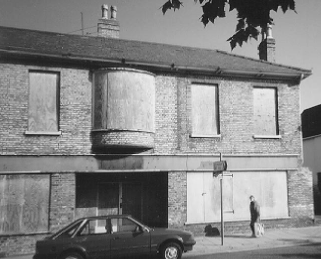
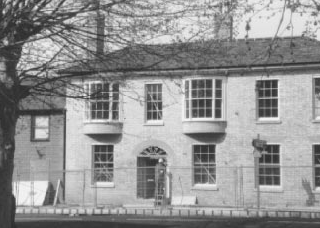
No. 90 Risbygate Street is a former town house which had been altered by the insertion of twentieth-century plate-glass shop windows. The garden had been lost and it had been empty for many years, with problems of decay internally. The ground-floor facade has been accurately restored, with the sash windows being reinstated, and the building is now used as offices for voluntary organizations. Figs 1 and 2 show the property before and after restoration, respectively.
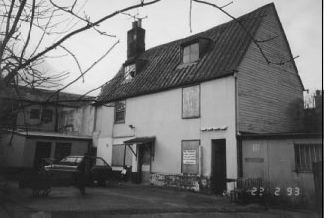
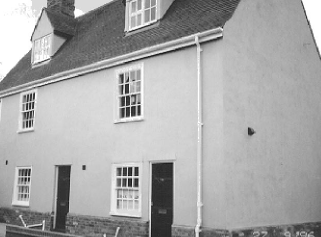
Numbers 96a and 96b Risbygate Street are a pair of cottages which were partially destroyed by two fires in the mid-twentieth century. They had been put to a number of short-lived uses but the final occupiers moved out in the early 1990s due to the condition of the building and the area. The building was acquired by the Suffolk Housing Association which transformed it into two town houses with first-floor sitting rooms. Figs 3 and 4 are photographs of the houses before and after restoration, respectively.
Numbers 98a, 99 and 100 Risbygate Street were acquired by the Bury Town Trust which embarked on a lengthy renovation project. The ground floor is now shops and three new flats were created in the rear ranges and upper floors.
No. 81 Risbygate Street—Royston House—had been a house in multiple occupation and therefore had typical fire doors with Georgian wired-glass and an unattractive external fire escape. It was empty for several years, and the necessary repairs and land-locked garden made it difficult to sell. The Suffolk Housing Association owned the adjacent site and it acquired Royston House to link through with their flats next door. One flat was formed on each of the three floors of Royston House, and new flats were built at the bottom of the garden, the remaining garden being available for the enjoyment of the tenants.
In addition to the restoration of the existing buildings in Risbygate Street, a mixture of new houses, flats and sheltered accommodation was also provided, and this has been fundamental in the success of the regeneration of Risbygate Street. New housing has been erected in Elsey's and Rae's Yards (to the rear of Risbygate Street) (Figs 5 and 6, respectively) and flats built over the entrance to Tavern Lane.
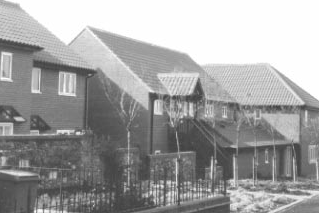
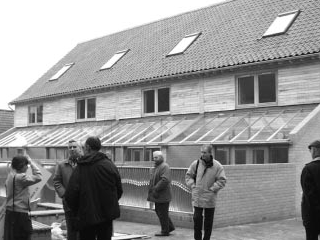
New shops were also provided in Elsey's Yard as well as in the renovated buildings fronting Risbygate Street.
To complement the building works, enhancement works were also carried out to improve the settings of the buildings, and to encourage investors in the early stages of the project, and shoppers to visit the area. The enhancements also provided a much more pleasant environment for residents of the new housing.
Three new pedestrian ‘streets’ were created to improve the links between the public car parks and Risbygate Street, at Tavern Lane, Elsey's Yard and Tidy's Yard. The demolition of No. 101 Risbygate Street decades previously had left a gap in the street. The site was redeveloped to incorporate a public footpath—Tavern Lane—through to the new bus station in St Andrews Street North. The lane at Elsey's Yard used to lead to a derelict car-breaker's yard. With the provision of the new craft units and renovated housing here, it was important to complete the scheme with improved surfacing and tree planting. Tidy's Yard was the former garden to No. 90 Risbygate Street and had been left derelict at the side of the empty house. When the site was disposed of, ownership was split, making its redevelopment very difficult. It was therefore made into a public open space which usefully links through from the street to the car park beyond and a nearby supermarket.
Conclusion
The acceptance that the restoration of many of the historic buildings in Risbygate Street would not generate profit led to the creation of the CAPS and prompted the borough council to encourage the involvement of non-profit-making bodies such as the local building preservation trust.
The mix of repair and new build has worked very well, allowing the cross-subsidizing of the repairs from the profit made on the new build, as well as breathing new life into the area.
In summary, 18 flats and two houses were created in the historic buildings together with twelve flats and 13 houses being newly built. Offices and shops have established themselves in seven of the historic buildings, with three new craft units being built in Elsey's Yard. In total, 45 new residential units and ten new retail units have been created.
The enhancement of public spaces and creation of thoroughfares has further helped stimulate the area, encouraging an influx of investors, residents and shoppers. The street is now a thriving area once more, integrated into the town centre, and a popular place in which to live, work and shop.

