This study examined the effectiveness of the serious gaming simulation (SGS) Fligby® for leadership development among officers in the Canadian Armed Forces (CAF). Fligby® is based on the philosophical foundation of Flow and Flow-based leadership originally articulated. We chose to include leadership in VUCA contexts as VUCA is a term first introduced by the American military, and we wondered if the current VUCA environment within the CAF might be a factor negatively impacting the leadership culture. Since leadership development is prioritized for fostering essential cultural change within the CAF, we aimed to evaluate whether the SGS Fligby®, along with a pre-simulation workshop discussing Flow-based leadership and VUCA leadership, could effectively facilitate leadership development within the CAF.
This is a qualitative, phenomenological study of military leadership development. Data collection consisted of two data sets: (1) focus groups and (2) semi-structured interviews.
Participants reported enhanced self-awareness as leaders and an improved understanding of “VUCA,” “Flow” and “Flow-based leadership.” They also reported an improved understanding of leadership after the pre-simulation workshop and Fligby® gameplay. Participants suggested that the utility of the Fligby® simulation might best be realized with emerging junior military leaders who need to work in teams and thus enhance their human skills and decision-making as compared to leaders at a higher level in the Canadian military who focus on the more conceptual, strategic and organizational level. Overall, participants rated the workshop and simulation favorably for leadership development.
There were several limitations to our research. Firstly, we would have preferred more time to develop VUCA and Flow-based leadership concepts with the participants. A one-day workshop was not enough time to fully explore these two concepts embedded in the Fligby® simulation. However, we had five days on-site with the officers to complete the workshop, gameplay, focus groups and semi-structured interviews, which were graciously set aside for our research by the Canadian Army Simulations Centre team and the participants. Another limitation of the research is that acute staffing shortages in the CAF and the consequent overload on existing personnel meant we had a sample of 11 officers at the rank of Captain, Major and Lieutenant-Colonel (some retired from active service but continued working with the CAF as contractors). A third limitation of our research is the selection of participants. We believed the Fligby® simulation would best suit senior-level officers at Captain, Major and Lieutenant-Colonel ranks. However, although the participants shared positive feedback on the workshop and the Fligby® simulation, they suggested that the seminar and simulation would be even more effective with newer emerging junior military leadership.
For the CAF leadership seeking systemic culture change throughout the organization, this study assists through identifying and improving specific leadership competencies using the SGS Fligby®. This study also provides an understanding of the ability of Flow-based leadership to develop a positive, Flow-oriented work/organizational culture within the Canadian Armed Forces. We wondered if a Flow-based approach to leadership might serve as a practical paradigmatic framework to support the desired culture change within the CAF. Further, the study presents insights into the effectiveness of the Fligby® SGS in fostering adaptable, strategic and human-centric leadership mindsets and skill sets for leadership and followership.
This research is part of an ongoing quest by leadership scholars across both public and private sectors to identify effective leadership development practices. This research is unique because of its use of the Fligby® SGS for military officer leadership development. SGSs have been used for military leadership development, but the Fligby® simulation together with a pre-simulation workshop discussing FLOW and FLOW-based leadership linked to VUCA leadership has not been so deployed.
Introduction
The Canadian military faces evolving challenges in contemporary global security, demanding adaptive and effective leadership. In the past 5 years, due to a call for meaningful culture change within the Canadian Armed Forces (CAF), leadership development has been foregrounded as an organizational priority (Eyre & Gregoire, 2022). The traditional process of career progression within the CAF through seniority, recognition and recommendation may have led to the neglect of several critical character dimensions of effective leadership (McCaskey, 2017), so much so that the CAF now suggests, as Eyre and Gregoire (2022, p. 6) highlight in the CAF Ethos:
However, military performance can quickly be overshadowed by inappropriate conduct, which in turn can cause significant damage to the trust that the CAF maintains with Canadians, the Government, and our own serving members…It follows that this duty requires a commitment from our people to be of strong character. Even more so now than ever, character is just as important and indeed often more impactful, than competence.
The CAF holds multiple intersecting motivations for leadership development. The negative motivations around leadership development within the CAF are related to character failures among the members and leadership of the CAF (Kasurak, 2011; Minister of National Defence Advisory Panel on Systemic Racism, 2022; Parenteau, 2022). In addition to the continuing allegations of racism, there are numerous sexual harassment allegations, which some members still deny and suggest are not endemic to the culture of the Canadian military even though evidence to the contrary is overwhelming (Anand, 2022; English, 2017; Fish, 2021; Hillier, 2007; Kean, 2021; Martinelli et al., 2022; Parenteau, 2022; Selberg, 2021; Taber, 2022). However, though some members of the CAF deny the existence of sexual harassment, it is hard to ignore a 2017 class action lawsuit based on discrimination, sexual harassment and sexual assault allegations, which received almost 19,000 claims (Martinelli et al., 2022). Most recently (December 2023), Statistics Canada highlighted that 1,960 members were sexually assaulted in 2022 (Cochrane, 2023).
A new leadership style based on a different leadership paradigm is needed to address the CAF’s culture’s challenging and harmful aspects. This desired new style of leadership will not emerge organically. There is a requirement for intentional leadership development of existing and emergent leaders within the CAF.
To explore the effectiveness of a leadership development program aimed at changing leadership mindset and skill set, we decided to utilize the serious gaming simulation (SGS) known as “Fligby®” (Buzady, Wimmer, Csesznak, & Szentesi, 2022; Kiili et al., 2022). Since the psychometric reports generated from Fligby® underscore Flow-based leadership and VUCA-ready leadership, we organized a pre-gameplay workshop to introduce the concepts of Flow-based leadership (Badibanga & Ohlson, 2021; Everett & Raven, 2016; Ji, Zhao, & Dang, 2023; Lovelace, Manz, & Alves, 2007; Mao et al., 2023; Ralston & Smith, 2023; Xie, Singh, & López, 2023) and VUCA-ready leadership (Bawany, 2016; Moore, 2014; Swarbrick & Stearman, 2012; Yoder-Wise, 2021). The workshop also covered how to play Fligby® and the types of reports Fligby® produces for each participant.
Purpose and Significance
This research aims to contribute valuable insights into integrating simulation-based training in military leadership development. The findings will inform curriculum development, training methodologies and investment decisions in leadership programs, ultimately strengthening the capabilities of the Canadian military.
Research Objectives
The team developed several research objectives such as:
- •
To assess the effectiveness of the Fligby® SGS (Kiili et al., 2022) in developing leadership competencies for culture change relevant to the Canadian military’s needs.
- •
To identify specific leadership attributes and skills that can be targeted and improved through the Fligby® simulation and attendant reports emerging from each user’s engagement with the simulation.
- •
To evaluate the impact of Fligby® on enhancing collaboration, communication and decision-making within military leadership teams.
- •
To evaluate the impact of a Flow-based leadership development intervention on leaders’ perceptions of their capacity to influence followers’ psychological safety and healthy organizational culture (Lovelace et al., 2007; Schermuly & Meyer, 2020).
- (3)
Methodology
This qualitative study into leadership development in the CAF adopted a phenomenological approach to explore how participants perceived the pre-gameplay workshop and Fligby®'s® SGS supported their leadership development. This study complied with the Canadian TCPS Core 2 requirements for ethical research involving human participants. We used the following methods to collect data from participants:
The research team, apart from the PI who conducted the pre-gameplay workshop, hosted two separate focus groups (n = 5 or 6 per group), which helped participants identify and clarify their views through structured questions leading to ad-hoc discussions (Parker & Carroll, 2009; Tausch & Menold, 2016)
The research team, apart from the PI who conducted the pre-gameplay workshop, hosted semi-structured interviews (Adeoye-Olatunde & Olenik, 2021; Whiting, 2008) with each participant (n = 10). Eleven participants participated, but one missed their scheduled interview due to unforeseen circumstances.
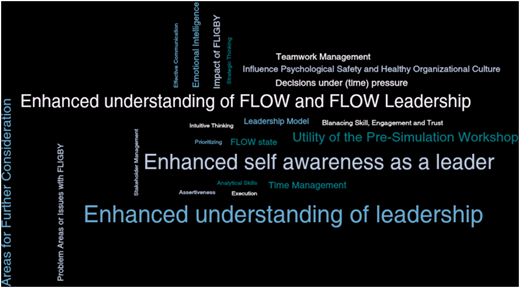
After the focus groups and semi-structured interviews were transcribed and uploaded to the Dedoose® coding platform for deductive coding using a codebook developed from our research objectives and the 29 leadership competencies listed by Fligby® in their leadership report (Buzady et al., 2022). Our coding yielded three major themes illustrated in Figure 1 (author’s own work).
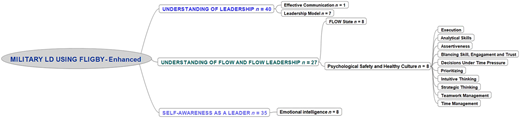
Figure 1 highlights three major themes from the Fligby® SGS: an enhanced understanding of leadership, enhanced self-awareness and improved knowledge of Flow and Flow leadership (FL). These three themes support several child themes illustrated in the Mind Map in Figure 2 (author’s work). We developed this Mind map of emergent themes by foregrounding those themes that articulated the highest numerical density such as: “understanding of leadership,” which occurred 40 times in participant feedback; “understanding of Flow and Flow-based leadership,” which occurred 27 times in participant feedback and “self-awareness as a leader,” which occurred 35 times in participant feedback. The child themes were linked to these parent themes as a natural expression of the theme, for example, “effective communication,” as an essential leadership motif, emerged in the feedback, as did the theme of “leadership model(s),” both of which support the parent theme of “understanding leadership.”
The Fligby® serious gaming simulation as a leadership development tool
To address our research questions, we sought a serious gaming simulation (SGS) that supports leadership psychometrics as an outcome of gameplay. We hypothesized that these psychometrics would become an invaluable resource for participants in assessing their areas of leadership strength and opportunities for improvement through leadership coaching and self-development. As Reed, Klutts, and Mattingly (2019) highlight in their systematic review, only a tiny fraction of the included articles aimed at assessing leadership effectiveness or development, indicating a gap in psychometric evaluations in this context. Furthermore, their work emphasizes the need for a coherent framework for operationalizing leadership development, aligning with the user task of exploring practical psychometric tools in this area. Their review mentions efforts such as adapting the Jefferson Scale of Empathy as a model for developing valid assessments, further reiterating the importance of robust psychometric instruments in leadership evaluation. Our research intentionally designed gameplay with comprehensive psychometric reports as a precursor to executive coaching for participants in areas they identified for improvement based on the psychometrics. Later researchers such as Braathu, Laukvik, Egeland, and Skar (2021) and Braathu, Laukvik, Egeland, and Skar (2022) highlighted the value of psychometric tools such as the Multifactor Leadership Questionnaire (MLQ) and the Implementation Leadership Scale (ILS) for leadership development within healthcare.
Additionally, there is a robust body of literature that highlights the value of SGS’s for military leadership development. For example, Laamarti, Eid, and El Saddik (2014) discuss the broader context of serious games, noting their growth and application in various fields, including military training simulations. While their research primarily provides an overview of serious games, it highlights how military-focused serious games train military personnel in leadership and combat scenarios. Zhao, Fang, Li, and Zhang (2024) discuss the importance of simulation-based training in improving the skills and capabilities of military nurses in emergencies, which can also be applied to military leadership development through SGSs. Kirchner (2017) discusses leadership development within the U.S. Army and highlights the structured leader development program in the Army, indicating that such programs incorporate diverse training methodologies that may include SGSs to foster leadership skills.
Fligby’s® distinctiveness and utility emerge because it leverages the power of serious gameplay to compile robust psychometric tools (Buzady et al., 2022). Fligby® is unique because the psychometrics are produced through gameplay in a virtual world, as opposed to an individual attempting to self-assess their leadership acuity through a series of questions or the insights of others in a 360-degree analysis (Wilson, Lee, Ford, & Harding, 2020).
We used MS Co-Pilot to assist us in comparing a range of SGS’s with Fligby. The results are indicated in Table 1.
An internet search also yielded a range of virtual SGSs, such as those offered by the Inconext Consultancy Group (https://incontextconsultancy.com/expertise/serious-gaming/#serious-games). However, one of the standout aspects of the Fligby® simulation is that a NATO commander designed the VUCA readiness psychometrics. Additionally, the LeadWell and Ethical Leadership psychometric outputs were appealing for our research. With 29 leadership skills and competencies being assessed through gameplay, it is hard to find an SGS that is as comprehensive in providing robust and actionable leadership insights.
As researchers, we determined that at least two of our research team members needed to play the Fligby® simulation to understand the game’s quality and nature. The strength of Fligby® is the robust leadership-related psychometric reports one receives after gameplay. These reports comprise a leadership health report, a VUCA readiness report and a lead well report. Samples of these reports can be found at this link: https://www.fligby.com/?s=Sample+report.
The Fligby® simulation is staged at the Turul winery in California, where you are the winery’s general manager. You are the head of a management team of eight people currently experiencing conflict and dysfunction. You are called upon to make decisions to strengthen team cohesion and productivity in the winery. The game is played over an extended time frame of four to six hours. Players can take rest breaks when needed as the game tracks their progress, and time limits are not a factor in the gaming outcomes.
We selected the Fligby® simulation because the concept of Flow-based leadership, as emulated in the Fligby® simulation, seemed to align with the CAF’s desired culture change closely. FL focuses on creating and maintaining conditions within a team or organization that maximize the probability of individuals experiencing “Flow states” during their work. This involves consciously structuring tasks, processes and the work environment to foster intrinsic motivation, deep engagement and optimal performance (Aubé, Rousseau, & Brunelle, 2018; Mao et al., 2023). This connection between the Fligby® simulation and the CAF’s culture change manifests in three key areas: contrasting or supporting other major leadership theories, promoting psychological safety and enhancing VUCA readiness. We will discuss each of these areas by reviewing three significant leadership theories in the following paragraphs.
Transformational Leadership vs. Flow Leadership: Transformational and FL both aim for high performance and engagement. However, the key distinction in motivation for high performance and engagement in Transformational Leadership (TL) may be extrinsic; the leader’s actions drive the followers’ motivation (Tran & Vu, 2021). Conversely, FL motivation is more intrinsic, as followers are driven by their alignment with and passion for the task (Chou, Lin, Chang, & Chuang, 2013). TL inspires followers through leadership by enacting the four I’s to motivate them to exceed expectations: idealized influence, individualized consideration, inspirational motivation and intellectual stimulation (Capitano, Fisher, & Bozeman, 2020). On the other hand, FL focuses on optimizing processes, creating an environment where individuals can easily enter a state of Flow – a deeply focused and enjoyable work state where performance naturally flourishes (Csikszentmihlyi, 1990). While a TL may inspire a team to reach a challenging goal, a Flow-oriented leader concentrates on structuring tasks and the work environment to help each individual experience Flow regularly, resulting in sustained high performance and intrinsic motivation. The difference lies in the approach: inspiration versus optimizing the work process. Smith, Koppes Bryan, and Vodanovich (2012) suggest in their study that Flow may diminish the anticipated positive effects of TL. This study examines the moderating role of Flow in the context of TL, revealing that Fow can negatively affect job satisfaction when interacting with TL and Authentic Leadership (AL). Within military contexts, this juxtaposition of TL and FL is significant because the extrinsic motivation of TL, with its pressure to perform and adapt in extreme environments, can lead to adverse psychological effects on followers (LaRocca & Groves, 2021). The CAF seeks to ameliorate these adverse psychological effects arising from a particular approach or leadership style through a different approach to leadership training and development, aiming to transform the alpha leader-centric culture.
In contrast to TL, FL is positioned as a leadership style and approach that mindfully engages the leadership role in creating positive environments for followers. This positive allocation of FL applies to Operations Other Than War (OOTW) and the social capital and mindfulness components this approach to leadership fosters in high-stress contexts such as those encountered in war. However, as in many leadership and followership contexts, situational awareness and wise deployment of various leadership styles and approaches might be required, thus calling for TL in one specific high-stress moment while necessitating FL in another (Wang & Howell, 2010; Chaskar & Upadhyay, 2023). More research into the juxtaposition of TL and FL in extremis and OOTW contexts seems necessary. For our research purposes, it is helpful to note the significant contribution FL can make to potentially reshape the leader-centric mindset within the CAF, suggesting that culture change might occur with this altered leadership paradigm.
Authentic Leadership vs. Flow Leadership: Authentic leaders build trust through transparency and self-awareness, fostering a positive work environment that supports the emergence of Flow states (Wong, Walsh, Basacco, Mendes Domingues, & Pye, 2020). However, authentic leadership (AL) does not directly address the conditions necessary for Flow. A truly effective leader might integrate both leadership approaches, exhibiting AL to build trust while utilizing Flow principles to design work that consistently encourages Flow experiences. The key difference lies in the scope: AL emphasizes character and relationships, whereas FL concentrates on the psychological experience of work itself. Kafeel, Khan, and Ahmed (2024) examine the interplay between AL and Flow at work, highlighting how Flow mediates the relationship between AL and innovative work behavior. Notably, the findings confirm a positive relationship between AL and Flow at work, suggesting that leaders who demonstrate authenticity can foster Flow among their employees, leading to greater innovation. Within military contexts, Antonesei and Fasarea (2023) suggest a strong relationship between AL, psychological capital and motivation among military personnel. Meerits and Kivipõld (2020) quantitatively evaluate leadership competencies among first-level military leaders in the Estonian Defence Forces. Their study categorizes leadership capacities into three behavioral dimensions: task, change and relational competencies, emphasizing the assessment of how these competencies correlate with authentic leadership traits. By utilizing validated frameworks such as the Extended Authentic Leadership Measure, the authors provide a methodological approach to quantify leadership quality, focusing primarily on the relational competencies underpinning authentic leadership behavior. This work highlights the gap in existing research regarding the significance of authentic leadership in fostering trust between commanders and subordinates, making it a valuable study for understanding this leadership model within military settings. Thus, it contributes to the dialogue on authentic leadership by providing empirical data and establishing a foundation for further exploration in military contexts. AL might serve as a valuable addition to the leadership portfolio of military leadership and appears to support FL within military contexts in a way that TL may not.
Servant Leadership vs. Flow Leadership: Servant leadership (SL) prioritizes the needs of followers (Greenleaf & Spears, 1998). By creating a supportive and empowering environment, a servant leader can indirectly contribute to Flow experiences. However, SL does not explicitly aim to induce Flow. For example, a servant leader might remove obstacles that hinder a team’s ability to enter Flow, but the explicit design of Flow-inducing tasks remains a distinct focus of FL. The contrast is one of intention: serving others versus directly optimizing the work experience. Khan, Mubarik, Ahmed, and Islam (2024) indicate that leadership styles significantly influence trust dynamics, which are crucial for fostering effective communication and collaboration – core principles in both SL, which prioritizes service to others, and FL, which focuses on creating optimal experiences for team members. Within military contexts, SL appears to have an impact on subordinate engagement by fostering a proactive mindset (Moreno et al., 2021). Additionally, research suggests that SL within a military context creates a service climate and empowers followers leading to positive outcomes (Bahmani, Teimouri, Javadi, & Khorasegani, 2020). SL and FL are thus suggested as complementary leadership approaches within a military context.
In summary, while each leadership theory offers valuable insights, applying Flow principles to leadership presents a unique perspective. TL seems least conducive to the type of culture change away from alpha-driven leader-centricity required in the CAF. FL, on the other hand, emphasizes optimizing the work experience itself to achieve high performance and engagement. Our survey of these major leadership approaches indicates that effective leaders may integrate aspects of multiple theories, recognizing how each contributes to fostering a military environment where Flow thrives.
To assist the reader in navigating the intersection of learning theories and Fligby, we engineered a prompt for ChatGPT 4.0 to create a comparison table, as seen in Table 2: Learning Theories and The Fligby SGS.
Findings – discussing three key themes
Building upon a small pilot study conducted just over a year ago in which we used simple virtual role-play simulations with junior military leaders (JMLs), we hypothesized that a more complex serious game simulation with rich psychometric capabilities could serve as a helpful leadership development tool within the Canadian military. Given the complexity of the game and the range of psychometric feedback, we decided to focus on military leaders at a higher level than the JMLs we worked with in our pilot study. For this reason, we invited military leaders of the rank Major and Lieutenant-Colonel to participate in the study. We were concerned that the nature of the simulation, a winery, might impinge on its effectiveness since it is not explicitly crafted for military personnel by using military scenarios in the gameplay. As we report later in this section, the participants suggested that non-military leadership gameplay was a good choice because it freed participants of their natural propensity to question the validity and quality of scenarios if they were military.
Theme 1: Enhanced Understanding of Leadership (n = 40 occurrences in the coding)
As previously highlighted, our sample included officers at the rank of Lieutenant Colonel and Major. While it seems evident that leaders at this rank within the military will have forged their ideas of leadership and followership, we wanted to assess if the Fligby® SGS further enhanced their understanding of leadership. Could Fligby® provide mindset and skill set development through the insights emerging during gameplay and the psychometric feedback arising from the game? The gameplay and psychometrics appear to have provided a forum for an advanced understanding of leadership. We focus on the impact of the gameplay and the psychometric feedback. Concerning the insights gained from the gameplay, as one participant stated:
For me, leadership is about influencing individuals or groups toward a common goal, but it also must be grounded in ethics and morality. My opinion of leadership hasn’t changed, though I’ve taken away some insights that may improve my own skills.
This notion of new insights gained from Fligby® for skills development is significant and permeates leadership development thinking and research in military contexts (Boe, 2015) as well as across several sectors (Farr & Brazil, 2009; Larsen, Beier-Holgersen, Meelby, Dieckmann, & Østergaard, 2018; McCallum & O’Connell, 2009) and has been suggested as a natural outcome of serious gameplay designed for leadership skill development (Buzady et al., 2022).
The utility of Fligby®, in addition to providing space for leaders to develop insights that assist with leadership skills development, is that it exposed these leaders to other approaches to leadership, which they found helpful. As one participant stated, “What I’ve found really helpful in terms of leadership is just being able to observe examples of good and bad leadership actions.” Yet another participant highlighted the utility of Fligby® in this way:
I think it’s good on one hand, for military personnel to get exposed to other types of leadership and other types of environments. But I think you heard during the group conversation that there was a lot of discussion, I think, in both the groups after; I spoke afterwards with some of them about adapting that type of training in a military environment or military scenario because I think there are some subtleties in how we do business. The business world would be better represented in that environment. But no, there’s nothing, you know, there’s nothing wrong with being exposed to leadership in a different environment, right?
While many participants articulated how playing Fligby® had enhanced their understanding of leadership, they felt it could significantly enhance young emerging leaders’ understanding of leadership. As one participant stated:
That’s always been an area of weakness for me, and at this time, it’s not going to improve any more than it is now, right? Whereas, if you get a younger person coming through who's just started healthy and is really keen to understand where their leadership strengths and weaknesses lie, and they have time to go, okay, that’s an area I need to work on, right? So, how do I work on that? How do I become better at conflict management? Or how do I become better at delegating responsibility? Or those type wherever your weaknesses may lie, and understanding, okay, I’m really, really good at these areas. I communicate well, I, you know, I balance, you know, good at a certain you know, whatever those things are that you that your strengths are, you know how you reinforce those? But people like me where it's less relevant now, because I’m at the end of my career, it doesn’t matter as much. So I think it all depends on where you catch these people, right? And if you’re aiming this at sort of the junior level of leadership, I think that’s the right level, right? Because that is where they will benefit the most from that.
In addition to the insights gained during gameplay that enhanced understanding of leadership, the psychometric reports on leadership skills and VUCA readiness offered further material for an improved understanding of leadership. Psychometric reports offer rich data for leaders’ improved understanding of their leadership style, strengths and potential areas of improvement (Can, Hendy, & Berkay Ege Can, 2017; Schulte & Thielsch, 2019). Commenting on the utility of the post-game psychometric report one participant stated:
So, yeah, I think that’s a very, very useful thing. You can pull from it. I think the reports are very, very useful. They’re clear, they're easy to read. You can quibble. You may go, “Well, I thought I was stronger in that area than I thought maybe I am.” Or, yeah, okay, yeah, that's an area I knew I was reasonably good at in terms of, in terms of how things are measured. But you know, it gives enough areas to look at and then the four or five key ones to look at that you would have a lot to work with if you are looking at, okay, how do I improve?
Building upon their existing understanding, the combined impact of gameplay and psychometric reporting appears to enhance participants’ understanding of leadership,
Theme 2: Enhanced Self-Awareness as a Leader (n = 35 occurrences in the coding)
Self-awareness is suggested as an essential leadership attribute supporting relational transparency, internalized moral perspective and balanced processing. A leader’s self-awareness also supports confidence and humility in decision-making and fosters a culture of distributed leadership (Grandy & Holton, 2012; Rodriguez & Rodriguez, 2015). The participants reported enhanced self-awareness arising from the situations encountered in the gameplay. As one participant stated:
Surprised by the strength of some of the strengths? Certainly. When I was a younger man, people would not have accused me of being emotionally intelligent (rather) far more belligerent. Still, I have softened over the years because I was once fairly strict in my sense of what was right and wrong militarily, with emotions being paid less attention, so I was surprised at the level of emotional intelligence that it ascribed to me, as was another member here, who was younger. Still, I could see some similar traits in him. So that was interesting.
It appears difficult to cultivate meaningful self-awareness as a leader when immersed in the daily leadership routine. As one participant put it:
It offers a different perspective, and we often don’t get many opportunities to stop and reflect on our decisions due to the demands of our roles.
Another participant stated:
It was helpful for me. The simulation slowed things down in a way where you could actually see how your decisions affected others.
It is thus, perhaps, one of the advantages of simulated gameplay like Fligby® that it enables participants to “escape” into a different world where the consequences of the decisions imply a challenge but not at the same level as the participant’s “real-world” leadership context. The opportunity for participants to focus on a liminal “third space” enabled them to “challenge assumptions, unearth unexpected encounters, act differently, and posit complex questions (Koro, Löytönen, & Cruz, 2020).” In short, Fligby®, as that liminal third space, enabled participants to enhance self-awareness, which is pivotal to effective leadership in the current milieu (Comfort & Okada, 2013; Herold, 2016; Linsky, 2019; Pinnington, 2011; Vidic & Burton, 2011; Winton, Palmer, & Hughes, 2018). SGSs like Fligby® enhance leadership self-awareness because they provide the opportunity and the space for leaders to self-reflect. As one participant stated after playing Fligby®, “There’s a lot of self-reflection involved – wondering, “Why did I make that decision?” Thematically it appears that participants deeply appreciated the capacity of the gameplay to enhance their leadership self-awareness as, perhaps, one of the most helpful components of the exercise:
Yes, I noticed that when I made the right decision, I felt great – like, “Yes, I nailed it!” But when I made a wrong decision, I felt really upset. The self-reflection was valuable, helping me understand what I should have done differently.
Theme 3: Enhanced Understanding of Flow and Flow Leadership (n = 37 occurrences in the coding)
“In my experience, Flow often happens under pressure. Whether in sports or military operations, those moments of focus and performance often come when the pressure is on, and everything just aligns (participant).” The name “Fligby®” is a compilation of the first letters from the sentence “Flow is good for business.” Fligby®, as a serious game simulation, was built on the foundation of Mihaly Csikszentmihalyi’s discovery of the concept (Buzady et al., 2022). The state of “Flow” is a peak experience that is enjoyable and intrinsically motivating and occurs when one is immersed in an activity (Bakker & van Woerkom, 2017; Xie et al., 2023).
As a research team, we believed that the concept of “Flow” and a sophisticated, serious gaming expression of “Flow” fit the military context well because of the nature of military leadership in extremis (Dixon, Weeks, Boland, & Perelli, 2017) and in OOW (Elkington, Worthington, & Ruttenberg-Rozen, 2024) because of the distinctive situational demands of each and the requisite leadership skills required to navigate each effectively. The pre-gameplay workshop and the serious gameplay enhanced participants’ understanding of “Flow” and “Flow leadership.” One participant put it this way:
Yeah, I think it is. I think it’s compared to some of the other leadership models that it really focuses on, like, I think I said that in the group interview yesterday, like, sort of the emotional quotient of the leadership side of the house. And, you know, given the need for culture change in the Canadian Forces, this may be a model that might be useful to that because I think, you know, a lot of our issues tend to be on more of a personnel management side of the house, and this really focuses on managing people and expectations and work and how people work, and what environment they work in, and how they work best, what type of environment they work best. So, yeah, I thought it was very useful.
Understanding the antecedents of “Flow” and the role of job design and effective leadership in supporting “Flow” are aspects of ongoing research – but there is a clear recognition that leadership is a factor supporting conditions to achieve “Flow” (Badibanga & Ohlson, 2021; Bakker & van Woerkom, 2017; Barua, Muchiri, Muenjohn, & Burgess, 2019; Liu, Lu, Li, Linden, & Bakker, 2023; Lovelace et al., 2007; MacGillivray, 2018; Ralston & Smith, 2023; Xie et al., 2023). Recognizing that effective leadership is an essential component of supporting “Flow” within the team, participants were also perceptive that “Flow” is not a constant state and can be elusive, as on participant stated:
In any organization it would be very difficult. I think Flow is something that will come and go to keep everybody in the zone all the time is probably going to be too much to ask of any organization, right? There will always be points where people are out of it, or people are into it, depending on what they're doing. Are they part of this project? Are they kind of just doing day to day management things where they’re not being pulled in for big projects or big changes in the company or what they’re doing? So to me, it will always fluctuate a bit. There'll be moments when everybody’s pulling in the same direction, and it’s all working, and there will be moments when it comes apart, or at a very least, you’ll have people that are not at the maximum, right? So, I’m not sure if Flow represents … that kind of ultimate goal where it might achieve it every once in a while, but it's not something that you can realistically work at that level all the time, 100% of the time, 365 days a year in any organization.
Discussion: the use of a serious gaming simulation in military leadership development
Building on a pilot study exploring the efficacy of virtual simulations for junior military leadership development, this study sought to explore the efficacy of the SGS known as Fligby® for military leadership development. To achieve this objective the team developed four research objectives as follows:
To assess the effectiveness of the Fligby® SGS (Kiili et al., 2022) in developing leadership competencies for culture change relevant to the Canadian military’s needs.
To identify specific leadership attributes and skills that can be targeted and improved through the Fligby® simulation and attendant reports emerging from each user’s engagement with the simulation.
To evaluate the impact of Fligby® on enhancing collaboration, communication and decision-making within military leadership teams.
To evaluate the impact of a Fow leadership development intervention on leaders’ perceptions of their capacity to influence followers’ psychological safety and healthy organizational culture (Lovelace et al., 2007; Schermuly & Meyer, 2020).
As a team, we hypothesized that the combination of pre-gameplay workshops designed to expose participants to the concepts of Flow, VUCA and serious gameplay, together with the opportunity to exercise leadership decision-making skills within the Fligby® serious gaming eco-system, would support leadership development. As a research team, we were unsure if our hypothesis would prove to be accurate and, if valid, what form the resultant leadership development might take. The results of the intervention were surprising and encouraging. Participants suggested that the combination of the workshop, serious gameplay and extensive psychometric reports (supplementary material) enhanced their understanding of leadership, their self-awareness as leaders and their knowledge of “Flow” and “Flow leadership.”
Participants also suggested that this intervention would not be appropriate for leaders at a higher rank because these higher-level leaders focus on conceptual and organizational priorities and less directly on people leadership. They further suggested that the intervention was helpful for participants at their rank (Major and Lieutenant-Colonel). However, participants suggested that the intervention’s greatest utility was situated at the emerging junior military leadership level since these new leaders are learning to lead teams of people and knowledge and practice of the concepts of “Flow,” “VUCA” and “Psychological Safety” would serve these emerging leaders well.
Conclusion: areas for further research
The data yield from this research is significant, and space and time limit our ability to articulate the breadth of our findings. Participants almost unanimously expressed a desire to replay the game and improve their gameplay scores. They also suggested that the pre-gameplay workshop and “Fligby®,” along with the resulting psychometric reports, would serve as a valuable leadership development process for emerging JMLs.
We aimed to operationalize the Fligby outputs by providing Executive Coaching for participants, allowing them to address areas they identified through gameplay that they wanted to improve. However, although some officers availed of the coaching with ICF-certified coaches, only one agreed to replay the game. This does not represent significant enough data to warrant further exploration for this study. We hope to facilitate a larger project with JMLs that incorporates all the elements of this study, but with a robust longitudinal assessment over three years. If the data yield from that study is consistent with what we observed in phases 1 and 2 (this study) of our research, we plan to work with CAF leadership at a policy level to assess if the implications of the SGS outputs warrant inclusion in the CAF Officer training portfolio.
Furthermore, our research must be tested with leaders in various sectors outside of military contexts. However, this intervention could help emerging and existing leaders across all industries. This might be the case because it focuses on the significant concepts of leadership’s role in creating conditions conducive to “Flow” and strengthening a leader’s self-awareness and understanding of leadership as a relationship.
The supplementary material for this article can be found online.