Despite the growing emphasis on green public procurement (GPP), public institutions face challenges in attaining the desired levels of GPP performance. This study aims to identify the critical barriers to GPP performance evaluation by synthesising findings from existing literature, establish the interrelationship between the barriers and to propose strategies for addressing them.
This study was guided by the Preferred Reporting Items for Systematic Reviews and Meta-analysis (PRISMA) protocol. Forty papers were selected from Scopus, Web of Science (WoS), ScienceDirect and Google Scholar.
Lack of knowledge, lack of awareness, resistance to change, budget constraints, high costs and inadequate regulations were identified as some critical barriers to GPP performance evaluation. There is a need to build stakeholders’ capacity. Government institutions must consistently monitor to ensure public institutions comply with GPP, using performance evaluations. Institutions should support and seek innovative revenue sources to fund GPP performance evaluation activities, rather than relying solely on government support.
This study lacks empirical evidence to support its findings. It also focuses on public institutions, making the findings applicable to specific sectors.
Public institutions can adapt methods and tools that encourage and facilitate the practice of GPP performance evaluation. Management of public institutions needs to introduce innovative training programmes to equip procurement practitioners and other stakeholders with the benefits of GPP performance evaluation, thereby enhancing their knowledge base. Management should develop internal policies and standards for GPP performance evaluations while procurement practitioners implement regular monitoring and audits.
This study emphasises the importance of training stakeholders on the barriers to GPP performance evaluation, empowering them to ensure that institutions conduct their activities in a way that does not harm their health or the environment.
This paper identifies the critical barriers to GPP performance evaluation, establishes their interrelationship and proposes strategies for addressing these barriers.
1. Introduction
The barriers to green public procurement (GPP) have led to inefficient resource utilisation, increased carbon emissions and environmental harm, negatively impacting the health of stakeholders. GPP is essential for achieving Sustainable Development Goal (SDG) 12 on Responsible Consumption and Production (Opoku et al., 2022). GPP has become an imperative due to significant government spending, with Organisation for Economic Co-operation and Development (OECD) countries investing approximately 40% of their GDP, European countries around 49.1%, and developing countries approximately 30% (Vejaratnam et al., 2022). Increasing concerns about environmental performance are prompting countries to adopt GPP as a crucial solution for enhancing the ecological outcomes of various sectors (Simion et al., 2019). Exploring barriers to GPP performance evaluation can help identify success factors, enhance GPP and promote higher green performance (Alqadami et al., 2020a).
Despite the growing recognition of GPP as a tool for advancing sustainability and the SDGs, performance evaluation of GPP in public institutions remains underdeveloped. Existing studies have focused on persistent barriers, including limited resources, weak institutional capacity, high upfront costs and insufficient legislation (Nasiche and Ngugi, 2014; Mojumder et al., 2022). Moreover, the absence of standardised evaluation methods, reliable procurement data and clear performance metrics has created a methodological gap that hinders consistent assessment across contexts (Rejeb et al., 2023; Mosgaard, 2015). While earlier research has explored supplier selection and green purchasing, few studies have systematically examined the interconnected barriers that undermine GPP performance evaluation (Genovese et al., 2014; Vejaratnam et al., 2022). Thus, this study aims to address the question:
What are the critical barriers hindering GPP performance evaluation?
The paper identifies critical barriers to evaluating GPP performance and their interrelationship, then proposes strategies for addressing these barriers. This will guide public institutions on how to allocate resources effectively for preventing and mitigating the impact of these barriers. Furthermore, these identified barriers will enable policymakers to effectively monitor GPP performance by providing necessary support, thus fostering SDG 12. The paper covers an introduction, literature review, methodology, findings, discussions, implications, conclusion and recommendations.
2. Literature review
2.1 Green public procurement performance evaluation
Crovella et al. (2023) acknowledged the difficulties in accurately defining GPP, reflecting broader conceptual debates about its scope as a public policy instrument. GPP is the process by which public institutions acquire goods, services and works with reduced environmental impacts across their life cycle (EC, 2008; Pouikli, 2021; Lewis et al., 2022) and is increasingly viewed as a strategic mechanism for advancing sustainable development through public procurement (Brammer and Walker, 2009). The primary objective of GPP is to ensure that public procurement is conducted in an environmentally responsible manner while supporting economic efficiency and social value. Performance evaluation systematically assesses organisational effectiveness and efficiency (Kaydos, 2020) and, in public procurement, serves as a governance tool that links policy objectives to operational outcomes through monitoring (Wysokińśka-Senkus, 2020). Ketemaw et al. (2020) noted that procurement performance is benchmarked against measures that reduce transaction costs and improve the quality of delivered goods, underscoring the need for structured evaluation frameworks (De Boer et al., 2001). GPP performance evaluation therefore supports continuous improvement by identifying areas of success and misalignment, enabling procurement systems to align more closely with environmental policy goals (Lewis et al., 2022).
2.2 Barriers to green public procurement performance evaluation
Literature identifies multiple barriers to GPP performance evaluation that constrain implementation and performance outcomes (Islam et al., 2017). Patrucco et al. (2016) noted that fragmented and misaligned performance metrics often conflict with institutional strategies, echoing Hoffman’s (2006) concerns regarding strategic incoherence. Extending this argument, Adjarko et al. (2014) demonstrated that weak information access, limited leadership accountability and poor integration of environmental criteria into procurement routines significantly undermine the implementation and evaluation of green purchasing policies in local governments. The lack of suitable methods for analysing suppliers (Bhutta, 2003) and limited empirical evidence on the effectiveness of existing evaluation tools (Genovese et al., 2014) further complicate GPP performance assessment. Although techniques such as data envelopment analysis (Forker and Mendez, 2001) and multi-attribute decision-making models (Huang and Keska, 2007) are available, their practical application is constrained by data limitations, organisational capacity and low user accessibility. Grandia and Voncken (2019) emphasised that these technical shortcomings are reinforced by organisational behaviour, particularly where procurement officers lack incentives, discretion or managerial support to apply sustainability-oriented evaluation criteria. From behavioural and institutional perspectives, Hsueh et al. (2020) argue that failures in GPP performance evaluation are not solely technical but are deeply embedded in organisational cultures, leadership commitment and governance structures. Hervani et al. (2005) identified issues like non-standardised data and poor technological integration, highlighting the need for standardised tools. In the automotive industry, Luthra et al. (2011) called for better support among supply chain partners for performance measurement, while Cuny (2001) noted that low-quality personnel hinder evaluations. Resource inadequacies for sustainable procurement have also been reported (Ayarkwa et al., 2020, 2021). The influence of human behaviour on achieving green goals is significant (Neruja and Arulrajah, 2022); Katiyar et al. (2018) observed that firms often lack awareness of effective performance measurement systems, which equally hinders GPP performance evaluation. These challenges underline the growing interest in GPP performance evaluation, making it clear that further investigation is necessary.
2.3 Strategies for overcoming the barriers to green public procurement performance evaluation
Some studies have identified strategies to overcome barriers to GPP performance evaluation. Patrucco et al. (2016) recommend that key performance indicators (KPIs) align with innovations to measure procurement performance. Beamon (1999) argued for expanding traditional performance metrics to include product recovery, as suggested by Ayarkwa et al. (2021). Comprehensive frameworks and skill training can enhance awareness of environmental issues and boost participation in green initiatives (AlNuaimi and Khan, 2019; Nalini and Durai, 2019). Education and training have been shown to be effective in improving practitioners’ ability to integrate environmental sustainability (ES) into supplier selection (Alsamarraie and Ghazali, 2023). De Boer et al. (2001) and Bruno et al. (2012) emphasised the need for universally accepted performance measures. Knowledge management, top management commitment and environmental capabilities are crucial for integrating ES into public procurement. Governments should financially support green projects and advocate for green procurement in major public projects (Alqadami et al., 2020b; Wong et al., 2016). There is a need to build capacity in ES to strengthen GPP performance evaluation by ensuring that green criteria are embedded in procurement policies and practices.
2.4 Theoretical framework
This study draws on established procurement and sustainability models to explain barriers to GPP performance evaluation. Thai (2001) provides the base by emphasising efficiency, accountability and transparency, while the triple bottom line, together with life cycle costing (LCC) and life cycle assessment (LCA), links procurement choices to long-term economic and environmental outcomes. The strength of the study lies in its integration of institutional theory, which explains how organisational behaviour is shaped by coercive pressures from regulations, normative pressures from professional standards and mimetic pressures from the adoption of perceived best practices (DiMaggio and Powell, 1983). These mechanisms clarify why GPP barriers persist: weak enforcement affects compliance, limited practitioner competence weakens normative expectations and the scarcity of GPP exemplars restricts diffusion. The emphasis that GPP evaluation challenges arise from both organisational capacity and institutional constraints. Managers influence training and monitoring, but legislation, budgets and administrative structures shape their actions. This understanding informs the study’s approach to identifying institutional and managerial barriers that affect GPP performance evaluation.
3. Methodology
A systematic literature review (SLR) helps examine a research question using systematic and transparent methods to select and evaluate relevant studies and to collect and analyse data from the included studies (Chandler et al., 2019). Vejaratnam et al. (2020) argued that rigorous SLR helps identify gaps and guide future studies. To achieve the objectives of systematic reviews, the Preferred Reporting Items for Systematic Reviews and Meta-Analyses (PRISMA) protocol is a widely used guideline for rigorous reviews (Page et al., 2021). The PRISMA statement and its extensions are an evidence-based, minimum set of recommendations designed primarily to encourage transparent and comprehensive reporting of SLRs (Sarkis-Onofre et al., 2021). The protocol serves as a roadmap to help SLR authors describe what was done, what was found and what is being planned (ibid). The PRISMA flowchart outlines three steps: identification, screening and inclusion of papers.
3.1 Identification
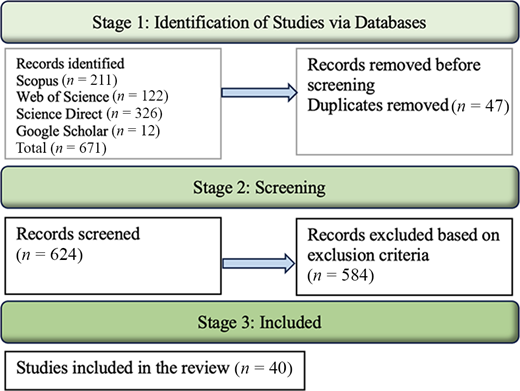
Planning this SLR involves identifying databases for paper retrieval using relevant keywords (Qazi and Appolloni, 2022). Research articles on barriers to GPP performance evaluation were sourced from Scopus, Web of Science (WoS), ScienceDirect and Google Scholar. Albhirat et al. (2024) confirmed that Scopus is suitable for high-quality research, while Qazi and Appolloni (2022) highlighted its comprehensive coverage of peer-reviewed literature. WoS is recognised for its credibility in business and management, offering broader coverage and accuracy (Ayarkwa et al., 2025). Additional journals were included to ensure comprehensive data collection. All four databases identified 671 documents as presented in Figure 1.
3.2 Screening
The identified documents were screened according to the limitations presented in Table 1. The search was not limited to paper type and included research and conference papers, which were selected to emphasise high-quality research (Qazi and Appolloni, 2022). Adjei-Bamfo and Maloreh-Nyamekye (2019) opined that peer-reviewed papers are of high quality. The search strings for Scopus and WoS differed from those for ScienceDirect and Google Scholar, as presented in Table 1.
The identified documents were downloaded in BibTeX format and uploaded to the Zotero online referencing tool. Forty-seven duplicates were removed using the Zotero online referencing tool, leaving 624 papers. Table 1 outlines the document selection process, including the criteria for inclusion and exclusion.
3.3 Inclusion and exclusion criteria
The screening for inclusion and exclusion excluded unrelated articles based on topic, abstract or full-text review. Five hundred and eighty-four articles were eliminated, leaving 40 for analysis and discussion. Although the selection criteria did not limit the document type, the final selection resulted in peer-reviewed papers, indicating that the review was conducted exclusively in peer-reviewed journals, indicating the quality and reliability of the sources used. The process is illustrated in Figure 1.
4. Review
The study used NVivo 15 software for thematic analysis. This software was suitable for the study due to its user-friendly interface, extensive data support, robust coding and query tools and visualisation options (Phillips and Lu, 2018). It helped the study explore trends, manage codes, interpret and analyse data. Thematic analysis is suitable for literature reviews, as it goes beyond summarising data to building prominent themes, organising and structuring the literature (Xiao and Watson, 2019). Thematic analysis is distinctive among qualitative approaches because it serves as a flexible tool for identifying and interpreting patterns across data, rather than as a methodology confined to a single theoretical stance (Clarke and Braun, 2017). This flexibility makes it well-suited to exploring barriers to GPP performance evaluation, which span institutional, strategic, financial and regulatory levels. This characteristic made it appropriate for analysing barriers to GPP performance evaluation, The biographic details from the 40 selected articles were first compiled in Excel (Table 2) and uploaded as case classifications to allow the software to link each coded segment to its source characteristics. This enabled systematic tracking of patterns across publication year, country, sector and methodological approach. Coding began with the creation of a parent folder for barriers, under which individual nodes were generated as each article was reviewed in detail. As the articles were read line-by-line, text segments that described, implied or discussed barriers to GPP performance evaluation were coded inductively, allowing categories to emerge directly from the data. This initial cycle of coding produced 34 first-order codes capturing a wide range of challenges reported in the literature. These initial codes were then subjected to a second stage of analysis in which similar, overlapping or conceptually related codes were reviewed, compared and merged. During this stage, relationships between codes were examined using NVivo’s query functions and coding stripes, enabling the researcher to visualise co-occurring concepts and refine the theme structure. The refined codes were subsequently organised into broader conceptual categories, producing nine final themes that represented institutional, strategic, operational, capacity-related and environmental barriers. This multilevel thematic structure allowed the study to capture both surface-level issues and deeper systemic constraints shaping GPP. The reliability of the coding process was strengthened by Krippendorff’s (2004) proposal of reproducibility, which involves having two other authors code and obtain similar results. Intercoder reliability was established through cross-checking and discussion until consensus was reached, ensuring consistency in interpretation (Elo and Kyngäs, 2008). Peer debriefing further enhanced credibility by challenging assumptions and refining categories.
The process was predominantly inductive, while also maintaining deductive sensitivity to established concepts in environmentally sustainable procurement. This balance reflects an abductive orientation, where data-driven data were continually compared with theory to be theoretically informed (Timmermans and Tavory, 2012). Details of the codes or themes for the barriers to GPP performance evaluation are presented in Table 3.
4.1 Descriptive analysis
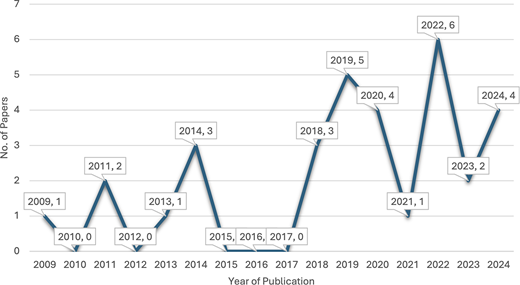
The selected papers were on barriers to GPP performance evaluation across various sectors and countries (Nemec et al., 2023; Stokke et al., 2023), including construction (Butler and Keaveney, 2014) ministries (Vejaratnam et al., 2022; Malatinec, 2021) and local government authorities (Johnson and Klassen, 2022; Smith and Terman, 2016; Dou et al., 2011). Public universities had the highest number of papers. The number of barriers to GPP performance evaluation has steadily risen over the past five years, indicating that greater research effort is being directed toward addressing these barriers. The effectiveness of GPP for proactive firms relies not only on compliance with environmental regulations (Khan et al., 2019) but also on performance measurement for continuous improvement, prompting further research into these barriers. Figure 2 shows the number of papers published each year on barriers to GPP performance evaluation.
Figure 2 suggests that little has been done to address the barriers to GPP performance evaluation in both developed and developing countries. This is evident in the identification of only 40 papers on barriers to GPP performance evaluation over the past 16 years. This reinforces the need for significant improvements in GPP performance evaluation. It is worth noting that GPP cannot improve if performance evaluation issues are unattended to. Results from Table 2 showed that researchers evaluating GPP performance lacked theoretical underpinnings for their studies. This does not provide a theoretical foundation for GPP performance evaluation research, resulting in a lack of clarity and consistency, which in turn diminishes the study’s practicality. Out of the 40 papers selected, only 13 had theories guiding their studies. The most commonly used theory for evaluating GPP performance was institutional theory. This suggests that the external environment plays a significant role in shaping barriers to GPP performance evaluation. Most papers were empirical and employed quantitative methods. The papers identified the need to consider qualitative methods to address barriers to GPP performance evaluation, thereby providing a flexible research design to explore complex, context-specific barriers. This provides insight into stakeholder perspectives, motivations and experiences with barriers to GPP performance evaluation, revealing dynamics and nuances that quantitative data may overlook.
4.2 Thematic analysis
The coding of the papers yielded nine themes and 34 sub-themes, as outlined in Table 3.
4.2.1 Capacity-building-related barriers.
The authors highlighted a widespread lack of awareness among stakeholders, particularly in developing countries, regarding GPP performance evaluation. Several studies indicated low awareness among procurement practitioners (Aboelazm et al., 2025; Faracik, 2018; Chari and Chiriseri, 2014). Research has shown that many do not recognise the benefits of GPP (Jin et al., 2024). Budi et al. (2023) noted inadequate training and education on GPP, particularly in the construction industry (Butler and Keaveney, 2014). Alqadami et al. (2020c) indicated that small-scale suppliers in Malaysia have limited capacity for innovation. The lack of capacity in GPP performance evaluation was associated with various stakeholders. In Ghana, Agyekum et al. (2023) found that stakeholders lacked sufficient knowledge, and Appiagyei et al. (2018) identified training gaps among procurement professionals, both of which are relevant to GPP performance evaluation. There are persistent perceptions that GPP performance evaluation does not yield returns compared to its costs (Aboelazm et al., 2025; Da Costa and Da Motta, 2019).
4.2.2 Institutional barriers.
This theme suggests that processes and structures within institutions hinder the GPP performance evaluation, primarily due to employees’ personal characteristics. Behavioural barriers are difficult to manage due to their intangible nature. This suggests that resistance to change was a barrier that needed to be addressed for the success of GPP performance evaluation. Agyekum et al. (2023) stated that tertiary institutions lacked open and constant communication. Alqadami et al. (2020a) indicated inadequate consideration of stakeholders’ requirements and expectations. Patil et al. (2021) noted the potential for harmful media coverage and the limited availability of information on green building materials. Vejaratnam et al. (2022) and Qiao and Wang (2011) noted that a lack of communication and coordination among public procurement agencies hindered the implementation of GPP practices. Da Costa and Da Motta (2019) confirmed this, noting that the dissemination of green information is low and inefficient within institutions, which impedes the implementation of innovations such as GPP performance evaluation. Authorities need to enhance their internal communication systems to facilitate two-way communication, thereby fostering innovative ideas for GPP practice. Inappropriate internal structure was identified by Agyekum et al. (2023), who noted the absence of a stakeholder management process or an existing participatory process. Anane and Kwarteng (2019), Leal Filho et al. (2019), Agyekum et al. (2023) and Jin et al. (2024) confirmed that rigid structures, inflexible culture and excessive bureaucracy impede the practice of GPP performance evaluation. Da Costa and Da Motta (2019) and Appiagyei et al. (2018) noted a lack of planning in public institutions, findings that align with those of Appiagyei et al. (2018). Leal Filho et al. (2019) and Islam and Siwar (2013) identified decentralised purchasing structures as a barrier, indicating that this poses a challenge for developed countries, since both studies originate from such nations. Resistance to change was identified by Butler and Keaveney (2014), confirmed by Da Costa and Da Motta (2019) and Appiagyei et al. (2018), and noted to be detrimental to GPP performance evaluation. This affects their ability to adhere to GPP performance evaluation practices.
4.2.3 Procurement-related barriers.
Inadequate procurement procedures is a barrier to GPP performance evaluation. Alqadami et al. (2020b) highlighted a lack of tendering protocols for selecting green sources, attributed to insufficient professionalism (Anane and Kwarteng, 2019). Islam and Siwar (2013) noted that poor contract management hindered the achievement of GPP goals, while inadequate monitoring led to discrepancies in the delivery of goods and services. Chari and Chiriseri (2014) argued that viewing procurement as an isolated function restricts interdepartmental collaboration. The absence of a well-organised procurement department impedes GPP performance evaluation, as there are no established processes and procedures for conducting such evaluations. GPP performance evaluation depends on reliable data. Thus, poor record-keeping hinders the transparency of GPP performance evaluations, as noted by Da Costa and Da Motta (2019). Ambiguous evaluation criteria complicated the tendering process, as unclear wording created difficulties in meeting green standards (Aboelazm et al., 2025; Qiao and Wang, 2011). Jin et al. (2024) found that environmental attributes are often undervalued in performance evaluations, thereby impeding adherence to GPP performance standards. The absence or non-use of green criteria is a barrier to GPP evaluation, as these criteria provide the basis for comparison. Butler and Keaveney (2014) highlighted the lack of methods and tools for assessing GPP performance, indicating challenges in considering the total life-cycle cost of products. Oyewobi and Jimoh (2022) highlighted the absence of sustainability measurement tools, which aligns with the findings by Pourvaziri et al. (2024) regarding inefficiencies in standards. Monitoring and evaluation remain problematic (Arendse, 2010), with Alqadami et al. (2020c) noting difficulties in tracking environmental impacts, compounded by inadequate external mechanisms (Jin et al., 2024). Ogunsanya et al. (2022) and Vejaratnam et al. (2020) also discussed the lack of monitoring controls. Public institutions struggle with unclear specifications and insufficient integration of sustainability into contract terms, stemming from knowledge gaps and capacity limitations.
4.2.4 Strategic barriers.
Public institutions face significant challenges in implementing GPP due to the lack of practical guidelines for performance evaluation. Studies by Alqadami et al. (2020a) and Dou et al. (2011) highlighted that stakeholders struggle to incorporate environmental criteria into the procurement process. Da Costa and Da Motta (2019) identified the absence of clear organisational guidelines and management support, which led to confusion and conflict during the procurement process. Common issues include a lack of long-term vision, unclear mandates, delays in decision-making and insufficient integration of environmental strategies (Islam and Siwar, 2013; Osei-Kyei et al., 2024; Oyewobi and Jimoh, 2022). Additionally, public institutions lacked the necessary resources (Stokke et al., 2023) and faced technical difficulties that impede the implementation of GPP (Yap et al., 2024). Ineffective procurement practices, unqualified personnel and poor data management further hampered transparency and professionalism (Chari and Chiriseri, 2014). Ogunsanya et al. (2022) noted corruption among procurement practitioners and unrealistic carbon-emission targets (Osei-Kyei et al., 2024), which hinder progress in GPP evaluation.
4.2.5 Financial barriers.
The study identified budget constraints as a barrier to GPP performance evaluation. Budgets are largely constrained by limited financial resources and the non-prioritisation of the green agenda. Aboelazm et al. (2025) believed that public institutions lacked the necessary budget to implement GPP policies. The absence of financial support and funding prevents firms from implementing GPP initiatives. Alqadami et al. (2020b) also explained that a barrier to GPP in construction projects was the lack of financial resources, funding support and project budget constraints. Malatinec (2021), Islam and Siwar (2013) and Appiagyei et al. (2018) identified the lack of budgetary allocation, and Da Costa and Da Motta (2019) identified the lack of financial support. Jin et al. (2024) and Osei-Kyei et al. (2024) reported that the procurement budget was limited and did not cover the perceived high cost of green products. Corruption was identified as a barrier to the performance evaluation of GPP. Although not prominently featured in the literature, corruption remains a significant barrier that must be addressed. Dou et al. (2011) acknowledged that the presence of corrupt behaviours undermined the potential opportunities for some green suppliers. Nemec et al. (2023) also mentioned the existence of corruption in post-socialist countries. According to Osei-Kyei et al. (2024), misappropriation of funds and corruption were prevalent in the procurement of construction projects. Green products have been associated with higher costs, which has hindered their adoption and consumption. Some authors have suggested that the higher upfront capital costs of greener products and services are the most significant barriers to the adoption of GPP practices (Osei-Kyei et al., 2024; Alqadami et al., 2020c; Butler and Keaveney, 2014; Islam and Siwar, 2013). Jin et al. (2024) and Chari and Chiriseri (2014) emphasised that cost price remained a primary selection criterion, thereby prioritising economic benefits.
4.2.6 Green market dynamics.
Low demand for green products has been identified as a barrier to GPP performance evaluation. The number of papers addressing this barrier suggests that the demand for green products is not a widespread challenge across countries. Authors from the UAE and Malaysia identified this barrier. Aboelazm et al. (2025) suggested that suppliers and contractors have no desire for green supply. Yap et al. (2024) also noted a lack of social drive and insufficient client demand, while Rais et al. (2018) reported a weak market for green products. In Nigeria, Oyewobi and Jimoh (2022) reported that fewer developers undertake green building projects. Ethics was not identified as a common barrier among authors. However, Osei-Kyei et al. (2024) reported that some suppliers exhibited questionable environmental practices, suggesting credibility issues. Green products are not readily available on the market. This is because, if public institutions do not procure green products, GPP performance evaluation is not possible. According to Aboelazm et al. (2025), a significant shortage of green products and commodities in local markets made it challenging to find local suppliers offering environmentally friendly goods and services. Butler and Keaveney (2014) also noted a lack of options for environmentally friendly products and services. Pourvaziri et al. (2024), Ogunsanya et al. (2022) and Da Costa and Da Motta (2019) highlighted the limited availability of eco-products, services and materials in the market. Pourvaziri et al. (2024) pointed out that the scarcity of green products in local markets is often accompanied by the presence of incompatible products and a lack of environmental preferences among external stakeholders. Qiao and Wang (2011) noted that the development of green products is inadequate, with only a limited number of options currently available. Yap et al. (2024), Shaikh and Channa (2022) and Islam and Siwar (2013) reinforced the idea that green suppliers and products are largely absent. The lack of green products hinders the basis for assessing GPP performance, thereby impeding the evaluation process, as there is nothing to evaluate.
4.2.7 Regulatory and compliance barriers.
Regulatory barriers included inadequate regulations, a voluntary compliance framework and ineffective legal frameworks for evaluating GPP performance (Pourvaziri et al., 2024). Insufficient policies and a lack of leadership hinder the adoption of green practices in public institutions (Aboelazm et al., 2025; Alqadami et al., 2020a). While China has laws for a green procurement system, they are general and lack detailed requirements (Qiao and Wang, 2011). Additionally, procurement laws do not support GPP (Nemec et al., 2023). The absence of enforcement mechanisms and social justice policies also limits the practice of GPP (Osei-Kyei et al., 2024; Appiagyei et al., 2018) and GPP performance evaluation. Government support is essential for effective practice of GPP performance evaluation; however, political interference and commitment issues have delayed initiatives, such as the National Council for Public Procurement in Nigeria (Ogunsanya et al., 2022). Inadequate infrastructure further complicates the GPP performance evaluation (Pourvaziri et al., 2024; Stokke et al., 2023) and GPP itself. Public procurers often lack motivation due to challenges in complying with environmental legislation and low government enforcement (Rais et al., 2018), which also affects the evaluation of GPP performance practices. Key issues include a lack of structured frameworks, benchmarks for sustainable procurement and clear procurement policies (Aboelazm et al., 2025; Anane and Kwarteng, 2019). Limited national policies on net-zero goals and misalignment with procurement practices hinder progress (Osei-Kyei et al., 2024; Patil et al., 2021).
4.2.8 Innovation and technology barriers.
Public institutions are hindered by innovation and technological barriers to GPP performance evaluation. There is a lack of comprehensive databases on GPP implementation (Malatinec, 2021). Osei-Kyei et al. (2024) stated the availability of a few smart technologies in project procurements and insufficient innovation in net-zero construction supply chains. Patil et al. (2021) identified limited information technology (IT) infrastructure, poor data quality and low data retention. Simion et al. (2019) identified technical and technological difficulties regarding the use of green. These findings are relevant to GPP performance evaluation, as there is a need for innovative approaches to evaluations. Evaluations often require specialised software and tools to facilitate ease of evaluation and produce reliable results.
4.2.9 Stakeholder engagement barriers.
The study identified stakeholder commitment and collaboration as a barrier to GPP performance. Collaboration among all stakeholders is crucial for achieving green objectives. Jin et al. (2024) found that Chinese higher education institutions (HEIs) lacked commitment, while Oyewobi and Jimoh (2022) highlighted the need for sufficient government support. Pourvaziri et al. (2024) highlighted a deficiency in managerial staff commitment, and Patil et al. (2021) cautioned about the potential for negative media coverage. Qiao and Wang (2011) noted the need for better publicity for GPP. The study identified a lack of industry support, as indicated by Osei-Kyei et al. (2024), in the construction industry. An inappropriate relationship among stakeholders’ challenges GPP performance evaluation. There is no cordial relationship among stakeholders, which has contributed to the numerous barriers identified. Collaboration between government institutions and suppliers is vital to the implementation of environmentally appropriate policies and solutions (Aboelazm et al., 2025). Agyekum et al. (2023) noted that stakeholder relationships were hindered by misunderstandings of needs, poor relationships, uncooperative attitudes, conflicts and a lack of trust.
Table 4 summarises the study results by presenting the barriers to GPP performance evaluation across countries and sectors.
Table 4 shows that barriers to GPP performance evaluation manifest in different ways. Barriers to GPP performance evaluation vary substantially across sectors and national contexts, highlighting the need for tailored interventions. In HEIs in countries such as Ghana, China and Pakistan, barriers are largely capacity-related, including low awareness, weak stakeholder engagement and inadequate training, reflecting fragmented governance and limited technical expertise. By contrast, the construction sector in Nigeria, Malaysia and Romania is constrained by operational and financial barriers, notably high upfront costs, weak monitoring systems and unclear specifications, underscoring the need for life-cycle costing and robust evaluation tools. At municipal and national government levels in China, Poland, Slovakia and Sweden, institutional rigidity, weak enforcement and bureaucratic resistance dominate, indicating the importance of regulatory reform and compliance monitoring. Health-sector studies reveal challenges linked to limited green product availability and evaluation tools, while cross-sectoral evidence from developing and transition economies points to systemic governance issues such as resource constraints, corruption and weak leadership. These variations confirm that GPP performance evaluation barriers are context-specific and require differentiated policy and capacity-building responses rather than uniform solutions.
4.3 The interrelationship among the main barriers to green public procurement performance evaluation
The adoption and practice of GPP performance evaluation face several barriers as presented above. Interestingly, these barriers are often interconnected, hindering the practice of GPP performance evaluation, either individually or collectively (Khan et al., 2018; Appolloni et al., 2014). Stakeholders need to have a clear understanding of these barriers and their interrelationships to devise effective strategies to promote the implementation of GPP performance evaluation across various sectors (Yang et al., 2021).
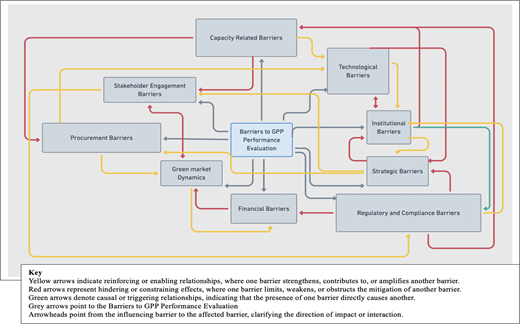
The study identified that insufficient capacity leads to technological barriers, limits stakeholder engagement and affects procurement practices, which is confirmed by Ali (2010), who stated that insufficient capacity leads to barriers in stakeholder engagement and procurement practices in municipalities. Insufficient capacity, technological ability and stakeholder engagement hamper the ability to train staff, implement green criteria and interpret policies. Institutional barriers contribute to strategic, regulatory and procurement barriers, reinforcing them. Chang and Wu (2014) found that institutional barriers hinder institutions in evaluating and selecting green procurement options. The existence of institutional barriers to GPP performance evaluation weakens strategic direction and enforcement. Many public institutions still rely on traditional methods to procure goods and services. This can lead to noncompliance with rules and regulations, affecting market dynamics and making it difficult to adapt to new technologies. Inadequate procurement systems to support GPP performance evaluation led to a disconnect between policy and practice, resulting in low demand for green products and a lack of mechanisms to evaluate GPP performance. Strategic barriers weaken institutional support and reinforce procurement barriers, further influencing stakeholder engagement. Financial barriers hinder the development of green markets by discouraging investment in innovative technologies, as confirmed by Qazi and Appolloni (2022), who stated that financial barriers impede technology implementation. Green market dynamics reinforce financial barriers, limit procurement options and discourage stakeholder engagement.
Regulatory and compliance barriers to GPP performance evaluation often encourage institutional resistance to change, resulting in weakened strategies and increased capacity constraints. Regulatory-related barriers in the literature have been defined as barriers with substantial driving power and low dependence (Rizos and Bryhn, 2022; Rosell, 2021), indicating the degree to which other drivers rely on them. Qazi and Appolloni (2022) established the relationship between barriers, stating that the lack of government support necessitates top-down leadership and policy changes. Technological barriers affect procurement-related barriers by increasing resistance, while institutional and strategic barriers are also hindered. Yevu et al. (2022) confirmed that the implementation of electronic procurement in construction is hindered by human-related, technological, government, market and financial barriers. Stakeholder engagement barriers affect regulatory and compliance barriers, strengthen market barriers and capacity-building barriers. Stakeholder engagement barriers to GPP performance evaluation affect the policy acceptance and implementation. It also hinders the green market’s growth and reduces the need for capacity building. The interrelationship among the barriers to GPP performance evaluation is presented in Figure 3.
Barriers are interconnected, with one often reinforcing another. Low awareness and limited training among procurement officers (Aboelazm et al., 2025; Agyekum et al., 2023) contribute to institutional weaknesses, including rigid structures, poor communication and resistance to change (Leal Filho et al., 2019; Appiagyei et al., 2018). Weak procurement systems, including unclear tendering procedures and inadequate monitoring (Alqadami et al., 2020b; Islam and Siwar, 2013), are further compounded by financial constraints, which sustain the perception that green procurement is unaffordable. Market and regulatory gaps also interact. The limited availability of eco-products (Pourvaziri et al., 2024), combined with weak or poorly enforced regulations, discourages suppliers from innovating or investing in greener options. This creates a cycle where demand is low, supply is limited and performance evaluation becomes impractical. Stakeholder disengagement adds another layer of difficulty, as a lack of collaboration undermines trust and weakens institutional capacity to adopt GPP (Osei-Kyei et al., 2024; Agyekum et al., 2023). These challenges require integrated solutions, thus indicating that addressing a single barrier, such as staff training, will have little effect without corresponding reforms in financing, regulation, procurement systems and stakeholder collaboration.
4.4 Pareto analysis
The barriers to GPP performance evaluation vary in influence. Pareto analysis is essential for filtering a large set of variables to identify the most impactful ones. Kaur et al. (2019) used Pareto Analysis to rank critical barriers to green supply chain management, thereby isolating key bottlenecks in green initiatives. This method is crucial for distinguishing between critical and non-critical barriers, enabling stakeholders to focus their resources on addressing the most significant ones. The Pareto chart is an essential tool that is used for this categorisation.
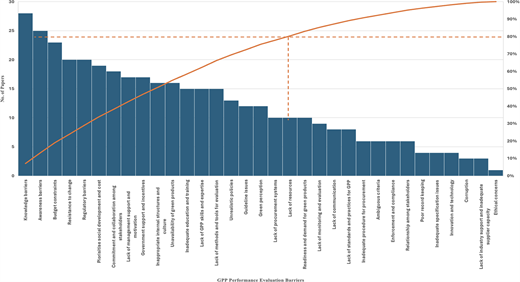
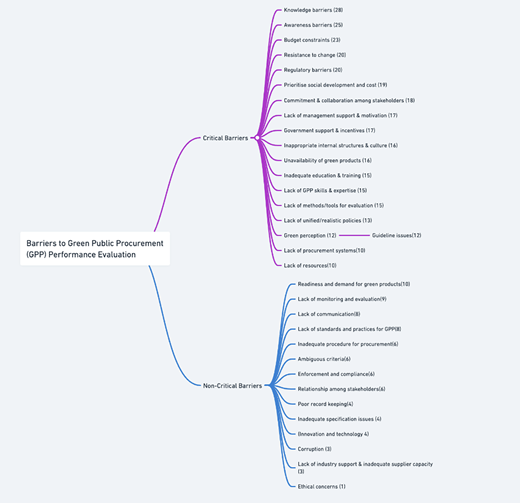
Figure 4 visualises the barriers to GPP performance evaluation using a Pareto chart. The blue bars indicate how often each barrier appeared in the reviewed studies, while the orange arc shows their cumulative contribution. The dotted line marks the 80% threshold, illustrating the Pareto principle that a small set of barriers accounts for most of the effects. The chart shows that knowledge gaps (28 papers), awareness barriers (25 papers), budget constraints (23 papers) and resistance to change (20 papers) together account for nearly half of the identified barriers. When extended to include regulatory issues, a lack of methods/tools and weak government support, the first 19 barriers account for approximately 80% of the cumulative impact, confirming the Pareto principle (Abyad, 2020). These findings suggest that public institutions should prioritise these “critical few” when designing interventions. At the same time, less frequently mentioned barriers, such as poor record-keeping, limited innovation or weak industry support, still matter, as they can compound difficulties if ignored. The chart, therefore, points to both immediate priorities and longer-term areas for improvement. These interaction effects are essential to building an enabling environment for GPP performance evaluation across types of public sector institutions.
5. Findings and discussions
The paper presents a discussion of the 19 critical and 14 non-critical barriers to GPP performance evaluation. Details of the barriers are presented in Figure 5.
5.1 Critical barriers
The most critical barriers to GPP performance evaluation were grouped by similarity and interdependence to facilitate an in-depth discussion.
5.1.1 Lack of awareness and knowledge.
The study revealed that awareness and knowledge are the primary barriers to GPP performance evaluation. Masron et al. (2024) noted that a lack of knowledgeable staff was a significant hurdle within the “people” challenges. Suliantoro and Fitriani (2022), Ahsan and Rahman (2017) and Tian (2010) identified personnel awareness and knowledge as key obstacles in government institutions. In practice, this gap often prevents procurement officers from distinguishing between conventional and green criteria, thereby perpetuating the use of lowest-price evaluation methods even when sustainability policies are in place. Similarly, Vejaratnam et al. (2020) argued that inadequate knowledge and awareness are more critical barriers than financial constraints, indicating that barriers to GPP performance evaluation are not solely about the perceived high cost of green products. Feng-quan (2011) emphasised that awareness influences GPP implementation among various stakeholders, including suppliers and regulatory bodies, particularly when suppliers lack understanding of the environmental requirements embedded in tender documents, resulting in non-compliant submissions and weak performance monitoring. Thus, a holistic approach to awareness creation is critical and must extend beyond procurement units to suppliers, users and oversight institutions. Roos (2016) affirmed that limited knowledge among decision-makers undermines GPP practices by weakening commitment and enforcement, a finding reinforced by Ayarkwa et al. (2025). For governments and regulatory bodies to effectively promote GPP performance evaluation and advance SDG 12, systematic, continuous training is required for all stakeholders in procurement methods, evaluation tools and the practical application of green performance criteria in real procurement processes.
5.1.2 Resistance to change.
Resistance to change is a significant barrier to GPP performance evaluation, closely linked to gaps in awareness and knowledge. Where stakeholders do not recognise the relevance of GPP, resistance is likely to persist. Mélon (2020) observed that legal complexities within the EU public procurement framework constrain GPP adoption, whereas Chiappinelli and Zipperer (2017) linked resistance to concerns about increased procurement costs. In practice, such resistance reinforces reliance on traditional procurement approaches and limits the uptake of green evaluation criteria. Targeted education on the consequences of neglecting GPP performance evaluation can help mitigate resistance. Training that highlights long-term cost savings, environmental health benefits and the use of appropriate incentives may further support behavioural change.
5.1.3 Budget constraints and the high cost of green products.
Budget constraints and the perceived high cost of green products were identified as barriers to GPP performance evaluation. Butler and Keaveney (2014) observed that cost perceptions hindered GPP implementation in the construction sector, a view echoed by Malolitneva (2018) in Ukraine. However, the findings suggest that while cost remains a barrier, its significance varies across nations. Vejaratnam et al. (2020) showed that cost concerns often interact with low practitioner awareness, intensifying resistance to GPP adoption. Public institutions face additional challenges due to limited revenue, competing priorities and rigid budget structures that restrict flexibility (Roos, 2016). Several studies have confirmed that financial constraints persist as barriers to green practices (Ametepey et al., 2015; Sourani and Sohail, 2011; Brammer and Walker, 2009), with Masudin et al. (2025) highlighting insufficient funding for sustainable procurement. This barrier requires long-term financial planning, improved understanding of life-cycle cost benefits and the use of public–private partnerships to ease budget pressures.
5.1.4 Regulatory issues, unrealistic policies and targets and guidelines issues.
The study identified regulatory issues, guideline shortcomings and unrealistic policies as key barriers to GPP performance evaluation. Mélon (2020) highlighted inadequate regulations and weak policy frameworks as significant constraints on GPP progress. Feng-quan (2011) ranked insufficient governmental regulation as the primary barrier to implementing green government procurement, a finding consistent with Vejaratnam et al. (2022) and Tian (2010). Nemec et al. (2023) further observed that existing regulatory frameworks often lack clear guidance, accountability mechanisms and operational clarity. Vejaratnam et al. (2022) confirmed that many procurement regulations emphasise compliance procedures rather than environmental performance monitoring. Without robust, enforceable and performance-oriented regulatory frameworks, GPP performance evaluation remains difficult to institutionalise. Strengthening regulations and aligning them with SDG 12 are therefore essential to enable consistent monitoring, accountability and effective implementation.
5.1.5 Lack of methods and tools.
The lack of effective methods and tools constitutes a significant barrier to GPP performance evaluation. Malatinec (2021) highlighted deficiencies in methods for comparing the environmental credentials of green goods and services, while Stokke et al. (2023) identified insufficient tools to support GPP initiatives. Similarly, Lindfors and Ammenberg (2021) noted that the absence of accessible and user-friendly tools hinders the standardisation of green criteria development. Ahani and Trapp (2021) argued that well-designed tools enable decision-makers to benchmark performance and conduct meaningful comparative analyses. However, shortcomings in existing evaluation tools limit public institutions’ ability to assess GPP outcomes systematically. Stokke et al. (2023) further acknowledged inherent weaknesses in procurement methods, reinforcing Kristensen et al. (2021) calls for dedicated tools to strengthen environmental integration in public procurement. Without appropriate methods and tools, embedding sustainability criteria into procurement processes remains inconsistent, thereby constraining practical evaluation of GPP performance.
5.1.6 Inadequate education and training, and the lack of green public procurement skills and expertise.
Evidence from the literature consistently indicates that limited institutional capacity and weak stakeholder management skills significantly constrain the evaluation of GPP performance. Agyekum et al. (2023) and Zaidi et al. (2021) observed that many public institutions lack the knowledge and organisational capacity required to engage stakeholders effectively, pointing to persistent gaps in training and skill development. This deficiency results in insufficient expertise to execute GPP-related tasks, as confirmed by Lewis et al. (2022). Similar findings by Suliantoro and Fitriani (2022) indicate that weak institutional capabilities undermine procurement entities’ ability to operationalise green criteria and evaluation mechanisms. In sector-specific contexts, Butler and Keaveney, 2014 identified inadequate training as a significant barrier to GPP implementation in the construction industry, illustrating how capacity constraints manifest in practice. Collectively, these findings suggest that capacity-related barriers are not isolated challenges but systemic weaknesses that affect stakeholder engagement, policy interpretation and the effectiveness of evaluation.
5.1.7 Lack of procurement systems and inappropriate internal structures.
Public institutions lack appropriate procurement systems and structures. Polonsky et al. (2022) and Alqadami et al. (2020c) stated that the absence of internal management structures for GPP is a significant barrier. Anane and Kwarteng (2019) and McMurray et al. (2014) revealed that several practices within the procurement chain are highly porous, thereby affecting effective and efficient procurement practice. Wendt-Rasch et al. (2021) highlight an inadequate procurement procedure. Chimwani et al. (2014) acknowledged that procurement procedures enhance GPP performance by facilitating coordination, transparency and compliance. Structural weaknesses impede the consistent application of GPP performance indicators and undermine data collection for evaluation. These findings suggest that without appropriate institutional structures and procurement systems, GPP performance evaluation remains disconnected from practice, reinforcing the gap between policy intent and operational outcomes.
5.1.8 Lack of management and government support.
The study revealed that GPP performance evaluation in public institutions lacked support from management and the government, particularly at the implementation and monitoring stages. This finding is consistent with Katiyar et al. (2018), who identified the absence of government support for the system as a critical barrier to effective supply chain performance measurement. In practice, weak policy support and limited institutional incentives lead to GPP being treated as a compliance exercise rather than a performance-driven process. The success of GPP performance evaluation in relation to SDG 12 depends on governments and the management of public institutions. Governments should introduce the necessary regulations and policies to establish a management system for the implementation of GPP performance evaluation. Butler and Keaveney (2014) indicated that public institutions lacked government support in the form of incentives (Da Costa and Da Motta, 2019). Wong et al. (2016) emphasised the importance of government incentives, noting that subsidies and tax exemptions can promote GP implementation. The absence of dedicated management structures undermines systematic evaluation. Without internal teams responsible for defining GPP criteria, performance indicators and reporting procedures, evaluation efforts remain fragmented. Management commitment is therefore essential for investing in digital procurement systems and data infrastructure that enable consistent monitoring, reporting and evidence-based decision-making. Such investments translate policy intent into measurable GPP performance outcomes across public institutions.
5.1.9 Unavailability of green products.
The study revealed that green products were unavailable (Aboelazm et al., 2025; Butler and Keaveney, 2014). Pourvaziri et al. (2024) identified that the unavailability of green products in the local market is the second most significant barrier, which can deter external stakeholders from selecting GPP products. This is confirmed by Johnson and Klassen (2022), who found that obtaining goods and services from local suppliers presents a barrier for green firms. Ogunsanya et al. (2022) also noted the lack of green materials. Nasiche et al. (2014) likewise confirmed the unavailability of green products as a significant barrier in Kenya. Governments should introduce policies and incentives to encourage the manufacture and importation of green products. Since the study confirmed that the lack of green product consumption is not solely due to price, increasing market availability of these products can promote green consumption. There is therefore a need for governments to introduce targeted policies, incentives and supplier development programmes that encourage the local manufacture and importation of green products. This expansion of market availability can play a decisive role in promoting green consumption and strengthening GPP performance.
5.1.10 Commitment and collaboration among stakeholders.
A lack of commitment and collaboration among stakeholders in evaluating GPP performance undermines coordinated action across public procurement systems. Although Jin et al. (2024) did not identify government commitment as a top-ranking barrier to sustainable procurement in HEIs, evidence from other contexts suggests that limited institutional ownership constrains effective implementation. Qiao and Wang (2011) indicated that GPP in China received limited media coverage, which affected awareness creation. Da Costa and Da Motta (2019) also identified the lack of government incentives as a critical barrier, ranking it among the top ten barriers in a Delphi study in Brazil. The lack of commitment and collaboration will lead to inefficient resource use, reduce trust and undermine accountability in GPP practices. The absence of sustained commitment and collaboration leads to fragmented decision-making, inefficient resource use, reduced trust among actors and weak GPP performance evaluation practices. Addressing this barrier through clearer leadership roles, incentive structures and collaborative platforms would foster a more unified approach, ensuring that government agencies, suppliers and users work towards shared green procurement objectives.
5.1.11 Inadequate procurement systems and resources.
There is a lack of adequate procurement systems and resources within public institutions, which constrains GPP performance evaluation. Stokke et al. (2023) and Mannaan (2025) observed that many public organisations lack the financial, human and technical resources required to move green procurement beyond policy statements. Yap et al. (2024) indicated that technical difficulties, including weak digital infrastructure, impede the consistent application of GPP evaluation criteria. These gaps result in ineffective procurement procedures, limited data availability and weak integration of environmental criteria into routine decision-making. Chari and Chiriseri (2014) further noted that unqualified personnel and poor data management undermine transparency and professionalism, as public procurement officers struggle to justify or enforce green purchasing decisions. Consequently, inadequate systems and resource constraints reinforce reliance on traditional procurement practices, weakening GPP performance evaluation.
5.2 Non-critical barriers
Non-critical barriers should be continuously monitored for performance and effectiveness to ensure they do not hinder the success of the GPP performance evaluation. This will enable the understanding of the barriers that hinder GPP performance evaluation. There is a need to develop specific action plans to address these barriers, with a focus on preventing their escalation into critical ones. These non-critical barriers require further investigation to determine if this category of barriers is consistent across different countries and sectors. The study holds that these non-critical barriers are categorised as such due to the lack of practice in GPP performance evaluation and the sensitive nature of some of these barriers. For instance, three studies identified corruption as a barrier to GPP performance evaluation; however, it is evident that the public sector struggles with corruption across various areas, and GPP performance evaluation is no exception. This is confirmed by World Health Organization (2000), who stated that corruption in the public sector constitutes a multifaceted and pervasive challenge to governance. It is also evident that GPP performance is hindered when institutions have bad relationships. Serious challenges were identified, including poor relationships among stakeholders, limited collaboration, conflicts and a lack of trust (Agyekum et al., 2023; Anane and Kwarteng, 2019; Appiagyei et al., 2018). Critical to GPP performance evaluation are the criteria which form the basis of supplier evaluation. Literature has highlighted barriers associated with specific criteria (Jin et al., 2024; Islam and Siwar, 2013; Qiao and Wang, 2011). The adequacy of the criteria in evaluating GPP performance requires further investigation in research.
5.3 Strategies to overcome barriers in green public procurement performance evaluation
Overcoming barriers to GPP performance evaluation requires institutional adaptation and supportive managerial practices. Change management theory (Kotter, 1996) suggests that creating urgency, building coalitions and embedding sustainability into daily routines can help overcome resistance and knowledge gaps. In practice, this means that public institutions must develop tools and methods to meet their procurement needs. This requires training for procurement professionals, as inadequate knowledge remains a key barrier (Vejaratnam et al., 2020). Institutional theory (Scott, 2017) shows the importance of aligning policies and norms with GPP, a process that can be reinforced through regular audits to ensure adherence to GPP regulations (Amoah and Eweje, 2022). Collaborative governance (Ansell and Gash, 2008) further emphasises the importance of stakeholder engagement, as exemplified by early market dialogues that cities have used to support low-emission technologies (Stokke et al., 2023). Beyond compliance, governments should strengthen capacity through staff development, provide innovative funding mechanisms to offset upfront costs and invest in pretested evaluation tools. These managerial practices and governance strategies can transform barriers into opportunities, enabling public institutions to build more resilient, transparent and environmentally sustainable procurement systems.
These linkages are essential for moving from barrier description to strategy. For instance, limited capacity restricts technology adoption, weakens stakeholder engagement and undermines procurement practices. This can be addressed through targeted training and resource support, which can unlock improvements in diverse areas. Likewise, institutional barriers such as rigid structures or poor governance can contribute to weak strategies and ineffective regulation, suggesting the need for stronger leadership, which can have a cascading impact. Financial and market barriers are closely connected: without government incentives and demand stimulation, investment in green technologies remains low. Regulatory barriers also stand out as high leverage, since stronger enforcement and clear guidelines create conditions for tackling other weaknesses. Trust and collaboration need to be built among stakeholders to enhance policy acceptance and strengthen green markets.
6. Managerial and practical implications
For procurement practitioners, the findings point to the need for targeted training in life-cycle costing, eco-design and environmental management systems. There is a need to strengthen record-keeping, apply transparent evaluation tools and improve monitoring practices to enhance the reliability and transparency of procurement processes. The results show the importance of building practitioner capacity to interpret green criteria and evaluate supplier performance effectively. For policymakers, the study reinforces the importance of clearer guidelines, stricter enforcement, dedicated GPP budgets and incentives for local suppliers to strengthen accountability and expand the green market. For research, the results point to the need for sector-specific studies, deeper analysis of practitioner behaviour and the development of context-appropriate indicators to refine GPP performance evaluation frameworks.
7. Conclusion and recommendation for further research
The study reviewed barriers to GPP performance evaluation using the PRISMA protocol, resulting in 40 papers. Nine main barriers were identified, and their interrelationship was established. Additionally, the 34 identified barriers were analysed using a Pareto chart, which identified 19 critical and 14 non-critical barriers. Lack of knowledge was the most frequently cited barrier, cited by 28 papers, whereas green perception and guideline issues ranked lowest among the critical barriers, each cited by ten papers. Regulatory barriers differ from the other barriers in that they are not dependent on market trends, economic conditions, technological factors or stakeholder engagements. This means that even if the market is performing well, institutions may still struggle to evaluate GPP performance if the regulatory framework is weak. The study emphasises the need for capacity building, robust regulations and regular audits to enhance compliance with GPP performance evaluation. It also requires suitable tools and methods for evaluating GPP performance.
The study findings extend previous research, which often focused on single issues, such as cost pressures or inadequate regulation, but rarely connected them. Evidence from 40 papers and 34 barriers across nine themes, and from Pareto analysis, revealed critical barriers that drive most performance evaluation barriers. This approach goes beyond earlier fragmented accounts by demonstrating how institutional weaknesses permeate strategic, financial and market dimensions, offering a more comprehensive and practical roadmap for enhancing GPP performance evaluation. The study recommends conducting additional qualitative studies to gain deeper insights into the identified barriers and to assess their impact across various sectors and countries. Thus, this study contributes to the body of knowledge on barriers to GPP performance evaluation.