This study aims to address the challenge of evaluating place brand identity implementation over time in dynamic local contexts. Using the case study of the Vision Naturno 2030+, it proposes a conceptual model grounded in design science research (DSR) to assess how the intended place brand identity is enacted through governance, public discourse and stakeholder perception.
The study applies Hevner’s three-cycle model of DSR to develop a multi-method evaluation model integrating expert interviews, a mixed-method questionnaire, social media analysis and strategic document review. The model is developed as an evaluative extension of Botschen et al.’s (2017) Brand-driven Identity Development of Places (BIDP) framework, addressing the original framework’s limited capacity for structured monitoring and adaptive feedback.
The application of the model in Naturno reveals strong institutional alignment with the Vision across strategic instruments and community initiatives but also exposes gaps in public communication and tourism governance. The model enables iterative learning and supports a more adaptive, stakeholder-informed management of place brand identities.
This study makes a dual contribution. First, it extends the BIDP framework by integrating an evaluation dimension, addressing the broader gap in place branding literature concerning the absence of systematic mechanisms for assessing brand identity implementation. Second, it demonstrates how DSR can be used in management contexts to construct theory-informed, practice-validated tools for managing place brand identity in dynamic, stakeholder-rich contexts, with particular relevance for rural and tourism-impacted settings.
1. Introduction
Place branding and identity-based place development have become increasingly central to how municipalities deal with complex challenges such as demographic change, tourism-related pressures and social cohesion (Campelo et al., 2014; Kavaratzis and Kalandides, 2015). Strategic identity visions are used to articulate shared values and guide long-term transformation. Yet the evaluation of these identity visions, especially in a way that is rigorous and responsive to local dynamics, remains underexplored (de San Eugenio-Vela and Barniol-Carcasona, 2015; Hanna and Rowley, 2014; Sevin, 2016).
To address this gap, this study introduces an evaluation model for assessing place brand identity implementation over time. The model supports iterative learning and adaptive governance, particularly in rural and tourism-affected settings. It responds to growing calls for structured and participatory tools that can monitor the alignment between strategic visions and institutional practice, stakeholder perception and public discourse.
Theoretically, the model builds on and extends the Brand-driven Identity Development of Places (BIDP) framework proposed by Botschen et al. (2017), which emphasizes participatory identity development. While the BIDP framework has been applied widely in practice, it lacks a structured mechanism for the long-term evaluation of brand identity implementation and for ongoing adaptation (Maffei, 2024a). This study addresses these limitations by proposing a complementary model.
Methodologically, the evaluation model is tested through the case of the Vision Naturno 2030+, a participatory, bottom-up strategy launched to address development challenges, including tourism pressures, in Naturno, Italy. Its development is based upon the principles of design science research (DSR) (Dresch et al., 2015; Hevner, 2007), which guides the creation of a theoretically grounded and practically useful artifact – the evaluation model – which evolves through cycles of application, reflection and refinement.
This study offers an empirical assessment of the Vision Naturno 2030+, identifying areas of alignment and divergence between the strategic vision and its implementation. Moreover, it applies DSR in a management field to propose and validate an evaluation model that is replicable, adaptable and theoretically grounded, complementing the existing BIDP framework and addressing a consistent gap in place branding literature. In doing so, the study aims to enhance both scholarly understanding and practical capacity for managing place brand identities in dynamic contexts.
The paper is structured as follows. Section 2 introduces the case study and the brand identity of Naturno, and it reviews the theoretical foundations of place branding theory, highlighting existing gaps. This section bridges the DSR knowledge base and explains its relevance in managerial settings. Section 3 covers the methodology. Section 4 presents the results of the evaluation, while Section 5 discusses the implications for local practice and theory, ultimately substantiating the relevance and legitimacy of the proposed evaluation model. Section 6 concludes with a summary of key insights, limitations, and directions for future research.
2. Theoretical background
2.1 Literature overview
Recent developments in place branding emphasize co-creation, participatory governance and identity-based development. Rather than simply focusing on image, contemporary place branding strategies aim to articulate and activate a place’s distinctive identity through engagement with local stakeholders, with the goal of enhancing attractiveness and fostering sustainable development (Campelo et al., 2014; Kavaratzis and Kalandides, 2015; Lucarelli, 2012). This shift highlights the growing importance of place identity, understood as the shared meanings, values and characteristics that define a place and shape stakeholder perceptions (Ageeva and Foroudi, 2019; de San Eugenio Vela et al., 2017; Gusman and Sandry, 2022; Yoon, 2010). Place identity is therefore increasingly recognized as a central element for successful and authentic place branding (de San Eugenio Vela et al., 2017; Kavaratzis and Kalandides, 2015).
While often used interchangeably, place identity, place brand identity and place branding are distinct concepts. Place identity refers to the socially and historically constructed meanings, values and emotional attachments associated with a place, shaped through everyday experiences, narratives and socio-cultural practices (de San Eugenio Vela et al., 2017; Kavaratzis and Kalandides, 2015; Tuan, 1977). Place brand identity is the intentionally formulated, communicable vision of a place’s identity, strategically derived from these deeper meanings to guide future development (Anholt, 2016; Botschen et al., 2017). Place branding is the overall process that connects these layers: it analyzes place identity, formulates a strategic brand identity and seeks to embed it into governance, communication and stakeholder engagement (Lucarelli, 2012). This study focuses on the implementation of place brand identity, that is, how the intended identity vision is enacted and sustained over time through policy, perception and public discourse.
One prominent contribution in this domain is the BIDP framework by Botschen et al. (2017), which proposes a structured, participatory process for shaping place brand identity. The model has been adopted in various municipalities such as Innsbruck in Austria and Naturno, Martello, Tubre and Lana in South Tyrol, Italy, for its ability to guide brand identity development processes rooted in community values.
However, while the BIDP framework represents a robust model for the development of a place brand identity, it offers limited guidance on how to evaluate its implementation and ongoing alignment over time, a weakness that seems to be common across place branding frameworks (Maffei, 2024a). Municipalities adopting the BIDP framework face challenges in assessing alignment between their identity visions and actual governance practices, citizen perceptions and communication strategies. This gap is particularly relevant in dynamic environments, which characterize the evolving nature of places.
The evaluation model proposed in this study is conceived as an extension of the BIDP framework and was shaped through an iterative research process. The model aims at integrating evaluation directly into the dynamics of place brand identity development. Its design follows a structured, research-informed approach that supports both analytical depth and practical applicability. This aligns with the principles of DSR, which ensure that the resulting framework is sensitive to local governance needs while remaining embedded in established place branding theory.
DSR relevance to management and organizational research has been widely acknowledged, reflecting a growing recognition that many complex real-world challenges require the design of solutions that bridge theory and practice (Dresch et al., 2015; Holmström et al., 2009). DSR can generate knowledge in complex, dynamic environments, enabling relevant research outcomes (Van Aken and Romme, 2009). Its focus on real-world problems can still increase the theoretical contributions and the generalizability of the developed artefacts through the integration of both explanatory and exploratory research approaches (Dresch et al., 2015; Holmström et al., 2009). Management researchers have been encouraged to adopt DSR to produce practical knowledge that meets the rigor and relevance standards (Ebneyamini, 2022).
A previously published systematic review of 112 peer-reviewed articles on place branding and place identity identified several recurring issues in the field: the predominance of qualitative case studies with limited transferability, limited theoretical grounding, a lack of transparency in methodological designs and the need for more holistic approaches involving residents and stakeholders (Maffei, 2024c). Moreover, the review emphasizes the importance of assessing brand identity implementation and its alignment with long-term place management. These insights reinforce the relevance of examining how a place brand identity can be translated into and assessed through concrete fields of municipal action.
Recent place branding literature confirms this assessment. Contemporary contributions increasingly conceptualize place branding as a governance-oriented, adaptive and multi-actor process, emphasizing co-creation, legitimacy and stakeholder networks rather than linear communication strategies (Bisani et al., 2024; Golestaneh et al., 2025; Ripoll González et al., 2025). At the same time, recent reviews and conceptual studies highlight that, despite these advances, systematic frameworks for evaluating place branding implementation and outcomes remain underdeveloped, particularly with regard to long-term effects, stakeholder dynamics and multi-level governance contexts (Chotisarn and Phuthong, 2025). This challenge is especially salient in non-metropolitan and rural settings, where resource constraints and governance structures further complicate implementation and assessment (Jafarli and Canavari, 2025). Place branding theory has thus evolved toward more participatory and governance-based perspectives; however, the need for structured, context-sensitive evaluation models remains a central and unresolved issue in current literature.
2.2 Case study overview
This study focuses on Naturno, an Alpine municipality of approximately 6,000 inhabitants in South Tyrol, Italy. As in many municipalities in South Tyrol, German is the language predominately spoken in this village. Naturno is characterized by limited settlement space, landscape protection constraints and growing urban development pressure. The local economy is shaped by both tourism and agriculture, two sectors that occasionally compete for land and development priorities. As a well-established Alpine tourism destination with a high ratio of overnight stays relative to its population, Naturno faces the challenge of balancing tourism with residential quality of life.
In 2018, in response to tensions related to tourism pressure, mobility challenges and demands for maintaining local quality of life, the municipality initiated a brand identity development process inspired by the three phases of the BIDP framework (Botschen et al., 2017). In the first phase, a core group of five people and a wider microcosm of 48 local stakeholders analyzed Naturno’s development situation and articulated a shared identity vision. More than 320 residents contributed through workshops, interviews and a household survey, providing the foundation for collaboratively defining the place brand identity.
During the second phase, the place brand identity was translated into action fields with the goal of identifying areas where such identity could be implemented and become more concrete. Some action fields were derived directly from the most urgent local challenges, particularly settlement development, tourism development and mobility. Because several of these issues required immediate attention, the municipality began implementing measures within some action fields immediately, resulting in phases two and three of the BIDP model progressing in parallel. Implementation continued alongside the refinement of the remaining action fields.
This participatory process led to the formulation of Naturno’s place brand identity vision, expressed as “living together, naturally and openly.” This brand identity consists of three interrelated components: community cohesion and participation (living together), ecological responsibility and nature-oriented lifestyles (living naturally) and transparency, inclusion and welcoming attitudes (living openly). The Vision Naturno 2030+ intentionally embeds this brand identity within its seven action fields: settlement development; tourism development; mobility and transport; ecological foresight; community life; associations and events; and transparent politics and administration. These fields function as the operational mechanisms through which the identity vision is enacted in practice, translating its core values into concrete projects, policies and initiatives across municipal departments and local organizations.
3. Methods
The evaluation model proposed in this study integrates qualitative and quantitative marketing research techniques, enabling a comprehensive, multi-level assessment. Its development is guided by Hevner’s (2007) three-cycle model of DSR, which integrates practical relevance (relevance cycle), theoretical grounding (rigor cycle) and iterative artifact design (design cycle). Applying DSR strengthens methodological rigor and positions the model within a broader research paradigm. In developing the model, exploratory research supported its design and adaptation to the municipality’s practical needs, while explanatory research grounded it in established theoretical contributions, positioning the model as an extension of the BIDP framework and a contribution to place branding literature.
The relevance cycle ensures that the research addresses a real-world problem. In the case of Naturno, the municipality adopted the BIDP framework to guide brand identity development. However, halfway to the 2030 target, it lacked a structured tool to evaluate the level of implementation and adapt strategies accordingly, a challenge shared by many municipalities. The model was designed in direct response to this gap, ensuring practical utility for local governance.
The rigor cycle connects the artifact to the existing theoretical foundations. The model builds on several bodies of literature: place branding and identity, participatory governance and the BIDP framework. The model also ensures methodological rigor through its multi-method design and triangulation of data sources. By integrating insights from both academic literature and practical case studies, the artifact contributes back to the knowledge base by refining concepts of place brand identity implementation and evaluation.
Finally, the design cycle represents the core of the artifact-building process. The evaluation model was constructed iteratively through design, application, reflection and refinement. It was applied in the Naturno case through four empirical components: expert interviews, a mixed-method questionnaire, a social media content analysis and a strategic document review. Feedback and findings from each method led to adjustments to the model, allowing for contextual sensitivity and theoretical refinement.
3.1 Expert interviews
A semi-structured expert interview was conducted to capture the political and administrative perspective on the implementation of the Vision Naturno 2030+. The interview focused on those political actors with direct responsibility for translating the brand identity into municipal action. For this reason, the primary interviewee was the mayor, who oversees and coordinates the implementation of the Vision. To ensure transparency and to incorporate an additional perspective, a second member of the municipal committee, responsible for agricultural matters, participated in the same interview session. This joint format was chosen because tensions between tourism and agriculture had emerged during the implementation process, and including both representatives allowed for cross-validation of statements in real time. The interview lasted approximately one hour and followed a semi-structured guide (see Appendix) covering the perceived relevance of the place brand identity, progress and obstacles in each action field, contextual factors such as elections and the pandemic and intersectoral collaboration. Audio recording with consent and subsequent transcription for analysis were conducted. Informal follow-up conversations with the project moderators, who were part of the Vision’s core group, were used to clarify specific factual details.
3.2 Mixed-method questionnaire
A mixed-method questionnaire was sent via email to all households in Naturno to assess residents’ perceptions of the current state of place development and its alignment with the envisioned place brand identity. The instrument, available in German and Italian, combined quantitative and qualitative items and was pre-tested with a small group of residents to ensure clarity, reliability and linguistic accuracy. The quantitative component used seven-point Likert scales and established multiple-item constructs measuring dimensions such as brand advocacy, brand distinctiveness and brand social benefits (Augusto et al., 2019; Lam, 2012; So et al., 2017; Stokburger-Sauer et al., 2012). These constructs were included to capture key aspects of residents’ emotional connection to Naturno: their willingness to speak positively about the municipality (advocacy), their perception of Naturno’s uniqueness (distinctiveness) and the social value they associate with living in the community (social benefits).
The qualitative component contained two open-ended questions designed to collect additional suggestions for improvement or comments about the current place development situation. These responses were analyzed using an abductive qualitative content analysis (Mayring, 2015). In the first, inductive step, categories were derived directly from residents’ statements, remaining open to emergent themes. In the second, deductive step, these categories were compared and aligned with the seven action fields of the Vision to ensure conceptual consistency. Coding was carried out independently by two reviewers, and discrepancies were resolved through discussion.
3.3 Social media content analysis
A mixed-method digital content analysis was conducted to evaluate how the municipality communicates and enhances its envisioned brand identity through social media channels. A quantitative textual analysis of Instagram, Facebook and YouTube posts using natural language processing techniques in R (quanteda package) was conducted. This analysis involved tokenization, stopword removal, stemming and frequency analysis to identify dominant themes and patterns. A complementary qualitative visual content analysis of a 10% random sample of Instagram posts, coded inductively across six emerging categories, was conducted as well. The coding scheme was developed iteratively and validated through peer discussion (Smith and Sanderson, 2015; Zafar et al., 2015). This approach enabled a triangulated understanding of how the municipality constructs and conveys its brand identity across platforms and how this aligns with the brand identity. Because of recent privacy and data protection regulations, systematic access to user-generated content on social media is no longer possible. For this reason, the social media component of the study is limited to analyzing communication published on the municipality’s official channels. While this restriction reduces the ability to assess how different audiences actively perceive or reinterpret municipal messages, it still enables a valid examination of those aspects of digital place communication that the municipality can directly influence. Moreover, the model captures a core element of place branding: the identity signals conveyed through official digital communication and the messages directed to digital audiences, including residents, visitors and regional stakeholders.
3.4 Strategic document content analysis
In Italy, local governments are required to draft two key strategic documents: the Documento Unico di Programmazione (DUP) and the Linee Programmatiche di Mandato. Both documents are mandatory by law and play distinct but complementary roles in municipal planning and governance [1].
Analyzing DUPs to assess the strategic orientation of municipalities has been adopted across multiple studies. DUPs are widely regarded as essential instruments for defining both strategic and operational objectives within Italian local authorities (Castellini and Riso, 2023; Gori et al., 2018). They represent the main strategic planning documents used by municipalities, outlining multiyear strategies formulated by administrators and officers in response to both internal organizational and external territorial factors (Del Gesso, 2020). DUPs can be considered “building blocks” for interpreting local strategies (Gori et al., 2018).
While these strategic documents do not measure implementation outcomes directly, their analysis is still essential, because policies, strategic frameworks and planning instruments represent key mechanisms through which the place brand identity becomes institutionally embedded and translated into administrative practice.
To evaluate the degree of alignment between the place brand identity and the municipality’s strategic planning, a qualitative content analysis was conducted on both the political guidelines and the five annual editions of the DUPs from 2021 to 2025. The analysis followed the principles of Mayring’s (2015) structuring content analysis, applying a deductive category model based on the action fields defined in the vision document. Each document was systematically reviewed to identify thematic references, initiatives and policy measures corresponding to these categories. The assessment focused on the presence, depth and evolution of vision-related themes over time, with particular attention to how the identity core values have been operationalized.
4. Results
4.1 Interview results
The interview conducted with the mayor and a member of the municipal council provided a rich account of how the Vision Naturno 2030+ has been translated into practice over the past several years. The Vision has become a pillar of municipal governance: it is embedded in the five-year political program and is regularly reviewed during council retreats. The core values of the vision – “together, naturally, and openly” – are not treated as abstract slogans but are understood as guiding principles.
In the area of settlement development, the municipality has made substantial progress. The interviewees described a proactive and data-driven approach to urban planning, including regular assessments of population growth and housing needs. Several public space projects have been completed, and the municipality has adopted a forward-looking stance by planning new residential zones beyond current demand.
Tourism development, another high-priority area, has also advanced. The municipality has deliberately shifted its focus toward supporting small and medium-sized tourism enterprises, in line with the Vision’s emphasis on sustainable and inclusive growth. The interviewees noted that the temporary absence of tourists during COVID-19 made residents more aware of tourism’s economic and social value.
Traffic and mobility, while also a priority, has proven more complex. While there has been progress in promoting soft mobility, more ambitious traffic management measures have faced resistance. Proposals such as a central parking garage were met with public opposition and negative media coverage; nevertheless, the municipality has reorganized parking systems and introduced traffic-calming measures, demonstrating a commitment to gradual change.
In the field of ecological foresight, the municipality has achieved important milestones. The transition of the district heating plant to 100% biomass sourced from local forests was highlighted as a major success. Additional initiatives include photovoltaic systems and plans for a small hydroelectric plant. Efforts to integrate local agriculture into the tourism value chain have encountered challenges because of logistical and motivational barriers.
The action field focused on associations and events was described as highly successful. The municipality has maintained a vibrant community life, supported by a digital event calendar and the revitalization of traditional events.
Transparency and citizen participation have also improved. The municipality has introduced innovative formats such as “citizens’ aperitifs” and livestreamed council meetings, which are also archived for later viewing. A digital village square and expanded use of social media have further enhanced communication. However, participation levels vary, and some initiatives failed to attract sufficient interest.
Finally, the action field dedicated to community living has seen comprehensive implementation. The municipality has launched assisted living facilities, expanded childcare and summer programs and fostered intergenerational initiatives. These efforts have been recognized through external awards, including a nearly perfect score in the family-friendliness award “FamilyPlus” in September 2022 [2].
Beyond the action fields, the interviewees also reflected on the broader political and social context. The 2020 municipal elections were seen as a turning point that reinforced the Vision’s role in local governance, as the newly elected mayor had been closely involved in the visioning process. In the recent 2025 elections, the mayor was re-elected, further solidifying the Vision’s continuity as a guiding model.
In sum, the interview results show that the municipality is actively translating the place brand identity of living together naturally and openly into concrete action. Progress in settlement development, ecological foresight and sustainable mobility reflects a clear commitment to living naturally, demonstrated through green infrastructure investments and gradual shifts toward soft mobility. The numerous initiatives in community living, associations and events and intergenerational programs strongly support the living together component, contributing to social cohesion and a vibrant local community. Finally, expanded transparency initiatives, new communication formats, digital tools and participatory processes illustrate how the municipality is working toward living openly. While challenges remain in specific areas, the overall trajectory indicates that institutional actions are increasingly aligned with the core components of the brand identity.
4.2 Questionnaire results
To complement the insights gathered through the interview, a questionnaire was distributed to assess public perceptions of the Vision Naturno 2030+ and its impact on the community. The questionnaire was disseminated via email to approximately 1,700 households, as well as through the municipality’s website and social media channels. Over the course of one month, 217 responses were collected, of which 144 were deemed valid for analysis after applying quality and completeness filters.
The demographic profile of the respondents revealed a strong representation of long-term residents, with over 92% having lived in Naturno for more than five years. The age distribution skewed slightly older than the general population, with a notable concentration in the 35–54 age range. Gender representation was relatively balanced. The educational background of participants was diverse, with a majority holding either a high school diploma or a university degree.
Respondents expressed a moderately positive emotional connection to the village. Brand social benefits received the highest average score (4.74), followed by brand advocacy (4.54), while brand distinctiveness scored slightly lower (4.01). These results suggest that, while residents generally feel connected to and supportive of their community, there may be room to strengthen the village’s unique identity.
A key finding of the questionnaire was the high level of awareness of the Vision: over 83% of respondents indicated that they were familiar with it. This awareness appears to correlate with more favorable perceptions of the municipality’s development, particularly in terms of perceived social benefits. Indeed, a statistically significant difference was observed in the perception of brand social benefits between those who were aware of the Vision and those who were not, as shown in Table 1.
Participants were also asked to rate the importance of the seven action fields outlined in the Vision. Transparent politics and traffic and mobility emerged as the most important areas, both receiving average scores above 6. Environmental sustainability and community living were also rated highly, while tourism was perceived as the least critical, with an average score below 5. Interestingly, this ranking aligns with the areas where residents reported the most and least perceived improvements. More than half of the respondents noted positive changes in mobility and community living, while only 20% observed improvements in tourism.
When asked to evaluate the overall impact of the Vision, respondents expressed a generally positive outlook. On average, they rated the Vision’s influence on the location slightly higher than its personal impact, with mean scores of 4.83 and 4.61, respectively. Among those who had noticed improvements in at least one action field, these scores rose to 5.17 and 4.91, indicating a stronger sense of alignment between the Vision and lived experience.
The questionnaire also explored how residents learned about the Vision. The most common sources were official municipal announcements and events, followed by local media and social media. This finding underscores the importance of institutional communication in shaping public awareness and suggests that the potential of social media as an outreach tool remains underused.
Finally, the questionnaire included an open-ended section, where participants were asked to indicate additional improvement potential over the next one to five years. This section yielded 76 qualitative responses. A content analysis of these comments revealed recurring themes such as environmental protection, traffic management, affordable housing and citizen participation. While some respondents voiced concerns about specific issues, others offered praise for the municipality’s efforts and expressed optimism about the future. Table 2 reports the code system that resulted from the content analysis with the number of mentions, hence improvement requests, for each category. Positive feedback has been captured in a separate category.
Taken together, the questionnaire results provide a rather positive picture of how the Vision is perceived by the community. The overall satisfaction with the village, measured according to the construct “life satisfaction in a place” proposed by Castelli et al. (2023), reached 5.11 on a seven-point scale. The findings suggest that further communication, engagement and policy refinement may be needed in some areas to fully realize the Vision’s potential.
4.3 Social media analysis
To evaluate whether and how social media content aligns with the place brand identity articulated in the Vision Naturno 2030+, a dedicated study was conducted (Maffei, 2024b).
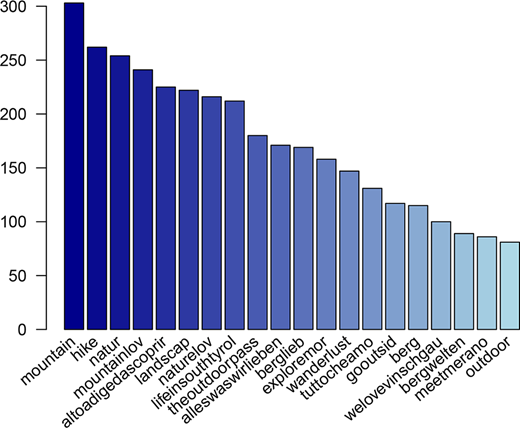
The assessment reveals that Naturno’s social media presence is strongly shaped by its natural environment, with a particular emphasis on mountains, outdoor activities and rural landscapes. On Instagram, the most frequently used words and hashtags included “mountain,” “hike,” “trail,” and “nature,” reflecting a consistent thematic focus on the village’s alpine setting and its appeal to nature-oriented visitors. The 20 most common hashtags are presented in Figure 1. This was further confirmed by the visual content analysis of Instagram posts, where over 70% of the images depicted rural or natural scenes, and more than 90% were related to outdoor activities such as hiking, biking, or seasonal events.
Facebook, in contrast, served a more informational role. Posts were generally longer, multilingual (German and Italian) and often included links to external content. The most common terms were related to time and scheduling – such as “today,” “week,” and “event” – indicating that Facebook is primarily used to promote local events and activities. Culinary and cultural elements also featured prominently, with frequent references to wine, local traditions and landmarks.
YouTube, while less active than the other platforms, echoed similar themes. The most frequent terms in video descriptions included “mountain,” “pasture,” “bike” and “trail,” reinforcing the centrality of nature and outdoor recreation in the village’s digital narrative. Family-oriented content also appeared across platforms, with “family” ranking among the top terms on both Instagram and YouTube.
When mapped against the seven action fields of the Vision, social media content showed alignment with several key areas. Tourism development, for instance, is prominently featured through the consistent promotion of outdoor activities and natural attractions. Mobility is also addressed, albeit indirectly, through the emphasis on walking and cycling. The action fields associations and events and community living are reflected in posts about family life and local events, while ecological foresight is conveyed through the visual prominence of natural landscapes.
However, other action fields – such as settlement development and transparent governance – are less visible on social media. This discrepancy may be because of the nature of these topics, which are less easily communicated through visual or promotional formats.
The social media analysis shows that Naturno’s official digital communication contributes to implementing its place brand identity. The strong dominance of nature-oriented visuals and terminology across Instagram and YouTube supports the living naturally component, presenting Naturno as an outdoor-focused and landscape-connected place. Elements of living together appear in Facebook posts promoting community events, cultural traditions and family activities. The living openly dimension is reflected in public announcements and information about municipal initiatives, although it remains less visible than nature-related themes.
4.4 Strategic document analysis
The content analysis of the municipality’s strategic documents reveals high institutional alignment with the Vision Naturno 2030+, particularly in terms of sustainability, community well-being and participatory governance.
The guidelines set a clear strategic direction for the legislative period, emphasizing organic settlement development, environmental sustainability, inclusive tourism and strong community support. These priorities are echoed in the yearly documents, which allocate resources to areas such as education, youth services, mobility infrastructure and environmental initiatives. These documents demonstrate a stable commitment to long-term goals while also adapting to emerging challenges, such as climate change and digital transformation, particularly from 2023 onward.
Sustainability emerges as a cross-cutting priority. The municipality’s ecological agenda is represented in both strategic and operational documents. The yearly documents deal with general sustainability as well as more targeted climate-conscious planning, with increasing attention to energy efficiency and green mobility.
Social cohesion and family support are consistently prioritized. The guidelines outline a vision of Naturno as a livable, inclusive community and the yearly documents reinforce this through investments in childcare, elderly care, intergenerational spaces and cultural programming.
In terms of governance, both sets of documents emphasize transparency and citizen engagement. The guidelines introduce tools such as the “Digital Village Square” and the GEM2GO app to facilitate communication and participation, while the annual documents hint at a structured and transparent strategic culture. The operationalization of participatory mechanisms is less detailed, suggesting room for further development in this area.
Tourism and economic development are treated with caution in the guidelines, which call for balanced growth and integration with local life. The annual documents, however, tend to emphasize tourism as an economic driver, with less explicit attention to the potential social and environmental trade-offs.
Although not always labeled as a distinct strategic field, the theme of associations and events is present in both the guidelines and the annual documents. The guidelines emphasize the importance of a vibrant community life supported by local associations and cultural events. The annual documents reinforce this through consistent support for youth, sports and cultural infrastructure, as well as the promotion of intergenerational and community-based initiatives.
In summary, the analysis of the political guidelines and the five DUPs shows that Naturno’s strategic planning documents support the implementation of its place brand identity. As illustrated in Table 3, the strongest alignment appears in areas connected to living naturally, particularly ecological foresight, sustainable mobility and environmentally conscious settlement planning. Elements of living together are embedded through commitments to community life, education, social services and support for associations, indicating that social cohesion and community well-being remain central strategic priorities. The living openly dimension is supported through references to transparency, participatory processes and digital communication, though with less operational depth than the other components.
5. Discussion
5.1 Evaluating place brand identity implementation
Interpreting the results through the three components of Naturno’s place brand identity shows that the implementation of the action fields broadly reflects the enactment of the identity vision itself. The first component, living together, is supported across all data sources: interviews described strong collaboration with local associations and continued investment in community programs; the questionnaire indicated generally positive perceptions of social benefits and community life; social media posts highlighted events and cultural activities; and the strategic documents prioritized social cohesion and support for associations.
The second component, living naturally, is reflected in ecological foresight, settlement development and sustainable mobility. Interview insights emphasized achievements such as the transition to biomass heating, new renewable energy investments and ongoing mobility initiatives. The questionnaire pointed to moderate but positive perceptions of ecological quality and mobility improvements. Social media content was dominated by nature imagery and outdoor activities, which visually reinforce this narrative. Strategic documents likewise give sustained attention to environmental planning and green infrastructure.
The third component, living openly, emerges through developments in transparent governance, accessible information and inclusive engagement. Interviewees highlighted new participatory formats and transparency measures, whereas the questionnaire reflected some variability in perceptions of openness, with residents evaluating transparency differently depending on the topic. Social media posts, particularly on Facebook, communicated municipal updates and public information, contributing to accessible communication. Strategic documents also include references to transparency and administrative openness, though with less operational detail than other fields.
5.2 Implications for place managers
Taken together, the findings of this study indicate that the implementation of the Vision Naturno 2030+ is progressing across most identity-related dimensions, even if unevenly. Some areas, such as ecological foresight, community life and settlement development, show strong institutional alignment and visible investments, while others, including tourism governance, housing and certain aspects of transparent administration, reveal gaps between strategic intent and perceived progress. These variations highlight the importance of continuous monitoring, adaptive management and diversified communication strategies to ensure that the brand identity remains both operationally embedded and broadly understood across stakeholder groups. For place managers, these findings carry several implications.
First, to truly shape a place, its brand identity must become part of institutional action: it should influence how decisions are made and priorities set. This means embedding it into routine practices: referencing it in meetings, aligning it with performance goals and using it as a compass in budget discussions. Just as importantly, the identity vision should be present in public discourse. When residents hear about it regularly, it becomes something shared, not just imposed. This kind of visibility helps foster a sense of collective ownership and long-term commitment.
Second, evaluating progress requires a multi-dimensional evaluation. On one hand, it should assess whether institutional actions are aligned. On the other hand, it must capture how people experience changes. Gathering residents’ feedback adds depth to the evaluation and helps ensure that the vision remains responsive to real and dynamic needs.
Finally, communication plays a crucial role in making a brand identity alive. A comprehensive communication strategy should reflect the full range of its ambitions. This means using different formats and channels to reach diverse audiences. It also means making the content accessible, using visuals, stories and examples that resonate. And perhaps most importantly, communication should be two-way: people need to see not only what is being done but also how their input is shaping the process.
5.3 The place brand identity evaluation model
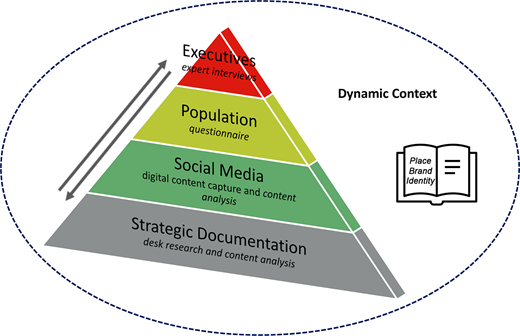
The main contribution to theory proposed by this study is an evaluation model for place brand identities. The model, illustrated in Figure 2, delivers a dual theoretical contribution.
First, it extends the BIDP framework by Botschen et al. (2017) by a major component. While the BIDP framework has proven valuable in guiding the participatory construction of place brand identities, it lacks a structured mechanism for assessing identity implementation outcomes over time (Maffei, 2024a). The proposed model supports ongoing assessment of whether and how envisioned place brand identities are translated into institutional practice, stakeholder perception and public discourse. By doing so, it introduces a structured learning loop into identity-based place development processes. The model retains the BIDP framework’s commitment to participatory values but enhances it with operational clarity, multi-level data triangulation and evaluative depth.
Second, the model contributes to place branding theory, addressing the lack of evaluation frameworks in the literature. Many place branding contributions propose case studies that lead to the creation of place brand identities but fall short in assessing whether the intended objectives could be achieved. Recent place branding scholarship further reinforces this perspective by conceptualizing place branding as a governance-oriented, adaptive and multi-actor process while simultaneously pointing to persistent gaps in evaluating implementation and long-term alignment across governance levels and contexts. With scholars highlighting the need for approaches that recognize place branding as an ongoing, multi-actor process (Kavaratzis and Kalandides, 2015; Campelo et al., 2014; Kavaratzis and Hatch, 2013), this model provides a practical mechanism to assess how different stakeholder groups perceive, experience and influence place brand identity over time. This makes the model valuable also for rural contexts, where place identity is strongly intertwined with community life, landscape and local cultural dynamics (Gharaibeh et al., 2021; Gulisova, 2021).
Even if this model has been applied in a single municipality, its structure and underlying logic are not context-bound. The model’s emphasis on identity components, stakeholder engagement and multi-level triangulation makes it adaptable to different contexts. In municipalities with more centralized governance, institutional documents may play a stronger role, while in more participatory settings, citizen and community insights may become more prominent. Likewise, in metropolitan or tourism-intense destinations, digital communication and public discourse may provide richer evaluative signals. Thanks to its DSR development and its iterative construction, the model can be adjusted to different places and developed further while preserving its core architecture.
Figure 2 visualizes the evaluation model. The pyramid metaphor reflects the need for triangulated, multi-level evaluation to support adaptive governance in dynamic, stakeholder-rich contexts. Each layer of the pyramid represents one of four complementary methods, aligned with key dimensions of brand identity implementation: institutional knowledge, public perception, digital discourse and strategic alignment. Together, these components form an integrated model for evaluating the implementation of place brand identity.
The model further contributes to the field at the methodological level by applying the DSR paradigm, particularly Hevner’s (2007) three-cycle model. The relevance cycle, grounded in the practical need of a municipality to evaluate the implementation of its place brand identity some years after the definition, provides the starting point for constructing the evaluation model. This need is shared and increasingly salient for local administrators, residents and scholars.
The rigor cycle draws on established place branding theories, which nevertheless lack structured evaluation mechanisms (Maffei, 2024c). These theoretical foundations informed the initial construction of the evaluation model and its multi-method approach. They also guided decisions on what and how to evaluate, offering a solid conceptual basis for the development of categories, components and indicators.
The design cycle unfolded during the empirical application of the model and involved several rounds of refinement. As the model was applied to the assessment of documents, questionnaire responses and the municipality’s digital communication, its evaluative criteria were adjusted to reflect emerging patterns, resolve ambiguities and ensure conceptual consistency across data sources. Although the overall structure of the model remained stable, these iterative adjustments enabled the model to become more context-aware and to accommodate practical challenges related to data availability and stakeholder accessibility.
The structured use of DSR positions the model not just as a practical evaluation tool but as a theoretically grounded artifact that contributes back to the academic knowledge base, which suffers from methodological fragmentation, case specificity and a near-absence of evidence-based, iterative evaluation approaches (Maffei, 2024c). By integrating perception-based data, institutional knowledge, strategic documentation and digital communication, the model offers a comprehensive and replicable approach for assessing place brand identity implementation across stakeholder groups over time.
6. Conclusion
This study introduced the place brand identity evaluation model, a DSR-based framework for assessing how place brand identities are implemented over time. Developed as an evaluative extension of the BIDP framework (Botschen et al., 2017), the model responds to a well-recognized gap in place branding literature: the absence of structured, iterative mechanisms for monitoring how identity visions are enacted in practice (Maffei, 2024a, 2024c). By integrating institutional, perceptual, communicative and strategic data, the model supports adaptive, identity-based place development in dynamic and stakeholder-rich contexts.
Applying the model to the Vision Naturno 2030+ showed how the municipality is progressing in implementing its place brand identity, articulated as living together naturally and openly. By interpreting the empirical findings through these three identity components, the study shows how different action fields contribute to enacting the intended identity in practice. Activities related to associations, community life and local events strengthen the living together dimension. Initiatives in mobility, ecological foresight and settlement development reinforce the dimension of living naturally, while efforts in transparent governance, open communication and inclusive participation reflect the dimension of living openly.
This study offers practical and theoretical contributions. It provides place managers with a replicable and adaptable tool for assessing the implementation of a shared place brand identity, and it advances academic debates by strengthening the evaluative dimension of place branding. As further applications refine and expand the model, its capacity to support participatory and adaptive brand identity development is expected to grow.
Some limitations must be acknowledged. First, the evaluation has been conducted in a single municipality, which partially limits the results’ broader generalizability. Second, the social media analysis is constrained to official municipal communication: while this captures how the municipality projects its identity digitally, user-generated material would provide additional insights into how identity signals are received, interpreted or contested by digital publics. Third, statistical indicators and independent media coverage related to the Vision Naturno 2030+ are still scarce at this mid-implementation stage, limiting their usefulness. As implementation progresses, these sources are expected to expand and offer richer evaluative insights.
Future research is encouraged to address these limitations and apply the model across diverse contexts to further evaluate its robustness and adaptability. The model allows a certain flexibility in its structure, with evaluative layers adaptable to different identity visions and data environments, and is therefore suitable for application in different territorial and governance contexts. Beyond the municipal scale, further research could explore how the model may inform policymaking and governance frameworks at regional, national or international levels. Among the many possibilities, regional authorities could use it to assess the alignment of multiple municipalities with shared regional identity visions; national governments might use it to monitor how local identity-based initiatives contribute to broader territorial branding or rural development agendas; and international organizations could adapt the model to evaluate cross-border or multi-country programs. Such applications would enhance both the methodological and policy value of identity-based evaluation.
The authors would like to acknowledge the support of the Public Management team at Eurac Research during the development of this project.
Funding
This research received no external funding.
Notes
The DUP, or Unified Strategic Document, is mandated by Article 170 of Legislative Decree No. 267/2000 and was introduced with Legislative Decree No. 118/2011. Prepared annually and submitted by the municipal executive to the city council by July 31st, it serves as the municipality’s strategic and operational model, linking political priorities with financial planning. The Linee Programmatiche di Mandato, translated as the Political Guidelines of the Mayor’s Term, are required by Article 46, paragraph 3 of the same decree. These guidelines must be presented by the Mayor to the City Council at the beginning of each administrative term. Unlike the DUP, this document is political. It outlines the vision, priorities and strategic goals that the administration intends to pursue over the five-year term.
References
Further reading
Appendix. Semi-structured interview guide (translated from German)
Perceived role and relevance of the place brand identity/vision:
How would you describe the core idea behind “living together, naturally and openly”?
In your view, how has this identity vision guided municipal decisions since its adoption?
Which elements of the identity are easiest or hardest to translate into practice?
Progress and challenges in the action fields:
How would you assess the progress made in each of the seven action fields so far?
Which initiatives have advanced most clearly, and why?
What obstacles or tensions have emerged (e.g. between tourism and agriculture, mobility issues)?
Are there fields where implementation has stagnated, and what are the reasons?
Contextual and institutional influences:
How have external factors (elections, political transitions, COVID-19, tourism trends) influenced implementation?
How does the Vision interact with the annual municipal program and budgeting process?
To what extent is the Vision still seen as a guiding document within the municipal administration?
Collaboration, participation and governance:
How do different sectors (tourism, agriculture, associations, citizens) contribute to the implementation process?
Have new forms of collaboration or conflict emerged during implementation?
How transparent and participatory do you consider the current implementation process?