


This study explores the dynamics of entrepreneurial resilience and empowerment by examining the lived experiences of rural Indigenous Dayak women entrepreneurs in Sarawak, Malaysia. Focusing on this distinct group, the research investigates how access to resources, support mechanisms, and cultures and traditions shape the development of entrepreneurial resilience. The study further examines how such resilience facilitates personal, social, and economic empowerment among these women.
A qualitative research approach was employed, involving semi-structured interviews with fourteen rural Indigenous Dayak women entrepreneurs. The interview data were analysed using thematic analysis to identify key themes related to entrepreneurial resilience and empowerment.
The findings reveal that the resilience of rural indigenous women entrepreneurs is shaped by a set of interconnected factors. Key challenges include balancing cultural values with business demands, coping with financial constraints, and navigating uncertainty in the business environment. At the same time, resilience is strengthened by access to financial and digital resources, strong family and community support, and supportive government initiatives. Cultures and traditions, particularly values emphasising sustainability, respect for the environment, and harmony with nature, play a critical role in guiding business practices and decision-making. Collectively, these elements foster personal growth, social recognition, and economic empowerment among the entrepreneurs.
This research offers valuable insights into the intersection of entrepreneurial resilience and empowerment among rural indigenous women entrepreneurs. By illuminating the experiences of a distinct and under-researched demographic, it extends existing scholarship on gender, entrepreneurship, and rural development. The study also offers practical implications for policymakers and development agencies seeking to design context-sensitive interventions that promote gender equality, strengthen entrepreneurial ecosystem, and advance sustainable rural economic development.
1. Introduction
The role of women entrepreneurs in advancing social progress and sustainable economic growth is gaining increasing recognition. As more women assume leadership roles in entrepreneurship, they contribute significantly to economic development by establishing businesses that diversify markets, generate employment opportunities, and foster innovation (GEM, 2021). Beyond their economic impact, women entrepreneurs often emphasise social responsibility, driving community transformation by addressing pressing societal challenges such as healthcare, education, and environmental sustainability (Minniti and Naudé, 2010). Their leadership also promotes gender equality by challenging traditional norms and encouraging greater participation of women in the workforce and entrepreneurial activities.
Within global entrepreneurship research, however, the resilience of Indigenous women entrepreneurs remains a crucial yet underexplored area of inquiry. Indigenous women, particularly those in rural contexts, remain largely underrepresented in academic research (Dana, 2007). Dana (2007) highlights the unique characteristics of Indigenous enterprises, notably the centrality of traditional and cultural knowledge, and calls for more focused research on the contributions of women entrepreneurs. Persistent economic marginalisation continues to shape entrepreneurial experiences of Indigenous women, particularly those in rural and marginalised communities, through structural inequities, resource constraints, and cultural limitations (Foley, 2003). Such marginalisation constrains not only individual economic empowerment but also broader community development and the continuity of traditional knowledge systems. Despite these challenges, many Indigenous women entrepreneurs demonstrate remarkable resilience and adaptability, contributing significantly to local economies. This paradox underscores the urgent need to better understand and support Indigenous women’s entrepreneurial pathways.
Indigenous women entrepreneurs also play a crucial role in preserving traditional knowledge and sustaining local economies. Their resilience is shaped not only by individual determination but also by collective strengths grounded in Indigenous values, customs, and community-oriented approaches. By integrating contemporary entrepreneurial practices with cultural identity, Indigenous women entrepreneurs carve out a distinct space within the broader entrepreneurial landscape. This integration fosters social and environmental sustainability while contributing to economic advancement. Understanding their entrepreneurial resilience provides valuable insights into the dynamics of Indigenous entrepreneurship and informs initiatives aimed at promoting more equitable and sustainable global economic development.
Community-based businesses in Indigenous contexts further underscore the pivotal role of women in fostering entrepreneurship that prioritises collective goals over purely individualistic pursuits (Peredo and Chrisman, 2006). In Sarawak, Dayak women illustrate this dynamic through a distinctive integration of cultural heritage and entrepreneurial initiative (Keling et al., 2023). Despite facing institutional barriers such as limited access to markets, financial resources, and educational opportunities, these women demonstrate remarkable resilience in pursuing both personal ambitions and community-oriented goals. Yap et al. (2023) further emphasise that such resilience is deeply intertwined with processes of empowerment, reinforcing their capacity to sustain and grow their ventures.
Nonetheless, empirical evidence identifies business failure as a significant obstacle to the entrepreneurial endeavours of Indigenous Dayak women. Although precise failure rates are difficult to ascertain, existing studies document a range of challenges that undermine business sustainability, including adverse socioeconomic conditions, cultural limitations, and limited access to critical resources. Keling et al. (2023) report that Indigenous women entrepreneurs often struggle to expand their businesses beyond the start-up phase, largely due to restricted access to capital and markets. These findings align with those of Ifelunini and Wosowei (2012) and Nyoni et al. (2021), who similarly identify financial constraints as major impediments to entrepreneurial growth.
Furthermore, Cliffton and Jaafar (2023) contend that a combination of institutional, cultural, and structural factors constrains the entrepreneurial performance of Indigenous Dayak women. Their study underscores the importance of fostering resilience as a critical capacity for navigating complex and uncertain business environments, consistent with Yap et al. (2023).
The significance of this research extends beyond the local context, contributing to a broader understanding of Indigenous women’s roles in economic development and underscoring the need for inclusive policies that advance gender equity. By examining the experiences and resilience of Dayak women entrepreneurs, this study seeks to inform stakeholders, including policymakers to community organisations, about contextually grounded strategies for empowering Indigenous women and fostering sustainable economic growth. Ultimately, this investigation provides a platform for recognising their contributions, strengthening their capacity, and supporting their long-term potential in the face of adversity.
Guided by cultural theory, empowerment theory, social capital theory, and intersectionality theory, this study aims to explore the determinants of entrepreneurial resilience and its outcomes among rural Dayak women entrepreneurs. It also examines the barriers and challenges encountered throughout their entrepreneurial journeys. Accordingly, the central research question is:
How do key contextual factors influence the development and expression of resilience among Indigenous Dayak women entrepreneurs in rural Sarawak, Malaysia, and in what way does this resilience contribute to their personal, social, and economic empowerment?
This paper is structured as follows: it begins with a comprehensive review of the relevant literature, followed by a detailed description of the research methodology. The findings are then presented, leading to a discussion of the key insights and their theoretical and practical implications. Finally, the paper concludes by acknowledging its limitations and offering directions for future research.
2. Literature review
2.1 Women entrepreneurs
As women strengthen their entrepreneurial competencies, self-determination, and confidence, they become increasingly empowered to establish and sustain their own businesses while taking greater control of their futures. Through entrepreneurship, they not only contribute to social transformation and economic resilience but also cultivate their own personal development. This empowerment extends beyond the individual, generating meaningful and lasting benefits for their families and communities (UN Women, 2016).
The World Bank (2012) emphasised the importance of gender equality in fostering economic progress and shared prosperity, highlighting the need to empower to enhance their social and economic status. However, empowerment is complex and multidimensional process encompassing political, social, psychological, and economic dimensions.
Numerous studies, including those by Nixon and Yarrow (2019), O’Neil (2019), and Sahota (2020), offer valuable insights into how women navigate and overcome sociocultural barriers to claim their rights and achieve economic independence. Drawing on these findings, successful women entrepreneurs can serve as influential role models within their communities, inspiring others to pursue entrepreneurial pathways and contributing to the broader empowerment of women. Similarly, the UN Women (2016) affirms that empowering women through entrepreneurship foster wider social and economic development, generating positive spillover effects for families and communities.
In contrast, significant gender gaps and barriers to economic participation often intensify the challenges women encounter in business (Peredo and McLean, 2013b). A deeper understanding of these constraints can inform initiatives and policies aimed at advancing social justice and gender equality, thereby fostering more inclusive economic development. Furthermore, empowering women to establish their own businesses not only challenges gender stereotypes but also equips them to assume leadership roles within their communities, a transformative step that contributes to a broader social change (Agarwal, 2016).
2.2 Indigenous entrepreneurship
Indigenous entrepreneurship represents a distinctive integration of cultural values, traditional knowledge, and innovative economic practices. This perspective is clearly articulated by Anderson et al. (2005) and Peredo and Chrisman (2006), who emphasise the communal orientation and sustainability embedded in Indigenous business approaches. Unlike conventional Western models that often prioritise individual profit, Indigenous entrepreneurship typically centres on the community well-being, environmental stewardship, and the preservation of cultural heritage. Such characteristics are evident in Collins et al.’s (2017) research on Australian Aboriginal businesses and Haar et al.’s (2019) study of Māori leadership in New Zealand. In addition, Guedel and Colbert (2016) illustrate how Native American tribal economies draw upon self-determination to develop resilient and community-oriented businesses.
Meanwhile, Alarcón and Sato (2019) and Fieve and Chrysostome (2024) illuminate Indigenous business and knowledge systems in Latin America and Africa, demonstrating how these models empower communities through fair trade practices and the promotion of sustainable livelihoods. These global examples underscore the adaptability and resilience of Indigenous entrepreneurs, who strategically integrate traditional practices with contemporary market opportunities to advance economic empowerment while remaining grounded in their cultural identities. From a broader comparative perspective, Cameron and Gibson-Graham’s (2022) diverse economies theory and Hindle’s (2010) principles of Indigenous entrepreneurship provide a robust theoretical foundation for understanding cross-cultural commonalities in Indigenous practices.
2.3 Indigenous women entrepreneurs
Recognising the significant contributions of Indigenous women entrepreneurs is essential for strengthening local economies. These women not only create employment and generate income but also stimulate innovation and inspire new business ventures (Anderson and Dana, 2006). Their community-oriented enterprises foster social cohesion and reinforce cultural ties by embedding traditional knowledge and values within contemporary business practices (Colbourne, 2018; Zapata and Hall, 2012). For Indigenous women in Sarawak, Malaysia, entrepreneurship represents more than a pathway to economic advancement, it also serves as a vital vehicle for preserving cultural heritage and nurturing a strong sense of identity (Keling et al., 2023).
Conversely, existing research suggests that entrepreneurial success is shaped by an interplay of individual characteristics and external factors. Entrepreneurs with lower levels of entrepreneurial inclinations tend to encounter greater challenges in sustaining business performance than those with stronger inclination counterparts (Keling et al., 2023). Similarly, Yap et al. (2023) emphasise that both internal attributes and external conditions are crucial in determining the performance outcomes and resilience of rural Indigenous women entrepreneurs.
Studying the resilience of Indigenous women entrepreneurs is vital, as it encompasses personal, economic, and socio-cultural dimensions. Such enquiry enhances our understanding of agency and self-determination within marginalised communities (Dewi and Gunter, 2017). An interdisciplinary lens drawing from gender studies, sociology, economics, and anthropology, further enriches theoretical frameworks on empowerment and entrepreneurship, generating insights that may also inform other marginalised groups. Grounded in empowerment theory, this study offers a holistic perspective on the factors that underpin entrepreneurial resilience and success in Indigenous contexts.
2.4 Entrepreneurial resilience in indigenous contexts
Entrepreneurial resilience is particularly vital for Indigenous and rural entrepreneurs, especially women, as they navigate challenges such as cultural barriers, limited resources, and economic inequality (Pathak and Muralidharan, 2021). For Indigenous Dayak women, restricted access to financing, infrastructure, and support systems makes resilience a key factor in sustaining their businesses while contributing to broader goals of economic development and gender equality.
Resilience enables rural women entrepreneurs to adapt by maximising available resources, exploring alternative funding opportunities, and developing innovative business models (Nguyen and Lockrey, 2020; Yadav and Unni, 2016). Their ability to remain creative and resourceful in environments characterised by scarcity strengthens both the viability and sustainability of their ventures (Gomez-Haro et al., 2011; Pato and Teixeira, 2016). Moreover, despite restrictive cultural norms that may limit their access to networks and decision-making opportunities, resilient women continue to challenge stereotypes, overcome structural barriers, and redefine traditional gender roles (Brush et al., 2009; Santos et al., 2020).
At the same time, community support is vital for building resilience among Indigenous women entrepreneurs (Ong, 2020). Social connections, local networks, and community resources help mitigate geographic isolation and structural constraints (Dana et al., 2014). These networks not only provide practical support but also nurture self-determination and empowerment, enabling women to pursue sustainable development, reinvest in their communities, and contribute to broader global agenda such as the United Nations Sustainable Development Goals (UNSDGs), particularly Goal 5 on gender equality. Through collective action and communal engagement, Indigenous women entrepreneurs promote equity, sustainability, and inclusive economic growth.
2.5 Theoretical foundations
2.5.1 Cultural theory
Overall, cultural theory explains how Indigenous Dayak women entrepreneurs embed cultural identity, traditional knowledge, and community values within their entrepreneurial activities (Dana et al., 2022; Keling et al., 2023; Peredo and McLean, 2023). This perspective highlights how entrepreneurship functions not only as an economic activity but also as a means of cultural preservation and sustainable development. However, cultural theory primarily focuses on meaning-making and identity, and does not fully explain how Indigenous women gain agency, access resources, or navigate structural inequalities. These aspects are further addressed through empowerment theory (Rappaport, 1981; Sahota, 2020), social capital theory (Putnam, 2015; Nahapiet and Ghoshal, 1998), and intersectionality theory (Crenshaw, 1989).
2.5.2 Empowerment theory
In this study, empowerment theory emphasises how entrepreneurship enhances Indigenous women’s agency, decision-making power, and economic independence (Rappaport, 1981; Sahota, 2020; Jennings and Brush, 2013). This perspective highlights how entrepreneurial activities enable women to challenge restrictive gender norms and improve their socio-economic position, particularly in marginalised Indigenous communities (García and Welter, 2013; Peredo and McLean, 2023). However, empowerment theory pays less attention to the cultural foundations shaping entrepreneurial meaning and the relational networks that facilitate access to resources. These dimensions are further examined through cultural theory (Dana et al., 2022; Mika et al., 2019) and social capital theory (Putnam, 2015; Nahapiet and Ghoshal, 1998), while intersectionality theory explains how structural inequalities shape empowerment opportunities (Crenshaw, 1989).
2.5.3 Social capital theory
Social capital theory therefore highlights the importance of networks, trust, and shared values in enabling Indigenous women entrepreneurs to access resources and sustain their enterprises (Putnam, 2015; Nahapiet and Ghoshal, 1998). Through bonding, bridging, and linking social capital, Indigenous women can obtain knowledge, financial support, and market opportunities that strengthen entrepreneurial resilience (Lewis and Söderbergh, 2019; Simpong et al., 2018). However, this theory primarily focuses on relational resources and does not fully account for the cultural meaning of entrepreneurship, empowerment processes, or overlapping structural inequalities. These aspects are addressed through cultural theory (Dana et al., 2022; Keling et al., 2023), empowerment theory (Rappaport, 1981; Jennings and Brush, 2013), and intersectionality theory (Crenshaw, 1989), which together provide a more comprehensive understanding of Indigenous women’s entrepreneurial resilience.
2.5.4 Intersectionality theory
Intersectionality theory complements the preceding theoretical perspectives by explaining how overlapping identities shape the opportunities and constraints faced by rural Indigenous Dayak women entrepreneurs (Crenshaw, 1989). While cultural theory highlights the role of cultural identity and traditional knowledge in entrepreneurship (Dana et al., 2022; Peredo and McLean, 2023), empowerment theory explains how entrepreneurial activities enhance agency and socio-economic independence (Rappaport, 1981; Sahota, 2020), and social capital theory emphasises the importance of networks and relational resources (Putnam, 2015; Nahapiet and Ghoshal, 1998). Intersectionality theory integrates these perspectives by illustrating how gender, ethnicity, and rural location interact to produce unique forms of marginalisation. Together, these theoretical foundations provide a comprehensive framework for understanding Indigenous women’s entrepreneurial resilience.
2.6 Barriers to indigenous women entrepreneurship
The intersection of gender, ethnicity, and rurality creates a unique and complex set of challenges that disproportionately affect Indigenous women entrepreneurs (Rahman and Mohamad, 2022). These overlapping identities constrain access to economic opportunities, financial resources, education, and institutional support, particularly in rural areas where slower economic growth and weaker infrastructure further exacerbate existing inequalities (Abdullah et al., 2021). Consequently, Indigenous Dayak women in Malaysia face entrenched disadvantages that limit their economic participation and perpetuate cycles of marginalisation, poverty, and inequality.
One of the most significant challenges is financial exclusion. Indigenous Dayak women often struggle to obtain capital and credit due to gender- and ethnicity-based discrimination from formal financial institutions (Zulkifli and Abdul Rahman, 2021). These institutions frequently fail to provide culturally appropriate support mechanism, such as tailored microfinance programmes, capacity-building initiatives, or flexible repayment options that reflect rural realities (Mansur and Ishak, 2022). The issue is further compounded by customary land tenure systems that tend to favour men, restricting women’s access to land and limiting their eligibility for financial services and collateral-based loans (Mansur and Ishak, 2022).
Cultural expectations also play a pivotal role in constraining Indigenous women’s entrepreneurial potential. Traditional gender norms often assign domestic responsibilities to women while positioning men as primary economic actors. In many Dayak communities, women are excluded from household and community-level financial decision-making, which limits their financial literacy and reduces opportunities to develop entrepreneurial competence. This cultural marginalisation is reflected in their limited exposure of consumer demands, product innovation, and market dynamics which are the critical factors for success in contemporary business environments (Rahman and Chong, 2022).
Geographic isolation further intensifies these challenges. Most Dayak communities reside in remote rural areas far from trade hubs and urban markets. Poor transportation infrastructure and weak digital connectivity severely restrict Indigenous women’s ability to market their products and participate in broader entrepreneurial ecosystems (Rahim and Omar, 2020). The digital divide also constrains their use of e-commerce and social media platforms that could otherwise help overcome physical barriers. Additionally, many women remain unaware of available government support programmes or encounter difficulties accessing them due to bureaucratic inefficiencies (Nasir and Karim, 2021).
Collectively, these interrelated barriers including financial, cultural, and geographic, systematically disadvantage Indigenous women entrepreneurs and push them to the margins of economic development. Their lived experiences reveal how structural inequities rooted in identity and location restrict access to resources, services, and opportunities. Addressing these layered challenges through inclusive policies and targeted support mechanisms is essential is essential for strengthening resilience and enabling sustainable Indigenous entrepreneurship.
2.7 Conceptual framework
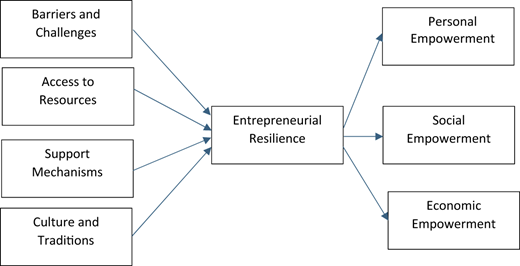
In the context of entrepreneurship, cultural, empowerment, and social capital theories help explain how entrepreneurial activities equip individuals, particularly marginalised groups, with the resources and capabilities needed to enhance their psychological, social, and economic well-being. Consequently, these perspectives collectively form the theoretical foundation for the development of the study’s conceptual framework (as shown in Figure 1). The propositional statements derived from these theoretical perspectives are presented in Appendix 1.
3. Methodology
This study adopts a qualitative methodology, employing semi-structured interviews to explore the individual narratives, lived experiences, and perceptions of empowerment of Indigenous Dayak women entrepreneurs. This approach enables an in-depth understanding of the meanings participants attach to entrepreneurship and empowerment within their socio-cultural context, making qualitative inquiry particularly appropriate for this research (Creswell and Poth, 2018). The philosophical assumptions underpinning this study are presented in Appendix 2. In addition, this study aims to illuminate how culture influences entrepreneurship (Rao et al., 2023). By using a method rich in depth, the study facilitates a nuanced exploration of each participant’s unique experiences, foregrounding the real-world perspectives of business owners. As argued by Dana and Dana (2005), such an approach strengthens understanding of indigenous entrepreneurial phenomena.
Despite the strengths of a qualitative approach, this study acknowledges inherent limitations, particularly regarding subjectivity and limited generalisability. These concerns were addressed through reflexivity throughout the research process. The researchers critically reflected on how their shared ethnic background, cultural sensitivity, familiarity with local dialects, and respect for local customs may have shaped interactions with participants and influenced the interpretation of culturally embedded notions of resilience and empowerment. However, the researchers did not share the same gender or lived experiences as the participants, necessitating heightened sensitivity during both data collection and analysis. Potential gendered power dynamics were considered carefully, as these could affect participants’ comfort, openness, and willingness to share personal experiences. Such dynamics may position researchers in a perceived position of authority, which could shape participants’ responses or lead them to provide socially desirable answers. To mitigate these risks, the researchers built rapport through respectful engagement, cultural awareness, and transparent communication of the study’s purpose. Interviews were conducted in a conversational manner to reduce hierarchical distance, and participants were encouraged to speak freely. Throughout the analytical process, the researchers maintained awareness of their positionality as men interpreting women’s experiences and continuously reflected on potential biases to ensure that findings authentically represented the lived realities of Indigenous Dayak women entrepreneurs.
Purposive sampling was employed, as the researchers had prior knowledge of Indigenous women entrepreneurs who possessed the capacity and willingness to share insights relevant to the study’s objectives. While this strategy enhanced the relevance of the sample, the potential for selection bias was acknowledged. Participants were selected based on predefined criteria to ensure the collection of pertinent and information-rich data. In total, fourteen Indigenous Dayak women who were actively engaged in entrepreneurship and had established their businesses before 2020 participated in this study. All interviews were conducted at the participants’ business premises, allowing for contextual immersion while maintaining a structured framework to ensure comprehensive coverage of key themes (Hansen and Schaltegger, 2023). Refer to Table 1 for an overview of the participants’ profiles.
Demographic information of the participants
| No. | Name | Age | Marital status | Highest educational level | Main business | Established since | No. of employees | Revenue in 2023 (RM) |
|---|---|---|---|---|---|---|---|---|
| 1 | Anne | >60 | Widow | Teaching Certificate | Contractor/Supplier | 2000 | 208 | 10–15 M |
| 2 | Bella | >60 | Married | High School | Contractor | 2013 | 24 | 1–2 M |
| 3 | Cathy | 50–60 | Married | High School | Retail/Contractor | 2014 | 16 | 500–600 K |
| 4 | Donna | Did not wish to disclose | ||||||
| 5 | Ellen | 30–40 | Married | Graduate | Agriculture | 2016 | 18 | 500–600 K |
| 6 | Florence | 30–40 | Married | High School | Cottage/Handicraft | 2018 | 3 | 50–100 K |
| 7 | Gwen | 40–50 | Married | High School | Cottage/Handicraft | 2017 | 2 | 50–100 K |
| 8 | Halle | 40–50 | Married | High School | Bakery | 2018 | 12 | 300–350 K |
| 9 | Ivana | 30–40 | Married | Graduate | Tourism/Homestay | 2018 | 3 | 50–100 K |
| 10 | Judy | 50–60 | Married | High School | Agriculture/Plantation | 2000 | 11 | 500–600 K |
| 11 | Kylie | 50–60 | Married | High School | Agriculture/Plantation | 2003 | 9 | 500–600 K |
| 12 | Laura | 40–50 | Married | Graduate | Agriculture/Plantation | 2014 | 11 | 300–350 K |
| 13 | Mandy | 50–60 | Married | High School | Cottage/Handicraft | 2010 | 2 | 50–100 K |
| 14 | Natalie | 50–60 | Married | High School | Cottage/Handicraft | 2016 | 2 | 50–100 K |
Note(s): The participants’ name is fictitious
Depending on the participants’ preferences, interviews were conducted in English, Bahasa Iban (a Dayak language) or Bahasa Malaysia, the national language of Malaysia, with interpreters engaged when necessary. With informed consent, each interview was audio-recorded and supplemented with field notes, lasting between sixty to ninety minutes. Ethical approval was obtained from the university’s Human Research Ethics Committee (approval code: HRE2023-0054).
Thematic analysis was undertaken following the procedures outlined by Braun and Clarke (2006). Categories were deductively predefined based on relevant literature and prior research, while themes were refined inductively based on participants’ accounts. To enhance analytical rigour and depth, NVIVO 15 qualitative data analysis software was used to examine the verbatim interview transcripts. The findings indicate that factors contributing to resilience include access to resources, support mechanisms, and culture and traditions. The outcomes of resilience manifest at personal, social, and economic levels. In addition, various barriers and challenges encountered in managing businesses emerged from the data. The interview questions are provided in Appendix 3, while Table 2 summarises the main concepts, categories, and corresponding themes.
Main concepts, categories, and themes
| No. | Concepts | Categories | Themes |
|---|---|---|---|
| 1 | Factors | Barriers and Challenges | Balancing cultures and business demands |
| 2 | Securing adequate financial resources | ||
| 3 | Growing business environment uncertainty | ||
| 4 | Intrinsic challenges of the business | ||
| 5 | Access to Resources | Securing grants and institutional financing | |
| 6 | Support from family and personal networks | ||
| 7 | Access to digital training and capacity building | ||
| 8 | Utilisation of digital technologies and social media | ||
| 9 | Engagement in industrial conferences and entrepreneurial networks | ||
| 10 | Support Mechanisms | Strong family support | |
| 11 | Collaborative community support | ||
| 12 | Adequate/inadequate government support | ||
| 13 | Cultures and Traditions | Cultural values, sustainability, and respect for the environment | |
| 14 | Outcomes | Personal Empowerment | Increased confidence and leadership skills |
| 15 | Ability to make independent decision | ||
| 16 | Social Empowerment | Enhanced community standing and influence | |
| 17 | Role modelling and inspiring other women | ||
| 18 | Economic Empowerment | Financial independence and business sustainability | |
| 19 | Significant/limited contribution to household and community income |
4. Results
The research findings are presented and discussed according to the following categories: barriers and challenges; access to resources; support mechanisms; and culture and traditions that impact entrepreneurial resilience. Additionally, the outcomes of entrepreneurial resilience are explored through personal empowerment, social empowerment, and economic empowerment.
4.1 Barriers and challenges
The primary challenges faced by rural indigenous women entrepreneurs include balancing the preservation of their cultural traditions with the demands of running their businesses, as well as securing adequate financial resources. The majority of participants identified the conflict between preserving cultural values and managing modern business demands as their most significant challenge.
One of the biggest challenges has been balancing my cultural values with the demands of running a modern business. In my community, we believe in collective well-being, sharing resources, and living in harmony with nature. However, the mainstream business world often emphasises profit and individual success, which sometimes conflicts with my desire to uphold traditional values. (Anne)
One of the main challenges I’ve faced is trying to balance my cultural values with the realities of running a business. In my community, we emphasise collective well-being and sustainability, but the business world often focuses more on profit and growth. This has made it hard to navigate certain decisions, especially when I feel pressure to compromise my personal values to remain competitive in business. (Donna)
Many participants identified access to financial capital from mainstream financial institutions as a significant challenge in their entrepreneurial pursuits, particularly during the early start-up stages.
It’s not easy to find investors or financial support when you’re starting out, especially if you don’t have a strong network in place. I’ve struggled with accessing the capital I need to grow, which has slowed down progress at times. (Ellen)
As an Indigenous woman, securing funding has been particularly difficult. Mainstream banks and investors often fail to fully understand or support businesses like mine, which are rooted in cultural preservation and sustainable practices. I’ve had to rely on community support, government grants, and other small funding opportunities, which are not always easy to secure. (Ivana)
A few participants identified the growing uncertainty in the business environment as their primary challenge in managing their entrepreneurial ventures.
The business world is fast-paced, and it can be overwhelming to keep up with competitors, especially when resources are limited. I’ve had to make tough decisions about where to focus my efforts, and there have been moments where I wasn’t sure which direction to take. (Ellen)
Another key challenge was scaling the business while maintaining quality and innovation. As we expanded, it became clear that staying ahead of the competition wasn’t just about working harder it was about working smarter. (Gwen)
One participant regarded the inherent nature of the business itself as the biggest challenge in her entrepreneurial pursuit.
There is a general lack of interest and initiative from my community. Many people were struggling to make ends meet and didn’t see the value in pursuing entrepreneurial ventures. When I first shared my idea, most responses were indifferent, and a few were outright negative, suggesting I focus on something more “practical”. (Cathy)
4.2 Access to resources
The majority of participants found it challenging to access the resources needed to start or expand their businesses, with securing grants from financial institutions being the most significant obstacle. While some successfully obtained funding and microloans from government programmes, a few relied on financial support from family and relatives. Many participants have begun leveraging digital technologies, such as social media and e-commerce platforms, to sell their products online, transact with suppliers, and build relationships with customers. Additionally, attending industry conferences and joining peer groups of rural women entrepreneurs have helped expand their networks and create new business opportunities.
A number of sources were sought by the participants to start and expand their businesses.
I initially faced many barriers in accessing financial resources due to the remoteness of my community and limited networking opportunities. (…). I started by reaching out to my uncle who is also running a local business, which provided me with both financial aid and mentorship. (Anne)
Starting my business was challenging due to limited access to financial institutions and business networks in my area. However, I sought support from local government programmes through MARA that offered small business grants and low-interest loans specifically for rural development. (Bella)
The majority of participants have undertaken online training courses to acquire and strengthen their business knowledge, as well as to expand their venture’s growth potential.
I participated in workshops on digital marketing and e-commerce, which were incredibly beneficial. My friend even helped me set up an online store, expanding my customer base beyond our rural area. This collaboration not only enhanced my business skills but also fostered a sense of community and support. (…) I gained the confidence to pursue my entrepreneurial dreams and have since seen significant growth in my business. (Halle)
I took it upon myself to learn new skills. I enrolled in business courses that taught me marketing, digital tools, and sustainable business practices. (Donna)
Some participants have begun leveraging digital technologies, particularly social media and e-commerce platforms to enhance their business operations and capitalise on emerging opportunities.
Even though networking opportunities are limited in rural areas, I used my smartphone to connect with other entrepreneurs through online forums and social media. These platforms not only helped me exchange ideas but also exposed me to new markets. (Gwen)
(…) allowed me to reach new customers outside of my rural area by selling products through social media and e-commerce platforms. By taking these steps on my own, I gained financial independence and connected with a broader market. (Cathy)
Some participants strengthen their entrepreneurial networks by joining peer groups of rural women entrepreneurs and attending industry conferences, which enabled them to broaden their professional networks and generate new business opportunities.
A close friend from the Chinese community introduced me to a network of local businesswomen, many of whom had successfully established their own enterprises. Through this network, I learned about various funding opportunities and business grants available specifically for women entrepreneurs. (Halle)
A friend of mine offered me her expertise and mentorship, guiding me through the complexities of the construction process and helping me understand the market demands. (…). Her connections in the industry also opened doors for me, enabling me to source materials at a lower cost and establish relationships with local suppliers. Additionally, she encouraged me to attend industry conferences, where I could network with other professionals and learn about the latest trends and technologies in construction. (Ivana)
4.3 Support mechanisms
Strong family support was frequently identified by participants as a key factor enabling them to sustain their venture and demonstrate resilience in their entrepreneurial endeavours.
My family has been incredibly supportive throughout my entrepreneurial journey. They encourage my ideas, assist with the operations, and provide emotional backing when challenges arise. This strong foundation gives me the confidence to take risks and pursue my goals. (Donna)
My family has been my strongest pillar of support. (…). Their encouragement gives me the confidence to pursue my goals, knowing that I have a safety net at home. Whether it’s helping with marketing or providing emotional support during tough times, my family’s involvement is invaluable and motivates me to keep pushing forward. (Florence)
In contrast, participants had mixed perceptions regarding community support. While some reported receiving strong support from their communities, others perceived community dynamics as constraints that hindered their entrepreneurial success. The positive views include:
The support from my local community has also been incredibly positive. We have a network of local farmers who share knowledge, resources, and experiences. Community events, such as agricultural fairs and workshops, provide opportunities to learn from one another and stay updated on best practices and new technologies. This collaborative spirit encourages us to uplift each other, leading to improved techniques and better results for all of us. (Gwen)
The negative views include:
Unfortunately, the support from my community is lacking. While some friends and neighbours appreciate my efforts, many still hold traditional views about women’s roles, which can make it difficult for them to fully understand or support my entrepreneurial ambitions. (…). This limited engagement means fewer opportunities for collaboration, mentorship, and shared resources that could help grow my business. (Florence)
In my rural area, the sense of community can sometimes feel more isolating than supportive. (…). Many people in my community are focused on established ways of making a living, which can lead to scepticism towards new business ideas. This lack of understanding can discourage collaboration and limit networking opportunities, making it challenging to find like-minded individuals who share my entrepreneurial aspirations. (Ellen)
On the contrary, government support, particularly from local authorities and agencies, remains inadequate.
Support from local authorities has been even more challenging to navigate. While there are programmes designed to assist indigenous entrepreneurs, accessing these resources often feels complicated and bureaucratic. Many local initiatives do not adequately address the unique barriers indigenous business owners face, such as limited access to capital, networking opportunities, and tailored business training. (Cathy)
Support from local authorities is often minimal. While there may be programmes aimed at rural development, they frequently do not cater to the specific needs of rural entrepreneurs. Access to funding and resources is limited, and navigating the bureaucratic landscape can be frustrating. Many initiatives lack the necessary outreach to ensure that rural entrepreneurs are aware of available support. (Ellen)
4.4 Culture and traditions
Many participants perceived their culture and traditions as an added advantage in their business endeavours, enabling them to effectively balance both aspects.
As a Dayak entrepreneur, my cultural values deeply influence my approach to entrepreneurship. The Dayak people place great emphasis on community, sustainability, and respect for nature, which guides the way I run my business. (…). Additionally, our deep connection to the land and environment shapes my commitment to sustainable practices. This means I focus on eco-friendly methods and ensure that my business respects and preserves the natural resources we depend on. (…). These traditions provide a unique strength to my entrepreneurial journey, allowing me to create a business that is not only profitable but also aligned with our values and traditions. (Anne)
My cultural heritage profoundly influences the way I conduct my business. In our community, women have traditionally held important roles in managing resources and preserving our culture, which has shaped my leadership style. (…). One key tradition that influences me is the emphasis on harmony with nature. I make it a priority to use natural, locally sourced materials and sustainable methods in my business, whether in agriculture, crafts, or other ventures. This aligns with our respect for the land, ensuring that our resources are protected for future generations. (…). My entrepreneurial journey is not just about profit, but about empowering others and preserving our cultural legacy. (Bella)
4.5 Personal empowerment
In terms of the outcomes of entrepreneurial resilience, many participants have successfully established themselves as role models and community leaders while continuously enhancing their knowledge and skills in running their businesses.
My journey as an entrepreneur has positioned me as a role model within my community. (…) This responsibility motivates me to persevere and demonstrate that women can succeed in business, thereby inspiring others to pursue their own entrepreneurial dreams. Running a business has honed my decision-making skills. I have learned to assess risks, manage resources, and plan for the future. (Anne)
Running a business has pushed me to step into leadership roles I never thought possible. I have learned to negotiate, manage resources, and lead my team, which has boosted my confidence. Other women in my community now look to me for advice and guidance, and I am proud to be a role model for them. (Donna)
4.6 Social empowerment
A majority of the participants perceived themselves as not only achieving personal growth but also contributing to their community by creating job opportunities, preserving cultural heritage, and inspiring others to pursue entrepreneurship.
My role as a business owner has greatly influenced my standing in the community, both as a source of pride and as a responsibility. Owning a business has allowed me to contribute directly to the local economy by creating jobs, supporting local suppliers, and encouraging the circulation of wealth within our community. It’s not just about financial success; it’s also about fostering a sense of belonging and preserving cultural identity. (Anne)
My business has allowed me to champion indigenous values, like respect for the environment and community-centred decision-making, and embed those values in modern business practices. (Bella)
Many community members have recognised that the business not only helps preserve our cultural identity but also creates opportunities whether it’s jobs, mentorship, or simply providing a model of success for younger generations. (Florence)
4.7 Economic empowerment
Some participants viewed themselves as making significant contribution to their families and communities by driving economic empowerment through higher income generation and job creation. However, a few participants acknowledged that the economic benefits might have limited impact on their families and communities and may not be sustainable in the long run. The significant contributions include:
I have experienced considerable success, and this journey has had a meaningful impact on both my family and the community. My agricultural business has provided a steady income for my family, allowing us to invest in education and other essentials. This financial stability has improved our quality of life and reduced economic stress. As my business has grown, I’ve been able to hire local workers, creating job opportunities for community members. (Gwen)
What’s unique about Indigenous entrepreneurship is that it’s often about more than just business; it’s about supporting the community, respecting our land, and sharing success with others. Through my business, I’ve been able to employ local people, offer training opportunities, and even inspire other women to start their own ventures. (Ivana)
The minimal contributions include:
While my oil palm business does provide some financial benefits, the earnings are not always as stable as I’d hoped due to fluctuating market prices and high operational costs. (…). The income has brought some improvement to our lifestyle, but the constant uncertainty makes it difficult to achieve consistent financial growth. In terms of community impact, my business has created a few jobs for local workers, especially during peak harvest seasons. However, the work is often temporary and doesn’t offer stable, long-term employment for many. (Laura)
Running this business does bring in some additional income, but it’s often not enough to make a significant difference for my family’s financial situation. The earnings help with small household expenses and occasional needs, but with the rising costs of materials and limited resources, it’s challenging to see major financial growth. (Mandy)
5. Discussion
This research highlights the multifaceted factors influencing the entrepreneurial resilience of rural Indigenous women, particularly within the Dayak community in Sarawak, Malaysia. The findings indicate that their resilience is deeply shaped by culture and traditions, supported by access to resources and various support mechanisms, yet simultaneously constrained by substantial barriers and challenges. Consequently, the resilience demonstrated by these rural indigenous women entrepreneurs contributes to empowerment at personal, social, and economic levels.
5.1 Addressing barriers and challenges
Rural Indigenous women entrepreneurs face a range of interconnected challenges, foremost among them the tension between upholding traditional cultural values and meeting the demands of modern business. Many participants described how the profit-driven and individualistic nature of mainstream entrepreneurship often clashes with their community-oriented values such as collective well-being, reciprocity, sustainability, and harmony with nature. This tension often complicates decision-making and frequently forces difficult compromises between cultural integrity and commercial viability. These findings align closely with existing literature on Indigenous women entrepreneurship (e.g. Dana, 2007; Foley, 2003), which highlights the tension between cultural preservation and modern business practices. Consistent with Peredo and Chrisman (2006), this study reaffirms that navigating profit-driven business environments can create cultural dissonance, internal conflict and hesitancy in strategic decision-making.
Securing financial capital also emerged as a significant barrier, particularly during the early stages of venture development. Participants reported that mainstream financial institutions often overlook businesses grounded in Indigenous values, limiting their access to financial grants and formal credit. Consequently, many rely on informal networks, community-based support, or government schemes that may be inconsistent or insufficient. These findings echo Abdullah et al. (2021) and Zulkifli and Abdul Rahman (2021) who document institutional and systemic financial barriers faced by Indigenous women, including limited banking access, low creditworthiness due to lack of formal documentation, and the absence of tailored financial products.
Additional challenges include operating within a rapidly changing and competitive business environment, scaling operations without compromising quality, and overcoming limited local entrepreneurial support. This partially aligns with Rahman and Chong (2022) who note that restricted market information, evolving consumer demands, and digital illiteracy generate uncertainty and anxiety among Indigenous women entrepreneurs. Some participants also highlighted a lack of entrepreneurial enthusiasm within their communities, where entrepreneurship is not consistently regarded as a viable or desirable path. This observation resonates with Kabeer (2005) and Nasir and Karim (2021), who argue that entrenched socio-economic constraints and traditional gender norms can suppress entrepreneurial aspirations among rural Indigenous women.
Collectively, these findings reflect key elements of intersectionality theory (Crenshaw, 1989), illustrating how gender, ethnicity, and rurality intersect to produce compounded barriers.
5.2 Access to resources as a key determinant of resilience
Entrepreneurial resilience among rural Indigenous women is closely linked to access to financial and technological resources. Financial support from family, friends, or government programmes plays a critical role in enabling business start-up, stabilisation, and growth, a finding consistent with Abdullah et al. (2021) and Rahman and Mohamad (2022).
However, financial resources alone are insufficient. Digital technologies have transformed the entrepreneurial landscape by enabling women. to overcome geographic isolation, access wider markets, and strengthen customer and supplier relationships. Social media platforms facilitate the promotion of culturally distinctive products to broader audiences, while e-commerce enhances operational efficiency and open new avenues streams. These findings align with Yap et al. (2023) and Omri et al. (2024), who emphasise the role of digital tools in bridging resource gaps and enhancing entrepreneurial capabilities. They also reflect social capital theory (Nahapiet and Ghoshal, 1998), which underscores the importance of leveraging networks to access critical resources through established social networks that support entrepreneurial resilience.
5.3 Support mechanisms and resilience
The study further reinforces the vital role of social support in fostering entrepreneurial resilience among Indigenous women, particularly in rural contexts. Strong family support emerged as a cornerstone of resilience, providing both practical assistance and emotional stability. As noted by Brush et al. (2009) and Jennings and McDougald (2007), family involvement plays a critical role in women’s entrepreneurial journeys. In Indigenous contexts, where entrepreneurship is deeply embedded in communal and familial values (Anderson et al., 2006), such support not only reduces emotional strain but also enhances operational capacity by contributing labour, advice, and resources.
Community support, however, presents a more complex dynamic. While some participants experienced collaboration and knowledge-sharing, others encountered resistance rooted in traditional gender norms or scepticism towards innovation. This divergence highlights the heterogeneity of Indigenous communities, a point emphasised by Peredo and Chrisman (2006). Indigenous communities are not monolithic; they vary in their openness to entrepreneurial activities, especially those led by women. Resistance from within the community echoes the findings of Hindle and Lansdowne (2005), who argue that socio-cultural expectations can function simultaneously as enablers and constraints for Indigenous entrepreneurs.
Government initiatives such as financial grants, training programmes, and capacity-building seminars were identified as vital mechanisms for strengthening resilience among rural Indigenous women entrepreneurs. These initiatives address immediate constraints while fostering long-term capabilities through improved financial literacy, marketing expertise, and sustainable business practices. Such findings align with Abdul Azis et al. (2023) and Selamat et al. (2024), who highlight the importance of institutional support in sustaining women-led enterprises in rural and indigenous contexts. Government-led networking platforms further enhance resilience by connecting rural Indigenous women entrepreneurs with mentors, peers, and industry experts, thereby expanding their access to knowledge and resources Yap et al. (2023).
5.4 The double-edged role of culture and traditions
A particularly significant insight concerns the dual role of culture and tradition. On the one hand, values such as community cooperation, respect for nature, and strong familial bonds act as strong pillars of resilience. Within the Indigenous Dayak cultural context, communal solidarity fosters shared responsibility and mutual support, reinforcing endurance during adversity. This observation resonates with Keling and Entebang (2017) and Peredo and McLean (2023), who argue that resilience is often embedded within indigenous social structures.
On the one hand, tensions arise when cultural preservation intersects with the fast-paced and profit-oriented nature of contemporary markets. Traditional norms may discourage risk-taking or prioritise subsistence and communal well-being over expansion and innovation, potentially constraining entrepreneurial growth. This underscores the need for culturally sensitive entrepreneurial strategies that honour Indigenous values while equipping women to compete in globalised market. These dynamics align with Foley (2003), Hindle and Lansdowne (2005), and Peredo and Anderson (2006), as well as cultural theory perspectives that emphasise the influence of shared values on individual behaviour (Wuthnow et al., 2013).
5.5 Empowerment through resilience
The empowerment resulting from entrepreneurial resilience manifest across personal, social, and economic dimensions. Personally, women report enhanced confidence, self-efficacy, and skill development, often becoming role models within their communities. As noted by Nixon and Yarrow (2019), O’Neil (2019), and Sahota (2020), such transformations challenge entrenched gender norms and contribute to broader social change.
Socially, these entrepreneurs stimulate community development by generating employment, promoting local sourcing, and preserving cultural heritage. Their ventures frequently embody and transmit traditional knowledge, contributing to cultural continuity. This aligns with Anderson and Dana (2006), who conceptualise Indigenous entrepreneurship as a vehicle for cultural revitalisation and sustainable development.
Economically, entrepreneurial resilience generates tangible benefits for households and communities. Through income generation, women improve living standards, invest in education and healthcare, and strengthen local economies (Mahadea and Kaseeram, 2018; Peredo and McLean, 2013a). Their commitment to sourcing supplies locally also create multiplier effects, reinforcing interconnected and resilient economic ecosystem (Anderson et al., 2006; Dana, 2007).
In sum, the findings support empowerment theory by demonstrating that the resilience exhibited by rural Indigenous women entrepreneurs fosters multidimensional empowerment at the personal, social, and economic levels.
6. Implications and conclusion
6.1 Implications for theory
This study sheds light on the often-overlooked entrepreneurial experiences of rural Indigenous women, particularly within the Dayak community in Sarawak, Malaysia. It reveals a complex interplay between cultural identity, environmental values, and community relationships in shaping entrepreneurial resilience, thereby challenging conventional frameworks that often prioritise individualism and market-driven motives.
First, this research extends cultural theory by demonstrating that cultural identity is not merely a contextual background but a central and active force shaping entrepreneurial behaviour. Deeply embedded values such as communalism, sustainability, and respect for nature influence business decisions, organisational models, and definitions of success. These findings contrast with dominant Western-centric narratives that emphasise autonomy and profit maximisation. Instead, Dayak women entrepreneurs engage in business as a culturally grounded and collective activity aimed at sustaining both livelihoods and community well-being.
Second, the study highlights the dual role of culture as both an enabler and a constraint. While cultural traditions foster resilience, purpose, and ethical business practices, they may also limit innovation when they conflict with contemporary entrepreneurial norms such as risk-taking or rapid expansion. This duality suggests a more dynamic interpretation within cultural theory, recognising culture as both stabilising and adaptive in entrepreneurial contexts.
Third, the research contributes to social capital theory by revealing culturally embedded forms of capital such as reciprocity, shared identity, and informal community support that are essential for entrepreneurial resilience. These forms of capital, often overlooked in mainstream literature, play a particularly important role in rural and marginalised settings where formal institutional support is limited.
Fourth, this study advances empowerment theory by reframing empowerment through a relational and community-centric lens. Rather than conceptualising empowerment solely as individual economic advancement, the findings demonstrate that it is as a collective process grounded in cultural preservation, intergenerational responsibility, and social cohesion. This perspective challenges neoliberal interpretations of empowerment and positions Indigenous women’s entrepreneurship as a transformative force for both community development and cultural continuity.
Fifth, this study extends intersectionality theory by illuminating how the intersecting identities of gender, ethnicity, and rurality uniquely shape the lived experiences of Indigenous Dayak women entrepreneurs in Malaysia. Rather than examining these identities in isolation, the findings show how their interaction produces compounded disadvantages that single-dimensional approaches often overlook. At the same time, the study expands intersectionality theory by demonstrating that while intersecting identities can intensify marginalisation, they also foster unique forms of agency and resilience, as the women draw upon cultural knowledge, and communal values to navigate challenges and sustain their businesses.
Finally, the women’s use of digital technologies, including social media and e-commerce platforms, despite infrastructure constraints, reflects an adaptive form of resilience that helps bridge the rural-urban divide. The technology adoption highlights their capacity for innovation and aligns their entrepreneurial activities with broader global development goals, particularly the United Nations Sustainable Development Goals (SDGs). By incorporating Indigenous perspectives that value sustainability, social cohesion, and cultural continuity, the study extends existing theoretical models of empowerment and resilience.
In sum, the study contributes to a more inclusive and holistic understanding of entrepreneurship by integrating Indigenous perspectives into cultural, social capital, empowerment, and intersectionality theories. In doing so, it challenges conventional assumptions and opens new avenues for theorising resilience, sustainability, and community-centred entrepreneurship.
6.2 Implications for practice
The findings offer several practical implications for policymakers, educators, and development practitioners seeking to support rural Indigenous women entrepreneurs. Targeted interventions that improve access to capital, resources, and markets are vital for overcoming barriers to business growth. Equally important are gender-sensitive policies that honour cultural values and promote community-driven initiatives, thereby enhancing the sustainability of Indigenous enterprises.
The study underscores the need for institutional reforms that expand access to financial resources, strengthen infrastructure, and provide capacity-building programmes tailored to the needs of Indigenous women. Tailored support such as culturally appropriate training, mentorship opportunities, and inclusive financial services can strengthen both individual capabilities and collective community resilience. In particular, educational programmes that develop digital literacy, financial management skills, and sustainable business practices are crucial for overcoming systemic challenges and fostering long-term entrepreneurial success.
Beyond the local context, these insights contribute to global efforts to advance gender equality and inclusive development. By recognising the intersection of gender, culture, and entrepreneurship, governments and organisations can better support Indigenous women in achieving economic independence, thereby contributing to broader development goals such as poverty alleviation and gender equity in entrepreneurship.
From a policy perspective, greater emphasis should be placed on strengthening digital infrastructure, expanding access to finance and grants, and developing supportive ecosystems that promote inclusive participation while respecting cultural traditions. These initiatives align with the Sustainable Development Goals (SDGs) and provide practical, context-sensitive pathways toward more equitable and sustainable development.
Importantly, this study also highlights how rural Indigenous women entrepreneurs draw upon traditional values such as environmental sustainability, community well-being, collective responsibility, and respect for nature as guiding principles in their business practices. These findings challenge prevailing assumptions and encourage a shift in public perception, positioning Indigenous culture not as a barrier but as a valuable strength in entrepreneurial development.
6.3 Limitations and recommendations for future research
This study acknowledges several limitations that offer directions for future research.
First, the research involved a relatively small sample of fourteen rural Indigenous women entrepreneurs in Sarawak, Malaysia, and relied solely on semi-structured interviews. Given the small sample size and the reliance on a single data source, there is potential for bias. Future studies could address this limitation by including a larger sample and incorporating multiple sources of data, such as secondary data or insights from entrepreneurs’ peers, customers, and suppliers, particularly in relation to entrepreneurial resilience.
Second, this research did not impose a specific definition of resilience, allowing participants to interpret the concept based on their own perspectives. While this approach provides rich insights, it also resulted in varying interpretation of resilience. Future studies could address this limitation by defining resilience within a specific theoretical framework, enabling participants to offer responses that reflect more explicitly on how they demonstrate resilience within that conceptual context.
Third, as male researchers studying the experiences of Indigenous Dayak women entrepreneurs, gender-related power dynamics or cultural sensitivities may subtly influenced participants’ responses during interviews, particularly when discussing topics such as empowerment and gender norms. Future research could benefit from involving female researchers or gender-balanced research teams. Gender-congruent interviewing may enhance rapport and encourage more open discussions, especially on sensitive issues. Additionally, or participatory or co-research approaches that involve Indigenous women as collaborators or peer researchers could further enrich the authenticity, depth, and cultural relevance of the findings.
Forth, the study’s geographic focus on Indigenous Dayak women entrepreneurs in rural Sarawak, Malaysia, limits the broader generalisability of the findings. While the results provide valuable insights within the Malaysian context, they may not fully capture the diversity of experiences, challenges, and resilience strategies of Indigenous women entrepreneurs globally. Future research could address this limitation by incorporating comparative perspectives that include Indigenous women entrepreneurs from other regions, such as Canada, Australia, Latin America, and Southeast Asia. Comparative studies across different cultural and socio-economic contexts would help identify both shared patterns and unique factors influencing resilience. Integrating cross-cultural analysis, global case studies, and international policy perspectives would also deepen understanding and inform effective strategies for supporting Indigenous women entrepreneurs worldwide.
6.4 Conclusion
This study seeks to explore the following research questions: How do key contextual factors influence the development and demonstration of resilience among Indigenous Dayak women entrepreneurs in rural Sarawak, Malaysia, and how does this resilience contribute to their personal, social, and economic empowerment?
The findings reveal that Indigenous Dayak women entrepreneurs encounter significant challenges in their entrepreneurial journeys. However, they exhibit remarkable resilience shaped by their culture and traditions and supported by access to resources and various support mechanisms. This resilience enables them to navigate barriers, adapt to changing circumstances, and sustain their ventures despite limited structural support.
Importantly, the resilience demonstrated by these women has led to tangible outcomes across multiple dimensions. Personally, they experience increased confidence and independence; socially, they contribute to community development and leadership; economically, they enhance the well-being of their households and promote local economic activities.
This study contributes to the broader discourse by integrating cultural theory, empowerment theory, social capital theory, and intersectionality theory to frame and explain the entrepreneurial resilience of Indigenous women. In doing so, it highlights the intersectional and collective nature of empowerment within Indigenous contexts, challenging dominant and individualistic models of entrepreneurship.
Finally, this research offers a valuable foundation for future studies in Indigenous women entrepreneurship globally. It underscores the importance of culturally grounded and context-sensitive approaches in understanding and supporting entrepreneurship as a pathway to empowerment, sustainability, and inclusive development.
Appendix 1
Propositional statements
Barriers to Entrepreneurship and Resilience
Indigenous Dayak women entrepreneurs in rural Sarawak demonstrate resilience through adaptive strategies that allow them to overcome specific barriers, including limited access to financial resources, socio-cultural constraints, and market challenges.
Resilience and Empowerment
The resilience demonstrated by Indigenous Dayak women entrepreneurs contributes to their empowerment at personal, social, and economic levels, enhancing their ability to make decisions, increase financial independence, and gain social influence within their communities.
Resource Access and Support Mechanisms on Resilience
Access to financial resources and digital technologies and external support mechanisms, including government initiatives, family networks, are essential in enhancing the resilience of Indigenous Dayak women entrepreneurs, allowing them to secure resources and navigate the challenges of entrepreneurship.
Cultural Influence on Resilience
Cultural values and traditions, including communalism, sustainability, and respect for nature, play a significant role in shaping the resilience of Indigenous Dayak women entrepreneurs, enabling them to integrate their entrepreneurial activities with their cultural heritage and practices.
Personal, Societal, and Economic Impact of Empowerment
Empowerment through entrepreneurship among Indigenous Dayak women leads to positive personal, societal and economic impacts, including self-confidence, community development, cultural preservation, and increased economic participation, benefiting both the women themselves and their broader communities.
Appendix 2
Philosophical assumptions
The philosophical assumptions of this study on Indigenous Dayak women entrepreneurs in rural Sarawak can be outlined through the lens of ontological, epistemological, axiological, and methodological perspectives, which align with the qualitative nature of the study:
Ontological Assumptions (Nature of Reality):
- -
The study assumes a constructivist ontology, which posits that reality is socially constructed and subjective. The lived experiences of Indigenous Dayak women entrepreneurs are shaped by their cultural, social, and economic contexts. Reality is not objective or singular but varies based on individual perspectives, particularly in relation to how these women perceive and experience their entrepreneurial journeys.
- -
The study recognises that there are multiple realities, as each entrepreneur’s experience of resilience and empowerment may differ based on her personal history, cultural background, and socio-economic position.
- -
Epistemological Assumptions (Nature of Knowledge):
- -
The study follows a subjectivist epistemology, emphasising the importance of understanding knowledge through participants’ lived experiences and perspectives. Knowledge is co-constructed through interactions between the researchers and participants, where their stories and narratives are central to understanding the complex dynamics of entrepreneurship and empowerment.
- -
As the study involves semi-structured interviews, it assumes that knowledge can be discovered through dialogue, meaning-making, and the interpretation of individual and shared experiences of Indigenous women entrepreneurs.
- -
Axiological Assumptions (Role of Values):
- -
The study adopts an axiologically engaged stance, where the values of the researchers, particularly in terms of cultural sensitivity and respect for Indigenous traditions, play a crucial role in shaping the research process. The researcher’s values are acknowledged and reflect the importance of understanding and respecting the cultural heritage of Indigenous women.
- -
Ethical considerations are central, particularly regarding how gender, culture, power dynamics, cultural sensitivity, and respect for environment affect the research participants and how these factors are accounted for in both the research process and the interpretation of data.
- -
Methodological Assumptions (Research Approach):
- -
The study adheres to a qualitative methodology that values depth over breadth, using semi-structured interviews as the primary method of data collection. It assumes that qualitative methods allow for rich, nuanced insights into complex, context-specific experiences, providing a deeper understanding of the resilience, empowerment, and challenges faced by Indigenous Dayak women entrepreneurs.
- -
The study is inductive, where the themes and theories are derived from the data rather than imposed beforehand. This allows the researchers to stay open to emergent patterns and insights grounded in participants’ lived realities.
- -
Appendix 3
Interview questions
What is your understanding of “resilience”?
Can you share a time when you faced a significant setback or challenge in your business? How did you respond?
What kinds of resources have you received that helped you stay resilient as an entrepreneur?
What kind of support systems (e.g. family, community, institutions, and governments) have played a role in your resilience?
In what ways have culture and traditions influenced your ability to cope with business challenges?
How has your experience in entrepreneurship changed the way you see yourself?
In what ways has running your business affected your financial independence or well-being?
In what ways has your role in your household or community shifted because of your entrepreneurial pursuit?

