Results of the 2010 fib Awards for Outstanding Concrete Structures competition
The fib Awards for Outstanding Concrete Structures are attributed every four years at the fib Congress, with the goal of enhancing the international recognition of structures that demonstrate the versatility of concrete as a structural medium. The award consists of a bronze plaque to be displayed on the structure, and certificates presented to the main parties responsible for the work. The fib award continues the tradition of the former FIP Award for Outstanding Concrete Structures attributed since 1990.
The Jury's selections for the 2010 edition of the award will be officially presented to the public on Sunday, 30 May, during the opening ceremony of the Third International fib Congress and Exhibition in Washington D.C.
The entered structures are judged in two categories, Buildings and Civil Engineering Structures. In addition to the 2010 Award Winners, other projects were singled out for Special Mentions.
The Jury for the 2010 Awards was composed of the fib Presidium members and four Honorary Presidents:
György L. Balazs, Deputy President
Josée Bastien, Presidium member
Gordon Clark, Presidium member
Hugo Corres Peiretti, Presidium member
Michael Fardis, President of fib
Jim Forbes, Honorary President
Hans Rudolf Ganz, Jury Chairman and Honorary President
Hans-Ulrich Litzner, Presidium member
Giuseppe Mancini, Honorary President
Harald Müller, Presidium member
Tor Ole Olsen, Presidium member
Koji Sakai, Presidium member
Michel Virlogeux, Honorary President
Jun Yamazaki, Presidium member
The decisions of the Jury are definitive and cannot be challenged.
The Jury convened in Santorini, Greece, in October 2009. In a first step, each entry was examined in detail and, following discussion, nominees for the Awards for both Categories were retained, i.e. eight Buildings and 19 Civil Engineering Structures. The jury took into account criteria such as:
design aspects including aesthetics and design detailing;
construction practice and quality of work;
environmental aspects of the design and its construction;
durability and sustainability aspects;
significance of the contribution made by the entry to the development and improvement of concrete construction.
In a second step, winners and special mentions for each category were selected from among the nominated structures. The complete results of the deliberations will be published in a full-colour commemorative Awards brochure (see next page).
Overall, the Jury was impressed by the large number of high quality entries, which were received from a wide cross-section of fib National Member Groups covering a variety of construction types. A total of 32 structures from around the world were submitted, including North and South America, Asia, the Middle East and Europe, confirming the truly inter-national character of this competition.
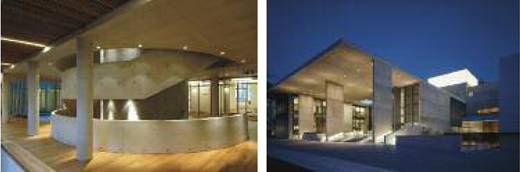
In the Buildings category the Jury was particularly impressed by the engineering challenges met by these structures. In all of the nominated buildings, structural concrete is largely exposed, highly visual, and demonstrates the elegance and aesthetics of this marvelous structural material. The Jury was struck by the high quality of concrete surface finishes, which were often extremely well set in scene by creative use of artificial or natural light. The Jury felt the selected structures will greatly promote the excellence of structural concrete in building construction.
Entries in the Civil Engineering Category showed overall a high level of quality. The most remarkable structures used either an arch as the main structural element or were cable-supported or used a combination of both. This very effective use of the structural materials resulted in particularly elegant and “light” structures. Similar to the buildings, high quality concrete surface finishes contributed significantly to the very pleasing aesthetics of the structures.
Another aspect that stood out was the ingenuity of some of the construction methods used. The nominated structures show that concrete is the material of choice for short to very long span bridges, and for structures in severe environments.
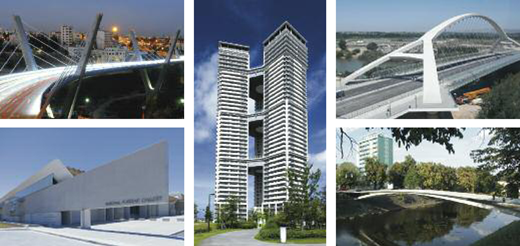
The selected Winners, Special Mention recipients and Nominated structures in both categories of the 2010 fib Awards for Outstanding Structures competition are as follows.
Winning structures
Category B, Buildlings
National Portrait Gallery, Parkes Australian Capital Territory
Island Tower Sky Club, Fukuoka City, Japan
Category C, Civil Engineering Structures
Third Millennium Ebro River Bridge, Zaragoza, Spain
Svratka River Pedestrian Bridge, Brno, Czech Republic
Wadi Abdoun Bridge, Amman, Jordan
Special mention recipients
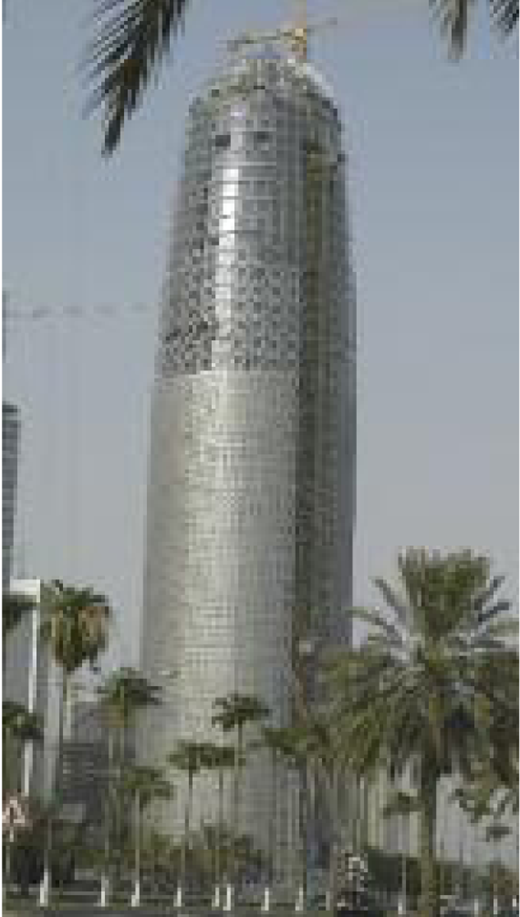
Category B, Buildlings
Gyldendalhuset, Oslo, Norway
Grand Rapids Art Museum, Michigan, USA
Doha High Rise Office Building, Doha City, Qatar
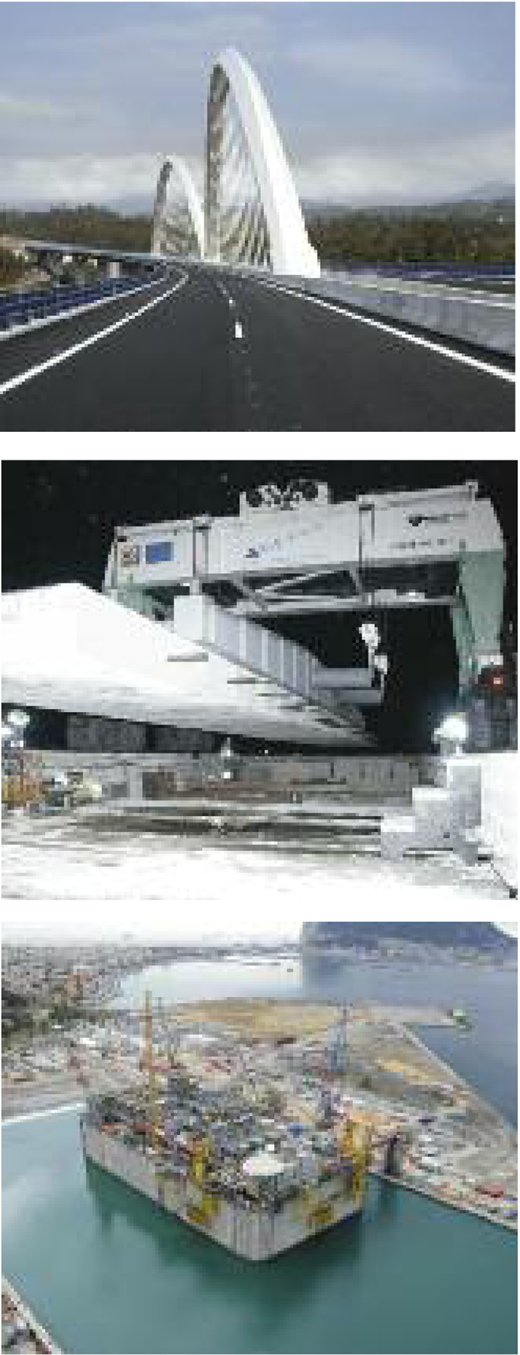
Category C, Civil Engineering Structures
Navia Viaduct, Asturias, Spain
Ferney Tunnel, Geneva, Switzerland
Adriatic LNG Terminal GBS, Spain (construction)/Italy (location)
Nominated structures
Category B, Buildlings
New Elephant House, Copenhagen Zoo, Denmark
Logan Airport Central Parking Garage repairs and expansion, Boston, USA
National Technical Library, Prague, Czech Republic
Category C, Civil Engineering Structures
Montabliz Viaduct, Cantabria, Spain
Labe River Bridge, Nymburk, Czech Republic
Sutong Bridge, Jiangsu province, China
Viaduct over Trois Bassins Ravine, Reunion Island
Sohlbergplassen, Lake Atna, Norway
Seishun Bridge, Gumma, Japan
Sound Transit Central Light Link Rail, Tukwila Segment, Seattle, USA
Ontur Terminal Oceanic Wharf, Nueva Palmira, Uruguay
Glenmore/Legsby Pedestrian Overpass, Calgary, Canada
Pont Gustave Flaubert, Rouen, France
Odra River and Antosovice Lake Bridge, Ostrava, Czech Republic
Ohmi-Ohdori Bridge, Shiga, Japan
Koroshegy Viaduct, Hungary
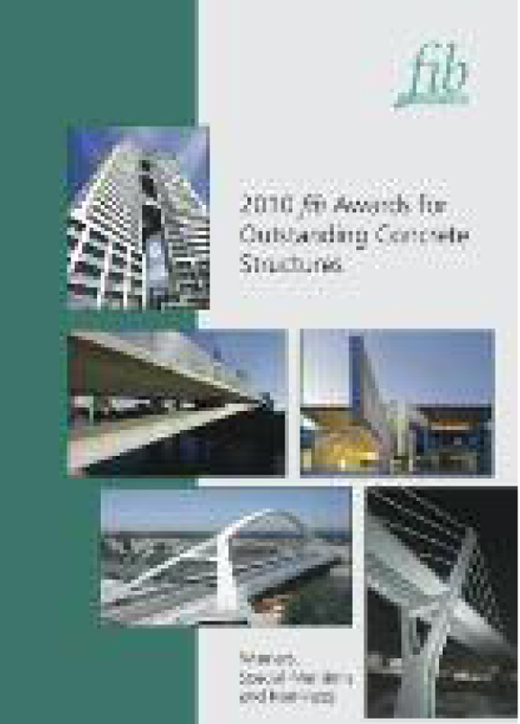
fib has published a full-colour commemorative brochure presenting the structures selected as Award Winners, Special Mention recipients, and Nominees. It can be ordered from the secretariat using the order form given at www.fib-international.org/publications/order.
The next edition of the Outstanding Structure Awards will be presented at the 4th fib Congress in Mumbai, India. The call for entries for the 2014 Awards will be dispatched in mid-2013.
The submitted structures must have the support of an fib Head of Delegation or National Member Group Secretary in order to confirm the authenticity of the indicated authors. The submitted structures must have been completed during the four years prior to the year of the Congress at which the awards are attributed (i.e. 2010–2013). The jury may accept an older structure, completed one or two years before, provided that it was not already submitted for the previous award attribution (Washington, 2010).
For further information, visit www.fib-international.org/about/awards, or contact the secretariat: fib@epfl.ch.
Publication of the fib Model Code 2010: first complete draft
The publication of the first complete draft of the 2010 Model Code is a landmark in the development of codes and in the technical work of fib. This article provides some background on the Model Code, and gives an overview of the content of the new 2010 edition. It should be noted that this is edition not yet the final version of Model Code; it is an intermediate draft that is intended for review and critique by the experts of the fib Commissions. This first complete draft will then be revised, and the definitive Model Code will subsequently be approved by the fib General Assembly.
In 1978 the first Model Code for Concrete Structures was published. It was a product of cooperation between CEB and FIP, two international bodies aiming at synthesizing research findings, defining new research directions and producing design recommendations. This Model Code had a considerable impact on the national codes of many countries.
The CEB/FIP Model Code 1990, which was the next in the series, was a major step toward international harmonization of codes. It served as a basis for the Eurocode for Concrete Structures, which is now introduced in most European countries.
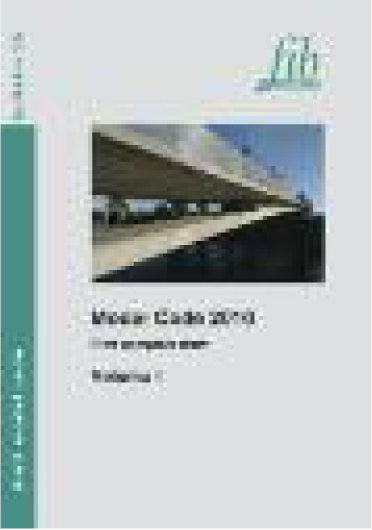
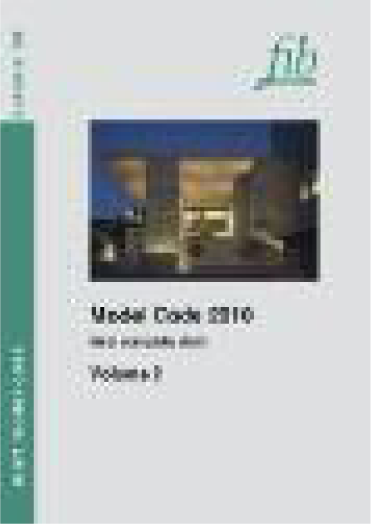
Twelve years after the publication of MC90, it was decided to prepare an updated edition of the Model Code. The first meeting of the Model Code Preparation Group was held in May 2002 in Delft, The Netherlands. The last, and 15th, meeting was in held by fib Special Activity Group 5, “New Model Code”, in November 2009 in Oslo. The first complete draft of the fib Model Code 2010, now published in two volumes as Bulletins 55 and 56, is the result of the sustained efforts of this group.
Compared to the Model Code 90, a number of new innovative aspects have been included in the new edition. The most important is the introduction of time as a design parameter. “Time” is related to the awareness that a structure should not only be sufficiently safe and serviceable, but should as well have sufficient resistance against deterioration. In this respect not only the intrinsic resistance at the start of the service life of the structure should satisfy the relevant design criteria, but also a strategy for maintenance should also have been developed.
The fib Model Code 2010 is thus much more “life cycle” oriented than its predecessors. This is reflected in the organisation of its content, which is presented in the following sequence: conceptual design, dimensioning, construction, conservation, and even dismantlement. Reliability plays an important part: various methods are offered to cope with this aspect. The choice depends on the case considered. The materials concrete and reinforcing or prestressing steel are described according to the latest state-of-the-art. The design of concrete structures is described for a large number of conditions. This includes static and various types of non-static loading, a large range of temperatures and several environmental conditions. Design criteria are given with relation to reliability, functionality, durability and sustainability, where the last category is in the state of development. Moreover particular techniques are addressed, such as analysis of structures by numerical analysis and design by testing. The chapter on conservation of structures provides insights into the degradation of concrete as a function of various types of environmental conditions. The analysis can be carried out with various levels of sophistication. Attention is given to non-traditional types of reinforcement as well, like steel fibres and FRP, which have reached a status of recognition in the previous years.
The Model Code for Concrete Structures is intended to serve as a basis for future codes. While existing operational codes are legal documents, the Model Code takes into account new developments with respect to concrete structures, the structural material concrete and new ideas for requirements to be formulated for structures in order to achieve optimum behaviour according to new insights and ideas. In this edition of the Model Code, those new ideas refer not only to classical requirements for safety and serviceability, but also take into account the increasing significance of design criteria for durability and sustainability.
The Model Code is also intended as a source of information for updating existing codes or developing new codes for concrete structures. While a normal operational code mainly gives sets of application rules which should be transparent enough to be applied by professional designers while still being accurate enough to be economical, the Model Code also aims to provide background information, show trends, and indicate where further research is necessary. At the same time, the Model Code is also intended to be an operational document for normal design situations and structures.
This edition of the Model Code gives an extensive state-of-the-art regarding material properties for structural concrete. This includes constitutive relations for concrete up to strength class C120, and properties of reinforcing and prestressing steel, including prestressing systems. Special attention is given to the application of fibre concrete for structural applications, and to the application of non-metallic reinforcement.
Special attention is also given to interface characteristics, to verification assisted by numerical simulations and verification assisted by testing, and to a number of important construction aspects.
Design rules for serviceability and ultimate limit states are given for a wide range of conditions, such as static and non-static loading (fatigue, impact and explosion, earthquake), high and low temperatures (fire and cryogenic). Furthermore limit states for durability are given. Design for sustainability will be an important task in the future; here some initial ideas are given. Design for robustness is also given due attention.
An important chapter within the scope of design for service life is Conservation. This chapter deals with conservation strategies and conservation management, condition survey and conditions assessment, decision-making, interventions and recording. To complete the idea of life cycle design, a final short chapter on dismantlement, removal and recycling is included. In the future this aspect deserves better integration within life cycle design.
This document is the first complete draft of the fib Model Code 2010, and as such, it is open to suggestions for improvement. After comments and feedback have been received from the fib Commissions and duly taken into consideration, the final document will be submitted to the fib General Assembly for discussion and approval. The publication of the final version of the fib Model Code 2010 will then follow.
fib Bulletins 55 and 56 were dispatched to fib members in May 2010.
fib Bulletin 55, Model Code 2010 - First complete draft, Volume 1 (chapters 1-6), March 2010, 318 pages, ISBN 978-2-88394-95-6. Non-member price: 140 CHF, surface mail included.
fib Bulletin 56, Model Code 2010 - First complete draft, Volume 2 (chapters 7-10), April 2010, 312 pages, ISBN 978-2-88394-096-3. Non-member price: 140 CHF, surface mail included.
To order these or any other fib, CEB or FIP publications, visit www.fib-international.org/publications.
This Model Code is the result of invaluable contributions by the international experts who participated in its development:
Convener: Joost Walraven*
Secretary: Agnieszka Bigaj-van Vliet*
György L. Balázs*
Evan Bentz
Isabel Burkart
John Cairns*
Jan Cervenka*
Vladimir Cervenka
Hugo Corres Peiretti*
Edoardo Cosenza*
Bernard Creton
Menfred Curbach
Frank Dehn
André Demonté
Marco di Prisco*
Rolf Eligehausen*
Horst Falkner*
Michael N. Fardis*
Stephen Foster*
Hans-Rudolf Ganz*
Christoph Gehlen
Mette Glavind
Steinar Helland*
Niels Peter Høj*
Manfred Keuser*
Jean-Francois Klein*
Johann Kolleger*
Giuseppe Mancini*
Peter Marti*
Stuart Matthews*
Stijn Matthys
Viktor Mechtcherine
Marco Menegotto*
Harald S. Müller*
Aurelio Muttoni
Paolo PInto*
Giovanni Plizzari
Norbert Randl*
Hans-Wolf Reinhardt
Steen Rostam*
Miguel Fernandez Ruiz
Koji Sakai*
Peter Schiessl*
Viktor Sigrist*
Luc Taerwe*
Thanasis Triantafillou
Tamon Ueda*
Aad van der Horst*
Lucie Vandewalle
Ton Vrouwenvelder
James K. Wight*
Jun Yamazaki*
* Member of fib Special Activity Group 5, “New Model Code”.
Obituary
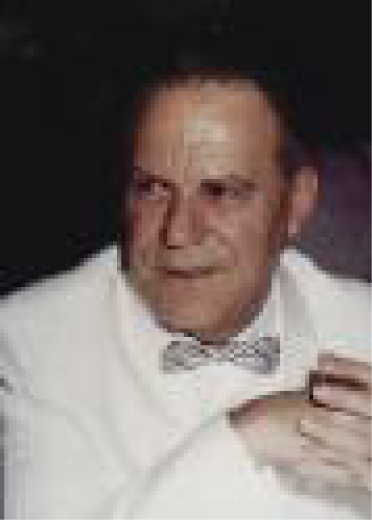
Born and brought up in West Berlin, Germany, Manfred studied Civil Engineering at the University of Technology, Berlin. In 1955 he became a scientific assistant at this university, where he earned his PhD in 1961. In 1960, he joined the German Concrete Society (DBV) where he eventually spent his entire career. In 1966, he was appointed Director, in 1978 Director-General and in 1981 Managing Member of the DBV Presidium. In 1995 he retired after 35 years of service for DBV.
In 1964, he became an active member of CEB, the European Committee for Concrete. At that time, CEB began work on its future “International recommendations”, published in 1978 as “CEB/FIP Model Code”. Manfred was one of the main authors of this important document which became the basis for various codes and standards worldwide. In 1979, a small CEB Group chaired by Franco Levi was charged by the European Union with the development of the first version of Eurocode 2 which was published in 1984. Manfred Stiller was also member of this group.
In 1980, Manfred was elected member of the CEB Administrative Council and Head of the German delegation. Re-elected several times, he served in these positions until 1993.
Regarding FIP, the International Federation for Prestressed Concrete, Manfred was Secretary and Member of the German FIP Delegation. He was organizer of the XI FIP Congress 1990 in Hamburg. In the course of this congress, he received an Honorary Membership in FIP.
In 1993, a CEB-FIP Implementation Group was established in order to create a joint association, fib. Manfred was one of the CEB representatives in this body. Also due to his efforts, the merger was realized in 1998 during the XIII Congress of FIP.
During his long career, Manfred received many honours and awards at home and abroad. In particular, he was recognised by CEB with an Honorary Membership in 1993 for his contributions to international relations during more than 35 years.
Manfred Stiller passed away in the morning of the 1st February 2010. We express our deepest sympathies to his wife Irmgard and to his daughter Sabine as well as her family.
Short notes
The Third Millennium Bridge over the Ebro River has not only been honored by the fib Awards for Outstanding Concrete Strucutres (see page 109), its designer Dr. Juan José Arenas was awarded the Gustave Magnel Gold Medal in recognition of his work on this structure.
Short news items from the fib secretariat are available via an “RSS feed”. This web-based service allows users to subscribe to regular information updates, such as announcements of new bulletins and upcoming fib events. To subscribe to fib's RSS feed, go to the fib home page, www.fib-international.org, and click on the orange RSS icon that appears in the address bar of your browser.
The fib secretariat continues its initiative to achieve a broader distribution of fib bulletins among students. University professors in civil engineering who are subscribing members in fib, or Individual Representatives of a corporate member, and wish to use an fib bulletin as part of their course materials can now apply for a PDF version of the bulletin. The bulletin will be provided at the normal member price (50 % off the non-member price), along with a special waiver allowing its free distribution, in electronic or printed form, to all students enrolled in the course, under the sole condition that the bulletin shall not be made available to third parties outside of the course.
For further information on obtaining PDF files of fib bulletins for teaching purposes, contact the secretariat at fib@epfl.ch
Congresses and symposia
The calendar lists fib congresses and symposia, co-sponsored events and, if space permits, events supported by fib or organised by one of its National Groups. It reflects the state of information available to the Secretariat at the time of printing; the information given may be subject to change.
fib-news is compiled, drafted by and produced under the sole responsibility of the Secretary General as an integral part of the fib journal Structural Concrete. Members of fib or participants in its work (for ex. members of one of its Commissions, Task Groups or Working Parties) are invited to submit to the secretariat any information they would want to disseminate through fib-news. Although the secretariat does its best to ensure that the published information is accurate, no liability or responsibility of any kind (including liability for negligence) is accepted in this respect by fib or its Secretary General. Contributions signed by an author were invited by the secretariat or proposed by the authors. They are published under the sole responsibility of the authors and, contrary to papers in the Journal itself, they are not submitted to a peer review process. Recent issues of fib-news are available free of charge as pdf files on the fib website, www.fib-international.org.
©fib 2010. fib, Case Postale 88, CH-1015 Lausanne, Switzerland. Tel: +41 21 693 2747; Fax: +41 21 693 6245; Email: fib@epfl.ch
fib - fédération internationale du béton - the International Federation for Structural Concrete - is grateful for the invaluable support of the following National Member Groups and Sponsoring Members, which contributes to the publication of fib technical bulletins, the Structural Concrete Journal, and fib-news.
National Member Groups
AAHES - Asociación Argentina delHormigón Estructural, Argentina
CIA - Concrete Institute of Australia
ÖVBB - Österr. Vereinigung Für Beton und Bautechnik, Austria
Belarussian Nat. Techn. University, Belarus
GBB - Groupement Belge du Béton, Belgium
ABCIC - Associação Brasileira da Construção Industrializada de Concreto, Brazil
ABECE - Associação Brasileira de Engenharia e Consultoria Estrutural, Brazil
fib Group of Canada
CCES - China Civil Engineering Society
Hrvatska Ogranak fib-a (HOFIB) – Croatian Group of fib
Cyprus University of Technology
Ceska betonarska spolecnost, Czech Republic
Dansk Betonforening DBF – Danish Concrete Society
Suomen Betoniyhdistys r.y. – Concrete Association of Finland
AFGC - Association Française de Génie Civil, France
Deutscher Ausschuss für Stahlbeton, Germany
Deutscher Beton- und Bautechnik-Verein e.V. – dbv, Germany
Technical Chamber of Greece
Hungarian Group of fib, Budapest Univ. of Tech. & Economics
The Institution of Engineers (India)
Management and Planning Organization, Iran
IACIE - Israeli Association of Construction and Infrastructure Engineers
Consiglio Nazionale delle Ricerche, Italy
JCI - Japan Concrete Institute
PCEA - Prestressed Concrete Engineering Association, Japan
Administration des Ponts et Chaussées, Luxembourg
Betonvereniging - fib Netherlands
New Zealand Concrete Society
Norsk Betongforening – Norwegian Concrete Association
Chancellery of the Polish Academy of Sciences
Committee of Civil Engineering, Concrete Structures Section, Poland
GPBE - Grupo Portugês de Betão Estrutural, Portugal
Society For Concrete and Prefab Units of Romania
Technical University of Civil Engineering, Romania
Association for Structural Concrete (ASC), Russia
Association of Structural Engineers, Serbia
Slovak Union of Civil Engineers
Slovenian Society of Structural Engineers
ACHE - Asociacion Cientifico-Técnica del Hormigon Estructural, Spain
Svenska Betongföreningen, Sweden
Délégation nationale suisse de la fib, ISBETON, EPFL, Switzerland
ITU - Istanbul Technical University, Turkey
Research Inst. of Build. Constructions, Ukraine
fib UK Group
ASBI - American Segmental Bridge Institute, USA
PCI - Precast/Prestress. Concrete Institute, USA
PTI - Post Tensioning Institute, USA
Sponsoring Members
Preconco Limited, Barbados
Liuzhou OVM Machinery Co., Ltd., China
Consolis Technology Oy Ab, Finland
Fachverband Beton- u. F. B.-W. e. V., Germany
FIREP Rebar Technology GmbH, Germany
MKT Metall-Kunststoff-Technik GmbH, Germany
Larsen & Toubro Ltd., ECC Division, India
Sireg S.P.A., Italy
Fuji P. S. Corporation Ltd., Japan
Kajima Corporation, Japan
Obayashi Corporation, Japan
Oriental Construction Co.Ltd., Japan
P. S. Mitsubishi Construction Co., Ltd., Japan
PC Bridge Company Ltd., Japan
SE Corporation, Japan
Sumitomo Mitsui Construct. Co. Ltd., Japan
BBR VT International Ltd., Switzerland
SIKA Services AG, Switzerland
VSL International Ltd, Switzerland
PBL Group Ltd., Thailand
CCL Stressing Systems Ltd., United Kingdom
Strongforce Engineering PLC, United Kingdom