


The Third fib Congress & Exhibition in Washington, D.C.: an unprecedented success
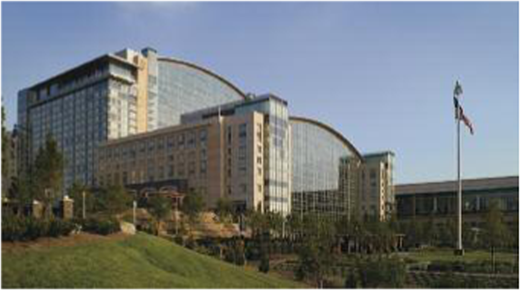
Venue of the Congress: the Gaylord National Resort and Convention Center, National Harbor, Maryland
Venue of the Congress: the Gaylord National Resort and Convention Center, National Harbor, Maryland
The Third International fib Congress and Exhibition (incorporating the PCI Annual Convention and Bridge Conference) took place from 29 May to 2 June 2010 and was an undisputed success, with more than 1,700 attendees, including 700 industry professionals from 56 countries around the world.
This unprecedented joint event took place at the Gaylord National Resort near Washington, D.C., and included over 125 educational sessions and hundreds of technical papers. Educational sessions covered tracks on architectural topics, research, sustainability, operations, business development, and executive subjects.
The Congress participants were welcomed at a reception held on Saturday evening, 29 May, in the Gaylord's vast exhibit hall, where they had ample room to mingle and get a first look at the over 90 exhibitors who would be on display during the following three days. At the opening ceremony breakfast on Sunday morning, 30 May, the Congress participants were extended a warm welcome by PCI President Jim Toscas and fib President Michael Fardis. They pointed out the excellent relationship and collaboration between PCI and fib, both in general and for the organization of the Congress, remarked on the notably high number of submitted papers, and on the unique nature of the joint event. PCI Chairman of the Board James Sorensen then took the podium and offered reflections on the role of PCI in the U.S. concrete industry.
During the awards portion of the ceremony, PCI President James G. Toscas, P.E., presented the PCI Fellows, Medal of Honor, Distinguished Educator, and Young Educator awards, and announced the 2010–2011 Leadership PCI Class. fib President Michael Fardis then presented the Freyssinet Medals for outstanding technical contributions in the field of structural concrete to Nigel Priestley of New Zealand and Jiri Strasky of the Czech Republic (see report on page 169). fib Honorary President Hans-Rudolf Ganz followed with the presentation of the 2010 fib Awards for Outstanding Concrete Structures (for details, see the June 2010 issue of fib-news). The ceremony then concluded with a keynote address by Jim Hartzfeld on “How to be more sustainable in your business”.
This impressive opening was followed by a full and varied technical program, which included the presentation of hundreds of peer-reviewed technical papers, including 53 papers on building systems, 160 papers on engineering and design, 160 on bridges and transportation, 86 papers on materials, and 25 papers on ultra-high-performance concrete. In addition, three sessions were reserved for reports by fib Commissions, and two for presentations by National Members. The delegations from Australia, the Czech Republic, Denmark, France, Germany, Hungary, India, Italy, Japan, Portugal, Slovakia, Spain and Switzerland had all published reports as books or CDs that were distributed to the Congress participants free of charge.
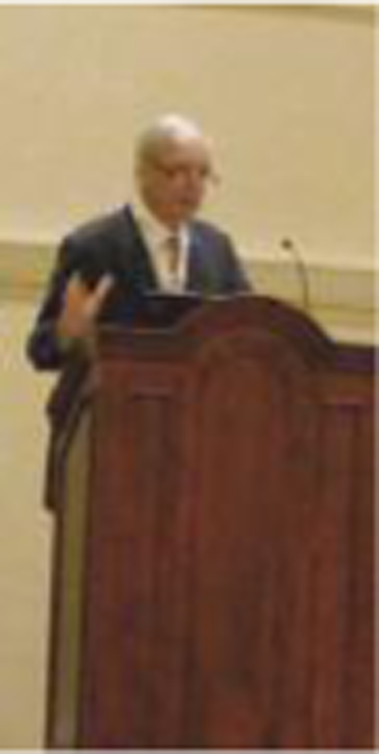
Professor Joost Walraven of Delft Technical University, the Netherlands, chaired the technical session on the first complete draft of the 2010 fib Model Code.
Professor Joost Walraven of Delft Technical University, the Netherlands, chaired the technical session on the first complete draft of the 2010 fib Model Code.
One of the highlights of the technical program took place on the last day of the Congress, with the presentation of the first complete draft of the 2010 fib Model Code for concrete structures (published as fib Bulletins 55 and 56; see the June 2010 issue of fib-news, pp 112-113) by Joost Walraven and several members of fib Special Activity Group 5, who have been developing and drafting the new Model Code since 2002.
The Congress concluded with a look back on the highlights of the event by fib and PCI Presidents Michael Fardis and Jim Toscas, presentations on upcoming fib events (the 2011 symposium in Prague, Czech Republic, and the 2014 Congress in Mumbai, India), and the traditional handing over of the Congress bell to the organizers of the 2014 Congress, represented by the Head of the Indian National Delegation, C.R. Alimchandani.
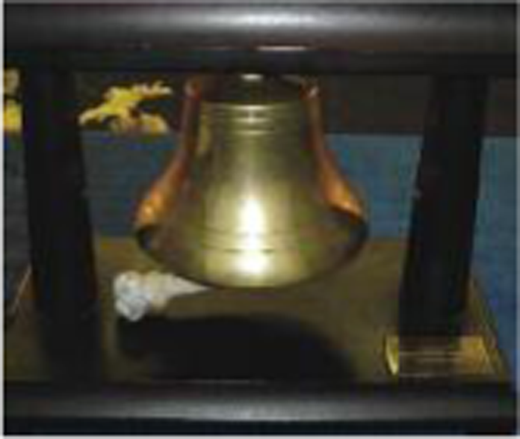
The FIP/fib Congress bell, now in the custody of the Indian National Delegation until the 2014 Congress.
The FIP/fib Congress bell, now in the custody of the Indian National Delegation until the 2014 Congress.
Social programs for the event included a memorable dinner cruise on the Potomac River and post-Congress tours of the nearby precast plants of Smith-Midland Corporation and The Shockey Precast Group.
Technical Council, General Assembly and Elections
The Congress program included meetings of fib Commissions, Task Groups, Special Activity Groups, the Technical Council and General Assembly, in parallel with PCI committee and council meetings. The fib Technical Council meeting included the usual Commission activity reports, as well as a brief presentation on the first draft of the 2010 Model Code and discussion of the review and approval process that will be followed in 2011 prior to the publication of the definitive version of the fib Model Code.
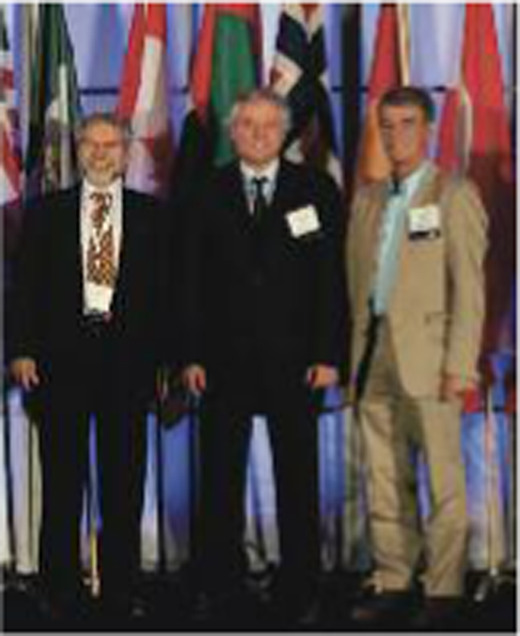
Current and future fib officers at the Washington Congress (from l to r): President Michael Fardis, Deputy President and President-elect György L. Balázs, and Deputy President-elect Gordon Clark.
Current and future fib officers at the Washington Congress (from l to r): President Michael Fardis, Deputy President and President-elect György L. Balázs, and Deputy President-elect Gordon Clark.
Elections were held by secret ballot during the General Assembly, and the following officers were elected:
President, 1st January 2011 - 31 December 2012: György L. Balázs (Hungary)
Deputy-President, 1st January 2011 - 31 December 2012: Gordon Clark (United Kingdom)
Four elected Presidium Members, 1st January 2011 - 31 December 2014: Hugo Corres (Spain), Harald Müller (Germany), Tor Ole Olsen (Norway), Jun Yamazaki (Japan)
As the Honorary Treasurer for 1st January 2011 - 31 December 2014, Hans-Ulrich Litzner was re-elected. Furthermore, the GA unanimously approved Honorary Life Memberships in fib for Hans-Ulrich Litzner and Jun Yamazaki (as reported on page 170).
Proceedings
The 2010 Congress proceedings (available on DVD; price: US$ 195) can be ordered by visiting www.pci.org, and then clicking on “Bookstore” under the Publications menu.
Freyssinet Medals awarded at the fib Washington Congress
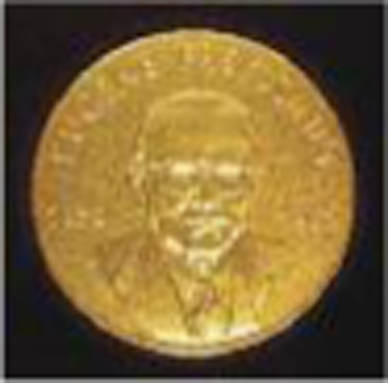
Awarded every four years at the occasion of an fib Congress, the Freyssinet Medal is the highest distinction awarded by fib. It is given “in recognition of outstanding technical contributions in the field of structural concrete”, and is a continuation of the Freyssinet Medals awarded by fib's predecessor organization, FIP (Fédération Internationale de la Précontrainte), since 1970.
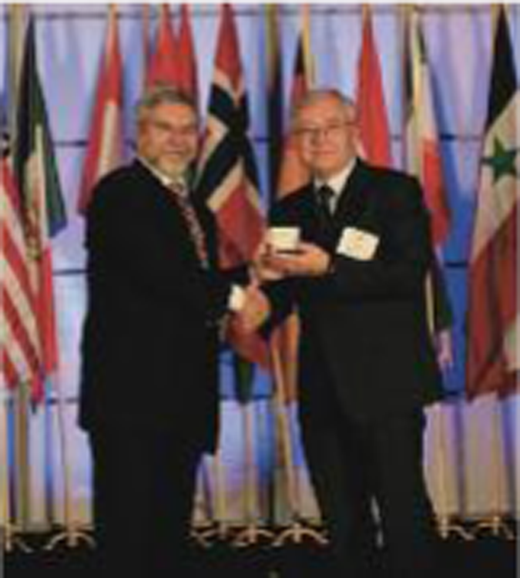
The two 2010 Freyssinet Medals were awarded by fib President Michael N. Fardis on 30 May 2010 to Dr. Nigel Priestley (New Zealand) and Dr. Jiri Strasky (Czech Republic), during the opening ceremony of the Third fib Congress and Exhibition (see previous article).
Nigel Priestley received his doctorate from the University of Canterbury, New Zealand, in 1967. He is Emeritus Professor of Structural Engineering at the University of California at San Diego, Emeritus codirector of the Rose School (Pavia, Italy), and also works as a consulting structural engineer. His research focuses on the seismic design of concrete and masonry structures, and on seismic design philosophy. He was coordinator of the PRESSS (Precast Seismic Structural Systems) Research program (1991–1999) for the development of recommendations for the seismic design of buildings constructed of precast concrete. The project culminated with the construction of a large-scale five-storey precast concrete building that was tested under simulated seismic loading.
Dr. Priestley's consulting work involves design, analysis or checking of seismic performance of new and existing structures. He has participated in, and coauthored reports for, numerous post-earthquake reconnaissance teams, including Chile (1985), Whittier (1987), Costa Rica (1990), Northridge (1994), and Kobe (1995). He was the leader of the seismic checking team for the Rion-Antirion Bridge, Greece, and was the co-concept designer for the repair, retrofit, and upgrading to 100% increase in seismic capacity of the Bolu Viaduct in Turkey (Duzce earthquake, 1999).
Dr. Priestley has published more than 650 books, technical papers and reports, mainly related to seismic design. He has received more than 30 international awards for his research. He is currently a member of fib Commission 7, Seismic design.
Jiri Strasky obtained his doctorate in 1981 from the Brno University of Technology, Czechoslovakia. He began his career with Dopravni Stavby Design and Construction Engineers, where he eventually became Chief Design Engineer and Vice-Manager of the Design Department. He spent three years with T.Y. Lin International (California, USA), as Project Manager or Engineer responsible for design/rehabilitation of suspension, cable-stayed and cantilever segmental bridges. Since 1991 he is the Technical Director of Strasky, Husty and Partners; since 1994 he is also Professor at the Technical University of Brno and works as a consulting engineer.
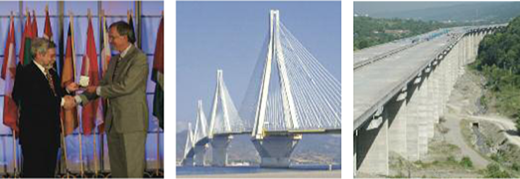
From left to right: Michael Fardis presents the Freyssinet Medal to Nigel Priestley; the Rion-Antirion Bridge, Greece, for which Dr. Priestley led the seismic checking team; Bolu Viaduct, Turkey, for which he was the co-concept designer for the repair, retrofit, and upgrading to 100% increase in seismic capacity.
From left to right: Michael Fardis presents the Freyssinet Medal to Nigel Priestley; the Rion-Antirion Bridge, Greece, for which Dr. Priestley led the seismic checking team; Bolu Viaduct, Turkey, for which he was the co-concept designer for the repair, retrofit, and upgrading to 100% increase in seismic capacity.
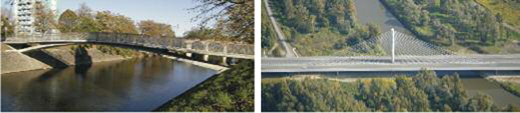
Two of Dr. Strasky's designs were selected in the 2010 fib Awards for Outstandng Structures competition: (left to right) the Svratka River Pedestrian Bridge (winner), and the Odra River Bridge (nominated structure)
Two of Dr. Strasky's designs were selected in the 2010 fib Awards for Outstandng Structures competition: (left to right) the Svratka River Pedestrian Bridge (winner), and the Odra River Bridge (nominated structure)
He specializes in concrete and steel bridge design and construction, with expertise in nearly all systems (suspension, stress-ribbon, cable-stayed, arch, cantilever, segmental, post-tensioned, precast, composite). He has developed new design and construction concepts and has experience with elastic and plastic design of bridges built in severe seismic areas of California, Oregon and Taiwan.
Dr. Strasky has published two books, contributed to six books and published over 100 technical papers. He has won numerous awards for his design work, including the 2010 fib Award for Outstanding Concrete Structures for the Svratka River Pedestrian Bridge and the 1994 FIP Award for Outstanding Concrete Structure for the footbridge over the Vranov reservoir both in the Czech Republic, as well as several achievement awards, including the fib Medal of Merit (1999). He is currently a member of fib Commission 1, Structures.
Honorary Memberships
Honorary life memberships are given by the fib General Assembly in recognition of significant personal contributions to the work of fib. At the Washington 2010 General Assembly, honorary memberships were bestowed on Hans Ulrich Litzner (Germany) and Jun Yamazaki (Japan).
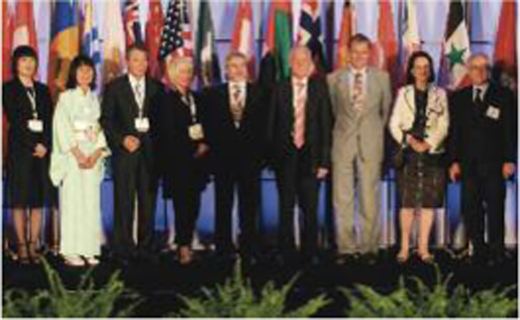
Honorees at the Washington Congress, with family members (from left to right): Akiko Yamazaki, Yoshiko Yamazaki, Jun Yamazaki, Kirsten Litzner, Michael Fardis, Hans Ulrich Litzner, Nigel Priestley, Tonia Fardis, Jiri Strasky
Honorees at the Washington Congress, with family members (from left to right): Akiko Yamazaki, Yoshiko Yamazaki, Jun Yamazaki, Kirsten Litzner, Michael Fardis, Hans Ulrich Litzner, Nigel Priestley, Tonia Fardis, Jiri Strasky
fib Honorary Memberships continue the traditions established by its predecessors CEB and FIP since 1970. For further information on fib awards and honors, see www.fib-international.org/about/awards.
New fib TG 8.10: Performance-based specifications for concrete
1. Background
Recent advances in cementitious material and chemical admixture technology, as well as the growing use of recycled materials have supported the increasing use of modern types of concrete that are not covered in existing codes and specifications and which are tailor-made for a specific application or project.
Traditional prescriptive requirements for constituent materials, limiting water/binder ratios and cement contents are often not applicable for modern construction. The prescriptive design philosophy is largely based on the (often misleading) assumption that different concretes with similar mix proportions result in similar performance. With this approach, the combined influences of constituent material selection, construction procedures and ambient environmental conditions cannot adequately be accounted for.
In contrast, performance-based specifications relate to certain performance criteria that can be defined for a particular application. As such, performance-based specifications make demands on particular fresh or hardened concrete properties rather than on the concrete's composition. Performance-based design and specification therefore include the testing of relevant concrete properties and the evaluation of test results based on agreed conformity requirements.
With the advancement of testing methods for concrete, performance-based design and specification of concrete and concrete structures is possible and already applied in practice. The most widely accepted performance-based design approach is for compressive strength, which has been used for more than a century. For many applications, however, compressive strength alone is not a sufficient performance indicator, as the relationship between compressive strength and other important properties may vary widely between different types of concrete. More recently, performance-based design approaches in combination with suitable test methods were developed for concrete durability and are already applied in practice in some countries. In addition to compressive strength and durability, other properties (e.g. elastic/plastic deformations, fresh concrete properties, thermal characteristics during and after hardening, strength development, ductility, crack resistance, etc) need to be considered.
fib Task Group 8.10 aims to present the state of the art on performance-based specification and testing methods applied to modern concrete structures around the world. Guidelines and recommendations for testing and specification methods, including relevant conformity criteria and limiting design values, will be developed and presented to industry. Furthermore, TG 8.10 aims to form a common base for the initiation of national and international collaborations and research projects leading to pre-normative or even normative specifications. An important underlying intention of TG 8.10 is close cooperation with RILEM as an organization and with relevant RILEM Technical Committees, in order to successfully cover the combined fields of concrete material technology and structural engineering.
The conveners of TG 8.10 are Prof. Frank Dehn, MFPA Leipzig GmbH, Germany, and Dr. Hans Beushausen, University of Cape Town (UCT), South Africa.
2. Scope
The anticipated scope of TG 8.10 will combine the fields of concrete material technology, structural engineering and testing technology (non-destructive and destructive testing). TG 8.10 intends to cover all relevant concrete material properties for which performance-based specifications need to be developed to allow for rational application of modern concrete technology.
3. Membership
TG 8.10 is targeting professionals involved in the fields of structural engineering, concrete materials technology and testing technology. One particular intention is to invite members from RILEM to contribute in order to combine the expertise of the two organizations. The suggested size of the group is about 40 members.
4. Time plan
The estimated duration of fib Task Group 8.10 is four years, during which the work will be subdivided into three phases:
Phase 1 (July - December 2010): Orientation, invitation of members
Phase 2 (January 2011 - December 2012)
Preparation of a State of the Art Review on performance based specification and testing methods
March 2011: First fib Workshop on performance based specifications for concrete structures
Phase 3 (January 2013 - June 2014)
Preparation of concrete technological and structural design recommendations
June 2014: Presentation of a pre-normative document that can be included in codes and standards
Meetings are planned to be held yearly or half-yearly. Additional meetings may be arranged for Working Parties.
5. Workshop on performance based specifications for concrete
The workshop will take place on 24–25 March 2011 in Leipzig, Germany. A public announcement and call for papers will be made in August 2010. The workshop should have a maximum of 100 participants and presentation between 40–50 peer-reviewed papers. The Scientific Review Committee for the papers will consist of the Task Group members.
6. Planned cooperation between TG 8.10 and RILEM
The work of TG 8.10 is to be carried out in close cooperation between members of fib and RILEM. Relevant existing RILEM Technical Committees (for example, TC 230 PSC - Performance-based Specification and Control of Concrete Durability) will be approached in order to find a basis for collaboration. State-of-the-Art reports of concluded RILEM TCs will provide a useful source of information and where needed, members of such concluded TCs may be approached for further discussion. In addition, the work of fib TG 8.10 is expected to yield research needs and research topics. Here, it would be useful if the identification of research needs resulted in the creation of new RILEM TCs.
7. Tasks of fib TG 8.10
Provision of concrete technological background and development of practical questions
Evaluation of existing or new test methods for performance-based assessment of concrete
Assessment and/or development of principles for performance-based specifications and compliance control
Development of (new) design concepts and models for performance-based concretes and concrete structures and transfer of the concepts into practice
Persons interested in getting involved in the work of fib Task Group 8.10 and/or in participating in the Leipzig workshop can contact the conveners Frank Dehn (dehn@mfpa-leipzig.de) or Hans-Dieter Beushausen (iccrrr@eng.uct.ac.za).
Dr.- Ing. Frank Dehn
Chair of fib Commission 8, Concrete
2011 fib Achievement Award for Young Engineers
The fib Achievement Award for Young Engineers (formerly called “fib Diploma to Younger Engineers”) has been awarded every two years at an fib symposium since 2001. The award includes a €2000 cash prize and certificate of achievement. Submissions are now open for the 2011 edition, which will be presented during a special ceremony at the upcoming fib symposium in Prague, Czech Republic, (June 2011). This edition of the award is sponsored by the Norwegian National Member Group in fib, in memory of the late Norwegian engineer Ivar Holand.
Candidates for the 2011 award must be proposed or supported by the fib National Member Group in their country; candidate applications without such support will not be accepted. Entries will be judged by an international jury chaired by Prof. Hugo Corres Peiretti. Entries are to be submitted to Prof. Corres and to the fib secretariat, in accordance with the procedures described below.
The Award is attributed in two categories, Research and Design & Construction
Research Award
The candidate shall be nominated on the basis of his/her Ph.D. thesis. The candidate must submit a copy of the original thesis plus a written summary in English of about five to 10 pages (even if the original is in English). This summary should include all relevant information to assess the technical level, importance and innovative quality of the thesis. The thesis should have been submitted to and accepted by the competent university authorities in the years 2006 to 2010.
Design & Construction Award
The candidate (note: a single candidate, not a group) should be nominated on the basis of a written report on practical design or execution work realized by her or him.
This report must be in English and should be about 10 pages long, including documentation such as photos, plans, etc. It should also specify the level or responsibility of the candidate and, if applicable, include any relevant information on remarkable, innovative or outstanding aspects of the work.
General conditions and entry procedure
Candidates are only eligible for the 2011 Award if born in 1972 or later.
Submission of proposals must be received by 30 November 2010, preferably in electronic form. They must be sent to to the fib secretariat (fib@epfl.ch) as well as to the chairman of the jury:
Prof. Dr. Hugo Corres Peiretti
FHECOR Ingenieros Consultores
C/ Barquillo 23, 2.° Izq.
28004 Madrid, Spain
Email: hcp@fhecor.es
The National Delegation (fib delegate or deputy for the candidate's country) must provide written confirmation that they support the candidate (an email is sufficient). In addition, every submittal must contain:
the candidate's thesis summary or practical report as mentioned above;
if applicable, one paper copy of the thesis in its original language, to be sent only to the chairman of the Jury;
the curriculum vitae of the candidate in English;
his/her full contact information, including phone number and e-mail address,
a passport-type photo.
The total number of candidates proposed per country in each category must not exceed the number of votes that country has in the General Assembly of fib.
The candidates should be prepared and willing, if selected as winner, to participate in the 2011 symposium (see below) and to write a paper on their work to be published later in fib-news.
An international jury of experts will select the winners in each category.
fib will invite the winners in each category to present and discuss their work during a special session at the Prague symposium.
This invitation will include:
the cost of an economy class plane ticket from the candidate's domicile to Prague,
free participation in the symposium, and
a 500 CHF contribution to the candidate's accommodation expenses.
In addition, the winners will be invited to report on their work in fib-news.
Full details on the award and the application procedure will be available from the fib website at www.fib-international.org/awards.
Successful PhD symposium at the Technical University of Denmark
The 8th International fib Ph.D. Symposium in Civil Engineering took place 20-23 June 2010 at the Technical University of Denmark (DTU). 106 Ph.D. students from 28 countries and five continents presented their work; it was therefore a truly an international event. Altogether, 27 technical sessions were held during the three days. The sessions were divided into the following topics
Structural analysis and design
Innovative structural systems
Advanced materials
Sustainability and cost efficiency
Strengthening and repair
Monitoring
The Symposium was opened by the University President of DTU Lars Pallesen, followed by the Director of the Department of Civil Engineering at DTU Professor Henrik Stang, Professor György L. Balázs (Hungary) as the initiator of this series of symposia, and Associate Professor Mette Geiker, representing the Organizing Committee. Subsequent to the technical sessions a key-note lecture on “Principles on advancing engineering knowledge” was given by Professor Michael Faber, ETH, Zürich (Switzerland).
The social events varied from a barbecue, a reception at the impressive City Hall of Copenhagen and a buffet dinner with typical Danish dishes chaired by Associate Professor Gregor Fischer.
Following the tradition, the following awards were given to outstanding papers and presentations:
fib 1st prize – 1000 € (sponsor: Knud Højgaards Fond): Laetitia Martinie, LCPC (France)
fib 2nd prize – 750 € (sponsor: Danish Concrete Society): Talayeh Noshiravani, EPFL (Switzerland)
fib 3rd prize – 500 € (sponsor NanoCem): Christian Fischer, Univ. of Stuttgart (Germany)
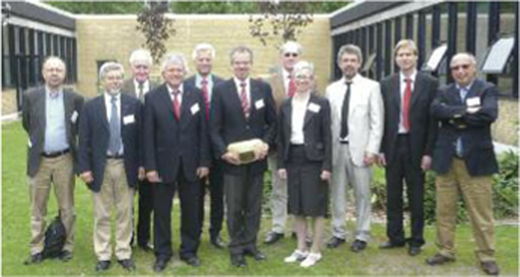
From left to right: Jos Brouwers (TU Eindhoven), Michael Fardis (fib President, Univ. Patras), Hans-Wolf Reinhardt (Stuttgart), György L. Balázs (Budapest Univ. of Tech. and Economics), Eugen Brühwiler (EPF Lausanne), Harald Müller (Univ. Karlsruhe), Henrik Stand (DTU), Mette Geiker (DTU), Lars-Olof Nielsen (Sweden), Ole Hededal (DTU), Giuseppe Mancini (Politecnico Milano)
From left to right: Jos Brouwers (TU Eindhoven), Michael Fardis (fib President, Univ. Patras), Hans-Wolf Reinhardt (Stuttgart), György L. Balázs (Budapest Univ. of Tech. and Economics), Eugen Brühwiler (EPF Lausanne), Harald Müller (Univ. Karlsruhe), Henrik Stand (DTU), Mette Geiker (DTU), Lars-Olof Nielsen (Sweden), Ole Hededal (DTU), Giuseppe Mancini (Politecnico Milano)
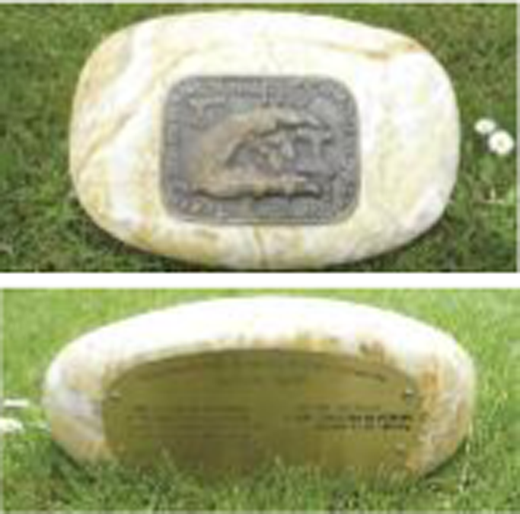
The Symposium Stone, which symbolizes the “burden” of organizing the symposium, was passed from the Danish organizers to the organizers of the 2012 Ph.D. symposium in Karlsruhe, Germany.
The Symposium Stone, which symbolizes the “burden” of organizing the symposium, was passed from the Danish organizers to the organizers of the 2012 Ph.D. symposium in Karlsruhe, Germany.
Ernst & Sohn achievement awards:
Malgorzata Kalicka, ETH Zürich (Switzerland)
Stefan Lips, EPFL (Switzerland)
Ahmed Mohammed, Univ. of Tokyo (Japan)
One year student membership in fib:
Prize winners (see above)
Barbara Ebert, ETH Zürich (Switzerland)
Thomas Roggendorf, RWTH, Aachen (Germany)
Karl Telleen, EPFL (Switzerland)
Benjamin Freiherr von Wolf-Zdekauer, Technical Univ. Damstadt (Germany)
The Symposium was closed by Associate Professor Ole Hededal who presented the awards, followed by the president of fib Michael Fardis (Greece) and Deputy President György L. Balázs (Hungary). Finally Mette Geiker of the Danish Organizing Committee handed over the Symposium Stone to Prof. Harald Müller of the Univ. of Karlsruhe (Germany), who will host the 9th International fib Ph.D. Symposium in Civil Engineering in 2012.
Mette Geiker
Technical University of Denmark
International Precast Seminar, Sao Paulo, Brazil
The V International Precast Seminar, was held April 29, 2010 in São Paulo, Brazil. Organized by ABCIC (Brazilian Precast Association), it received moral support from fib and also from national associations. There were more than 150 attendees, including academics, industry professionals, architects and design engineers. There was emphasis on architecture, precast housing, infrastructure and sustainability.
The construction boom that began in Brazil a few years ago is growing by the year. The 2014 soccer World Cup tournament and the 2016 Olympic Games are approaching and the upcoming construction of new sport stadiums and the upgrading of existing sports facilities, large infrastructural projects, enlargement of airports, implantation of high-speed trains, hotel, etc., are increasing the demand for precast building systems. In addition, the development program of Brazilian government requires speed of construction, high quality, low maintenance and controlled costs.
fib Presidium member Hugo Corres Peiretti presented the special requirements and challenge for using prefabrication in high speed railway bridges. David Férnandez–Ordónez (Convener of fib Task Group 6.7, Affordable housing), presented prefabrication for low cost or affordable housing. Brazilian architect Sidônio Porto talked about their projects and use of precast concrete since 1966. Sérgio Coelho (architect) presented the project for the Cuiabá stadium in mixed construction with precast concrete, part of the World Cup 2014 infrastructure. Sérgio Leusin (Professor at the University Federal of Rio de Janeiro) presented the recent standard approved in Brazil for modular coordination and Roberto Bauer (Civil engineer and president of Falcão Bauer Institute) discussed precast construction and sustainability.
Brazil became a statutory member of fib in 2008. ABCIC, represented by Marcelo Ferreira and Íria Lícia Oliva Doniak (both of whom are members of fib commission 6, prefabrication), together with ABECE (Brazilian Consultancy and Structural design Association) constitute the Brazilian National Group.
Íria Lícia Oliva Doniak
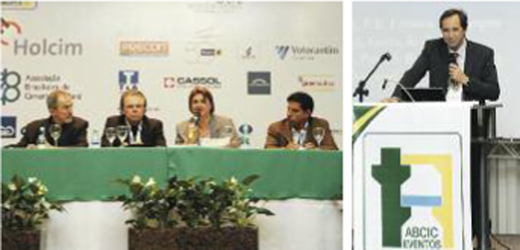
Left photo: Hugo Corres Peiretti, Sidônio Porto, Íria Doniak, Sérgio Coelho, during a discussion of the presentations.
Right photo: David Férnandez–Ordónez.
Left photo: Hugo Corres Peiretti, Sidônio Porto, Íria Doniak, Sérgio Coelho, during a discussion of the presentations.
Right photo: David Férnandez–Ordónez.
Congratulations to Petro I. Kryvosheyev on his 75th birthday
Prof. Kryvosheyev has had a long and illustrious career at NIISK in Kiev, where he began in engineering and scientific positions in 1960, and of which he became director in 1992. Throughout the years he has been a leader and innovator in the Ukrainian building industry, and has guided the development of NIISK as an important research centre with regional departments throughout the country.
His achievements include the construction of a number of modern multi-storied buildings in Ukraine, and the renovation and restoration of important Ukrainian national monuments.
As head of the Ukrainian consortium he played an important role in the study of the Chernobyl nuclear power plant containment problem, and the development of the new confinement system to replace the one built in 1986.
Prof. Kryvosheyev was the Scientific Secretary of the Ukrainian Department of the Soviet FIP Group from 1965 to 1980. From 1981 he was the Deputy Head of the Ukrainian Dept., and ten years later became Head of the Department. In 1996 Ukraine joined FIP as independent state, with Prof. Kryvosheyev as Head of the Ukrainian Group, a position he has continued in fib since the CEB-FIP merger in 1998.
In 2007 he was awarded the fib Medal of Merit, in recognition of his outstanding contributions to the field of concrete construction and to fib.
Our best wishes go to Prof. Kryvosheyev for continued success and good health for many years to come.
Obituary
Max Reiss, 1919–2010
Prof. Max Reiss passed away on May 2, 2010, in Haifa, Israel at the age of 91.
He joined the faculty of Civil Engineering, Technion-Israel Institute of Technology, in 1956, after some 13 years of practice as a senior designer with expertise in reinforced concrete structures in general and special structures (spatial structures, silos, industrial plants, etc.) in particular. As a senior professor of structural engineering he promoted study and research in reinforced concrete, edited textbooks and made a profound impact on the Israeli reinforced concrete code.
For many years he served as the Israeli delegate for CEB, as well as on numerous national committees. He strongly influenced the Israeli Structural Engineering community, and will be remembered for many years to come, by his many colleagues and past students.
fib extends sincere condolences to his family and friends.
Short notes
fib is pleased to announce that the Structural Concrete Journal has been accepted in the Web of Science IS Index, retroactively from Issue 1 of Vol. 10 (2009), course.
The next edition of the fib Directory will be published by the end of this year. fib members are invited to verify the contact information that is currently on file for them through the members-only section of the fib website, and contact the secretariat if any corrections should be made. Corrections received by 1st November 2010 will be included in the published Directory.
In accordance with the 2009 decision of the Technical Council, national members of fib received, free of charge, PDF versions of Bulletins 1–29, and will receive Bulletins 30–37 this autumn. These bulletins in electronic form are intended only for use and distribution within the National Member Groups of fib, and have only been made available to members who are up-to-date in the payment of their membership dues.
Congresses and symposia
The calendar lists fib congresses and symposia, co-sponsored events and, if space permits, events supported by fib or organised by one of its National Groups. It reflects the state of information available to the Secretariat at the time of printing; the information given may be subject to change.
| Date and location | Event | Main organiser | Contact |
| 26–29 Sept. 2010 Montreal, Canada | SCC2010 - Production and Placement of SCC | fib group Canada | www.civil.usherbrooke.ca/SCC2010 |
| 8–10 June 2011 Prague, Czech Republic | fib Symposium “Concrete engineering for Excellence and Efficiency” | fib Group Czech Republic | fib@cbsservis.eu www.fib2011prague.com |
| 13–15 June 2011 Cracow, Poland | AMCM : 7th International Conference onAnalytical Models and New Concepts in Concrete and Masonry Structure | Polish Academy of Science fib Group Poland Cracow Univ. of Techonology | amcm2011@pk.edu.pl www.amcm2011.pk.edu.pl |
| Deadline for abstracts: 15 November 2010 | |||
| 1–4 August 2011 Zurich, Switzerland | ICASP 11 International Conference on Applications of Statistics and Probability in Civil Engineering | ETH Zürich Institut für Baustatik und Konstruktion | walzer@ibk.baug.ethz.ch www.icasp11.ethz.ch |
| 9–11 August 2011 Christchurch, New Zealand | 9th Symposium on High Performance Concrete: Design, Verification & Utilization | New Zealand Concrete Society | www.hpc-2011.com/nz |
| 11–14 June 2012 Stockholm, Sweden | fib Symposium | fib group Sweden | johan.silfwerbrand@cbi.se Website and call for papers to be announced |
| 10–14 February 2014 Mumbai, India | The Fourth International fib Congress and Exhibition | fib group India | Website and call for papers to be announced |
fib-news is compiled, drafted by and produced under the sole responsibility of the Secretary General as an integral part of the fib journal Structural Concrete. Members of fib or participants in its work (for ex. members of one of its Commissions, Task Groups or Working Parties) are invited to submit to the secretariat any information they would want to disseminate through fib-news. Although the secretariat does its best to ensure that the published information is accurate, no liability or responsibility of any kind (including liability for negligence) is accepted in this respect by fib or its Secretary General. Contributions signed by an author were invited by the secretariat or proposed by the authors. They are published under the sole responsibility of the authors and, contrary to papers in the Journal itself, they are not submitted to a peer review process. Recent issues of fib-news are available free of charge as pdf files on the fib website, www.fib-international.org.
©fib 2010. fib, Case Postale 88, CH-1015 Lausanne, Switzerland. Tel: +41 21 693 2747; Fax: +41 21 693 6245; Email: fib@epfl.ch
fib membership benefits
fib has 39 National Member Groups as statutory members, and about 900 individual or corporate members in about 60 countries. The objectives of fib are to develop at an international level the study of scientific and practical matters capable of advancing the technical, economic, aesthetic and environmental performance of concrete construction. These objectives shall be achieved by the stimulation of research, the synthesis of findings from research and practice, and the dissemination of the results by way of publications, guidance documents and the organisation of international congresses and symposia. The production of recommendations for the design and construction of concrete structures, and the information of members on the latest developments also belong to these objectives.
Individual membership is offered in two categories with the following benefits: Ordinary members receive the quarterly journal Structural Concrete and one technical publication (‘Bulletin’) of their choice per year at a discount rate. Students (persons under 30 years of age) receive the same benefits as ordinary members for the reduced fee of 90 CHF/year instead of 190 CHF/year. Subscribing members receive one copy of all technical publications (on average six Bulletins/year, plus the journal) and may order any quantity of publications at a discount rate (including former CEB or FIP publications). Furthermore, individual members who attend official fib congresses or symposia will receive reduced subscription fees for the following year.
Corporate membership is available in three categories with the following benefits: Associate members (libraries, companies, engineering offices, etc.) may nominate one representative to be registered as individual member of fib, and, in addition to the benefits described above for subscribing members, may request two copies of all technical publications at no extra charge. In addition to this, supporting members are entitled to nominate two representatives to be registered as individual members. They are also entitled to a special mention in the Directory and receive discount rates when advertising in the journal Structural Concrete. In addition to this, sponsoring members receive special mention on the fib website, including a link to their homepage. They may use fib's logo by stating ‘Sponsoring member of fib' in their letterhead, and may nominate three representatives to be registered as individual members. They are entitled to nominate a member of a task group in one particular field or interest and may send a representative to the General Assembly.
In addition, all members receive the latest Directory free of charge and free access to the onlines services on fib's website.

fib - fédération internationale du béton - the International Federation for Structural Concrete - is grateful for the invaluable support of the following National Member Groups and Sponsoring Members, which contributes to the publication of fib technical bulletins, the Structural Concrete Journal, and fib-news.
National Member Groups
AAHES - Asociación Argentina delHormigón Estructural, Argentina
CIA - Concrete Institute of Australia
ÖVBB - Österr. Vereinigung Für Beton und Bautechnik, Austria
GBB - Groupement Belge du Béton, Belgium
ABCIC - Associação Brasileira da Construção Industrializada de Concreto, Brazil
ABECE - Associação Brasileira de Engenharia e Consultoria Estrutural, Brazil
fib Group of Canada
CCES - China Civil Engineering Society
Hrvatska Ogranak fib-a (HOFIB) - Croatian Group of fib
Cyprus University of Technology
Ceska betonarska spolecnost, Czech Republic
Dansk Betonforening DBF - Danish Concrete Society
Suomen Betoniyhdistys r.y. - Concrete Association of Finland
AFGC - Association Française de Génie Civil, France
Deutscher Ausschuss für Stahlbeton, Germany
Deutscher Beton- und Bautechnik-Verein e.V. – dbv, Germany
Technical Chamber of Greece
Hungarian Group of fib, Budapest Univ. of Tech. & Economics
The Institution of Engineers (India)
Management and Planning Organization, Iran
IACIE - Israeli Association of Construction and Infrastructure Engineers
Consiglio Nazionale delle Ricerche, Italy
JCI - Japan Concrete Institute
PCEA - Prestressed Concrete Engineering Association, Japan
Administration des Ponts et Chaussées, Luxembourg
Betonvereniging - fib Netherlands
New Zealand Concrete Society
Norsk Betongforening - Norwegian Concrete Association
Chancellery of the Polish Academy of Sciences
Committee of Civil Engineering, Concrete Structures Section, Poland
GPBE - Grupo Portugês de Betão Estrutural, Portugal
Society For Concrete and Prefab Units of Romania
Technical University of Civil Engineering, Romania
Association for Structural Concrete (ASC), Russia
Association of Structural Engineers, Serbia
Slovak Union of Civil Engineers
Slovenian Society of Structural Engineers
ACHE - Asociacion Cientifico-Técnica del Hormigon Estructural, Spain
Svenska Betongföreningen, Sweden
Délégation nationale suisse de la fib, IS-BETON, EPFL, Switzerland
ITU - Istanbul Technical University, Turkey
Research Inst. of Build. Constructions, Ukraine
fib UK Group
ASBI - American Segmental Bridge Institute, USA
PCI - Precast/Prestress. Concrete Institute, USA
PTI - Post Tensioning Institute, USA
Sponsoring Members
Preconco Limited, Barbados
Liuzhou OVM Machinery Co., Ltd., China
Consolis Technology Oy Ab, Finland
Fachverband Beton- u. F. B.-W. e. V., Germany
FIREP Rebar Technology GmbH, Germany
MKT Metall-Kunststoff-Technik GmbH, Germany
Larsen & Toubro Ltd., ECC Division, India
Sireg S.P.A., Italy
Fuji P. S. Corporation Ltd., Japan
Kajima Corporation, Japan
Obayashi Corporation, Japan
Oriental Construction Co.Ltd., Japan
P. S. Mitsubishi Construction Co., Ltd., Japan
PC Bridge Company Ltd., Japan
SE Corporation, Japan
Sumitomo Mitsui Construct. Co. Ltd., Japan
BBR VT International Ltd., Switzerland
SIKA Services AG, Switzerland
VSL International Ltd, Switzerland
PBL Group Ltd., Thailand
CCL Stressing Systems Ltd., United Kingdom
Strongforce Engineering PLC, United Kingdom

