


This paper aims to examine critically the literature on transformational tourism and explore a research agenda for a post-COVID future.
A systematic review of the transformational tourism literature is performed over a 42-year period from 1978 to 2020.
Further research is required in terms of how transformative experiences should be calibrated and measured both in qualitative and quantitative terms, particularly from the perspective of how tourists are transformed by their experiences. Similarly, the nature and depth of these transformative processes remain poorly understood, particularly given the many different types of tourism associated with transformative experiences, which range from religious pilgrimages to backpacking and include several forms of ecotourism.
Future research directions for transformational tourism are discussed with regard to how COVID-19 will transform the dynamics of tourism and travel, including the role of new smart technologies in the creation of enhanced transformational experiences, and the changing expectations and perceptions of transformative travel in the post-COVID era. In addition, the researchers call for future studies on transformational tourism to explore the role of host communities in the delivery of meaningful visitor experiences.
Transformational tourism is an emerging body of research, which has attracted a growing level of interest among tourism scholars in recent years. However, to this date, a systematic review of published literature in this field has not been conducted yet in a holistic sense. This paper offers a framework for future research in this field.
Introduction
Although transformational tourism would seem to be a novel emerging field of research (Reisinger, 2013), the roots of this concept can be arguably traced back to Victorian England (e.g. the Grand Tour), when leisure-related travel was often linked to self-change and self-exploration. Indeed, authors in the 17th and 18th century, including James Boswell, Samuel Johnson and Mariano Vasi, among others, provided reflective accounts of their travels in continental Europe (Knowles, 2013). From a more scholarly perspective, Mezirow's (1978) transformational theory set the foundations of what later evolved into transformational tourism with Bruner (1991) and Kotler (1998) as its pioneers. Today, scholarly research guided by transformational learning theory (see, for instance, Mezirow, 1991, 2000; or Hobson and Welbourn, 1998) is well established and early tourism scholars built on these foundations to explore the therapeutic and experiential elements of travel (Kotler, 1998). More recently, Ross (2010) defined transformative travel and tourism in terms of their aim to “honour the delicate interplay between the self and anyone who is different or the ‘other’ during the travel” (p. 55), with Lean (2012) arguing the key role of physical travel in this process.
Different aspects of transformational tourism have been explored adopting perspectives that have included existential-humanistic approaches (Kirillova, 2017), co-creation (Wengel et al., 2019), volunteer tourism (Knowlenberg et al., 2014), pilgrimage tourism (Nikjoo et al., 2020), ecotourism (Pookhao,2014), the sharing economy (Guttentag, 2019), experience development (Wolf et al., 2017) and host–tourist relationships (Lean, 2012; Soulard et al., 2019; Robledo and Batle, 2017).
Reisinger (2013) defined transformational tourism as tourism that delivers “very rich and very deep sensual and emotional transformational experiences that enable people to achieve their full potential as unique and authentic human being” (p. 31). In spite of this tentative attempt to define the concept, the connection between lasting personal transformations and visitor experiences in the context of tourism remains poorly understood. This article seeks to contribute to existing knowledge through a bibliographic analysis of the literature in this field and a research agenda for future scholarly work beyond the on-going COVID-19 pandemic and building on similar systematic literature reviews (SLRs) on this topic published recently (Teoh et al., 2021), though adopting a more comprehensive approach to the literature beyond the merely experiential elements of this field of research. The research agenda suggested is deliberately thought-provoking in its stance, particularly at a stage when the world is beginning to emerge from one of the most traumatic global health crises in living memory. Travel and tourism have been one of the worst-hit sectors of the economy (Škare et al., 2021). However, the sector is uniquely positioned to capitalise on the use of much sought transformational experiences to drive strategies for recovery (Abbas et al., 2021; Pasquinelli et al., 2022) and re-think the strategic positioning of tourism destinations adopting innovative future-based approaches (Korstanje and George, 2022; Assaf et al., 2022). First, the methodology of the systematic literature search is explained, with its main findings outlined. This is then followed by a review of the literature on transformational tourism and a proposed research agenda.
Systematic literature search methodology
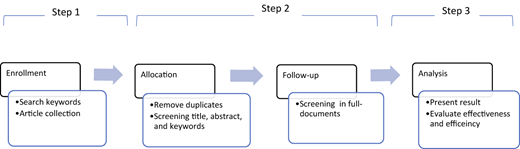
Building on earlier literature reviews by Stone and Duffy's (2015) and, more recently, Teoh et al. (2021), an SLR of transformational tourism (TT) was conducted as part of this study with the aim of eliciting key publications in this field as well as different theoretical perspectives and conceptual frameworks in this context. This SLR combined Davis et al.’s (2014) standard five-step Evidence-Based practice in Medicine (EBM) approach with the PRISMA (Preferred Reporting Items for Systematic Review and Meta-Analysis) approach proposed by Moher et al. (2009), as shown in Figure 1. In line with this, Scopus and WoS (Web of Science) were chosen as the sources for the literature search over a 42-year period from January 1978 to July 2020.
First, a set of keywords linked to transformational tourism was selected for the systematic literature search. In order to do this, a selection of seminal scholarly works in this field was made first. These seminal works included Reisinger's (2013 and 2015) edited books on “Transformational Tourism (Tourist and Host perspectives)”, where various typologies of tourism are explored from a transformational perspective. In addition to these two books, two articles were selected (Sterchele, 2020; Pung et al., 2020), as they included the most up-to-date literature reviews at the time. Similarly, the first article to coin the concept of transformational tourism (Bruner, 1991) was also selected. A content analysis of these publications was then conducted to elicit search keywords relevant to transformational tourism. Additionally, the five most-cited journal articles on transformational tourism were used as part of this content analysis to develop a set of keywords, which were then used for the systematic literature search process. The terms “transformative” and “transformational” were selected as some of the most often used keywords in these scholarly works. However, given that transformative experiences often involve a process of defining or re-defining an individual's self-identity, the following keywords were also deemed relevant to this study, based on the analysis of the publications cited above: “self-changing”; “self-development”; “self-improvement”; “self-responsibility”; “self-fulfilment”; “self-realisation”; “self-reflexive”; “self-monitoring”; “self-transformation”; “personal transformation”; “personal development”; “personal identity”; “transformational self”; “change in oneself”; “reflection on oneself”; “being true to oneself”; “immersing oneself”; “finding oneself”; and “life-changing”. Similarly, and given the different types of tourism often linked to transformational processes, the following search keywords were also adopted as part of this content analysis: “volunteer”; “ecotourism”; “adventure”; “backpacker”; “backpacking”; “yoga”; “religious”; “pilgrim”; “pilgrimage”; “wellness”; “wellbeing”; “well-being”; “spiritual”; “culture”; and “cultural heritage”.
The article search was performed by title, abstract and keywords, using Boolean operators “OR” and “AND” with an asterisk (“*”-proximity operator) to ensure that all alternative terms were captured. In addition to this, and given the limited amount of “hits” achieved initially, a number of search keyword combinations were implemented as part of the search query. For instance, “religious* Tourism” OR “religious* travel” AND “transform*” OR “life-changing” OR “self-change” OR “self-reflect” OR “personal transformation” OR “identify the life” were used as part of this exercise.
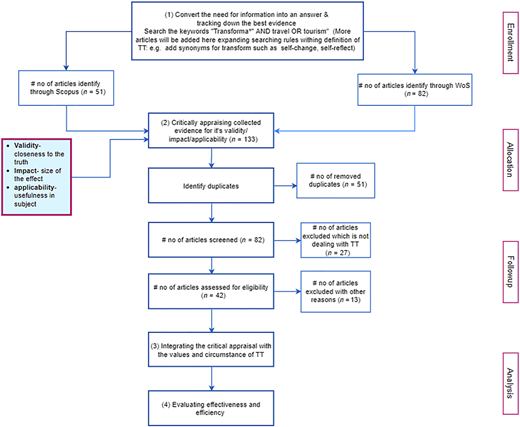
Figure 2 outlines the process followed in this systematic search of the literature on transformational tourism. For each search criteria, the number of scholarly sources found is indicated (e.g. n = 51). Only books and articles in peer-reviewed journals were considered in this systematic literature search. Editorial articles published in academic journals were not included in the analysis.
Findings
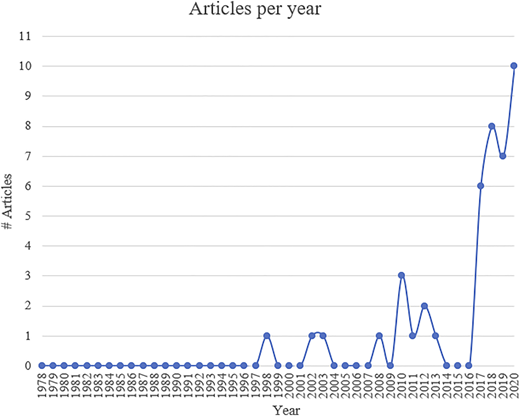
Overall, 194 scholarly sources related to transformational tourism were found to have been published between January 1978 and June 2020, following on from a preliminary screening process for validity and applicability to this study. Overall, it was found that scholarly interest in transformational tourism was rather embryonic among tourism scholars until 2007, with a significant growth in research activity between 2018 and 2020, which accounted for more than half of the total available documents, as shown in Figure 3.
Research topics in transformational tourism
Further analysis of the data (Figure 4) showed that 34 of these scholarly works were in pilgrimage/religious/spiritual tourism, with others related to cultural and heritage tourism (31), ecotourism (27), volunteer tourism (25), wellness/wellbeing/yoga tourism (14), backpacking tourism (9), adventure tourism (7) and dark tourism (5).
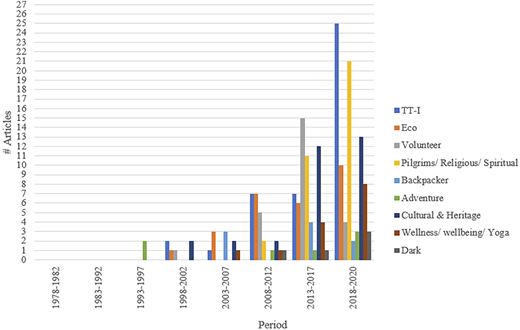
Articles in transformational tourism by topic (absolute numbers for 1978–2020 period)
Articles in transformational tourism by topic (absolute numbers for 1978–2020 period)
A qualitative analysis of keywords used was also performed. This is illustrated in the form of a network visualisation in Figure 5. The analysis rendered 102 scholarly outputs with the highest level of connection with transformational tourism. This rendered 11 clusters and 364 links, with a total link strength value of 372. Higher weights rendered larger circle labels for “transformation”, “transformative travel”, “tourism development”and “sustainability”. For example, 13 items, including “memorable experience” and “transformational learning”, represented one cluster. On the other hand, 6 items, including “tourist behaviour” and “spiritual tourism”, represented 11 clusters, as shown in Table 1.
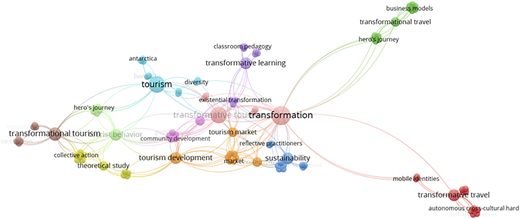
VOS viewer network visualisation of themes related to transformational tourism research
VOS viewer network visualisation of themes related to transformational tourism research
Keyword co-occurrence
| Item | Cluster | Links | Total link strength | Occurrences |
|---|---|---|---|---|
| Tourist behaviour | 11 | 22 | 23 | 3 |
| Transformation | 10 | 37 | 42 | 8 |
| Transformative tourism | 10 | 24 | 28 | 6 |
| Tourism management | 9 | 14 | 15 | 2 |
| Community development | 9 | 8 | 8 | 1 |
| Transformational tourism | 8 | 21 | 22 | 4 |
| Tourism market | 7 | 15 | 16 | |
| Tourism | 6 | 20 | 22 | 6 |
| Transformative learning | 5 | 13 | 13 | 3 |
| Sustainability | 3 | 13 | 13 | 3 |
Sources of scholarly works in transformational tourism
The highest proportion of journal articles on transformational tourism was published in Annals of Tourism Research (Table 2). Other journals contributing to this field included, in descending order, Tourism Recreation Research, Journal of Sustainable Tourism, International Journal of Religious Tourism and Pilgrimage, Current Issues in Tourism and International Journal of Tourism Research. A further 62 scholarly sources were published in a variety of other journals, excluding books and book chapters.
Sources (peer-reviewed journals) of transformational tourism articles
| Journal title | Counts | % of 194 |
|---|---|---|
| Annals of Tourism Research | 14 | 7.22 |
| Tourism Recreation Research | 9 | 4.64 |
| Journal of Sustainable Tourism | 9 | 4.64 |
| International Journal of Religious Tourism and Pilgrimage | 8 | 4.12 |
| Current Issues in Tourism | 7 | 3.61 |
| International Journal of Tourism Research | 6 | 3.09 |
| Sustainability | 4 | 2.06 |
| Journal of Tourism and Cultural Change | 4 | 2.06 |
| Asia Pacific Journal of Tourism Research | 4 | 2.06 |
| Tourist Geographies | 3 | 1.55 |
| Journal of Travel andTourism Marketing | 3 | 1.55 |
| Tourism Management Perspectives | 3 | 1.55 |
| Tourism Management | 3 | 1.55 |
| Tourism Geographies | 3 | 1.55 |
| Journal of Heritage Tourism | 3 | 1.55 |
| Journal of Tourism Futures | 3 | 1.55 |
| Tourist Studies | 2 | 1.03 |
| Tourism Review | 2 | 1.03 |
| Journal of Travel Research | 2 | 1.03 |
| Journal of Nature and Culture | 2 | 1.03 |
| Tourism | 2 | 1.03 |
| Journal of Hospitality and Tourism Research | 2 | 1.03 |
| The International Journal of Travel | 2 | 1.03 |
| Religions | 2 | 1.03 |
| Social andCultural Geography | 2 | 1.03 |
| Journal of Hospitality and Tourism Insights | 2 | 1.03 |
Research focus on transformational tourism
Qualitative research tended to dominate (47%) scholarly works on transformational tourism. This was followed by conceptual approaches (26%). It is noteworthy that only 12% of published journal articles on this topic involved quantitative research, though the lack of appropriate measurement scales and indexes may have influenced this.
A substantial proportion of research related to transformational tourism has tended to focus on aspects related to tourism demand (47%), including tourist behaviour, visitor experiences and transformational processes (e.g. personal and emotional changes, self-transformation). From a supply perspective, research on transformational tourism centred on tourism destinations accounted for 26% of scholarly output, with research focusing on host communities, local stakeholders, entrepreneurs, culture, economic development and environmental impacts accounting for 50 articles. In turn, conceptual research accounted for only 12% of scholarly output, with other categories seemingly rather unexplored, particularly, as regard sustainability (1%).
Literature review
The 194 scholarly outputs identified by this systematic literature search could be broadly grouped into four themes, namely: tourism experiences; leadership; responsible tourism and the United Nations' sustainable development goals framework.
Tourism experiences
Visitor experiences contribute to the thought processes that result in transformational outcomes for individuals. These experiences may revolve around the socio-cultural exchange, escapism, risk-taking activities, facing challenges, gaining confidence, personal development in new roles and controlling negative emotions such as fear, anger and anxiety. Coghlan and Gooch (2011) have shown that Mezirow's (2000) transformation steps effectively link with these types of experiences well beyond volunteer tourism. Similarly, interaction with local communities at tourism destinations, the development of new relationships and reflecting on a new understanding of social realities around the world have been shown to contribute to these processes in a variety of contexts, including ecotourism (Walter, 2016; Jernsand, 2017), voluntourism (Lee and Woosnam, 2010; Coghlan and Gooch, 2011; Zavitz and Butz, 2011; Alexander, 2012; Adams, 2013 or Muller et al., 2020), pilgrimage and spiritual tourism (Bond et al., 2015; Kurmanilyeva et al., 2014), backpacker tourism (Bosangit et al., 2015; Yang et al., 2018), wellness, wellbeing and yoga tourism (Thal and Hudson, 2019; Dillette et al., 2019; Voigt et al., 2011; Kim et al., 2019), adventure tourism (Allman et al., 2009; Gilbert and Gillett, 2014), cultural and heritage tourism (Yamamura et al., 2006; Marschall, 2008) and dark tourism (Sharma and Rickly, 2019; Zheng et al., 2020).
Similarly, transformative processes at the individual level have been linked by research studies to visitor experiences where escapism was a key motivation (Chen et al., 2014; Lochrie et al., 2019), breaking away from daily routines and responsibilities (Adams, 2013), where feelings of personal freedom induced by travel remained at the core of visitors' enjoyment (O'Reilly, 2006). For instance, research by Deville and Wearing (2013) examined ecotourism's transformational potential in the context of organic farms, where budget travellers interacted with local communities over lengthy periods of time, resulting in strong bonds forged with those host communities. Moreover, research by Jernsand (2017) found that there are three aspects affecting the delivery of transformational experiences in tourism. These include embodied and situated learning, relationship building and acknowledging and sharing power that is derived from engaging in development projects. Similarly, Massingham et al. (2019) found that engagement in environmental conservation projects and its experiential elements (e.g. education, encounters with wildlife) were generally associated with participants' emotions, learning, connections and reflective processes.
In a completely different context, dark tourism has often contributed to transformational processes through the delivery of experiences that often generate negative feelings among visitors, even when these negative emotions do not necessarily equate to negative experiences (Linayage et al., 2015). Dark tourism may in some cases result in visitors being exposed to poverty, hunger or dramatic levels of deprivation, which can have profound emotional impacts on people witnessing these circumstances.
Using generally more positive emotions, scholars have argued that adventure tourism (Gilbert and Gillet, 2014) can also lead to transformative experiences through risk-taking, overcoming personal fears, self-affirmation, teamwork and tourists realising their true potential, even if some scholars would posit that for adventure tourism to deliver truly transformative experiences, it needs to involve extreme situations that take people to the very limits of their emotions (Allman et al., 2009).
Overall, considering the overall trends that appear to emerge from the transformational tourism literature over the past four decades, scholarly research in this field appears to have shifted from individual transformations among tourists to a different level of understanding of these processes through different types of experiences where interactions with other individuals are beginning to be investigated in more depth, even if the research that takes into account host–visitor relationships remains still nascent. Similarly, from a more theoretical perspective, memorable experiences linked to tourism remain another fertile path for research – see, for instance, Pung et al.'s (2020) conceptual model, particularly, in terms of their measurement (note the transformational tourism experience scale developed by Soulard et al., 2020) and links to various aspects of experience design, including the “disorienting dilemma” first outlined by Mezirow's (1978, 2000) as a factor that significantly influences the development of transformational experiences. Research by Soulard et al. (2020), for instance, discovered that this “disorienting dilemma” tends to occur once tourists have returned home, so it is not possible to research it while they are still at their destination of choice.
Leadership
Leadership is increasingly developing into an emerging research theme in transformational tourism. Scholarly research in this field (Spicer-Escalante, 2011; Robledo and Batle, 2017) posits that tourism experiences focusing on personal development, including improved communication, bonding with others, development of self-understanding and self-awareness are elements that tend to contribute to personality traits associated with leadership.
For instance, using Hanson's (2013) leadership development interface model, Cruz (2017) showed that pilgrimage tourism experiences often contain important metaphorical aspects that influence the development of leaders. In fact, Cruz (2017) described pilgrimage as a “foundational symbol for leadership development” (p. 50) as it delivers self-awareness, self-growth and self-understanding as a result of self-reflection.
Similarly, Ross (2019) and Robledo and Batle (2017) used the metaphor of Campbell's archetypal journey adopting transformational tourism as a “hero's journey”. Research by Gilbert and Gillett (2014) echoes this metaphor in their analysis of Mary Shaffer and Barbara Kingscote as horseback adventurers and their achievements in the “frontier stage of adventure” (p. 314), which often involved overcoming fear in order to achieve their goals. The study found that through embodied experiences in adventure tourism such as excitement and thrill based on risk, they were able to de-territorialize themselves.
Responsible tourism
Responsible tourism guides a destination's development and respects its overall tourism system through a balanced focus on its culture, environment, local economy and host community (United Nations World Tourism Organization (UNWTO), 2018). In line with this philosophy, responsible tourists tend to be particularly predisposed to protecting the environment and its biodiversity. In turn, for local communities, it is the conservation and development of destinations that are often the priority (Sin, 2010; Woo et al., 2015), particularly with the aim of improving the quality of life of residents (Lehto et al., 2020), creating an increasingly resilient local economy and capitalising on the advantages of sustainable tourism (Uysal et al., 2016). However, the longer-term sustainability of a destination relies largely on a combination of responsible visitors and entrepreneurial residents with a good sense of environmental stewardship.
On this front, Ulusoy (2016) argued that “responsible [tourism and consumption] becomes an act of hybrid, of moral, rational, social, and ludic agencies” (p. 284) where tourists partaking in alternative break trips can undergo deep transformational experiences as a result of the acquisition of a sense of empowerment and a broader sense of responsibility. The same study found that participants in transformational experiences tend to develop responsible identities through their development of an organic community, unpretentious fun, embracing the other, developing and using capabilities, overcoming challenges and self-reflection. Ulusoy’s (2015) findings underline that the development of responsible behaviours and identities leads to self-interest and the creation of deep connections with “others”. Walker and Moscardo (2016) took this further within an indigenous tourism context by arguing that responsible tourism should also involve the development of a “sense of place” and a “care of place”. Moreover, they posit that these two spheres have the potential to deliver deeply transformational processes in tourists as well as their host communities, often influenced by periods of critical self-reflection.
Sustainable development (United Nations' sustainable development goals framework)
Transformational tourism has been interpreted by some scholars as a sustainable ambassador (Lean, 2012) by encouraging the empowerment of local communities as well as helping host communities and tourists to reflect on their responsibilities. In line with this, it could be argued that transformational tourism has a role to play in sustainable development.
The tourism sector has been linked to the United Nations' Sustainable Development Goals framework and the tourism development report in 2018 (United Nations World Tourism Organization (UNWTO), 2018) illustrated five pillars in this respect, namely, sustainable economic growth; social inclusiveness, employment, and poverty reduction; resource efficiency, environmental protection, and climate change; cultural values, diversity and heritage; and mutual understanding, peace and security. Kim et al. (2019), for instance, illustrate the link between community-based ecotourism and sustainable transformative economies. Similarly, Butcher (2011) highlights that ecotourism has the capability to tackle poverty and address the Millennium Development Goals. Massingham et al. (2019) feature aspects of experiences such as positive and negative emotions, connections, reflections and elements of experiences (animal encounters and educational shows) associated with ecotourism that support different types of conservational engagements. Higgins and Mundine (2008) allude implicitly to aspects of social inclusiveness, poverty reduction and resource efficiency in their analysis of transformative experiences in voluntourism. However, much of this research remains embryonic in terms of its contribution to clear links between transformational tourism and the UN's framework of Sustainable Development Goals.
Discussion and research agenda
As scholarly enquiry related to transformational tourism and, indeed, transformational experiences in this industry (Teoh et al., 2021) continues to develop, it would appear that an impending sense of Quo Vadis is emerging among researchers in this field. Far from being a sign of philosophical indecisiveness, creative dithering or even – far from it – lack of thought leadership, this may be more a product of the trans-modernity phenomenon first coined by Ghisi (2001) within the context of sustainability and discussed holistically with mesmerising profoundness by Ateljevic (2009, 2020). Indeed, in line with Ateljevic's argument, should transformational tourism focus solely on the neurological and psychological changes taking place at the level of the individual, the search for meaning by new generations in a hyperconnected world where, paradoxically, loneliness is on the rise, or the existentialist dilemmas emerging among communities around the world as the fallout of the largest global pandemic in living memory? This section attempts to discuss these issues and potential avenues for new research in transformational tourism adopting a futures-based approach. Inevitably, perhaps, questions are raised with no easy answers, at least not within the current business and management paradigm that dominates much of tourism research today.
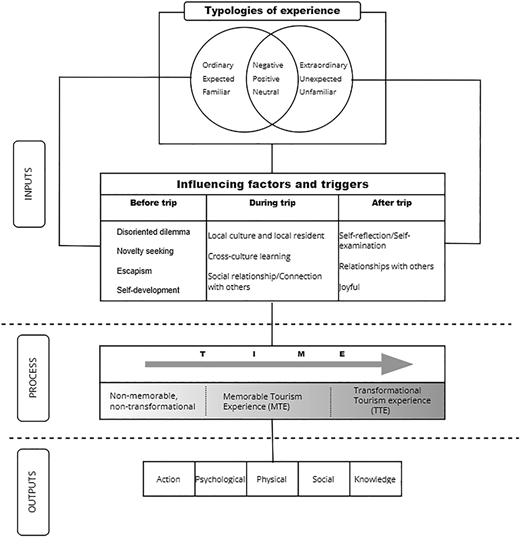
Firstly, the concept of what should be classed as “transformative” or “transformational” merits further investigation, particularly, given that transformational thought processes arising from self-reflection are complex and tend to take time (Coghlan and Weiler, 2018), as illustrated in Figure 6. Similarly, in order for transformation of any given magnitude to take place, is a trigger in the form of, for instance, a memorable experience a pre-requisite? Would this mean that a more ordinary, and arguably less memorable tourism experience, would be unlikely to result in transformative thought processes? Furthermore, if a tourism experience is designed to be “transformational”, how would we evaluate its success given that the time scales associated with self-reflection processes may last several years? Similarly, the output of this transformation may differ among individuals. For some, the transformation may be purely cognitive, whereas, for others, the transformation may result in physical changes and even life-changing actions such as a major career epiphany, a move to a different part of the world (or simply from an urban environment to a more rural location), dietary changes (e.g. embracing vegetarianism) or a radical lifestyle change involving some or all of the above.
Secondly, what type of tourism would be more likely to deliver the type of transformational tourism experiences sought by future generations? So far, scholarly enquiry in this field has tended to favour pilgrimage tourism, backpacker tourism, voluntourism and other forms of tourism often clustered under the general umbrella term of “special interest tourism” (see Weiler and Firth, 2021 for a research agenda for this field). Increasingly, however, slow tourism (see, among others, Caffyn, 2012) is likely to develop as a channel for transformational tourism experiences as the world emerges from the current global COVID-19 pandemic. However, although this type of tourism has often been associated with nature-based tourism, urban tourism destinations are likely to become strong competitors for slow tourism over time. Urban tourism destinations will not only develop their nature-based offer in the future, including mega parks (e.g. Buckley et al., 2021), geology-related attractions (e.g. Richards et al., 2021) and urban wildlife (e.g. Simpson et al., 2021), all of which have a positive impact on the mental health of residents and visitors alike. They will increasingly seek to evolve their smart tourism offer towards a different paradigm, coined by Coca-Stefaniak (2020) as “wise tourism cities”, which focusses more on a hybrid approach combining smart technologies and digital detox to trigger neurological processes leading to elusive (and often ephemeral) states of inner peace. Although these events need not result in transformational experiences at all in the short term, the effect of these experiences on visitors and residents alike will become an avenue of scholarly enquiry at various levels, particularly given that the impending Internet of the Senses revolution is poised to widen the array of options available to tourism professionals on this front (Agapito, 2020; Pasolini et al., 2020).
Thirdly, the majority of articles found in this systematic literature review focused on the tourists' perspective, with only a limited number of studies investigating the host and destination perspective (Isaac, 2017; Wanitchakorn and Muangasame, 2021). However, transformational experiences embedded in any degree of – albeit contested – authenticity tend to rely on a social context where local host communities play a pivotal role in the delivery of immersive experiences for visitors (Lehto et al., 2020; Seeler et al., 2021). Meaningful tourism experiences (McIntosh and Mansfeld, 2006; Mason and O'Mahony, 2007) sought by new generations of tourists (e.g. Chirakranont and Sakdiyakorn, 2022; Wilson and Harris, 2006) will increasingly rely on this aspect of transformational tourism, which currently remains under-researched. This search for more meaningful travel may well be one of the trigger points arising from the fallout of the global COVID-19 pandemic, as some scholars have postulated, particularly in the context of sustainable tourism (Lew et al., 2020; Galvani et al., 2020).
Conclusions
Transformational tourism remains an emerging field in tourism research. This study has provided a systematic analysis of the literature on this topic in terms of its predominant research approaches, focus and perspectives, including the contribution of scholarly works from related fields such as ecotourism, voluntourism, adventure tourism and pilgrimage tourism, among others. Overall, 194 articles have been reviewed spanning a 42-year period from 1978 until 2020. Most research in transformational tourism appears to adopt a demand-led focus, with scholarly enquiry adopting a host community perspective in need of further development. Similarly, in spite of the growing links between leadership development and transformational experiences or the parallels between transformational tourism and the United Nations Sustainable Development Goals framework, these two aspects of scholarly enquiry remain under-researched. Moreover, the need for a tourism system-based approach to the analysis of transformational tourism processes is argued in this study with a framework suggested for further research in this field that considers the role of time in the development of transformational tourism experiences as well as a potential continuum in this process that also involves more “standard” or “ordinary” tourism experiences as well as memorable ones. Accordingly, recommendations for further research in transformational tourism are offered adopting a tourism futures approach to elicit not only the shorter-term impacts that the on-going global COVID-19 pandemic will have on the dynamics of tourism and travel but also longer-term trends, including the growing search among new generations of tourists for meaningful experiences, where local communities play an active role.

