


The purpose of this study is to develop a cohesive framework, exploring the intricate relationship between ethical behaviour, values-based approaches and organisational performance. The study seeks to investigate, analyse and furnish strategic guidance on the fundamental role of ethical behaviour within organisational contexts, ultimately contributing to the enhancement of overall organisational performance.
Employing a case study methodology based on storytelling rooted in narrative inquiry, the study extracts best practices and valuable lessons from an exemplary organisation, capturing nuanced perspectives through participant interaction and storytelling. In-depth interviews with healthcare professionals were conducted, focusing on the context, actions, results and lessons learned to construct a coherent and insightful narrative.
The study through its real-world case study reveals that the implementation of ethical behaviour and a values-based approach significantly enhances healthcare performance in Uganda. The narrative inquiry method effectively captures the genuine experiences of healthcare workers, highlighting how ethical practices lead to improved patient care and organisational outcomes. The findings suggest that other healthcare facilities can adopt these ethical practices to boost their performance.
The study’s novelty lies in its use of an optimistic, practical storytelling narrative based on a single case study that offers greater understanding of the way people behave. This serves as an example of how ethical values can be practically incorporated into healthcare administration to improve organisational performance, and it also provides a structure that can be replicated by other organisations in similar settings.
1. Introduction
According to the Sustainable Development Goals, healthcare trust and equal access and quality depend on ethical practices (Widyani et al., 2020). Staff shortages, a 1:25,000 doctor-to-patient ratio, and high mortality rates, such as 336 per 1,000 live births, hinder healthcare delivery in Uganda (UBOS, 2020; Ministry of Health, 2020). Political favouritism, lack of core values, poor education and insufficient whistleblower protection worsen corruption, medical ineptitude and resource exploitation, which harm patients (Musinguzi et al., 2022; Galukande-Kiganda, 2022). These factors lower care quality and equality, increasing public mistrust and harming patients (Kyaddondo et al., 2017; Mwesigwa, 2021). God’s Grace Care Health Centre shows how a values-based and ethical conduct framework may improve healthcare performance, giving a model for other institutions experiencing similar issues.
Despite their advantages, CEOs’ ethical healthcare practices have rarely been studied (Patey et al., 2023). Often, healthcare ethics research assesses moral action, decision-making and constraints imposed by limited resources (Younes and Irandoost, 2024; Silva and Sousa, 2021). Care is taken of the ethics committees and instructional models, but little scientific literature gives scalable ethical practice models (Fiset and Byrne, 2020; Kumar et al., 2023). Uganda’s official measures humiliate 65% of the hospitalised patients if care delivery lacks values and ethical foundation (Nabukeera, 2016). A good constructive storytelling narrative focusing on human behaviour is utilised in this study to address these issues. This resonates with Ugandan healthcare performance reforms by ensuring accountability and transparency, aligning healthcare delivery with value-based care approaches. This prepares other groups in similar settings and reveals how ethics can improve the management of hospitals. This value-based approach aligns with Uganda’s Vision 2040 and Sustainable Development Goal 3: Good Health and Well-being. Such failures are avoided through employee engagement, open communication and leaders’ commitment.
Healthcare shortages and quality declines in Uganda due to absenteeism, bribery and medicine theft have eroded patient trust. Restoring service efficacy and public confidence requires particular actions (Mwesigwa et al., 2021). Healthcare performance in patients’ and healthcare professionals’ perspectives comprises of systems’ adequacy, effectiveness, safety, efficiency, equity, resilience and modification in care delivery (Levesque and Sutherland, 2020). Attitudes, subjective norms and perceived behavioural control of the theory of planned behaviour (TPB) (Ajzen, 1991) explain how morality and values-based healthcare can increase performance. If medical professionals have a good ethical mindset, are supported by colleagues and the corporate culture, and think they can follow ethics despite resource limits, TPB claims they are more likely to act morally, which helps organisational goals. This study emphasises narratives of personal and culture-based shared principles, introspective storytelling and emotional texture as foundations of individuals’ generative ethical meaning.
Our study examines the research question of “how the ethical behaviour and values-based approach impact healthcare performance within Ugandan healthcare facilities and what strategic lessons can be derived from healthcare professionals’ experience in enhancing organisational performance”?
2. Literature review and theoretical underpinning
2.1 Theoretical review
Fishbein and Ajzen’s (1975) theory of reasoned action examines how attitudes and norm influence behaviour. Ajzen expanded this into the TPB in 1985 by adding perceived behavioural control, which indicates volitional control. The TPB asserts that perceived behavioural control, attitudes and subjective norms determine behavioural intentions (Ajzen, 2020; Yeh et al., 2021). Subjective norms reflect social pressures; attitudes represent positive or negative views on actions and perceived behavioural control is confidence in performing behaviours despite obstacles (Yeh et al., 2021).
The TPB is widely applied in ethical research, especially in healthcare (Ajzen, 1991). Its global applicability is supported by organisational and social studies (Murtini, 2021; Francis and Presseau, 2019). While the theory is popular for focusing on individual behaviour, particularly in pro-environmental initiatives, many studies overlook inequities (Yuriev et al., 2020). Recent modifications to the TPB include impulsivity and self-efficacy as key intention-behaviour determinants (Hohmann and Garza, 2022). The TPB has been flexibly adapted to study healthcare practitioners’ behaviours. For example, Bosnjak et al. (2020) applied the TPB to public health, and Dionisi et al. (2020) targeted medication errors among nursing students. The TPB has also been used to analyse WHO safety targets regarding Indonesian health workers’ eco-friendly practices (Widianto et al., 2021), fostering collaboration between physicians and pharmacists (Zielinska-Tomczak et al., 2021).
The TPB has potential for enhancing patient and caregiver behaviours related to hand hygiene, antimicrobial stewardship, and MRSA screening and improving medical professionalism (Greene and Wilson, 2022). Wang et al. (2022) demonstrated the TPB’s relevance in the collaborative decision-making process between primary care physicians and patients with acute respiratory infections, highlighting how subjective norms, attitudes and perceived behavioural control influence healthcare professionals. These findings reinforce the TPB’s applicability across various domains while suggesting methodological enhancements.
The TPB is vital for understanding Ugandan healthcare ethics and a values-based behavioural approach, as community attachments shape behavioural constraints from attitudinal changes. This model emphasises beliefs, corporate culture and social expectations in healthcare practitioners’ ethical behaviours. The TPB fosters trust and accountability, improving healthcare performance by identifying areas for ethical intervention. It links healthcare legislation and values-oriented practices to inadequate ethical training, declining values and heavy workloads (Abay et al., 2023).
Originally rooted in quantitative research, the TPB is also effective in qualitative studies (Renzi and Klobas, 2008), making it suitable for exploring electronic learning platforms. Nguyen (2018) noted the theory’s adaptability for understanding lived experiences beyond traditional hypothesis testing. Our study adapts the TPB through interviews and narrative analysis to focus on subjective experiences, expanding the theory of moral agency by integrating attitudes, subjective norms and perceived behavioural control, and remaining neutral on local variables while yielding localised results based on general concepts.
2.2 Ethical practices and healthcare performance
Abay et al. (2023) define values-based leadership (VBL) as the ethical foundation for healthcare integrity and decision-making, enhancing employee well-being. Ethics is increasingly central to healthcare administration (Ocak et al., 2020). Business and healthcare ethics intersect through corporate behavioural ethics (De Cremer and Moore, 2020). Ethical leadership boosts engagement and productivity among healthcare workers (Tamer, 2021) by fostering trust and loyalty (Fernando and Bandara, 2020). Sumanasiri (2020) highlights that transformative VBL strengthens leadership and organisational performance. Healthcare management must balance client service with profitability, a challenge intensified by pay disparities, rising costs and workforce shortages (Ocak et al., 2020). Ethical environments reduce moral distress and fatigue, improving patient care and productivity. Honesty, justice and integrity are crucial for patient-centred care in Uganda (Kipkogei et al., 2020). These values align with global biomedical principles, prioritising patient well-being over satisfaction (Beauchamp and Childress, 2019). However, poverty, resource scarcity and patriarchal constraints hinder their application in Uganda (Adane et al., 2020; Naisiko, 2020).
Despite decades of moral legislation and reforms, poor working conditions and low pay sustain unethical practices, weakening healthcare delivery (Ochieng et al., 2020; Mutumba, 2022). Systemic issues limit reform effectiveness (Dowhaniuk, 2021; Tsujio et al., 2023), necessitating stricter legislation, ethical education and moral practice. Business ethics often overlook fundamental human motivations (De Cremer and Moore, 2020). Behavioural ethics research (BER) suggests honesty and integrity reduce misconduct and enhance performance. Business ethics—incorporating transparency and corporate social responsibility—affect organisational success (Oyegbami et al., 2023).
Though distinct, business and healthcare ethics are interrelated (Tamer, 2021). Business ethics promotes transparency, while healthcare ethics navigates moral dilemmas in patient care (Oyegbami et al., 2023). Both disciplines stress ethical frameworks for the competitive advantage and stakeholder trust. However, subconscious drivers of unethical behaviour remain poorly understood (Ilori et al., 2024). Ethical leadership and values-based strategies remain inadequate across industries. While Tamer (2021) and Ocak et al. (2020) focus on healthcare, ethical issues in other sector demand tailored leadership approaches. De Cremer and Moore’s (2020) model highlights neglected psychological dynamics in business ethics, underscoring the need for a broader understanding of morality across industries.
2.3 Ethical behaviour, values-based approach in Uganda’s context
Corruption significantly hinders healthcare access in Uganda (Transparency International, 2021; Kaseje, 2020). Compliance-driven interventions are limited by organisational factors (Basheka, 2013). Kyambade et al. (2024) argue that preventing misconduct requires more than rule enforcement, while Tumwine et al. (2019) emphasise the role of values-based leadership in fostering employee virtues. Ethical leadership enhances trust, employee loyalty and organisational success (Saudin, 2024; Alshawabkeh, 2023). Trust built through ethical conduct ensures patient satisfaction (Hosseini et al., 2019). Structural changes are necessary to address constraints like resource shortages and unemployment, which hinder the adoption of values (Naisiko, 2020).
Resource constraints and systemic corruption in Uganda’s healthcare sector necessitate accountability through TPB and ethics-based approaches. Corruption has hindered vaccination coverage, worsening health sector inequality (Rwashana et al., 2009). Ethical tensions arise between care value and data value (Hutchinson et al., 2018). Addressing patriarchal customs and reproductive health issues requires contextualised biomedicine and ethical considerations (Naisiko, 2020). Predicting health outcomes, such as waste separation and eating habits, relies on TPB predictors (Akulume and Kiwanuka, 2016). Disparities in postpartum contraception underscore the need for inclusive ethical frameworks involving multiple stakeholders. Organisational culture, values, and legal frameworks shape moral leadership and employee conduct. Corruption, poor working conditions and workforce shortages negatively affect healthcare outcomes (Saudin, 2024; Musinguzi et al., 2022). Ethical leadership mitigates public sector corruption by adhering to moral standards and addressing systemic causes (Fernando and Bandara, 2020; Kyambade and Namatovu, 2024; Tamer, 2021). A strong code of ethics and a positive corporate image reinforce values-driven strategies for organisational effectiveness (Nguyen et al., 2020).
According to TPB, ethical actions arise from attitudes, social pressures and perceived control over decisions (Ajzen, 1991). However, poor working environments in Uganda undermine moral independence (Ochieng et al.). While a values-based model fosters ethical behaviour, its success relies on institutional reforms, including better pay and reduced corruption (Alzola, 2020; Alison et al., 2021).
3. Methodology
3.1 Study context
God’s Grace Care Healthcare Centre (pseudonym) in Uganda’s Luwero district epitomises a values-based approach to healthcare delivery, incorporating compassion, integrity, transparency and accountability that collectively foster patient trust, job satisfaction and overall performance (Nalweyiso et al., 2022; Yiga et al., 2023; Yost et al., 2015). Leadership commitment, training, communication, reward and whistleblowing mechanisms reinforce these core values and are measured by patient satisfaction, clinical quality, employee engagement and community feedback. Leadership decisions, stakeholder engagement and moral dilemmas corralled by the Centre demonstrate the spillover effect of successful ethical practices, which is a testament to the ethical culture of the institution. The Centre has received numerous accolades and certifications for its ethical commitment, making it a case study on how a values-driven strategy builds trust and supports the long-term success of an organisation.
We undertake a single case study based on narrative inquiry, a qualitative method valued for producing deep understandings of human experience while allowing for both subjectivity and trustworthiness and the flexible transfer of results to similar contexts (Stalmeijer et al., 2024; Hays and McKibben, 2021; Clandinin and Connelly, 2000). This approach was emphasised by scholars as enabling rich, portable findings — identifying patterns that, when repeated, can prove causation and generalise to similar contexts (Ford, 2020; Kazdin, 2020; Stalmeijer et al., 2024).
3.2 Research philosophy
The interpretivism research philosophy was utilised for this study, a philosophy that focuses on understanding human experiences and social contexts and is therefore well-equipped for storytelling-based research that sought to elicit subjective insights on ethical behaviour and values in organisational performance (Alharahsheh and Pius, 2020; Brown and Brown, 2019; William, 2024). Drawing from subjectivism, which proposes that reality is a social function that builds context based on interactions and various perspectives, this orientation allows researchers to investigate how varied interpretations of ethics, in context, impact various organisational outcomes (William, 2024; Ford, 2020; Alharahsheh and Pius, 2020). By using deep interviews to investigate ethical behaviour, values-based practice and nursing performance, the study offered an inferential and profound understanding of the phenomenon, reinforcing the qualitative methodology’s effectiveness in understanding complex realities (Ryan and Rutty, 2019; Nalweyiso et al., 2022).
Through storytelling and narrative inquiry, this study transitions TPB from a positivistic to an interpretivist paradigm which is used for better understand experimental and subjective meanings of the concepts. Through qualitative research, TPB narratives lend philosophical perspective that makes apparent how TPB constructs influence decision-making processes in real-world contexts.
3.3 Research design
Narrative inquiry and storytelling are part of a distinctive approach to qualitative research that captures rich personal stories, highlighting how participants understand what they experienced, which makes them an excellent method to explore ethical behaviour and values-based approaches in healthcare (Riessman, 2008; Nalweyiso et al., 2022; Yiga et al., 2023; Passon, 2019). This method builds rapport, as participants can openly discuss sensitive instances, and helps researchers understand underlying trends and themes that lead to new understanding of how individuals act and make ethical decisions (Creswell, 2014; Kondratjew and Kahrens, 2019; Clandinin and Connelly, 2000).
3.4 Study population and sample
This research used a snowball sample to analyse the pro-values means of improving healthcare performance from the perspective of 15 nurse managers, as well as from the views of nursing and medical staff aged over thirty who had at least six years’ experience in the field (Atkison and Flint, 2001). We achieved a point of data saturation by the twelfth participant, which is consistent with literature that suggests sample sizes as small as one, or within a range of 9–12 for homogenous population samples, to ensure a better representation and understanding of organisational practices (Saunders and Townsend, 2016; Boddy, 2016; Nalweyiso, 2022). Such a lens emphasises the impact ethical behaviours have on growing organisations, showcasing how values-based strategies continue to shape the landscape of healthcare. Respondent statistics are presented in Table 1.
3.5 Data collection
At God’s Grace Care Healthcare Centre, this study drew on principles from appreciative inquiry by employing an interview guide that sought positive narrative stories from healthcare workers following observation of their interactions with patients (Cooperrider et al., 2008; Watkins et al., 2016; Alharahsheh and Pius, 2020). Using unstandardised interviews of 50 min to 1 h in duration, we elicited authentic voices of participants, yielding rich, culturally specific insights into the healthcare centre’s history and underlying values (Creswell, 2014; Young et al., 2024; Riessman, 2008), which were recorded and transcribed.
3.6 Data analysis
Specifically, qualitative analysis techniques drawing from storytelling (Creswell and Creswell, 2017), thematic coding (Yiga et al., 2023) and content analysis (Nalweyiso et al., 2022; Mafabi and Kabagambe, 2021), were employed to better understand and describe the insights from the data in consideration of a values-based approach and its transformative effect on healthcare performance. By visualising relationships between different concepts, network analysis contributed to finding the biases (Scott, 2017; Creswell and Creswell, 2017), and peer feedback and member verification increased credibility by diminishing biases. The aim was to extrapolate from the logics of cultural knowledge implicit in the narratives through the analysis of plot, characters, and topography of place to help differentiate and address more deeply values-particularist or values-universalist engagements in cultures of care, with attention to their respective impacts on health care performance.
3.7 Ethical considerations
This study was conducted following ethical guidelines as recommended by Harriss et al. (2022). The principal researcher obtained approval from the University of South Africa’s Research Ethics Committee with Reference No. 1918, and the informed consent from the participants with permission to be recorded after informing them of the study’s purpose, procedures and their rights to withdraw at any time without consequences. To ensure confidentiality, pseudonyms were used to protect the identity of both the participants and the organisation, with “R” and assigned codes representing participants, while “God’s Grace Care Healthcare Centre” representing the organisation”. This was done in compliance with Uganda’s Data Protection and Privacy Act (2019) as guided by Saunders and Townsend (2016).
4. Findings
The findings of this study are structured around two interconnected elements: (1) methodological insights derived from the narrative approach used in this research and (2) case-based outcomes illustrating the real-world application and impact of a values-based transformation within God’s Grace Care Healthcare Centre. The methodological insights focus on how storytelling was used as a tool to capture the nuanced experiences of participants, empowering them as co-creators of knowledge and emphasising their agency in driving change. The case-based outcomes, on the other hand, highlight the tangible effects of ethical leadership and a values-based framework on healthcare performance, including improvements in staff engagement, stakeholder trust and overall organisational growth.
4.1 Methodological insights into values-based healthcare transformation
4.1.1 Core values that anchored participant narratives
Participants’ narratives consistently revolved around the healthcare Centre’s core values, which served as a unifying framework for their stories. For instance, healthcare workers framed their experiences of increased job satisfaction and engagement by linking them to values such as compassion and collaboration. One healthcare worker noted: “When I think about why I feel more connected at work, it’s because everything we do revolves around compassion. It’s not just a word on the wall; it’s in every action we take.” (R11).
4.1.2 Storytelling as a tool for collective memory
The values-based transformation at the healthcare Centre became a collective narrative, where employees shared a common sense of purpose. This collective memory was reinforced through training, transparent communication and shared success stories. For example, one participant shared: “When we come together during team meetings, we often reflect on how far we’ve come as a unit. Our stories remind us that we’re building something meaningful, and that keeps us going.” (R03).
4.1.3 Agency and reflective storytelling
Participants demonstrated agency in their storytelling by critically reflecting on the before-and-after events of the healthcare Centre’s culture. This reflective process allowed them to internalise the transformation and express their role within it. As one nurse explained, “I used to feel invisible at work, like my opinions didn’t matter. Now, I feel like I have a voice, and my ideas are valued. It’s been a journey of rediscovering my worth” (R05).
4.1.4 Interplay between personal and collective narratives
The narratives revealed a dynamic interplay between personal experiences and the collective story of the organisation’s transformation. For instance, one administrator connected their professional growth to the organisation’s values-based approach: “I’ve grown so much as a leader here because these values push us to be better, both in our professional and personal lives. It’s not just about meeting targets; it’s about making a difference in lives, including our own” (R07).
4.1.5 Emotional texture and depth of narratives
The narratives were rich in emotional content, reflecting participants’ pride, gratitude and a new found sense of purpose. One healthcare worker described: “Seeing the smile on a patient’s face after receiving compassionate care is what drives me. It’s not just a job anymore; it’s a calling” (R01).
4.1.6 Key outcomes of values based and ethical framework
Over five years, God’s Grace Care Healthcare centre implemented a values-based approach and ethical behaviour framework, resulting in several noteworthy outcomes, including experiencing a substantial improvement in healthcare workers’ satisfaction and job engagement. This positive shift contributed to a reduction in staff turnover rates, signifying a more committed and contented workforce. One healthcare worker expressed the following:
Before we started emphasizing these core values, we were just doing our jobs. Now, I feel more connected to the patients and to the team. It's like we are all working towards something bigger, and it makes me want to stay and grow here.(R11)
Secondly, the healthcare centre’s efforts led to enhanced stakeholders’ trust. Patients and partners alike perceived God’s Grace Health Centre as a trustworthy and ethical entity. This increased level of trust not only solidified the healthcare centre’s reputation but also opened doors to additional business opportunities. Regarding the improved trust among stakeholders, one nurse shared:
We’ve seen a real change in how patients trust us. By following the core values of compassion and integrity, we’ve built stronger relationships. Patients are more open with us now, and I feel like they trust our care more because we treat them with respect and transparency. (R01)
Effective and ethical performance of medical practitioners as ethical beings translated in excellent financial health of God Grace Health Care Centre resulting in steady growth in both revenues and profits. One of the Centre’s nurses shared:
We’ve seen a clear difference in our revenues since we started implementing the values-based system. More patients are choosing us over other facilities because they know we provide quality care with integrity, and that has really boosted our growth. R07
The findings support the existing literature that ethical behaviours induce a positive impact on organisational performance and ethical leadership promotes employee commitment to business success, respectively (Alshawabkeh, 2023; Saudin, 2024). Peak performance is attained by firms that embed ethics into their governance structures, with the intersection of ethical leadership and actions bolstering performance with moderators of sector characteristics, logistics regulation and workplace culture (Oyegbami et al., 2023; Widyani et al., 2020).
5. Discussion
Ethical behaviour is globally recognised as crucial for organisational performance (Widyani et al., 2020; Zaim et al., 2021). Anchored in TPB, this study explains that healthcare performance improves when staff have positive attitudes driven by good intentions. These intentions are shaped by organisational factors, including leaders instilling ethical values, demonstrating integrity, fairness and honesty, and ensuring fair remuneration and good working conditions, as seen at God’s Grace Care Healthcare Centre. By showing that ethical behaviour is influenced by leadership and workplace conditions, this study clarifies TPB’s relevance, particularly in Uganda’s unique context as a developing country.
God’s Grace Care Healthcare Centre’s transformation highlights how a values-driven approach enhances healthcare performance, reinforcing the importance of integrity, compassion, and respect in building trust and organisational excellence (Kyambade and Namatovu, 2024). This improves decision-making and patient outcomes, significantly boosting organisational effectiveness (Oyegbami et al., 2023). Leadership rooted in commitment and responsibility foster openness and honesty. Ethical leaders inspire adherence to corporate codes, creating a culture of excellence (Tamer, 2021). Whistleblowing practices further demonstrate transparency and principled governance, enhancing staff morale and accountability. These factors boost stakeholder confidence and economic returns (Buchbinder and Shanks, 2019). The healthcare centre fosters trust, open communication and continuous development by ensuring a safe space for reporting unethical practices. Cultural transparency strengthens patient and shareholder trust, supporting long-term viability (Hosseini et al., 2019). Prioritising ethics not only upholds moral principles but also drives financial success. Ultimately, integrating ethics with strategic goals at God’s Grace Care Health Centre reduces litigation costs, enhances staff productivity and increases patient loyalty (Saudin, 2024).
This comprehensive plan underscores the critical importance of ethical leadership in attaining organisational success, offering a helpful framework for other healthcare institutions. By integrating ethical standards into strategic objectives, the Centre demonstrates that linking values with operations may enhance organisational performance, underscoring the transformational influence of values-driven leadership in healthcare (Buchbinder and Shanks, 2019).
Despite its positive transformation, God’s Grace Healthcare faces challenges, including resistance to change that hinders efficiency (Braithwaite et al., 2018). Manpower shortages, funding constraints and inadequate resources pose significant obstacles (Kaseje, 2020). Integrating learning into traditional healthcare settings remains difficult (Ochieng et al.). Compliance with complex regulations, maintaining patient confidentiality and rebuilding public trust, especially after past setbacks, are demanding (Hosseini et al., 2019). Sustaining best practices requires continuous data analysis, yet reliance on individuals or professional administrators threatens longevity (Braithwaite et al., 2018). Additionally, adapting guidelines to diverse populations is crucial, but external factors like legislative changes or economic crises may hinder implementation (Kaseje, 2020).
Figure 1 illustrates a values-based framework for improving healthcare performance, emphasising core values, operational elements and key outcomes. Compassion ensures patient-centred care, integrity upholds ethics, collaboration foster teamwork and innovation drives solutions. Key enablers include balanced doctor-patient ratios, leadership commitment, staff training, transparent communication and accountability. This approach enhances patient satisfaction, employee engagement, clinical outcomes and financial performance, fostering trust, quality care and sustainability.
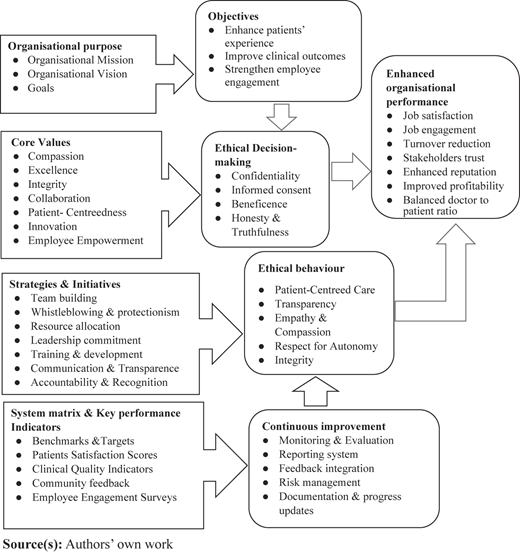
A conceptual framework of values-based approach for enhancing healthcare performance
A conceptual framework of values-based approach for enhancing healthcare performance
Recent studies stress rigorous research methods in limited datasets, emphasising coding, reflexivity and transparency (Grodal et al., 2021). Prioritising depth over generalisability, our study derives insights from 15 participants for rich, contextual understanding (Canali, 2020; Ford, 2020). This aligns with Holstein et al. (2024), who advocate for simple, rich data over complex datasets. Using storytelling, we examined ethical behaviour and value-based healthcare performance, generating meaningful frameworks. This approach highlighted participants’ ambivalence, providing deeper qualitative insights into ethical behaviour. It aligns with Canali’s (2020) focus on data quality and Kazdin’s (2020) view that context-specific data enhances understanding. Inspired by a Ugandan healthcare facility, our framework serves as a knowledge resource adaptable to similar contexts, though not universally prescriptive (Coe, 2009; Garvey and Jones, 2021).
Grounded in TPB, this qualitative study captures Ugandan healthcare challenges beyond what standardised questionnaires could reveal. By centring on healthcare workers’ experiences, it addresses local issues while offering insights for resource-limited settings (Garvey and Jones, 2021). Rich qualitative data enhance transferability, allowing researchers to adapt the model while maintaining relevance for theory and practice (Stalmeijer et al., 2024). Though not universally applicable, the findings provide valuable guidance from Uganda’s context. This study underscores the importance of contextually grounded methodologies with traceable processes to develop replicable frameworks from small datasets while maintaining scientific rigor. Ultimately, the framework demonstrates how a values-based approach rooted in leadership, training, communication and accountability enhances healthcare performance by improving patient care, workforce productivity and organisational growth.
5.1 Research and practical implications
Ethical leadership at God’s Grace Health Centre fosters a values-based culture, creating an ideal workplace environment. Extensive training helps staff apply core principles, while feedback from patients, employees and the community reinforces these values. Progress is tracked using key performance indicators (KPIs) to guide decisions and measure success. This study provides a practical framework for fostering moral conduct and value-driven practices, enabling medical professionals to enhance ethical behaviours, reduce misconduct and drive business growth, particularly in challenging environments like healthcare in emerging economies. By addressing the sustainability of ethical behaviour to improve organisational performance, it makes a significant contribution to the literature on ethics, healthcare performance and effectiveness. While acknowledging its limitations, the study highlights challenges in adopting best practices in healthcare, offering valuable insights into overcoming barriers to enhance performance and promote an ethical culture.
5.2 Theoretical implication
Our study advances the TPB by illustrating how attitudes, perceived control and social pressure influence ethical behaviour and efficiency in healthcare. At God’s Grace Care Healthcare Centre, values-based approach fosters positive attitudes toward ethical conduct, aligning with TPB’s premise that attitudes predict behaviour. Embedding integrity, compassion and respect into operations reinforces ethical standards among staff. TPB links behavioural attitudes to their likelihood of enactment. The healthcare facility’s ethical framework reduces disengagement and fosters moral principles crucial for patient welfare. Leadership empowerment, coupled with reward systems for ethical decision-making, cultivates integrity and accountability. TPB suggests that aligning intentions with organisational norms makes ethical conduct both foreseeable and achievable. Our analysis underscores the role of social expectations in shaping ethical behaviour. Transparency and whistleblowing at the centre strengthen normative beliefs, reinforcing social pressure to uphold ethical standards. By building trust and ensuring compliance, the facility meets public expectations, demonstrating that ethical behaviour is essential for career success and institutional sustainability.
6. Conclusion
The study examines how God’s Grace Care Healthcare Centre improved performance through a values-based approach and ethical behaviour framework. By integrating ethical values into healthcare operations, it offers insights into enhancing organisational outcomes. Using a narrative approach, participants shared experiences highlighting the transformative impact of this model, emphasising its theoretical, practical and social significance. A small qualitative dataset enables deeper exploration of context-specific insights often overlooked in larger studies, capturing participants’ complex lived experiences. While the sample size limits generalisability, the findings remain transferable, providing a framework for reflective practice and adaptive implementation in similar contexts. The richness of qualitative data enhances transferability (Stalmeijer et al., 2024), allowing researchers and practitioners to assess its relevance across different settings, contributing to both theory and practice.
7. Limitations and areas for future research
The focus of our study was on healthcare performance within a specific Ugandan context, which may constrain the generalisability of results. New research could go further by examining ethical behaviours, values-based models in healthcare facilities in different regions or countries to determine whether the same findings emerge. Second, this study used qualitative narrative analysis in that it offered rich insights but can miss the bigger picture or numerical representations of performance in healthcare. Our framework also would benefit from future research quantitatively testing and validating the model proposed herein on a larger and more diverse sample to broaden its utility.

