


The present article aims at systematizing the literature on EM that spans over three decades (1987–2023) to analyze the growth and development in the EM research following changes in reporting standards, economic conditions and legislations over the period.
The study covers 3,742 articles on earnings management (EM) indexed in SCOPUS and the Web of Science databases from 1987 to 2023. The study aims at the systematization of bibliometric data using R Studio, Biblioshiny and VOS Viewer software.
The study reveals that the research in the pre-SOX era gave more thrust to the development of cross-sectional models for the detection of accrual EM proxies, whereas research on EM had shifted to managerial discretions based on real transactions in the post-SOX era. Later, in the post-GFC era, the focus of EM research was redefined towards investor protection due to the collapse of the global economy that led to the erosion of investors’ wealth. In the modern era, research on EM focuses on ethical aspects such as CSR compliance, ESG framework and so on.
The findings of the study will aid the policymakers in addressing the EM based on real transactions and also incorporate the variations and changes in multiple green reporting standards to ensure fairness and transparency in reported figures.
The study contributes to the existing literature by quadrisecting the entire research on earnings management to analyze the growth and development in EM research and makes novel suggestions that future research on earnings management can be expanded towards the role of non-financial disclosure in managerial discretions and also the insider biases in green reporting.
Introduction
The academicians have addressed the issue of discretionary managerial practices even since the 1980s. The concept of Earnings Management (Hereafter, EM) was defined for the first time by Healy (1985) as a purposive intervention in the reported figures to demonstrate financial results in a way that is beneficial to the insiders of the company. Such benefits can be bonuses or managerial commissions (Jones, 1991), better credit ratings (Demirtas & Cornaggia, 2013), reduction in taxable income (Guenther, 1994), favorable proceeds during public offerings (DuCharme, Malatesta, & Sefcik, 2004; Ali & Zhang, 2015) and so on. Nevertheless, these insider benefits were driven by the intentional manipulation of financial reports. The flexibility in accounting standards and provision for accounting choices has resulted in the asymmetry of information and adversely affected the fairness of reported figures (Dichev, Graham, Harvey, & Rajgopal, 2013). Such information asymmetry is the basis of EM practices that can influence the decisions of potential investors who make investment decisions based on such reported figures (Richardson & Waegelein, 2002). Yet, the emergence of globalization and technological advancements in the early 90s lead to information efficiency all over the world (Hussain, Akbar, Khan, Sokolová, & Akbar, 2022).
However, EM has become the subject of interest to the general public and researchers following the global scandals in the early 2000s such as Xerox, Enron and WorldCom. It was evident that managers were intervening in the reported figures by exploiting the provisions in GAAP and other regional accounting standards (Dechow & Skinner, 2000). Following these global scandals, the USA passed the Sarbanes Oxley Act in 2002 to restore the confidence of investors and it is considered to be a legislative milestone in the regulation of managerial discretions (Cook, Huston, & Omer, 2008: Chan, Farrell, & Lee, 2008). Mandatory adoption of IFRS has also reduced the level of managerial discretion in financial reporting (Zéghal, Chtourou, & Sellami, 2011). Also, the introduction of various corporate governance codes such as the Common Code in Germany and Tabaksblat in the Netherlands has mitigated the manipulation of earnings at the international level (Chih, Shen, & Kang, 2008). The ultimate purpose of all these enactments and legislations was the protection of investors from earnings shocks (Leuz, Nanda, & Wysocki, 2003). However, the asymmetry of information in the financial statements has affected not just the confidence of investors but also the future performance and prosperity of the entity in the long run (Gunny, 2010). So, the protection of potential investors has become a global issue and it induced more in-depth research in analyzing discretionary managerial practices (Sun & Rath, 2010). The first research article on EM appeared in 1987 and the research on managerial discretionary practices has been developing to numerous dimensions. Thus, the present study analyses the following research questions.
How has the research on EM evolved over the period?
What were the major developments in EM research during each quadrille?
What are the dimensions in which future research on earnings management can be done?
So, the present study considers research articles that appeared in Scopus and Web of Science from 1987 to 2023. The entire period of the study has been divided into quadrisects to refine the results based on the timeline and occurrence of economic events. The remainder of the article is organized into five chapters. The first chapter, Introduction, gives an overview of the study and is followed by a Literature review in the second chapter that provides insights into previous studies. In the third chapter methodology and techniques applied in the study are described. The analysis and interpretation of bibliometric data are depicted in Chapter 4 and the final chapter summarizes the findings of the study along with the scope for further research.
Review of literature
Research on earnings management has exclusively begun with the introduction of discretionary accruals as a proxy for detecting earnings management that segregates abnormal accruals from total accruals (Healy, 1985; DeAngelo, 1986). One of the main sources for manipulating accruals is the provision for bad debts which is used as a tool for reducing taxable income (McNichols & Wilson, 1988). These kinds of provisions and accounting choices create an information asymmetry between the insiders (managers) and outsiders (Investors), leading to EM practices using discretionary accruals (Schipper, 1989). Such information asymmetry enabled companies to rely on discretionary income-decreasing accruals during import relief investigations to reduce their reported figures in financial statements (Jones, 1991). However, companies under crises tend to inflate their earnings using discretionary accruals to avoid the violation of their debt covenants (Defond & Jiambalvo, 1993). Up to the mid-1990s, Jones (1991) was the most prominent model in estimating discretionary accruals (DAs). Later, the accounts receivables were adjusted with changes in revenue to refine the estimation of DAs by addressing the tendency to manage earnings using non-cash revenue (Dechow, Sloan, & Sweeney, 1995). However, it was Beneish (1997) who formulated an EM index score by compiling various indices such as SG&A, Depreciation, Gross margin, receivables and total assets to total accruals to analyze the magnitude of accrual management. Following this, Kothari (2005) has addressed the importance of performance aspects by incorporating return on assets into the modified Jones model. Up to 2006, The concept of earnings management was confined to discretionary accruals until Roychowdhury (2006) addressed the issue of Real earnings management (REM) that results from the abnormality in R&D expenditure, production cost and cash flow from operations. Thus, earnings management is considered to be the outcome of both real and accrual manipulation in the reported figures (Ferentinou & Anagnostopoulou, 2016: Alhadab, Clacher, & Keasey, 2015). One of the major motives behind earnings management is to make high proceeds from public offerings using income-increasing accruals (Teoh, Welch, & Wong, 1998a, b). However, firms with aggressive EM practices during public offerings exhibit underperformance in terms of lower stock returns in the long run (Teoh et al., 1998a, b). There are a lot of motives that induce the insiders to manage their earnings such as favorable credit ratings in the market, managerial compensation (Aljifri, 2007), market speculations (Chen, Elder, & Hung, 2010), Managing the tax liability (Guenther, 1994) and Stock markets incentives (Cheng & Warfield, 2005). The composition of independent directors (Chen, Cheng, & Wang, 2015), multiple directorships (Sun, Lan, & Liu, 2014), CEO duality (Baker, Lopez, Reitenga, & Ruch, 2019) and family control over the board (Achleitner, Günther, Kaserer, & Siciliano, 2014) also affect the quality of reported figures as it can prioritize insider interests over the public interest. Even though earnings management practices benefit the insiders, they ultimately affect potential investors' wealth (Gopalan & Jayaraman, 2012). So, to protect investors from such insider manipulations, IFRS was implemented at the international level (Jeanjean & Stolowy, 2008). However, the adoption of IFRS has intensified the magnitude of discretionary accruals as compared to the non-IFRS period due to the provisions for managerial discretions in reporting items such as depreciation, stock valuation and so on (Callao & Jarne, 2010). The introduction of corporate governance codes at the global and regional levels reduced unethical business practices in financial reporting (DHU & HBP, 2019). So recent studies in earnings management are more interested in addressing the issue of investor protection in different dimensions such as sustainability reporting, ESG compliances, foreign ownership and so on.
Thus, it is evident from the literature that research on earnings management is dynamic and reports diverse and contradictory results over the period. So, the systematization of literature is essential to analyze the evolution and development of earnings management literature. Bibliometrics is a branch of information science that analyzes the bibliographic aspects quantitatively for the systematization of literature (Pritchard, 1969) and it is developed from the statistical bibliography introduced by Klein and Hulme (1923). The impact of a particular research area over the period can be analyzed using document citations, author citations, relevant keywords and thematic clustering (Glänzel, 2015). As far as previous studies on EM bibliometrics are concerned, few studies are confined to the Web of Science database (Vagner, Valaskova, Durana, & Lazaroiu, 2021; Teixeira & Rodrigues, 2022) and the SCOPUS database (Ahmad, Subhan, Hayat, & Al-Faryan, 2023; Suffian et al., 2023), while some of the bibliometric studies linked corporate governance with EM (Santos-Jaén, León-Gómez, & Serrano-Madrid, 2021; Kumar, Sharma, Mishra, & Kaushik, 2023), Whereas few studies have analyzed the bibliometric analysis on IFRS (Vatis, Nerantzidis, Drogalas, & Chytis, 2023), Keyword based thematic analysis on EM (Haugland Sundkvist, Madsen, Munim, & Stenheim, 2022) So, the present bibliometric study is based on bibliographic data from 1987 to the present to develop scientific knowledge through the systematization of literature on earnings management by identifying the most relevant keywords to analyze the growth and development of EM research in different quadrisects and thereby proposing the scope for further research in the concerned area. Apart from considering a single database, this study incorporates bibliometric data from both the SCOPUS and the Web of Science databases to get more refined data. To the best of our knowledge, this is the first bibliometric study that analyzes the development of EM research in each quadrisects by incorporating data from the most comprehensive databases to analyze the evolution, growth and recent developments in EM research over the period.
Data and methodology
Bibliometric analysis is essential for the scientific systematization of a large body of literature that spans a long period (Baker, Kumar, & Pandey, 2020). Thus, the present study follows a timeline approach to get more comprehensive insights into the earnings management literature. So, based on through literature review over the period (1987–2023) we quadrisect the entire literature into the evolutionary era (1987–2002), post SOX era (2003–2008), the post-crisis era (2009–2017) and the modern era (2017–2023). Bibliometric data for the study has been retrieved from SCOPUS and Web of Science (WoS) databases, which are considered to be the most comprehensive and reliable in scientific citations (Zhu & Liu, 2020). We used keywords such as “Earnings Management” “Accrual Earnings Management” “Real Earnings Management” “Accounting quality” “Accrual quality” and “Earnings quality” to get more refined data that address the concept of managerial discretionary practices. Search results were filtered into “English only” articles in the field of business, finance and management it was extracted from WoS in plain text format and from SCOPUS in BibTeX format to analyze the same using the Bibliometrix package in R-software to perform citation-based analysis and visualization of extracted data was done using VOS viewer. In total, we found 4,822 articles (3,300 from SCOPUS and 1,522 from WoS), duplicate articles (1,080 articles) were removed and the rest were merged using the mergeDbsource command in R-Studio and the final data stood at 3,742 articles. Final data were analyzed using three indicators such as quantity indicators (to measure productivity), quality indicators (to analyze the citation frequency) and structural indicators (to estimate the linkages between authors and publications).
Data analysis and interpretation
Summary statistics of bibliometric data are shown in Table 1. On average, the articles on EM are 7.51 years old and have 38.51 citations over the period. 3,742 articles in the study are authored by 5,869 authors, out of which 438 articles are single-authored in nature. It indicates the relevance of EM research at the international level. On average, co-authors per document stood at 2.66 and 13.76% of articles have resulted in international co-authorship.
Overview characteristics
| Particulars | Description |
|---|---|
| Time frame | 1987:2023 |
| Doent type (journals) | 3,742 |
| Keywords used for data extraction | “Earnings Management” “Accrual Earnings Management” “Real Earnings Management” “Accounting quality” “Accrual quality” and “Earnings quality” |
| Research domain | Business, Finance and Management |
| Average document age | 7.51 |
| Average document citations | 38.51 |
Source(s): Table by authors
Since the evolution of EM research, the most used keywords in the articles addressing managerial discretion are NDA (non-discretionary accruals – 2,182 times), DA (discretionary accruals – 981 times), Accrual quality – (576 times), Corporate governance – (453 times), and information asymmetry (391 times). So, the frequent occurrence of these keywords ultimately leads to nothing other than “investor protection” which is considered to be the crux of earnings management research. Among the documents, Dechow et al. (1995) and Kothari (2005) are the most cited articles (with 3,971 and 3,659 citations respectively) at the global level as these two have developed the most prominent models in the detection of discretionary accruals. Journal of Accounting and Economics, Accounting Review and Journal of Finance and Economics are the most impactful journals with 10,049, 9,350 and 7,138 citations respectively. As far the country-wise contributions are concerned, 33.21% of articles belong to the USA followed by 12.27% from China. Due to the financial advancements in emerging markets, now research on EM seems to be booming due to the increase in the inflow of foreign capital to emerging economies such as India, South Korea, Malaysia and so on. Also, the mandatory adoption of IFRS and corporate governance mechanisms has increased the scope for EM research among researchers and academicians.
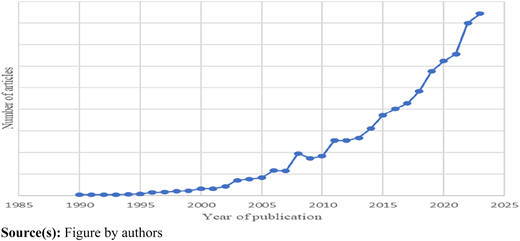
It is also evident from Figure 1 that the interest in EM substantially increased in 2008–09 following the financial crisis that questioned the fairness and transparency of financial statements (Türegün, 2020). Thus, the number of publications almost doubled (107 articles) in 2008–09 as compared to the previous years following the global financial crisis (GFC) that created a threat of wealth depletion among potential investors at the global level (Persakis & Iatridis, 2016). Also, the international co-authorship has become 20.61 since 2010 and at present, it stands at 23.79%. Thus, the magnitude of international co-authorship has almost doubled since the GFC portrays the significance of EM research at the global level that aims at mitigating the information asymmetry to protect the interest of potential investors.
Co-citation analysis on EM research
The technique of co-citation analysis was introduced by Small (1973) and Pilkington and Liston‐Heyes (1999) to analyze the most relevant publications in the concerned area. So, structure analysis of the most prominent research works on EM is depicted in Figure 2 using VOS Viewer software. One of the major motives behind the deliberate intention behind EM practices is to manipulate the earnings either to increase the profit or to reduce the losses (Burgstahler & Dichev, 1997) are shown in Cluster 1 (Red color). Such managerial discretions using the accruals reflect better economic value and it is also reflected in the stock prices (Subramanyam, 1996). Healy (1985) is the most cited article in the cluster that found that bonus plans for insiders are positively associated with their discretionary policies. Whereas, Degeorge (1999) revealed that insiders manage their earnings to meet the expectations of market analysts by maintaining recent performance or by reporting positive earnings.
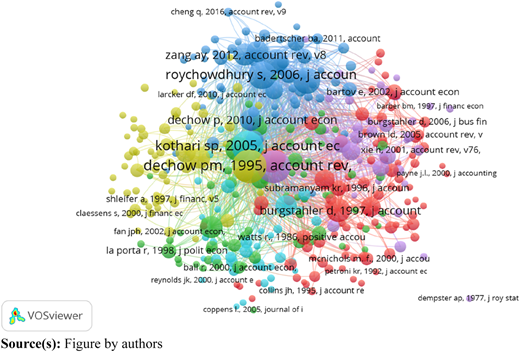
Cluster 2 (Green color) depicts the research on earnings management that points toward the protection of investors from managerial discretions. Leuz (2003) found that strong legislation and enactments mitigate discretionary practices and enhance the quality of reported earnings. Whereas, Burgstahler, Hail, and Leuz (2006) documented that the magnitude of earnings management is higher among private firms as compared to public firms due to its compliance with strong compliance to the legal system. When investor sentiments are high, managers strategically use abnormal accruals to overstate the earnings to increase the stock return (Simpson, 2013). Also (Marquardt & Wiedman, 2004), posit that there is a decrease in the value relevance of earnings among the firms with aggressive accruals during the year of equity offerings. Apart from accrual-based earnings management, the research on EM has also started to address the managerial discretions based on real-based transactions (Cluster 3 -Blue color) through abnormality in the production cost, cash flow and discretionary expenses (Roychowdhury, 2006). Since the passage of the SOX Act in 2002, there has been a shift in managerial discretions from AEM to REM to increase the compensation based on equity (Cohen, Dey, & Lys, 2008). The passage of the SOX Act has improved the internal governance mechanisms that reduced the extent of managerial discretion using real transactions (Cheng, Lee, & Shevlin, 2016). However, in consideration of the relative costs, managers tend to use real earnings management and accrual earnings management as substitutes (Zang, 2012). So, to protect investors from such managerial discretions, governance mechanisms were introduced to EM research (Cluster 4 – Yellow color) following the article by Jenson and Meckling (1976) that depicts the relationship between agency cost with managerial behavior. Xie, Davidson, and DaDalt (2003) found that an increase in the frequency of Audit and Board committee meetings and the financial or corporate background of the members are very effective in mitigating the level of discretionary accruals. Srinidhi, Gul, and Tsui (2011) also documented that the inclusion of female directors on board and audit committees has substantially enhanced earnings quality. It is also evident that the presence of reputed institutional investors also reduces the level of managerial discretion (Chung, Firth, & Kim, 2002). Thus, research on EM has been moving into numerous aspects and multiple dimensions to adapt to the changes and developments in the micro and macro environment.
Thus, to portray the relevant focal points of EM research over time, we have created a co-occurrence map using VOS viewer by incorporating recurrent keywords that appeared in the publications are shown in Figure 3. Here, cluster 1 (Red) is focused on the keyword “earnings management” with the superior occurrence that exhibits linkages with various keywords such as financial reporting quality, audit quality, transparency, institutional investors, accrual quality and so on. So, the cluster demonstrates the association between earnings management and the quality of reported figures in the financial statement. Whereas, cluster 2 (Blue) shows the linkages of earnings management towards keywords such as IFRS, accounting standards, conservatism, earnings quality and so on. So here the cluster envelops the impact of various legislations and enactments on managerial discretions.
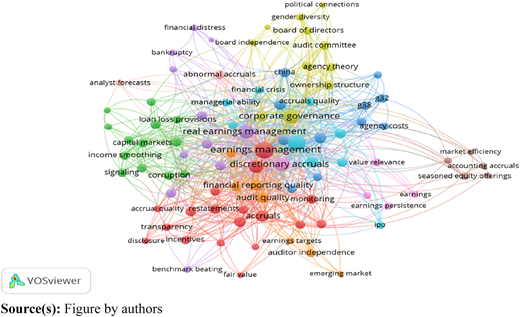
At the same time, cluster 3 (yellow) documents the linkages of the keyword “corporate governance” towards various dimensions such as audit committee, gender diversity, ownership structure, agency theory, board of directors and so on. So, cluster 3 demonstrates the role of governance mechanisms in regulating managerial discretions. Whereas, cluster 4 (purple) depicts the keyword “real earnings management” and its various dimensions in EM research such as financial distress, bankruptcy, long-run performance, profitability and so on. Thus, cluster 4 gives an overview regarding the consequences of real earnings management even though its detection is comparatively difficult as compared to accrual earnings management. Although, cluster 5 (green) exhibits multiple approaches in earnings management using keywords such as loan loss provisions, signaling, tunneling, dividend, income smoothing and so on. Here the cluster mainly shows various strategies and dimensions in the management of earnings by the insiders for their private gains and benefits.
So, based on a thorough literature review we have found some significant contributions towards earnings management research that incorporate timely developments and progress in managerial discretionary practices are depicted in Table 2.
Glimpse of major milestones in earnings management literature
| Year | Author | Contribution to literature |
|---|---|---|
| (1985) | Healy | The first model for DA (Discretionary accruals) estimation by presuming mean reversion mechanism for NDA (Non-discretionary accruals) |
| (1987) | Jennings | Unsystematic security price movements during the week of earnings forecasts |
| (1988) | McNichols and Wilson | Use of provision for bad debts as an income-decreasing mechanism |
| (1989) | Schipper | Asymmetry of information between insiders and outsiders |
| (1991) | Jones | Managing of earnings to increase the amount of import relief grant |
| (1995) | Dechow et al. | Incorporated Sales-based manipulation into the DA estimation model |
| (1997) | Burgstahler and Dichev | EM as a technique to increase earnings or to decrease losses |
| (1998) | Teoh et al. | Unusual accruals during IPO lead to poor stock returns in the future |
| (1999) | Healy and Wahlen | Coined comprehensive definition of earnings management |
| (2000) | McNichols | Analyzed Research design issues through specific and aggressive accruals |
| (2003) | Leuz et al. | Addressed investor protection at the international level |
| (2006) | Burgstahler et al. | Reporting incentives behind managerial discretion |
| (2006) | Roychowdhury | Estimation of REM through 3 proxies |
| (2010) | Callao and Jarne | Impact of IFRS in managerial discretions |
| (2012) | Gopalan and Jayaraman | Insider incentives and motives behind EM practices |
| (2013) | Hasnan, Rahman, and Mahenthiran | Evidence for EM before the year of fraudulent financial reporting |
| (2014) | Filip and Raffournier | EM behavior during the financial crisis period |
| (2015) | Ali and Zhang | Overstatement of earnings is more during the early years of CEOs |
| (2016) | Obigbemi, Omolehinwa, Mukoro, Ben-Caleb, and Olusanmi | Association between board meetings and EM practices |
| (2017) | Lo, Ramos, and Rogo | Effect of EM on the transparency of financial reporting |
| (2018) | Almahrog, Ali Aribi, and Arun | Impact of CSR on EM practices |
| (2019) | Liu and Lee | Effect of CSR on tax avoidance mechanisms |
| (2021) | Velte | Carbon performance, Environmental performance, and EM behavior |
| (2022) | Yuan, Zeng, Yuan, and Lan | Irregularities in corporate financial reporting and ESG disclosure |
| (2023) | Aqabna, Aga, and Jabari | Impact of EM on CSR and Firm Performance during COVID-19 |
Source(s): Table by authors
It is evident from the literature that the research on EM is still evolving and diverging into multiple dimensions. A composite co-occurrence analysis won’t be enough to get the evolution, growth and development in earnings management research. So, based on the literature, we are interpreting the research on EM by quadrisecting the entire period of EM research into the pre-SOX (1987–2002), post-SOX period (2003–2008), post-GFC era (2009–2016) and Modern era (2017–2023) to get more comprehensive and fruitful interpretations on EM research.
Pre-SOX era (1987–2002)
During the initial phase, the detection of discretionary accruals (Proxy for EM) began with the assumption of mean reversion of non-discretionary accruals (NDA) by Healy (1985) and it was followed by DeAngelo (1986) with a presumption of random walk movement in NDA. However, these models were not able to account for external factors, and Jones (1991) incorporated depreciation expenditure and changes in revenue to estimate NDA. Later, the Jones model (1991) was modified by Dechow (1995) by addressing the effect of sales-based manipulation to widen the approach to the estimation of discretionary accruals. One of the major challenges in EM research is the proper estimation of DA (discretionary accruals), the proxy for EM that results from the information asymmetry.
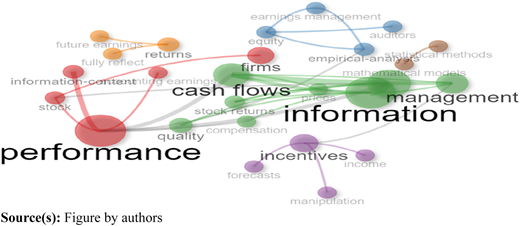
So, it is evident from Figure 4 that the majority of the research during the pre-SOX era has highlighted the asymmetry of information between managers and investors of the company (Coller & Yohn, 1997). Such asymmetry of information is more common among firms expected to yield higher market reactions as compared to firms expected to yield lower market reactions (Lombardi Yohn, 1998). Managers manage their earnings using income-increasing accruals to maximize their bonus plans in the short run by exploiting the information asymmetry (Guidry, Leone, & Rock, 1999). The impact of asymmetry of information is also reflected in the valuation of the firm if the value-maximizing investors and managers are not properly informed about the firm prospects (Chaney & Lewis, 1998). Based on such information asymmetry, McNichols (1989) found that earnings forecasts are reflected in the short-run stock price movements till the reversal mechanism of such information asymmetry in the capital market. Such information asymmetry is also visible during IPOs (Initial Public Offerings) resulting in poor stock returns in the succeeding years (Teoh et al., 1998a, 1998b). Thus, abnormal accruals in the pre-IPO period can increase proceeds from IPOs but it affects the future returns to the investors (DuCharme, Malatesta, & Sefcik, 2001). Apart from IPOs, aggressive accrual management during seasoned equity offerings (SEOs) also resulted in underperformance in the long run, adversely affecting the subsequent returns (Teoh et al., 1998a, 1998b). So, the research on earnings management during the initial phase was mainly focused on the development of DA estimation models and addressing the information asymmetry during various corporate events. Such information asymmetry leads to aggressive EM practices that have witnessed major global scandals such as the Waste Management scandal in 1998, the Enron Scandal in 2001, and the WorldCom scandal in 2002 and so on.

Post-SOX era (2003–2008)
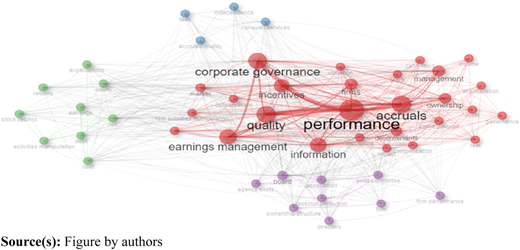
Global scandals in such multinational corporations have questioned the fairness and transparency of financial statements (Xu, Taylor, & Dugan, 2007). So, the need for a regulatory mechanism to protect investors from fraudulent financial reporting has gained attention at the international level (Leuz et al., 2003). Thus, to restore the confidence of investors USA has passed the Sarbanes Oxley Act (SOX) in 2002 that ensures stringent recordkeeping requirements. Following the SOX Act, various legislations such as the Tabaksblat Code in the Netherlands and the Common Code in Germany were enacted to ensure the protection of investors from fraudulent reporting.
Thus, during this era, the concept of corporate governance emerged at the global level to reinstitute the well-being of stakeholders as well as potential investors (Man & Wong, 2013). Figure 5 further reveals that following the corporate governance regime, the frequency of board and audit committee meetings and the financial corporate background of committee members have reduced the level of DCA (discretionary current accruals) (Xie et al., 2003). So, the ignition of corporate governance mechanisms at the global level has resulted in the enhancement of competitiveness at the international level (Carney, 2005). In the meantime, return on asset (ROA) was incorporated into the DA estimation model to address the performance aspects (Kothari, 2005). However, the concept of EM was not confined to the discretionary accrual (DA) aspects as the managers started to manage their earnings using real transactions (Gunny, 2005). So, the detection of REM (real earnings management) was pioneered by Roychowdhury (2006) through various proxies such as abnormal production cost, abnormal cash flow from operations and abnormal discretionary expenditure. Thus, during the post-SOX era, the enactment of corporate governance mechanisms enhanced public confidence and the introduction of the Roychowdhury model has bisected earnings management into accrual-based and real-based EM practices (Xu et al., 2007).
Post-GFC era (2009–2017)
Subprime lending and the housing market bubble led to the Global Financial Crisis (GFC) in 2008 which brought down numerous MNCs such as Lehman Brothers, Merrill Lynch, HBOS and so on. So, it was evident that various discrepancies in financial reporting such as securitization of assets, fair value reporting and loan loss provisioning have affected the market discipline (Barth & Landsman, 2018). However, the magnitude of EM, especially managerial discretions through real-based transactions was lower compared to the previous years due to the shrinking of economic activities at the global level (Dechow, Ge, & Schrand, 2010).
Figure 6 exhibits that during the post-GFC era, the research on EM focused on various concepts such as earnings quality, audit quality and disclosure quality which was necessary to recoup the market momentum at the global level. Thus, following the GFC, IFRS was accepted and implemented at the international level (Even though the International Financial Reporting Standards (IFRS) was introduced in 2003) to enhance the disclosure quality of financial statements. However, few studies have come up with evidence that the presence of income smoothing is more among IFRS-adopting firms (Rudra & Bhattacharjee, 2012), and the various provisions in IFRS such as a provision in income recognition and provision for depreciation expenses have created more opportunities for managerial discretions (Callao & Jarne, 2010). Nevertheless, it was evident that the presence of high-quality auditors has mitigated the EM practices as well as reduced the cost of equity (Chen, Chen, Lobo, & Wang, 2011). However, the presence of high-quality auditors was not enough to recapture the confidence of investors. Due to the purposeful intervention of insiders in the reported figures, potential investors started to rely more on third-party grading mechanisms such as credit rating (Demirtas & Cornaggia, 2013) and IPO grading (Maheshwari & Agrawal, 2015) to ensure the quality of company fundamentals. It is evident from the literature that, the presence of reputed credit rating agencies has mitigated the earnings management practices (Ahn & Choi, 2009). Previous evidence also suggests managerial discretions using real-based transactions were lower among firms with high-graded IPOs (Abraham & Kumar, 2023). Thus, during the post-GFC era, the research on EM has more thrust on the global adoption of IFRS and the role of third-party grading mechanisms in ensuring the disclosure quality to arrest the effect of the global financial crisis that drained the wealth of potential investors.
Modern era (2018–2023)
The emergence of the concept of “socially responsible investing” in EM research has incorporated the psychological and emotional aspects of insiders and investors of a company. Corporate Social Responsibility (CSR) makes a company accountable to itself, its stakeholders and the general public. Thus, Section 135 of the Companies Act mandates them to spend at least 2% of their average net profit during the three immediately preceding financial years. Companies committed to CSR mechanisms are less prone to managing their earnings using discretionary accruals (Velte, 2020; Almahrog et al., 2018). It is also evident that EM using real-based transactions is low among socially responsible firms as they won’t risk long-term profitability (Gaio, Goncalves, & Sousa, 2022). Socially responsible firms with acceptable board composition and optimum gender diversity are more effective in the mitigation of managerial discretionary practices (Orazalin, 2020). Empirical evidence also suggests that female board participation is also effective in constraining EM practices (Mnif & Cherif, 2021). The probability of aggressive EM practices is also lower among companies having larger and independent boards with an audit committee (Saona, Muro, & Alvarado, 2020). Likewise, the presence of experienced and qualified women directors on the board and audit committee reduces insider opportunistic behavior (Fan, Jiang, Zhang, & Zhou, 2019). However, the managers of the companies in the concentrated market with Corporate Governance (CG) substitute accrual earnings management (AEM) with real earnings management (REM) (El Diri, Lambrinoudakis, & Alhadab, 2020). Thus, corporate governance in the form of board quality is very effective in mitigating discretionary practices (Chatterjee, 2020).
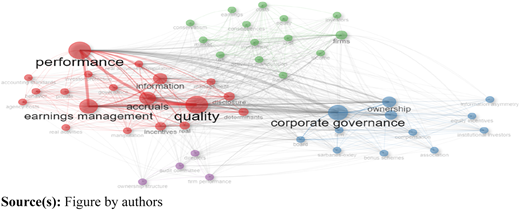
As depicted in Figure 7, Ethical considerations and alignment with values have extended corporate governance practices into environmental and social aspects that lead to the incorporation of ESG dimensions in EM research in the modern era. Nowadays, investors not only consider the financial materiality but also the ESG (Environmental, Governance and Social) fundamentals while making their investment decisions. Empirical evidence shows that ESG performance reduces AEM, especially governance performance is more effective in mitigating discretionary accruals as compared to environmental and social performance (Velte, 2019). Likewise, firms with higher ESG scores are less prone to manage their earnings using accrual or real-based transactions (Ji, Oh, Yoon, & An, 2019). However, financially distressed firms tend to engage in managerial discretion by disclosing more ESG practices using various loopholes such as greenwashing (Almubarak, Chebbi, & Ammer, 2023). However, companies that manage their earnings using real transactions will have lower ESG performance and total enterprise value (Habib, 2023). Studies have also addressed the impact of COVID-19 on EM and it was found that firms tend to manage their earnings during the pandemic to meet the analyst coverage (Lassoued & Khanchel, 2021). Thus, in the modern era, research on EM primarily focuses on board diversity, board quality, pandemic effect and ESG aspects that have bilateral binding on insider policies and public investment decisions.
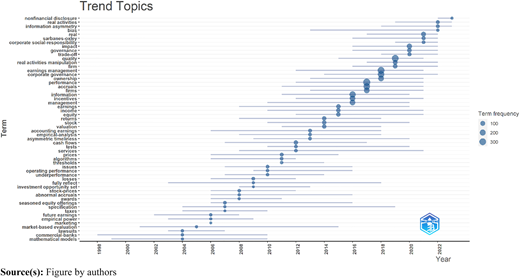
The research on EM is in its maturity phase and it's still moving to various dimensions like CEO duality, investor sentiments, stock price synchronicity and so on. Studies can be extended to analyze the Environmental, Social and governance factors separately (Instead of aggregate ESG) in managerial discretions in emerging markets. Due to enactments and legislations such as IFRS, ESG compliance, IPO grading and credit rating, we can see that there is a shift from accrual-based discretions to real-based managerial discretions. Therefore, the failure or incapability of these legislations and enactments in mitigating real-based EM can also be addressed in future studies. Also, the magnitude and timing of non-financial disclosures can affect the managerial discretions that can also be analyzed in the future. Research on EM has to be widened to emerging markets, especially towards the role of foreign ownership in managerial discretions are to be considered as such economies acknowledge immense amounts of money in the form of FDI, FPI, foreign bonds and so on. It is also evident from Figure 8 that the research on EM can be extended to the least explored dimensions such as bias in reporting and non-financial disclosure.
Conclusion
The present study attempts to systematize the literature on earnings management to analyze how the research on EM has evolved over the period and the development of EM literature in each quadrille. The study reveals that the research in the pre-SOX era gave more thrust to the development of cross-sectional models for the detection of accrual-based EM. However, the research on EM had shifted to managerial discretions based on real transactions in the post-SOX era. As compared to the accrual-based EM, the real-based EM is comparatively difficult to detect and it resulted in the development of models to estimate REM proxies. Later, in the post-GFC era, the focus of EM research was redefined towards investor protection due to the collapse of the global economy that led to the erosion of investors’ wealth. At present, in the modern era, the research on EM is developing towards non-financial disclosure dimensions such as ESG framework (Environmental, Social and Governance), CSR compliance and so on. Future research on EM can be expanded to multiple dimensions by linking the effect and impact of environmental and social aspects, especially towards Real earnings management. As far the ESG implementation is concerned it is still not that effective in mitigating real transactions as its detection is relatively difficult. Also, the majority of the studies are addressing sustainability reporting in non-financial entities. So, attention is required towards the role of green or sustainability reporting in financial institutions. So, it is clear from the trend analysis (Figure 8) that the literature demands more in-depth research on non-financial disclosures such as ESG in addressing real earnings management and insider biases in green reporting.
The present study is limited to 6 keywords. It does not consider other keywords such as big bath, earnings smoothing, tunneling, earnings manipulation and cookie jar reserves that also resemble managerial discretions. While extracting data from Web of Science and Scopus, we have considered only the published articles published in the English language. Results would have been modified if we considered the book chapters, conference proceedings and articles in other languages. Also, the analysis can give more refined results if we could employ more articles from modern databases such as ProQuest and EBSCO.
Conflict of interest: On behalf of all authors, the corresponding author states that there is no financial or non-financial conflict of interest.

